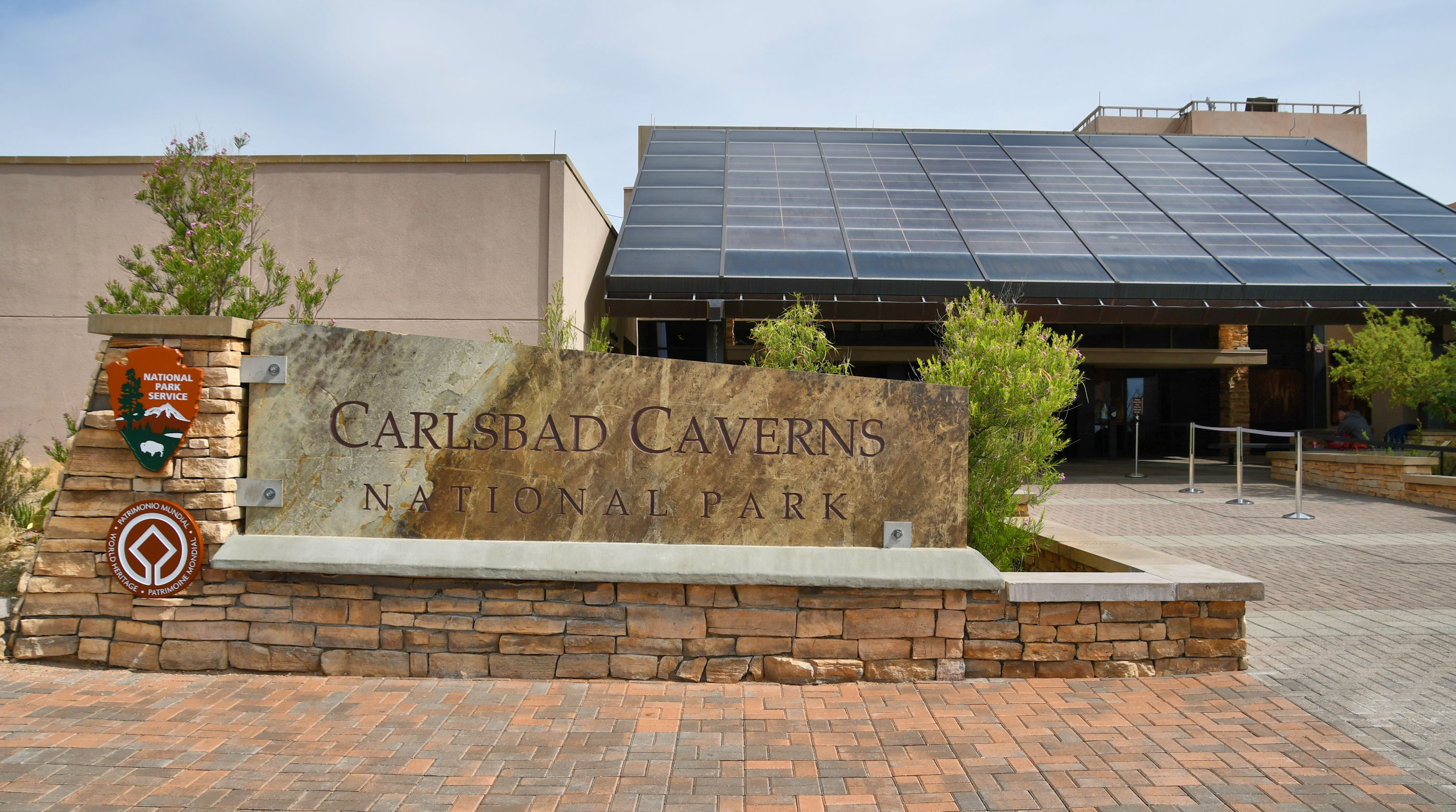
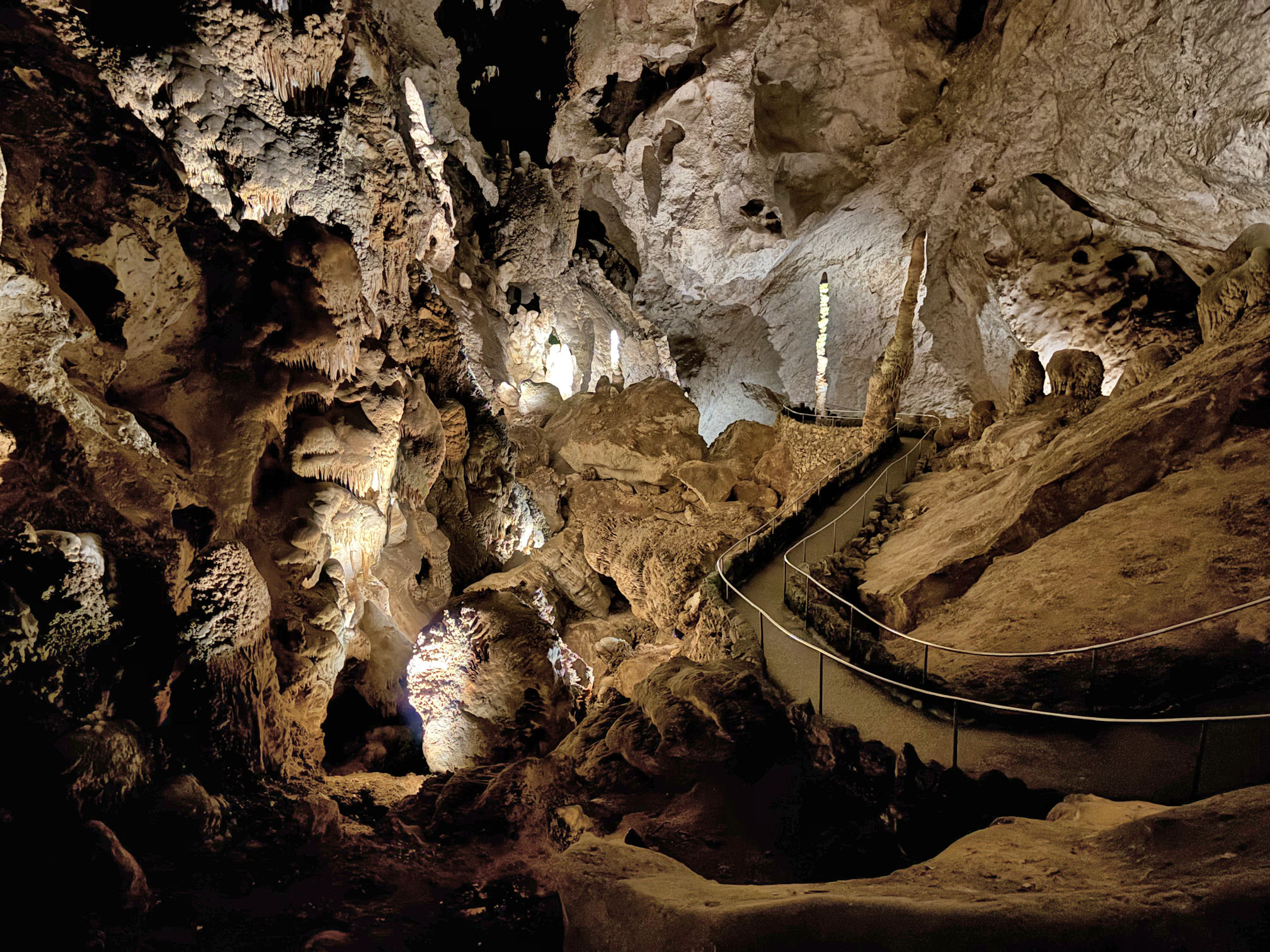
Carlsbad Caverns National Park has been on my bucket list since I was a little kid. But for the bats, not the cavern. In fact, I had never even thought of it as a place to explore a cave, in all the forty years I have been dying to get here. Look at the photos below, and just imagine then, how ecstatic we were to be here for the bats, but also discover this cave!! It is tremendously cool.
We arrived in the morning, and had our free entrance tickets already reserved online before the trip. All I had to do was show my ID and my National Parks pass, and we were welcomed in. We arrived 5 minutes before a busload of elementary school aged children, and were grateful to put them behind us. :o)
The Visitor Center is large, with two tourist counters: one for the cave, one for the bats (I’ll get to that later). There is also a giant gift shop. Guests heading for the cave first walk through a museum area with information about the cave, its history and current maintenance, the animals that live in the area, and even a section for the Artist In Residence.
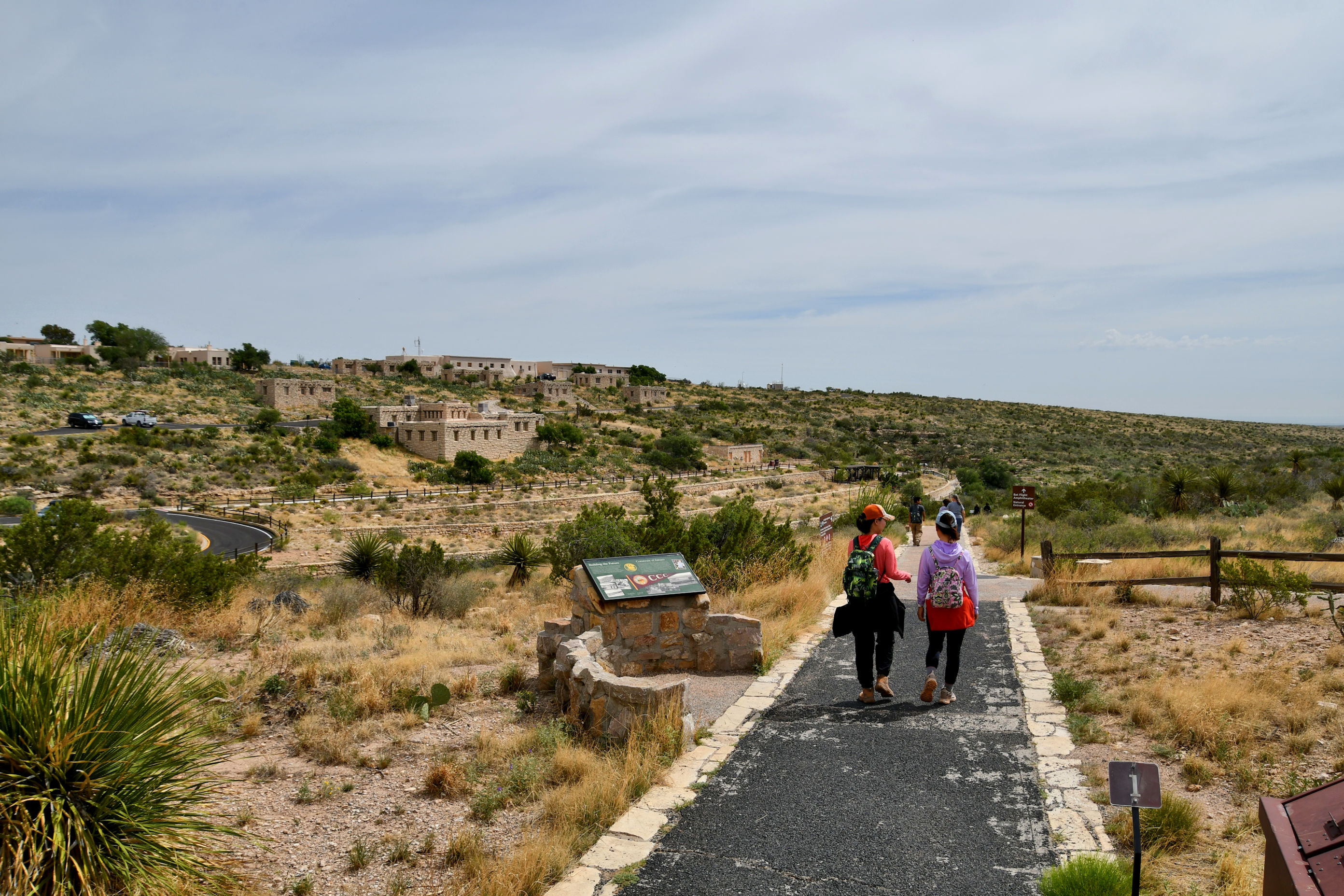
Then we stepped outside and walked the path to the entrance. Visitors have the option to take an elevator from the Visitor Center down to the bottom where it opens inside the largest cave area -or- they can walk down. We chose to walk of course.
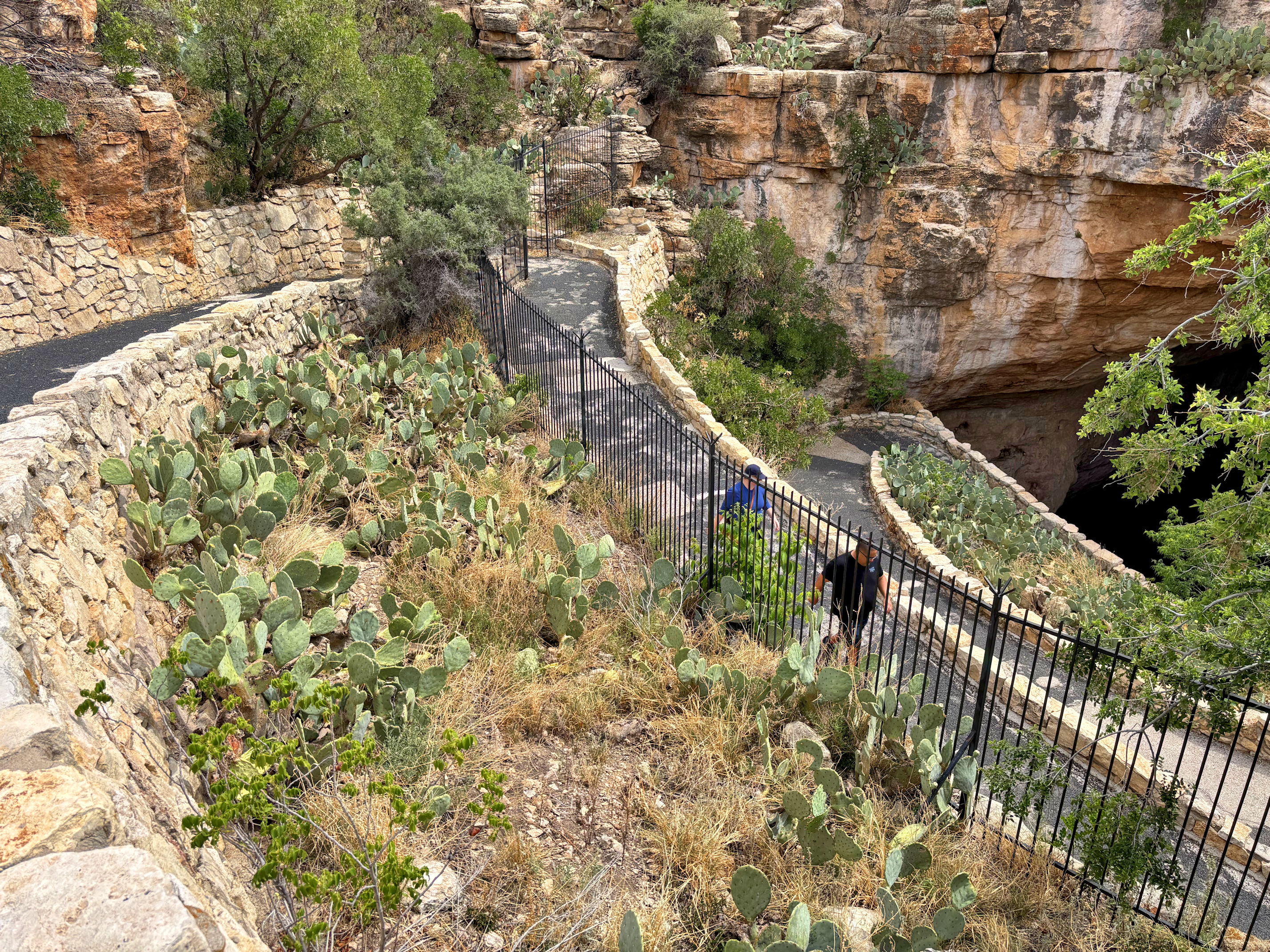
It’s very noisy at the entrance. There are Cave Swallows making a cacophony, and also, notably, a smell. It’s surprisingly stinky for the first 10 minutes. As I walked down, I made peace with that idea, assuming it would stink all the way through, because once we passed swallow area, we would hit bat area. But we were pleased to discover that the air is fresh and comfortable to breathe all the way through, with no stinkiness at all, down inside there.
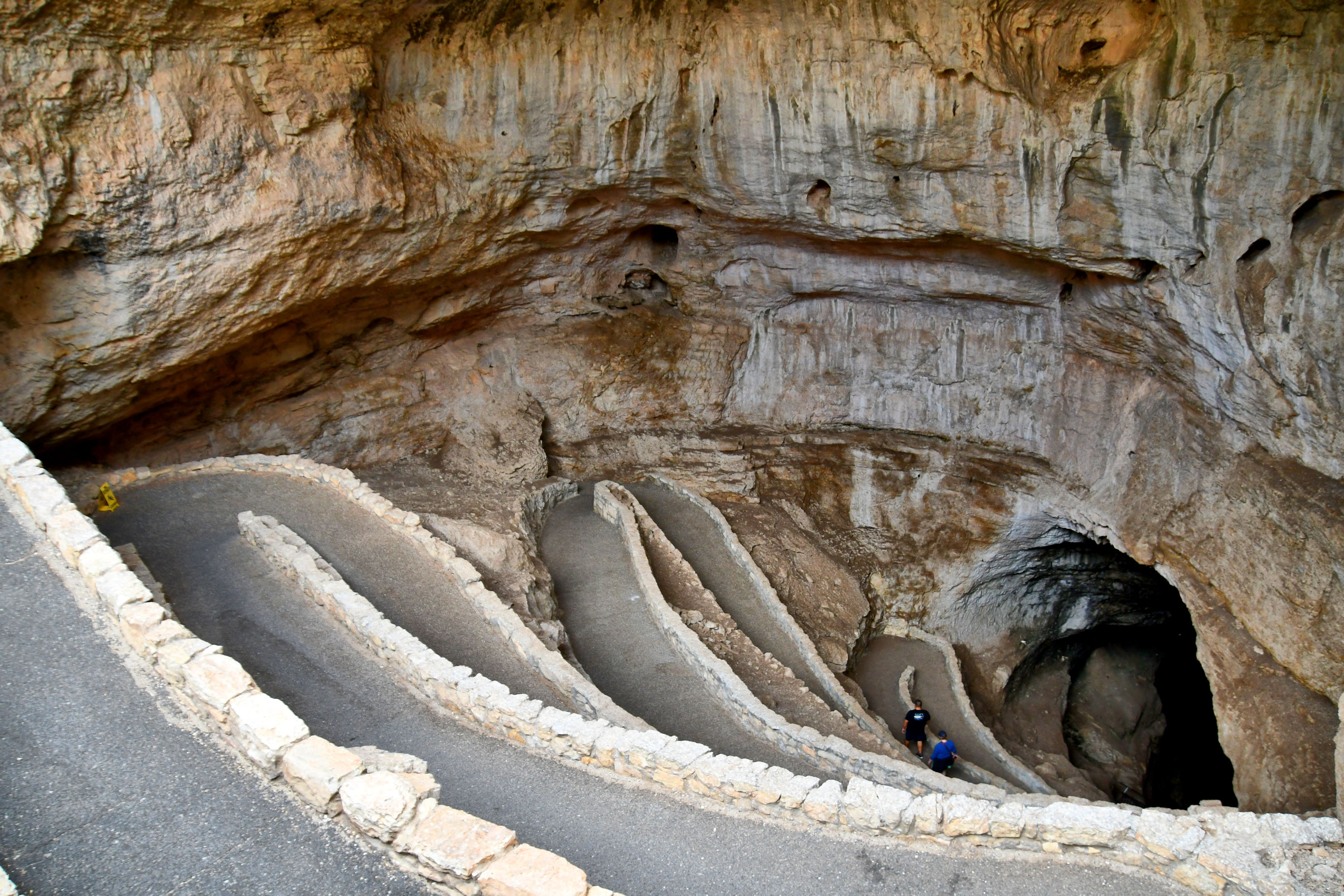
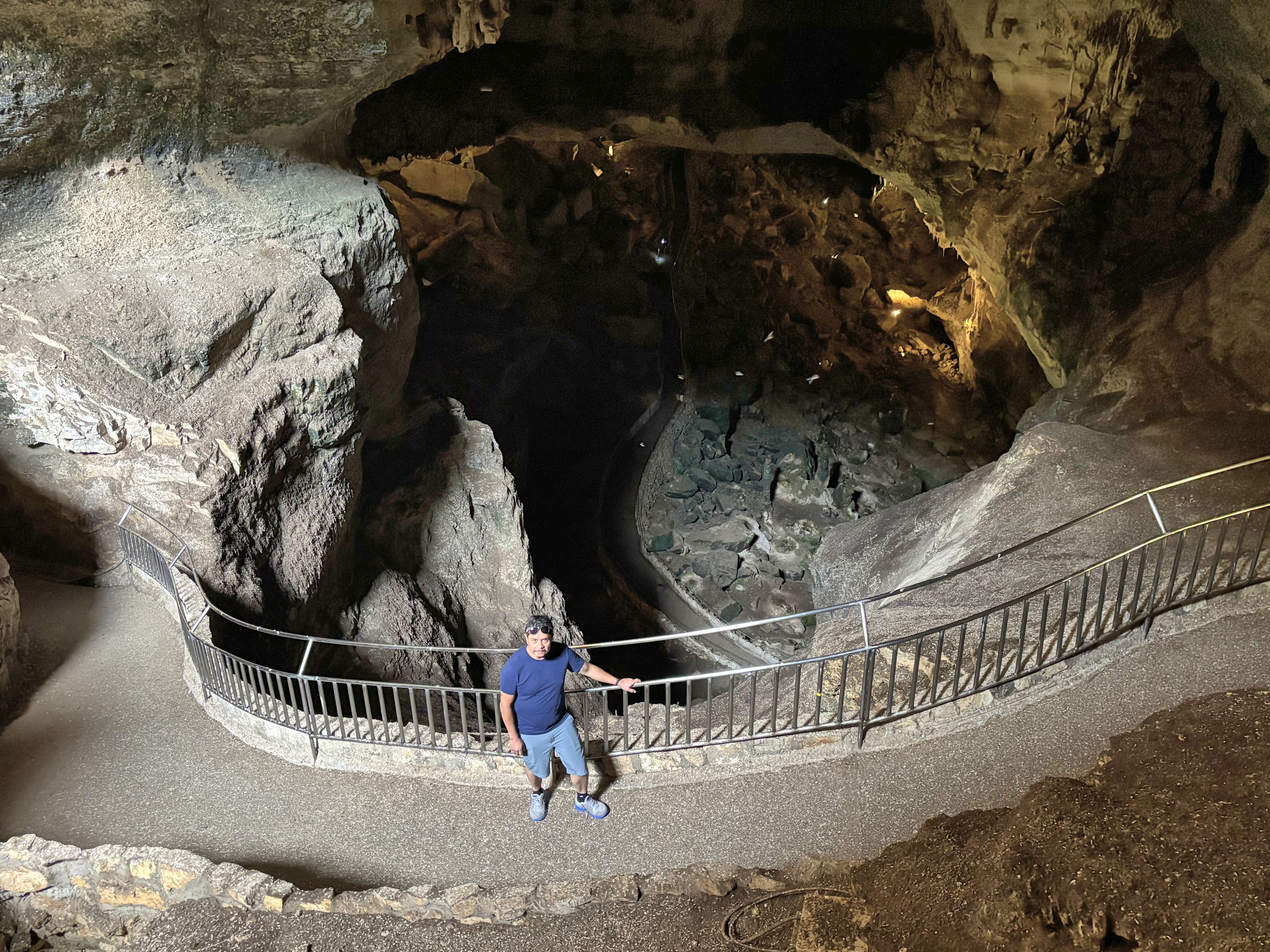
The Cave Swallows aren’t here all the time, and apparently migrate through. They can be seen from February to late October nesting just inside the entrance to Carlsbad Cavern. The swallows are captivating due to their chattering, swooping, and diving into and around the mouth of the cave.
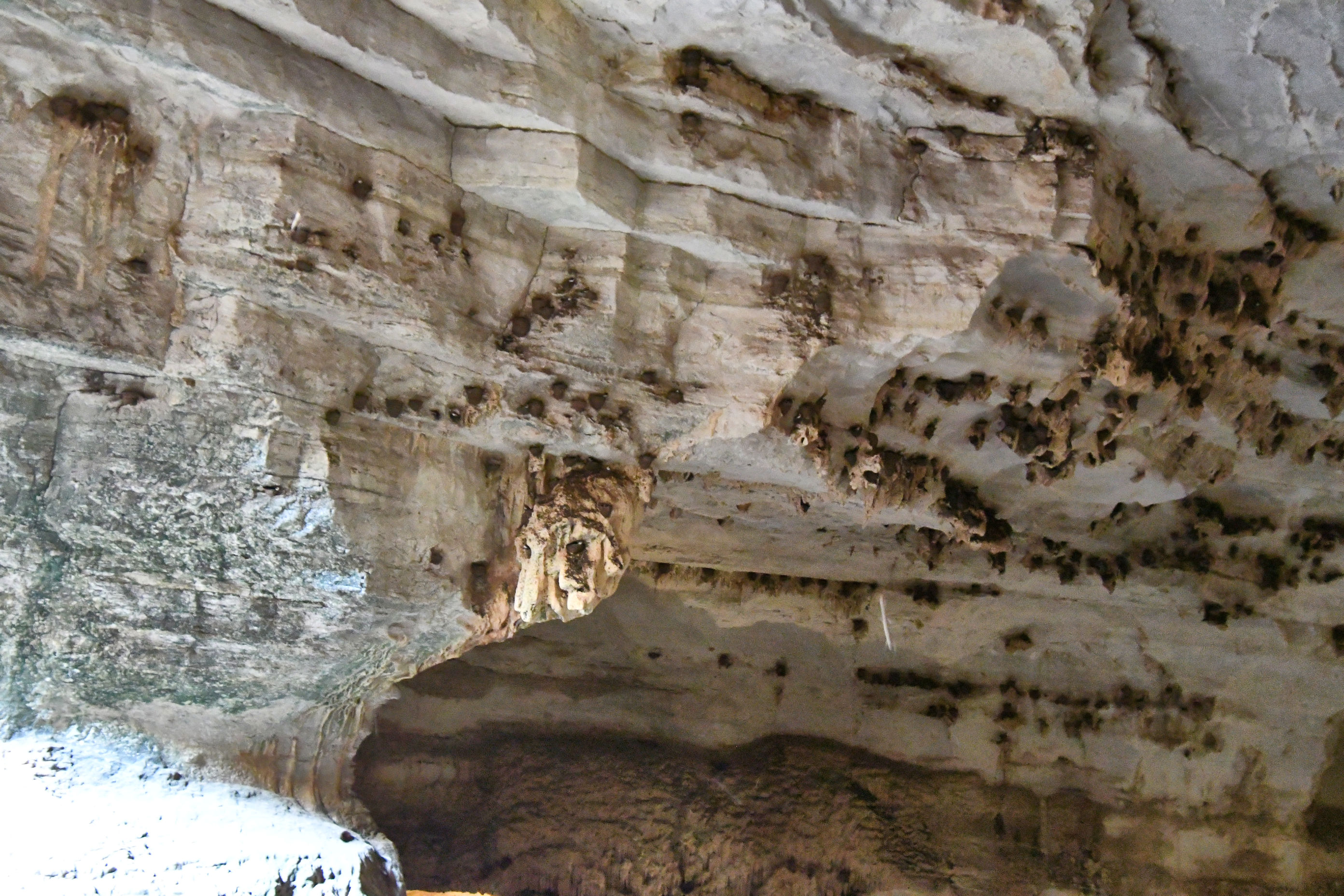
Above, you see the switchbacks that drop into the entrance of Carlsbad Caverns (and Pedro’s hand there for a second). The sign mounted at one of the switchbacks tells visitors about the Cave Swallows.
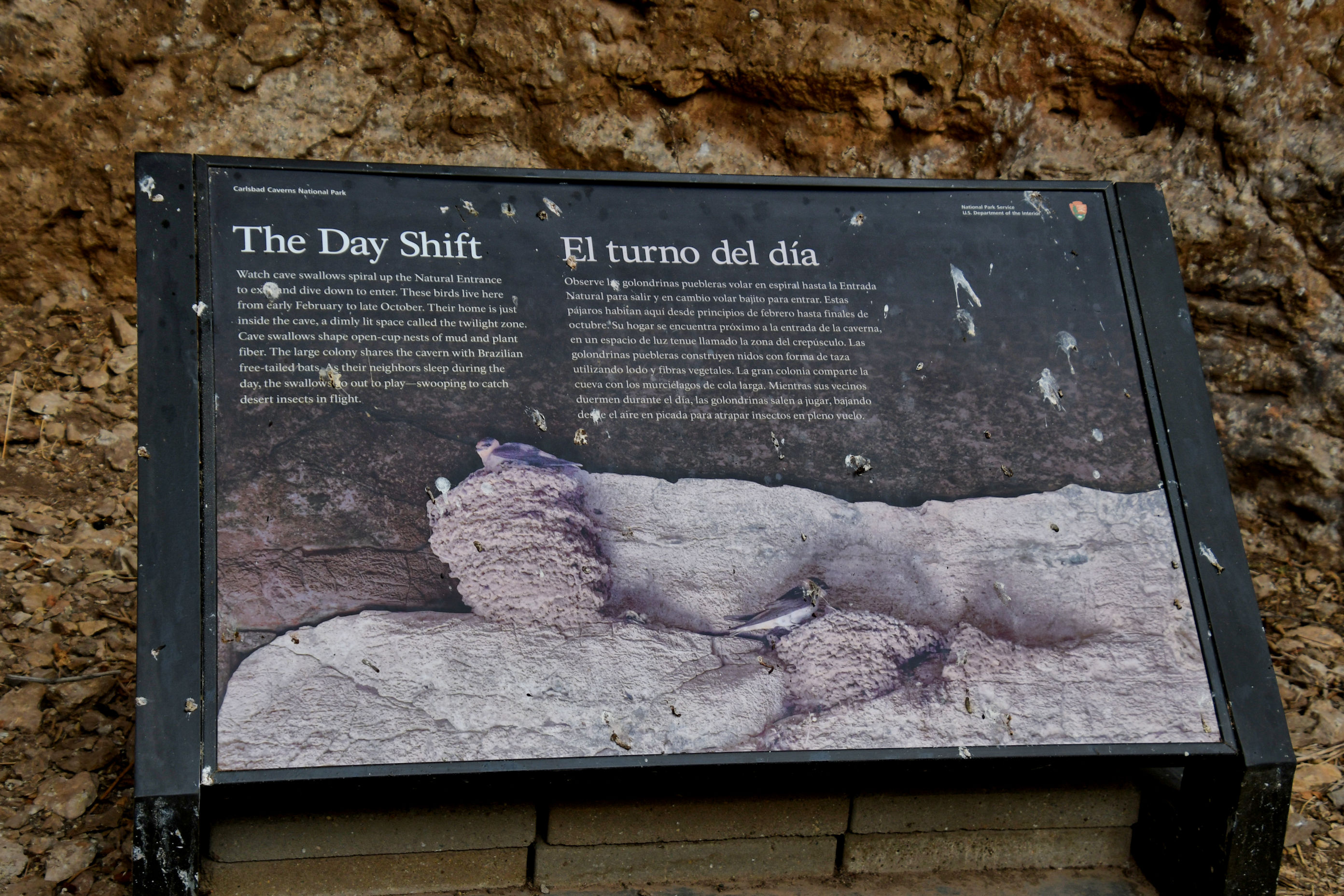
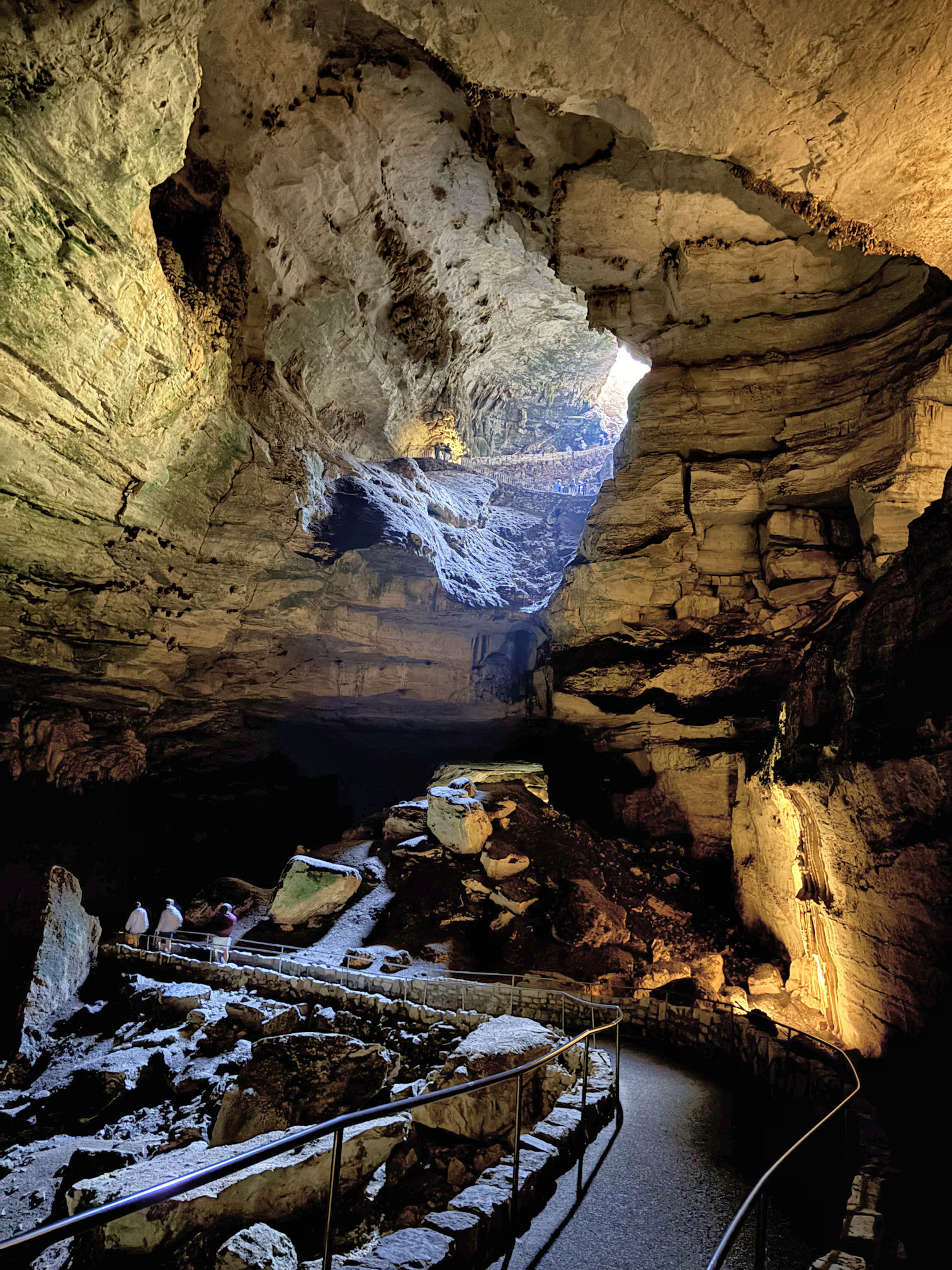
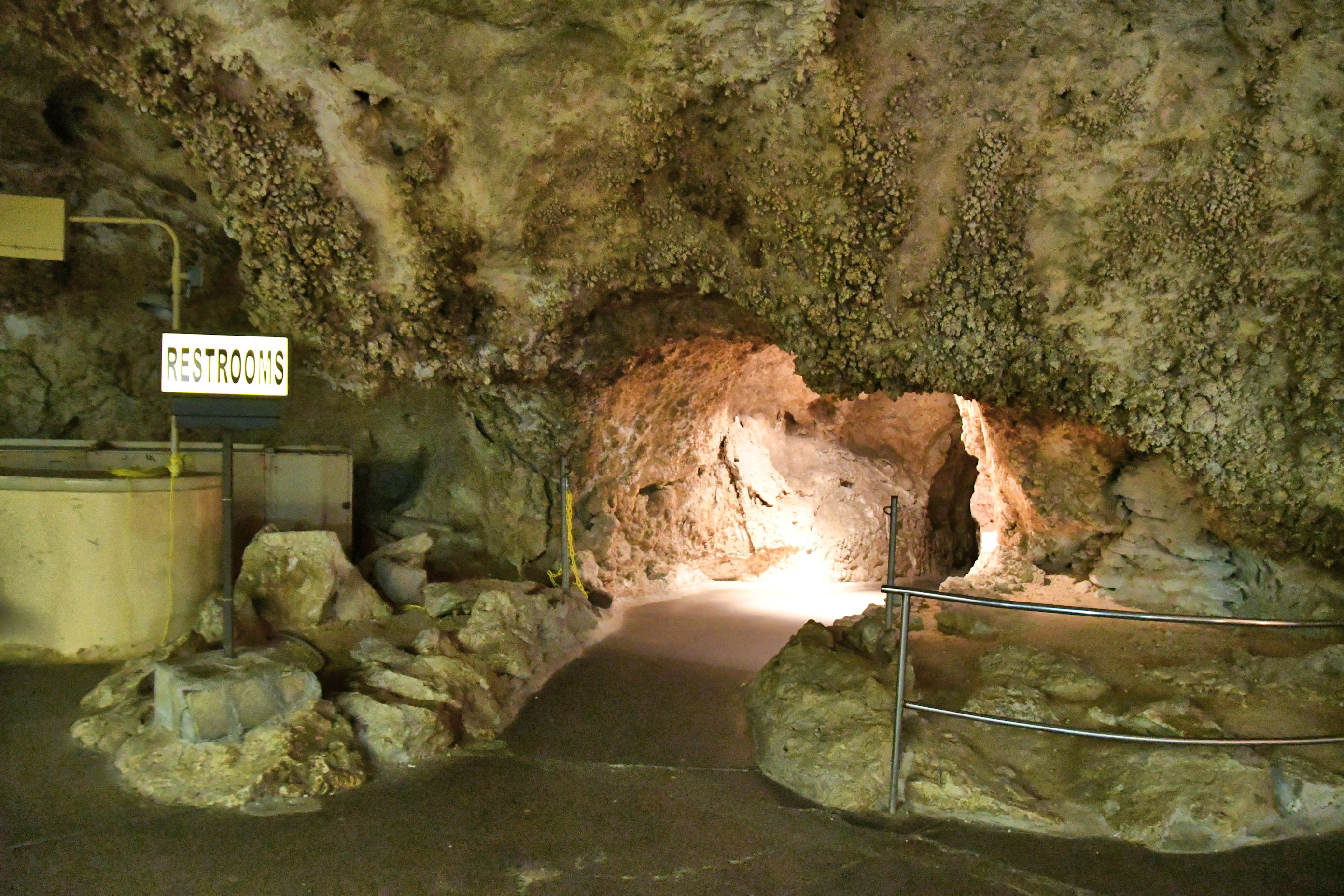
Soon enough, we were inside the cave. The path is smoothly paved all the way through, and even allows access for people using wheelchairs! There are lights all through: allowing you to see the path, highlighting particularly good cave structures, but not too much light. It stays dark throughout and you never forget you are underground. People do not need to bring lights unless they are extremely uncomfortable with darkness.
There are information signs all the way through, lit up so that they can always be read.
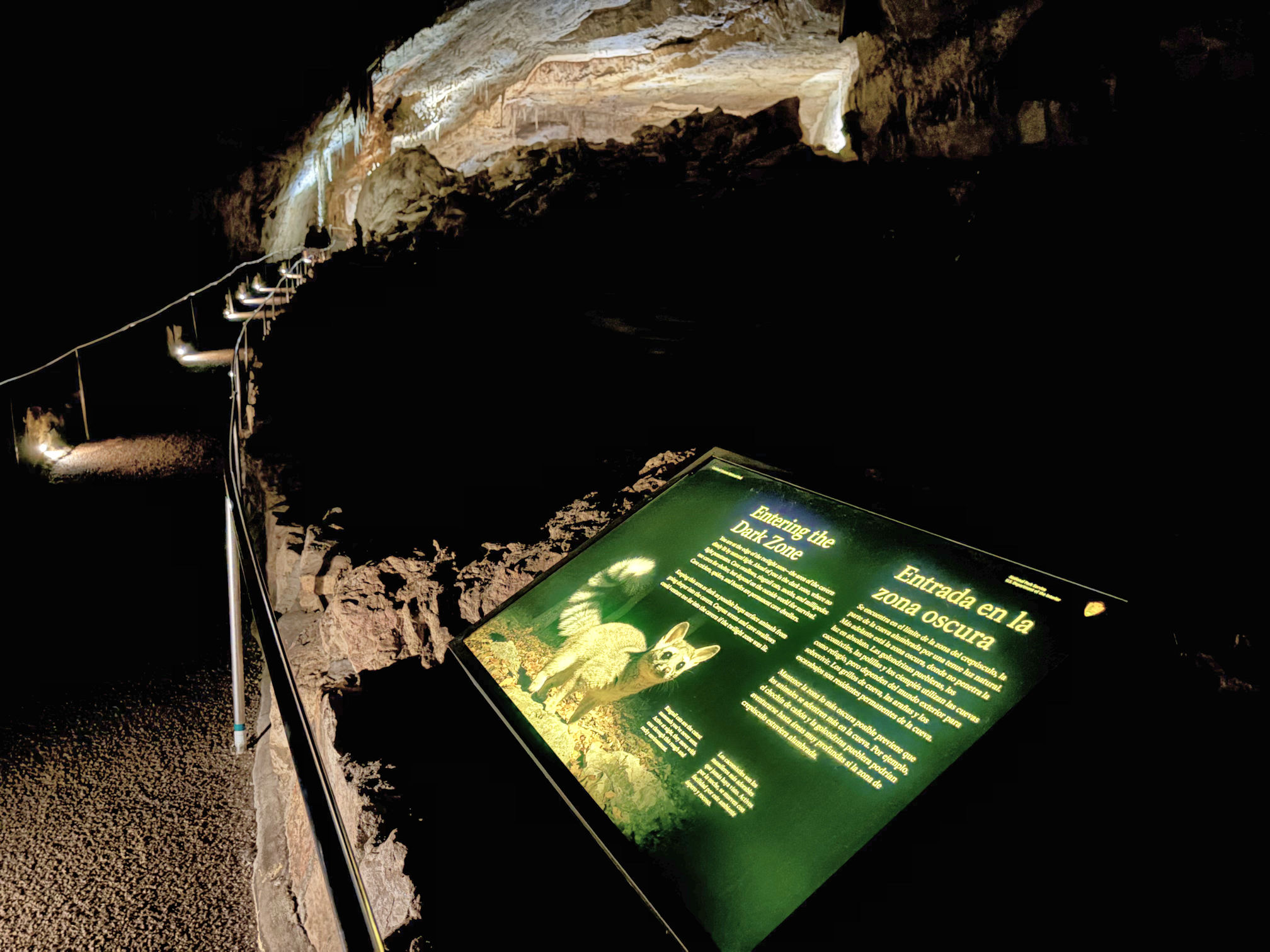
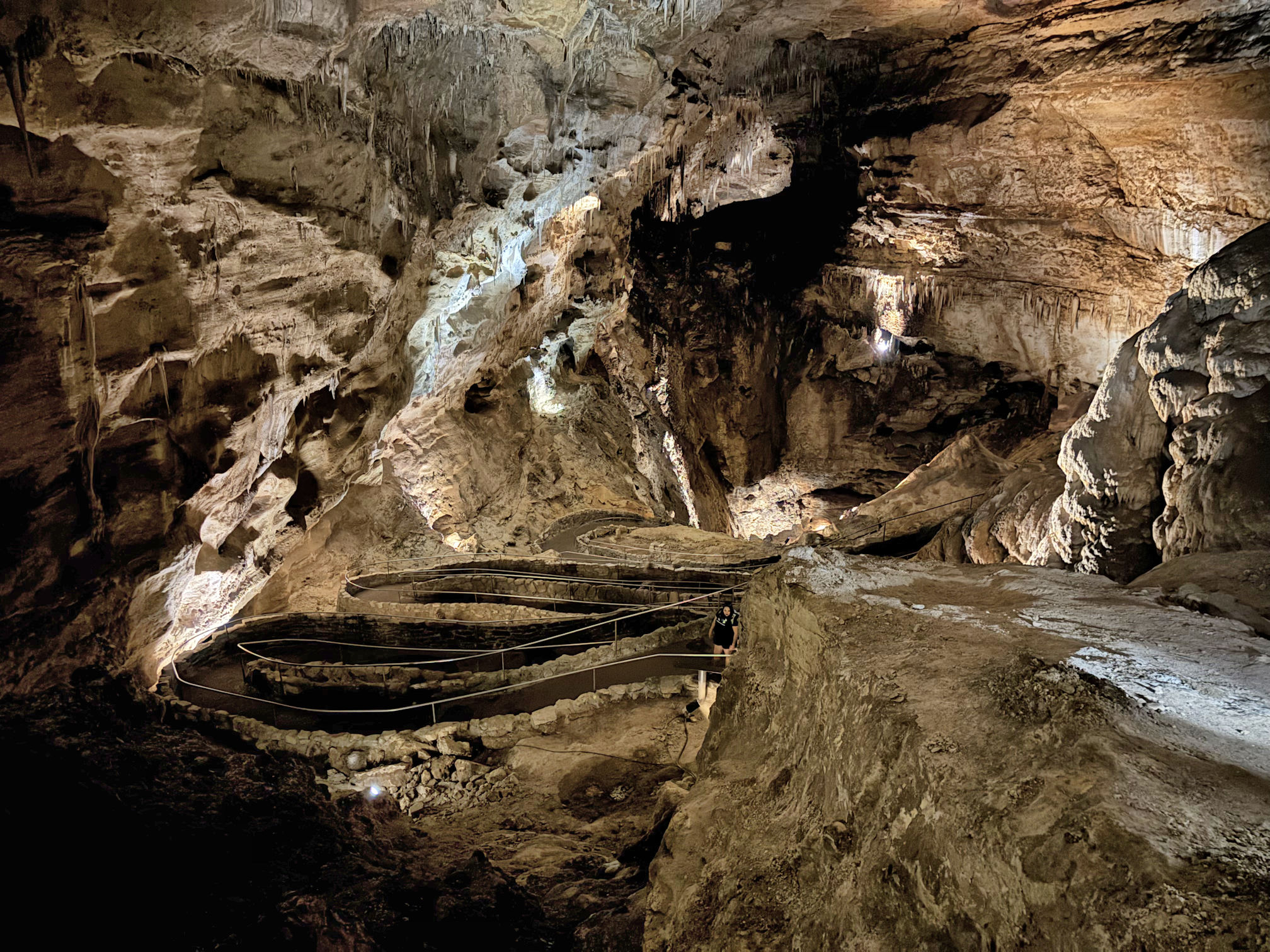
We hiked deep into the earth: the same height as the Empire State Building, only down inside the planet. That is just astounding to imagine.
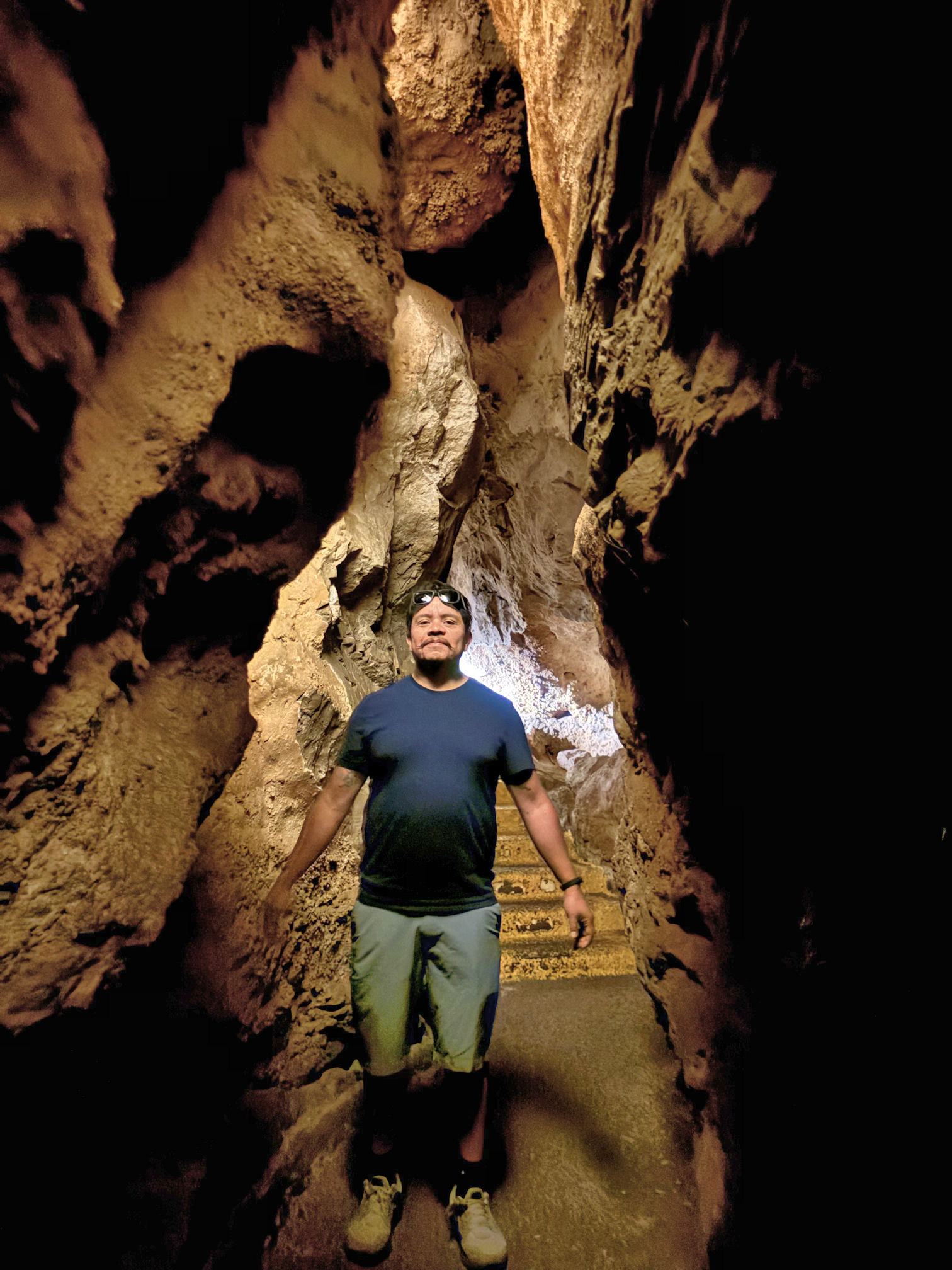
The ranger at the Visitors Center told us that it is an hour hike to get to the bottom, 2 hours to walk the paths inside. It did take us an hour to get down, but that was because we stopped every 2 minutes to “ooh” and “ahhh” at the structures inside the cave.
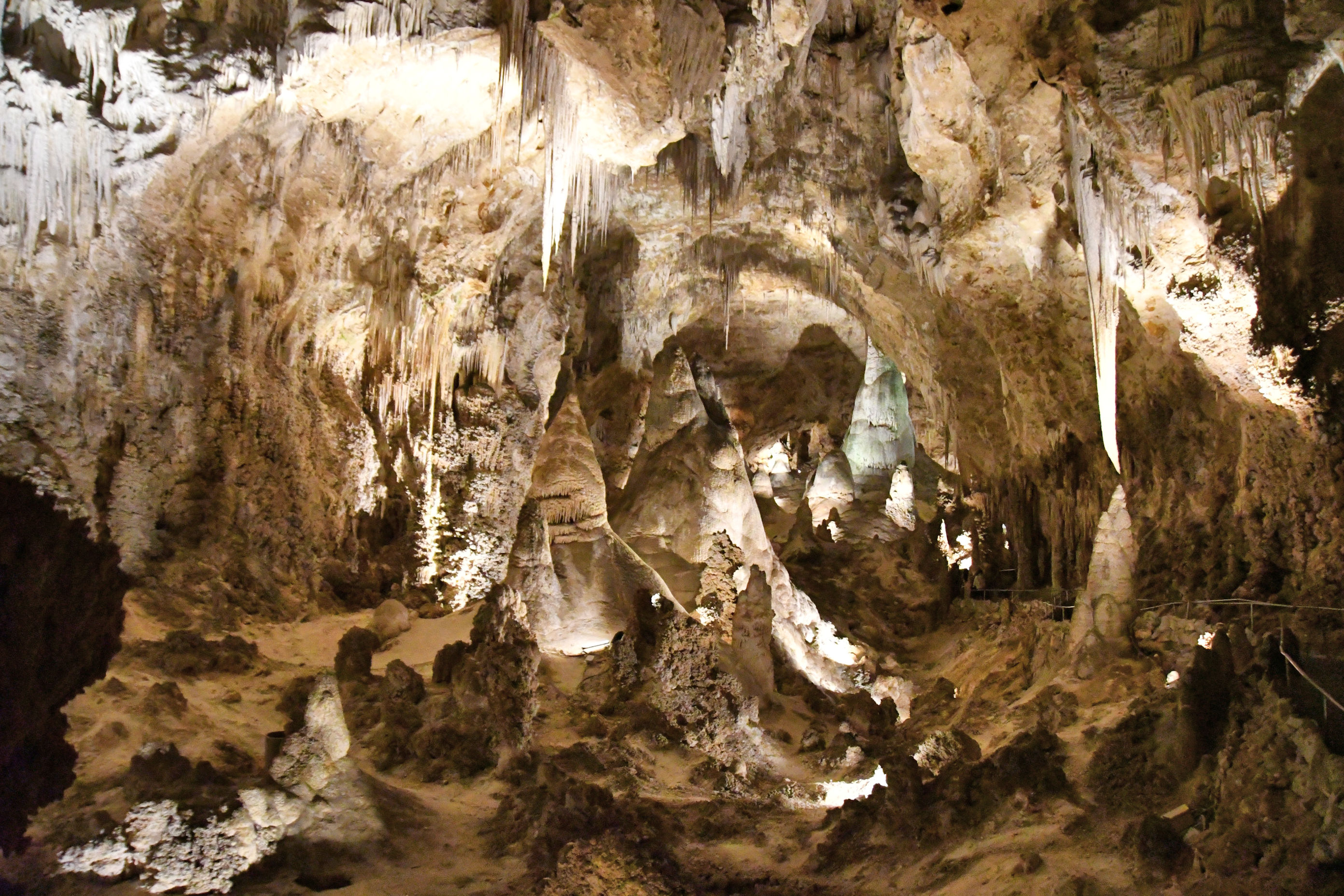
Here’s how I remember the difference: Stalagmites are the ones growing up from the ground. The word contains a smaller word: mites. Mites are little crawling insects, so I think of them on the ground. Stalactites are the other one: the ones dropping down from the ceiling. Some people say they cling “tight” to the ceiling…but that doesn’t help me because they could also be clinging tightly to the ground.
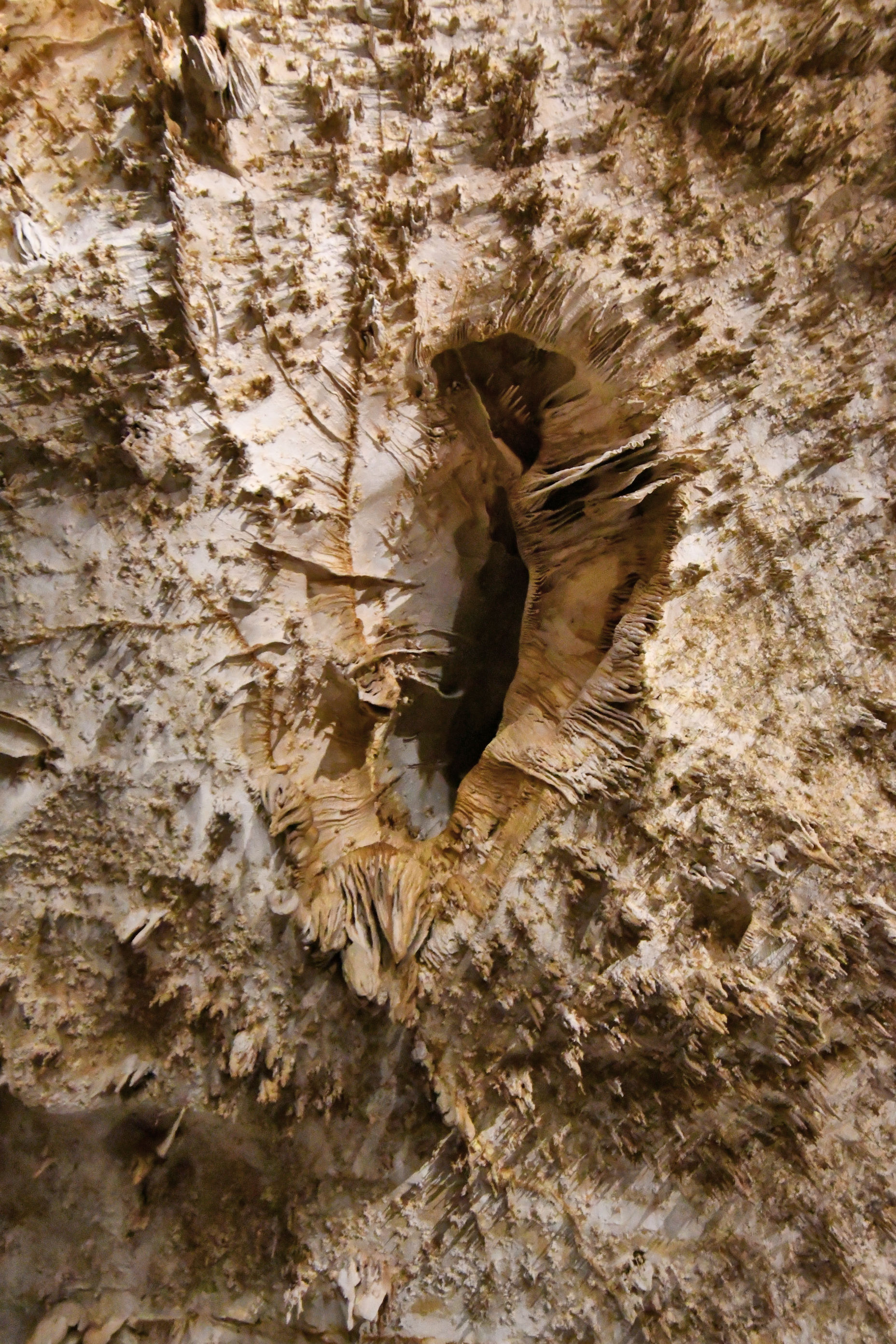
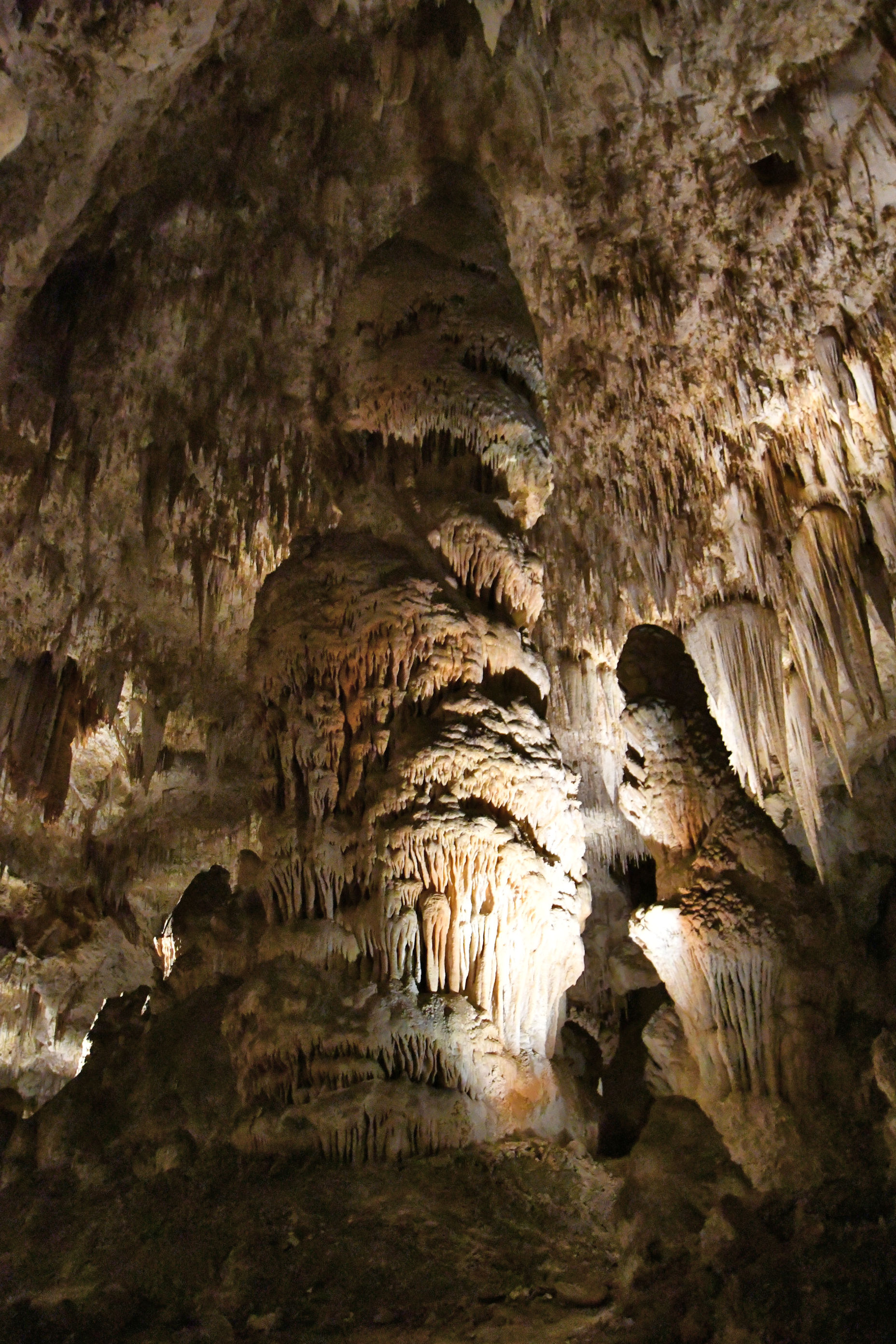
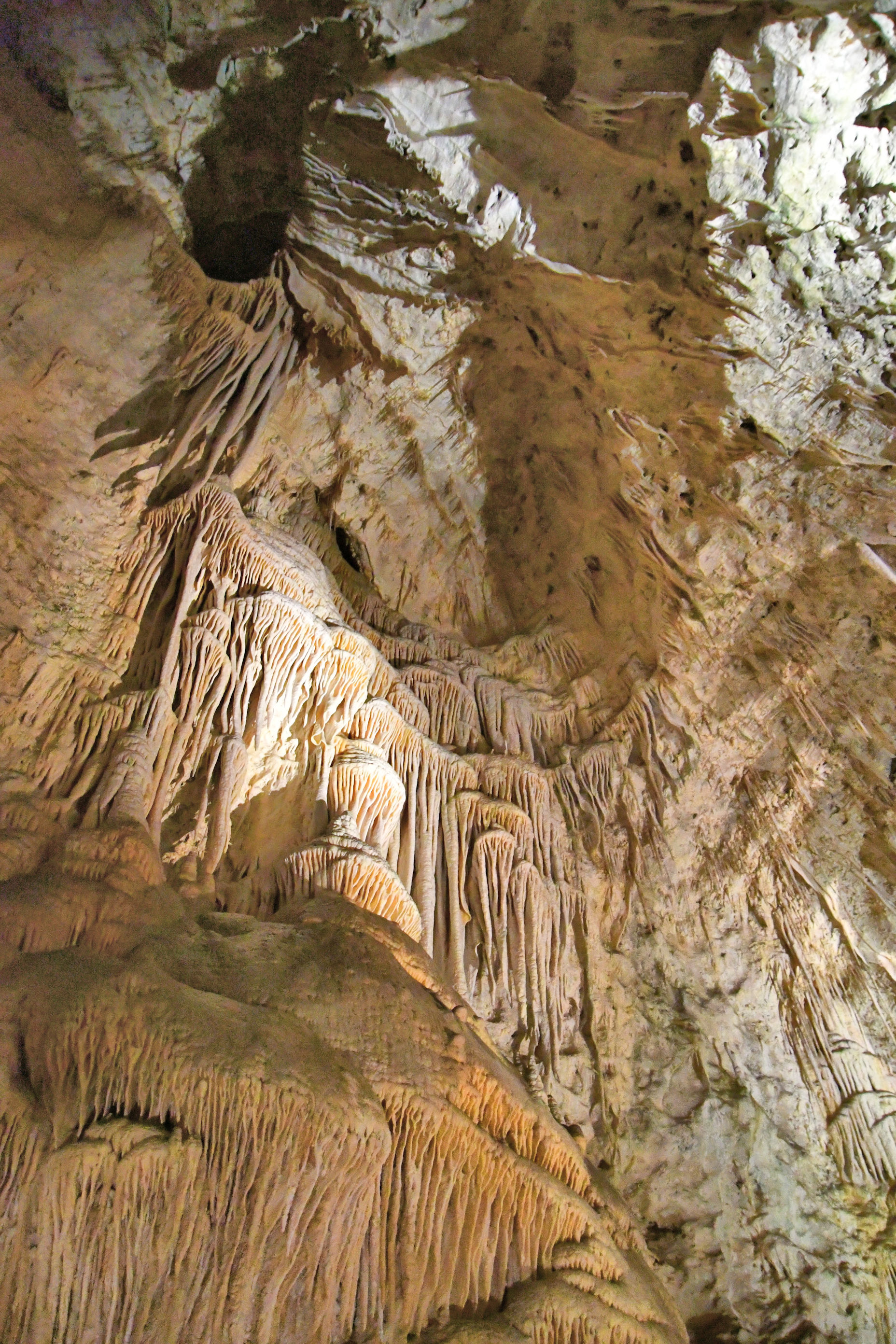
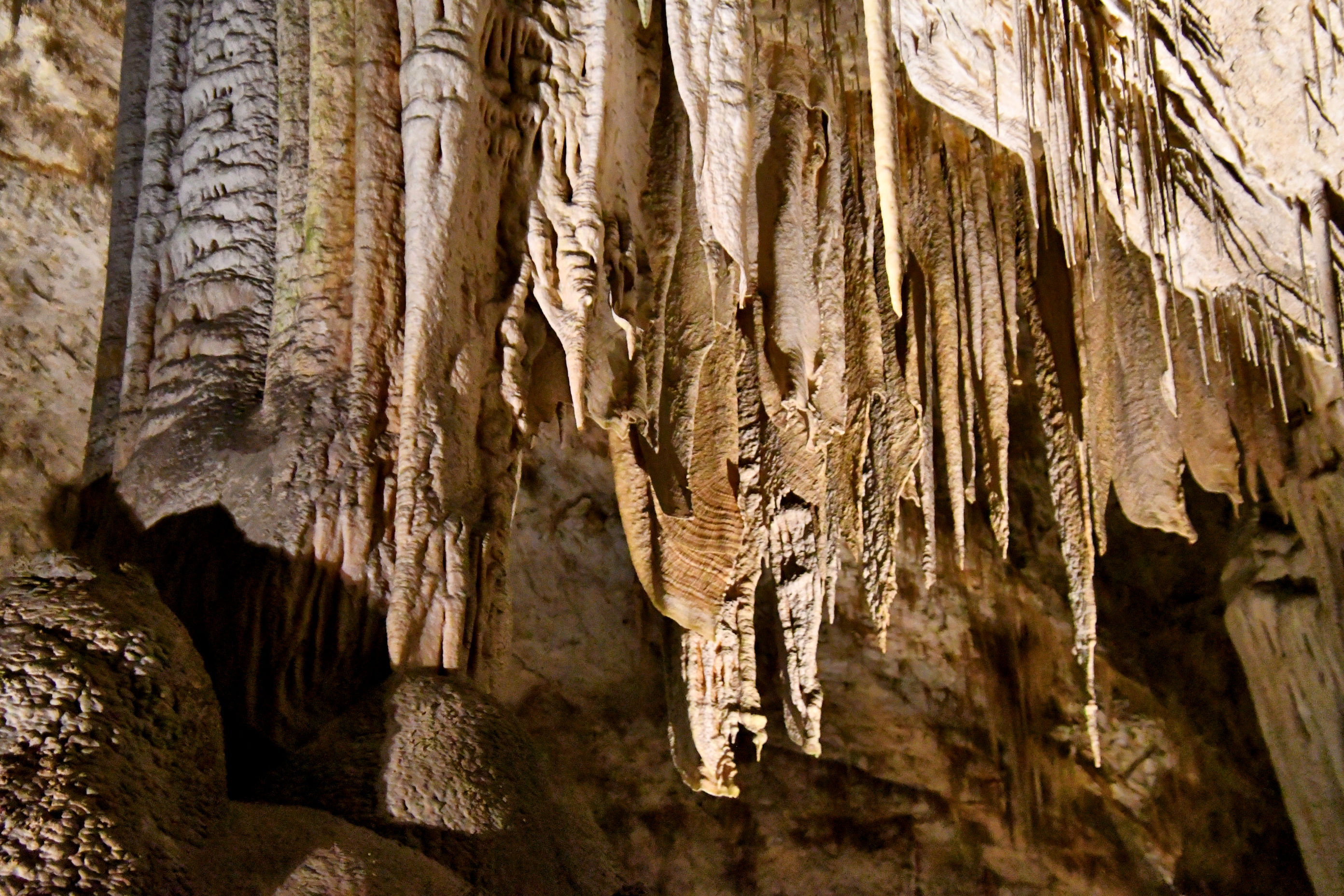
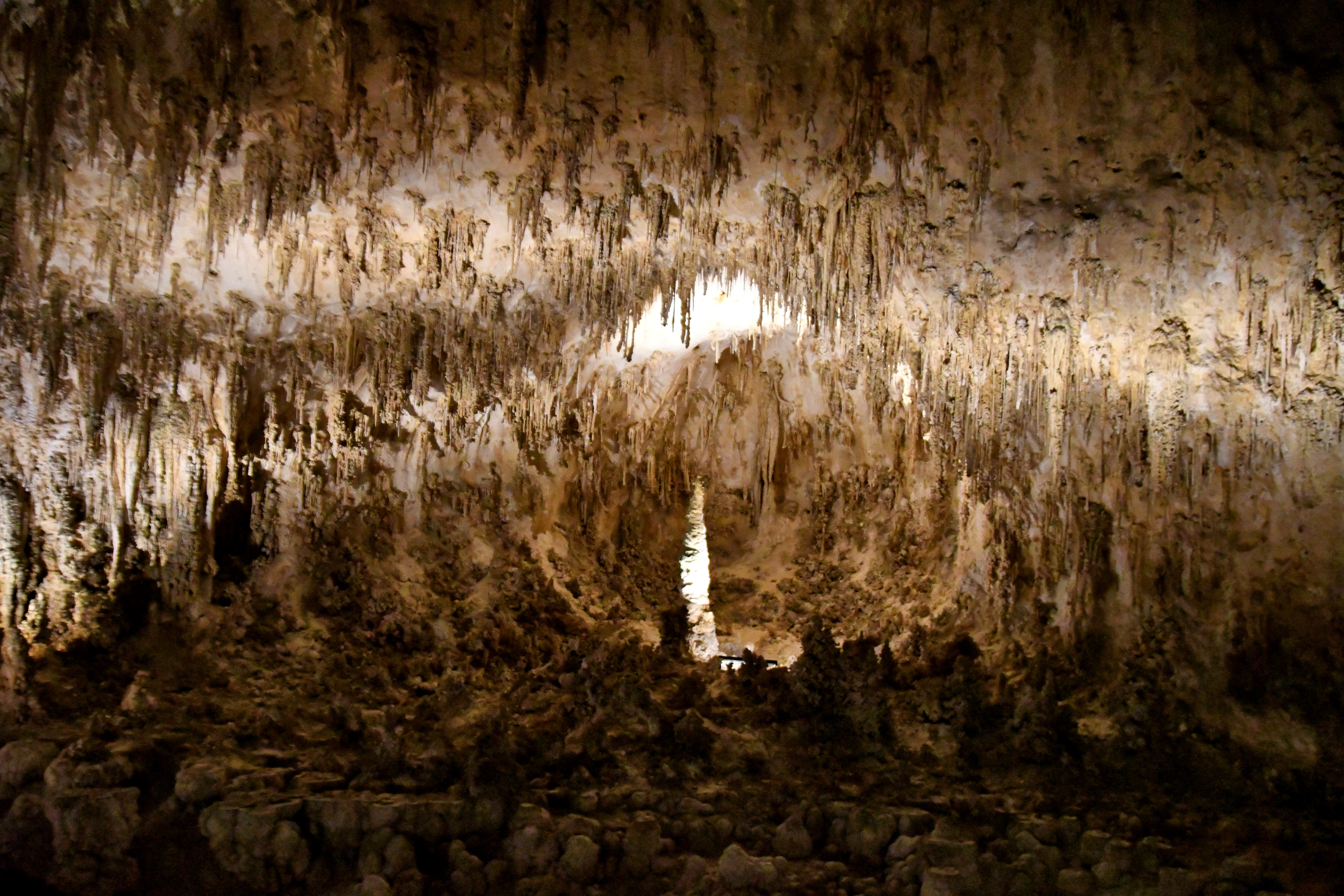
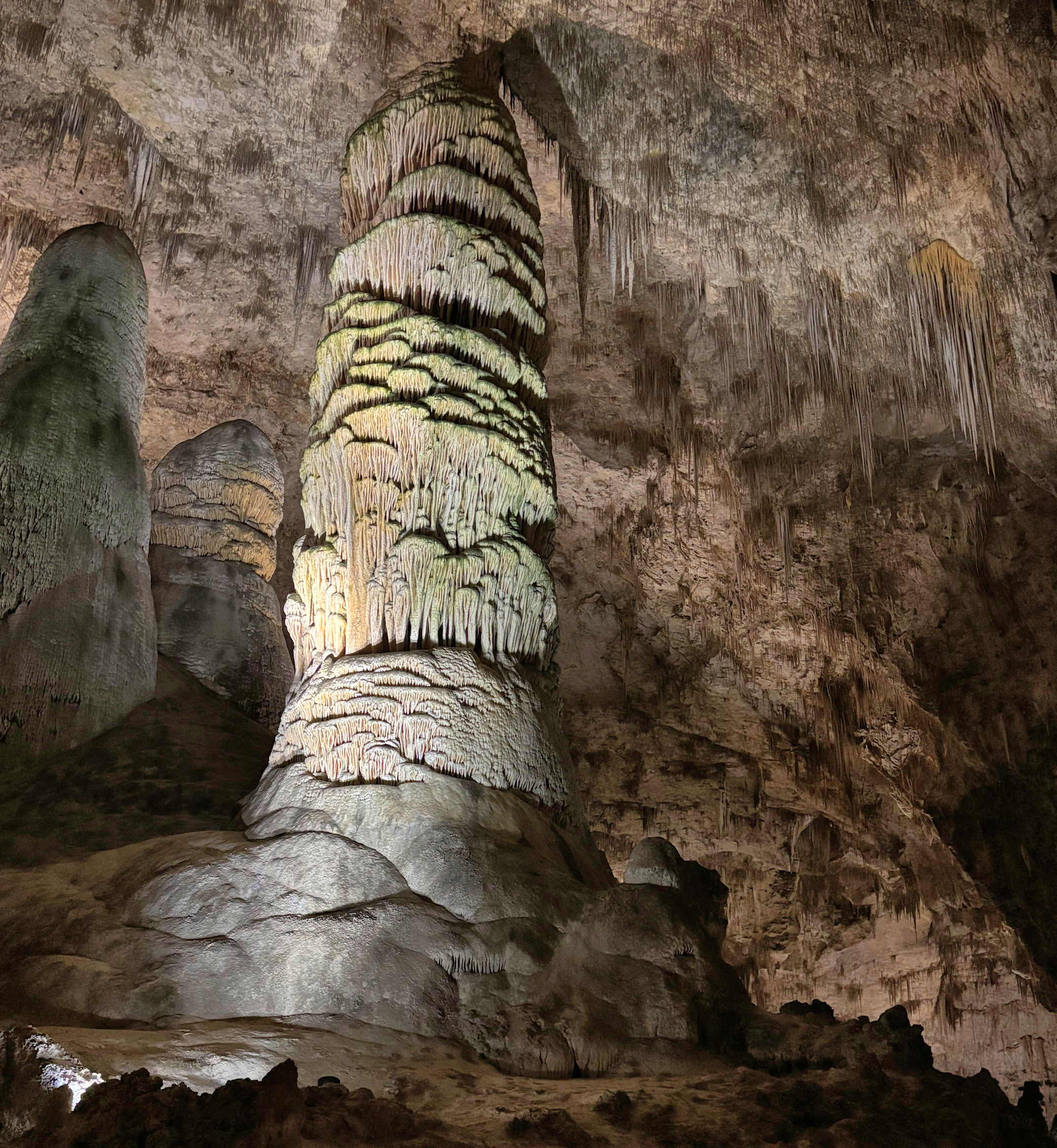
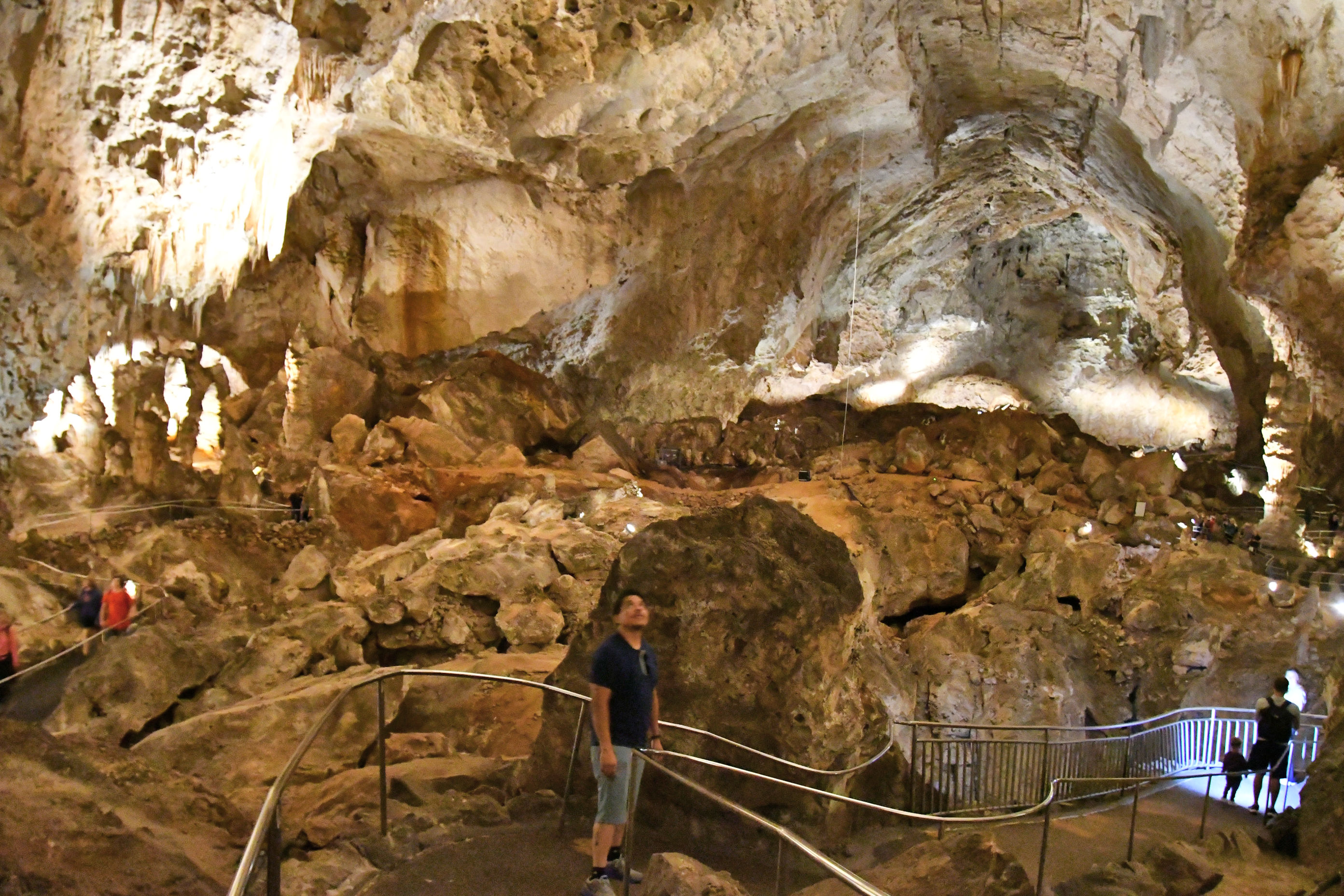
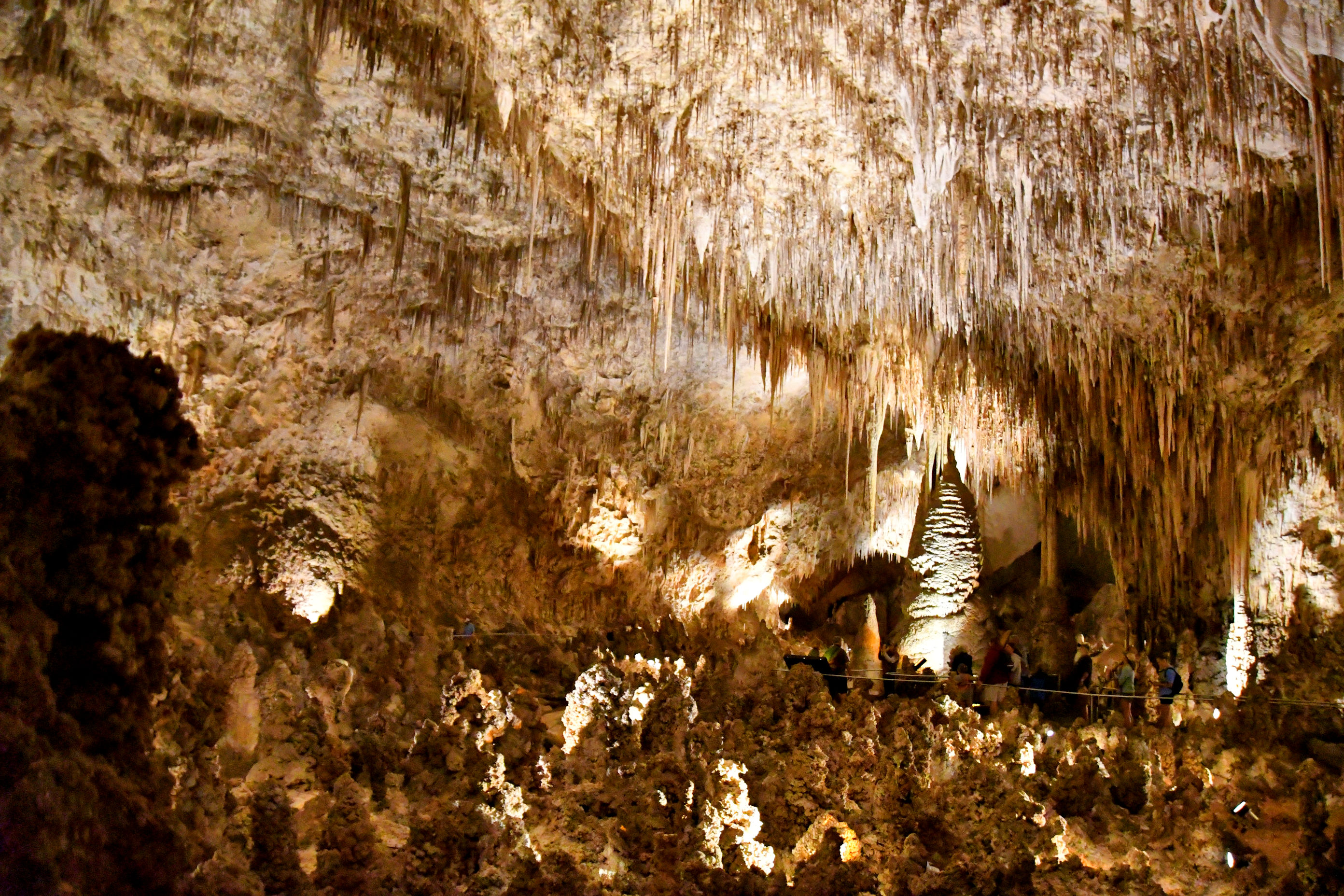
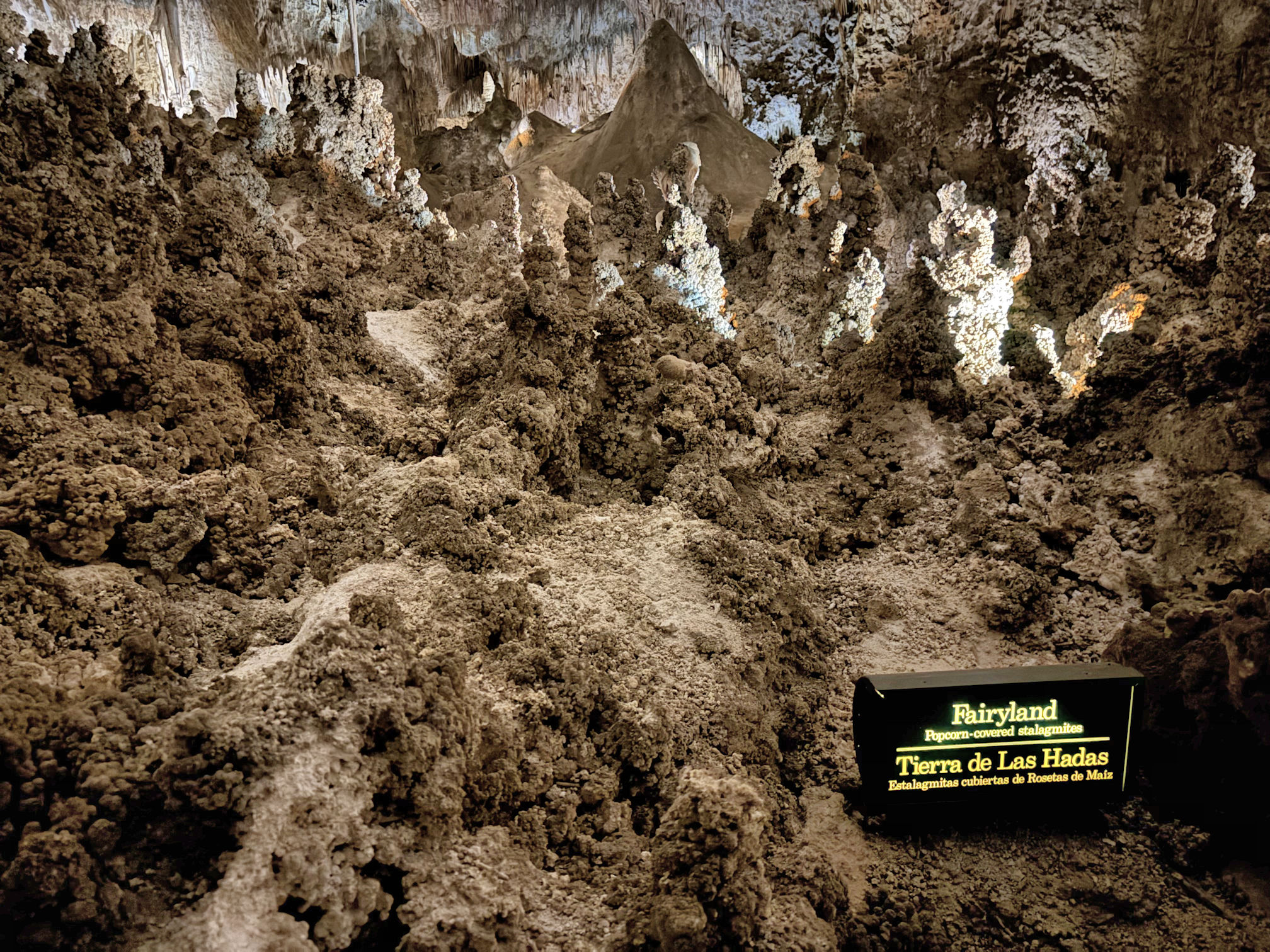
In the video above, if you are able to play it, you can hear the echoey sounds of other visitors inside the cave. I am wearing a summer dress, which is slightly too cool inside the cave. Many visitors brought jackets. But soon enough, I would be outside in the blazing sun once more, so I didn’t bother with a jacket.
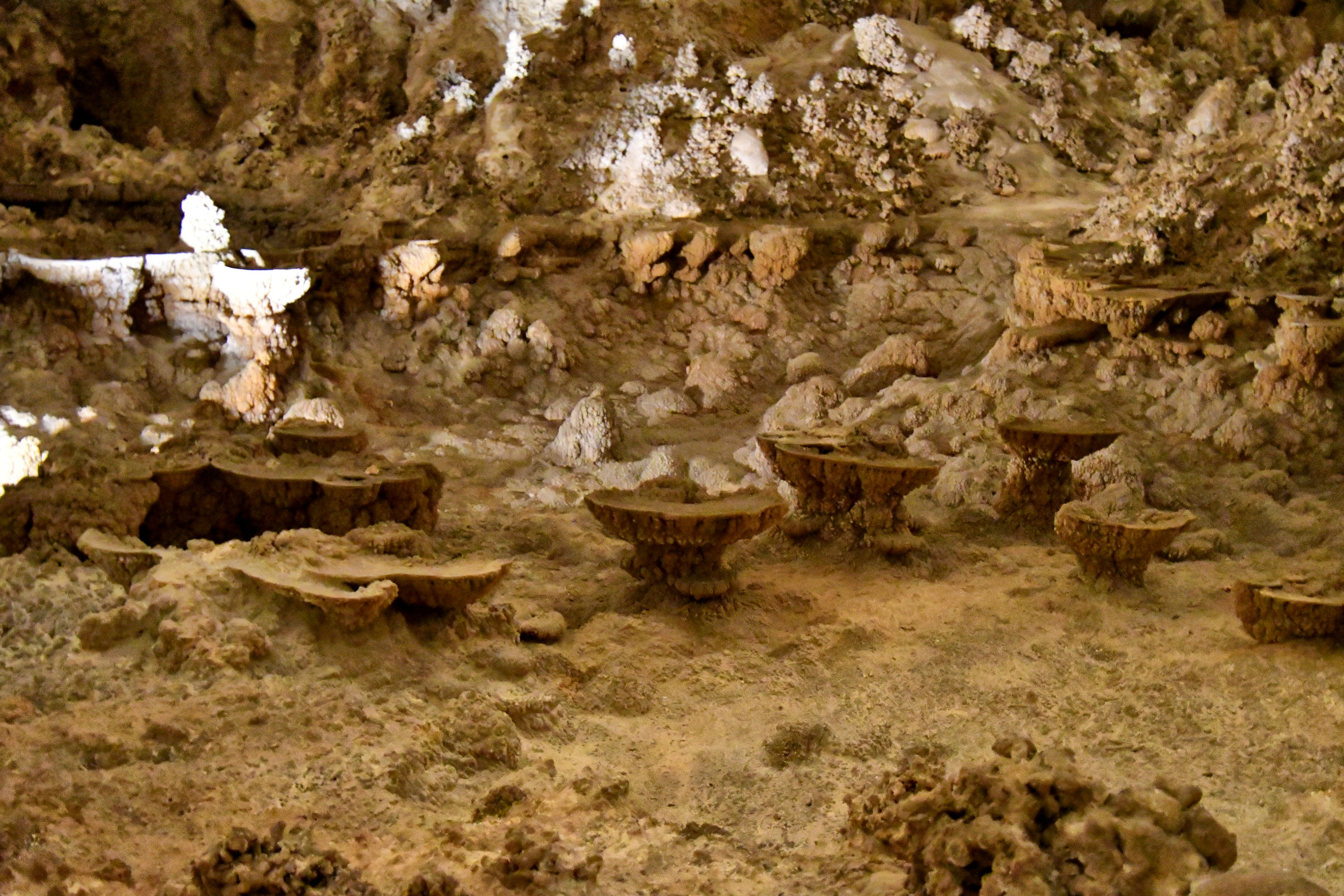
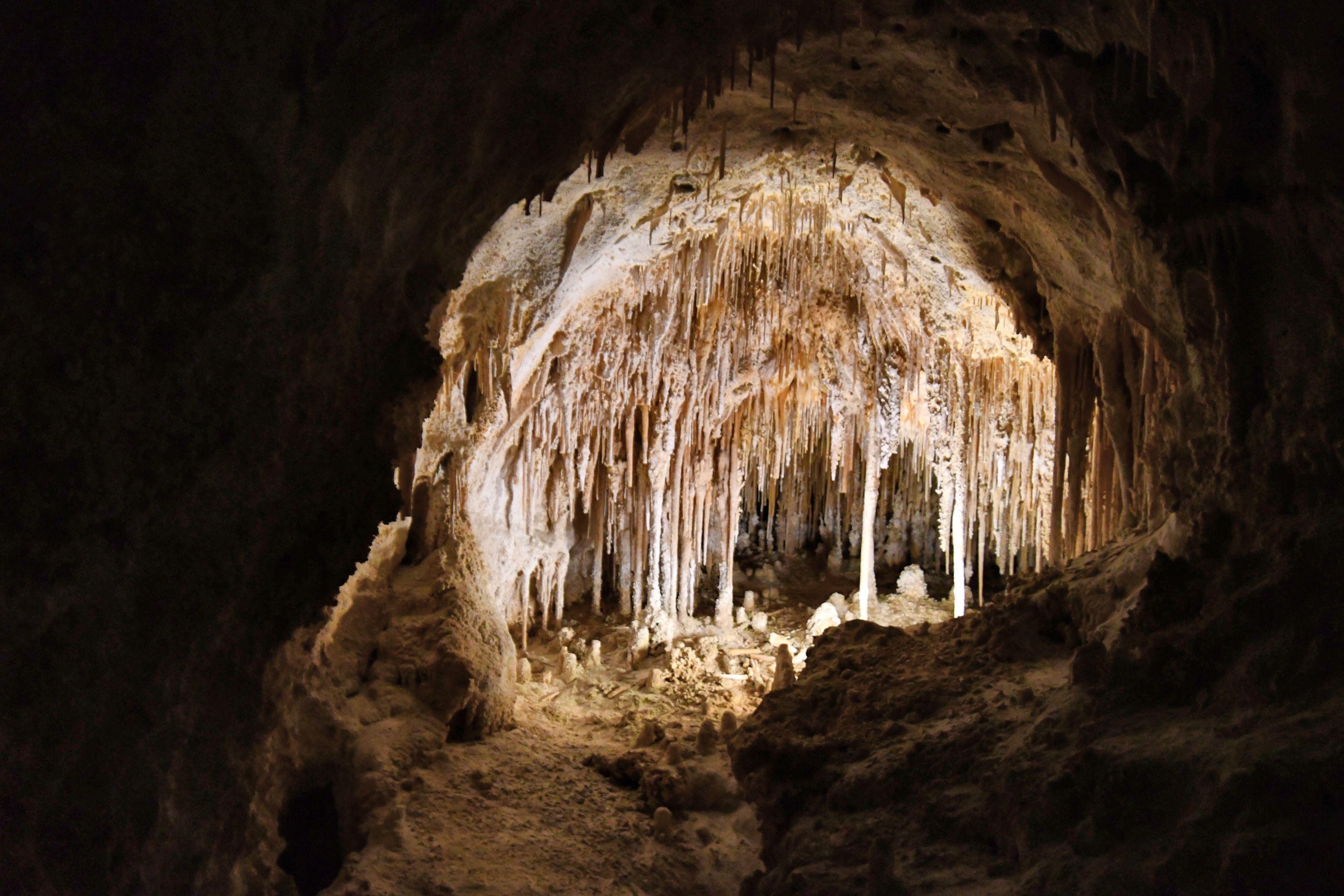
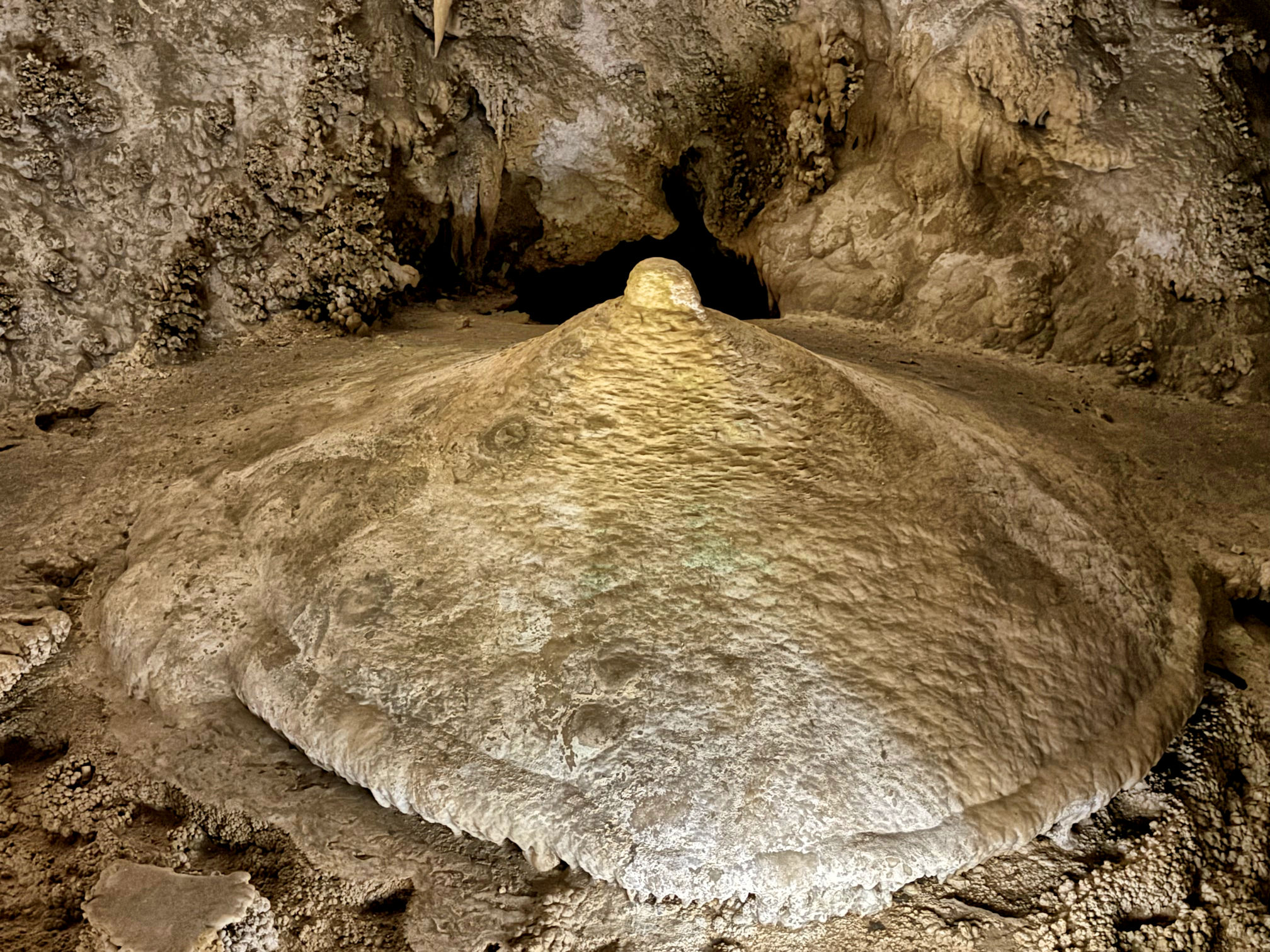
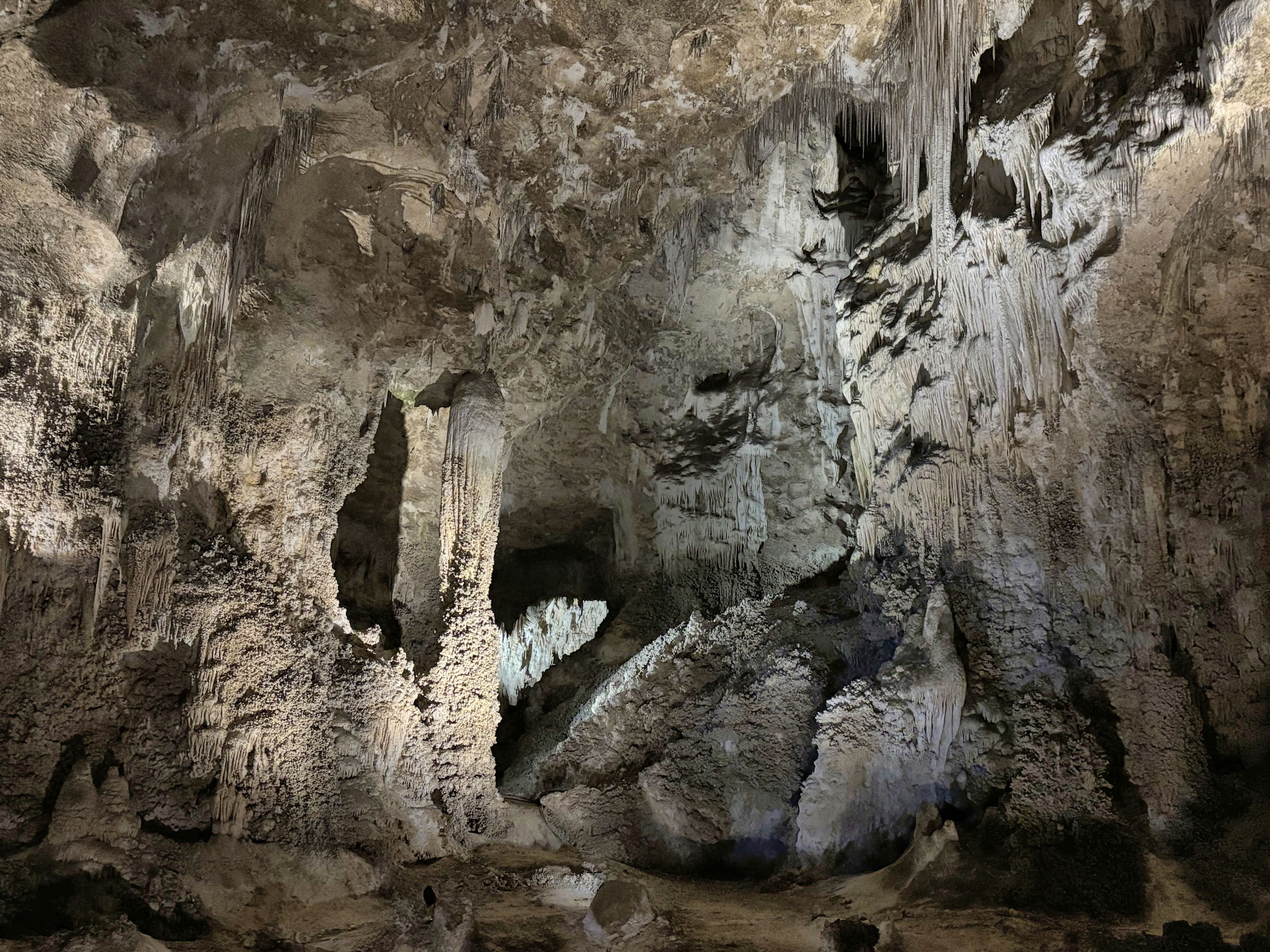
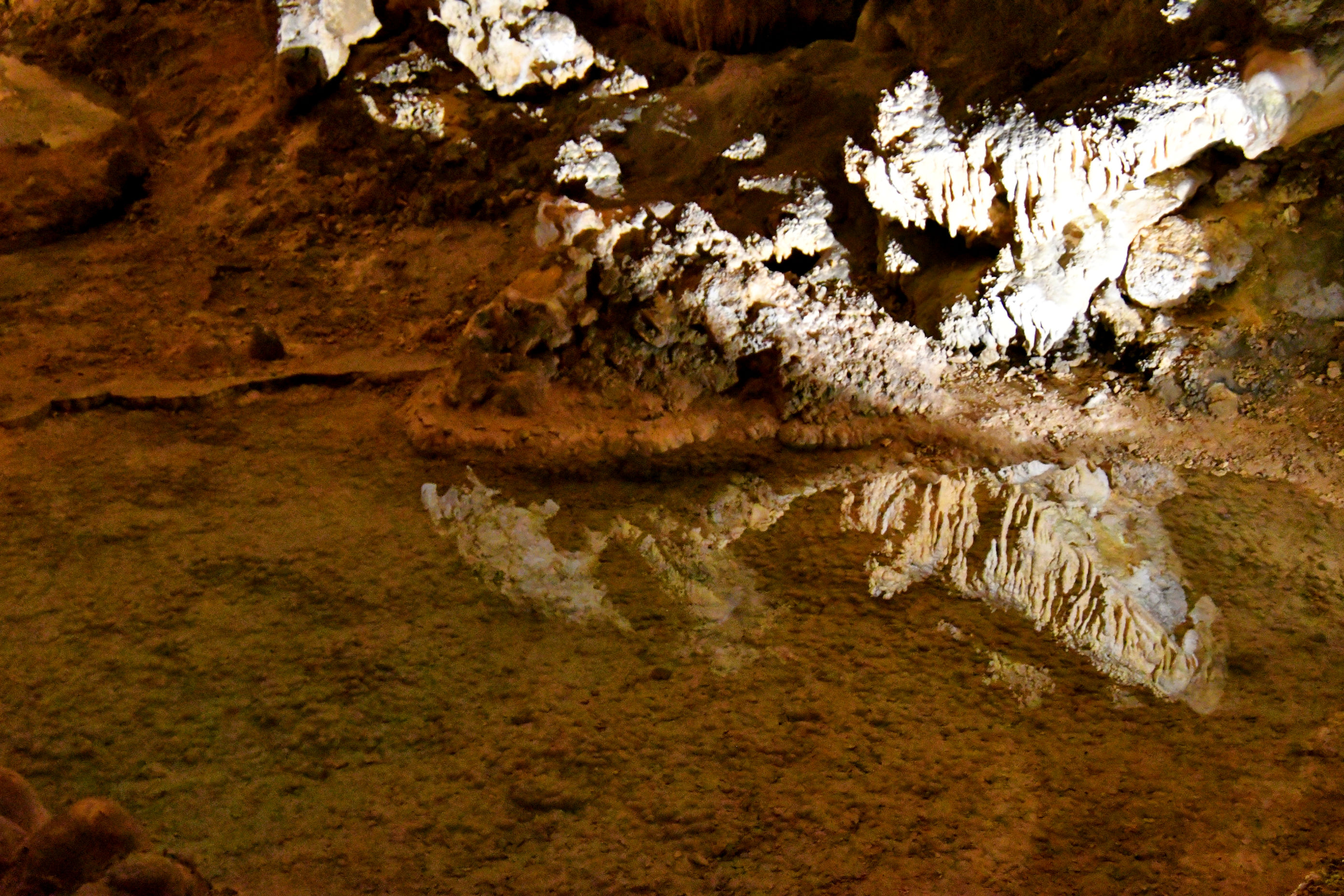
We were delighted about the whole thing, and spent a full two hours inside the main large cave, just like they said we would. The ranger had encouraged us to take the elevator out, rather than endure the long trek back up. But….Pedro and I looked at each other and declared “We can do it in less than an hour!” And off we went, trying very hard not to stop for photos. We were back at the surface in twenty minutes.
Back into the heat of the day, we made the thirty minute drive back to our AirBnb, then walked over to the amazing food cart called El Nopal, and bought even more food this time, and carried it back to our incredibly awesome rented room that I talked about in my last post. In the evening, we drove back to the park.
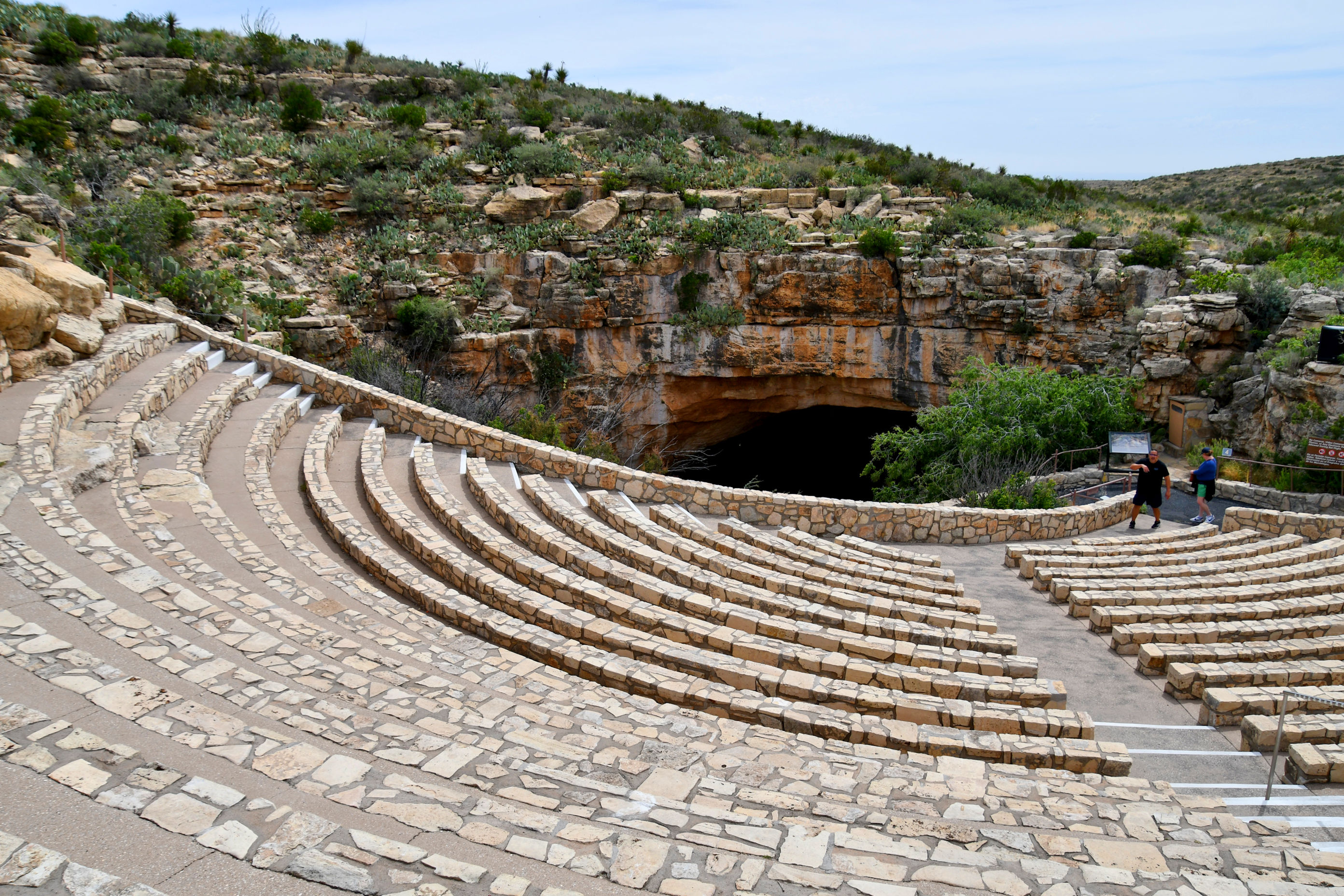
At the top of this post, I said this place was on my bucket list for 40 years, maybe more. Somewhere, somehow, I had heard about the exodus of bats from the mouth of the cave. I heard that it is an event that people gather to see, every single day. I have loved bats as long as I can remember (as long as they are not in my house!), and it seemed to me one of the great events of nature that humans could experience. Finally, finally, thanks to Alexandra’s wedding, I would have an excuse to go all the way out here in the middle of nowhere to see the bats leave the cave.
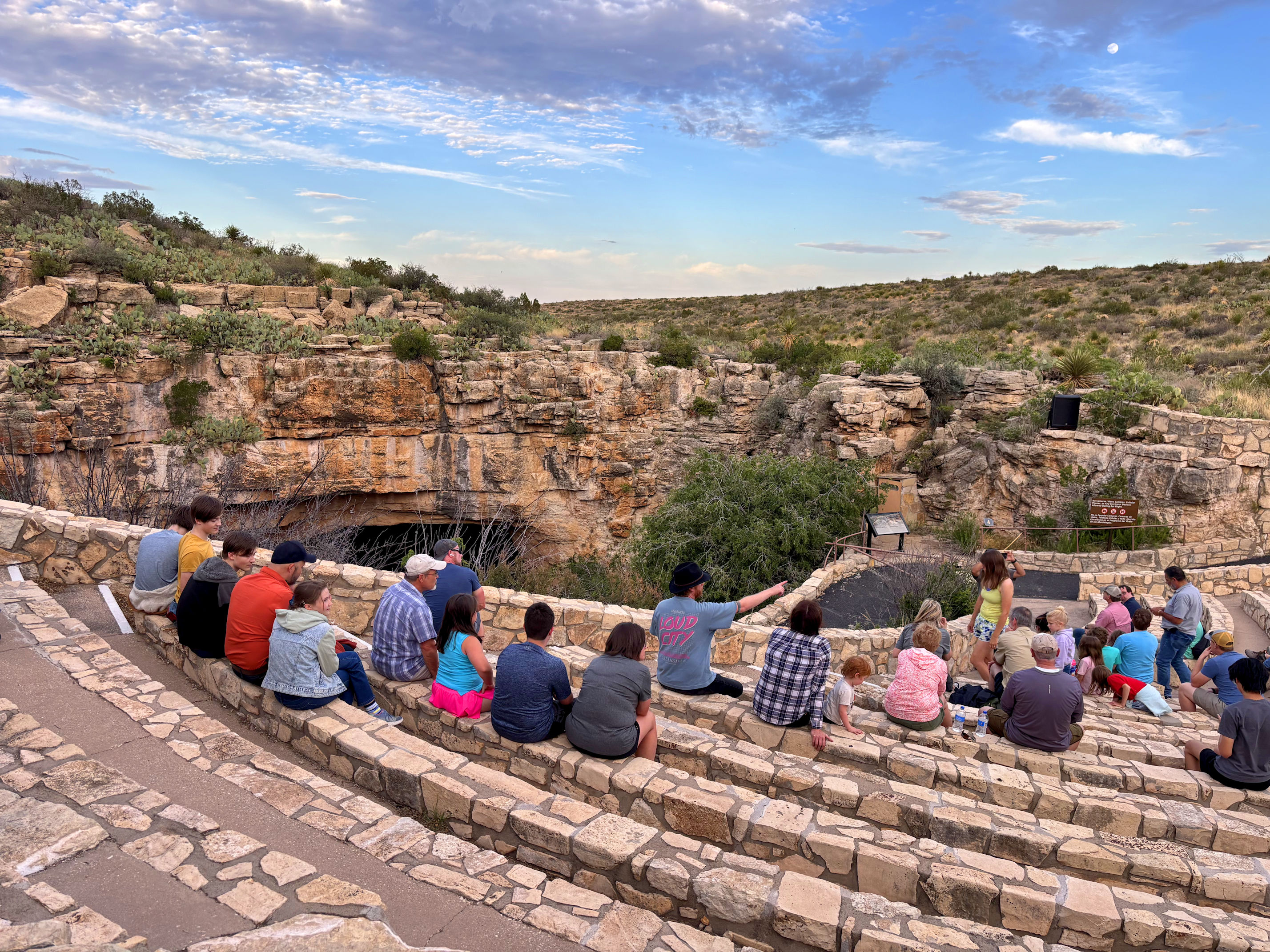
A ranger began speaking as the dusk increased. She explained that once the bats are spotted, we are not allowed to talk, or use our phones or watches or ipads. She called on us all to check our neighbors and ensure our devices were turned completely off at the appointed time. Then, she happily answered questions from audience members to fill the time until a bat was spotted.
One of the most amazing facts I remember is that bat moms have their babies in the cave. When the babies are old enough to live on their own, the moms migrate. All the young bats stay at the cave, getting bigger and stronger, learning to fly long distances. Then when they feel ready, they migrate too. Somehow they know where to go. Then, the following year, bats always return to the cave they were born in, just like salmon return to their stream. That is astonishing.
Thousands of bats sleep all day long inside the cave, and come out at dusk to feed on insects around a river nearby. They feed all night and return to the cave at dawn.
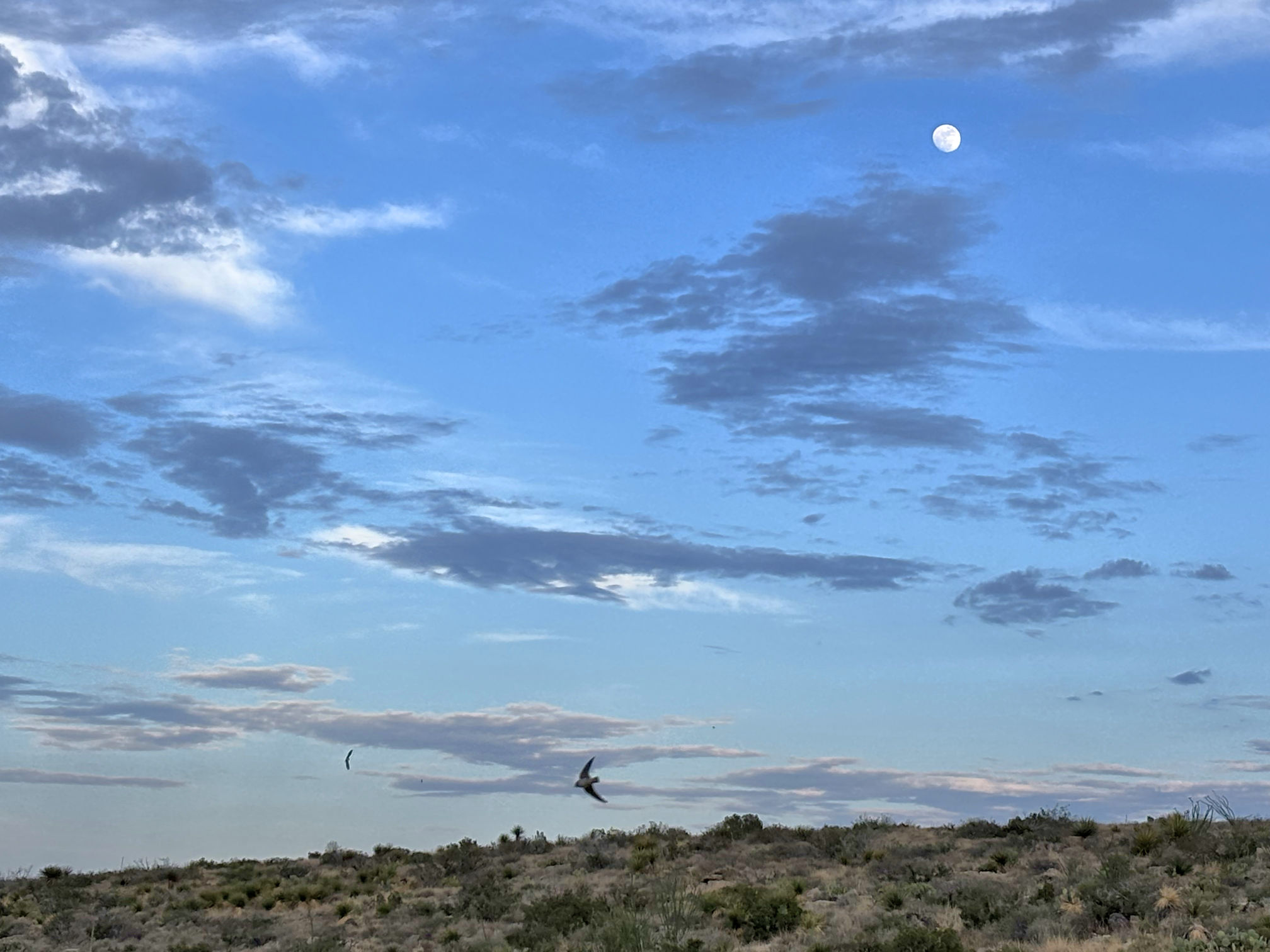
The ranger explained that the bats come out in a rush, and sometimes that makes it hard for the swallows that are still straggling in for the night. We did witness that! Some swallows had to wait off to the side, and make multiple attempts, to find a way back into the cave while thousands of bats exited.
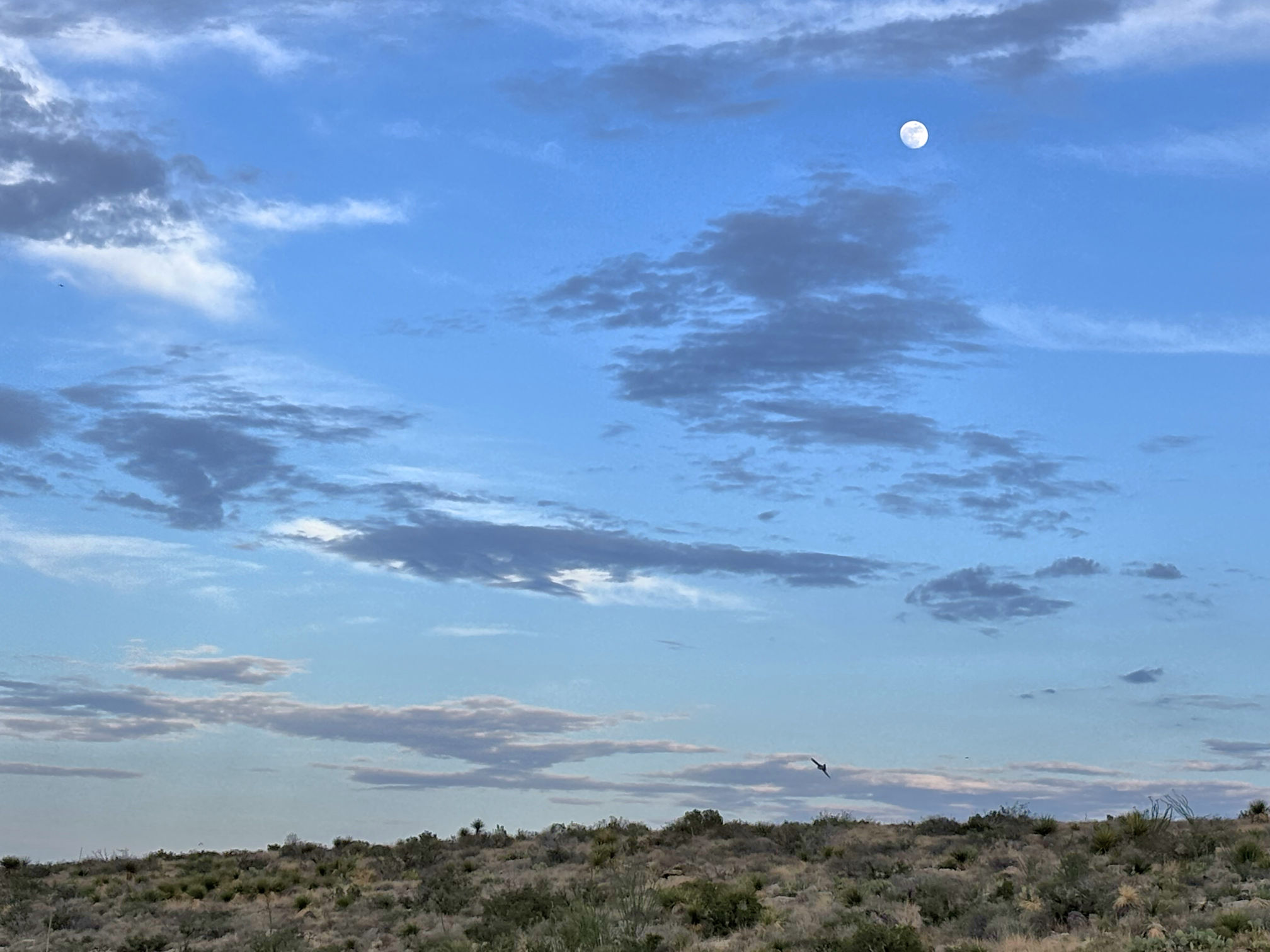
And then! A bat was spotted. The ranger immediately turned off her microphone and gestured to the audience that it was time for silence. All of us instantly went quiet.
We sat without speaking for an hour, until there was barely a hint of light on the horizon, and we watched, mesmerized, as clouds of Brazilian free-tailed bats poured from the cave. Like the Vaux’s Swifts I have mentioned several times before, only in reverse: the bats first fly in tight circles, right next to all of us seated there. They form a swirling mass that I call a bat tornado, then pour up into the sky and off across the landscape, farther than we could see.
We would watch the last bits of the tornado dissipating off across the horizon, but by then there was already a new tornado forming at the mouth, right in front of the stone amphitheater we sat in. And whooosh! Off it would go. There was never a time when bats were not either spinning in front of us or vanishing toward the horizon and the promise of a buggy feast.
There are hundreds of thousands of bats. Some years as low as 300,000 bats. One year they recorded 1.2 million bats. All of them exit at night to go eat. All of them return at dawn to go to bed.
And you can HEAR them! Their soft flappy wings become an audible hum when there are thousands flapping together. The night was warm, all the people were silent, the moon grew bright, and we listened to the soft thwap thwap of a thousand bats at once.
Then predators arrived! And in silence, we sat upright and pointed, as a hawk circled and dove and BAM! picked a bat right out of the sky, then flew to a high bush to eat it. After 15 minutes, it came back and did that once more. Another hawk arrived and did the same. They continued this in such low light that I could barely tell what was happening. I am impressed at their eyesight.
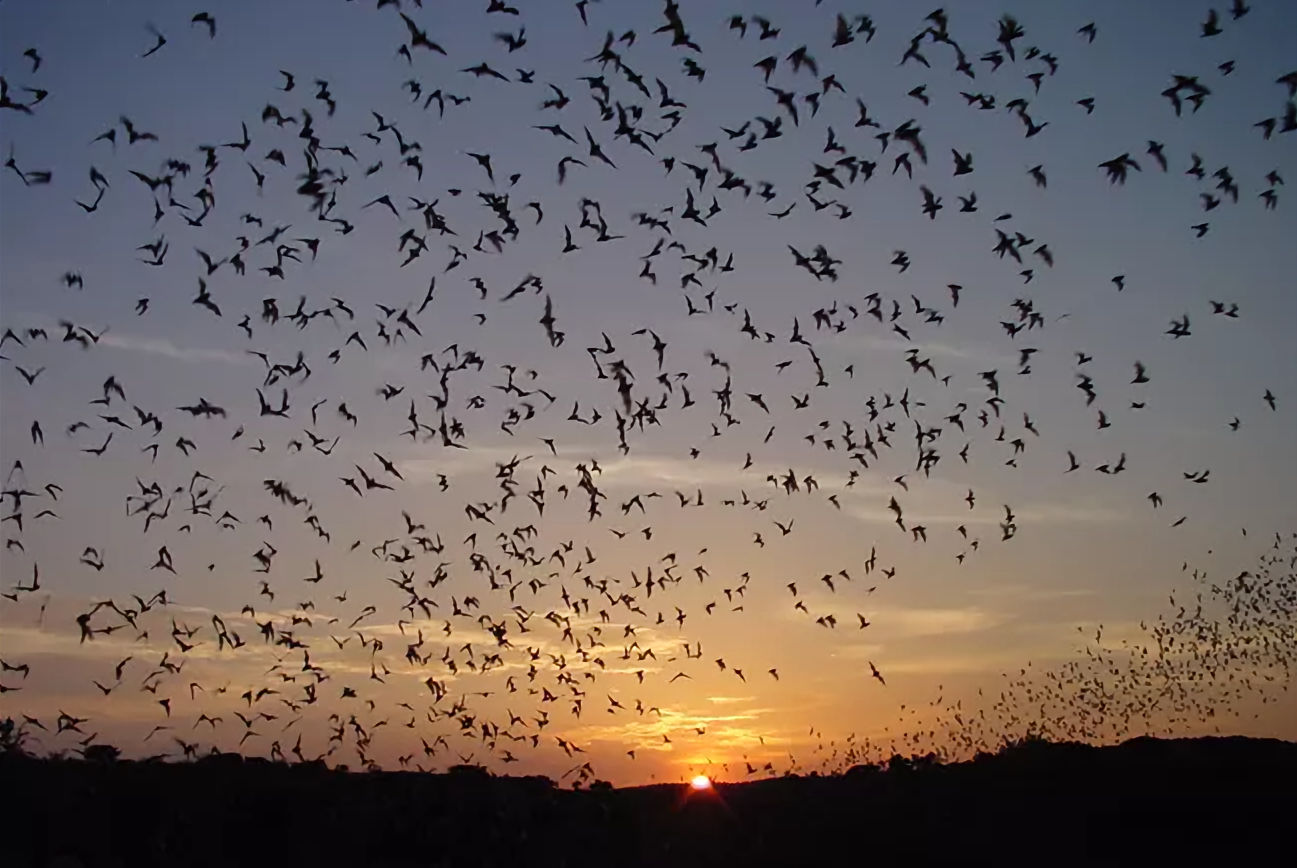
After I couldn’t see anymore, I whispered to Pedro that I was ready to go. But he was not. He said the experience of being outside in the warm night, with people all silent and no screens and no devices, was so peaceful he didn’t want to leave. He was right. We stayed longer.


Your pictures and descriptions are breathtaking! I’m adding this to my list of places to visit.
Carlsbad, New Mexico is so far out of the way for me that it took a long time to get there. I hope it doesn’t take you as long. ❤ It is absolutely worth the trouble to get there.
A stunning trip wonderfully illustrated and so well described. I’ve always remembered that the tites hang down
I’m glad you remember. It was a regular challenge by our science teacher in high school, and I had a hard time remembering, but finally, the lesson is fixed and I can always get it right. :o) It was a stunning trip. The best part of our time in New Mexico. Things are always better for me when I am surprised, and I was here.
Another trip I’ve never taken and with such an enthusiastic guide! I used to think I had all the time in the world for trips and plans. Lately, it’s become painfully clear how much more time lies behind than ahead. If I never make it to Carlsbad it’s okay. In my old-old years, I’ll probably remember your vivid descriptions and think that I DID go! Thanks for that! 🤣
ha haha…I like that mental image. Elderly and infirm Bonnie going on to the person beside her on the park bench, “You should have seen Carlsbad Caverns back in 2026 when I was there…”
Fascinating. Thanks for sharing…
Of course, I couldn’t resist sharing. :o)
Oh my word! What a magical experience, Crystal. Watching those bats leaving the cave must have been worth waiting for. I’m so glad that you finally got to see the spectacle. And how wonderful that you discovered so much more there. I love that switchback into the cave with the swallows flitting about. I love both swallows and bats, and like Pedro, I suspect I would have found it difficult to leave too.