Earlier this month, Pedro and I were in Dallas for the AMIA Conference. The topic of most interest for tourists in Dallas is the JFK assassination. Kennedy, the 35th President of the United States, was assassinated in Dallas at 12:30 p.m. Central Standard Time on November 22, 1963.
This is a pivotal event in our country’s history. It means very little to me emotionally, but that is because I was born in 1970. For a comparison, the JFK assassination is for many people like the 9/11 attacks are for me. I can think of the span of my life in terms of before- and after-that event, and I will never ever forget that day in 2001.
Many people would similarly describe the day they heard about the assassination attempt in Dallas on the 46-year-old United States President, John Fitzgerald Kennedy, and his official death at the hospital, within the hour.
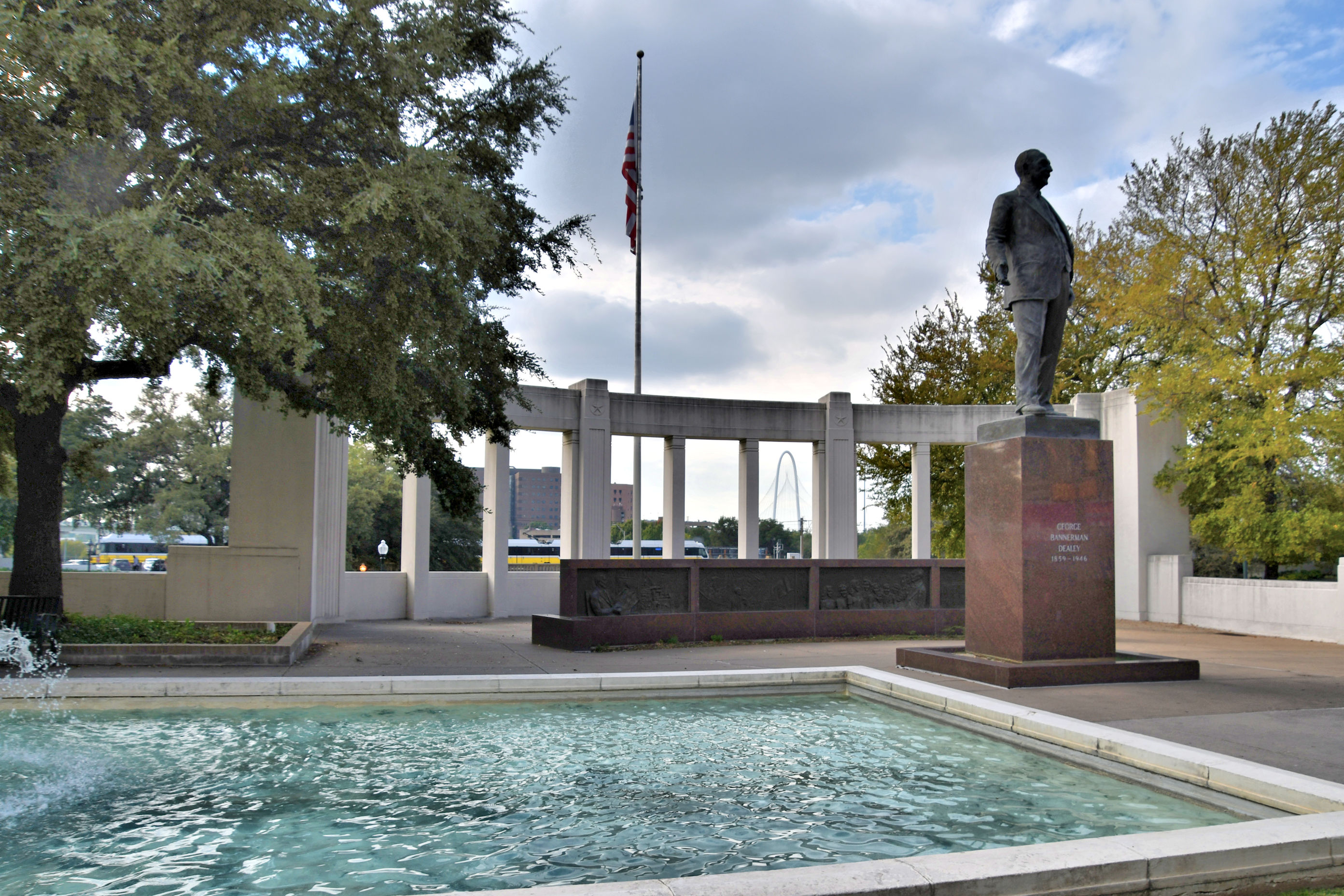
George Dealey grew up in Liverpool, England before his family moved to Texas. He was a teenager when he began working at the newspaper. He became the manager of the Dallas Morning News paper in 1895, a board member in 1902, vice president and general manager of the corporation in 1906, and president in 1919. Eventually he owned four papers and the A H Belo Corporation itself.
The plaza, and Dealey, unfortunately, are now names immediately associated with the assassination. While traveling in a presidential motorcade through Dealey Plaza, the President was shot once in the back, the bullet exiting via his throat, and once in the head.
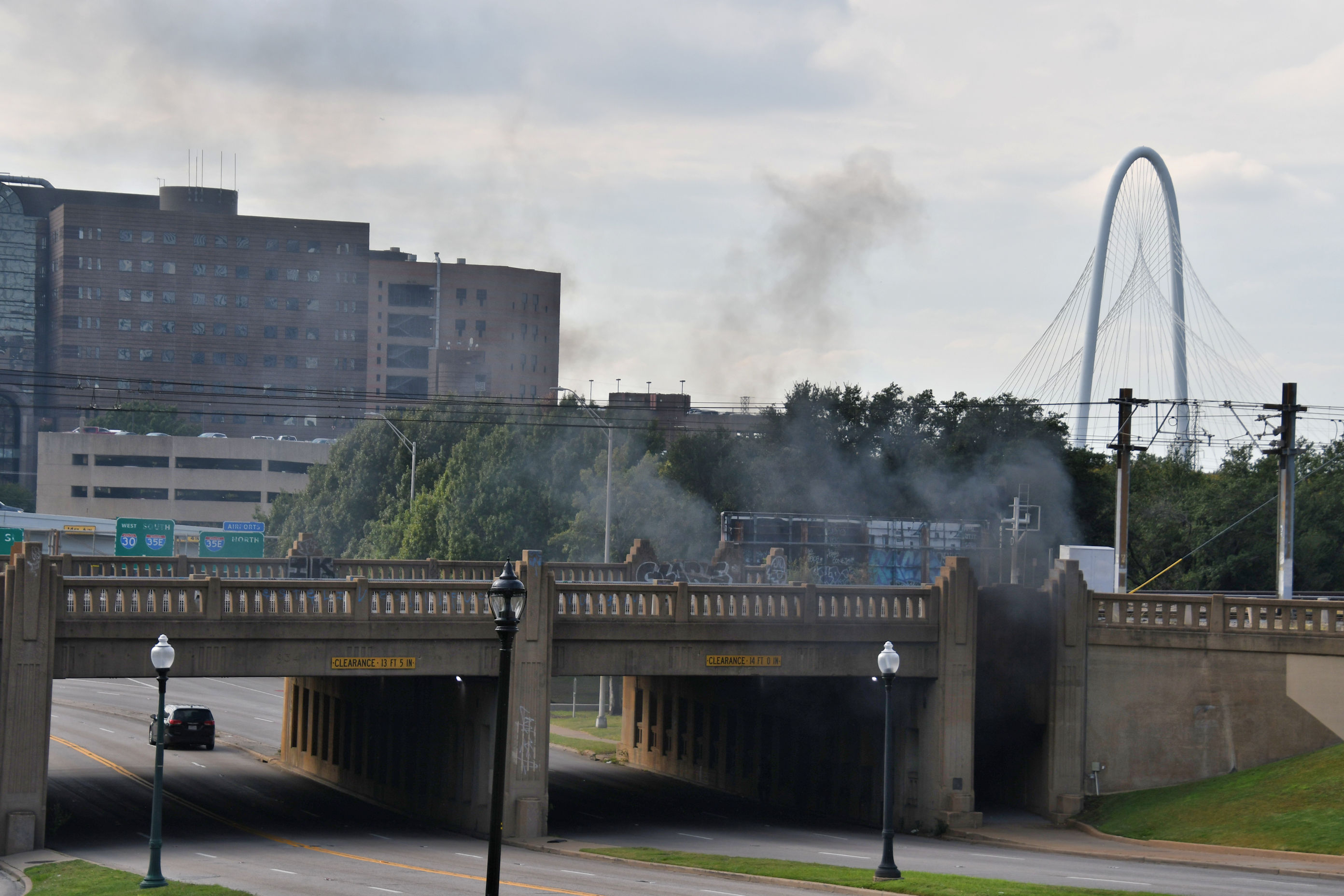
I walked behind the statue of Dealey, and leaned through the concrete-framed windows at the back of the plaza to survey the landscape. I spotted a wisp of smoke near the bridge, and thought perhaps a diesel vehicle or a train exhaust caused it. I watched, in curiosity, as the smoke grew thicker and darker. There were people milling about everywhere here, because it’s a tourist destination, but no one was paying the smoke any mind, so I moved on.
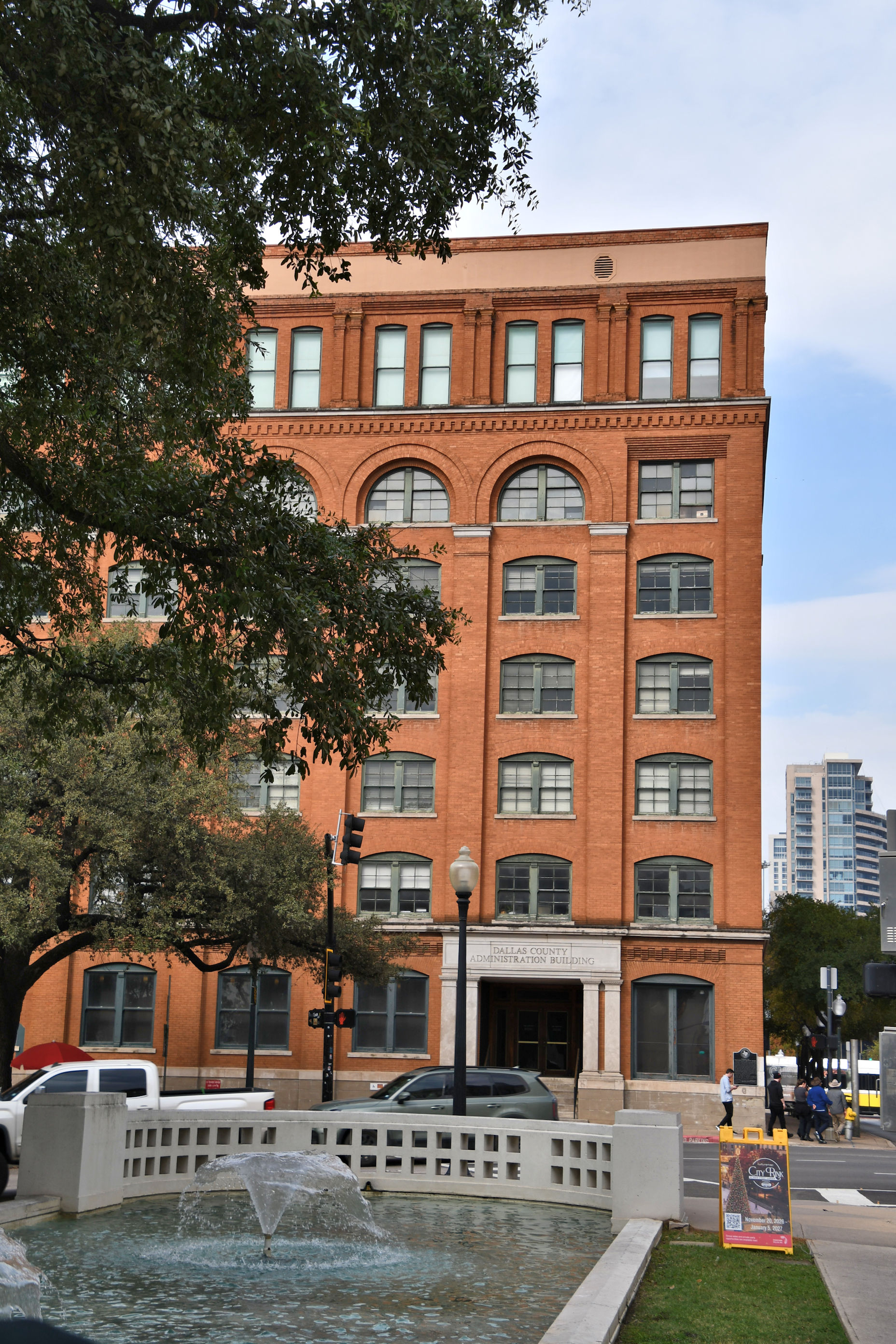
In the image above, there is a marker in the sixth floor window at the corner. From here, it looks like a white rectangle with a small black rectangle in the circle. That is the place where Lee Harvey Oswald stood to take three shots. The sixth floor of this building is now a museum, and I did not visit it. It seems as though the trees are in the way for a clear shot of the street. They are not, as you will see.
Thirty minutes after Lee Harvey Oswald shot the President, he shot and killed a police officer in a different part of town. An hour later, he was arrested for the murder of police officer J. D. Tippit (a crime he committed shortly after the assassination) and was subsequently charged with Kennedy’s assassination.
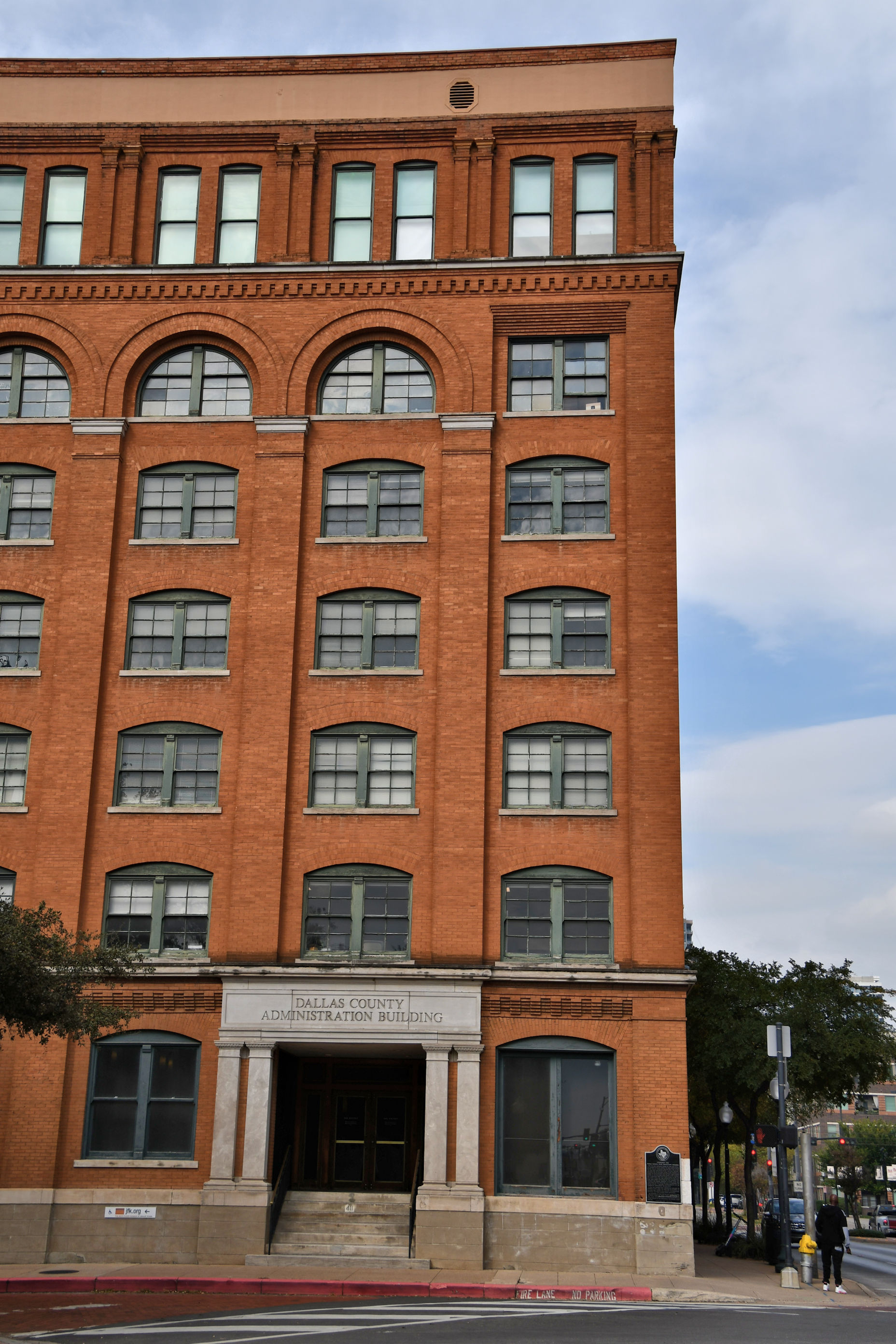
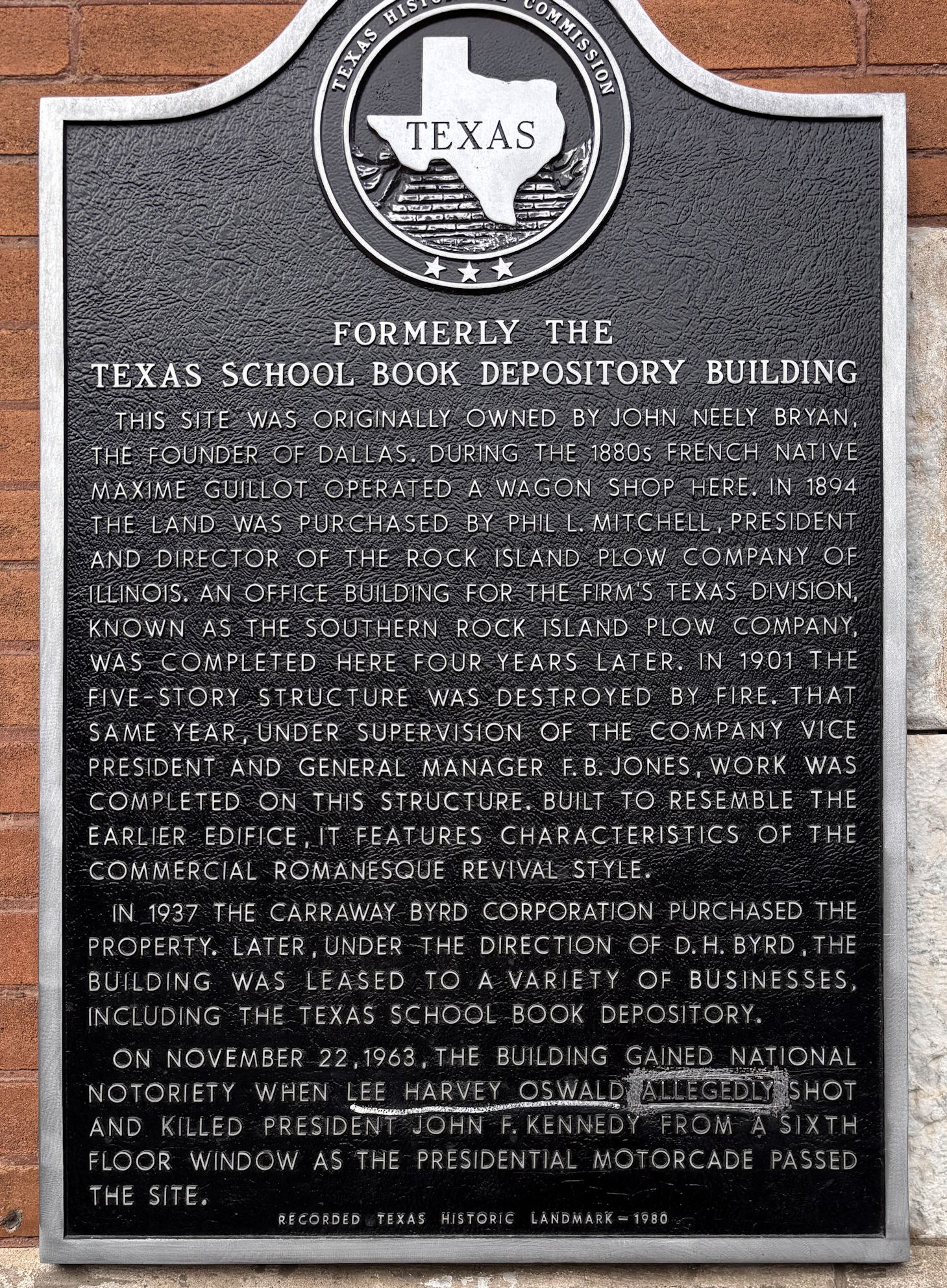
If I recall the details correctly, there were three shots at Dealey Plaza, and they came quickly. The first bullet hit the curb and was harmless to those nearby.
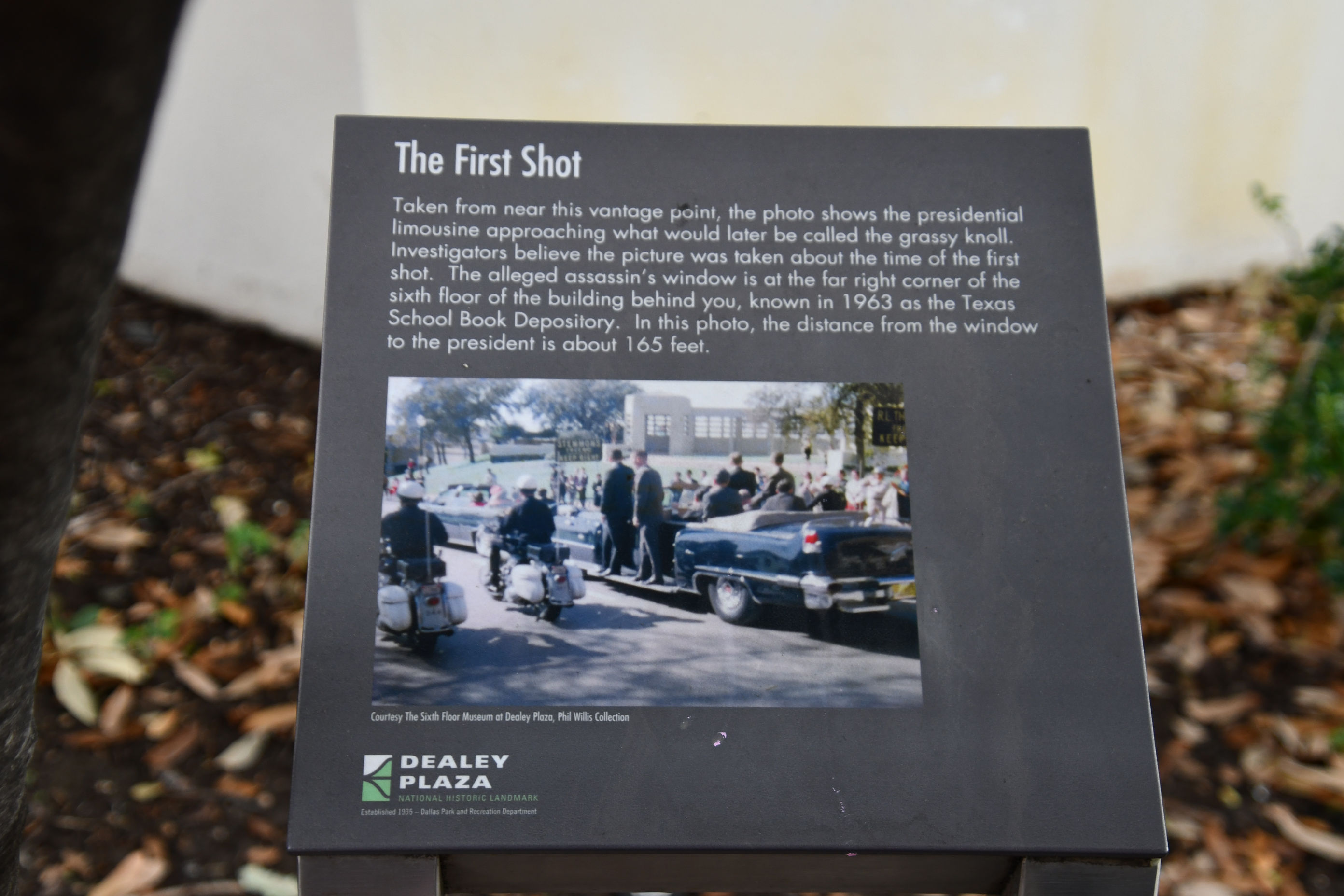
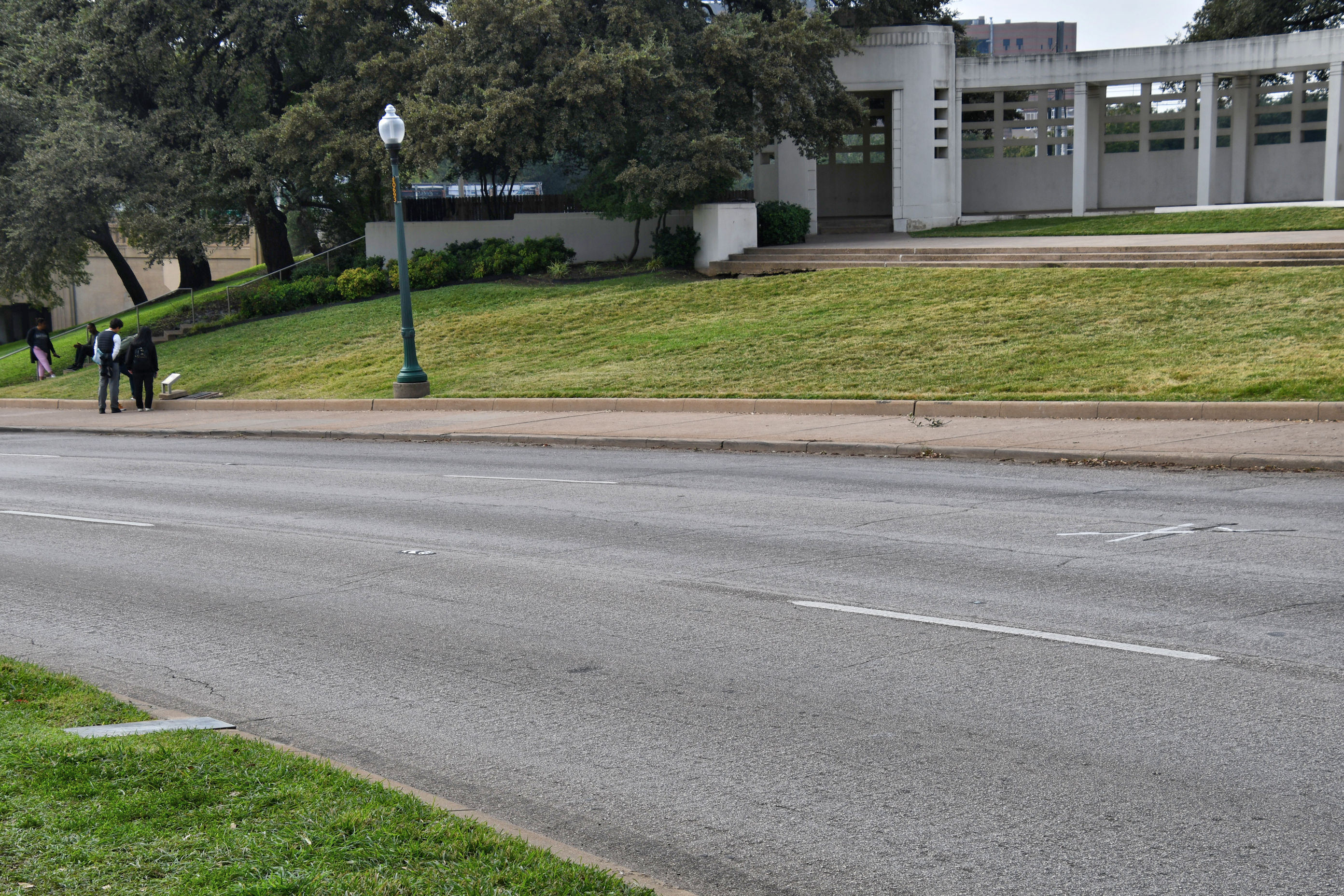
The second shot fired by Oswald hit both the President and the Texas Governor John Connolly. Though serious wounds, these were not fatal to either man. Connolly recovered in the hospital.
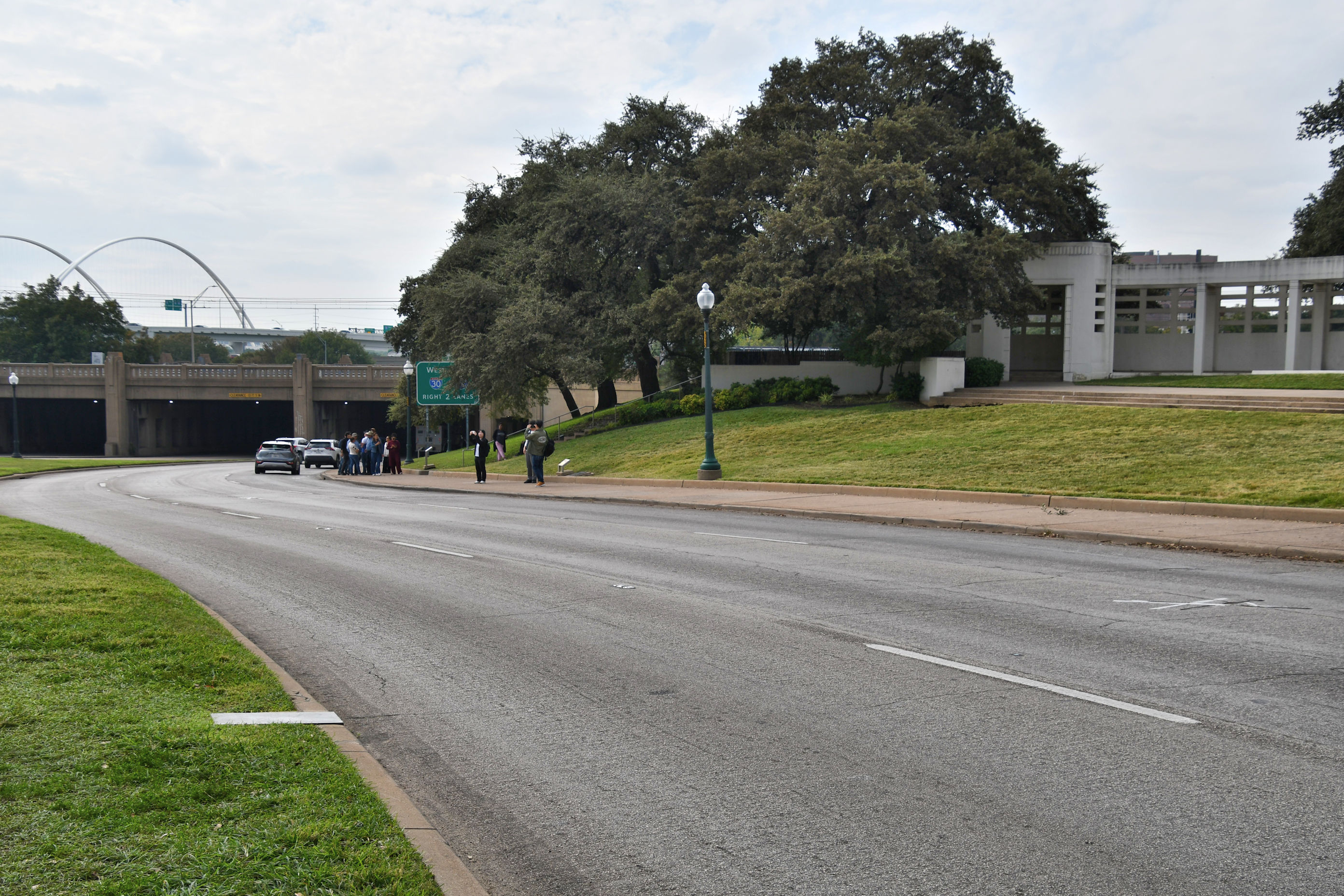
The third and final shot struck the President again, when his car was about where all those tourists are standing. This time the shot was through the head, and determined the fatal shot. I headed that way to get a closer look at the white X, but also to see the source of the black smoke. Though the people appear clustered in the image above, they are gathered around a tour guide and still no one is paying any attention to the smoke that was thick and black at first, but once the fire caught, the smoke became more transparent.
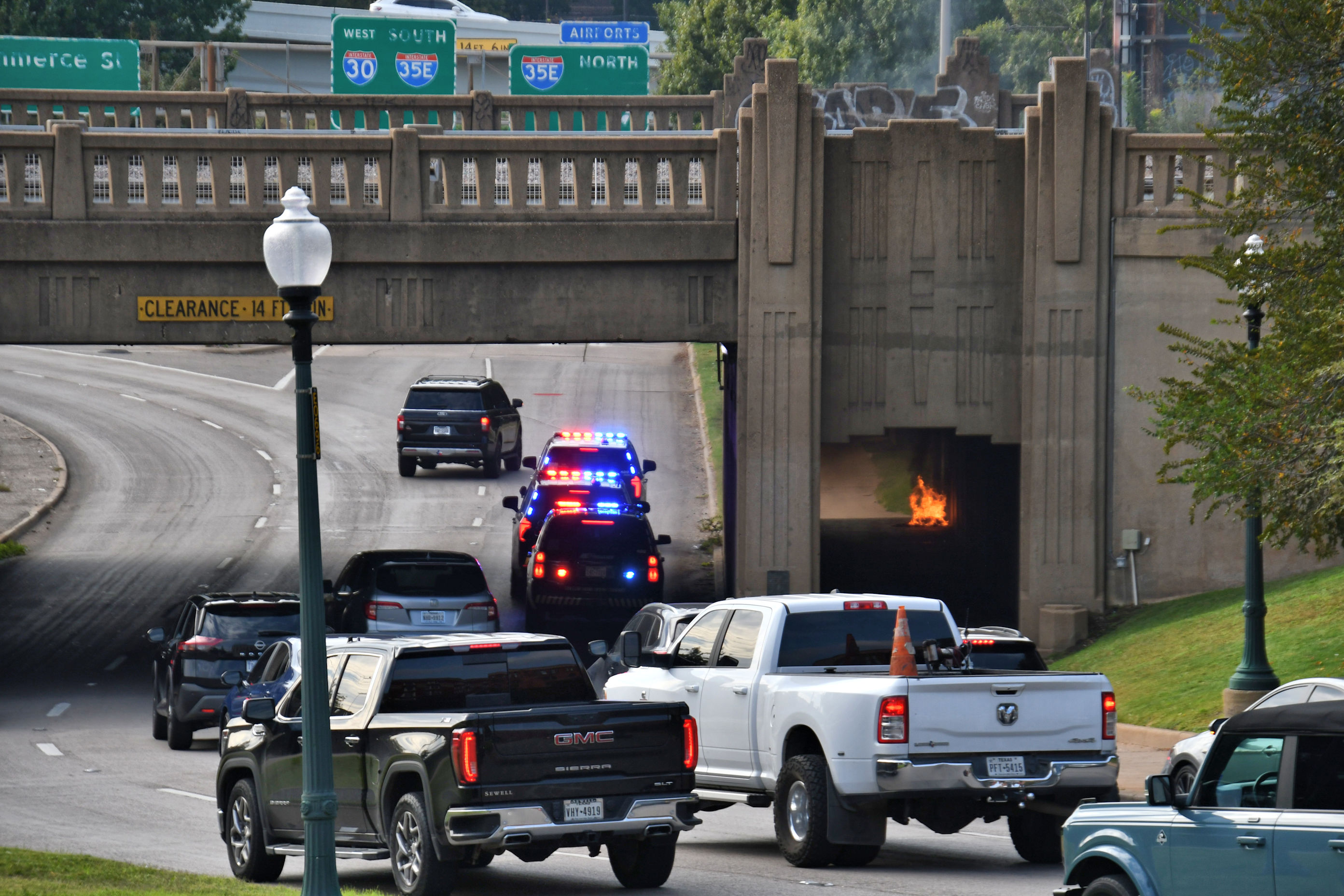
As I walked, sirens blared and three police vehicles arrived, and vehicle traffic began braking on seeing the lights, and then crawling along the road as the drivers craned their necks to look at the flames. FINALLY I was assured that someone had noticed and had taken action. By the time I got close enough to see the flames, I saw no one around who seemed to be the arsonist.
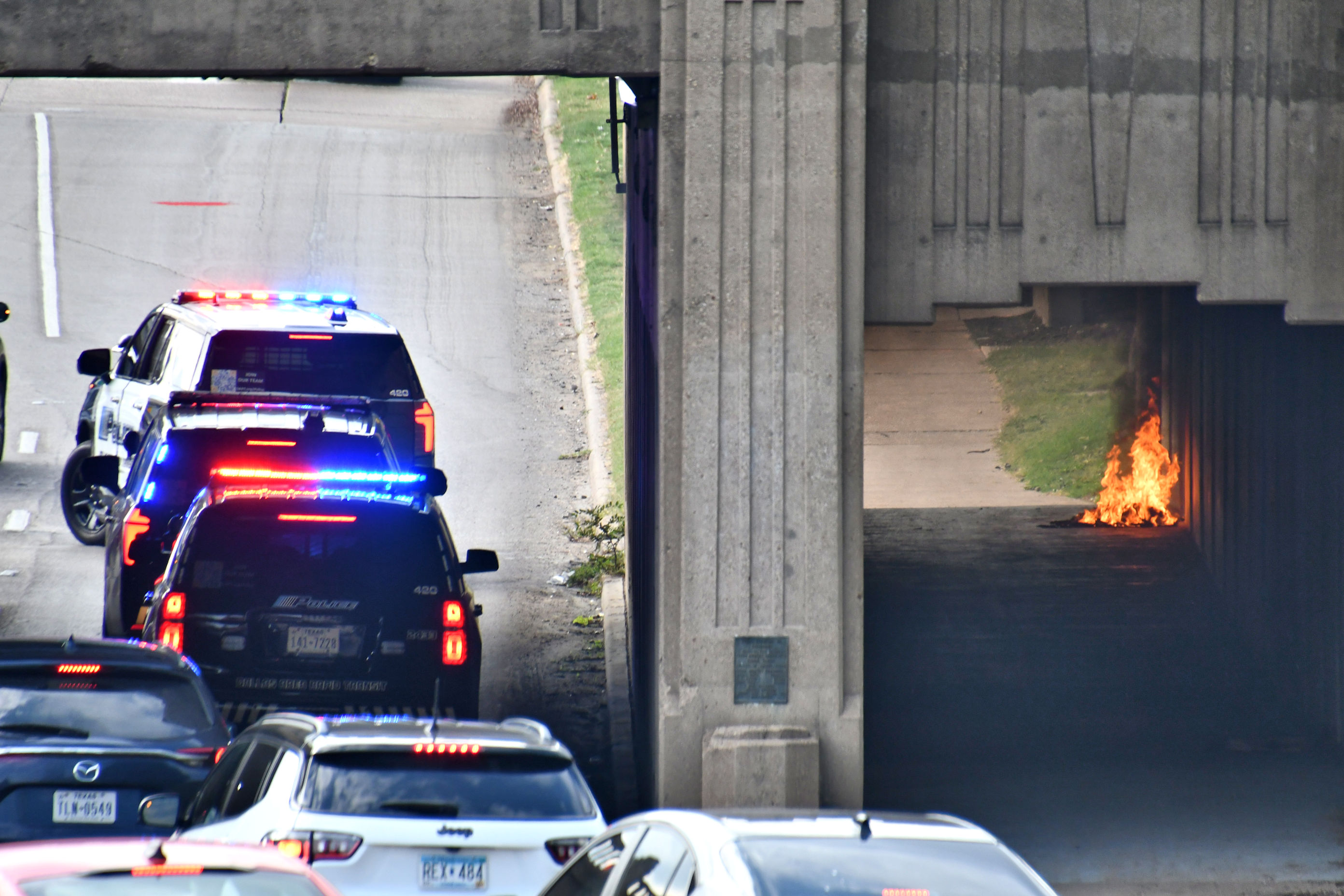
I glanced back at the tourists, and still no one seemed to be paying any attention. I followed their lead and let it go from my thoughts.
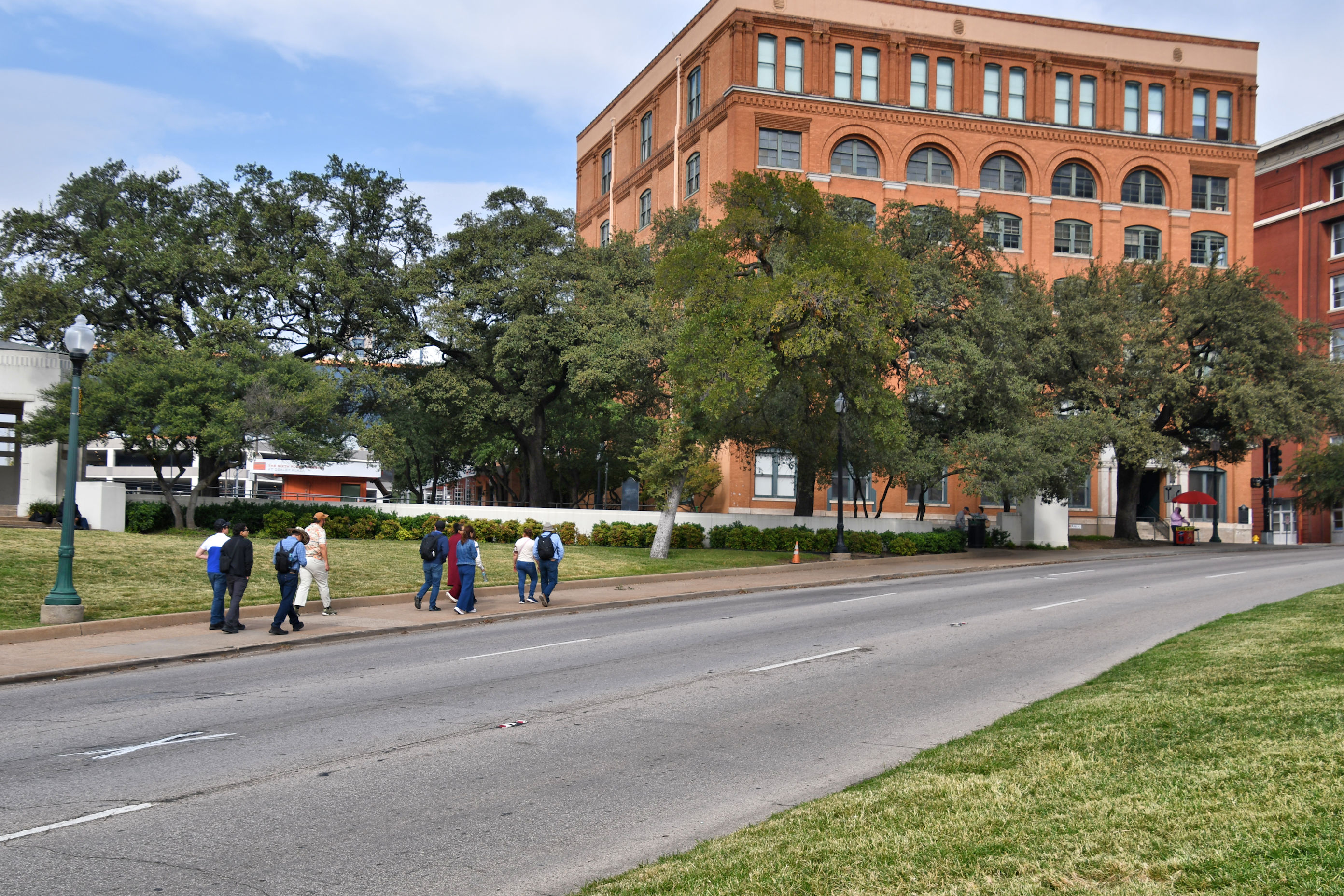
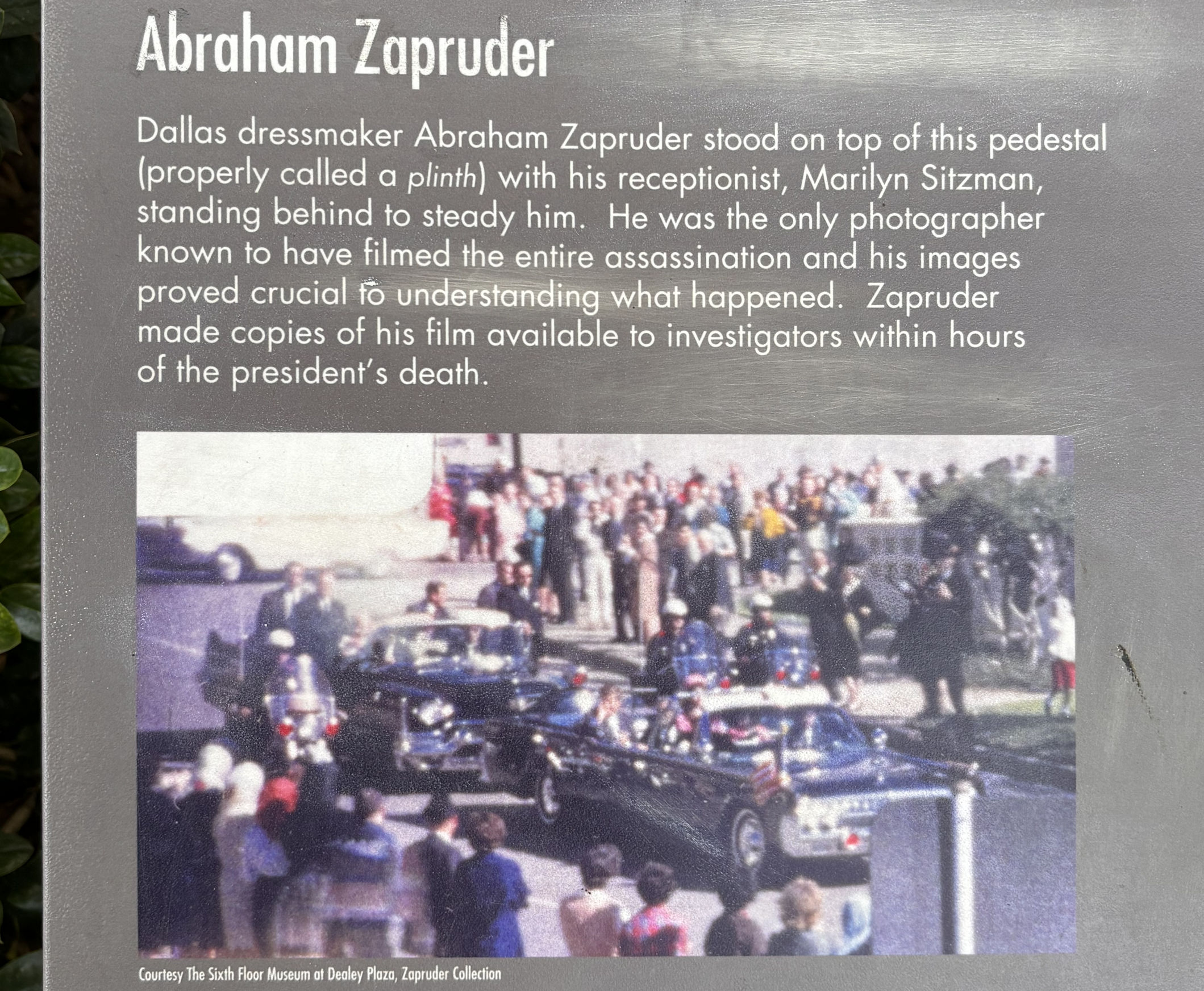
Of interest is that this part of the city is kept much as it was that fateful day in 1963. The scene is preserved in honor of the President’s memory, and as an additional memorial to the event. (My irreverent mind also thinks this works well for any future movies about the assassination, like the 1991 film JFK.) You will see background landmarks in the old photos that are still here today.
I ran across the street during a lull in traffic, because I wanted to stand on the infamous “grassy knoll.” As I did, I heard more sirens arriving.
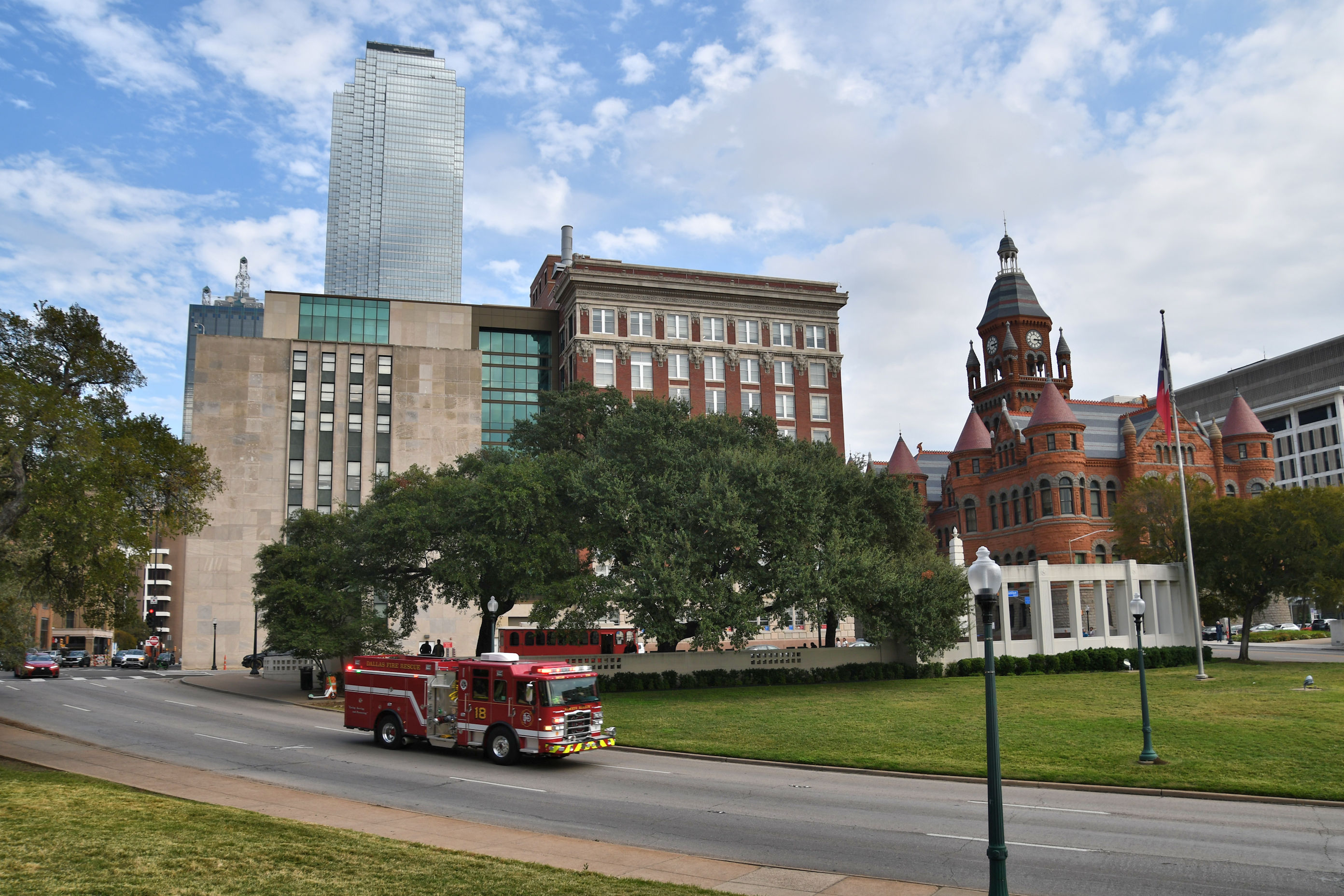
From where I stood while taking the photo above, looking back toward downtown, you can see several landmarks I have shown already, notably the Red Courthouse and Dealey Plaza.
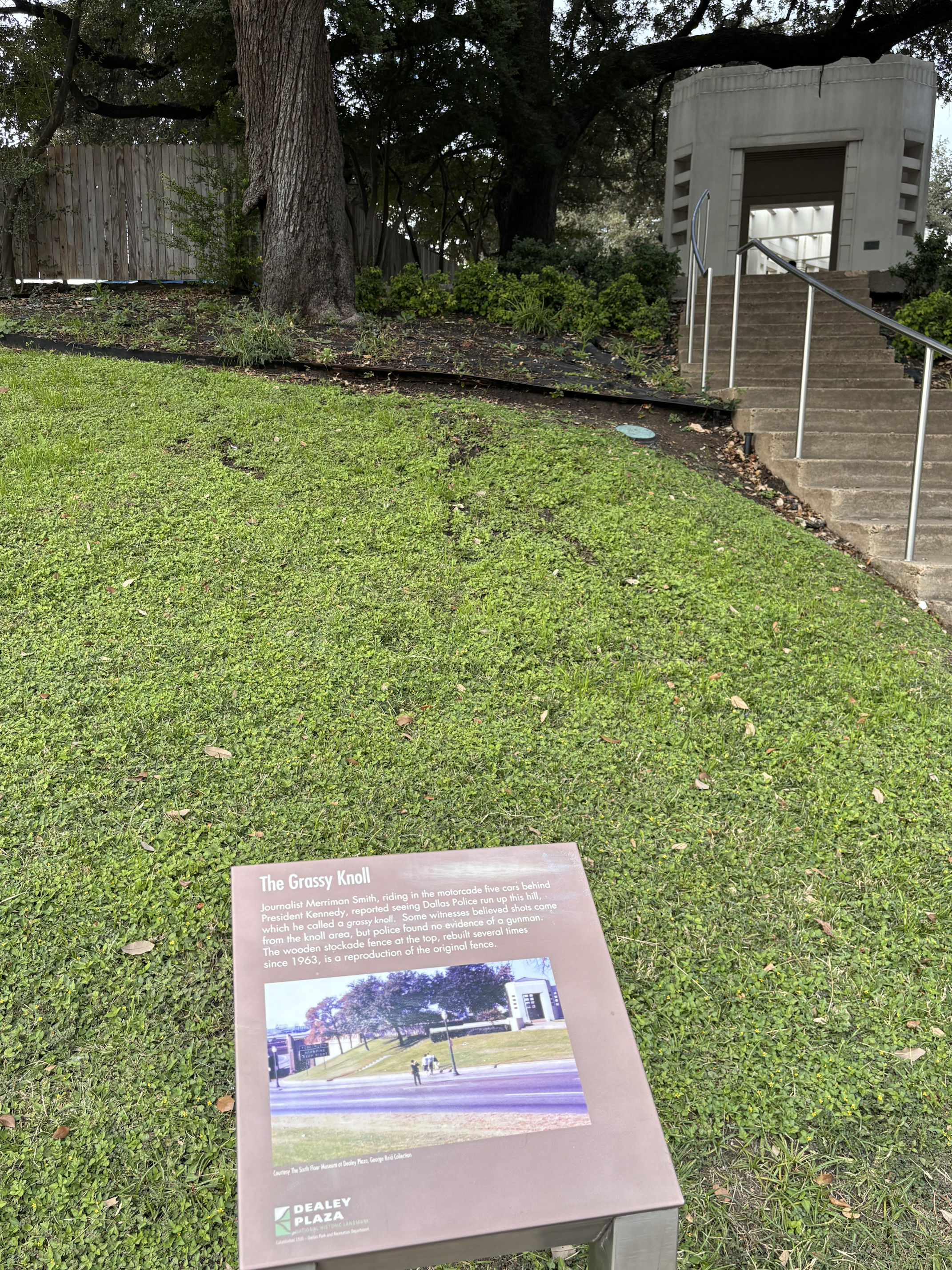
The infamous Grassy Knoll, is a low rise with grass on it, where conspiracy theorists believe there was a second shooter who assisted Oswald. They have scrutinized the Zapruder film, and believe they see the shining barrel of a rifle poking out from the hedges. The government investigation does not accept this theory.
Oswald denied shooting anyone, claiming he was a patsy, and this got people to speculating. On November 24, before he could be prosecuted, he was shot and killed by Jack Ruby. I think this shocking (convenient?) death of the shooter before anyone had a chance to question him is the reason for so much speculation that continues to this day. Ruby was arrested and convicted for the murder of Oswald, and had successfully appealed his conviction but died of cancer on January 3, 1967, while awaiting a date for his new trial. This was only more fuel to feed the conspiracy.
President Johnson quickly issued an executive order to create the Warren Commission to investigate the assassination. The commission concluded that Oswald was not a part of an organized attack and acted alone in killing Kennedy.
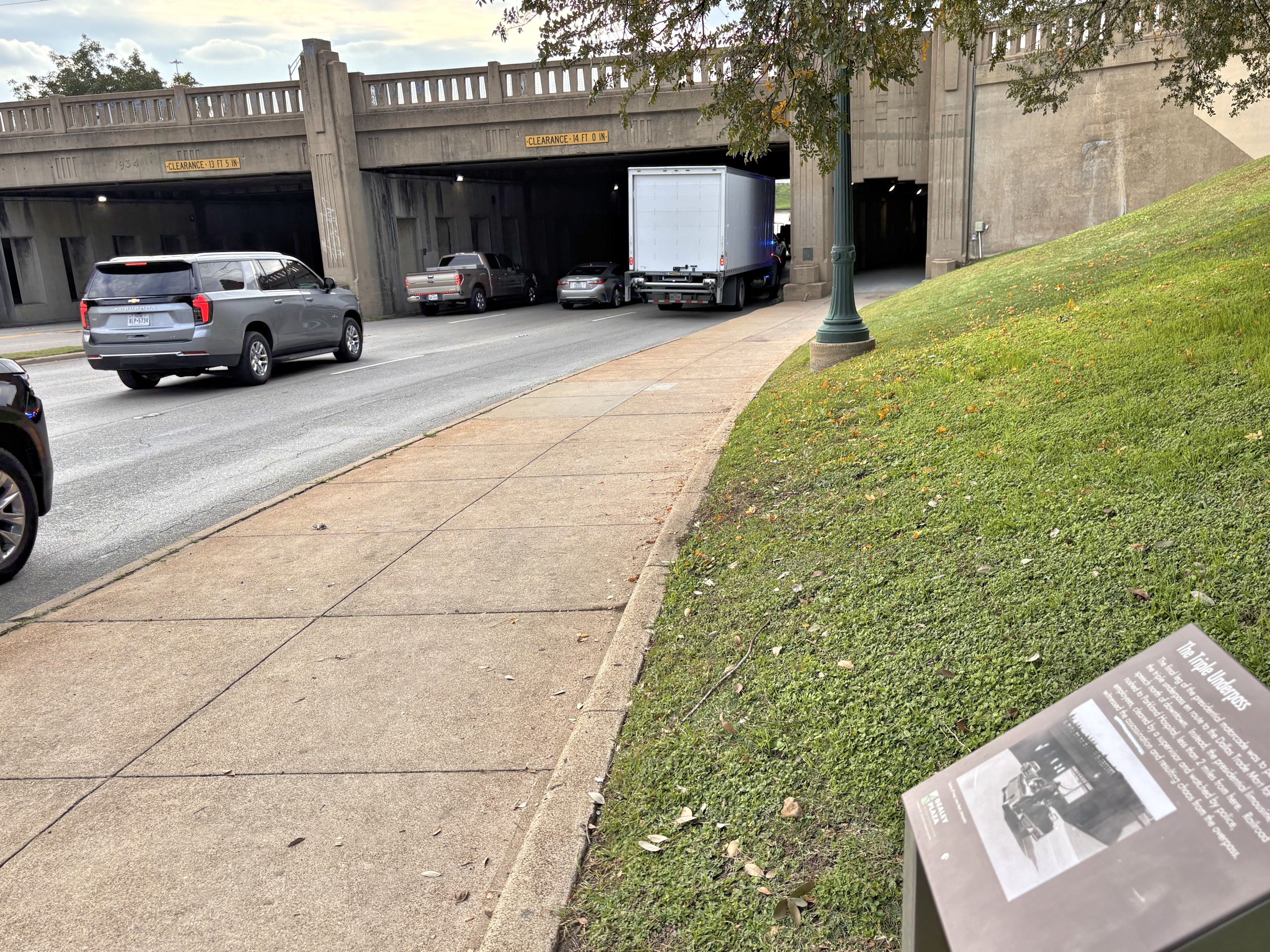
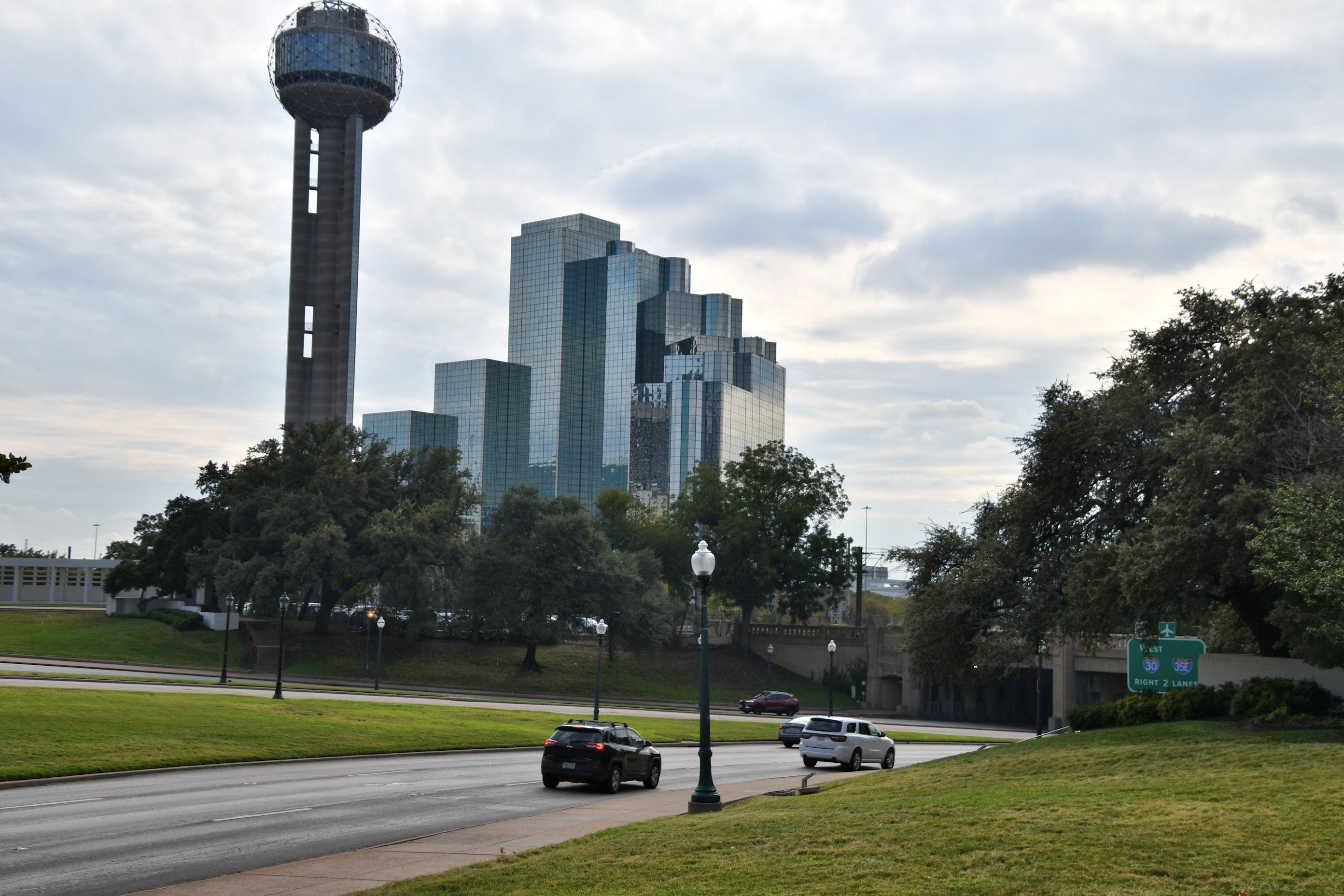
The overpass bridge crosses Elm Street (seen in photo), Main Street, and Commerce Street in downtown Dallas. Railroad employees and police stood atop this street as the President approached, but they were not in a position to assist.
Like I said at the beginning, this event rocked the nation, and even had an impact around the world. He was a beloved President. It’s hard for me to imagine being heartbroken over the death of a politician (maybe Obama), but people were indeed heartbroken.
Before burial, his body was placed in situ for viewing. Hundreds of thousands of people queued to view the casket, and after 18 hours, a quarter million people had come. The funeral service was held November 25 (63 years ago today), and the body was buried at Arlington Cemetery.
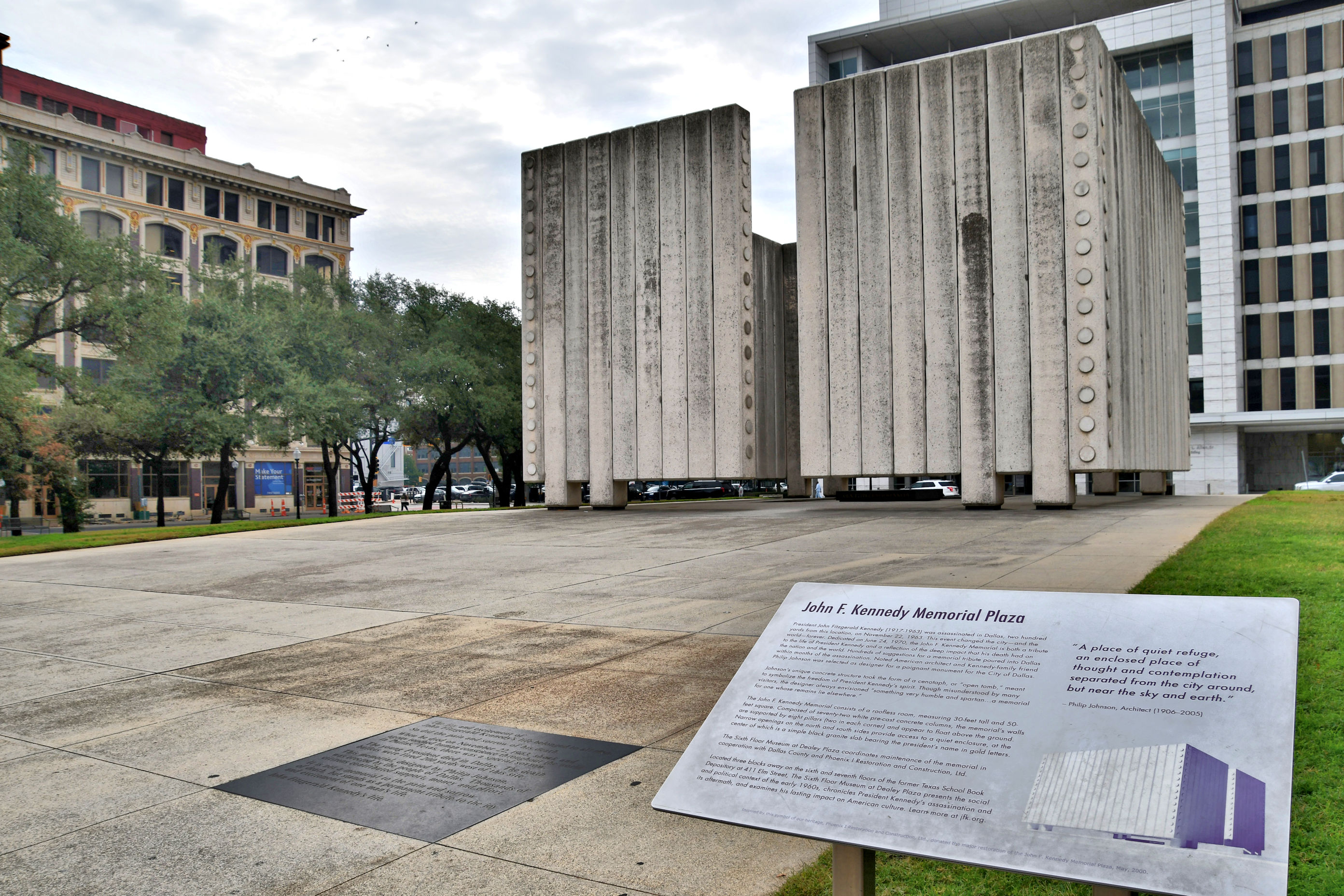
The John F. Kennedy Memorial was designed and created by Kennedy family friend Philip C. Johnson, with the cooperation of first lady Jacqueline Kennedy Onassis. Johnson called it “a place of quiet refuge, an enclosed place of thought and contemplation separated from the city around, but near the sky and earth.” Dallas raised $200,000 for the memorial by August 1964, entirely from 50,000 individual donations contributed by private citizens.
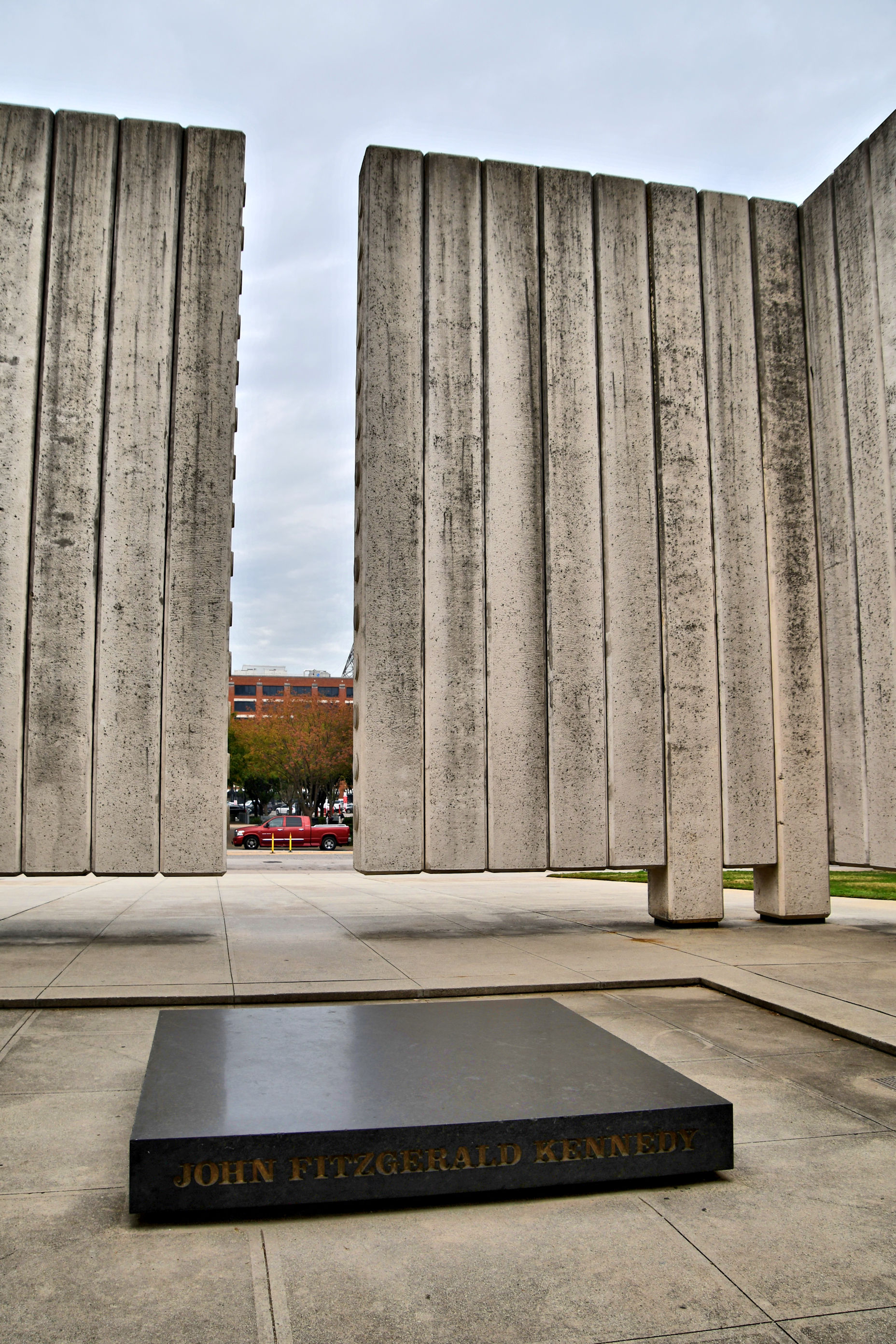
Philip Johnson’s design is a cenotaph, or empty tomb, that was intended to symbolize the freedom of Kennedy’s spirit. Our tour guide explained that the idea was to give viewers the impression of what we are now missing: a great man and leader of the country. The tour guide also explained that many people hate this memorial, believing it to be ugly and insufficient for what it is meant to represent. The guide also explained that because it is perceived as unremarkable, that many local people and Texans that take her tours have lived in the city all their lives, had driven past it a hundred times, and had no idea that it was a memorial to the President.
In the image at the top of this post, you can see a metal plate embedded in the ground, to the left of the information panel. These are the words inscribed therein:
The joy and excitement of
John Fitzgerald Kennedy’s life belonged to all men.
So did the pain and sorrow of his death.
When he died on November 22, 1963, shock and
agony touched human conscience throughout the world.
In Dallas, Texas, there was a special sorrow.
The young President died in Dallas. The death
bullets were fired 200 yards west of this site.
This memorial, designed by Philip Johnson,
was erected by the people of Dallas. Thousands of
citizens contributed support, money and effort.
It is not a memorial to the pain and sorrow
of death, but stands as a permanent tribute to the joy
and excitement of one man’s life.
John Fitzgerald Kennedy’s life.
— Jim Lehrer, journalist
{Many of the facts I included in this post came from multiple Wikipedia articles. I donate monthly in gratitude for that helpful resource.}
An interesting connection to England brings this story full circle. Remember that Dealey was born and raised in England? On a recent trip to England, I was surprised to discover another JFK memorial.

This place, an hour’s drive west of London, is placed on what is now deemed U.S. soil, gifted by Queen Elizabeth II after the Kennedy assassination. It was helpful for me to see this in another country, to gain a better understanding of the impact of the death of a man I grew up not knowing or caring anything about. What an excellent example of how knowledge reveals depths of people that are worth knowing, even after they are long gone.


I was on a Boy Scout camping trip in New Jersey. In 1963, with limited access to news except for a small radio at the campground headquarters, we had no idea what was going on, and there was speculation right afterward that it was some sort of coup attempt…kids…what did we know.