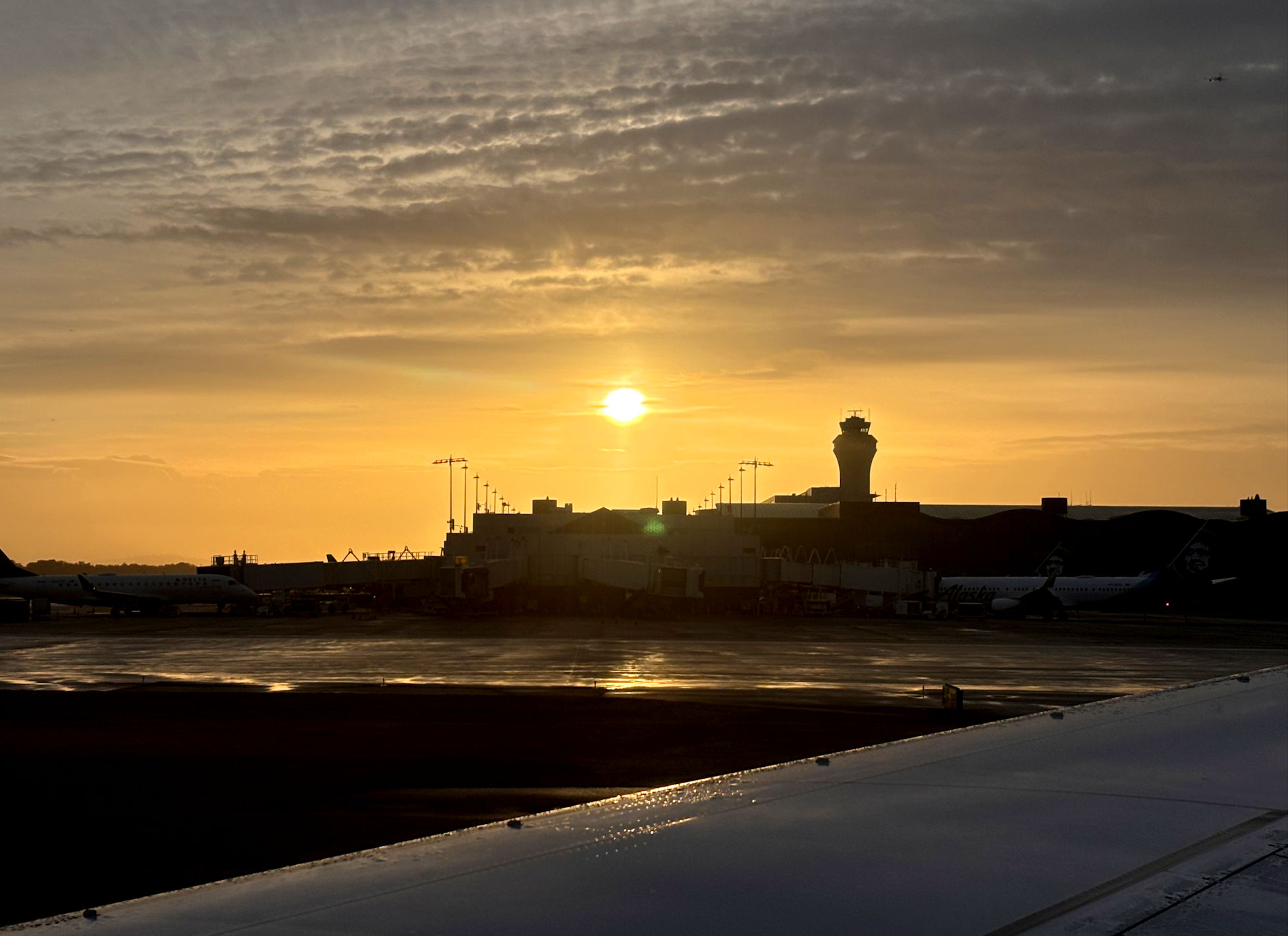
The second week of November, Pedro had a work conference in Dallas, Texas, and I tagged along with him. Neither of us had previously any interest in visiting the city, and for that reason alone, it was good to go and see a place we probably would not have thought to visit. The photos are taken at different dates and times during our five-day trip.
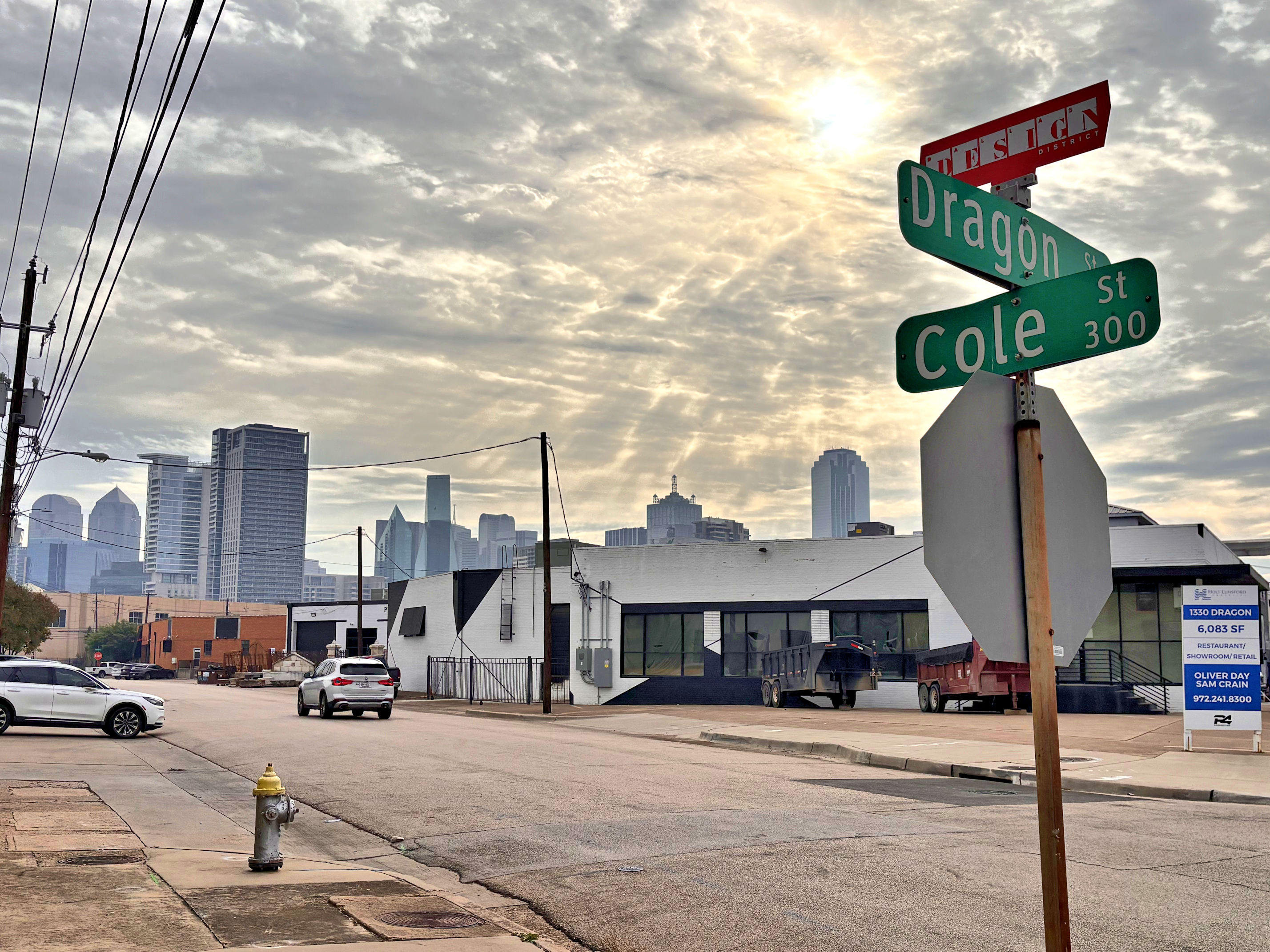
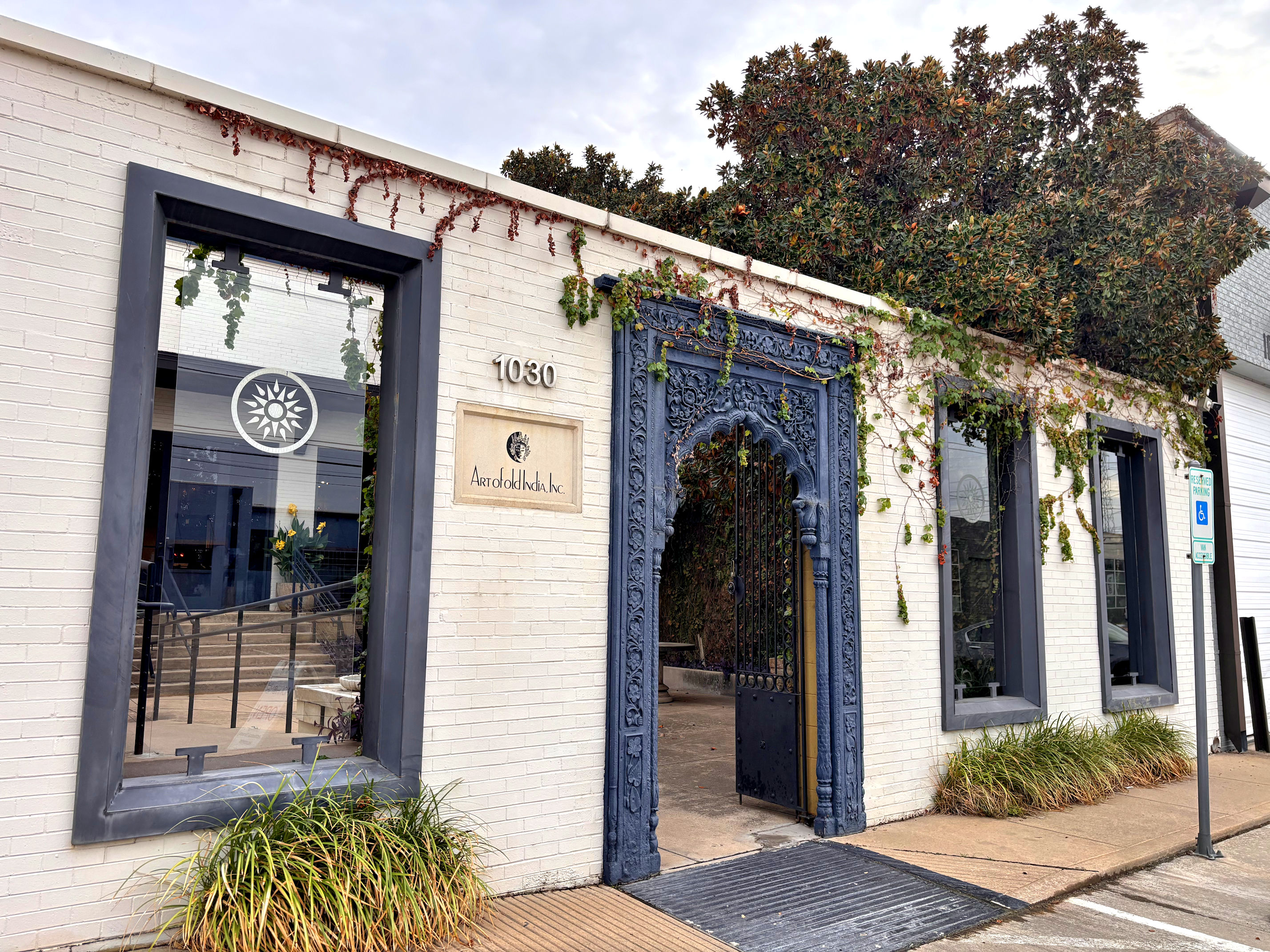
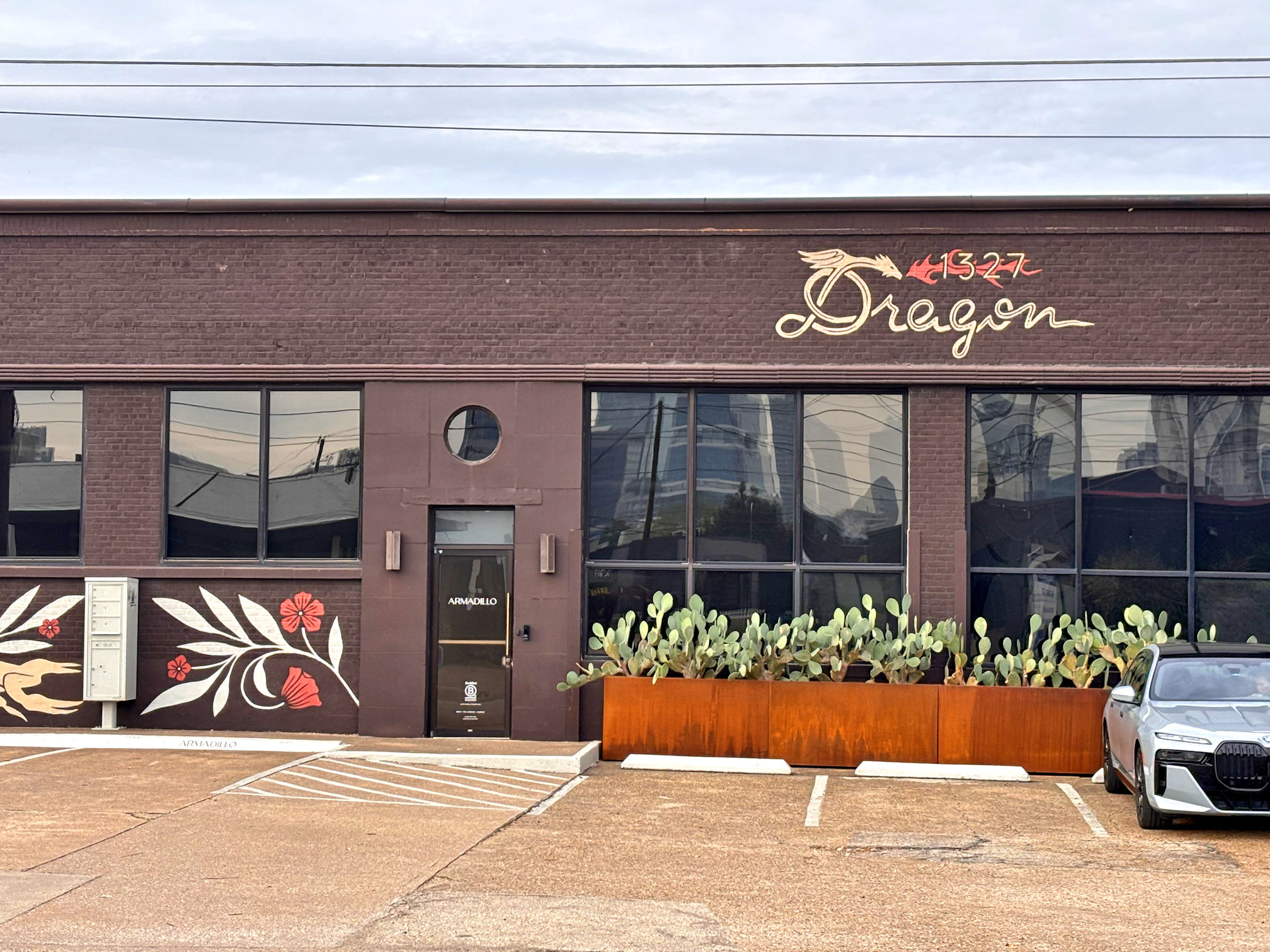
I had the advantage, of course. He was busy all day long. I was free to do whatever I wanted to do. So I explored. The first full day, I walked almost 10 miles. First, I walked into the city to catch a tour. Then I walked around while on tour, then I walked back to the hotel. Then, that evening, we walked to dinner.
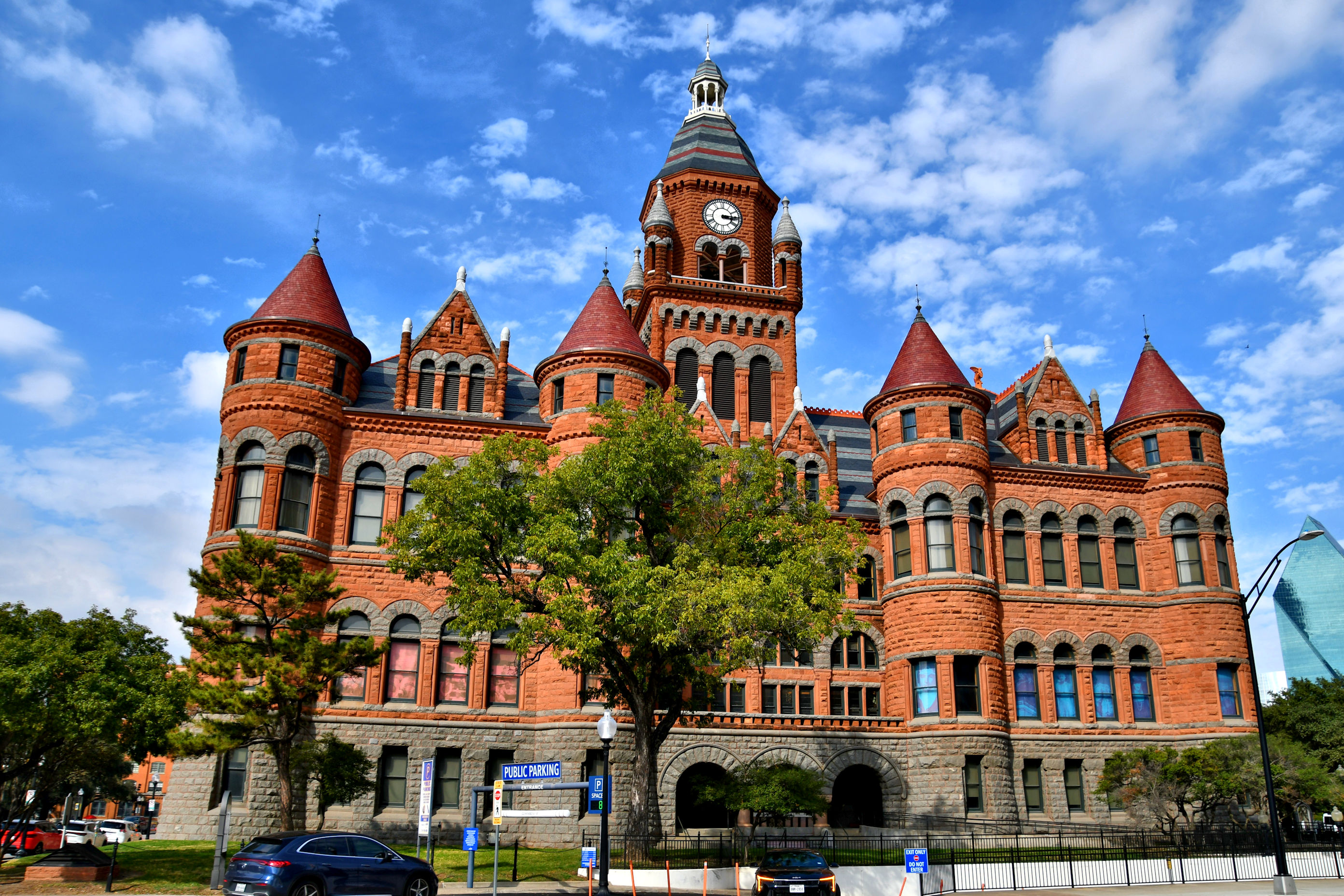
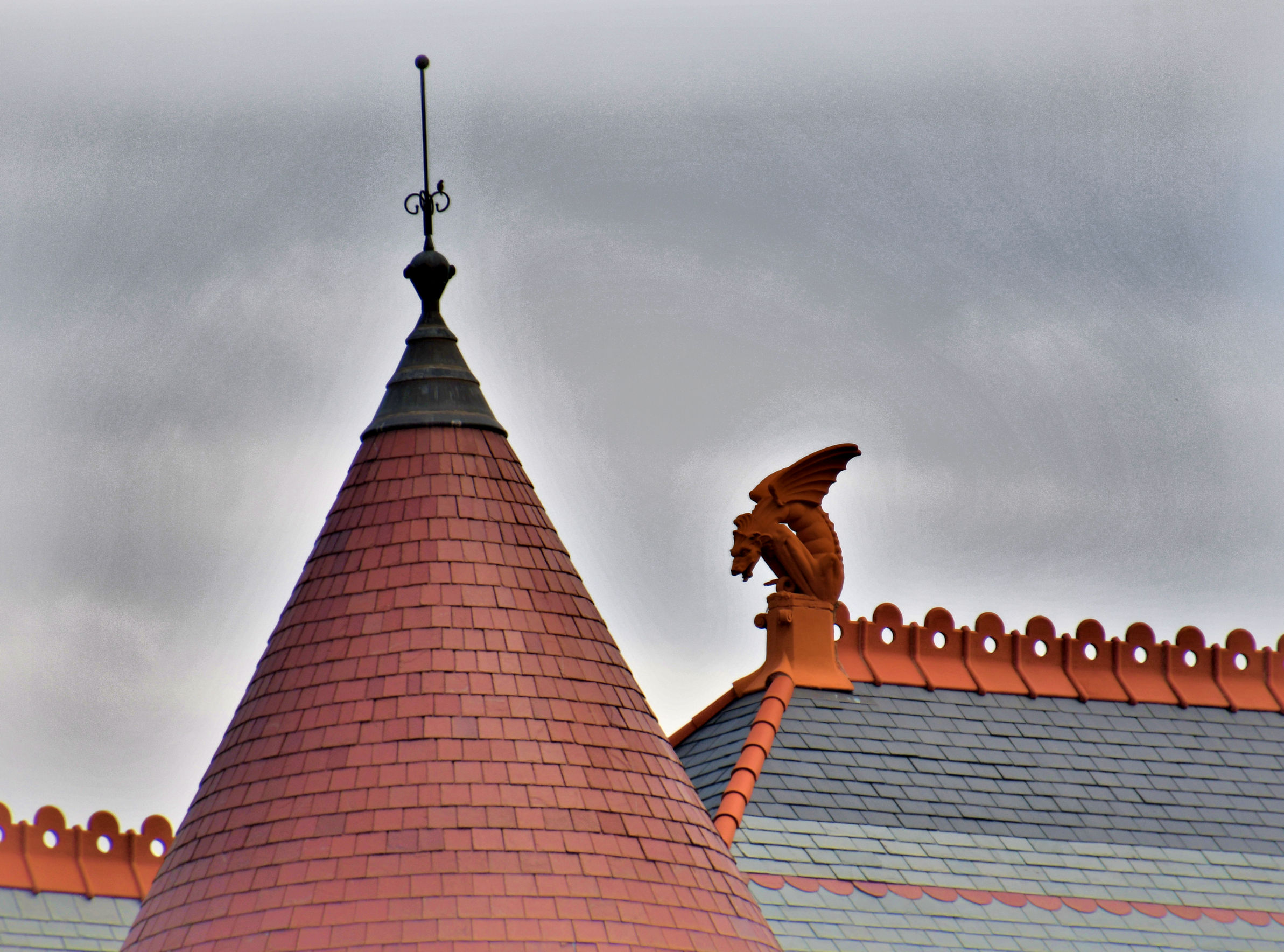
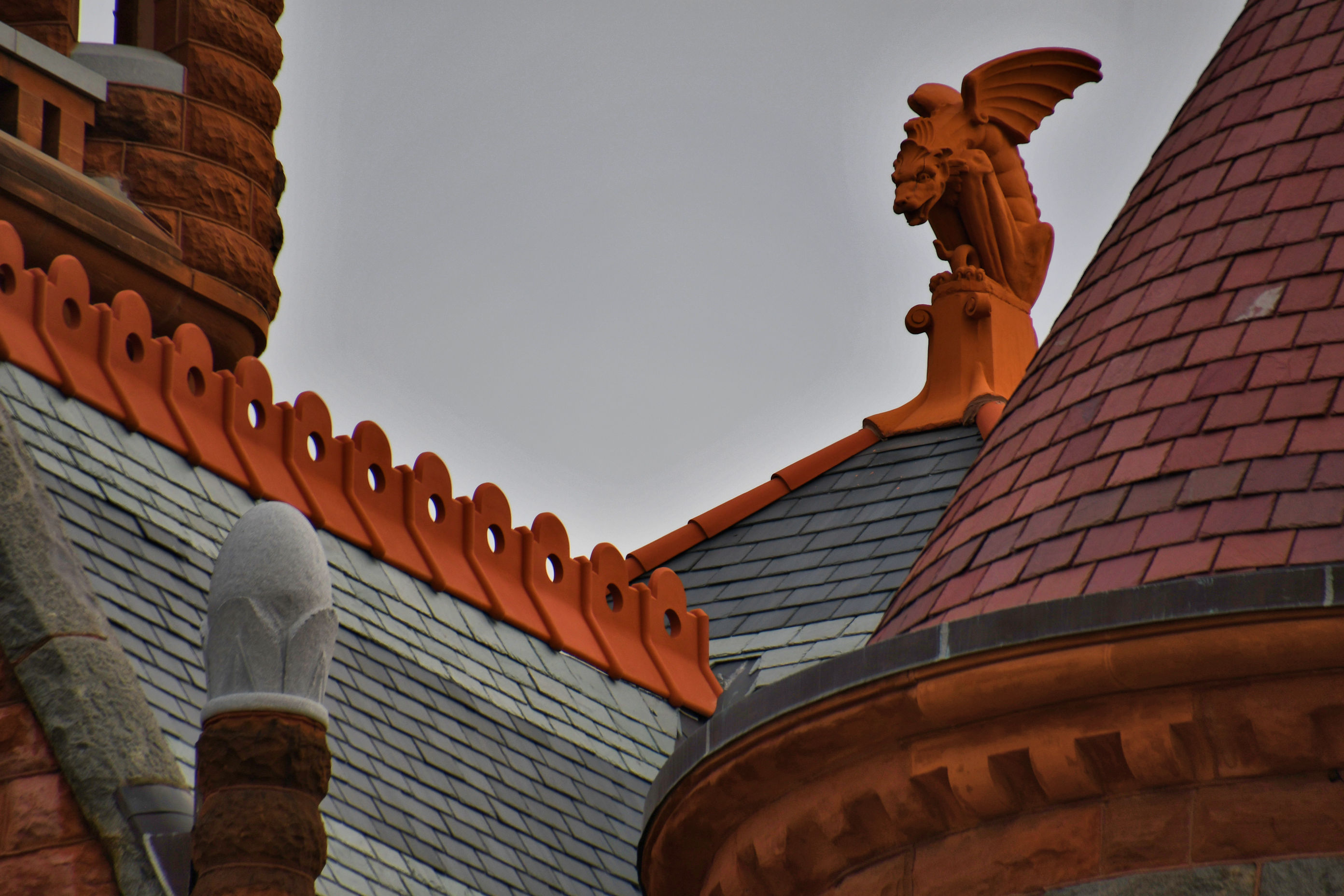
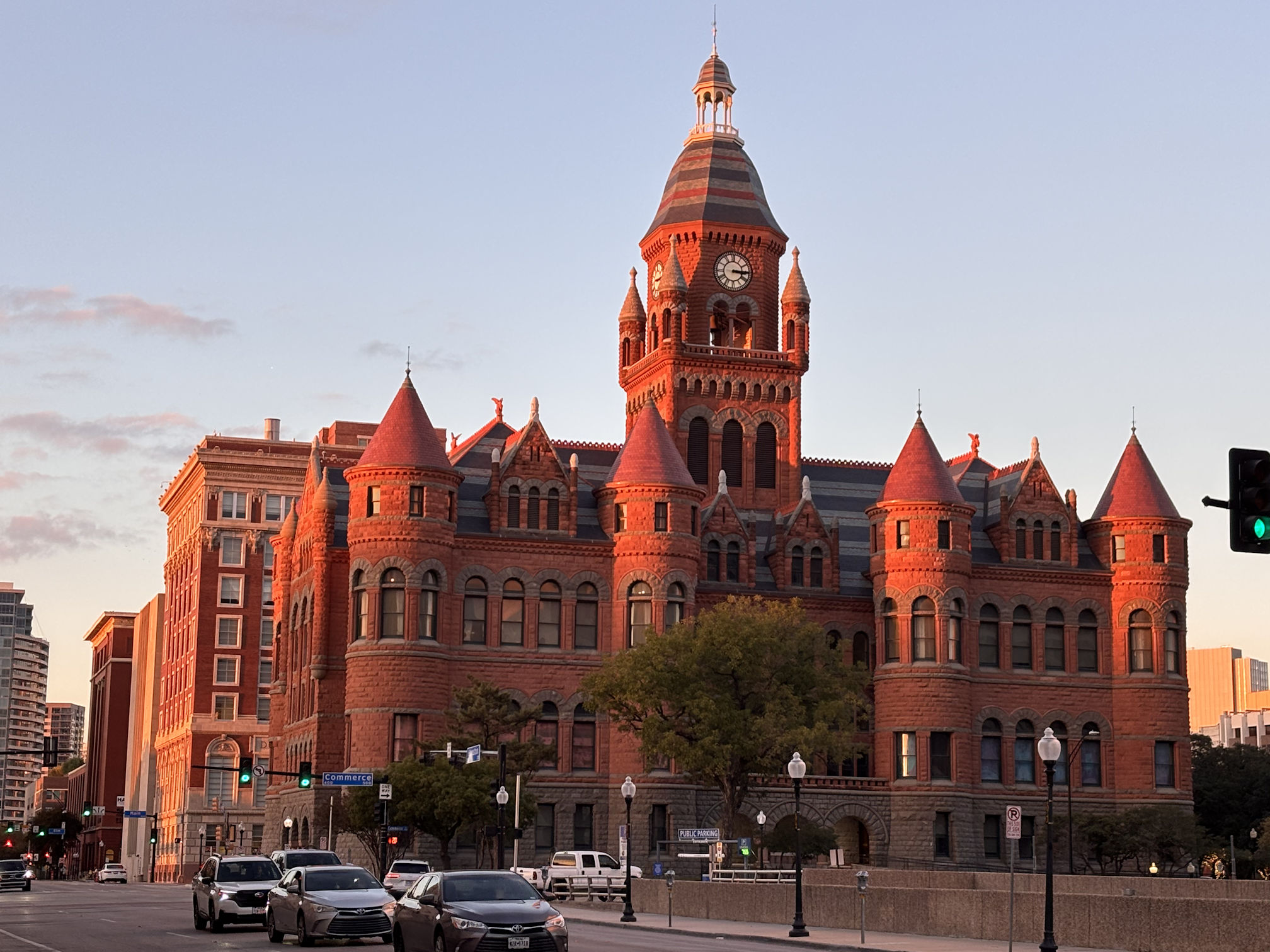
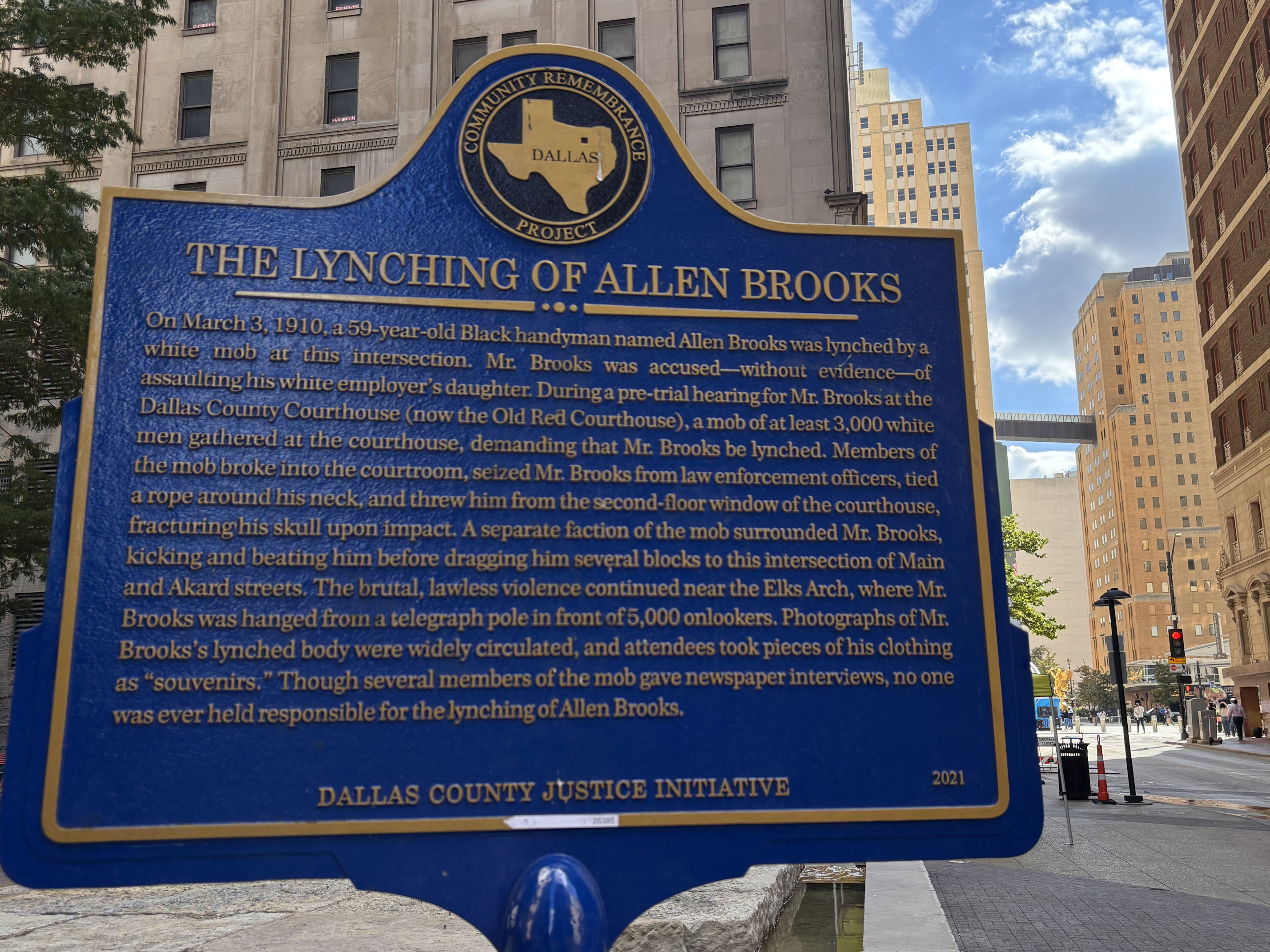
The Dallas County Courthouse was built in 1892 of red sandstone with marble accents. Multiple previous courthouses burned, and so the community built this one specifically to withstand fire. In intervening years it was a museum, and in 2024 the Texas Fifth District Court of Appeals moved in and made this a courthouse once more.
Around the corner is the JFK memorial, but I’ll cover that in a later post. Also nearby is a lovely water feature and an old log cabin replica of the home of the founder of the city.
In 1839, Tennessee lawyer John Neely Bryan chose this high bluff and shallow ford on the Trinity River as the site for a trading post. He planned the town and named it Dallas.
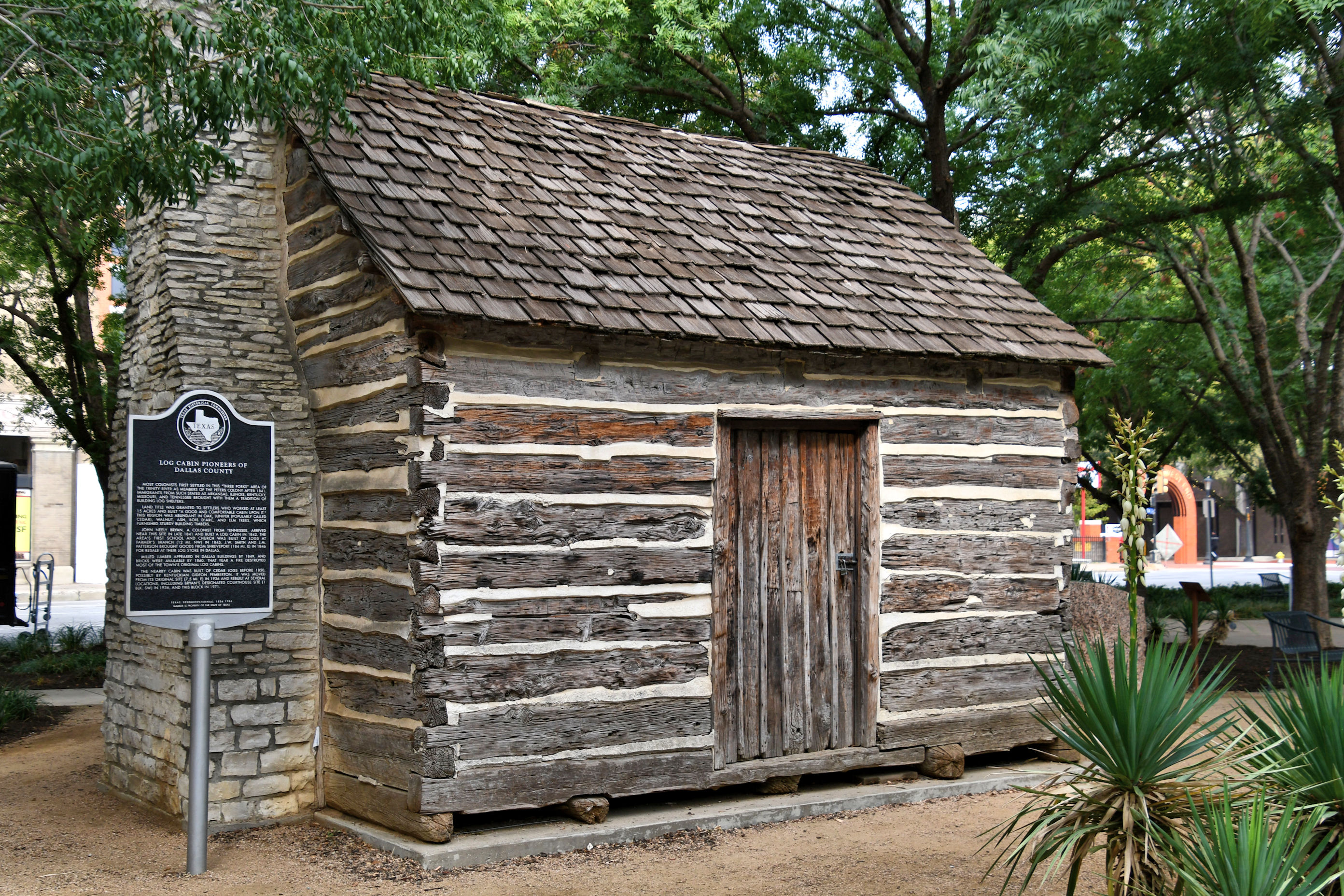
The log cabin above was not Neely’s cabin, but meant to elicit an impression of what his cabin was like. Our tour guide did not tell us that this specific cabin was actually built by a different colonizer prior to 1850 and moved and rebuilt here. So…that’s pretty close to authentic.
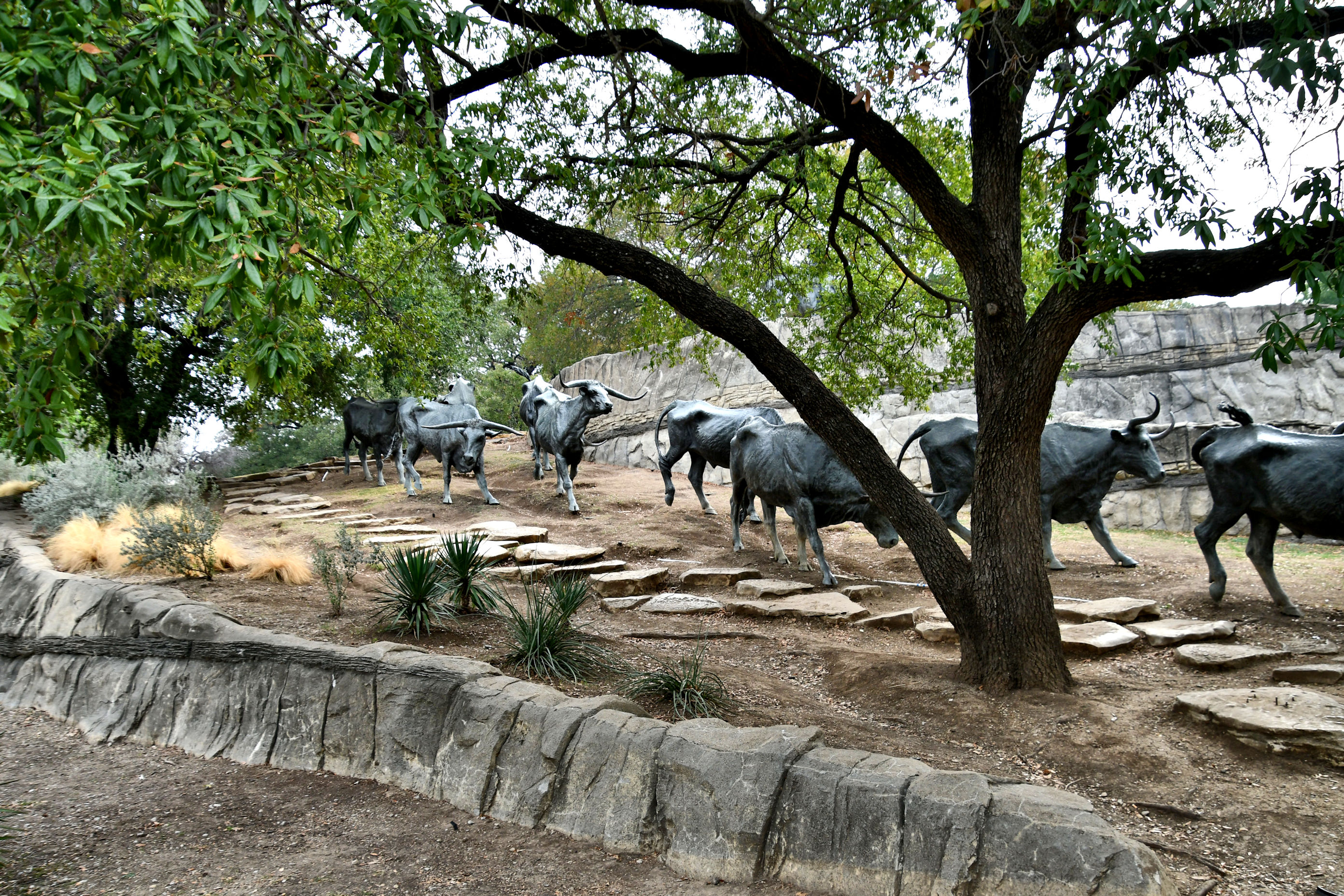
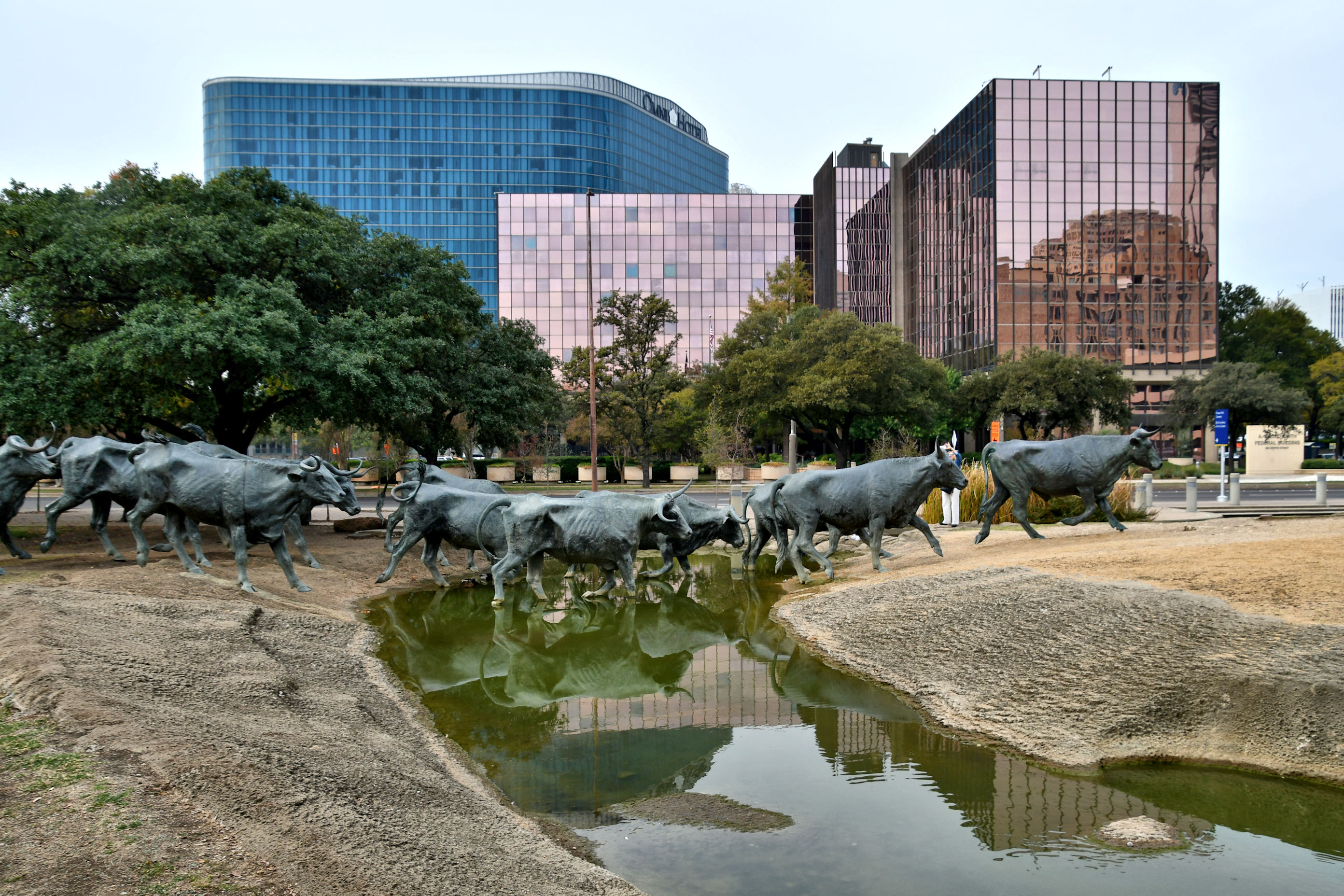
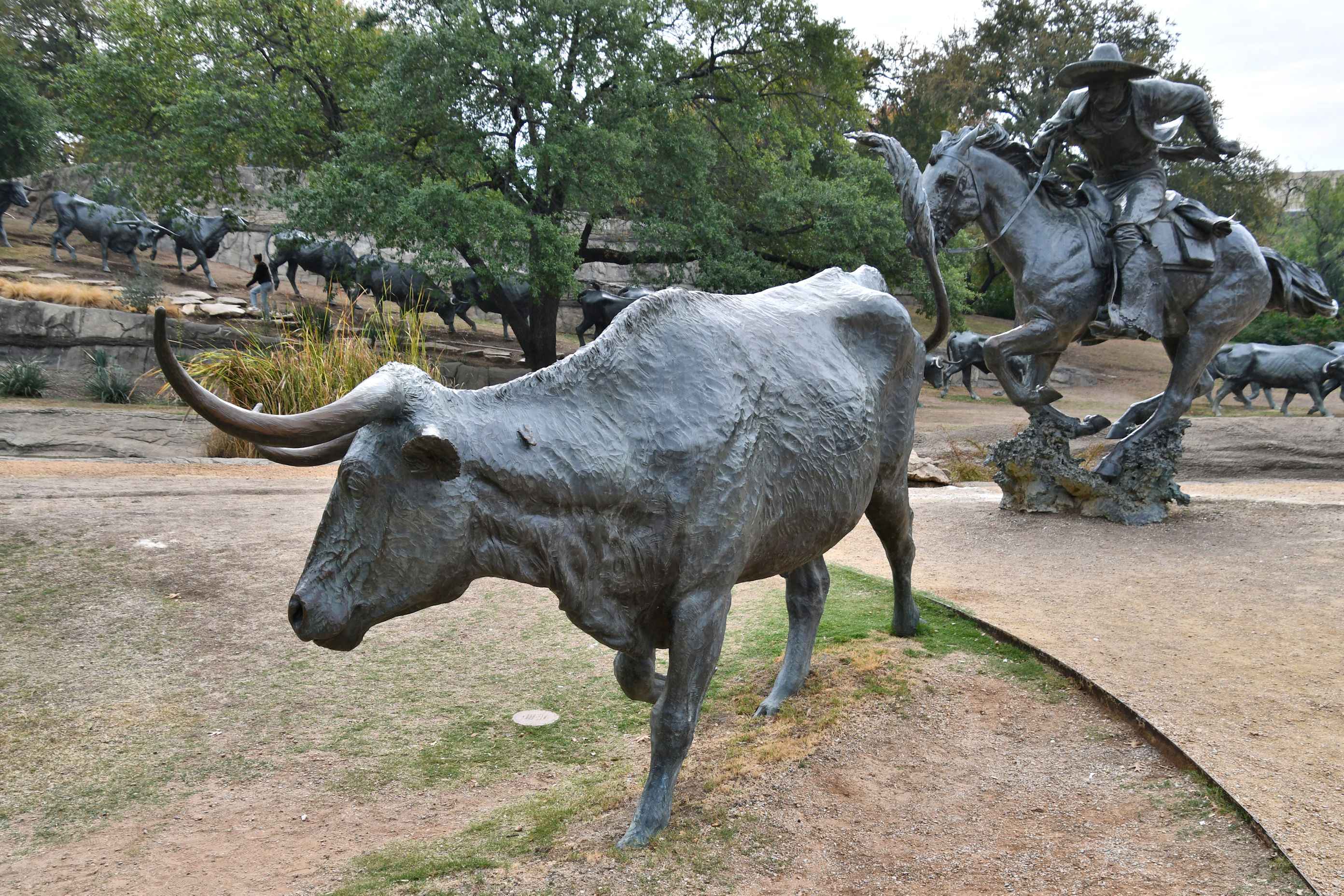
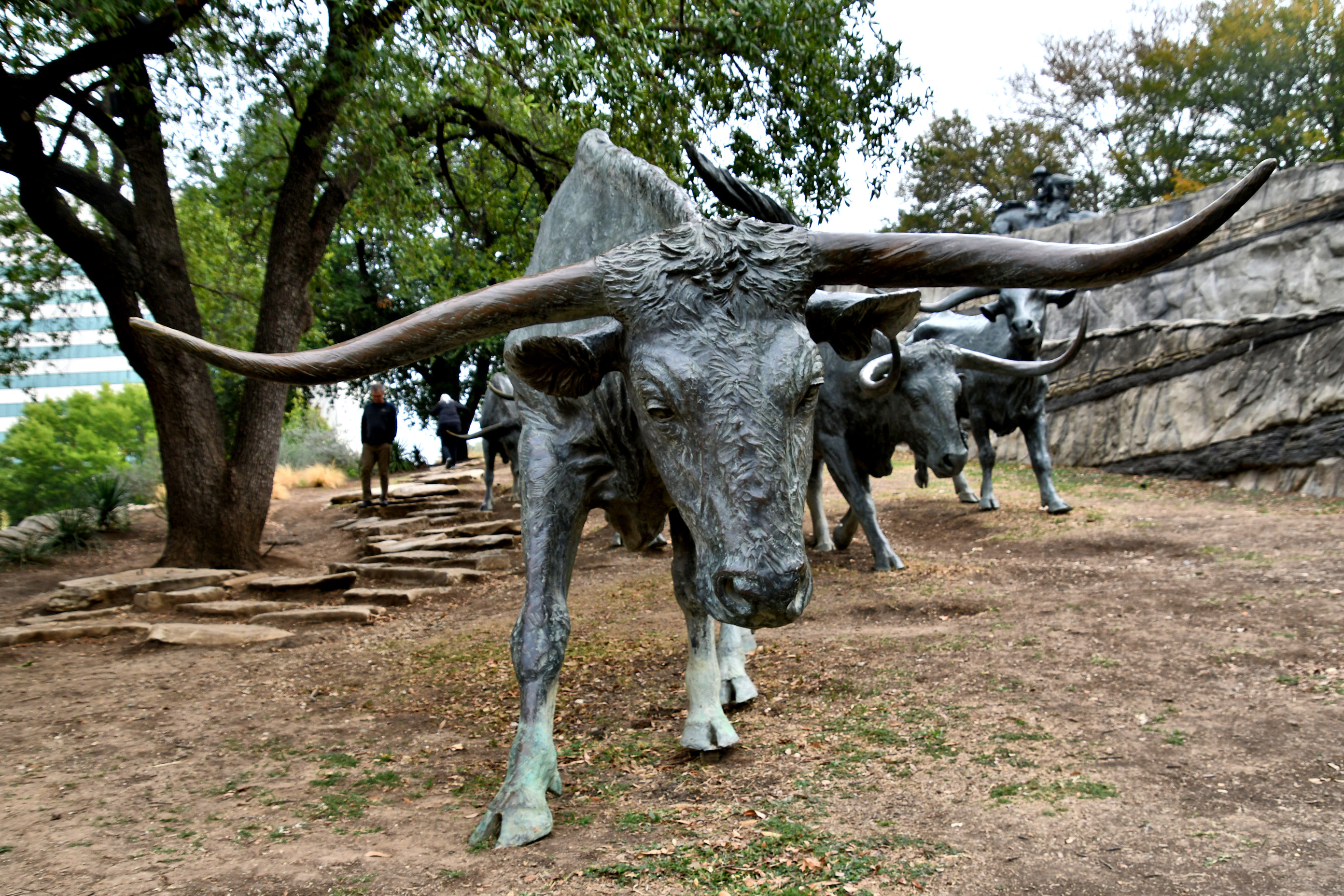
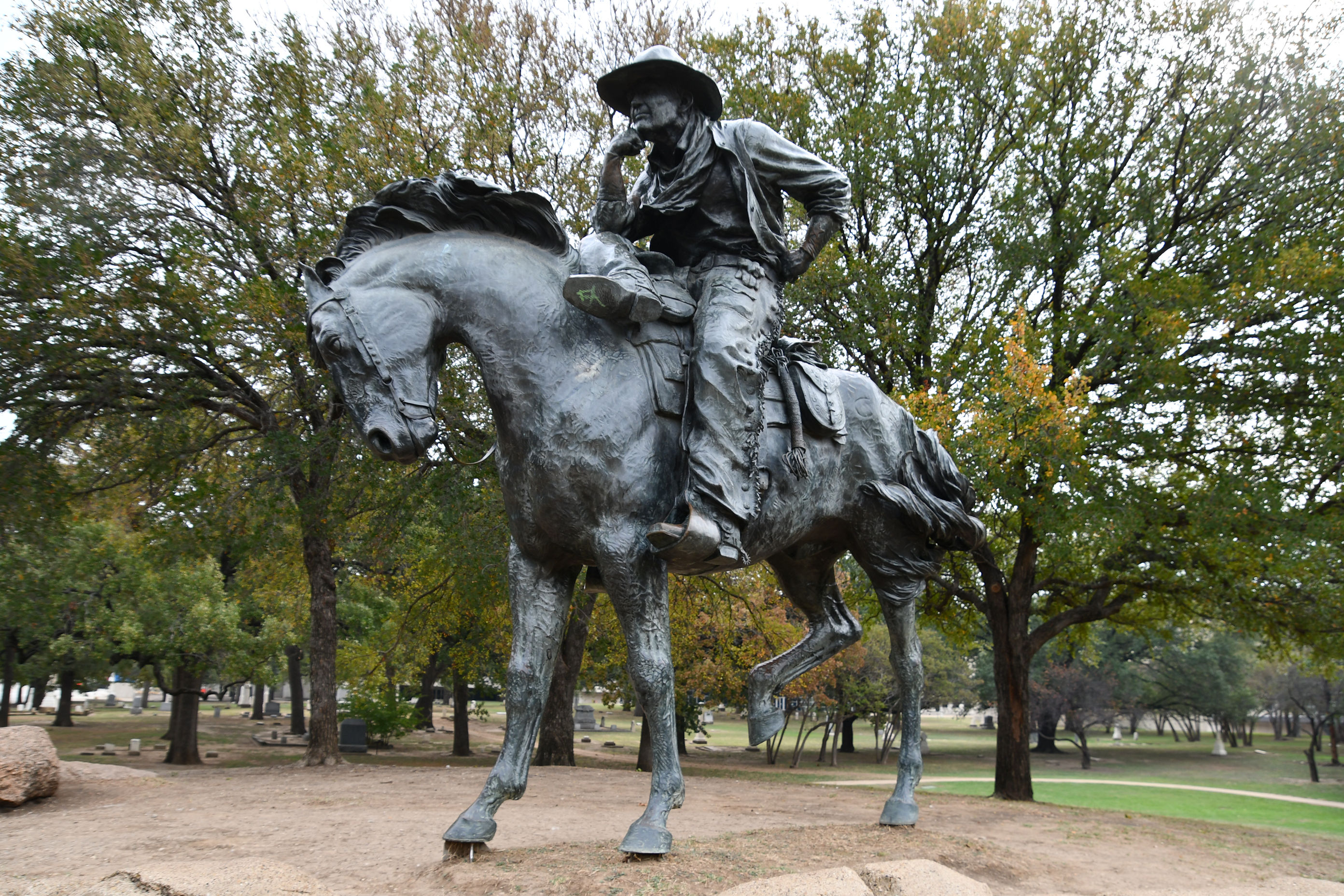
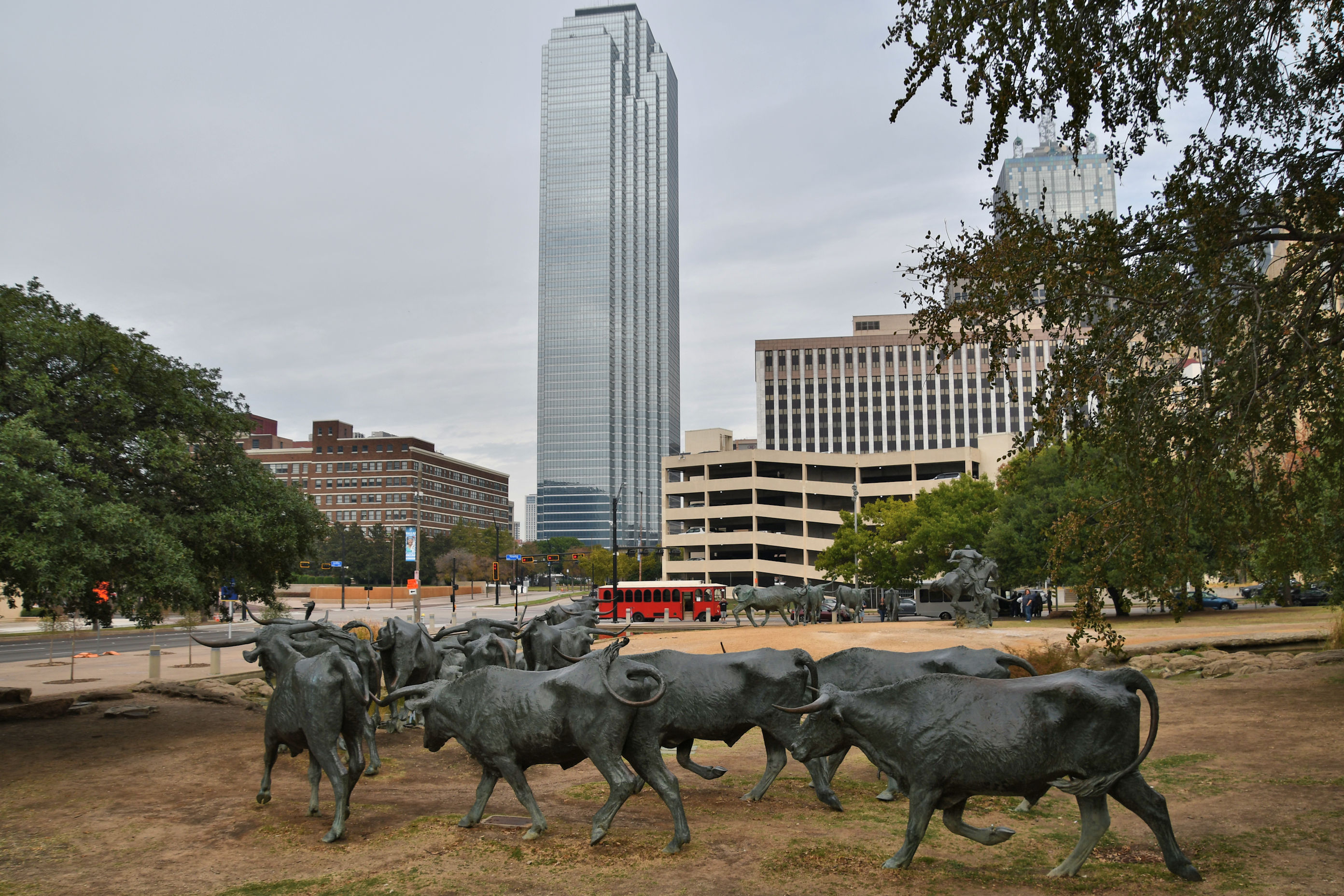
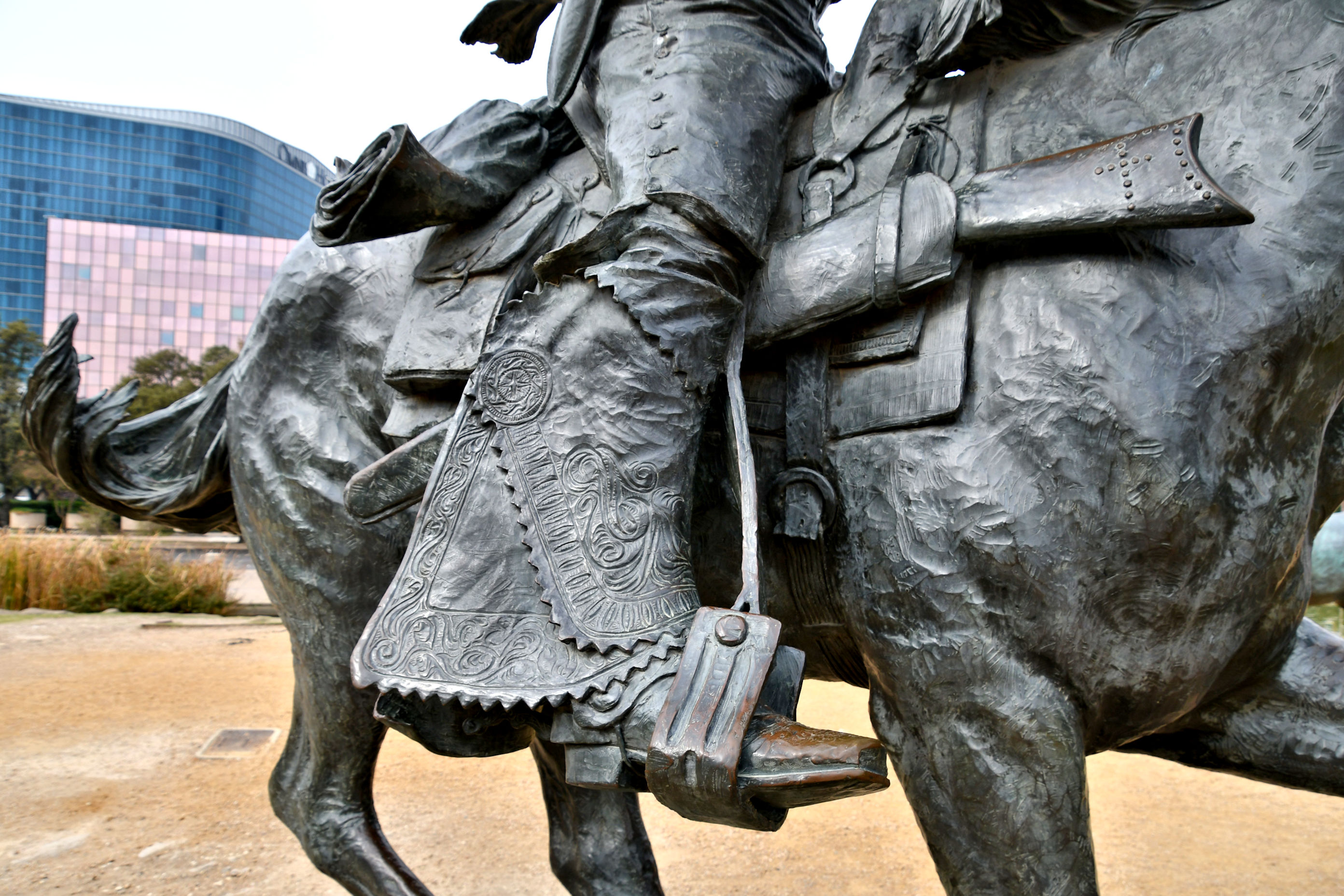
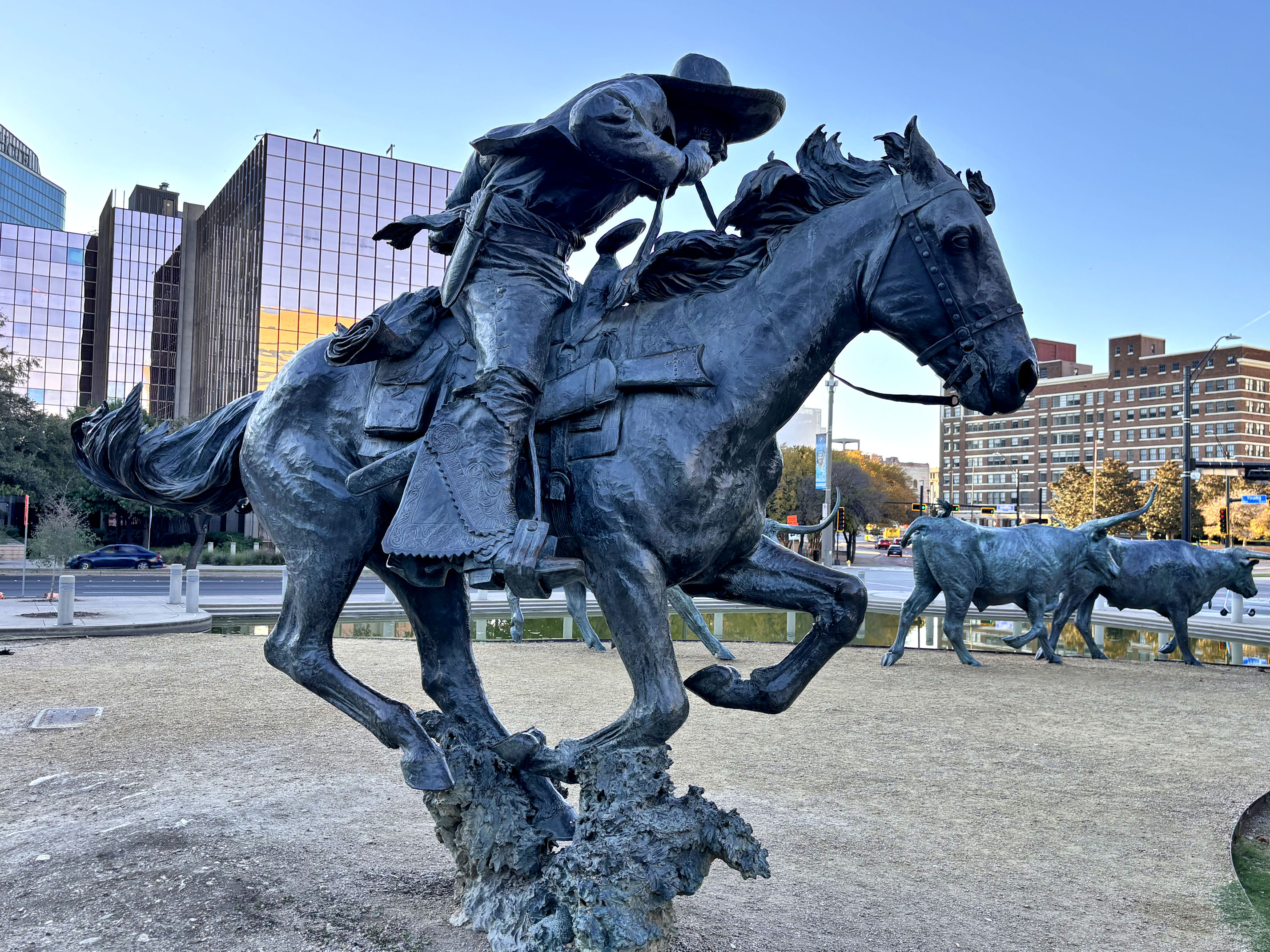
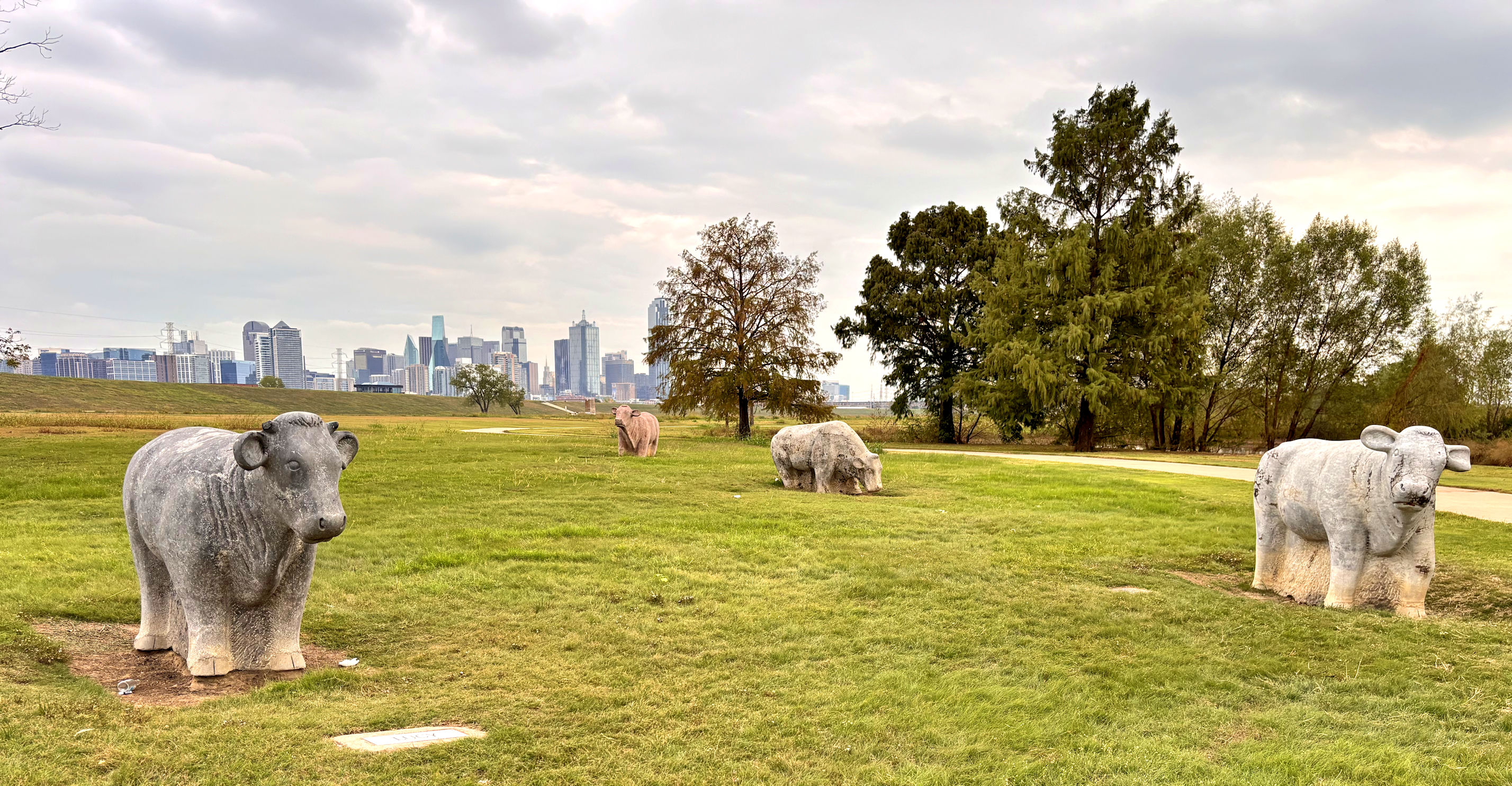
One of our first stops on the tour was this amazing art exhibit of cattle. We were told that originally there were 50 longhorns, but due to being overly loved (and climbed on), there are fewer. The group is still impressive.
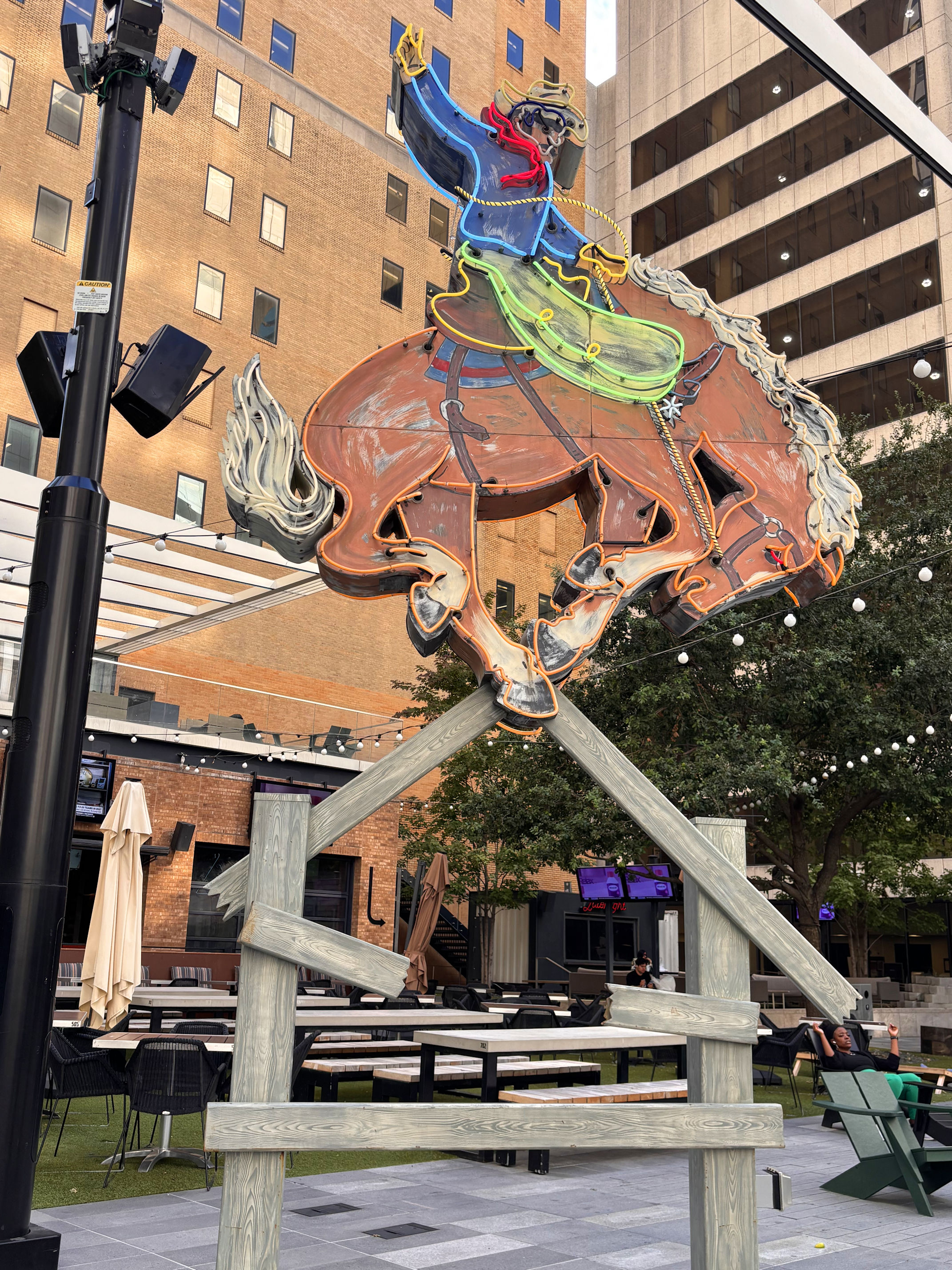
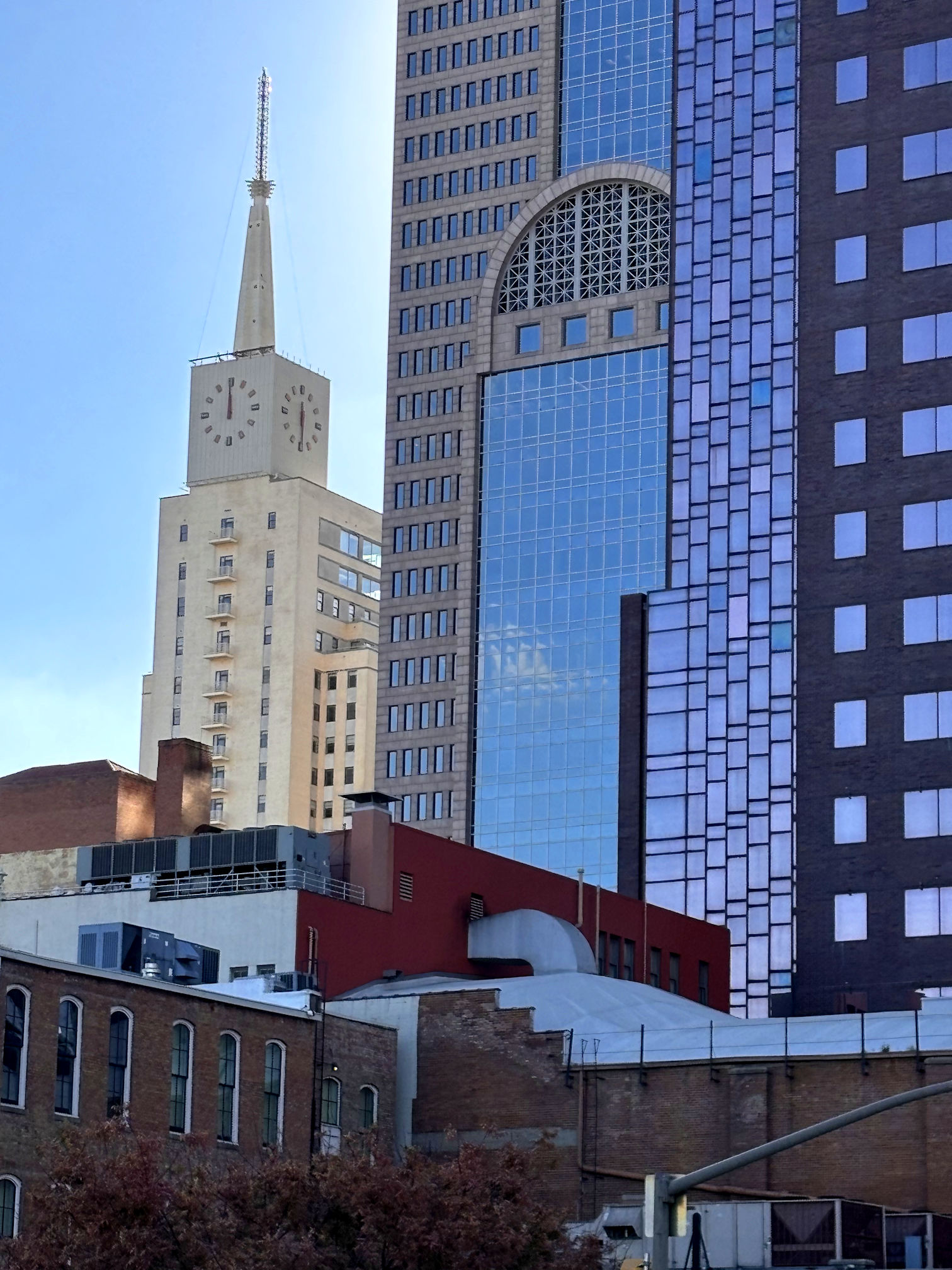
Next we learned some lore about the famous Flying Red Horse, which I hear is the proper way to call it if you are a local, but our tour guide called it the Pegasus. Old postcards and articles from the 1930s call it the Pegasus, so I guess both are correct.
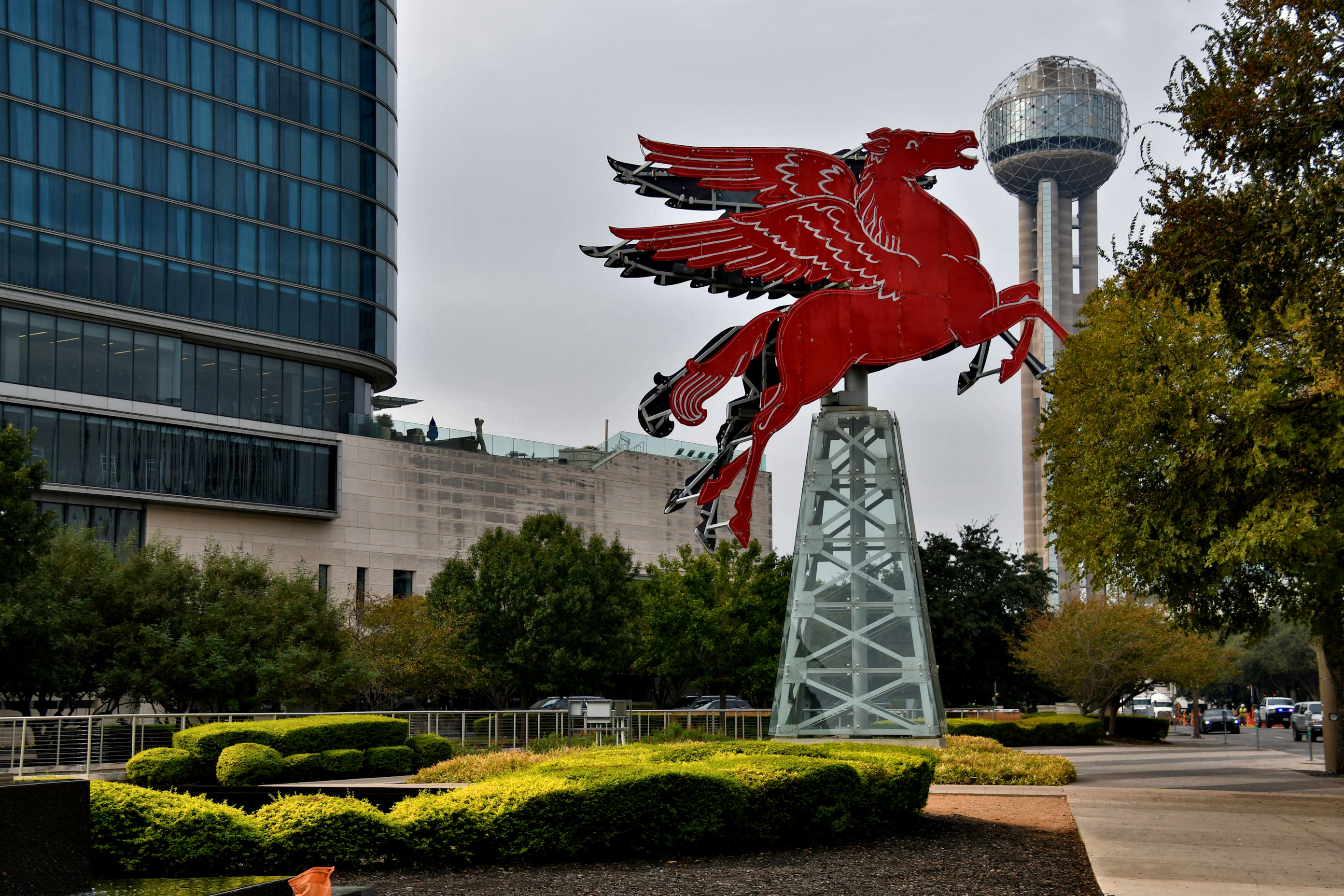
The Mobil Oil Pegasus perched atop the Magnolia Petroleum building in Dallas from 1934 until 1999, when rust and growing structural issues forced its removal. It was packed into crates and almost immediately lost. On the first day of 2000, a carefully crafted duplicate was returned to the Dallas skyline. In 2012, after finding the rusted and gunshot-pierced remains of the original in a city-owned shed by White Rock Lake, the Omni Dallas Hotel funded the restoration. In 2015 the surviving red symbol of the city was re-lit in front of the Omni, where it is today.
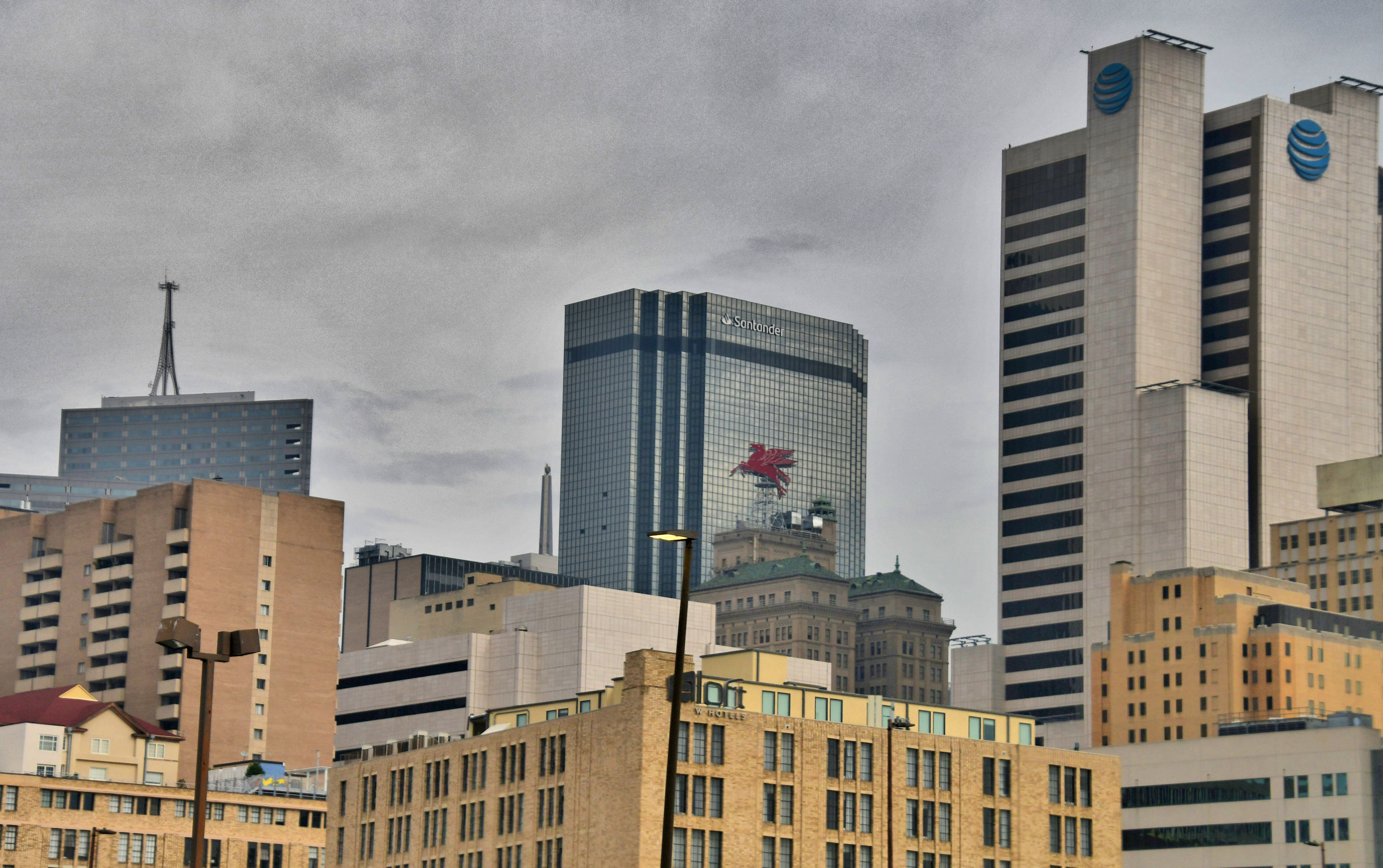
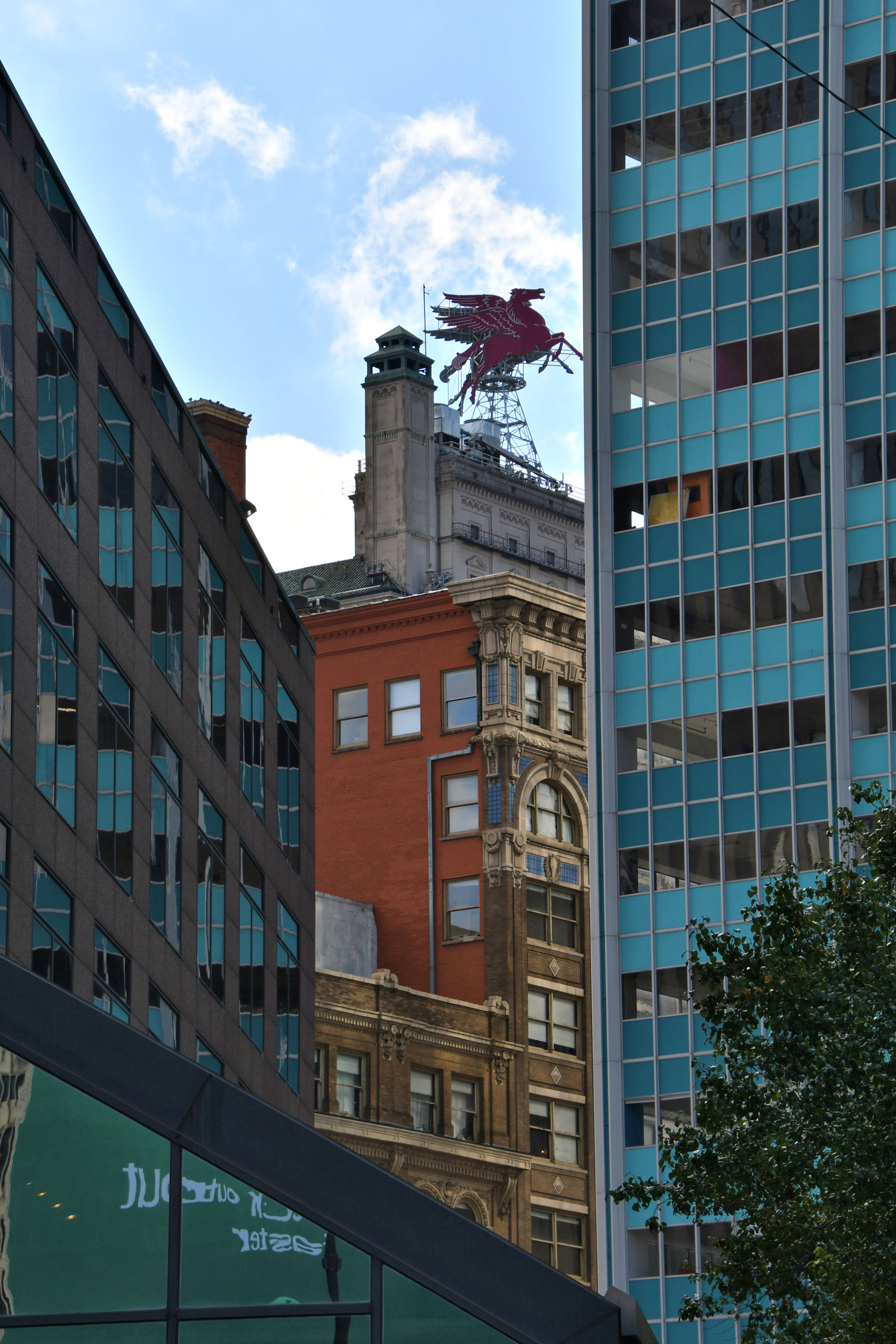
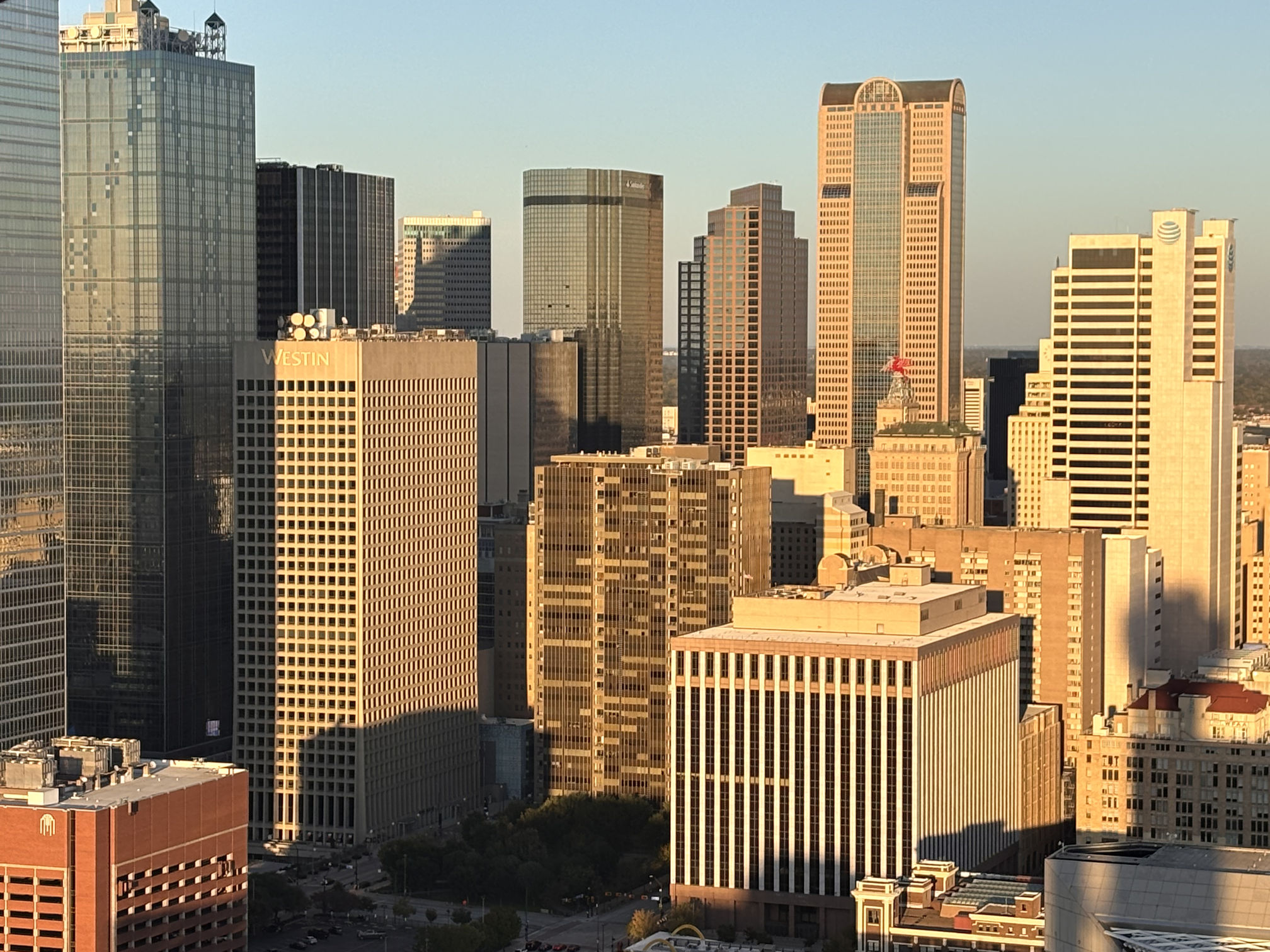
Above, you can see three different views of the replacement Pegasus, still flying above the Dallas skyline. Please click the images for a larger version. For people who know the city, or grew up here, this Flying Red Horse is synonymous with Dallas.
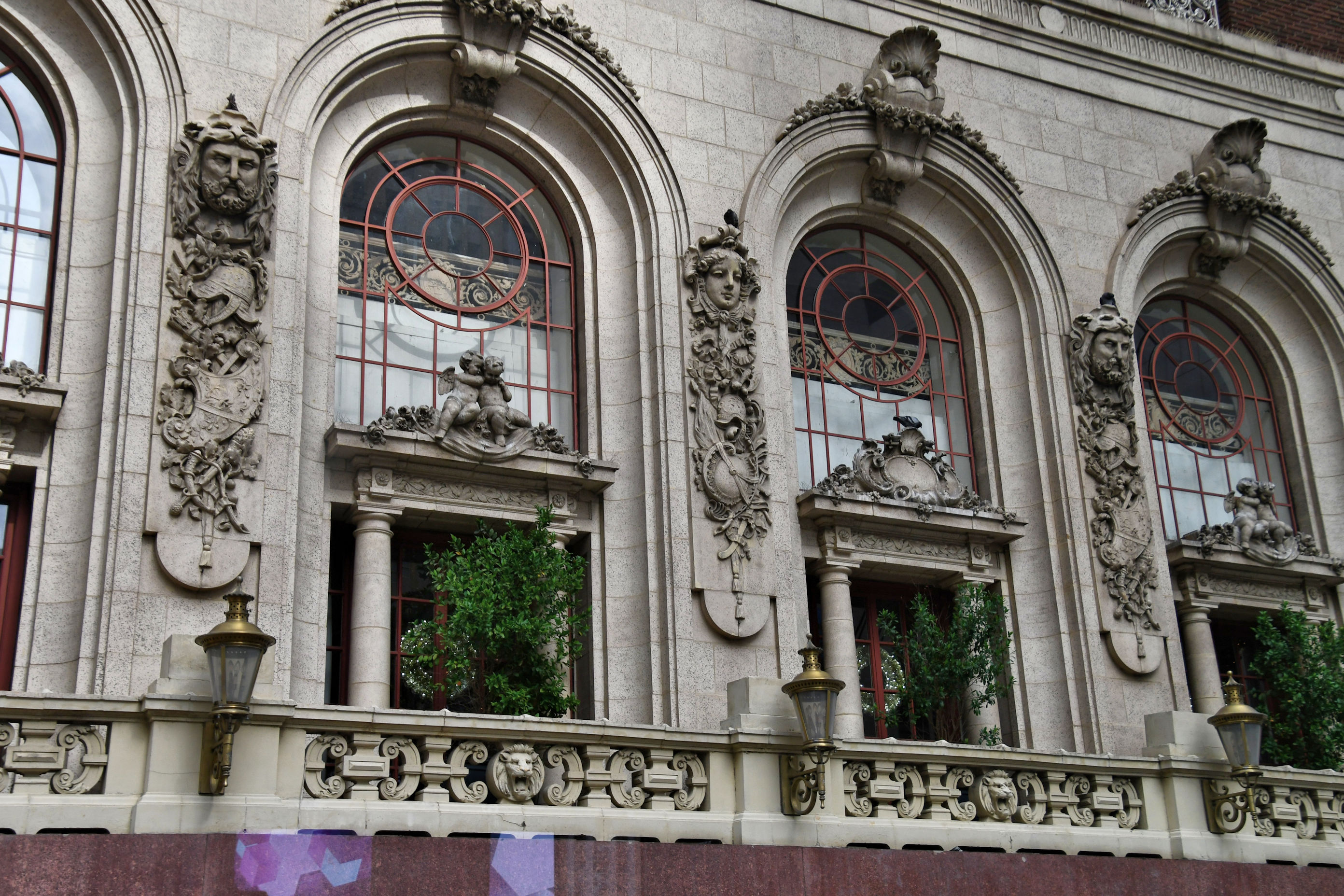
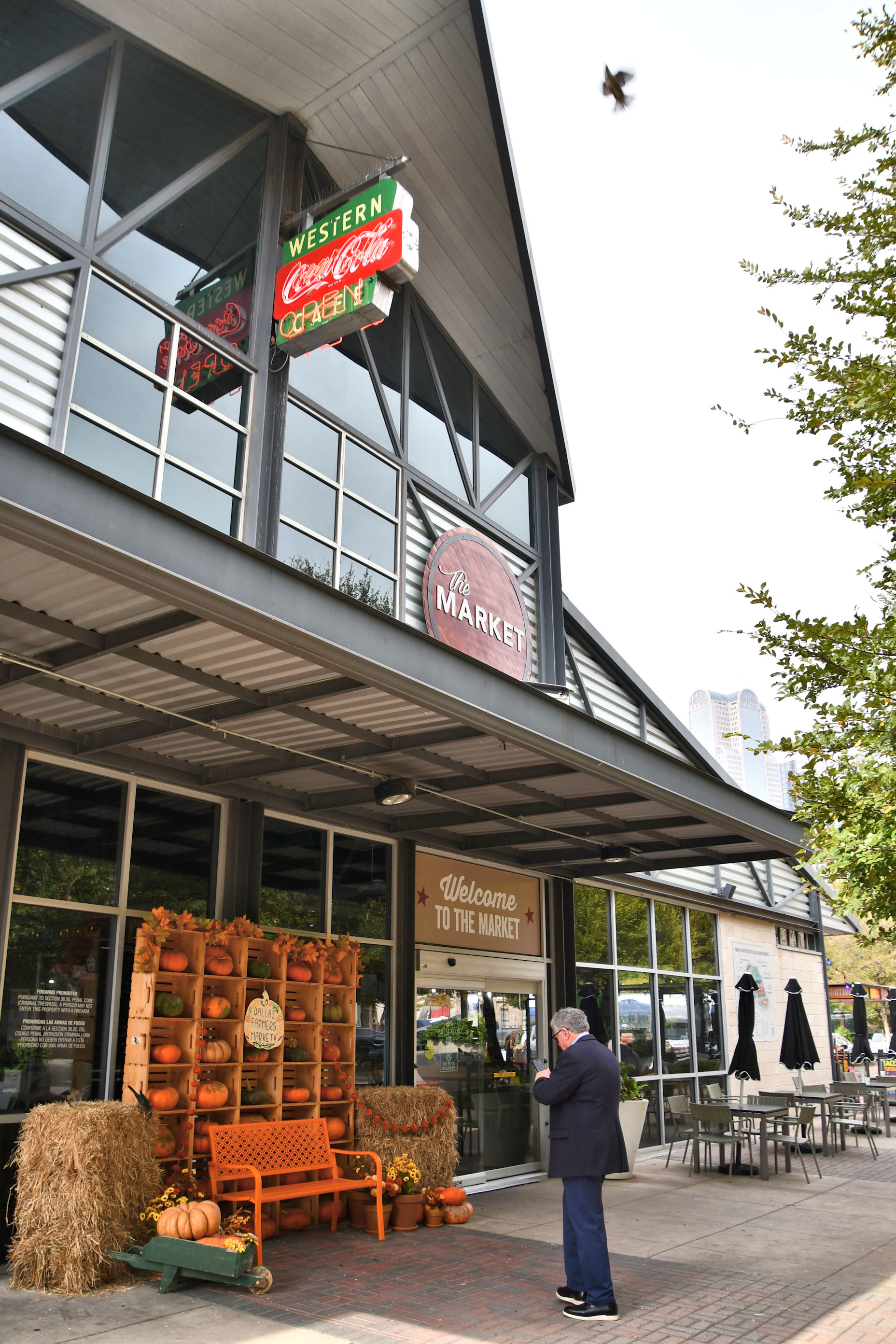
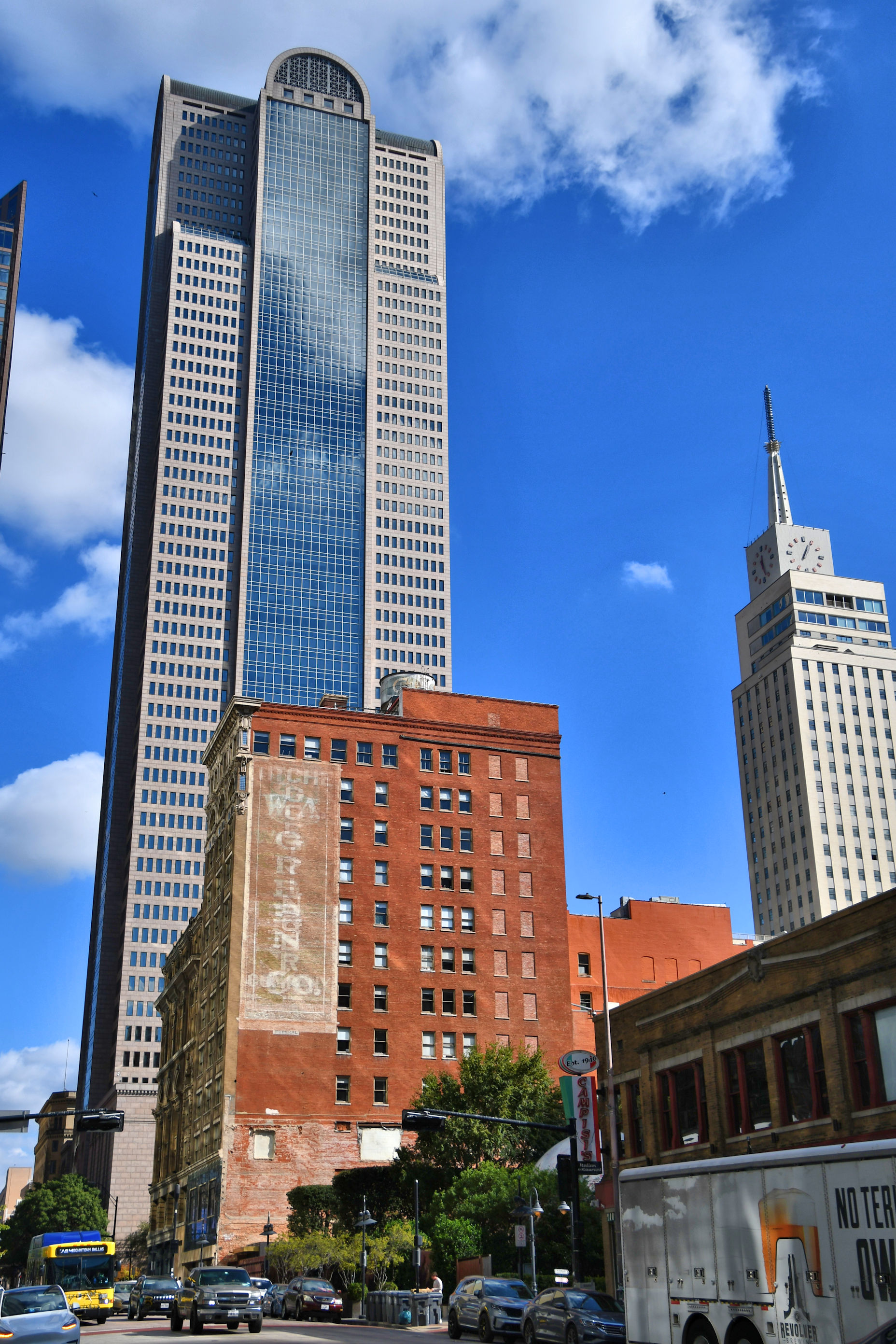
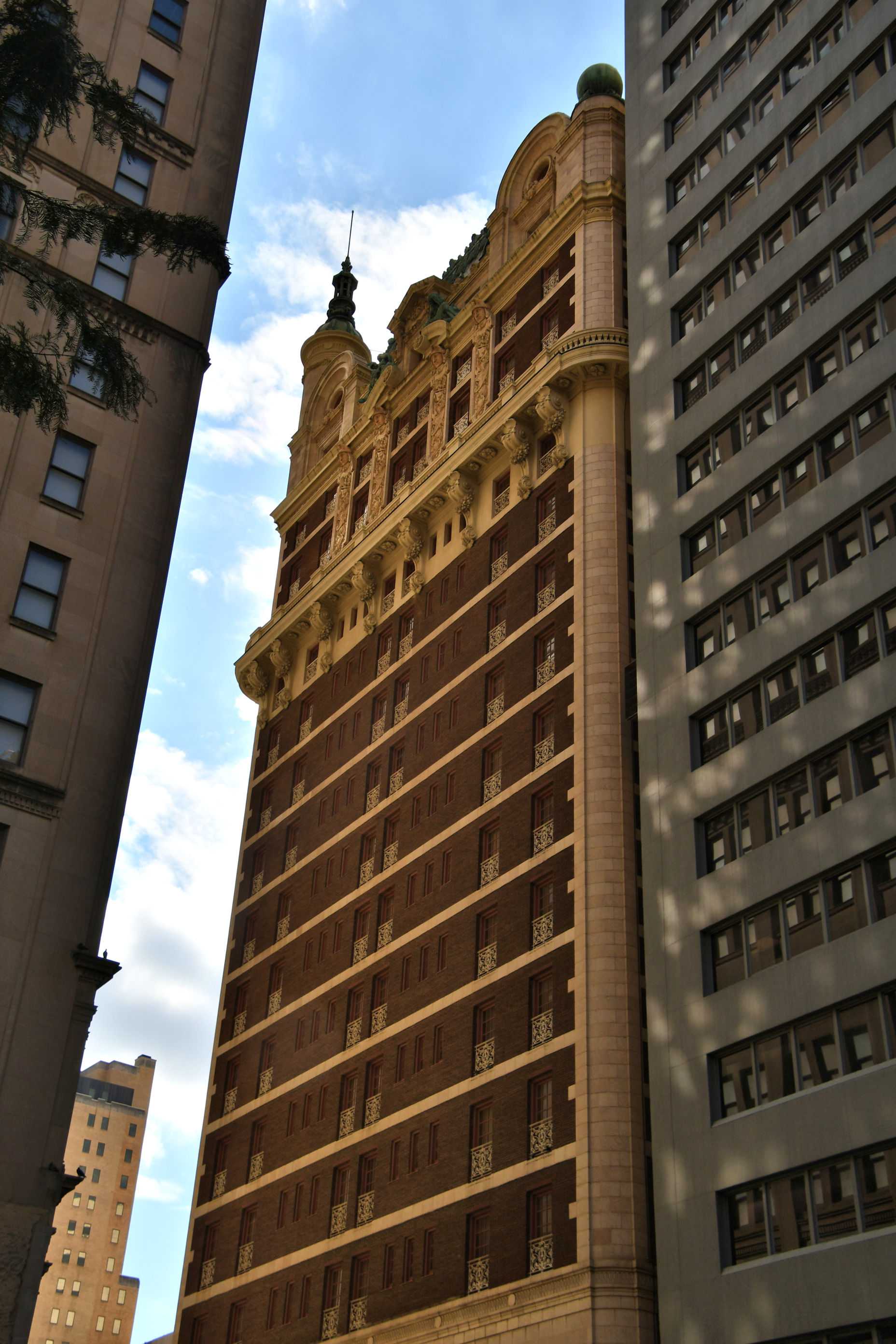
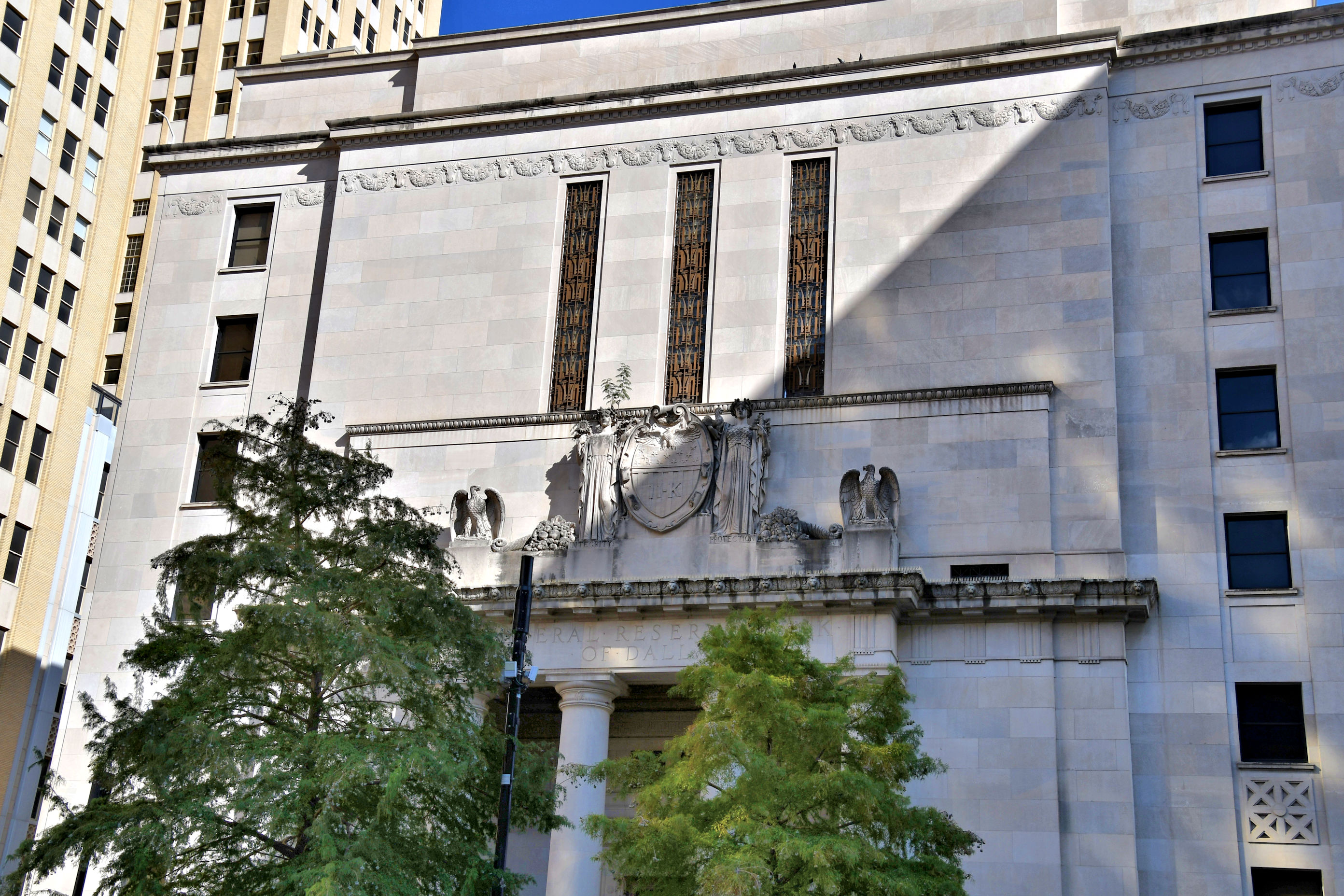
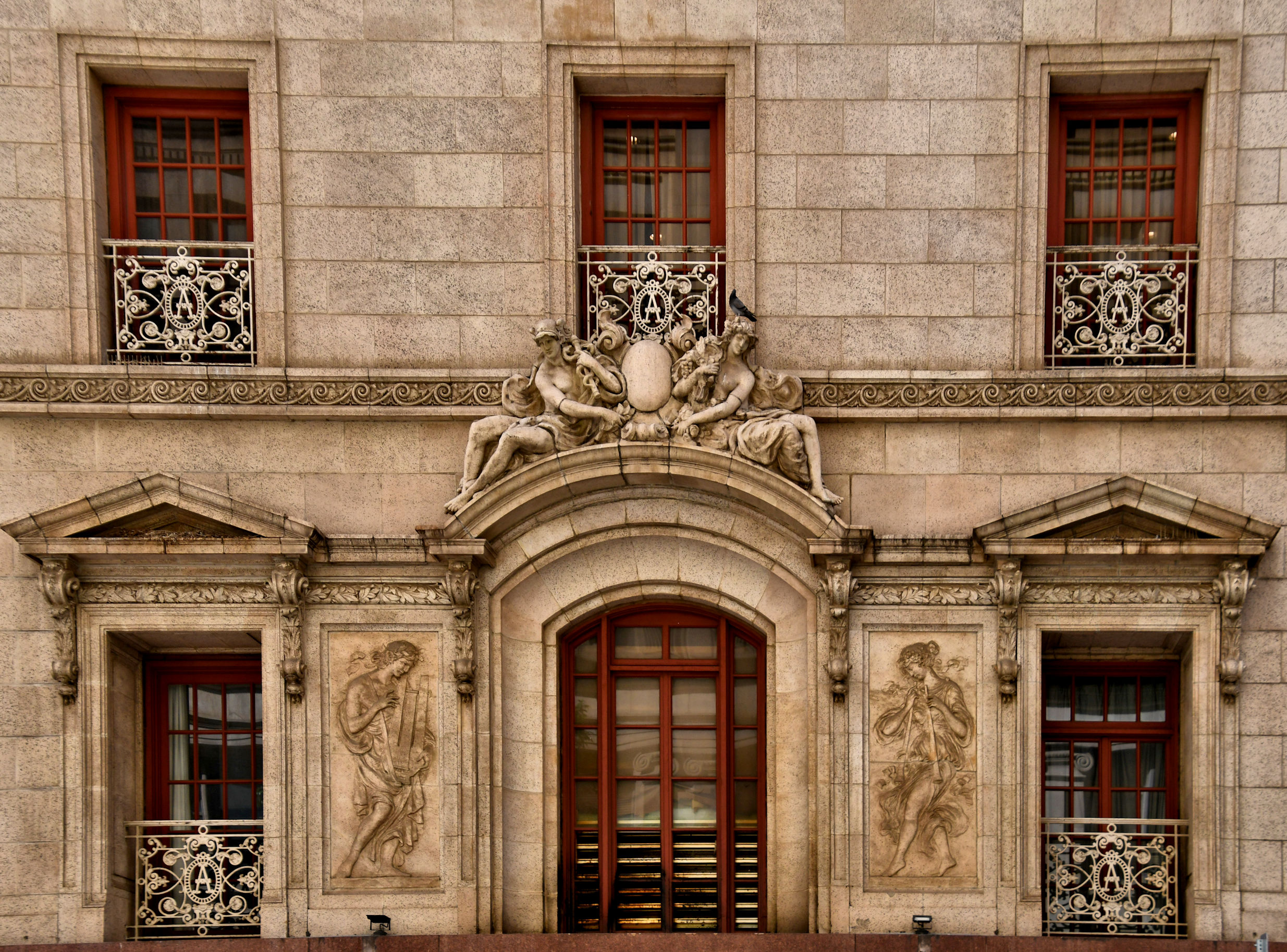
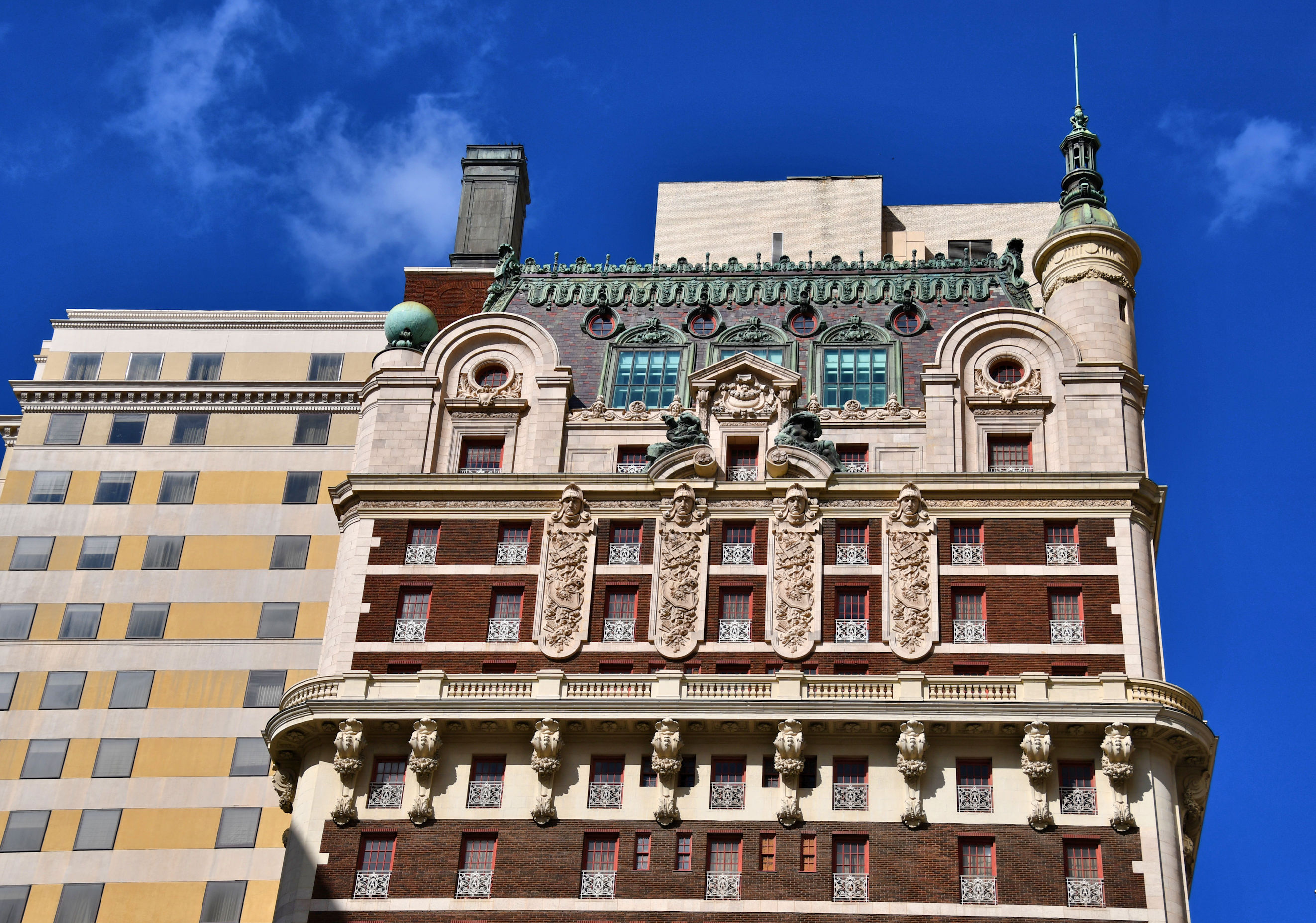
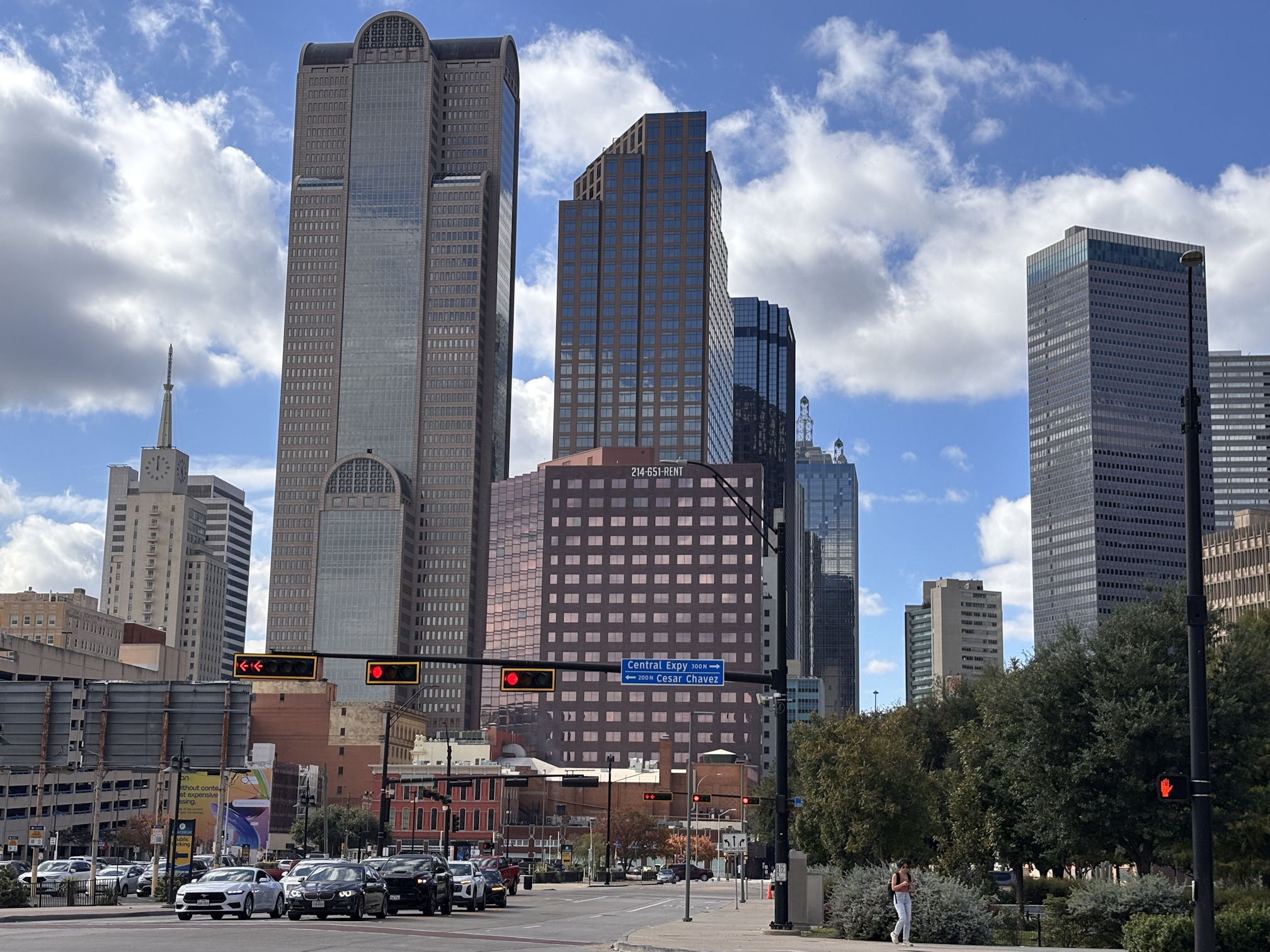
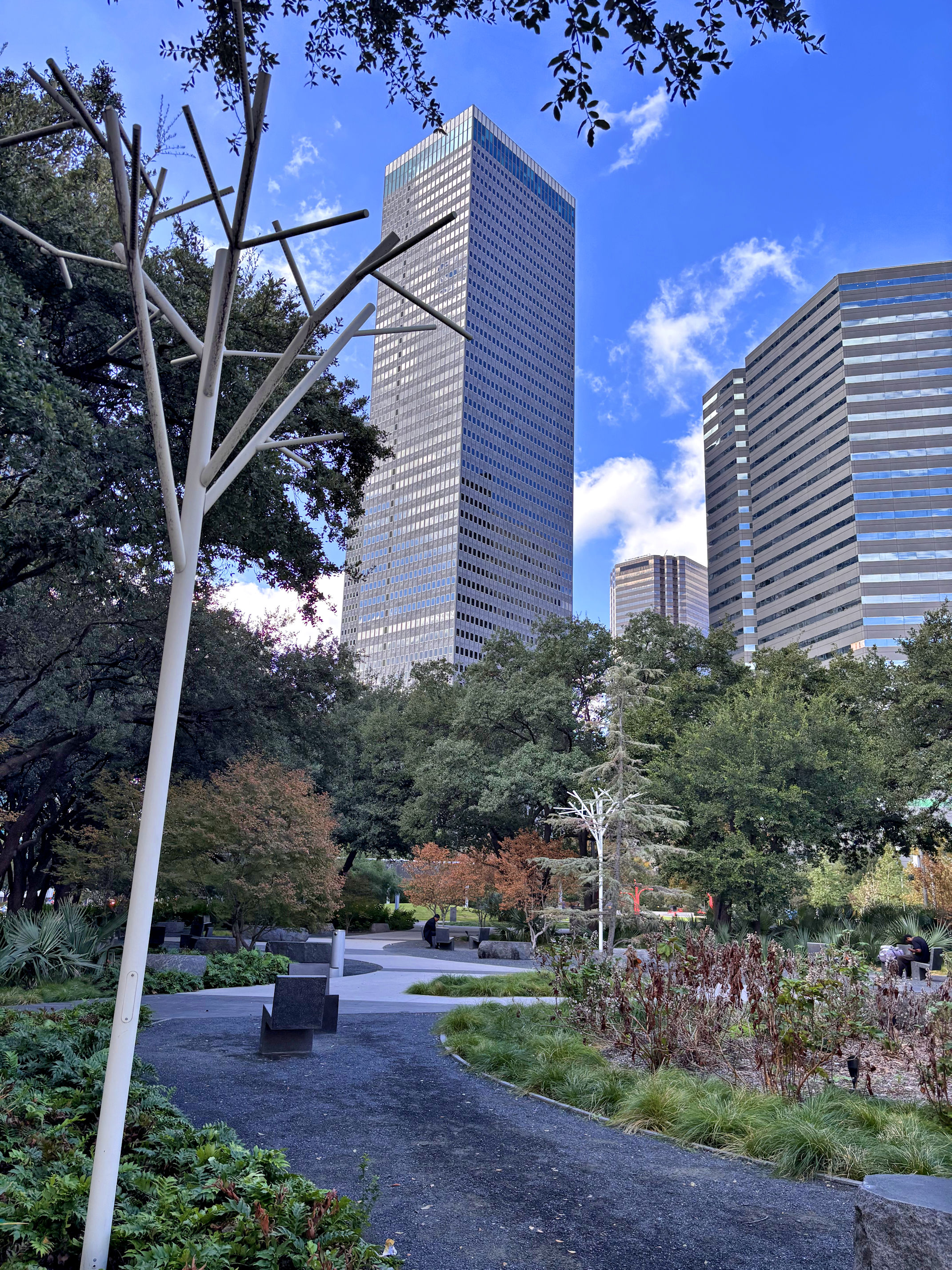
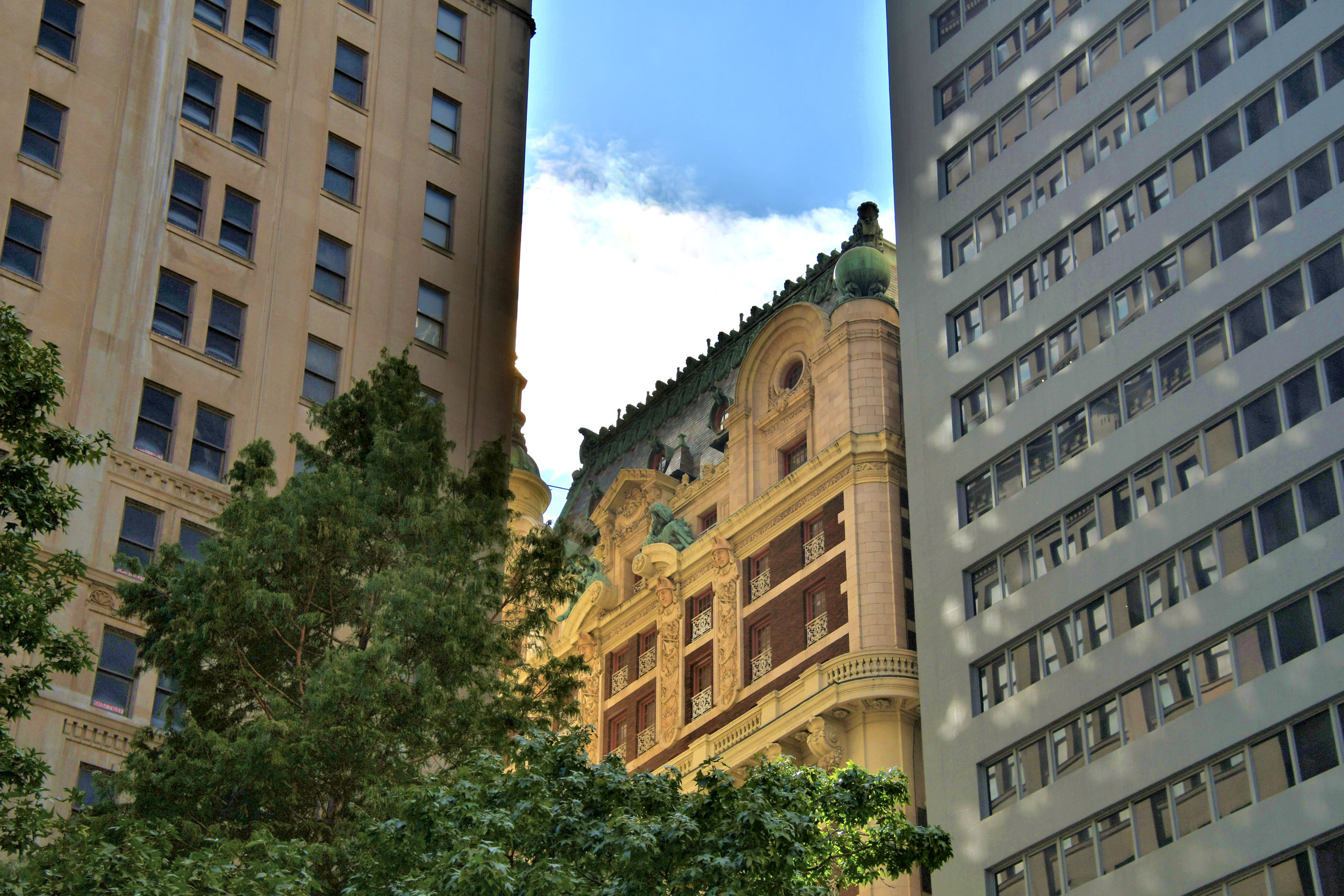
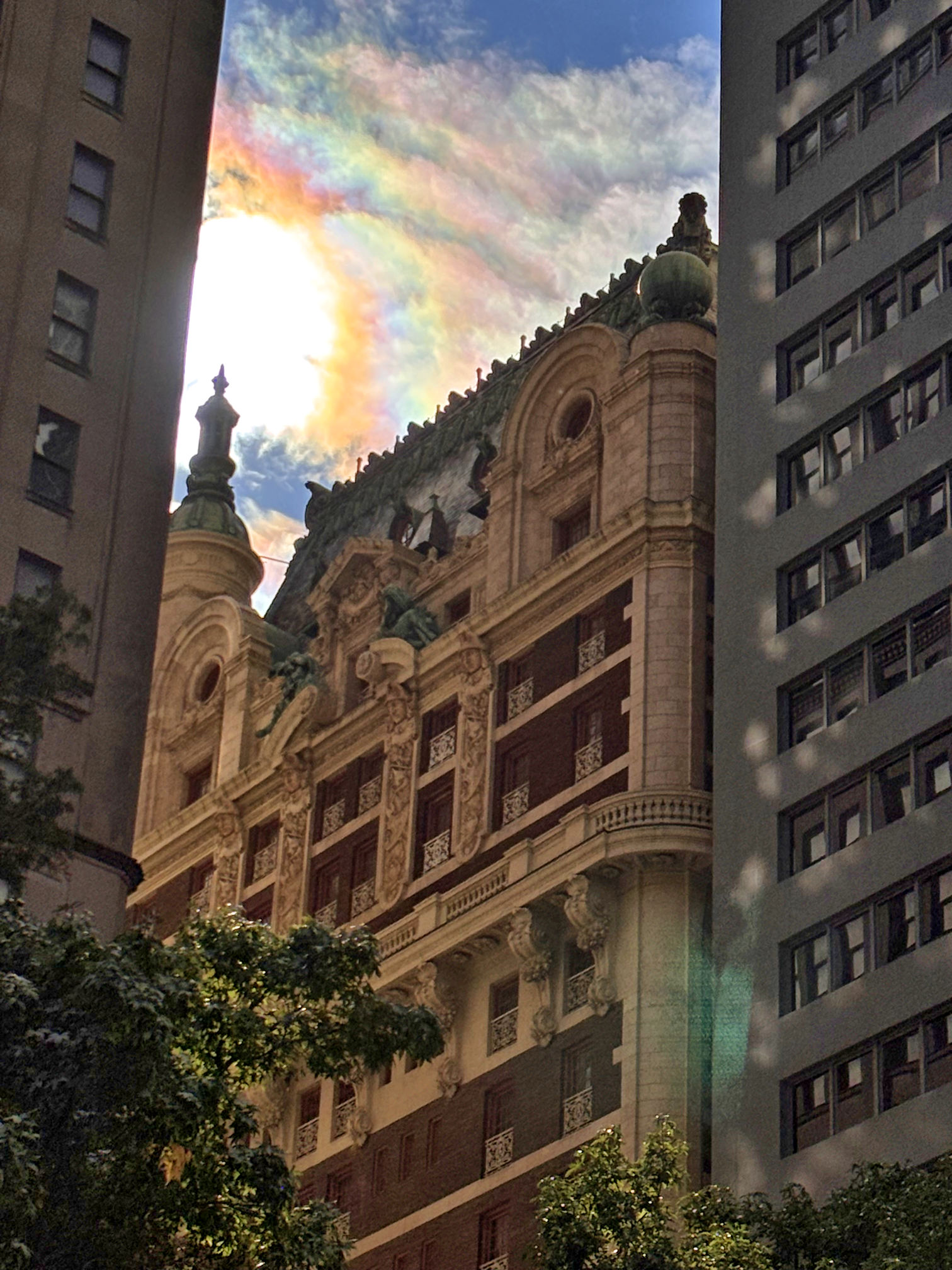
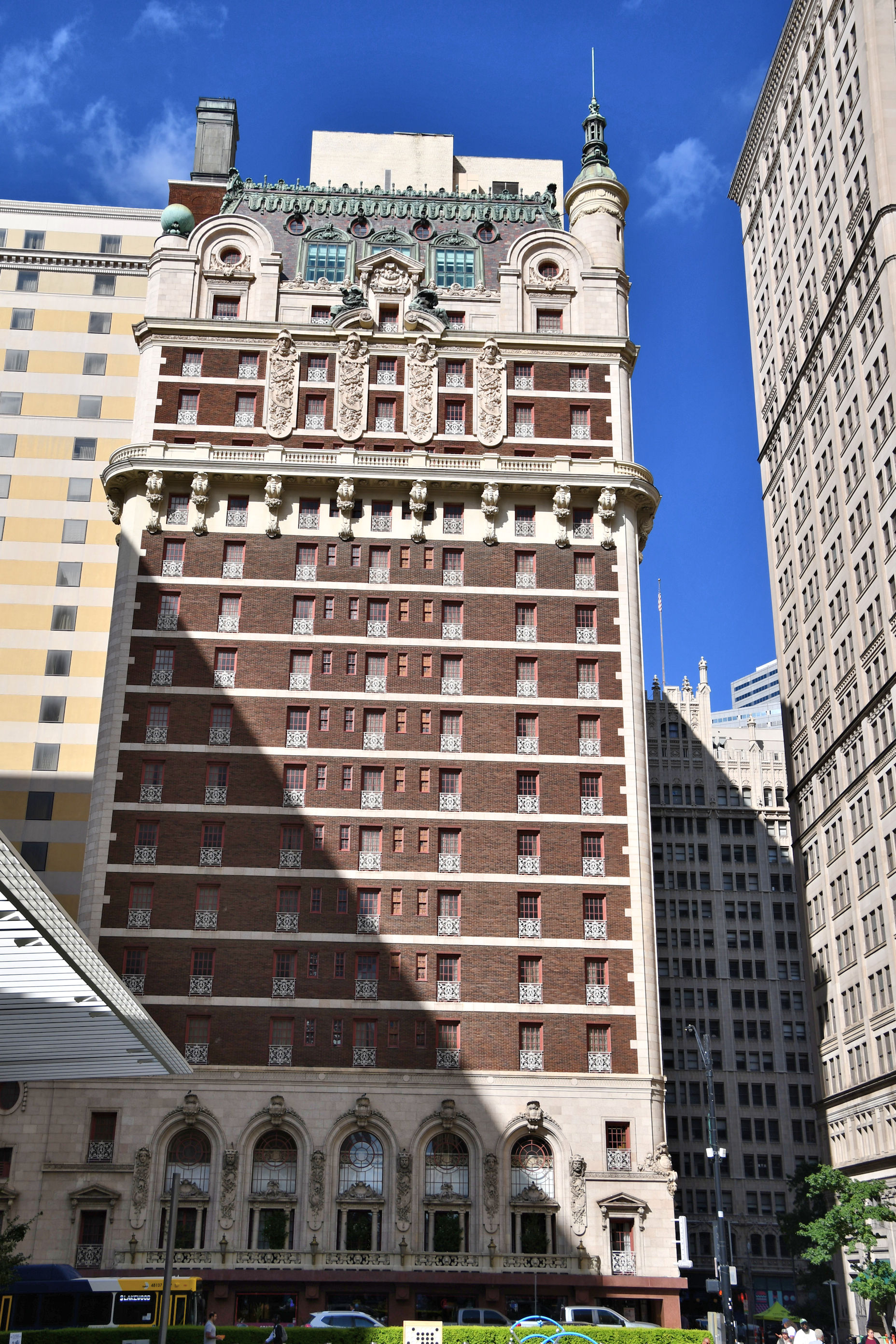
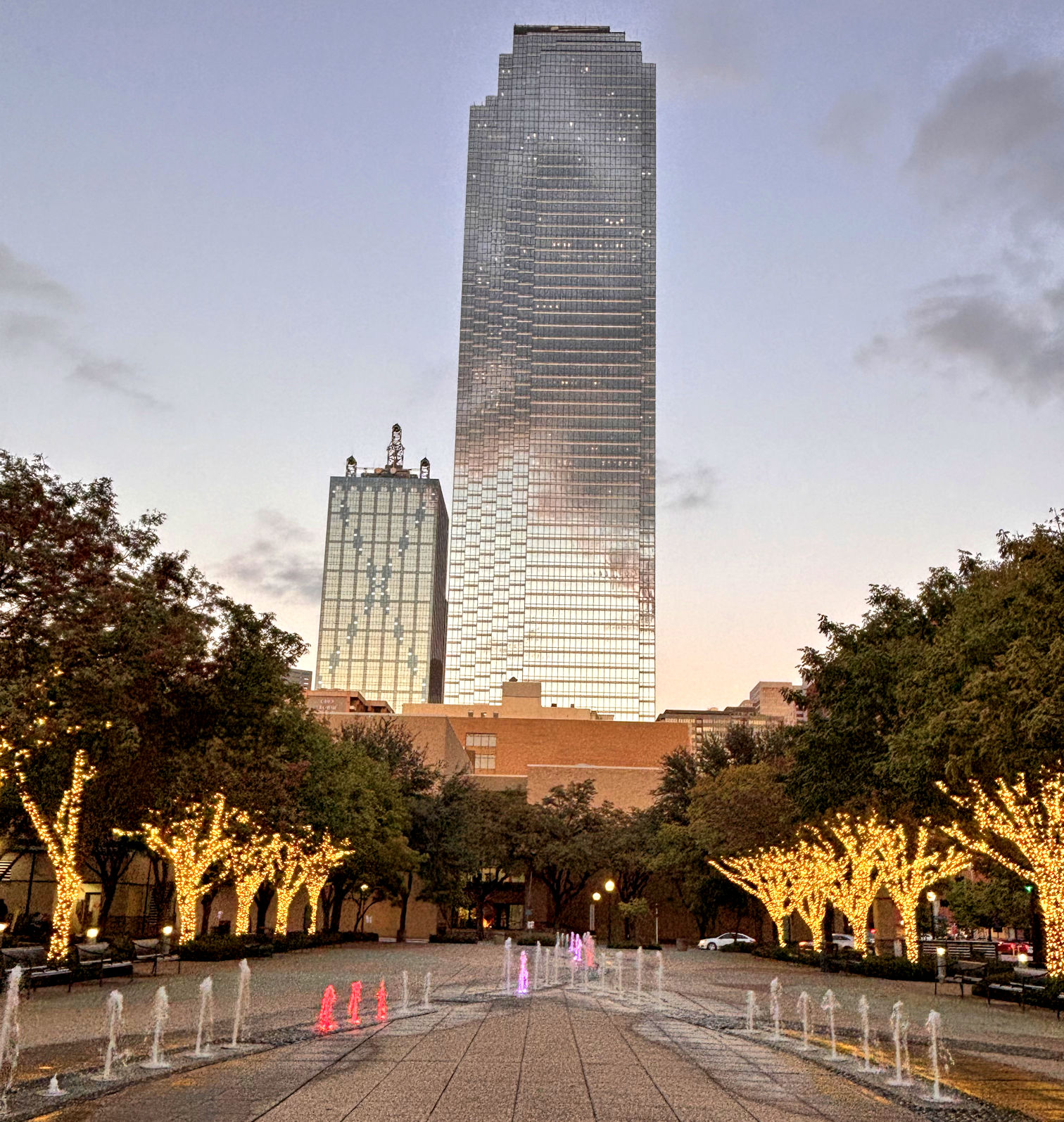
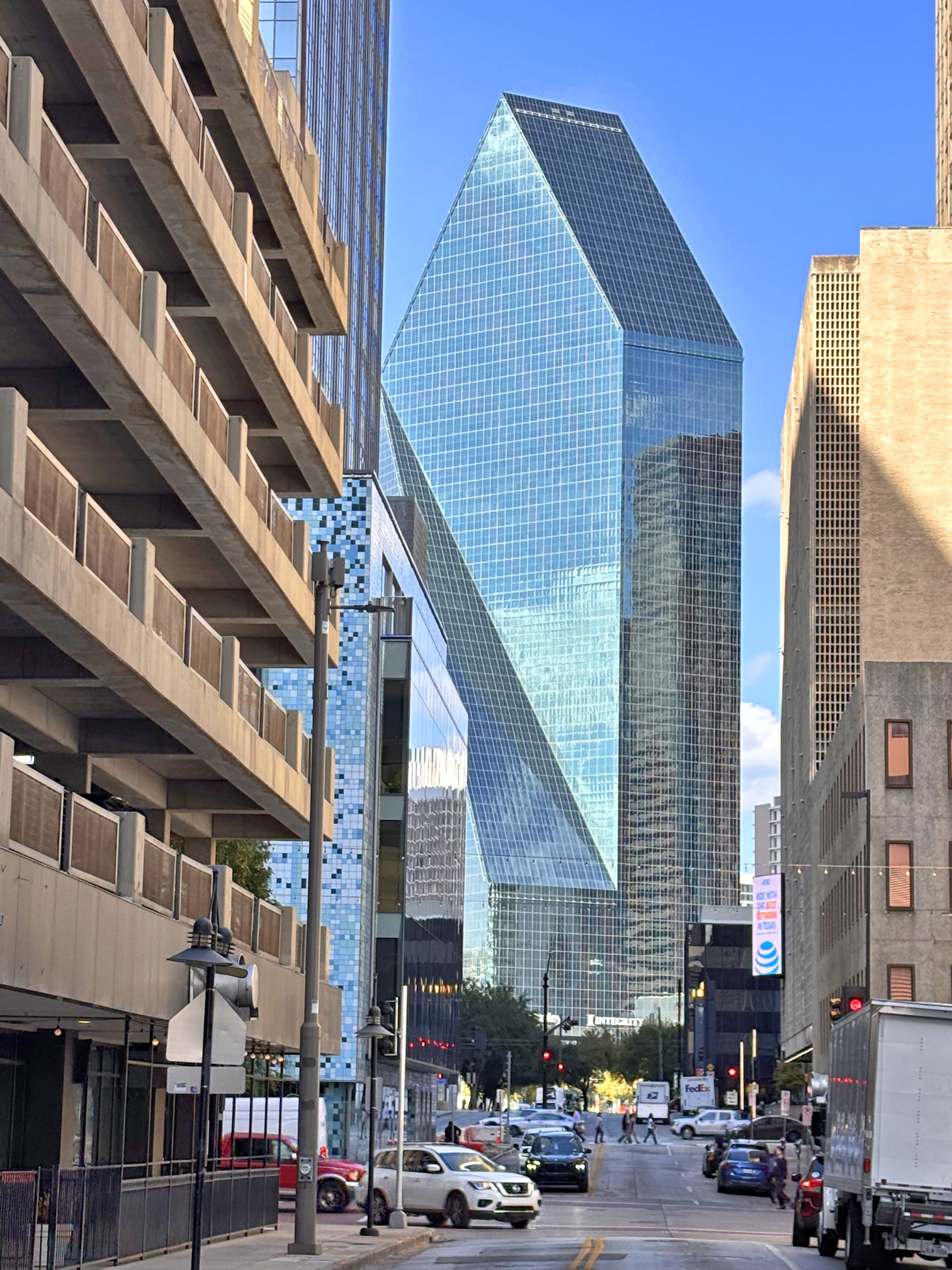
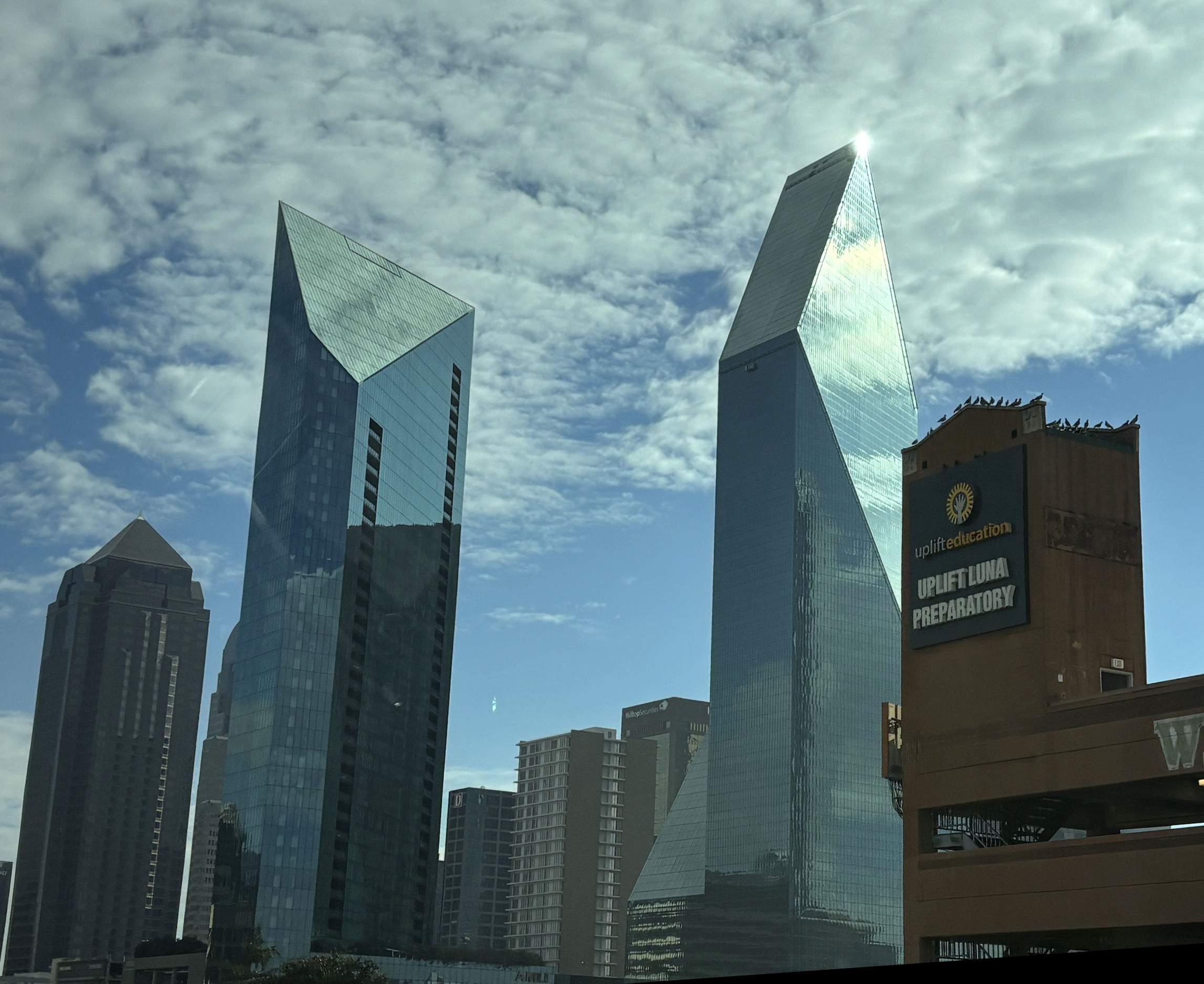
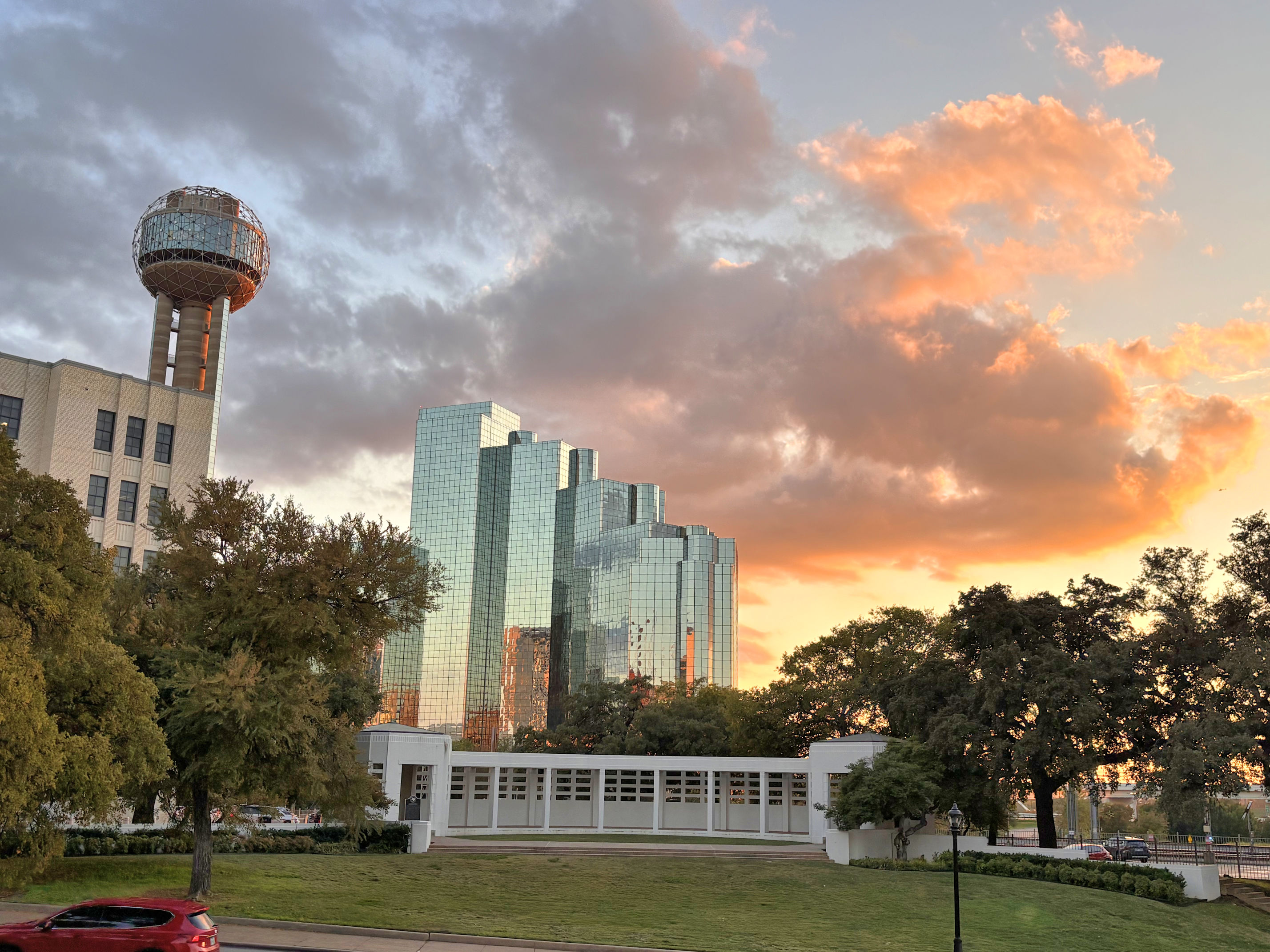
I always appreciate architecture, and this city is a good place to do that. I had a couple of faves, like the red courthouse above, and the gorgeous green glass Fountain Place buildings built sharp as screwdrivers twisting into the sky.
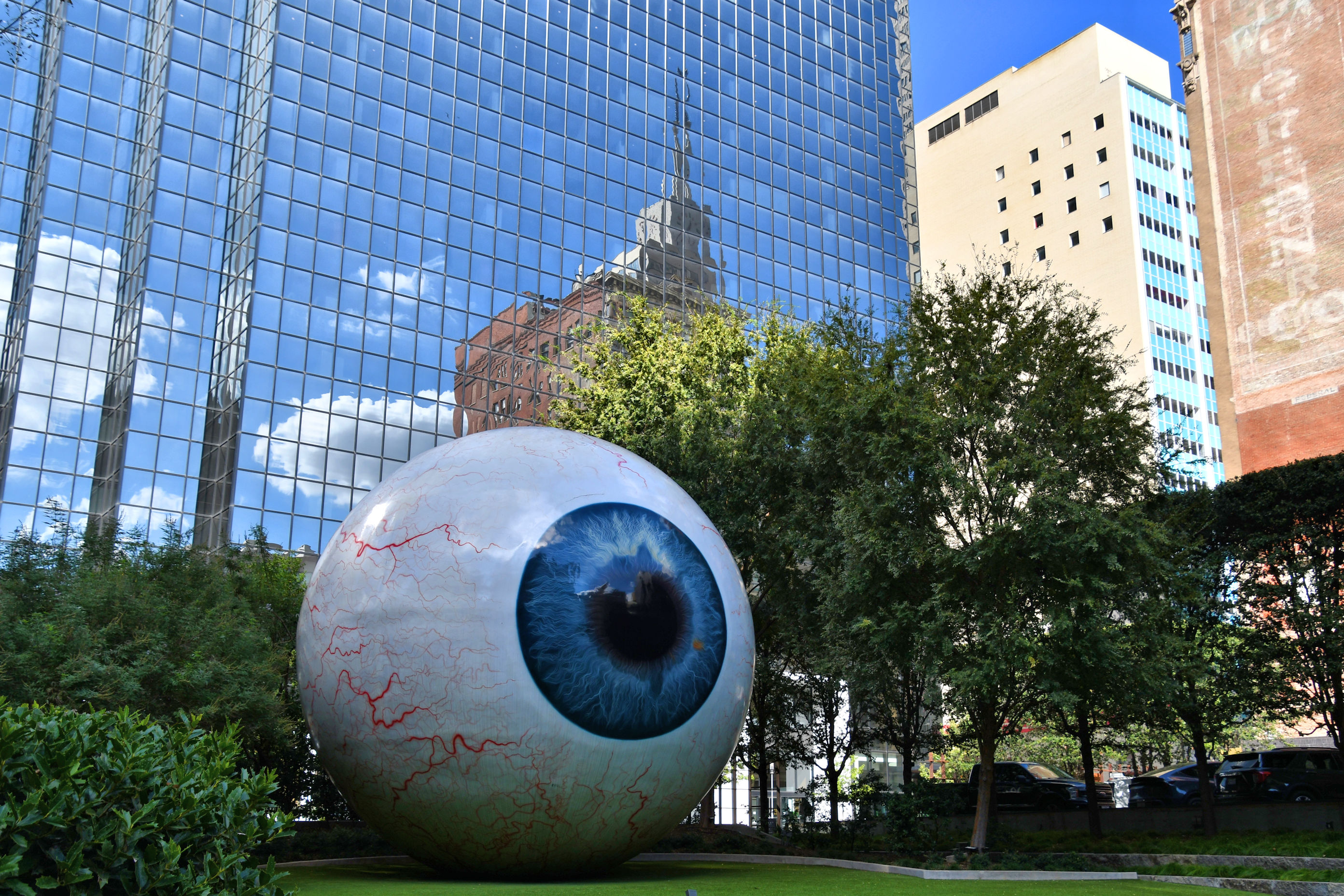
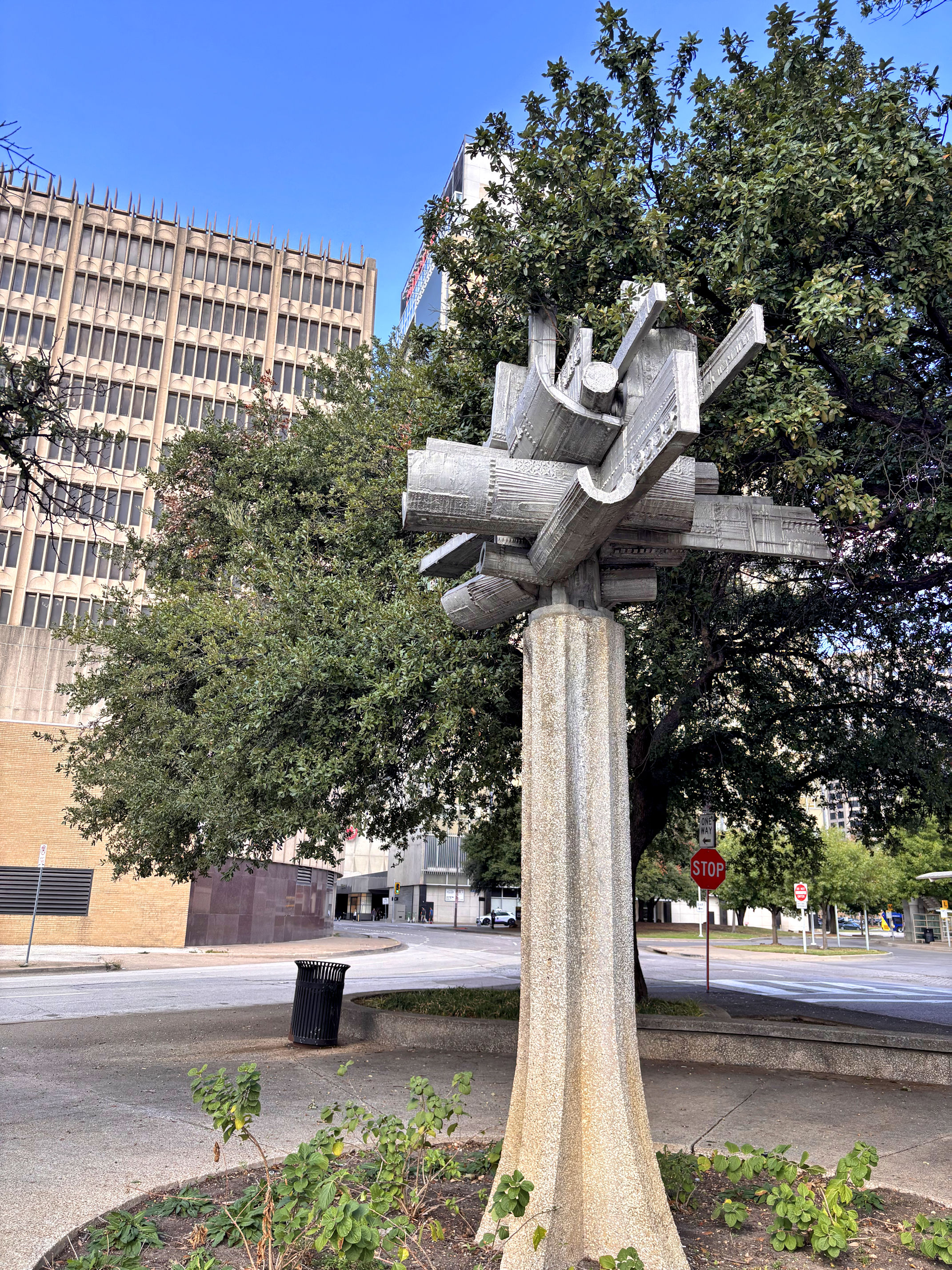
Our tourguide told us that the owner of the hotel across the street purchased this piece of land and applied for a permit from the city to build a parking structure to support his hotel. The city firmly declined to approve the permit, saying that a parking structure in downtown would be an eyesore. “I’ll give you an eyesore,” was apparently the response of the hotel owner, who commissioned this piece instead.
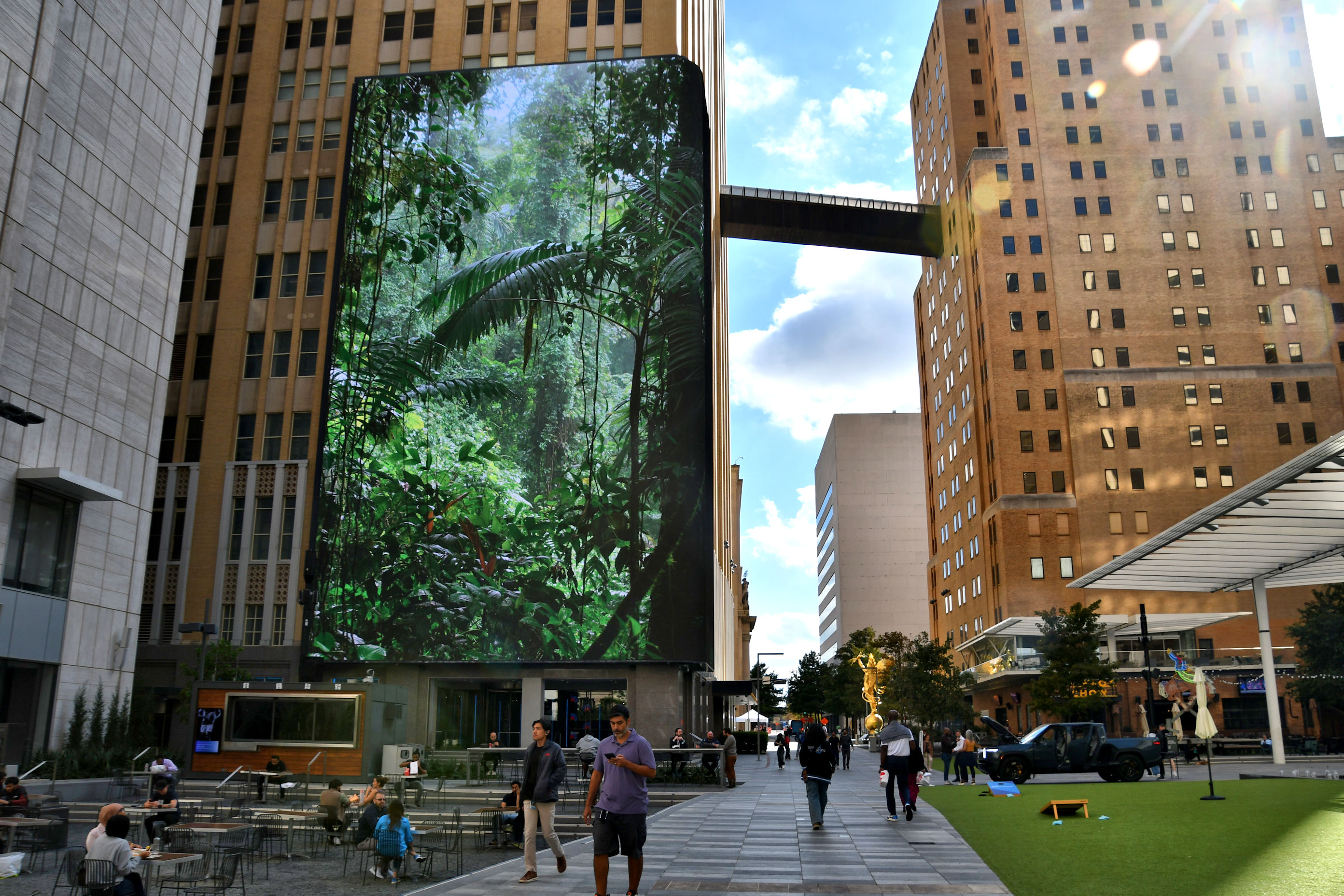
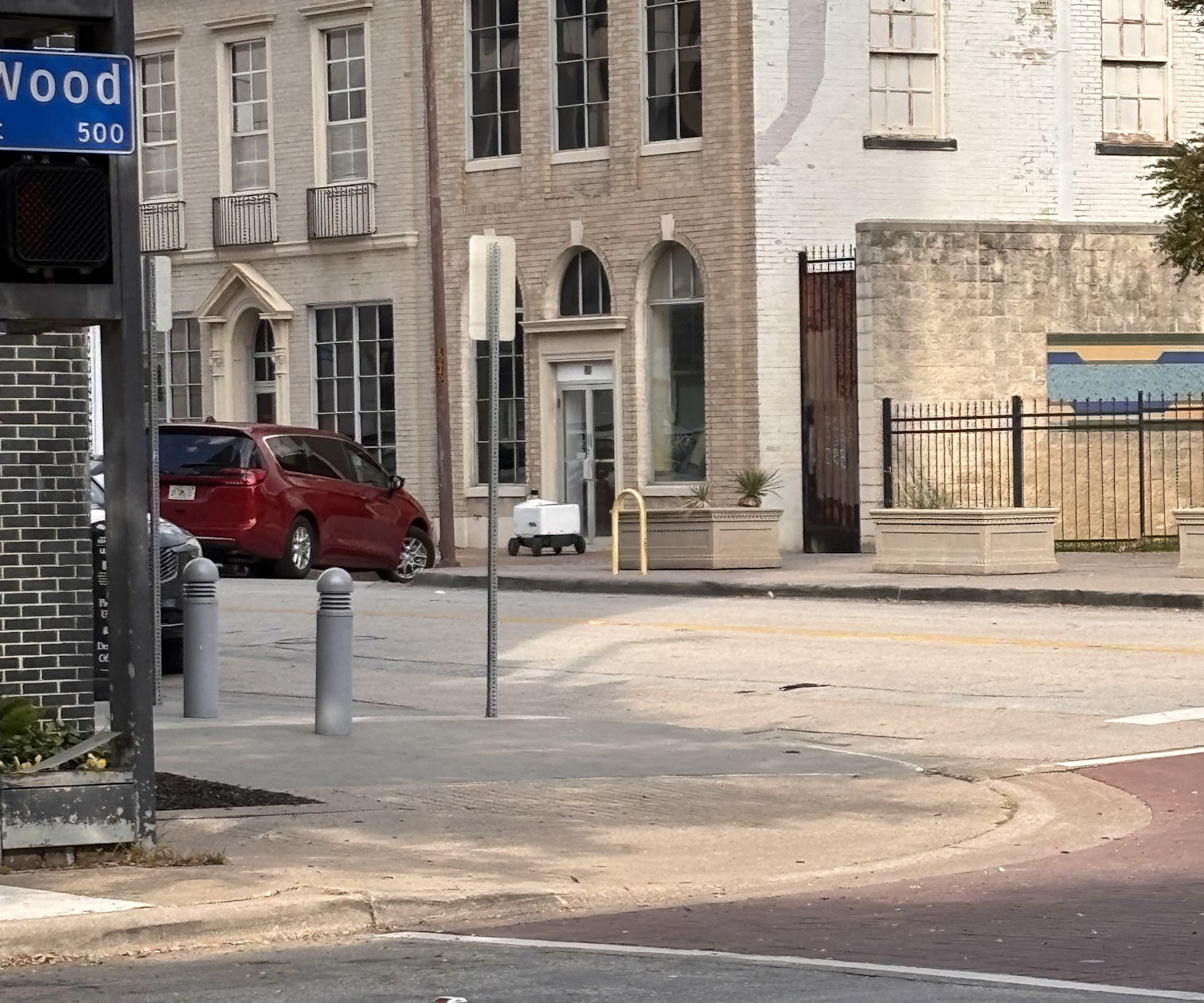
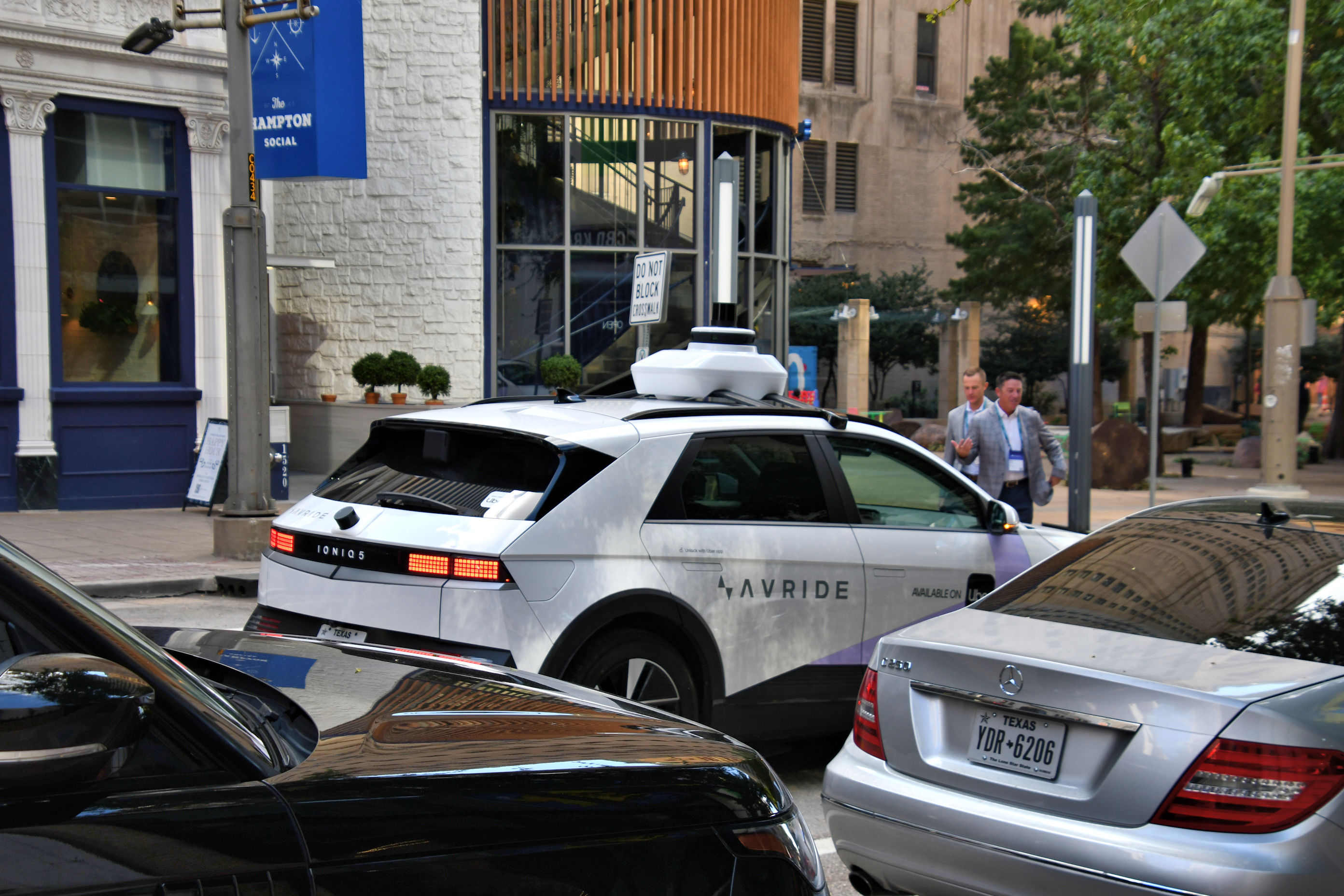
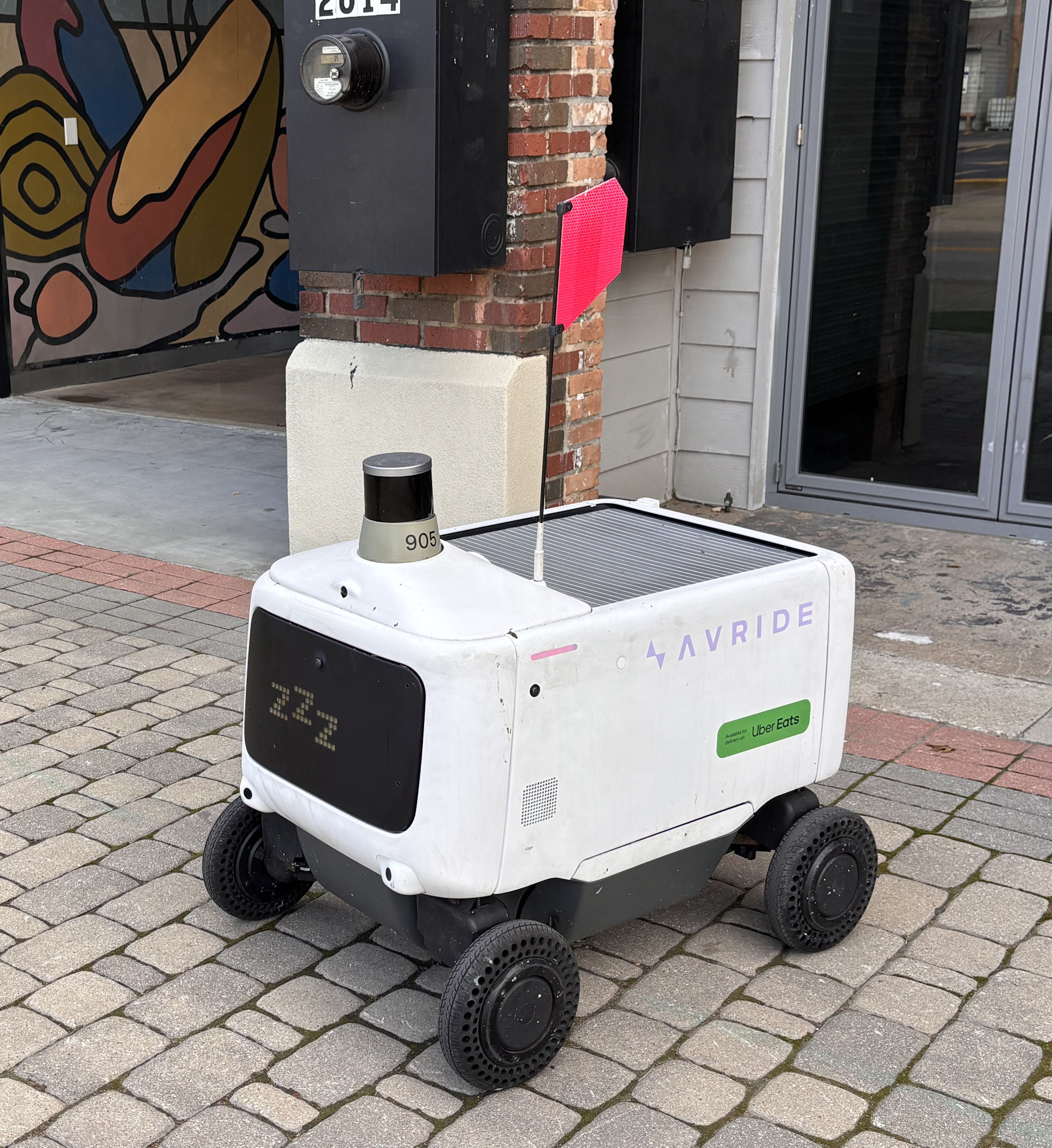
All manner of driverless vehicles were on the roads in Dallas. They were there every time I looked up. Also these little robot delivery vehicles that were probably DoorDash tools, bringing food to people around the city. I’ve seen robots at work in the aisles of Lowe’s and Fred Meyer here in Portland, but actual working autonomous taxis are not here yet, and the food delivery things I had never seen until these in Dallas.
My hope with that city tour was to get an idea of where to go later, and top on my list was Deep Ellum. I went there the next day and spent hours. That will be in a future blog post.
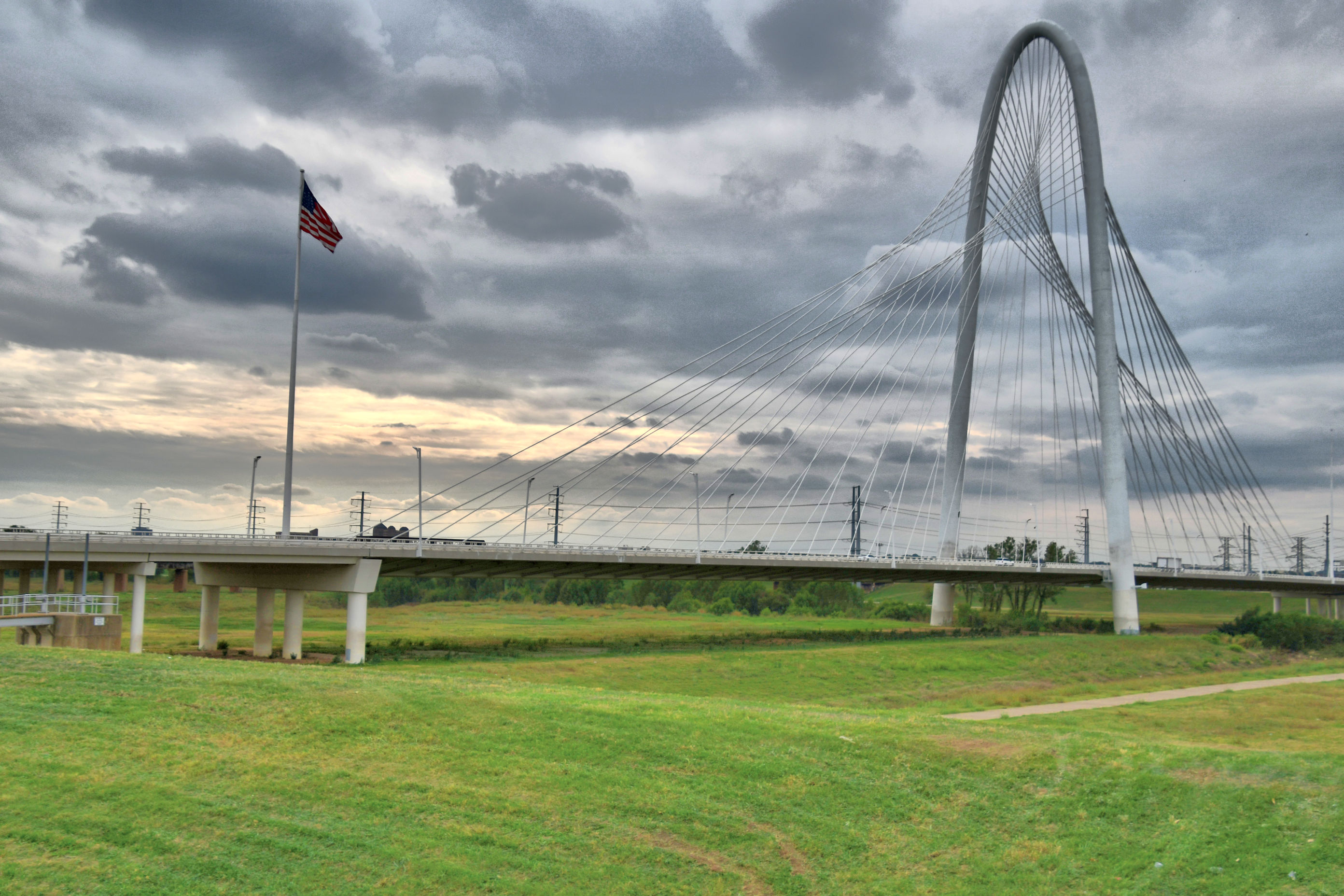
It was getting later in the day and I wanted to start heading back to the hotel on a new route along the Trinity River. My AllTrails app showed multiple bike and hiking trails along the river in a wide greenspace in the middle of the city. I eagerly headed for it, but it was tricky getting there. Dallas seems to be on the cusp of embracing pedestrians. Some places had great sidewalks and crosswalk lights, while other places were seriously sketchy. I made questionable safety choices to get myself onto the trails, but I was determined.
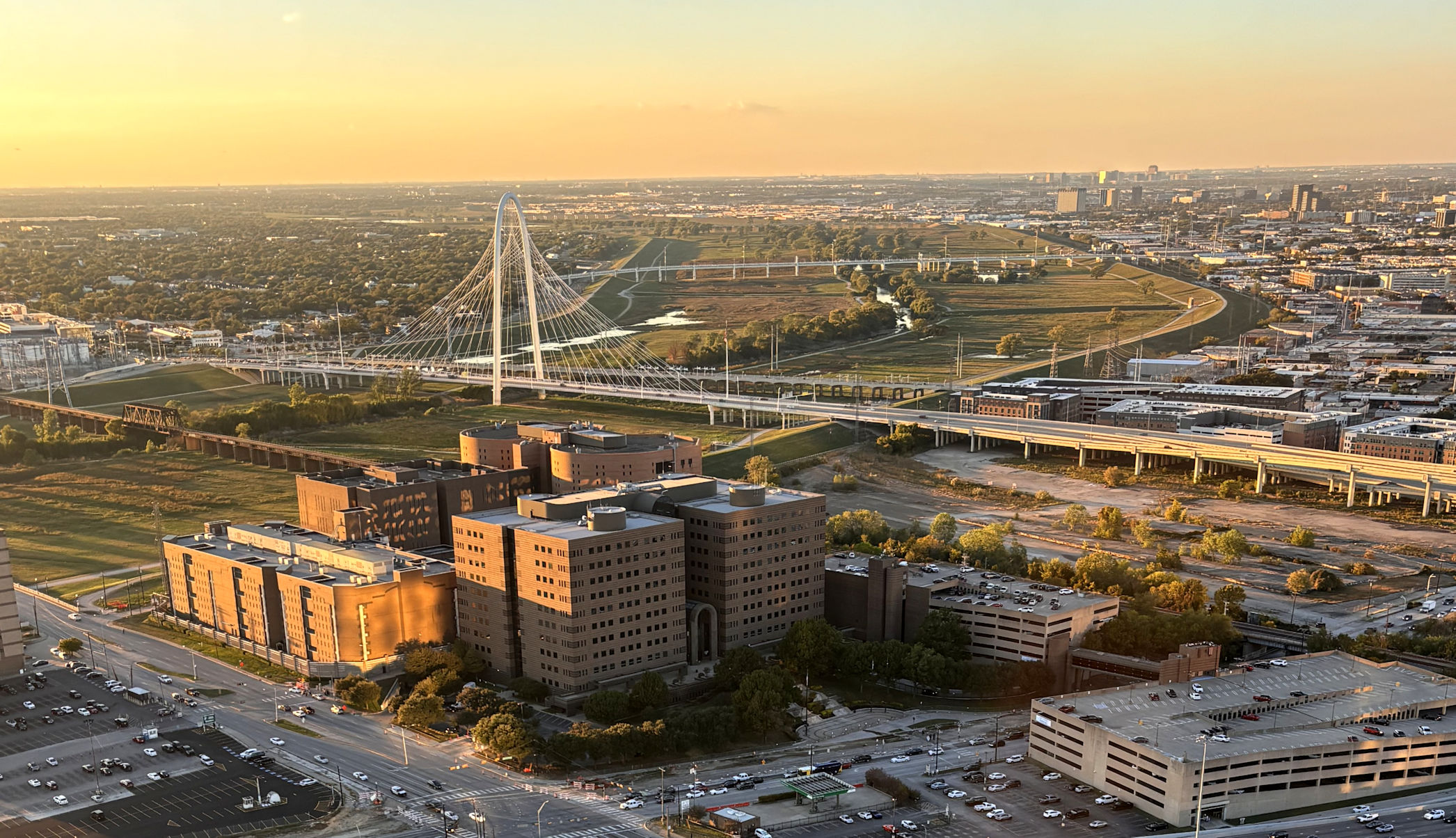
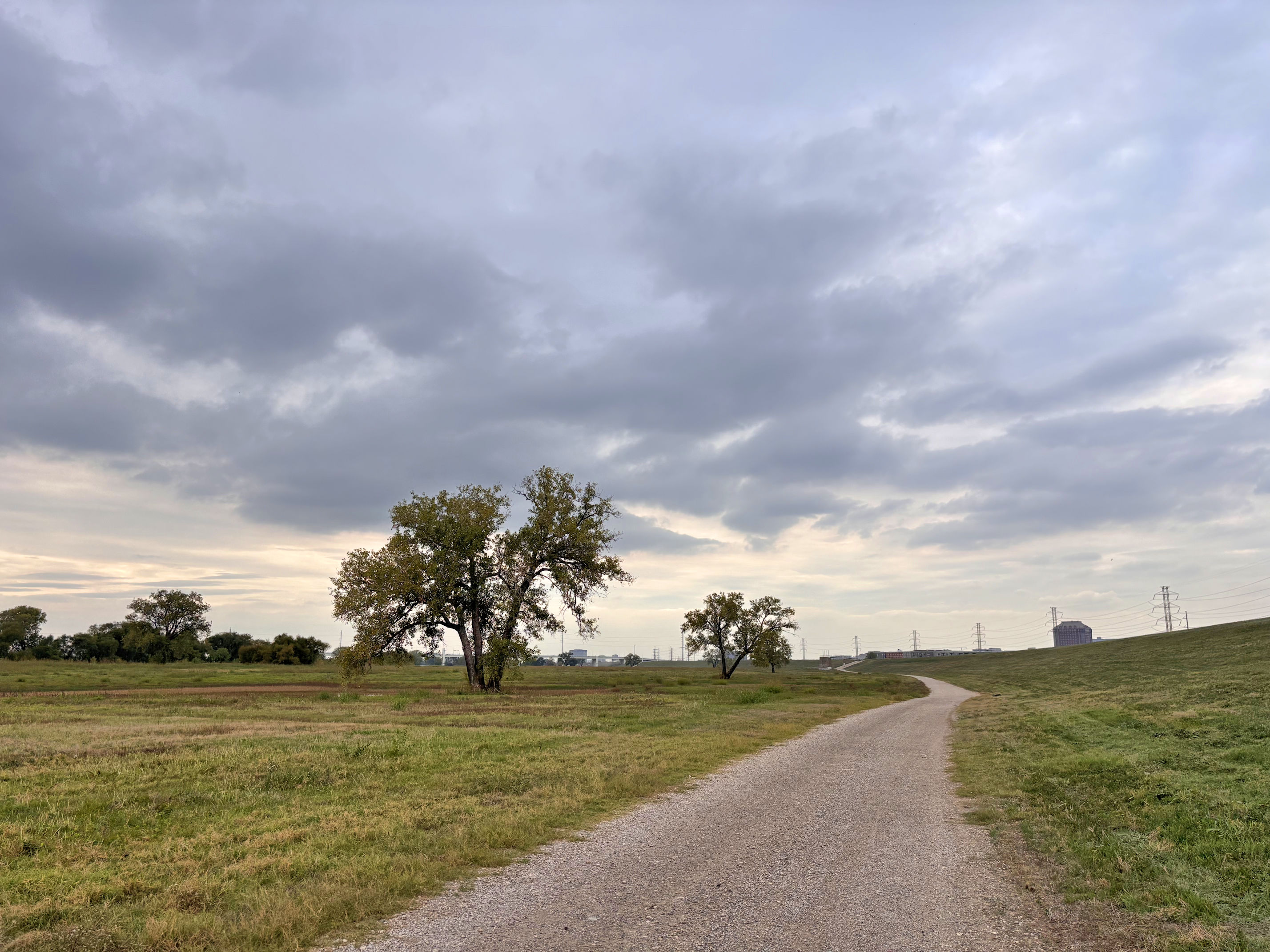
I walked for an hour and did not see a single soul except for the driver of a grass-cutting tractor, who was on his way back to the storehouse when I spotted him. Maybe if people didn’t have to work so hard to get onto this trail from downtown, there would be more people using it.
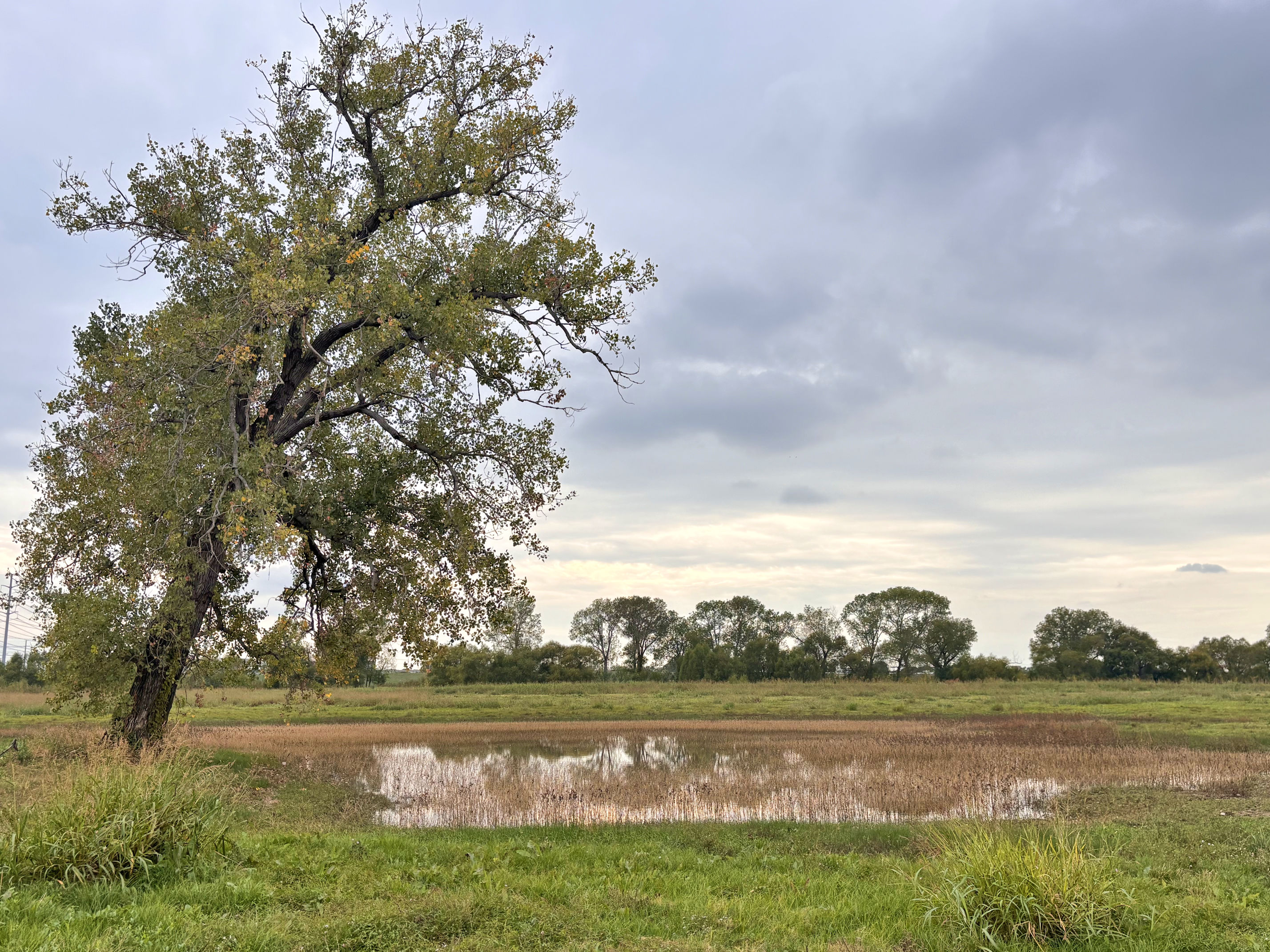
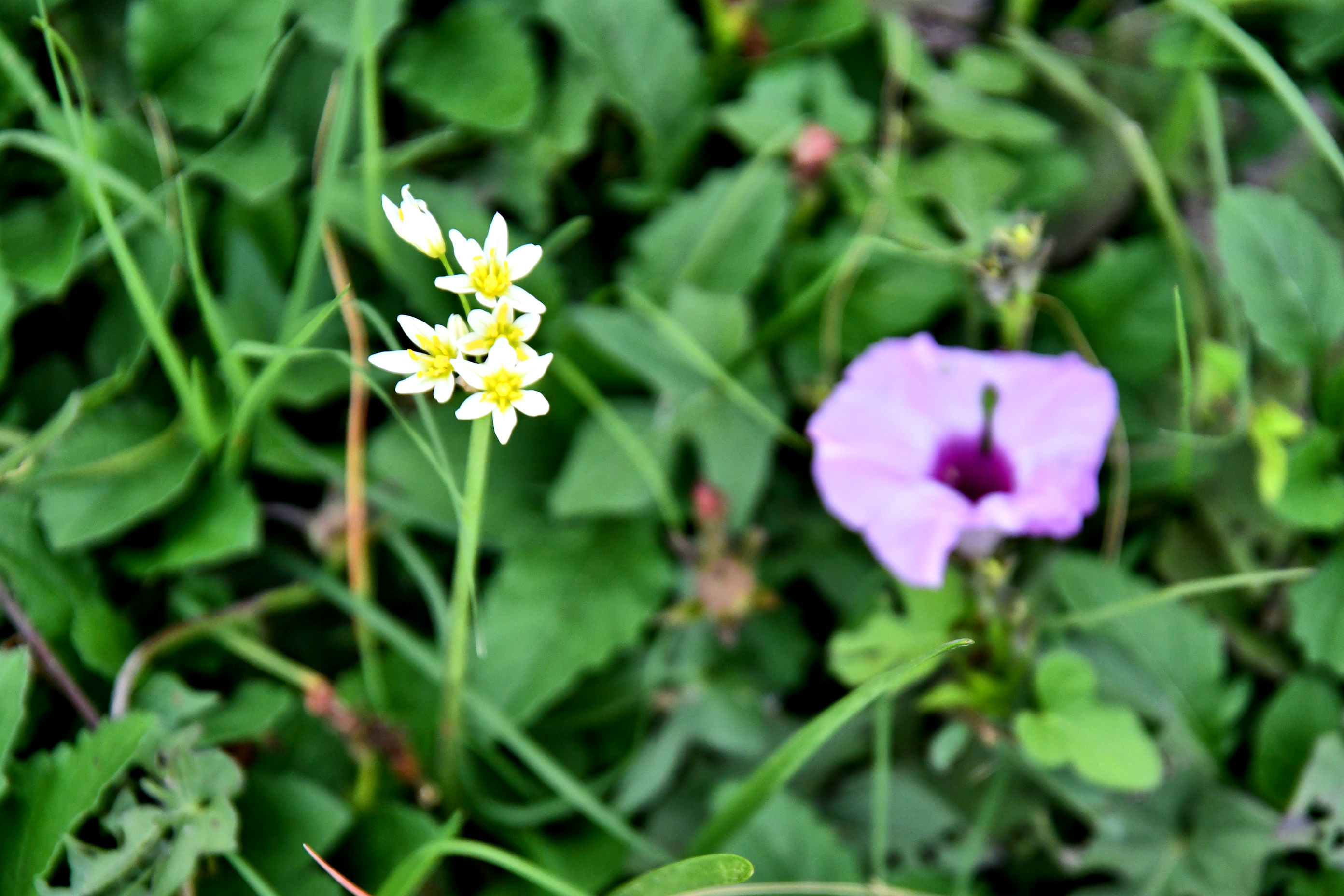
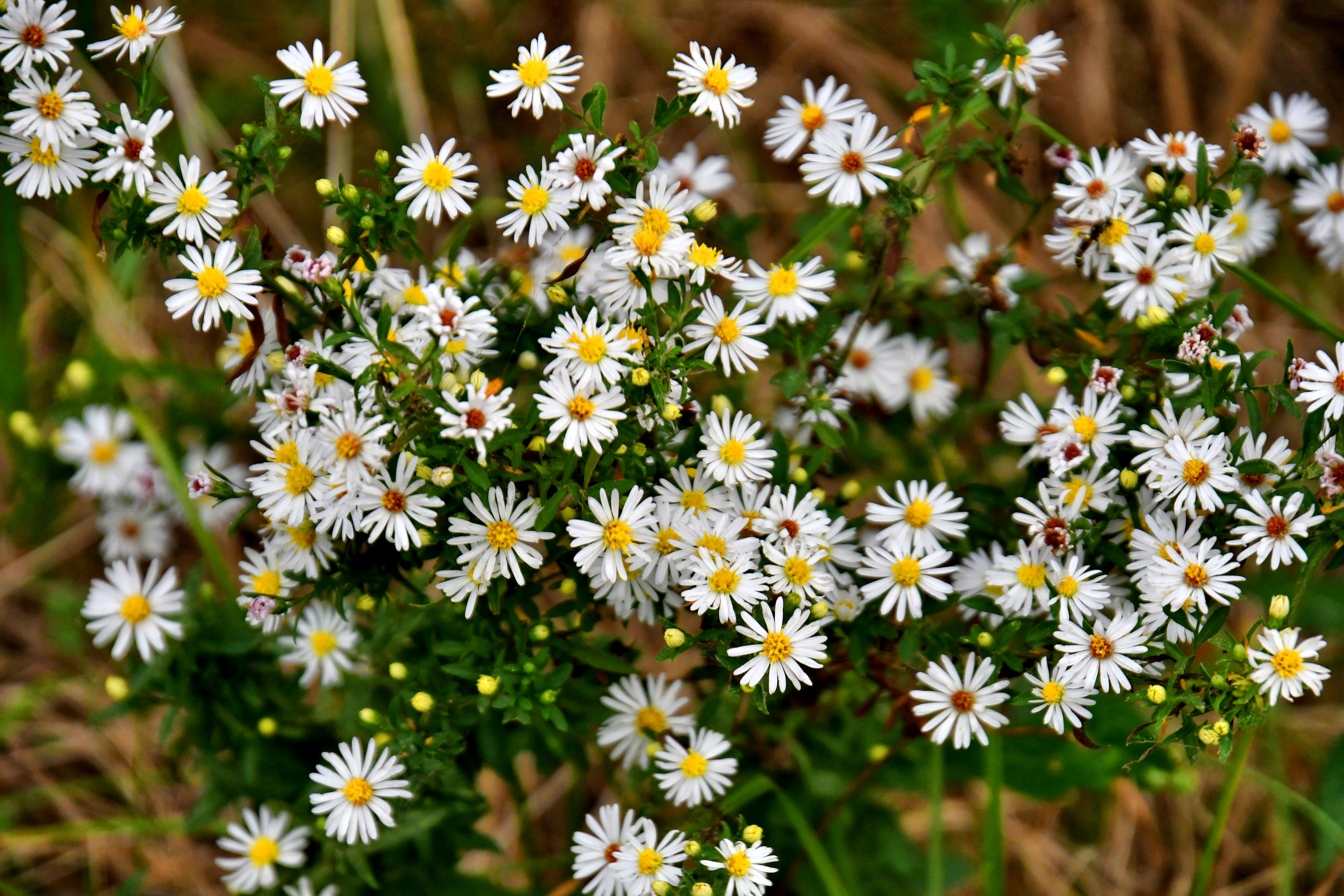
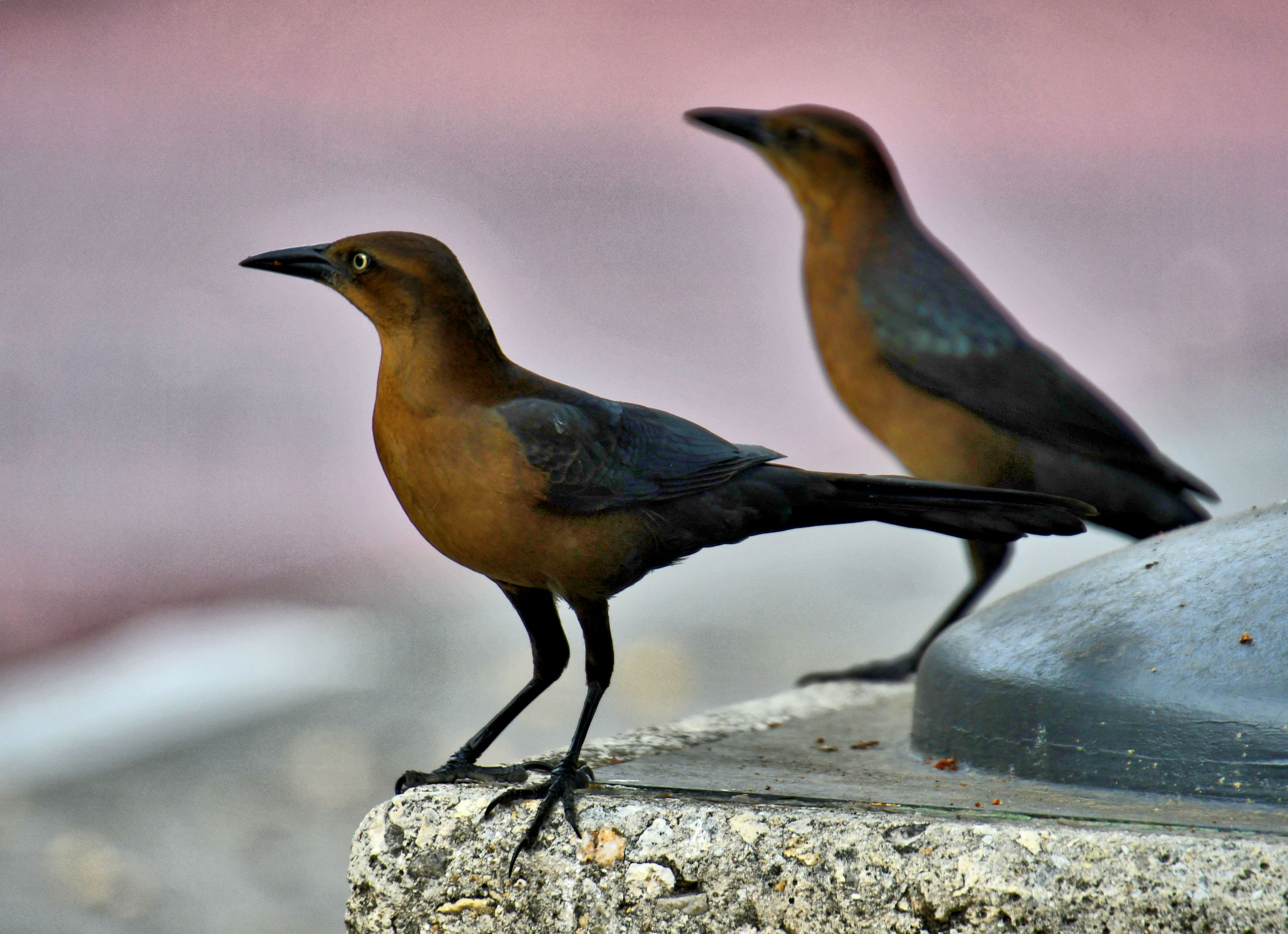
I assumed the river was on the horizon where the line of trees was, but the trail I chose stayed far away from the river most of the time. Eventually I took an intersecting trail that led me to the river, and it was not much to see. I walked on gravel most of the time, but the trail sometimes was paved. I found other things to photograph, like flowers and birds.
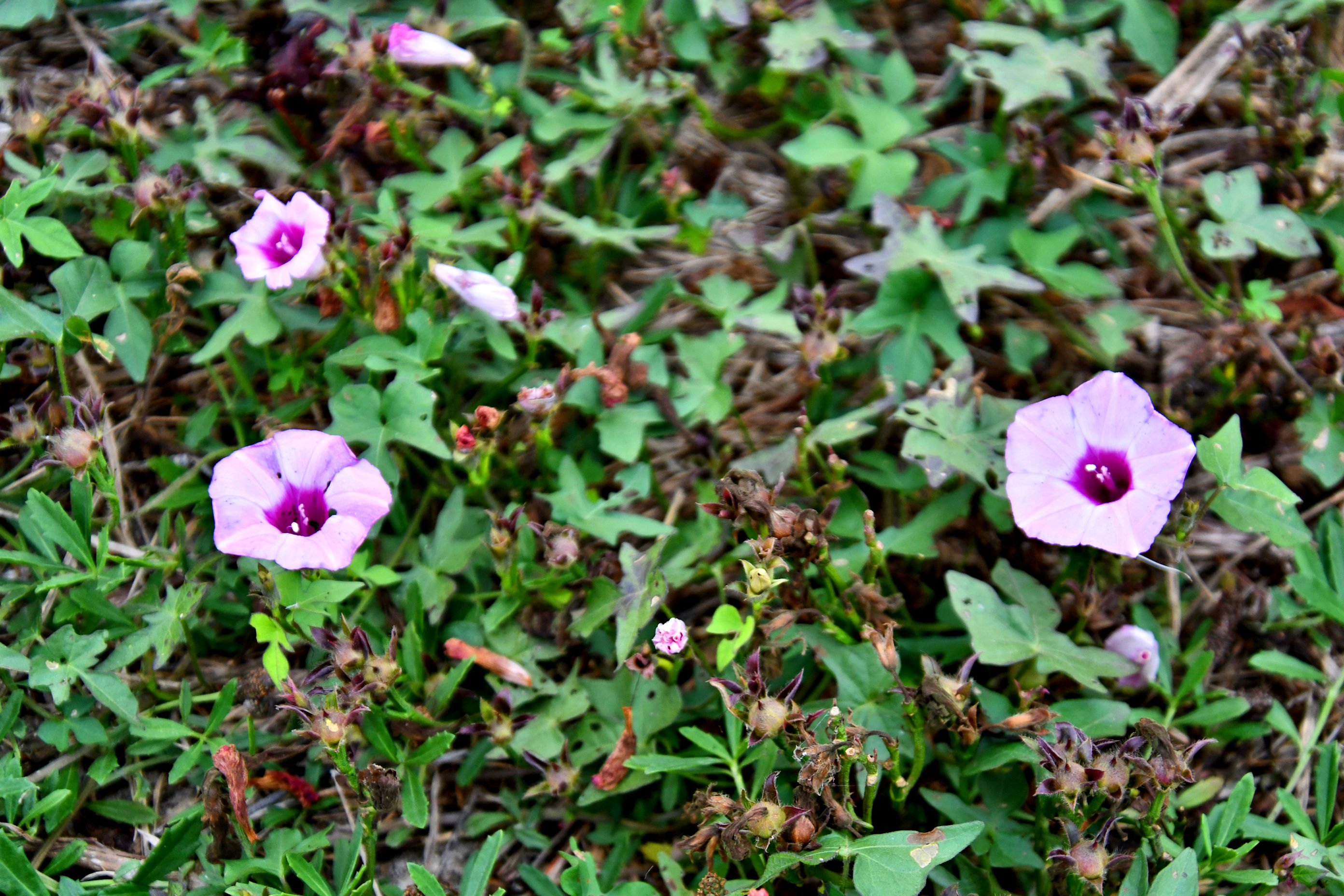
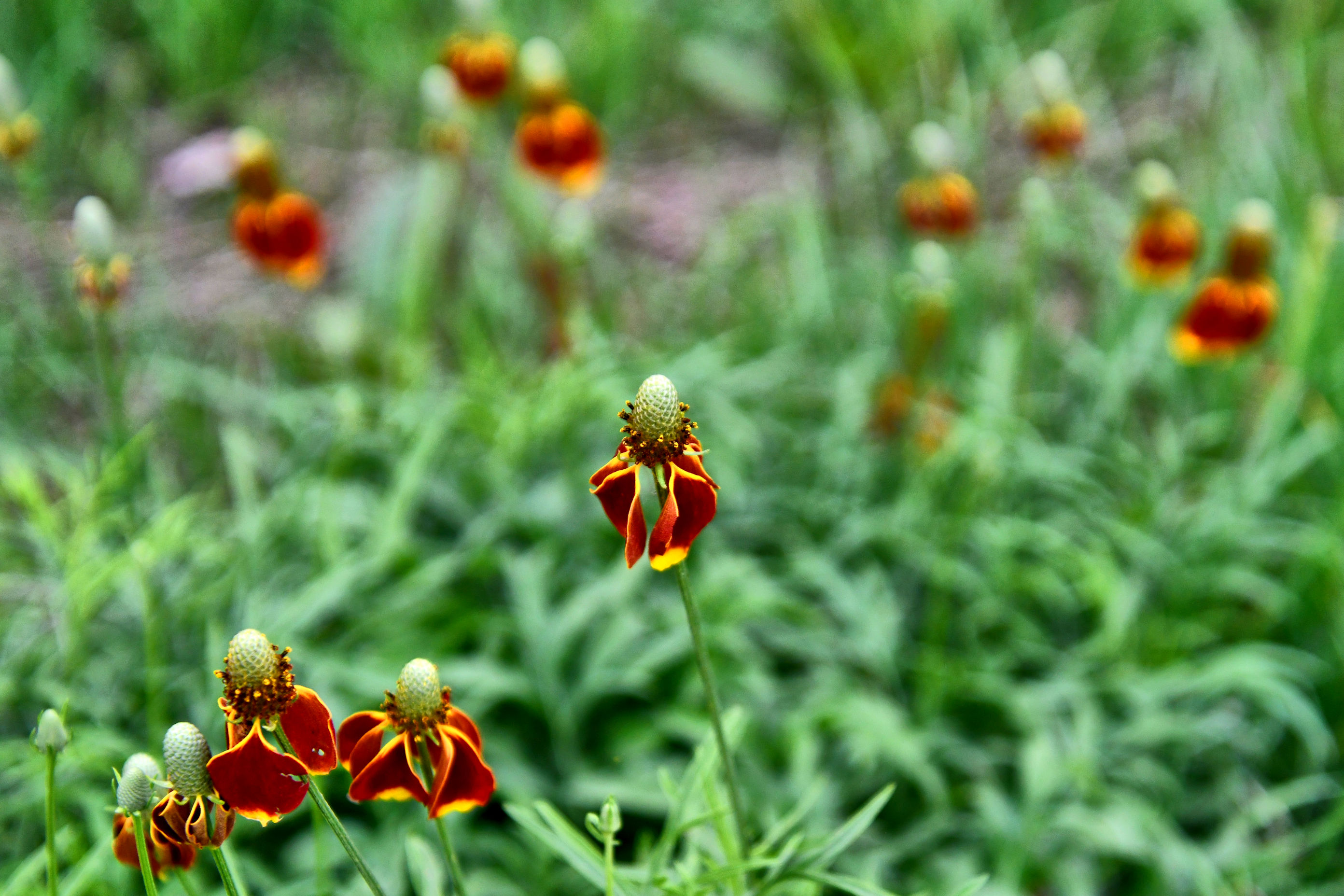
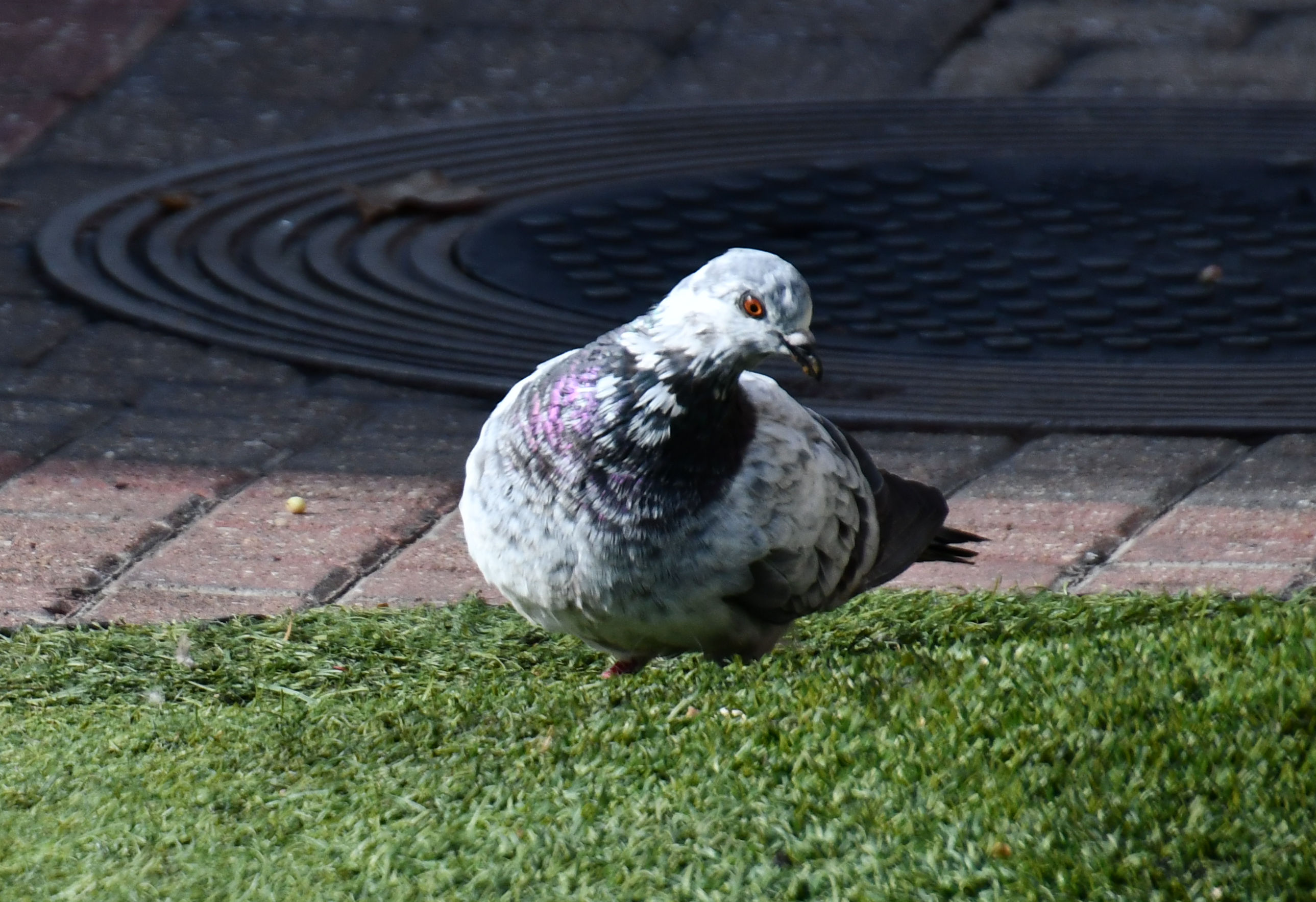
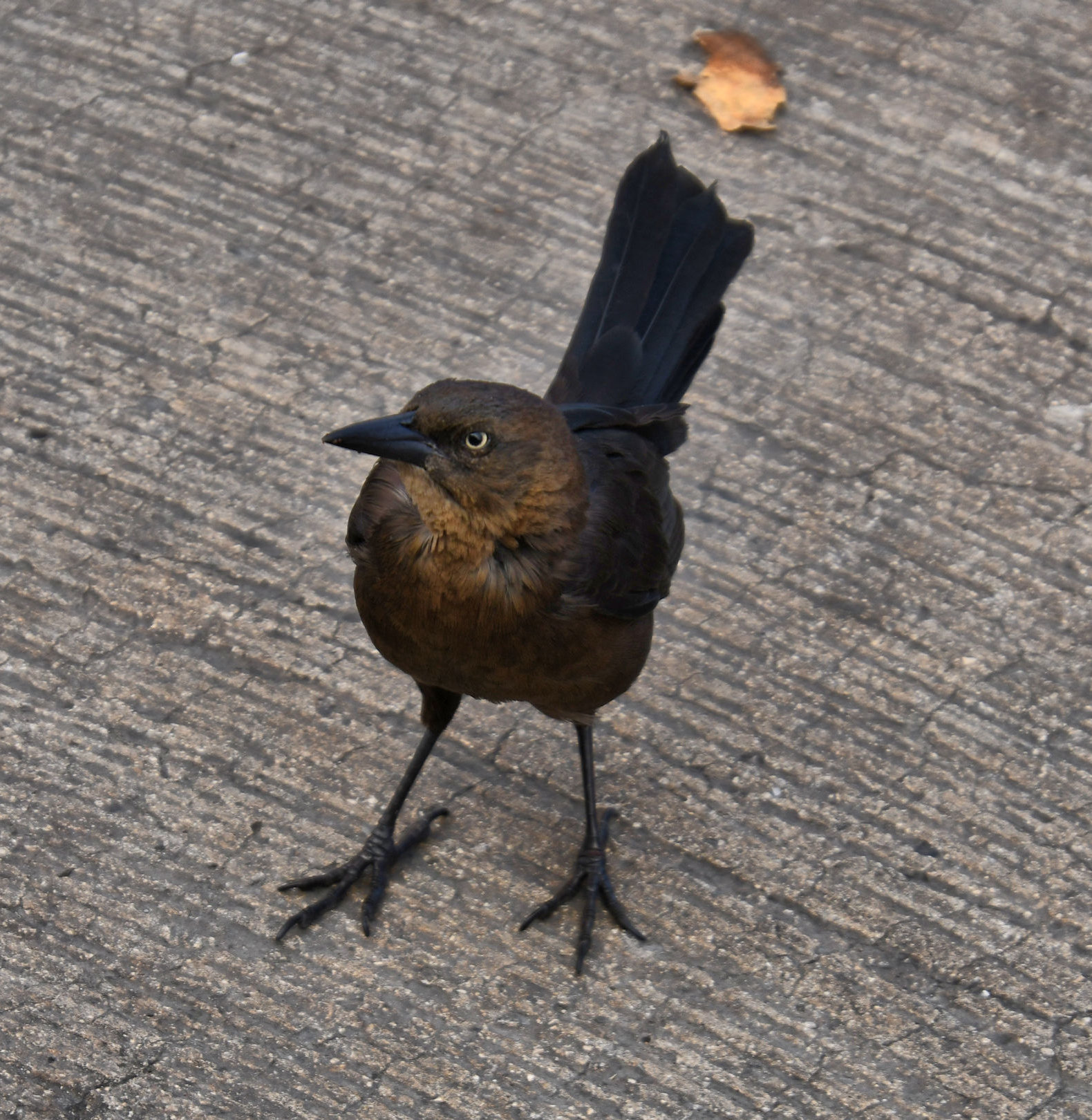
At the far end of my route, where I planned to leave the greenspace and return to streets, I came to a park named Trammel Crow Park. As unlikely as it seems, Trammel Crow was the name of a wealthy real estate developer, and we will learn much more about him in a future post. The park has a parking lot accessed from the overpass nearly overhead, and due to that access point, was the only place that had people. There were couples on electric bikes, and families having picnics, and elderly people sitting on benches looking at the water.
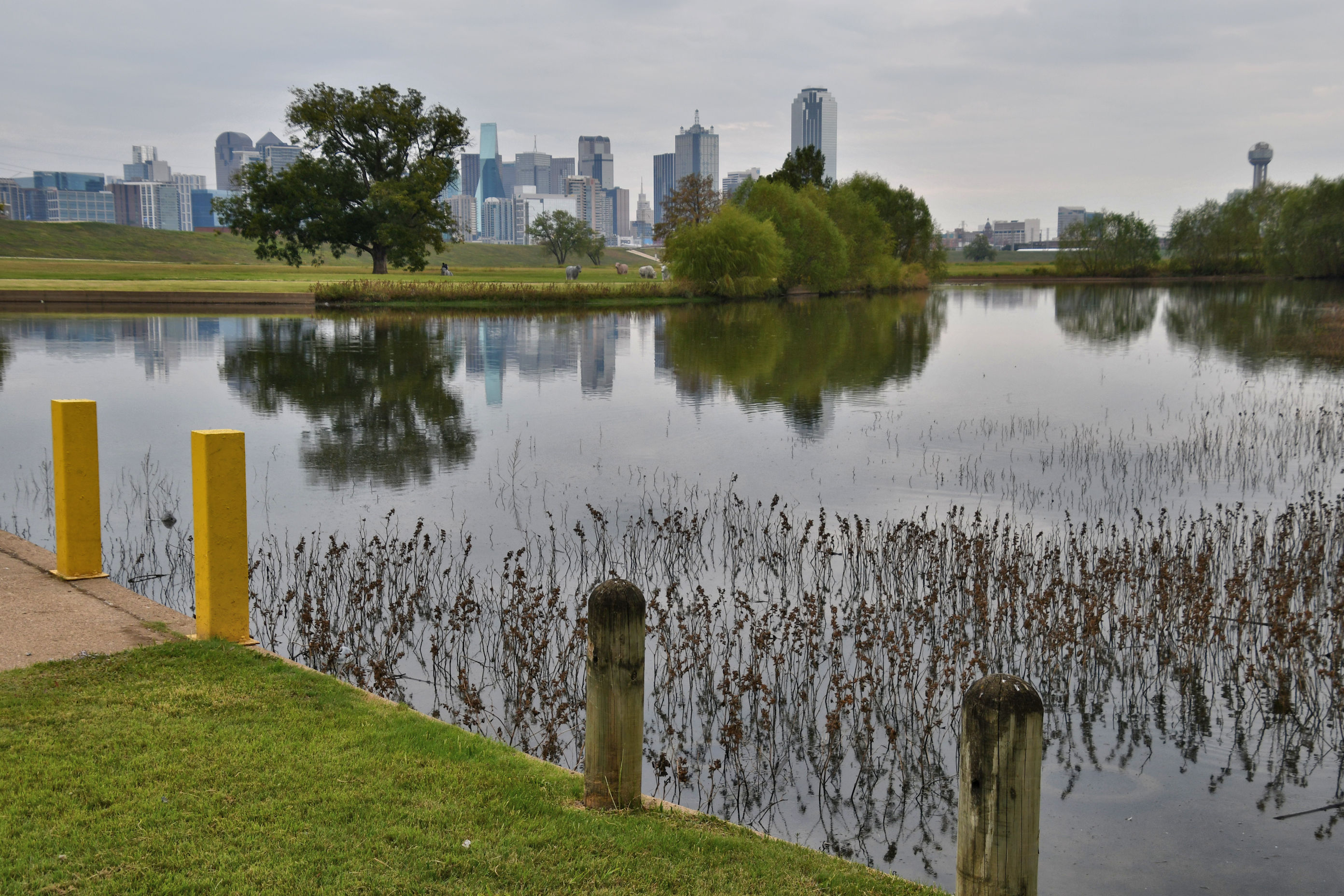
I made it back to the hotel just as Pedro was finishing his work day. We walked out into the world and found an outstanding seafood restaurant called Flying Fish, where the service was welcoming, the environment comfortable, and the food excellent and generous. I ordered blackened catfish and he had grilled shrimp and that was just what we needed after a long day.


Hmmmmm…the gunshot remains of Pegasus … right within city limits…Hmmmmm.
So much to see and do. A wonderful tour thanks Crystal. Mobil here used the red flying horse as well.
Love the eyeball sculpture
Another of your splendid tours. I was particularly pleased that you gave us the memory of Allen Brooks when the world hasn’t moved on much