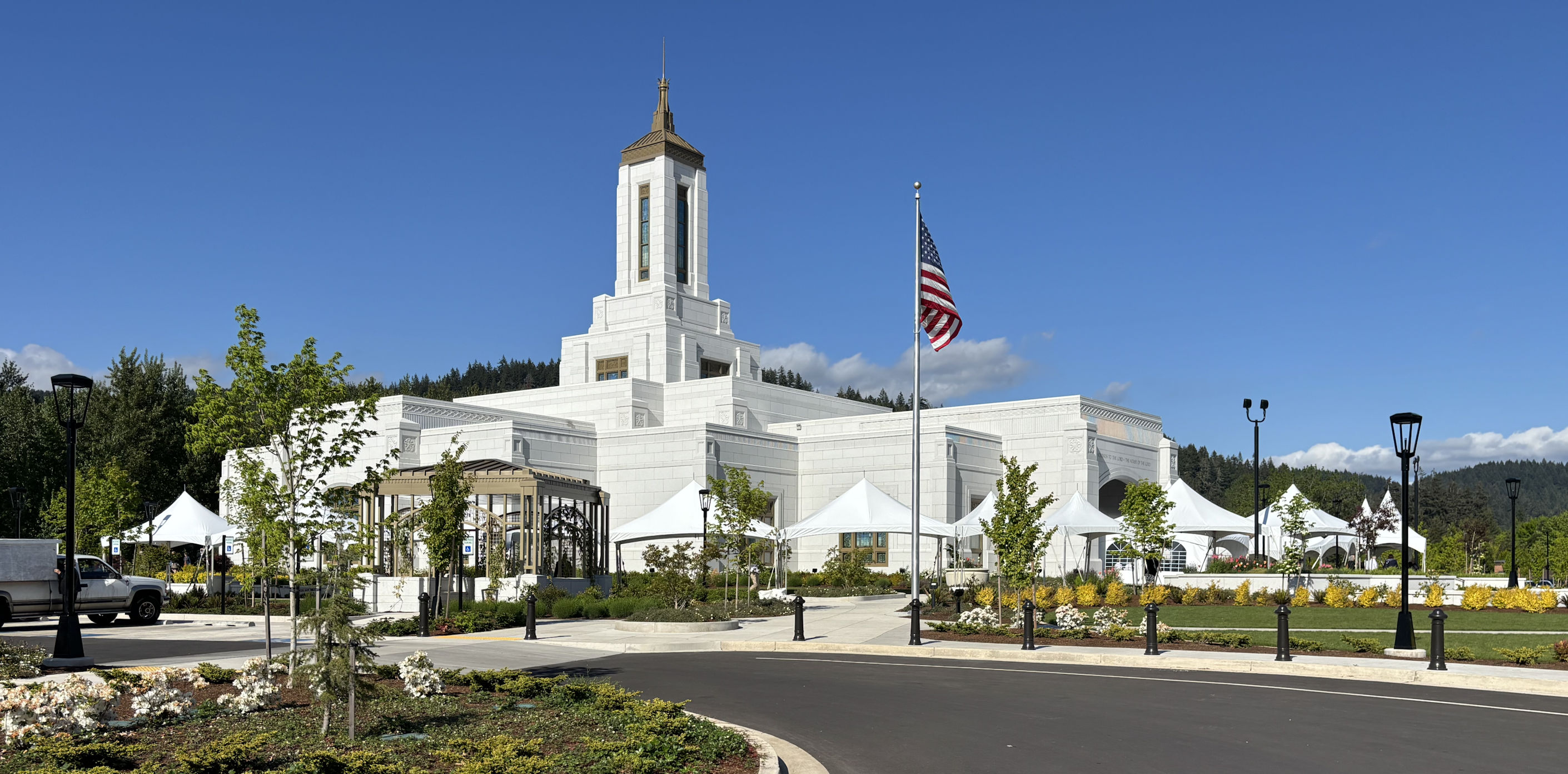
I spent at least ten years a Mormon, from approximately ages 7 to 17. I tried my very best to be a devout disciple of the Church of Jesus Christ of Latter Day Saints, or LDS for short. I was baptized Mormon when I was 8.
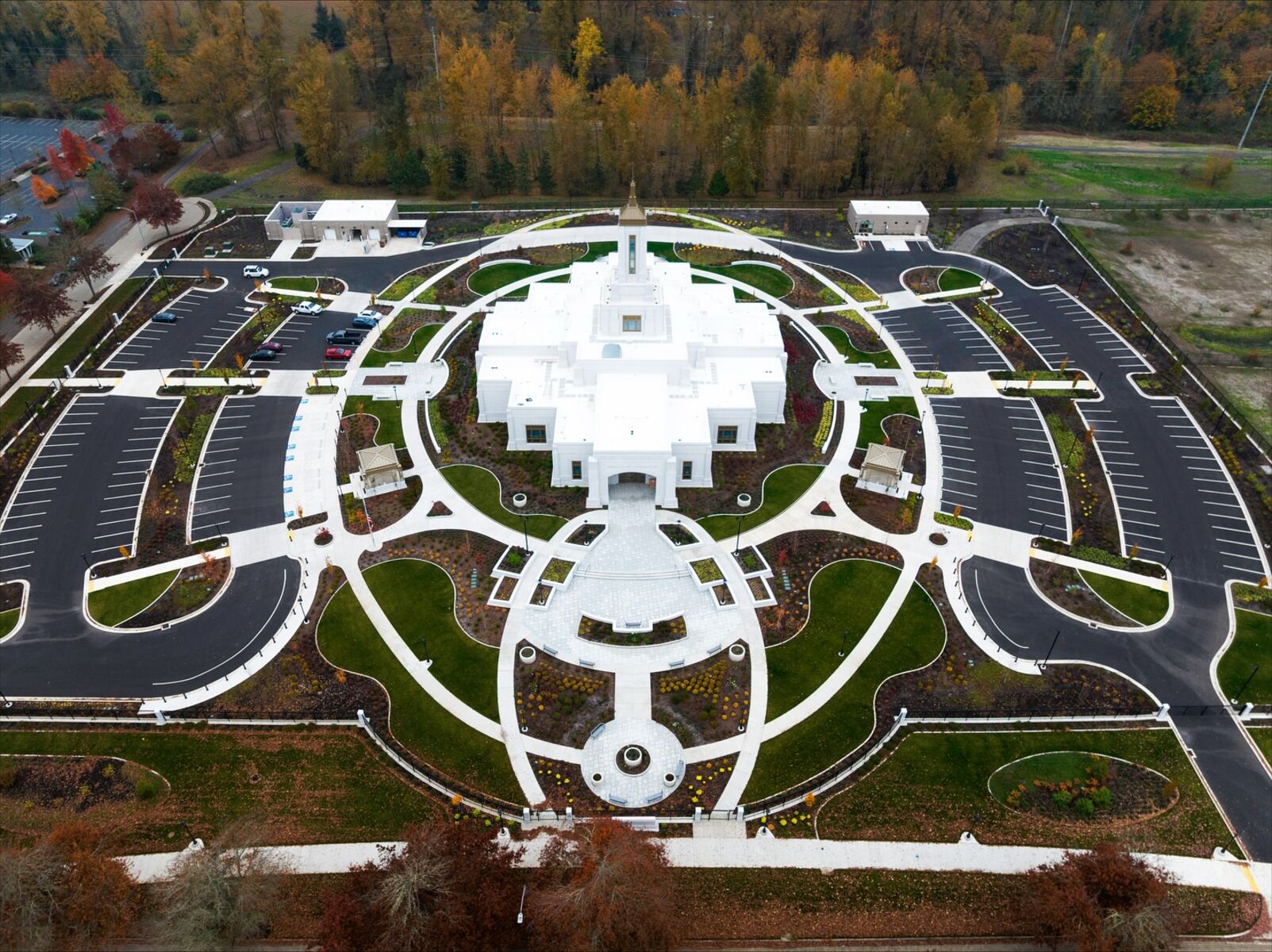
The mind control didn’t work, and eventually I left the LDS church, and religion altogether, and now have my feet firmly and confidently planted in atheism.
But…since such an impressionable time in my life was trying really hard to be a good Mormon girl, I retain a fascination with the magical things in the church and church lore. The Temple was one of them. The Temple is not a place for regular services, so regular Mormons can’t just go there when they want to. Temples are sacred and special and held apart. If I remember right, there might also be places in the temple that even typical Mormons on a special occasion can’t even see, just the very most special, but maybe that is only a conjured idea from childhood.
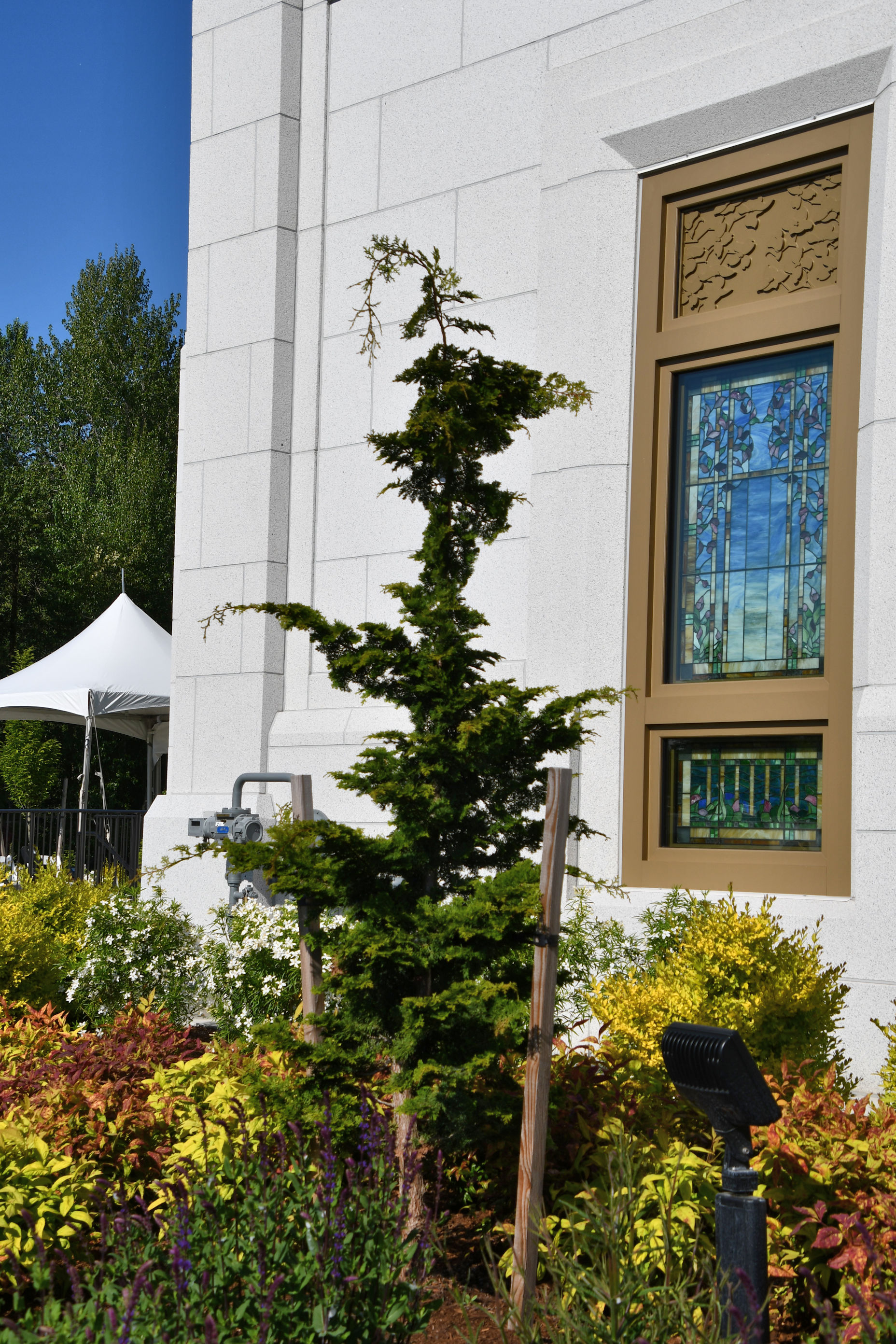
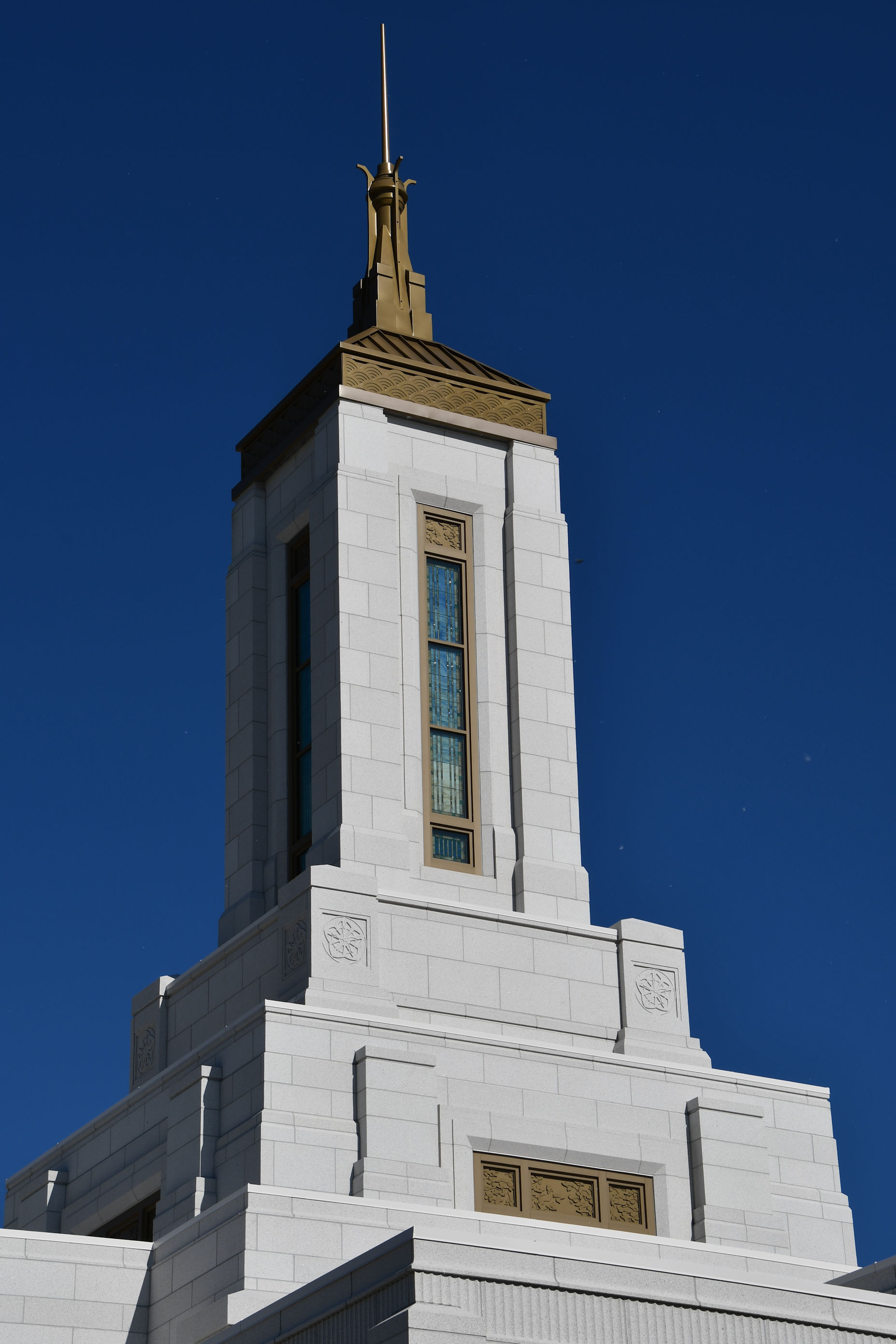
I read in the Oregonian that the newest local LDS temple would be opening to the public for a two-week period before it is officially dedicated and becomes sacred property. Forty years later is my very first opportunity to see inside a temple. I couldn’t resist!
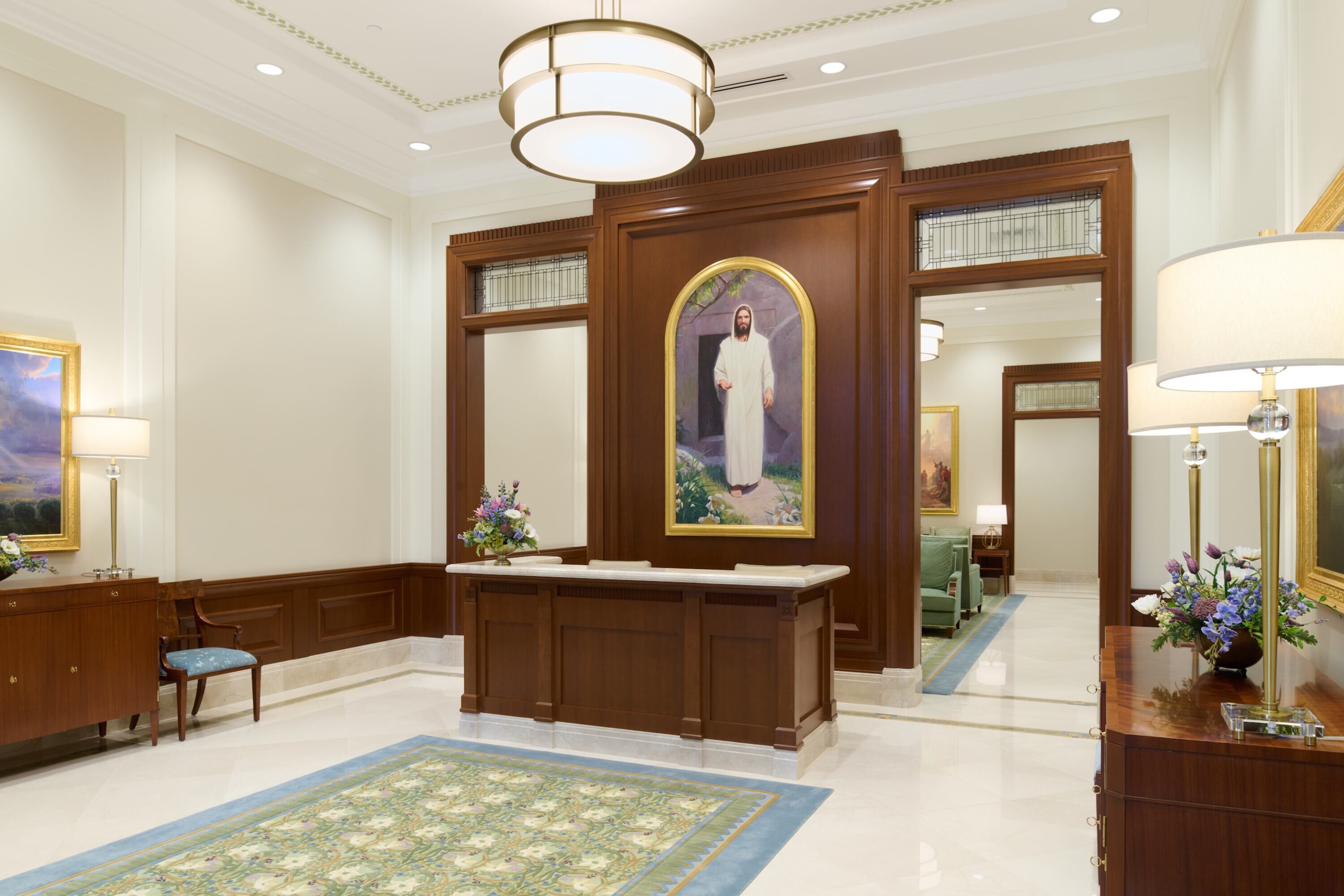
I was greeted by some smiling people that showed me where to park, and then where to start. More people greeted me and showed me where to stand and wait outside the closed front doors. More people smiled at us and managed who could enter or exit, while we waited. We gathered at the front door till there were enough people for a guided tour. We all had to wear shoe coverings to protect the floors.
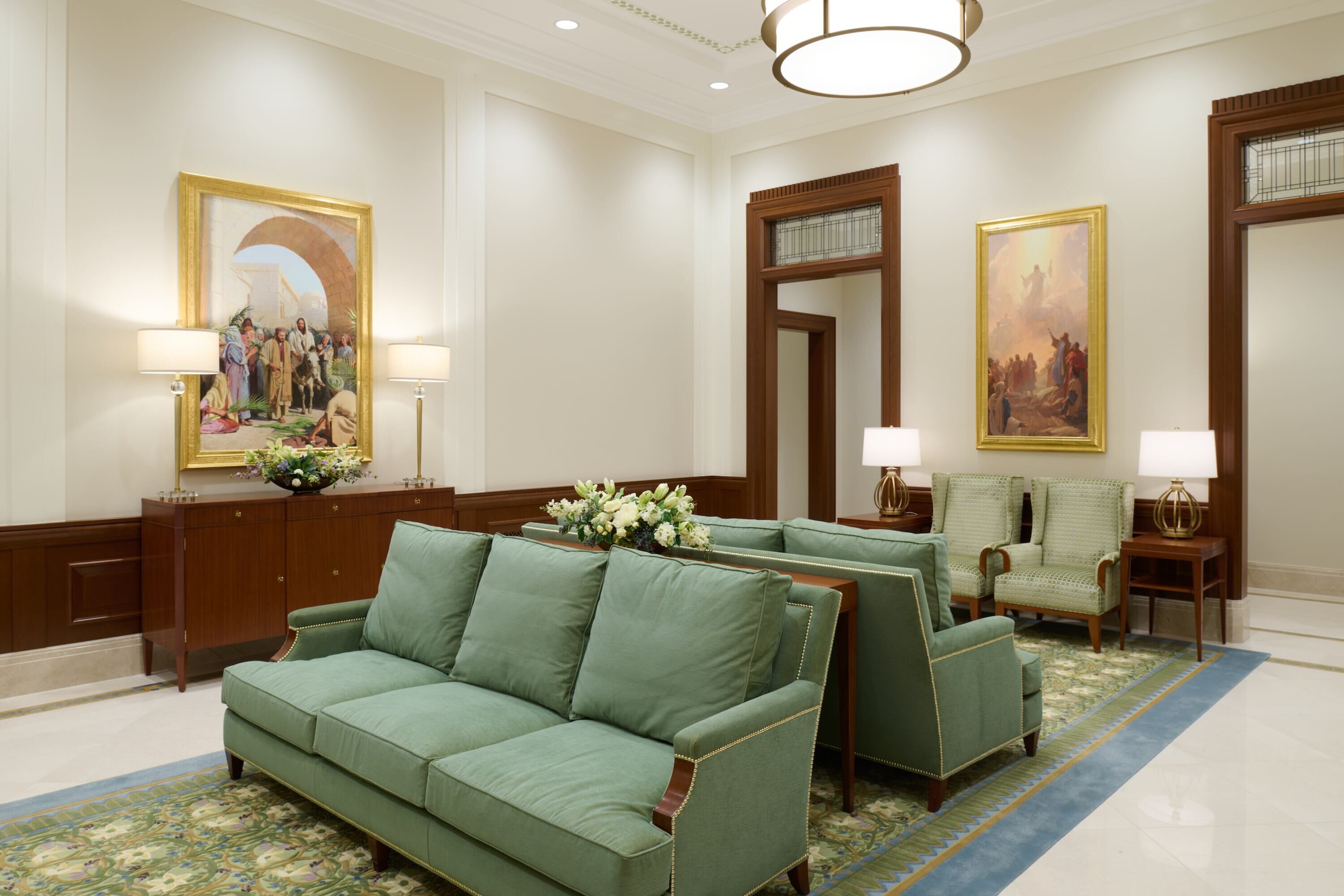
During my trip, I saw people with name badges coming and going, and I could tell they were all volunteers from the congregation. It’s one thing I remember about the culture of Mormons: they eagerly and earnestly work for their community, even when they are not of the same faith. It is probably my favourite thing about Mormons.
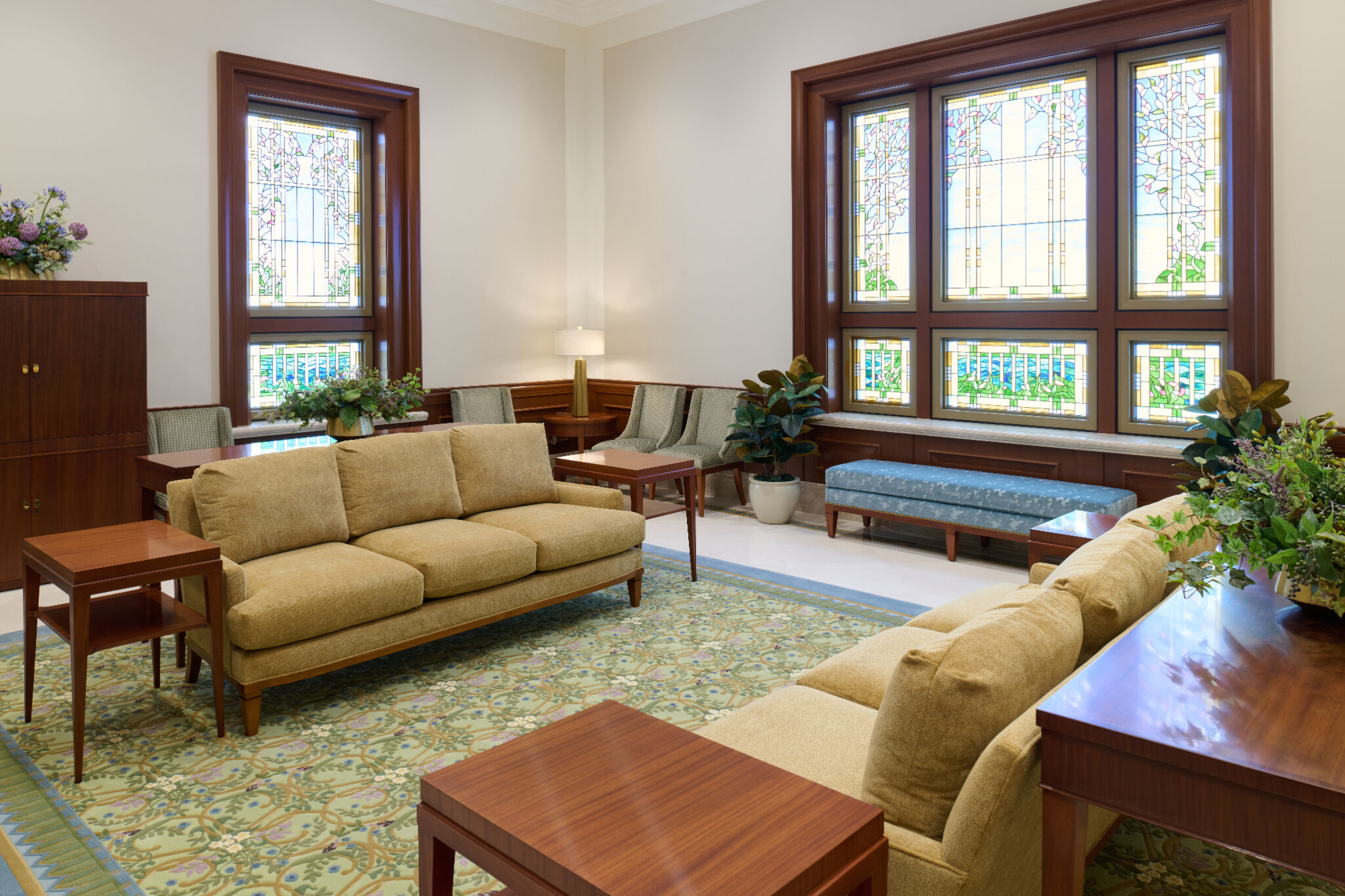
We were admitted in, and shown a lot of the inside of the building. We were told not to take a single photo inside, but to take as many photos outside as we liked. They also said that we were free to download and use any photos from their website, which I have done in this post. All photos outside are mine, except for the aerial photo.
At the Welcome Desk, we were told a little bit about what we would see, and the woman excitedly announced that we would see 19 paintings of Jesus. “There are 3 more, but you won’t see those.” In each room, we were handed off to a new volunteer, who told us about that room. They said a little bit about what each place was for, but kind of in a cultural way. Not practical details like “This is where people put their coats,” but “This is the next step toward becoming closer with god and showing humility by wearing the garments.”
After the waiting room, we went to the women’s clothing room, where garments were handed out much like getting shoes at the bowling alley. They explained that if everyone wears white then everyone is the same, which is a nice sentiment, but take it with a grain of salt. For Mormons, men are more valued than women, even if they are wearing white.
Next were the women’s showers, where they could wash up before wearing the garments. There were maybe four shower stalls – large, private and tasteful with cabinets adjacent, for personal items – and places to sit and mirrors and counters. They explained that on the opposite side of the place, it’s exactly the same, only for the men. See what I mean? Can’t bring the general public in and potentially soil the men’s side. (Ok, that’s my own personal interjection…but it is what I was thinking at the time.)
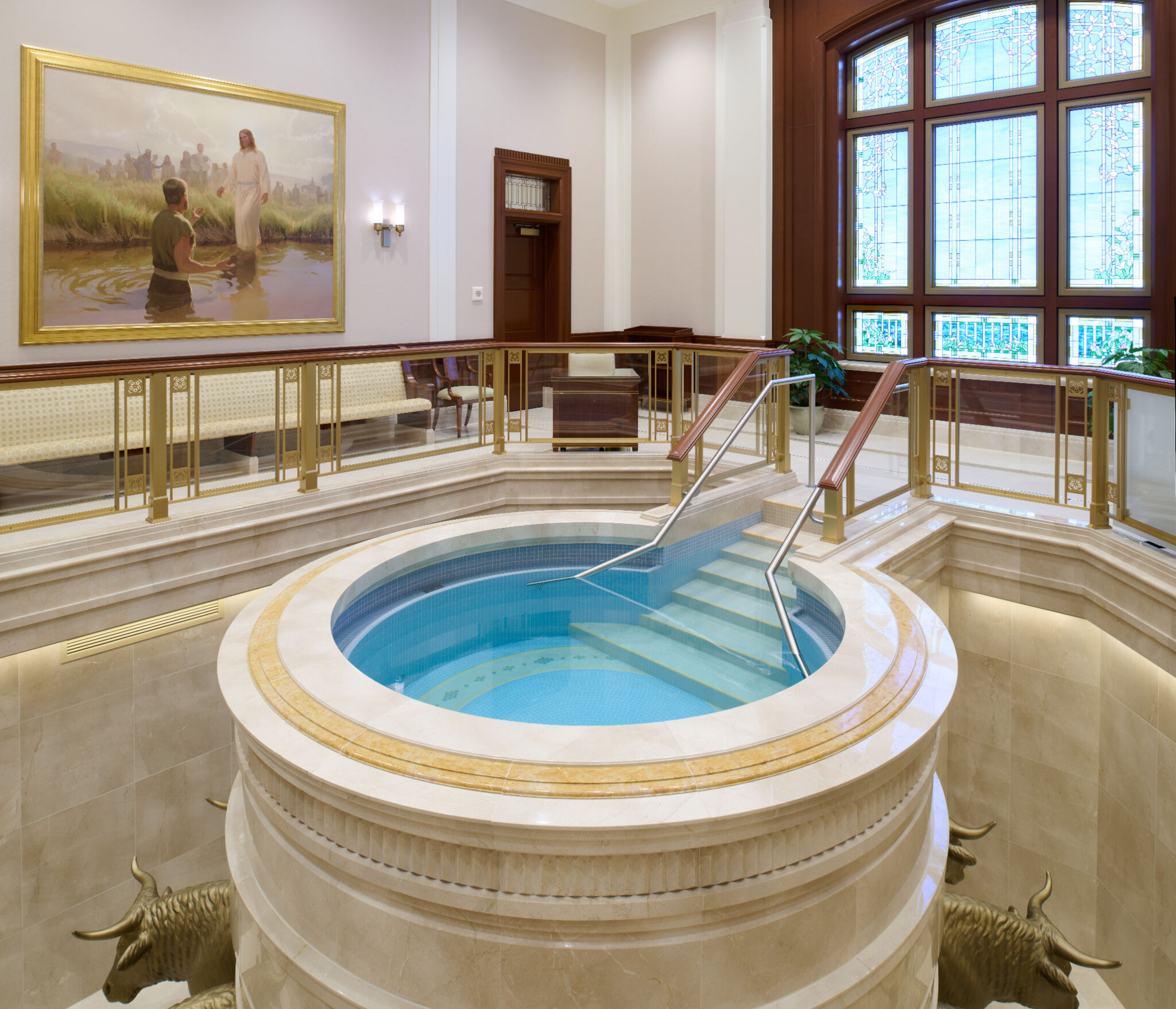
The church believes that kids are innocent until their eighth birthday, then, by the time the cake is finished, the child is fully aware of good and evil, and from then on must live and die based on the consequences of their decisions. As I typed that, I just had a question form in my mind that if children are innocent, why get baptized at 8, since the point of it is to wash your soul clean and begin anew? There is nothing to wash clean at 8, right? Doesn’t it make more sense to get baptized at about 47 years old, when they have had a chance to screw up, learn lots of lessons, and get sh*t figured out?
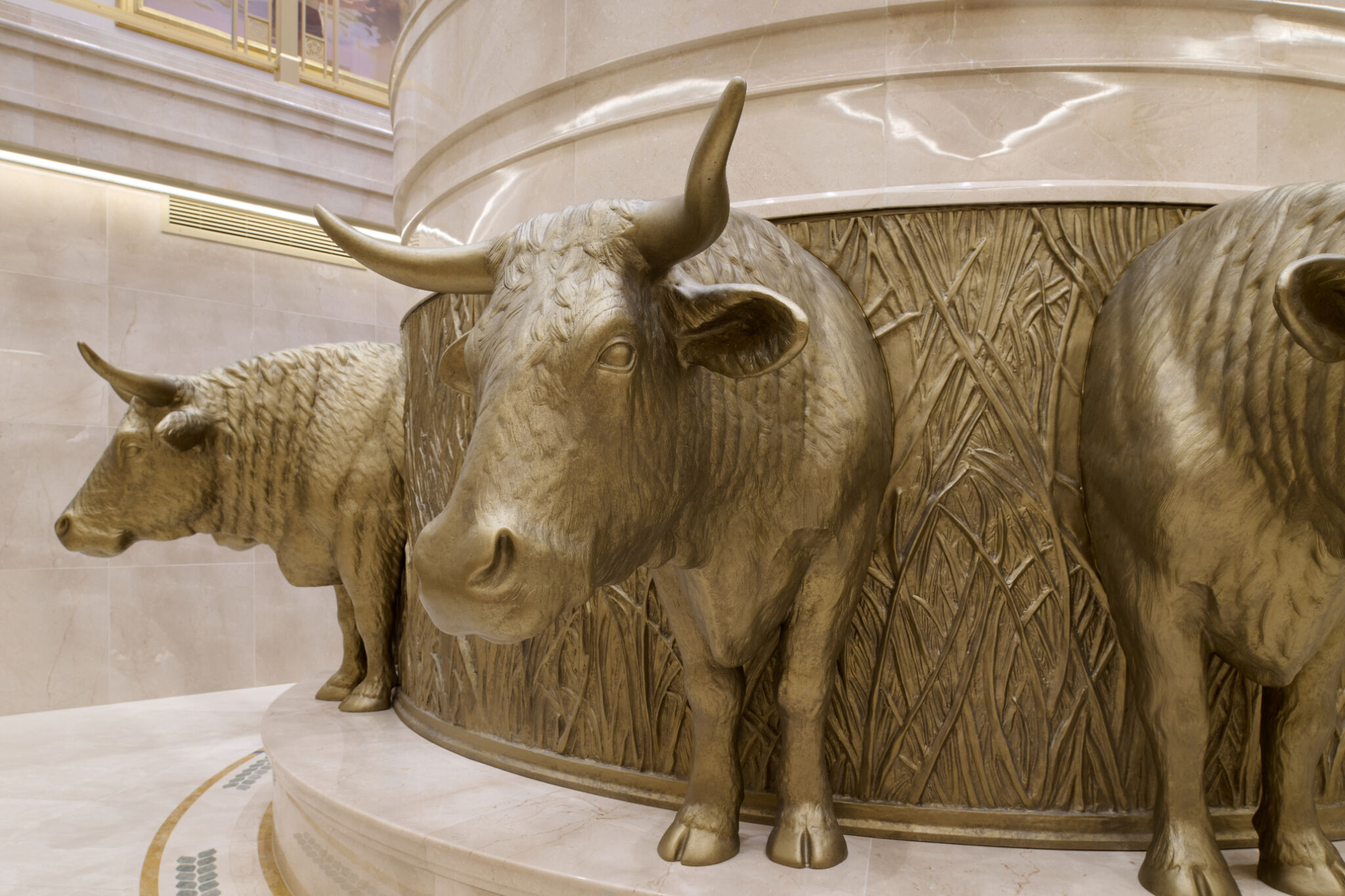
Some scholars talk about the lost ten tribes of Assyria, and a period of time Jesus’ travels are unaccounted for in bible history. Mormons believe that during that time Jesus came to the area called North America today. My memory is fuzzy, but I think the church believes they are the descendants of the missing 10 tribes and Jesus and a couple of angels came to North America and got those people set up on the right path again, with teachings started up over here, using the bible part III (Old Testament is the part held sacred by Jews, so I call that Part I, and New Testament believed by Christians to be simply more of the bible, so I call that Part II).
Part III is the Book of Mormon. This is believed by them to be the rest of god’s teachings and held back for later, in order to help steer the people back onto the righteous path. You should read it sometime. It’s um… enlightening. You should also read Mark Twain’s treatment of it in the book Roughing It, where he reads the book out of curiosity. I found his description hilarious and accurate.
Anyway… that is why the 12 oxen.
The temple baptisms are NOT for new converts, but only for the deceased. I had a question here, but I chose not to ask it because I thought there was too much challenge in my heart and I didn’t want to make anyone feel bad. Mormons get baptized not only for themselves, but also for deceased people who “may not have had the opportunity.” I knew about this already. The woman on the tour then casually remarked that the deceased person can then choose whether or not to accept the baptism, which is what I wanted to ask about. I wonder what their thoughts are on the possibility that the person receiving the baptism may not want to have anything to do with the church. I have always wondered this because my Grandfather was devoutly Mormon and constantly begged me to come back to the church. I assumed he must have undergone baptism for many relatives.
When I was baptized, the setting was not this magnificent, but I did get to wear all white and get lots of attention, which for me, at age 8, was awesome. Mormons place a great significance on total submersion during baptism. They scorn any other form that does not include going completely under water, unless the person being baptized has a medical condition preventing it from happening safely.
Please click over to my post on seeing the location believed to be the actual place where John the Baptist baptized Jesus. It was pretty amazing to me, atheism notwithstanding.
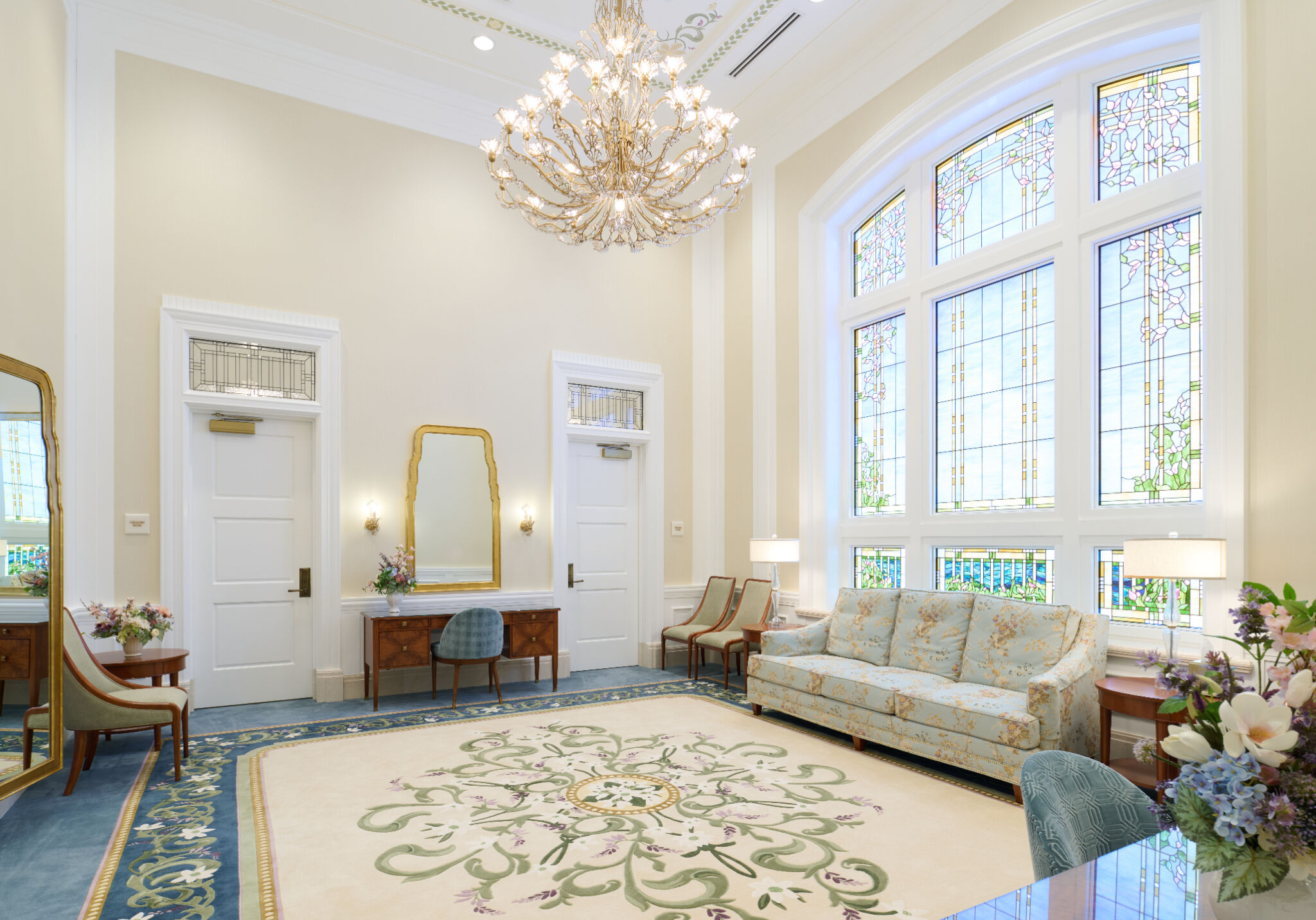
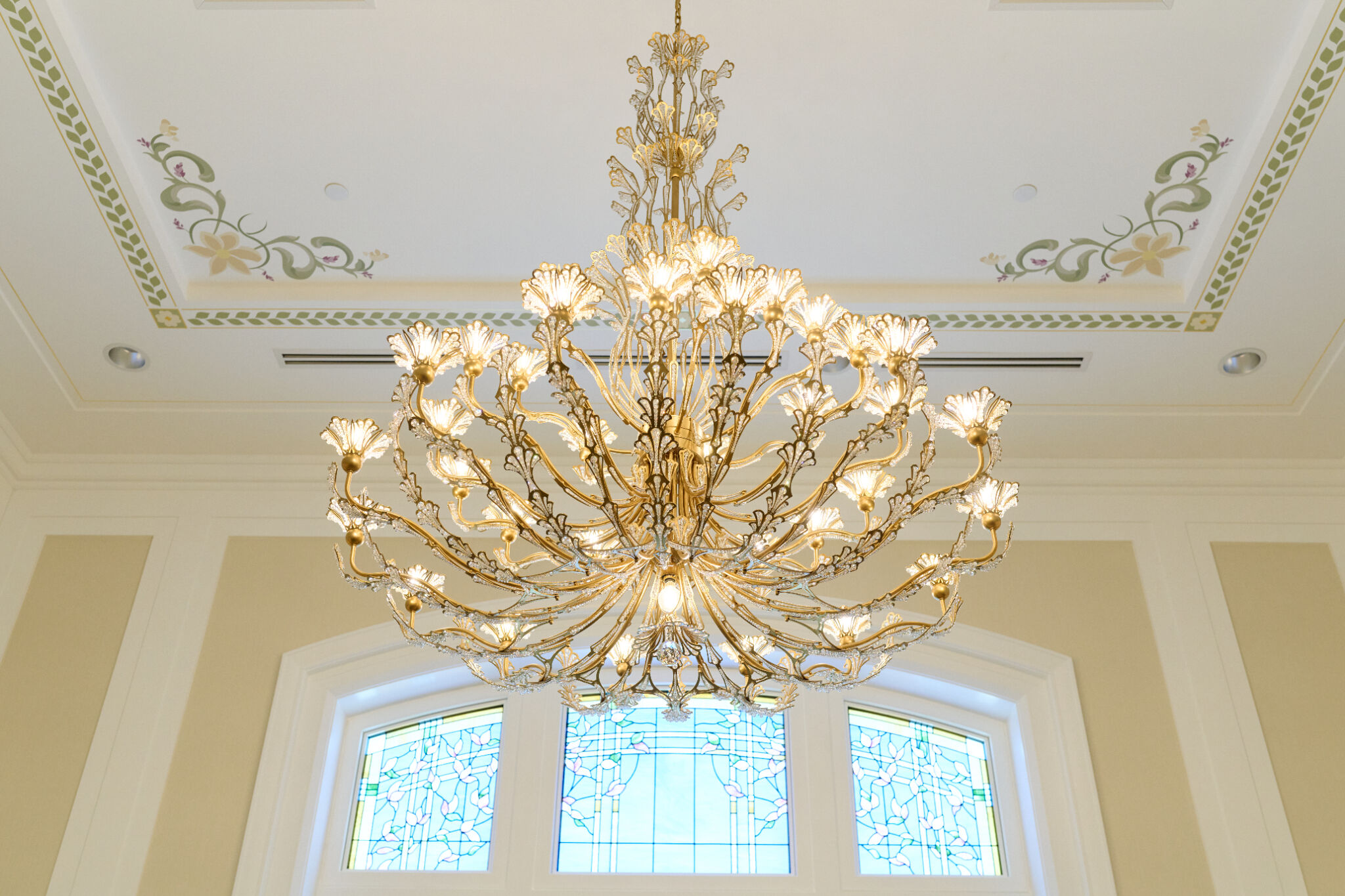
I loved the chandelier in the Bride’s Room, and also appreciated the painted murals on the ceiling, that match the carpet patterns. I saw the same ceiling designs in several places and it’s all very nice.
You will notice, as you gaze at the interior photos, that the rooms match. There are repeating themes and colours, that the guides were rather proud to point out. The colours I would call sage and rose and summer wheat? Lots of gold, like Trump rooms. The stained glass is beautiful, and consistent. The carpets were really beautiful. The carpets and stained glass were custom designed for the place, we were told. The furniture and drapery and flowers might be standard to a Mormon Temple. I did appreciate the simplicity, and the colour scheme, but it had a hotel feel to me. It seemed as though all this stuff could have come from the Mormon IKEA, where sage upholstery and gold paint might be produced on a massive scale. Most interesting about the design scheme was that it was immediately familiar as Mormon-y. Though it has been forty years since I was last inside a Mormon church, I see the culture is consistent. It reminds me of the city of Salt Lake, in places, which is sort of Edward Scissorhands-ish (if you remember the neighborhood in the movie).
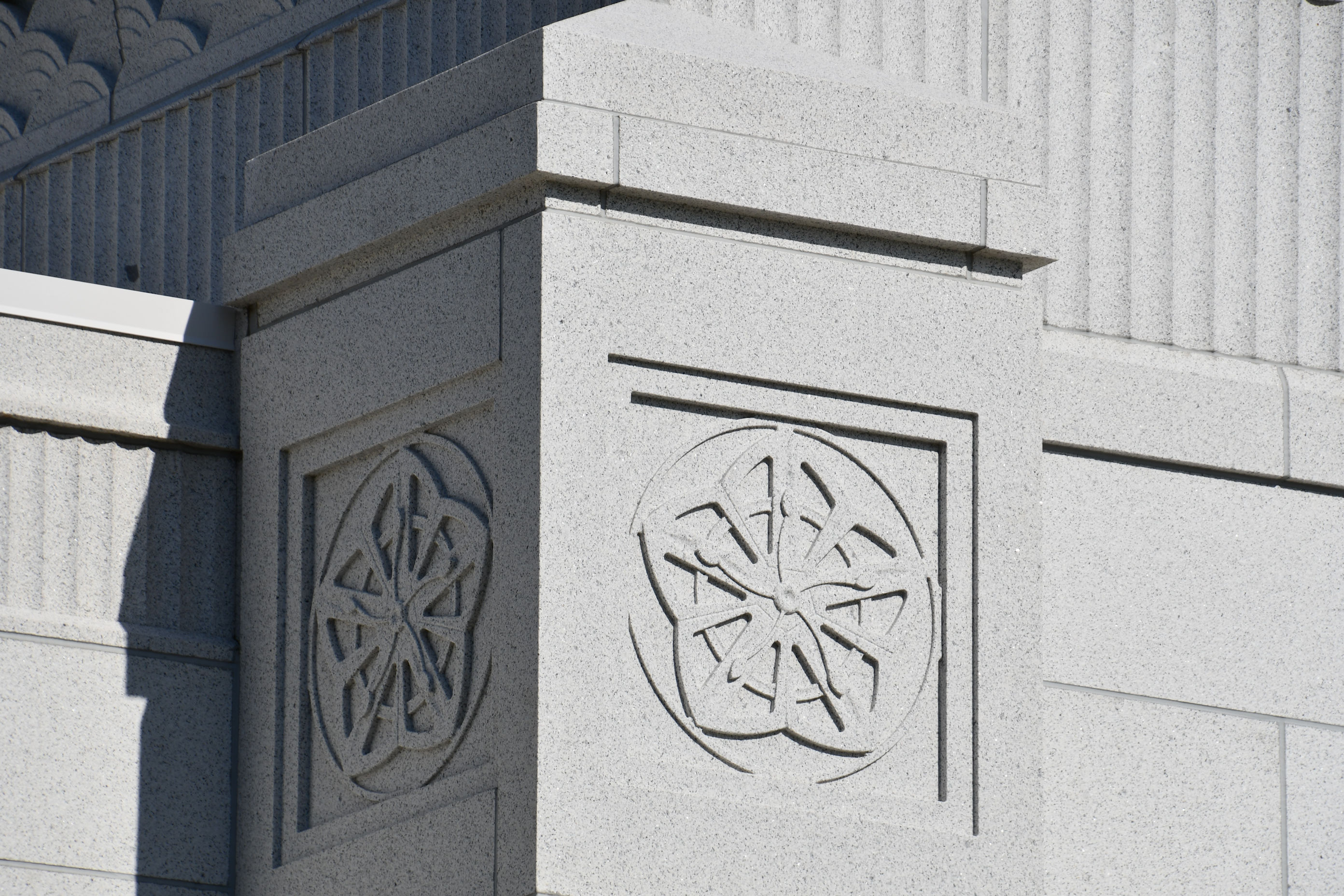
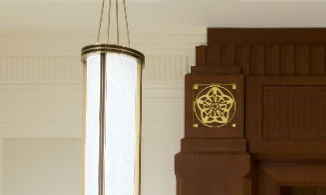
This flower pattern represents a specific flower, but I do not recall what it was. It was one of the nice touches that I liked in this architecture. We saw this flower pattern on the murals, in the stained glass, and on the outside of the building.
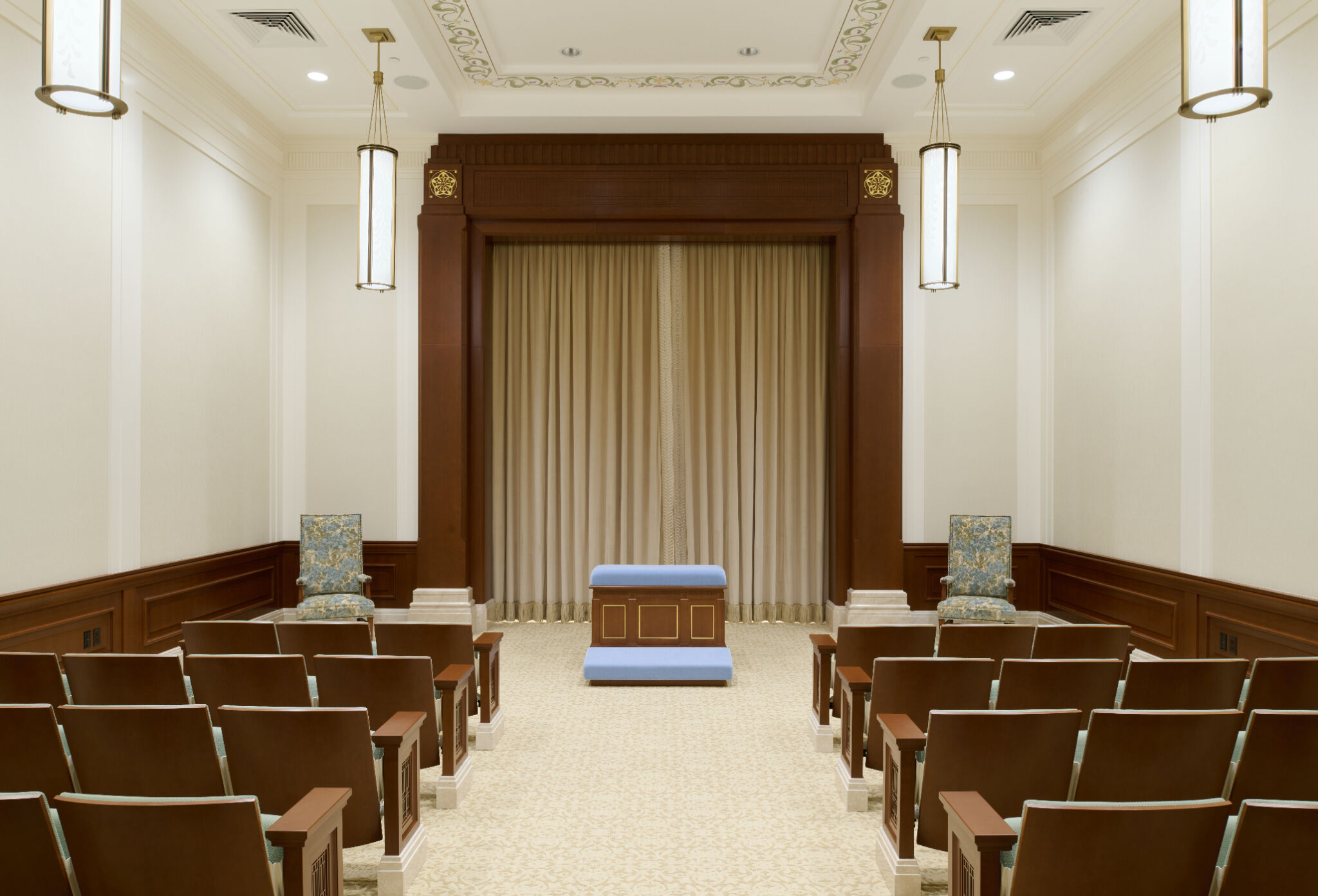
You’ll also notice there are no big spaces in here. It’s all intimate. No regular sermons or services are held in a temple, apparently. I wonder what it’s main functions are. Possibly just marriages and baptisms?
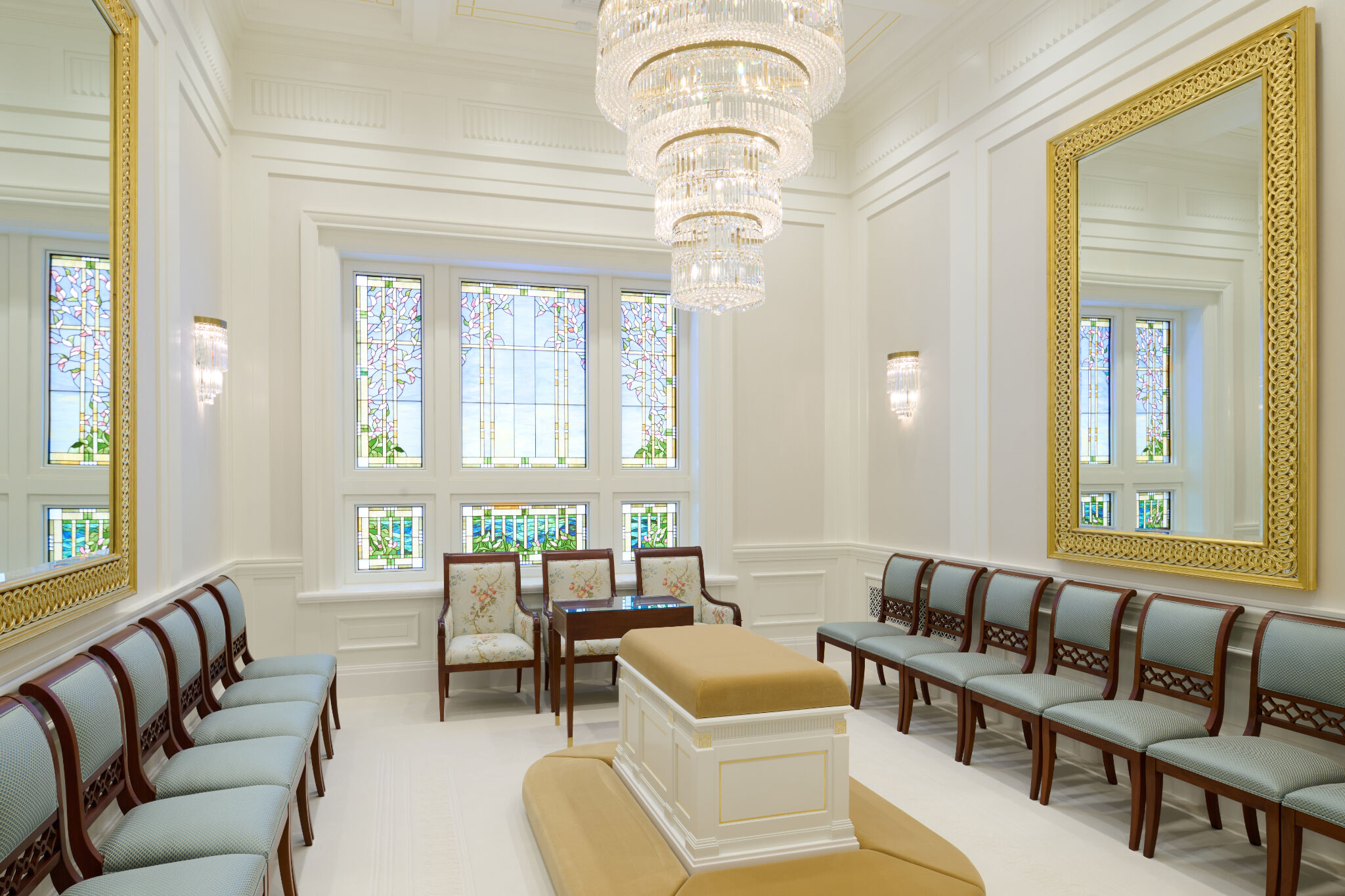
The Sealing ceremony, they explained, is the final and most important step of the commitment to family with god. This is the place where bride and groom kneel and commit themselves to god, and in exchange they are promised eternal life. I think the commitment is to family, more than just the two people. This is another thing I like about LDS, that the emphasis on family is profound, like the example of the baptisms for deceased family. The ultimate goal is to get everyone you love into the Celestial Kingdom with you.
There are, like, five heavens? I don’t remember exactly. Each one is a different level, depending on how good you are. But if you’re really really good, you can go to the best one, which is the Celestial Kingdom. A step above that, if you’re amazingly good, is that you get to run your own planet, like Jesus, but that’s a legend for a different time.
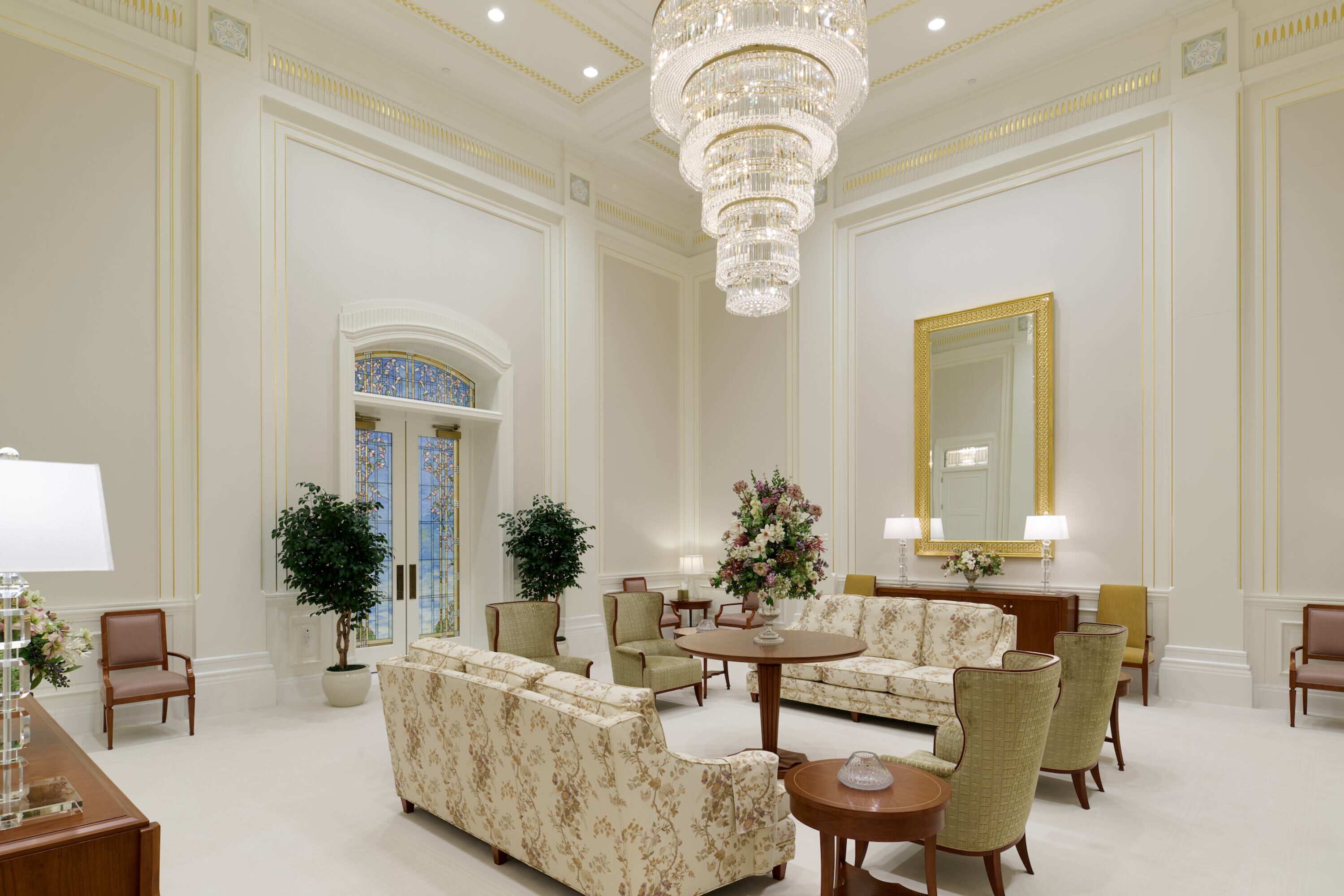
We were afforded an opportunity to enter the Celestial Room, which I assume is named for the Celestial Kingdom, so I was hoping it would be special. It struck me as one more room that was just like the others and felt as much like a hotel as the others. It has a nice chandelier also, but I liked the bride’s one better. I liked the tall ceilings throughout, but not the gold, which reminds me too much of Trump.
Inside the Celestial Room, the doors were closed, and we all stood motionless and silent for a few minutes, to allow us to appreciate the feeling of the room. That was nice because it was new and interesting. It did begin to feel prickly to me, which reminded me of a CRAZY thing that happened once when a high school field trip of mine went inside a particular Mormon building in Salt Lake City. The prickly energy sensation felt ominous and suffocating, and two of us on the trip raced for the exit. My mom would have definitely said it was The Devil’s work. But that, too, is a legend for another day.
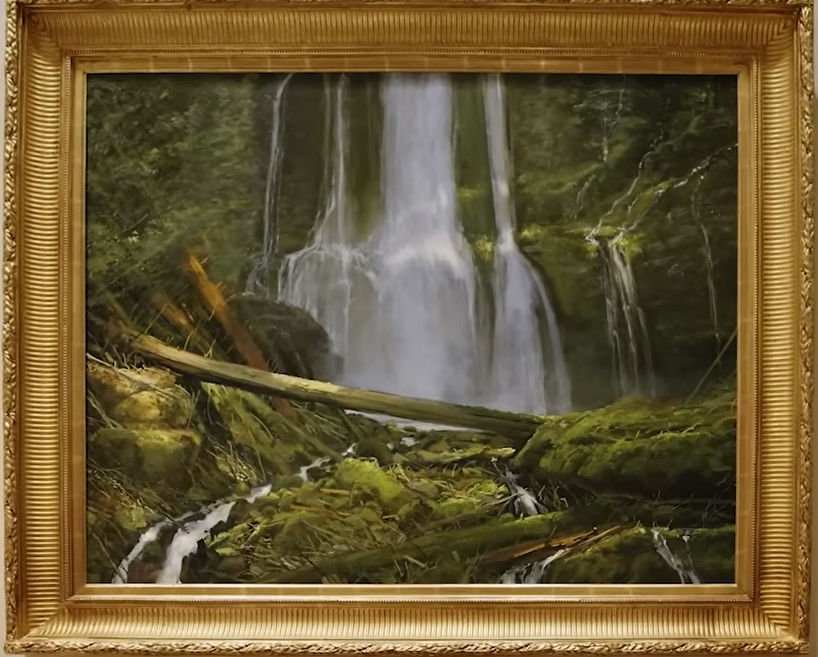
One of the flower vases in the church (in fact the one right in front of the painting above), contained blackberries in the arrangement. I loved that touch. I did enjoy all the artwork of landscapes and White Jesus. I can appreciate the artistic skill even though the work promotes racist ideals that I think seeps into people in ways the congregation certainly doesn’t grasp. I was astonished to see two paintings of token Black people. As in, I literally gasped out loud. Black people are now welcomed in the U.S. Mormon churches as far as I know (I hope they were always allowed in churches in the countries where the missionaries proselytized, but I digress.), but it was still a shock, with my Mormon memories being mostly from the 1980s.
When I first joined the church, Black families were not allowed inside. Long considered the descendants of Cain, who killed his brother Abel in the bible story, Mormons at that time considered them unfit for most stuff in the church. Then, our prophet at the time, Spencer W Kimball (look at my little girl mind, memorizing that name for life, awww….indoctrination is so sweet) went into deep prayer and was told by god, “Oops, my bad. Nevermind. I actually think Black people are ok now.”
The announcement was made and THE VERY NEXT SUNDAY a Black family was in the pews with us at our church in Sandpoint, Idaho. I was astonished. Even my 8-year-old child mind was astute enough to ask myself “Why?” I was baffled at that family. Why, when these people thought your entire ancestral history was unclean forever up until last week, why then would you want to join them in faith this week? I never met the family, and never asked them.
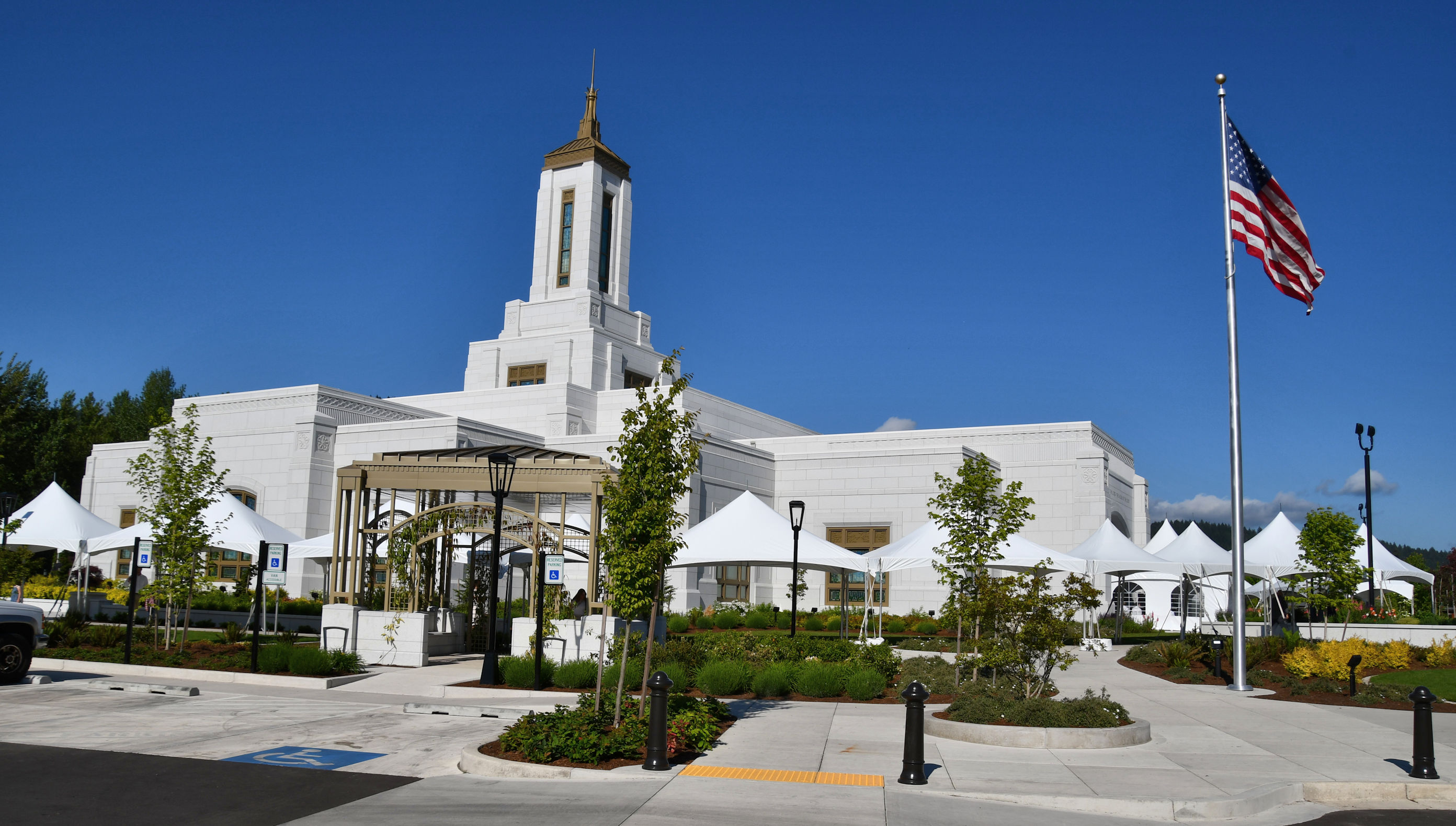
Then the tour was over and we were encouraged to stay as long as we liked. We were encouraged to ask questions of anyone. I didn’t ask any questions. I had questions, but like I said earlier, it was couched in criticisms, and I didn’t want to challenge them, just to look and learn. So I kept my mouth shut. The only thing I said the whole time was to comment to the women in the baptism room that one of the paintings of the river Jordan with trees and landscape was just how I remembered it on a recent trip to that spot, only with fewer palm trees. They were genuinely appreciative to hear that comment, as I hoped they would be.
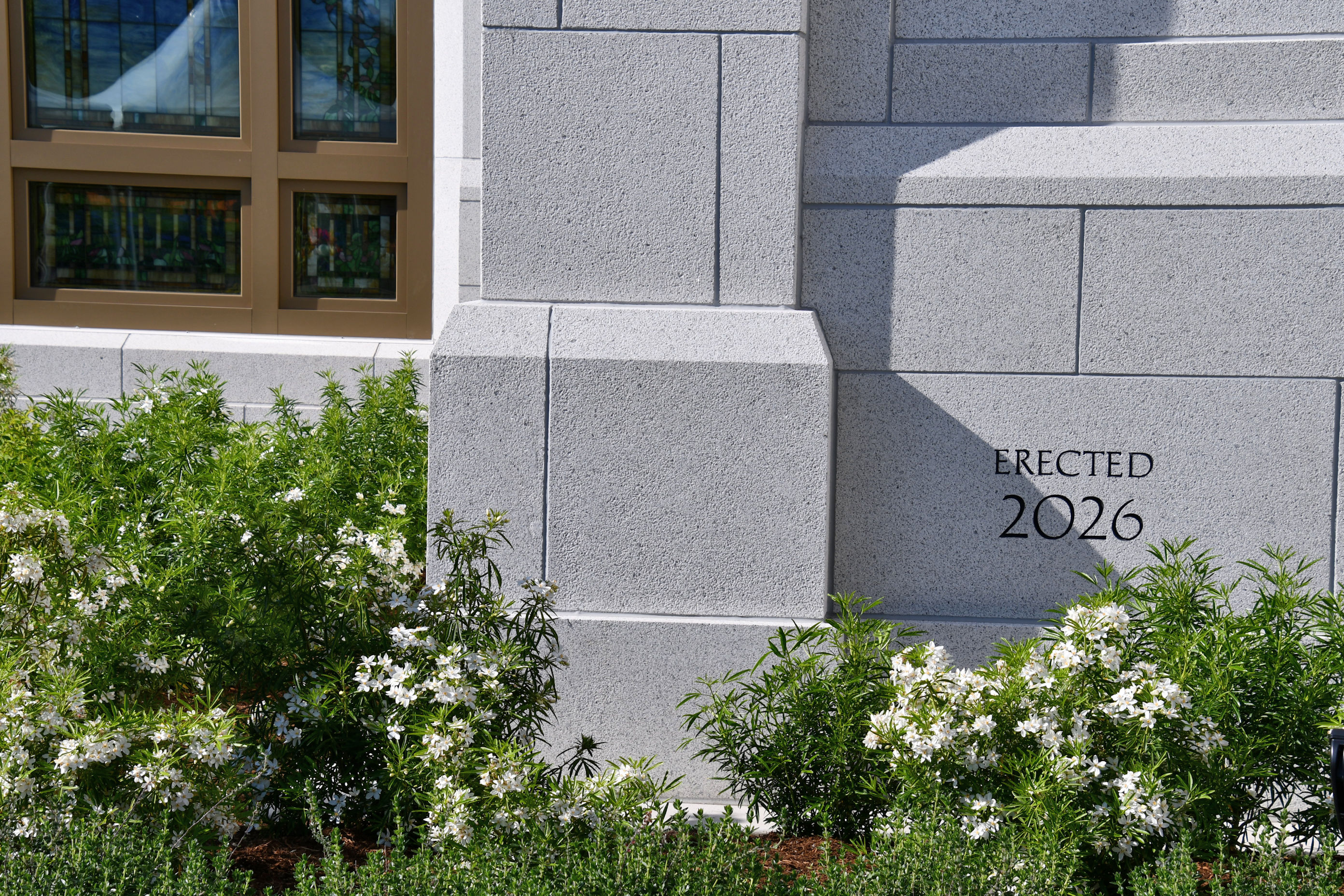
I took a few photos and then went off to meet Kellen for dinner, since I was in central Oregon and close to their home.

 Conscious Engagement
A rather amazing place Crystal. Very white
Wow. Just wow. I had just started at Bellevue College in the fall of 1980 when the Seattle Temple was dedicated. (Odd that it’s called that, given it is a different city). During the dedication I remember a group of women chaining themselves to the gate in opposition to the church’s position on the ERA. A dozen years later I was the letter carrier for the temple and was allowed inside with a registered letter, although I could only be allowed in to a small waiting area. People were dressed in elaborate garb and some man was in a chair (throne). Such an interesting place. This is really fascinating to read. Thank you!