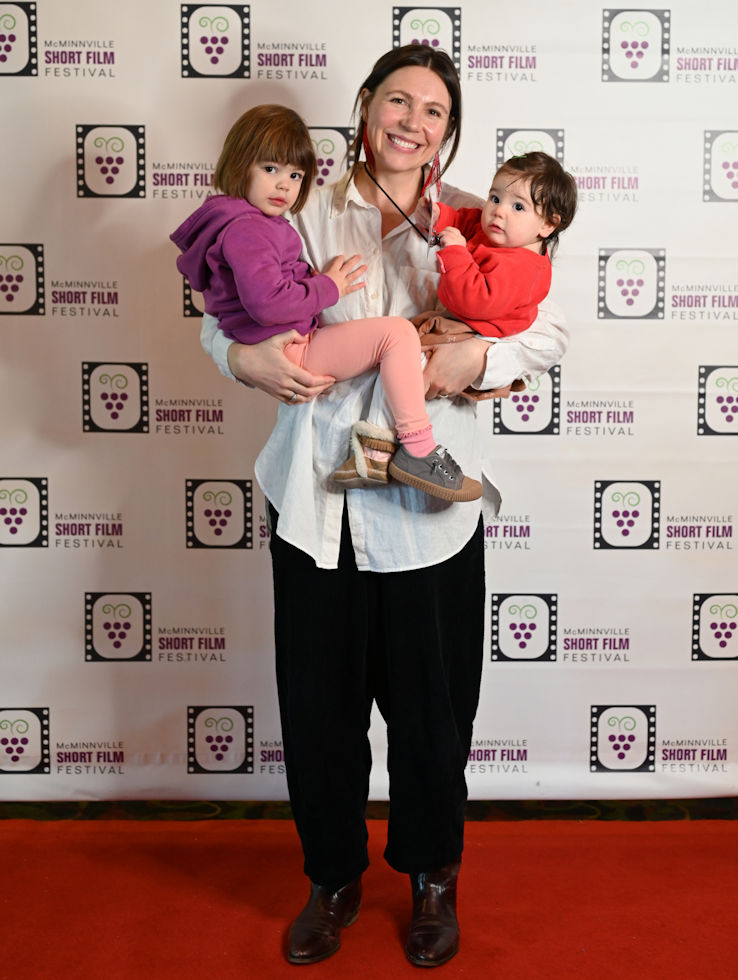
In the Portland satellite group of Cherokee Nation, called Mt. Hood Cherokees, we have many accomplished artists. As Editor of the group’s newsletter, I am fortunate to get to talk about them all the time, and keep up with what is new in their careers. In March I got an up close look at new work from two of them in the same family! These are two Cherokee warrior women who are using their power in a form of activism by education.
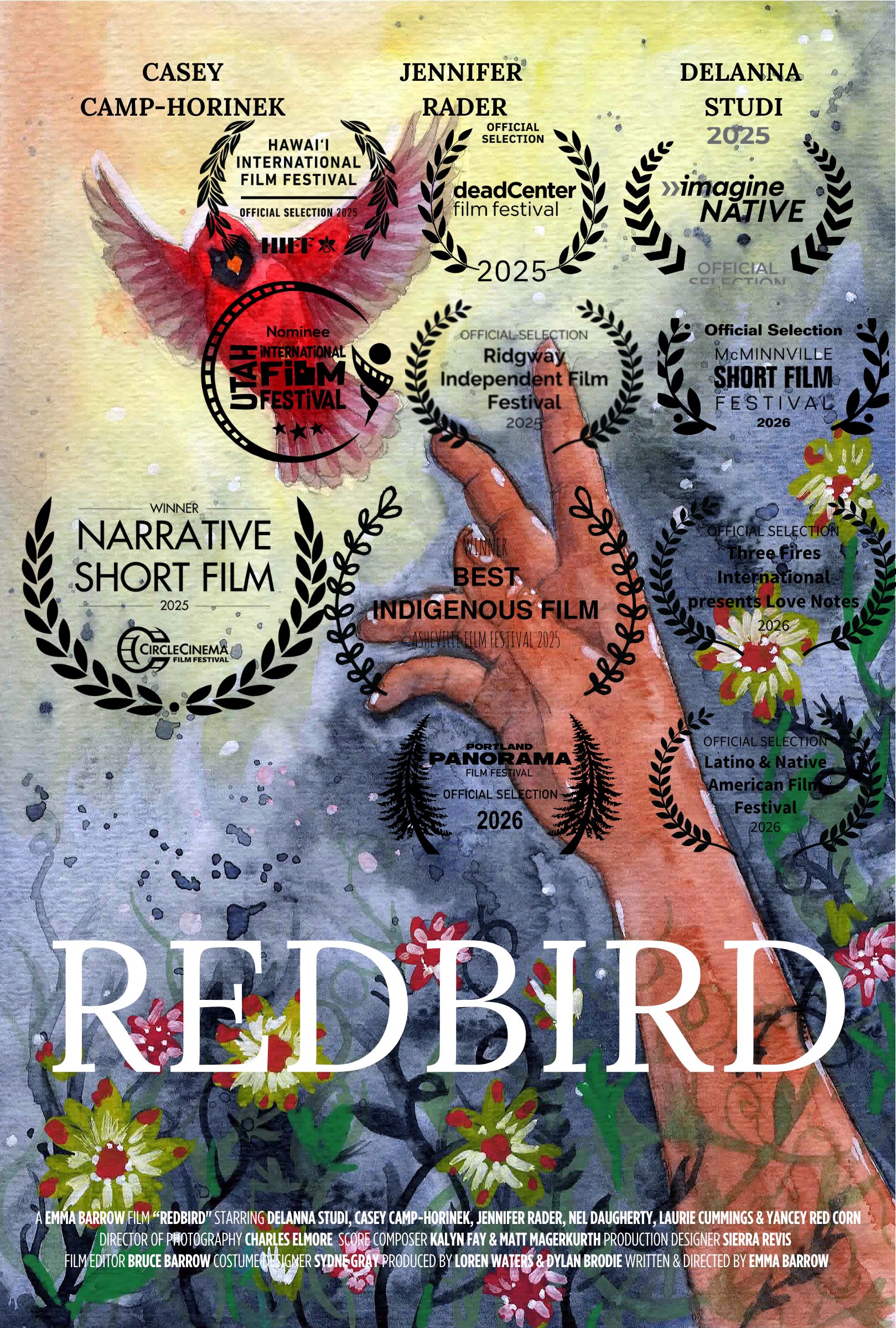
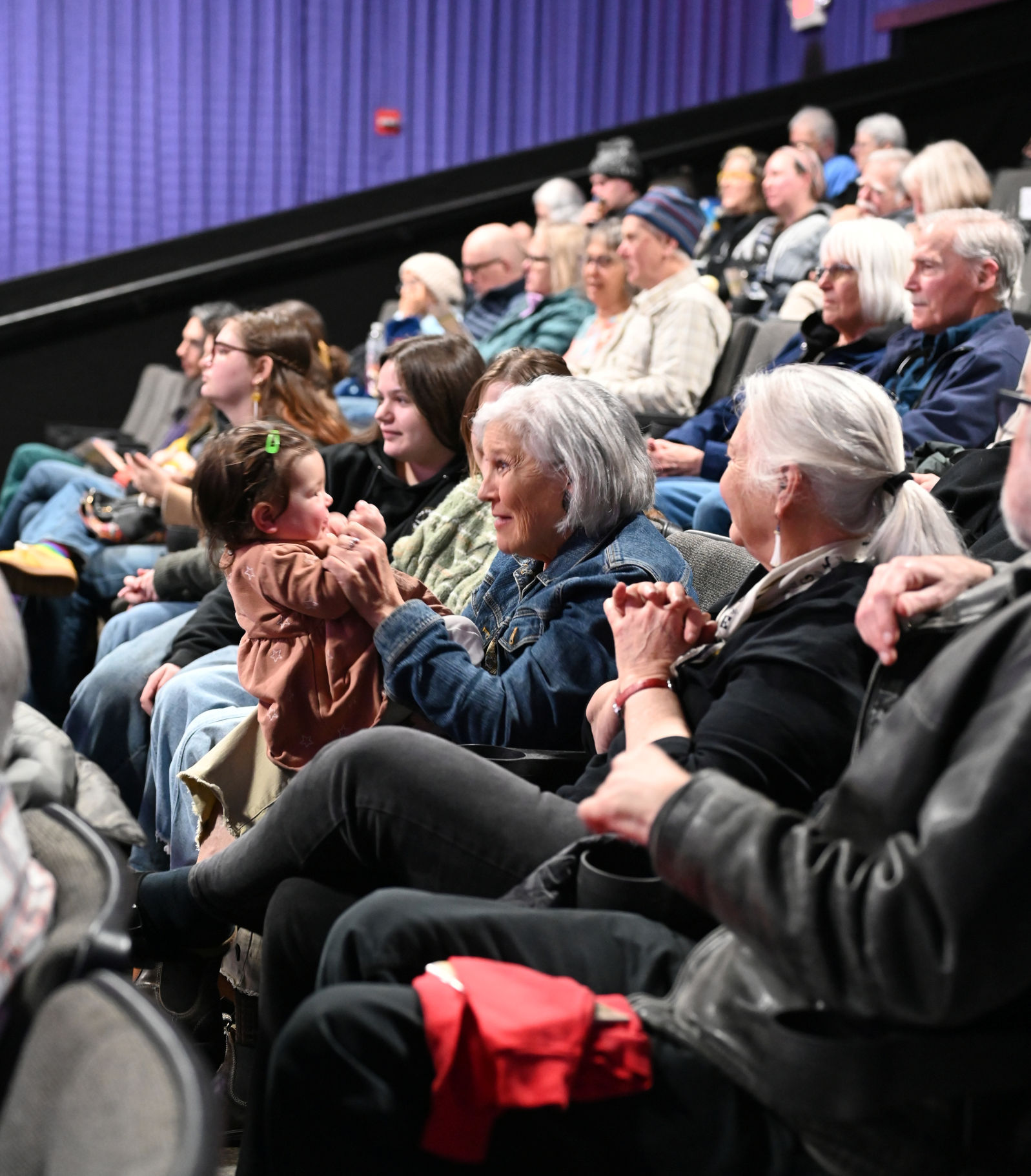
Emma Barrow is a filmmaker, and was able to showcase her short film called Redbird at the McMinnville Short Film Festival. The film explores complicated family dynamics that arise with the death of a parent, when both mother’s and father’s families want custody of the children. More complicated is when one family is White, and has the resources to afford to fight in court the Native family to ignore the ICWA (Indian Child Welfare Act). Barrow draws our attention to the generations-old practice (often government-directed removals) of taking Native children out of their communities and raising them in non-Native families and preventing them from accessing their Native cultural heritage. The practice is now against the law, but is alive and well in 2026.
ICWA was enacted in 1978 to set standards for adoption that involves Native children. It prioritizes their best interests through strengthening family and Tribal stability. The Act prioritizes placements within their family and community when a child has to leave their own home, and ensures the child’s Tribal Nation and family are fully informed and involved in state court proceedings. The only way a Native child is supposed to go to a non-Native family is if there is no other way to keep them within the Native community, and even then, the child’s tribe is supposed to be a part of the decision for where they are placed.
Barrows film is traumatic but ends on a hopeful note, when the women in the Native family band together and decide not to give up on the child.
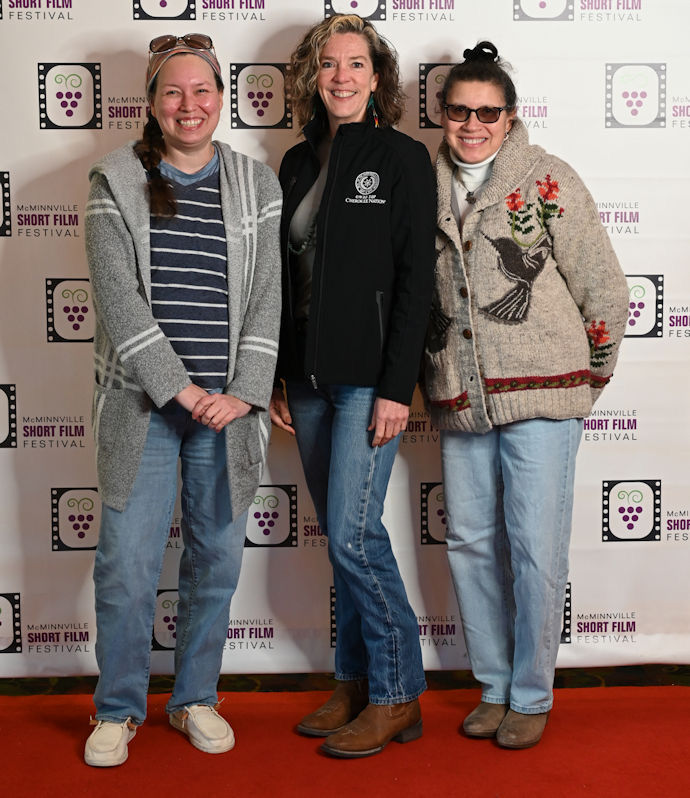
Mt. Hood Cherokees met up one day at the Jordan Schnitzer Musem on the Portland State University campus to see an installment by Barrow’s aunt, Brenda Morgan. Morgan’s work also points a finger at a generational harm done to Native people. In this case, the allotment of lands, that ultimately resulted in more land loss, even after treaties.
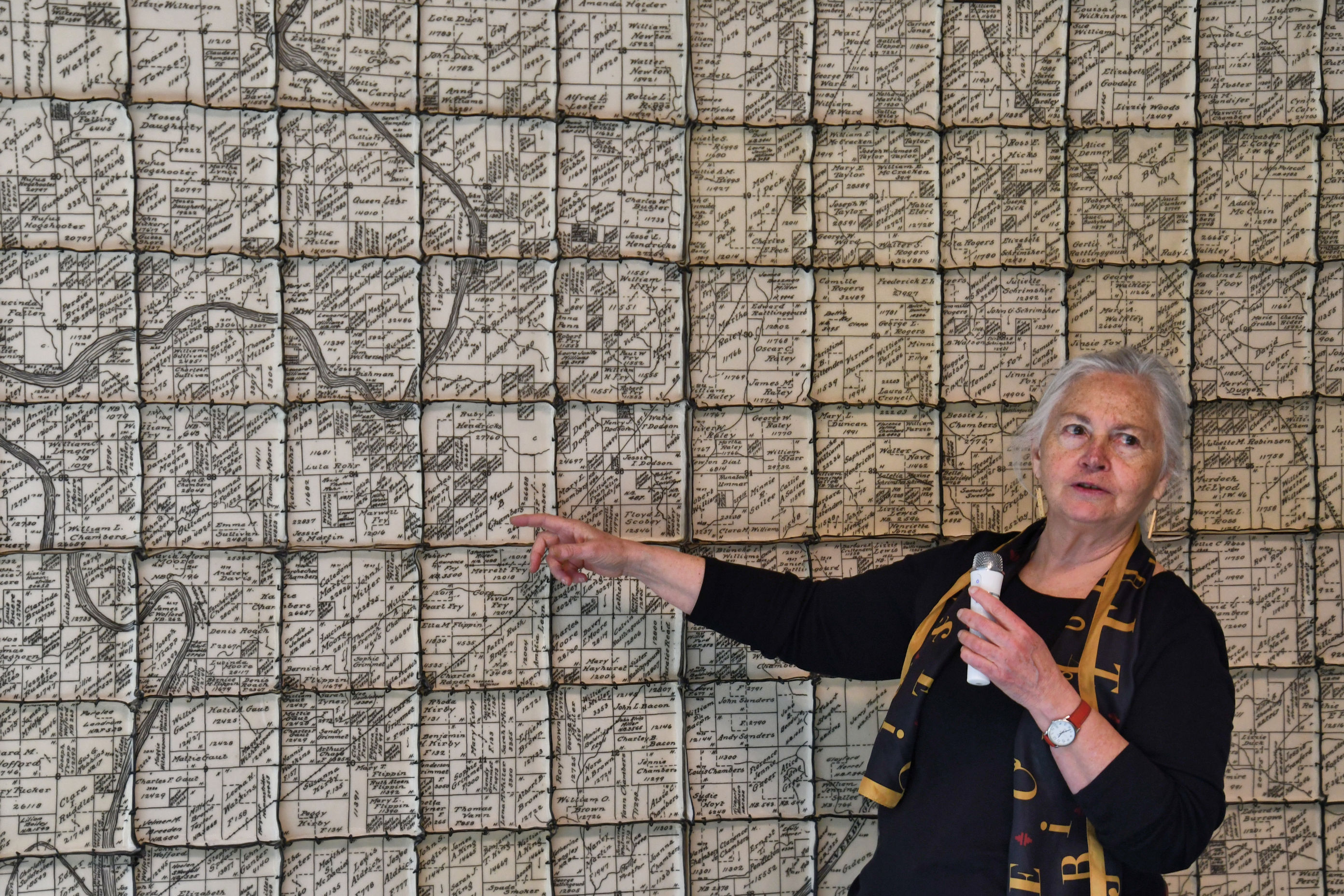
Briefly, for those who don’t know about allotments, they are parcels of land assigned to Native people by the U.S. Government as part of their campaign to assimilate tribes. The government said that allowing Natives to live in their own tribal communities on protected reservation land was causing them to isolate and resist integration with the colonizers. So…the government broke up the reservation land into 40-160-acre parcels and drew up paperwork so that each parcel/allotment was owned by an individual.
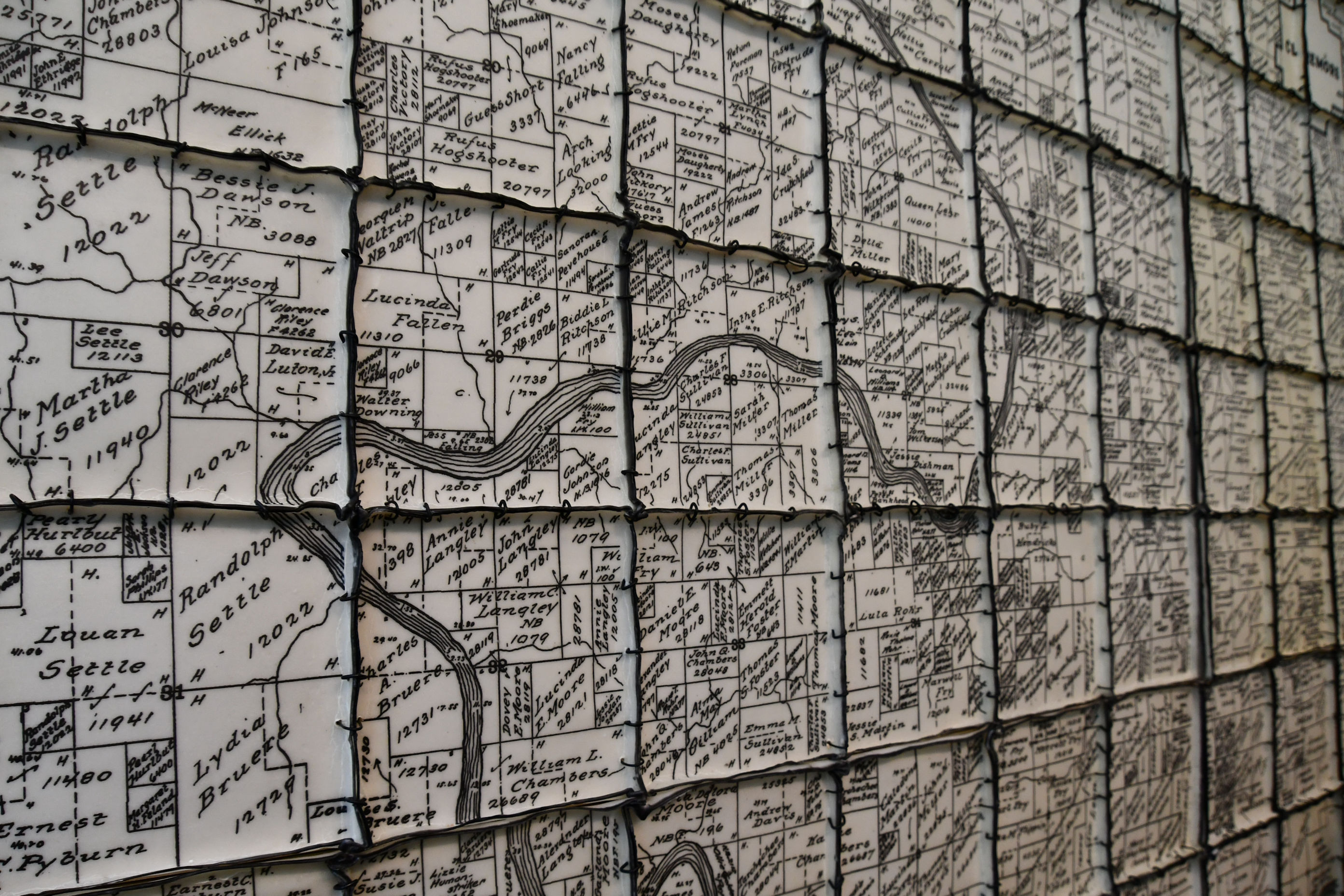
Codifying ownership sounds like a good thing, if you are in a modern, European mindset, as were the people in government who did this. There were problems. First of all, most tribes used land communally, and were not familiar with individually managing parcels of land, so they didn’t do it well, or didn’t do anything at all – which shocked White people at the time, who quickly decided that Natives were ignorant and wasteful and didn’t deserve the land. Natives were declared incompetent land owners, and subsequently not allowed to sell or take full management of their lands. The government assigned itself steward.
The majority of Native lands had already been lost in treaty exchanges, as most of you know. Previously, in exchange for taking most of their land, and moving Natives to reservations, the US government had agreed to provide assistance with food, housing, and medical care for a limited time. When that help ran out, unable to participate in the economy like other citizens, and unable to use their land in their traditional ways, Natives went into debt for their needs. The government allowed them to sell their lands to pay off their debt. Viola! Non-Natives got most of the alloted land too.
Ok, that wasn’t very brief, was it? I tried.
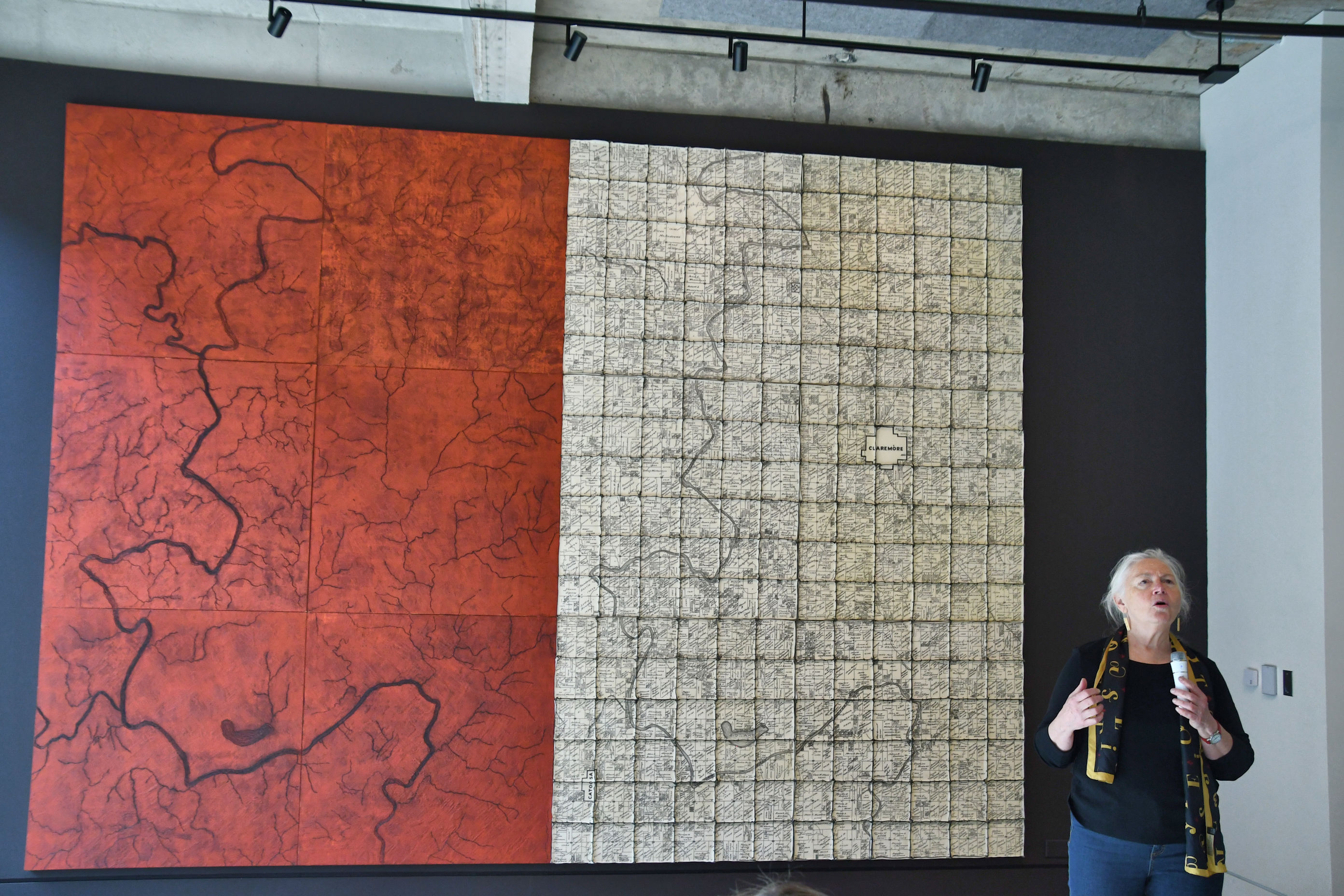
The portion of the map of Oklahoma that Mallory used is the one that contains allotments from her own family. Lands assigned that are no longer in her family’s possession. On the left, in red, she shows a map of the land when it was whole. On the right, it is broken into pieces. You can use the shape of the river to see that it is the same section of map. Though I physically can feel the pain of this when I look at these maps, something else I see is hopeful. The land is still there, beneath the scars, and it still requires us to be stewards of it. We can’t give up on the land below us, even if it’s hard to see.
I have photopies of my family’s allotment paperwork somewhere in storage. My family in Oklahoma were the Haleys, and their allotment lands were in the area around a town called Nowata, north of Tulsa. I don’t know anyone in the family who still lives in Oklahoma though.
In the 21st Century, modern land managers are learning to copy Native land management methods. In particular, I have been hearing how people are just now realizing that the best way to prevent massive forest fires is to actively work those forests as indigenous people did, to include harvests and planned burning. I have not heard yet of studies proving that the best way to serve a community with the land is to use it communally, but there may be work like that going on, and some reasearch team is going to announce one of these days that the Indians were doing it right before colonization.
Tribes believe that their people existed in North America “since time immemorial.” Archaeologist have verified that indigenous people lived here at least 20,000 years. Tools found in Idaho have been dated to 16,000 years ago. A collection of sandals found in Oregon date to 12,700 years ago.
This land was colonized 400 years ago, and yet…those people assumed they knew better how to use this land. Many of their descendants are convinced of it still today.


Years ago, some First Nation friends of mine in Canada introduced me to the term colonizer. It has much more power and specificity than other terms; it doesn’t dance around what was done and why.
That’s one powerful piece of art.
I, too, learned the word “colonizer” later in life. I am learning about my Native heritage at a time when US Natives are feeling and acting emboldened. Emboldened enough to use a direct word like “colonizer.” A lot of our elders remain traumatized by policies of child stealing and imprisonment for things like not cutting the hair of a tribal man, or speaking a tribal language in public. I still get the feelings of censorship from some of the older Native people, who have learned not to talk about tribal things publicly – and here I am, talking about it on my blog. I love the benefit of their lived knowledge, and I try to keep some things quiet, but I see a greater benefit to talking about being Native than hiding it. Anyway, I think it’s a pretty cool time to be a Native person in the United States, all things considered.
Thank you for your feedback on the artwork. Brenda’s map is really powerful. I left out details, but there is so much more. As an artist, I’m sure you are the perfect audience. Brenda stitched her allotment map together, for example, with steel hog rings – historically used to control hogs.
A fine event I am proud that you are part of Crystal. Despite strenuous efforts to maintain contact with my first dead wife’s family I had literally to fight them off to keep my toddler son.
Derrick that sounds wretched, for all involved. It is just awful that you and your boy had all those multiple painful things to deal with at the same time. I am proud that you are the kind of man who found a way to keep your son. Wish I could hug you. I am sorry that my post brought back painful memories.
XX
Wow, fascinating! I appreciate all that I learn from your posts. There is just so much I don’t know! And may the learning never stop ..
Learning keeps us young, Bonnie. I firmly believe it. I am glad I was able to teach you some of our fascinating U.S. history. There is always so much to know; I’ll never learn it all. But history never ceases to be interesting to me.