I was only out on the trail for two days, but I returned with so many photos that it took me two days to go through them and choose and edit some for posting. This week I can only be in my office for a couple hours in the morning, till the sun heats it up to 100 degrees. All that…. to explain that I have used up my time with editing photos, and now all I have time for is a quick post before I cook in here.
To eliminate some of my heaps of great photos, I decided to post today just about the birds and berries I captured Thursday and Friday while I was backpacking on Eagle Creek Trail in the Columbia River Gorge.
The berries caught my attention because so many of them were ripe! I ate handfuls of so many kinds of berries. I began taking photos of everything I was eating. And then I took photos of a few not to eat.
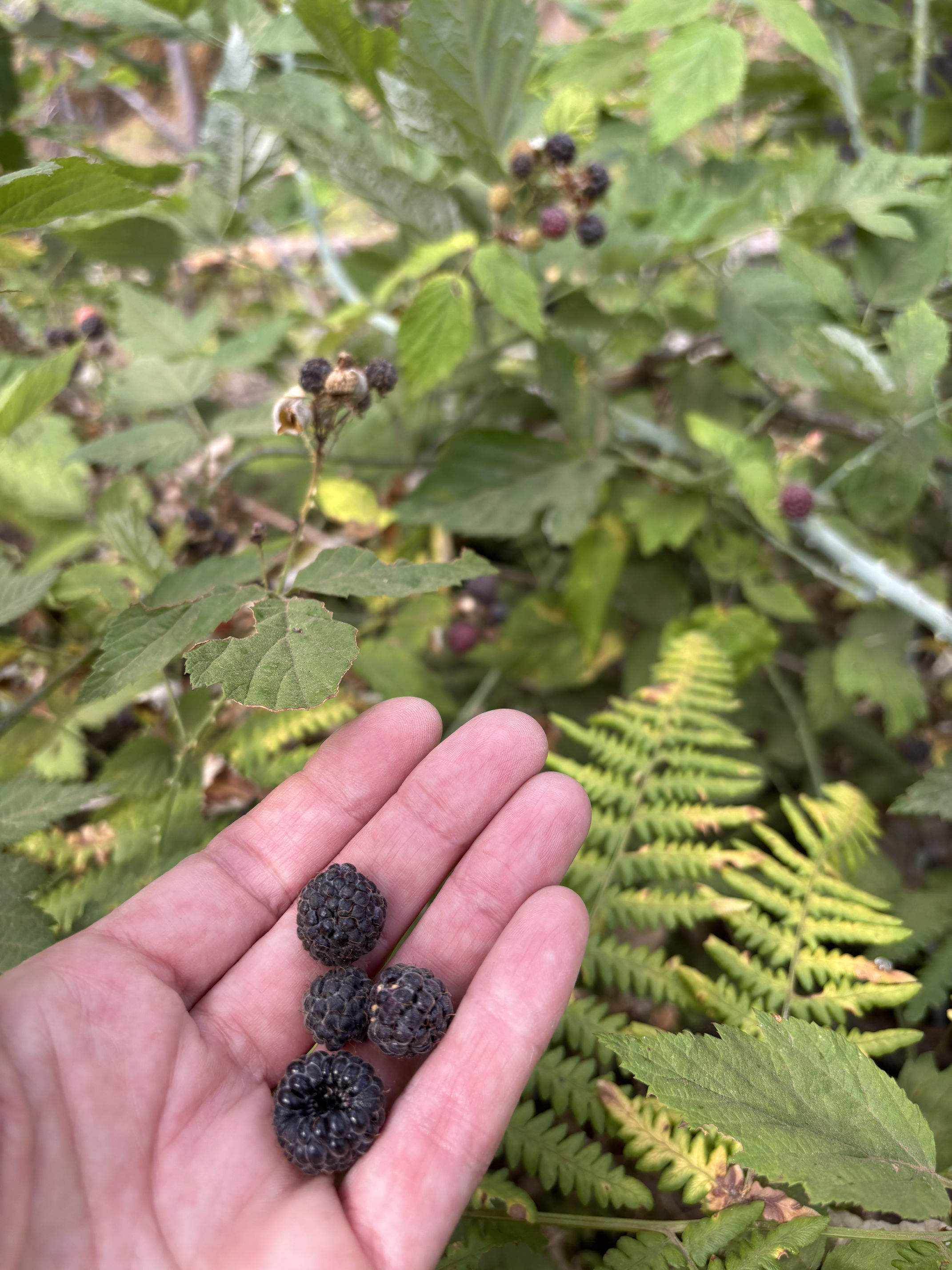

The most common berry in season along the trail is the black raspberry. I ate handfuls of these. They have a round – not elongated – top that seems dusty. They have a mild sweetness and less juice than a blackberry. Above, the photo on the left is black raspberries. More common in Oregon is the blackberry, and there are lots of varieties. I’m just going to claim ignorance and please enlighten me if you can, but there are berries that my mother always called Dewberries. They have delicate vines that are too fragile to lift up into the air, and crawl across the ground and make delicious sweet berries that taste a lot like blackberries. I included some of those on the photo above on the right.
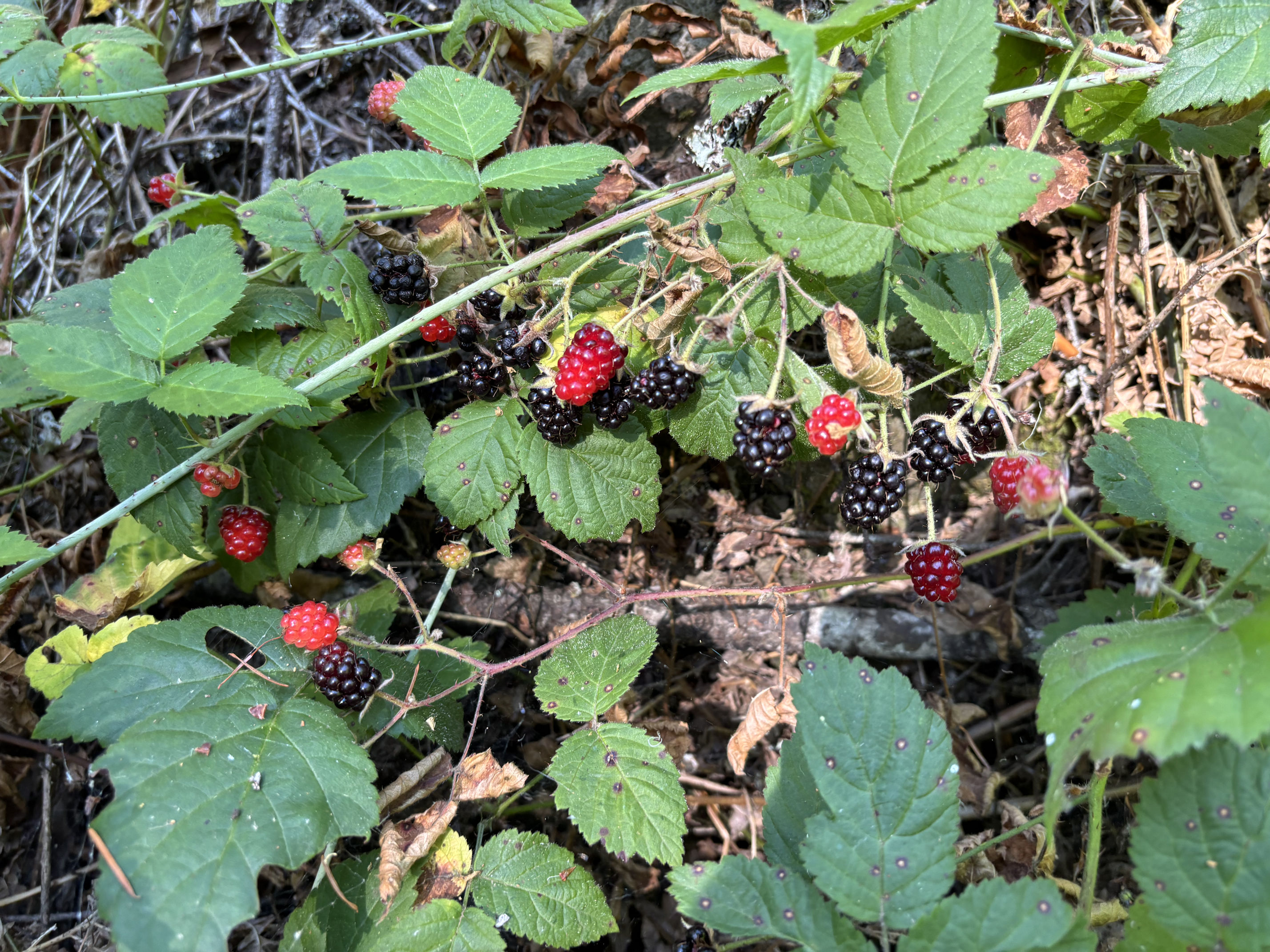
What I call blackberries are strong stemmed vines that grow up into the air and can tower over your head. A variety of these is called marionberries, a berry that Oregon is famous for. These berries are bigger, and often elongated, like I show in the photo below. However, in the photo below, the berries are on a thin vine crawling across the ground, so I would be tempted to call these dewberries as well.

I did not see a wide variety of birds, but the ones I did see were very cool! The first one I saw was the show stopper, but I was unprepared. Not 4 feet in front of me was a Western Tanager, and by the time I slowly took off my glasses, and unwound the camera from my neck, and slowly pulled it up to my face– the bird took off. But I’ll include someone else’s photo so you see why I was excited to see this beautiful boy so close.

I was so eager to see another Tanager that I was much more prepared for birds after that. I did hear another Tanager, but never saw another. Ah well.


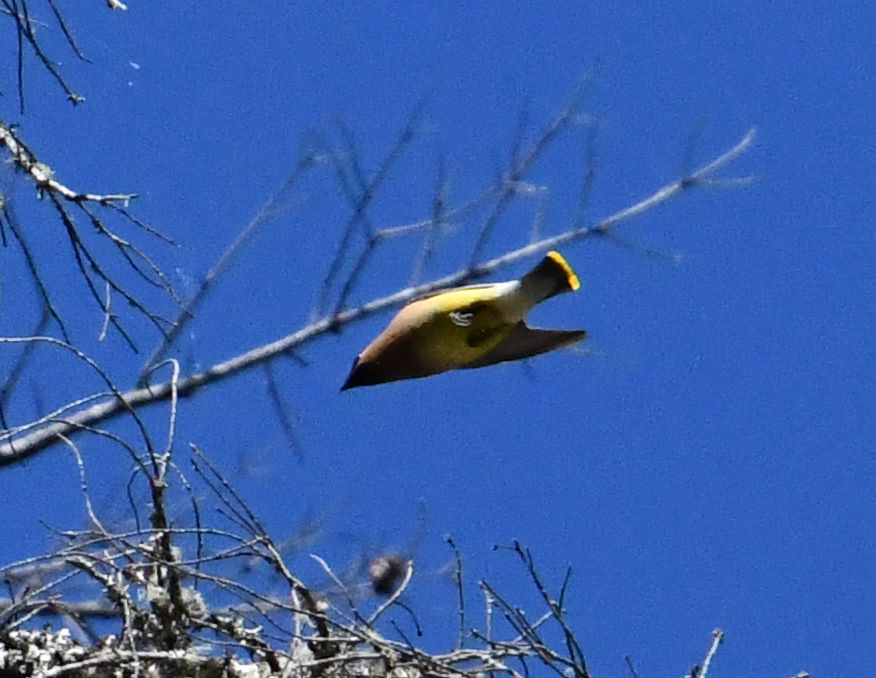


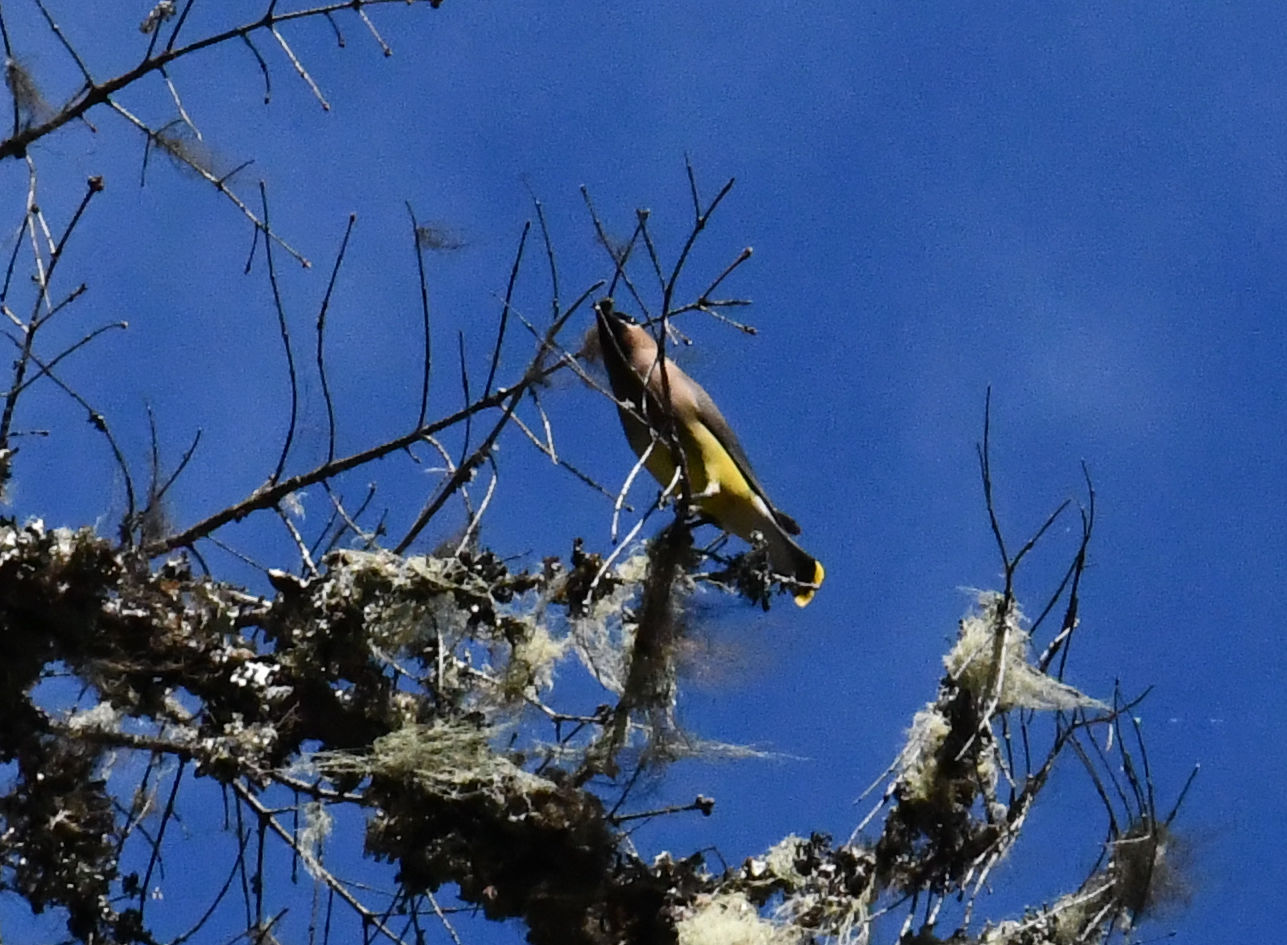

I watched a Cedar Waxwing for about 30 minutes, as he flitted as quickly as a hummingbird from fire-dead tree to fire-dead tree, ping! ping! ping! finding delicious bugs, I assume. The fabulous copper and brilliant yellow and black and white was so appealing to me that I followed him with my camera and took photo after photo, trying desperately to capture him. But all you see here is all I could see: tempting flashes of unexpected colours.
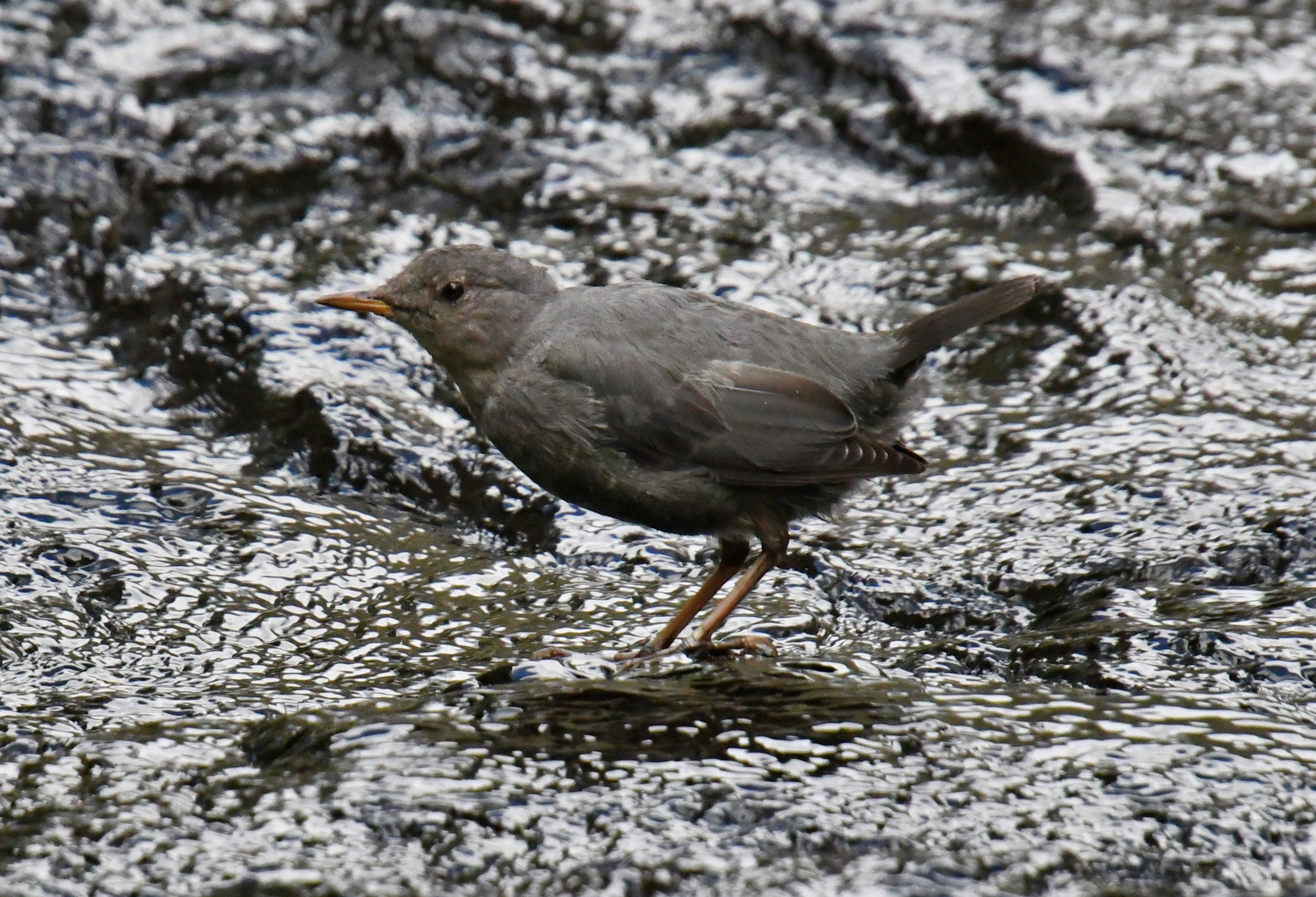
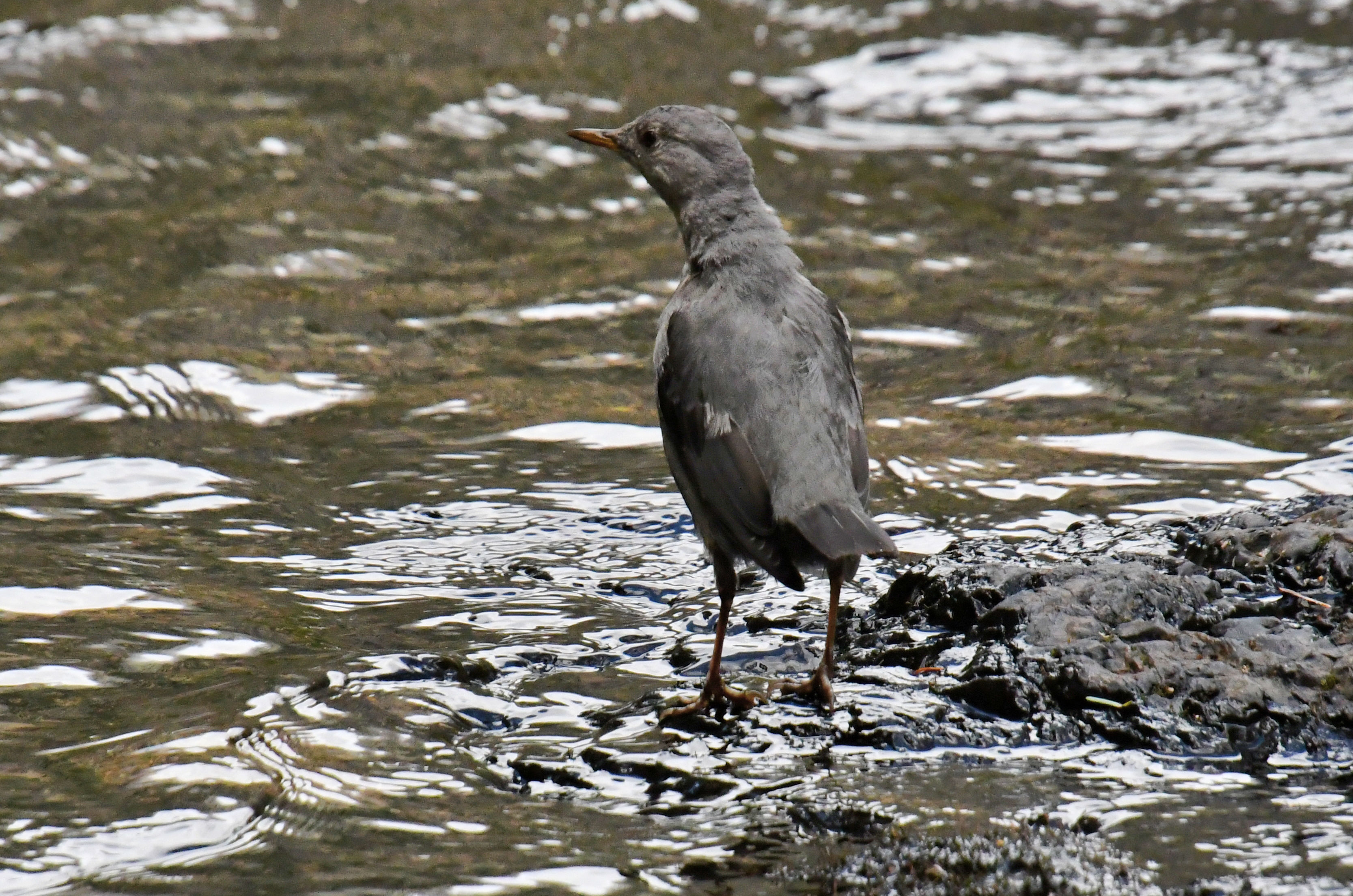
The American Dipper that I have at the top of the post is a water bird, and they are apparently at ease with humans. I saw lots of them near me, and near the other people recreating with me. When I returned to the parking lot at the end of my trip, I saw another Dipper there at the creek beside all the cars, just feet away from squealing kids and barking dogs. The Dippers are so fun to watch that I had to include a video for you:


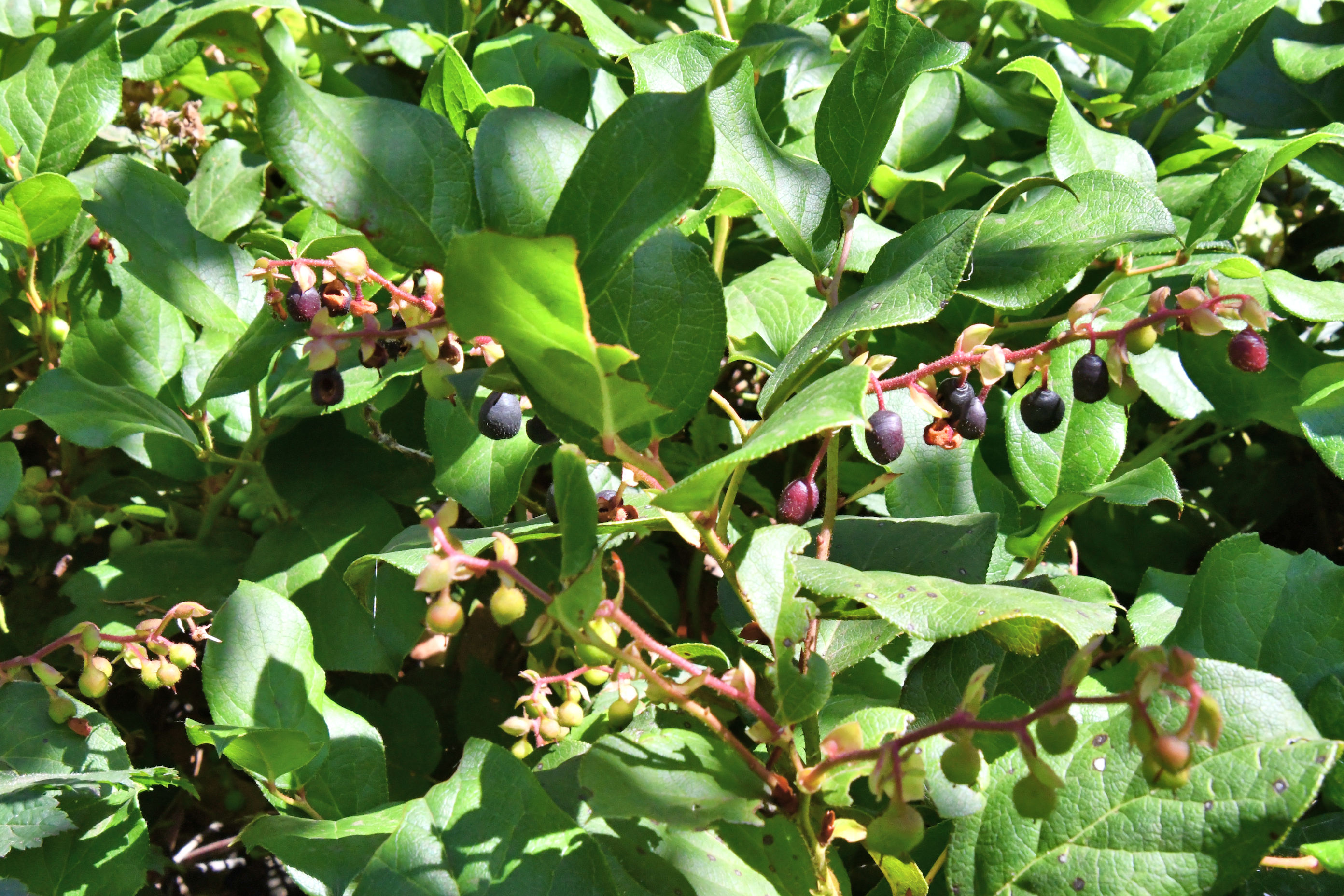
Western Serviceberries were not as common along the trail, but another appealing edible berry. These are commonly called Saskatoon berries.


Red huckleberries (in the photo above left) are tart and juicy and delicious. Thimble berries (in the photo above right) are some of my absolute favourite berries in the wild. They pack such a punch – just loaded with flavor, sweet and tart and amazing. These are also called redcaps, but thimbleberries makes more sense to me, being so old that I used to sew things by hand and use a thimble to protect my fingers.


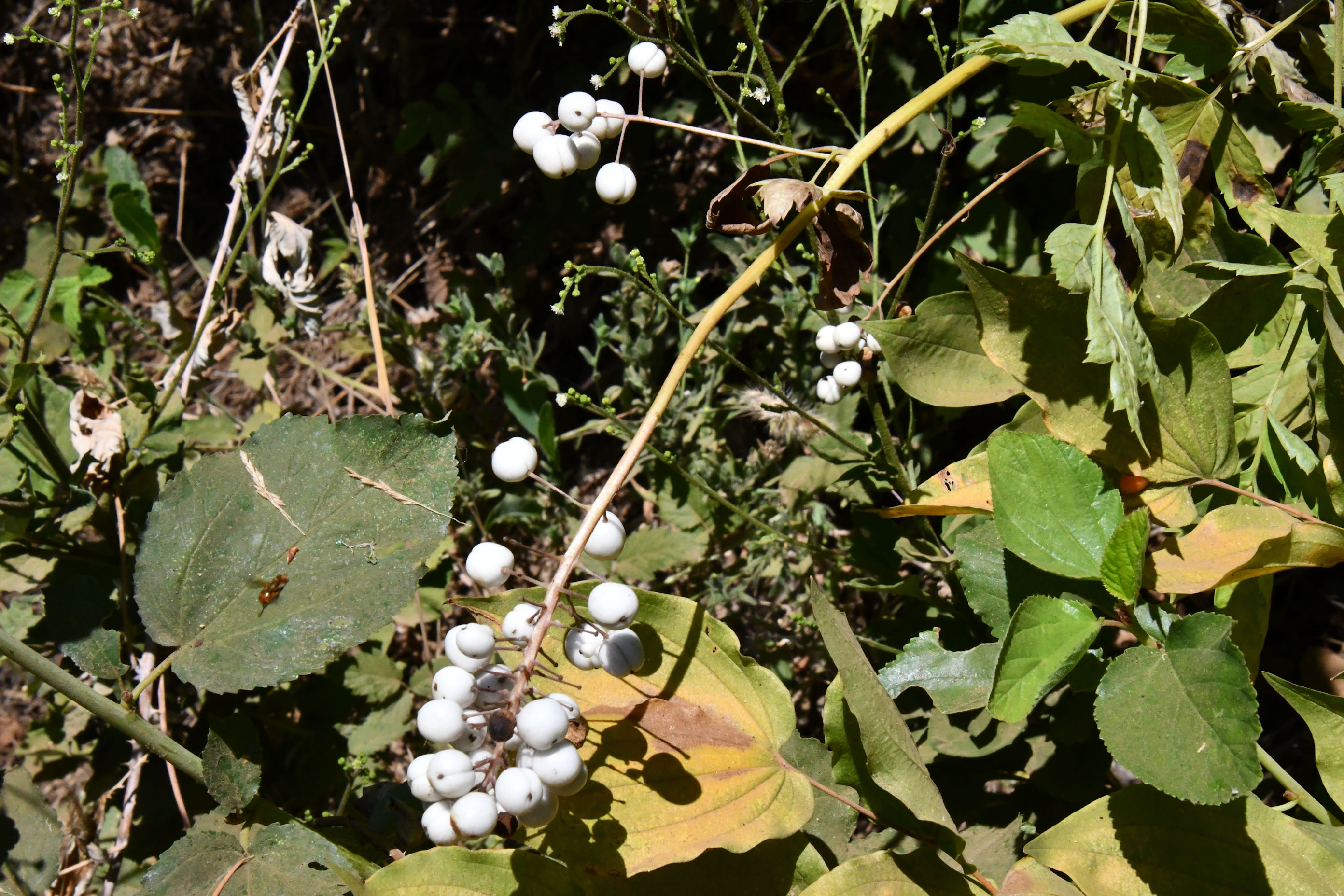
Photos above are berries with various stages of warnings. The red Baneberry, is identified as a toxic berry – do not eat. The orange one – I cannot identify it – therefore *I* do not eat, if you know what I mean. The white Snowberry has a reputation for being toxic, but actually was eaten by Native people and it has multiple healthy properties. I was taught as a child not to eat it, so I’d just….rather not.

I also did not eat any Oregon grape. They are edible, and tasty, but only after some enhancement. Primarily, when picked off the bush they are really sour with a bitter edge. I like to cook them down, remove ten billion seeds, and add a bunch of sugar. THEN they are delicious as jelly or added to other fruits in a pie, or made into my fave wild berry dessert, Lemon Oregon Grape tarts.
I also spotted along the trail Wild Strawberry and Elderberry, both not in season. Wild strawberries are usually much sweeter than the domestic kind you find in a store, and if you ever spot a ripe one, DO eat it immediately! They look exactly like the strawberries you know, but are tiny. Elderberry for some weird reason has people all freaked out about how toxic it is, but I’ve been eating them all my life. Elton John sang a song about Elderberry Wine, even. The truth is, there are traces of toxins in the stems and seeds of Elderberry. It’s apparently such a low amount that even if you injest a seed by accident, you will be fine. So please, go ahead and try elderberries. I absolutely love elderberry jam and I’ve never tried elderberry wine, but I’ll bet it is awesome.

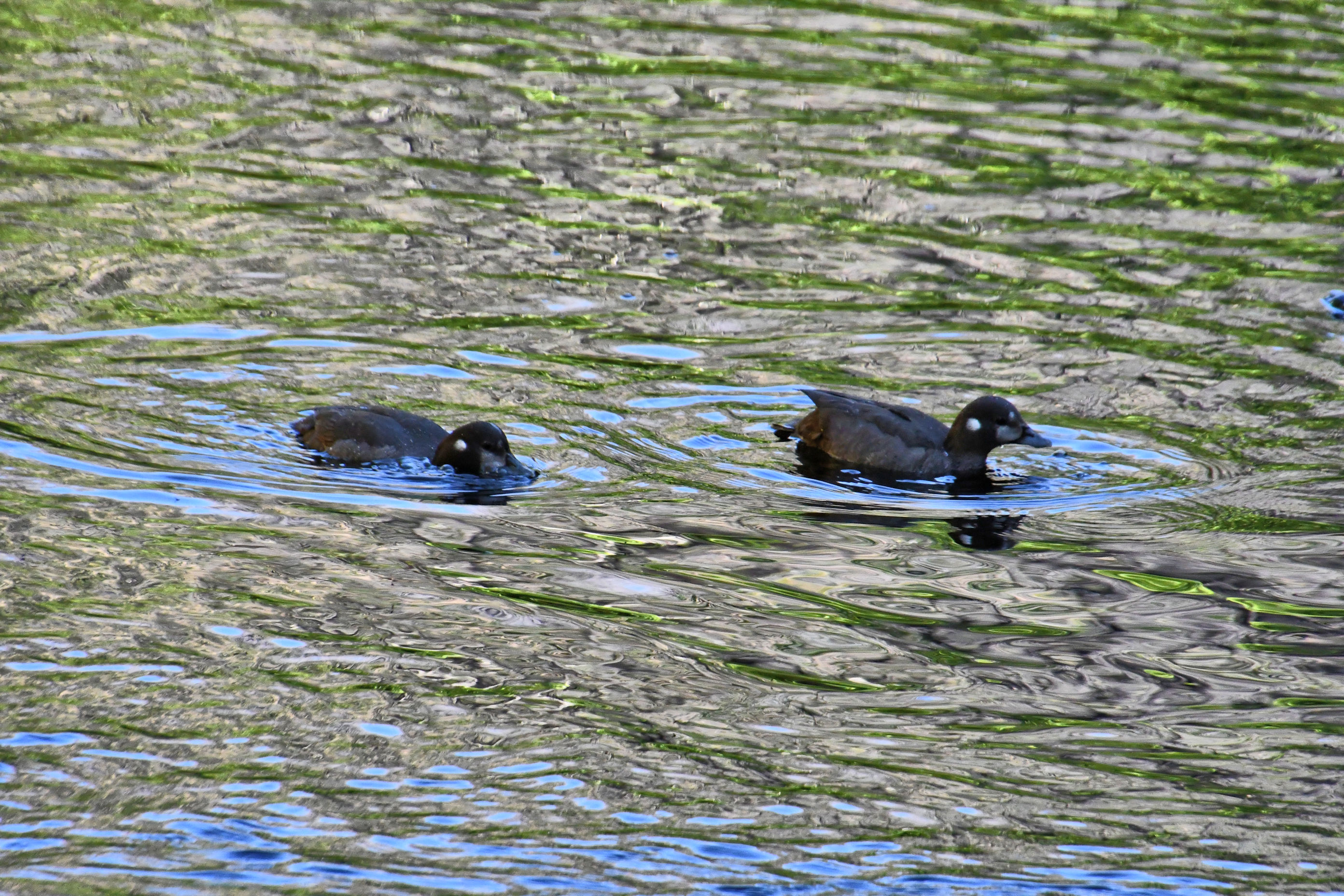
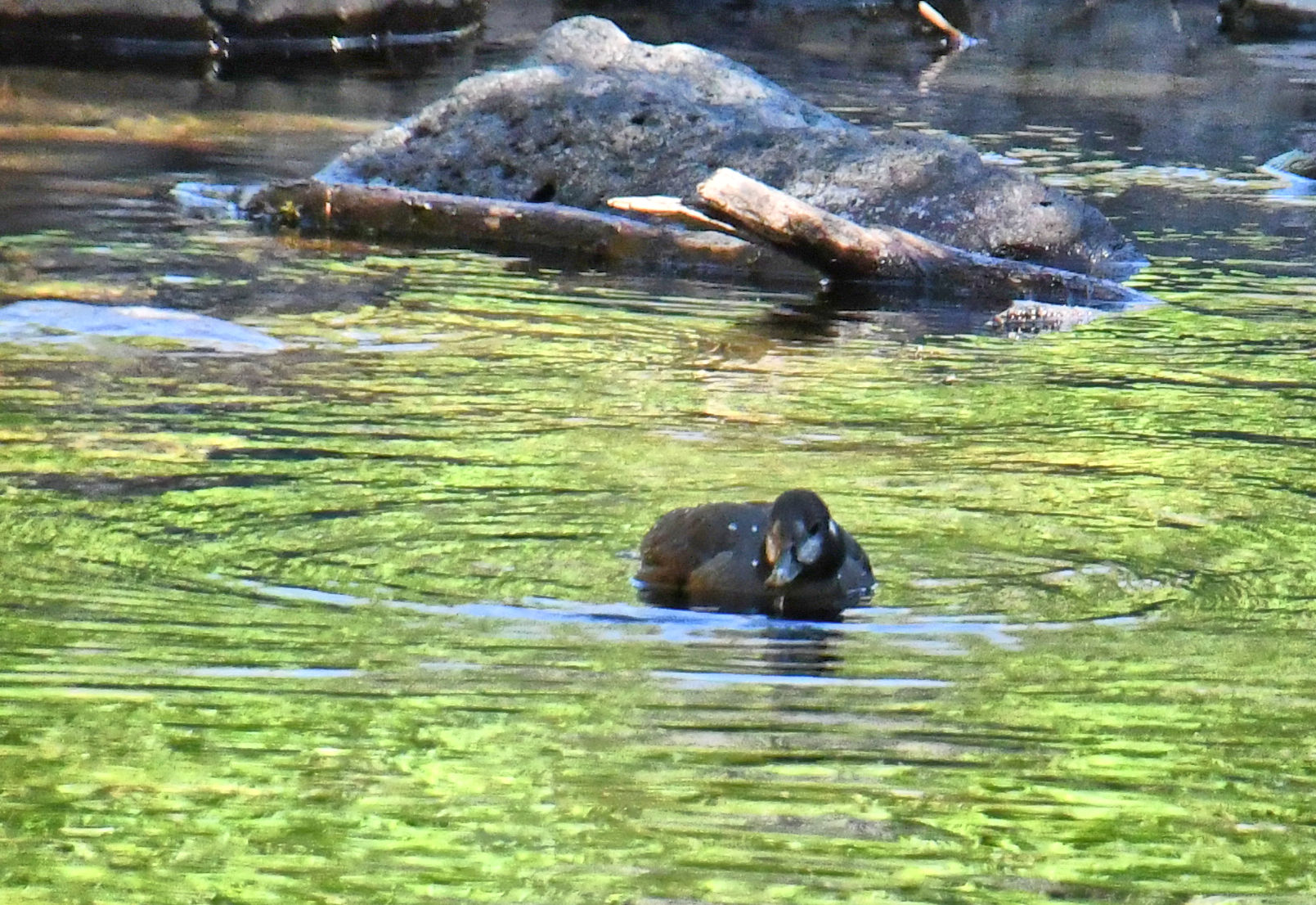
I’ll leave you with the last two ducks I saw, in the morning just before I struck camp. They are Harlequin Ducks. The adult males of this species are astonishingly patterned and coloured, but these were subdued. They were a pair that stuck together, so I am not sure how to identify them. Females or juveniles.




I hope you enjoyed my B’s. I’ll return soon and tell you more about the trail.
P.S. How fun it was that I referred to my mother so many times. My parents were both obsessed with wildlife, and each of them different things. My mom wanted especially to know the weed-like plants and shrubs and vines and flowers and fruits. She dug things up and re-planted them in her own property so she could watch them and eat them and learn more. She cultivated her own salad garden by tasting leaves of things in the forest, and digging up any random plant she liked the taste of, and re-planting it at her house. Good grief it’s a wonder she never got sick. But she always said with some impatience, “Well, Sis, how do you think the Indians and the pioneers learned what to eat? There were no books to tell them.” She taught me everything she knew. I have forgotten a lot, but I still remember a lot too.

 Conscious Engagement
Agrest and very though post . I found the informtion on the Galutheria interesting. Here on the east coast we have Galutheria procumbens – the teaberry. We used to grab a leaf on hikes to suck the leaf which has a pleasant wintergreen taste. It has a history as a medicinal plant because of a compound in it similar to that in aspirin. I wonder if the one you describe is similarly medicinal?
Lou, I have not heard of medicinal qualities of the salal here. But in looking for it, I found references to the teaberry and wintergreen varieties, which apparently also grow here in just the right conditions. I think sucking on a leaf for the wintergreen taste would be so nice. I don’t know of any wild plants I chew the leaves of, only a few that I just eat.
Wonderful part of the hike Crystal. Pity about not getting a photo of the Western Tanager, that would have been the topping on the walk.
The berries are abundant and such a variety. I guess some of the ones not advisable to eat but were used as medicinal probably cured constipation lol
You are right, the Western Tanager would have been the star of the show on this trip, but if I had managed a decent photo of the Cedar Waxwing, that one is outstanding as well. Not very lucky this time for photos, but lucky for sightings. When I lived in Rainier, I managed to photograph the Western Tanager often, because they liked to rest in the cedar trees just beside my back porch.
Medicinal for constipation!! That is hilarious. I’m certain you must be right about that. I mean, someone at some time MUST have made that conscious choice.
I am pleased that you have continued your interest in photographing birds. I bet you were one of those kids who came home from blackberrying with an empty bag and black lips and cheeks
You caught me!
🙂
Any walk I can eat my way through is a good walk. Your mom sounds like she was an interesting woman. Made you a curious human for certain. Glad you had a good hike and are back safe and sound. I love the berries growing in Oregon. The shameful excuse for berries in the supermarkets isn’t worth the money.
My dad taught me mushrooms to eat, and the names of trees, and how to protect wildflowers. My mom taught me plants with medicinal properties, and how to prepare and eat a hundred different wild plants. I grew up thinking this was normal. I am often surprised when I grab things and munch along a trail, and the person I am with is aghast and worried that I’m about to die from poisoning. haha! Doesn’t everyone know about selfheal and watercress and nettles? In retrospect, I was so fortunate.
How wonderful! I love American dippers too. They nested beneath a small footbridge in a state park I frequent and have bern a reliable sighting. I could watch them for hours! I have also seen them in the icy mountain streams at Mount Rainier. I love reading about the berries too. I’m one who would never likely indulge on the trail just because I don’t know enough about what is safe. Thanks for this. Looks gorgeous! Looking forward to Part 2!
Their delightful bouncing was so much fun for me to watch. I tried to imagine an appropriate song playing for a soundtrack. They made me want to dance with them.
You are absolutely right not to eat things if you aren’t sure! Like I said to Marlene, I feel fortunate to have been raised learning to eat things from my toddler days. I’ve been munching things from the forest for as long as I can remember. I remember my dad getting into trouble by neighborhood parents because one day I was teaching my little kindergarten buddies how to identify puffball mushrooms that were safe to eat. My parents always stressed how to identify things as part of the lesson, and when not to take chances, so I was simply passing it on. I was worried that my dad would tell me not to eat mushrooms any more. But nope, he checked that I was teaching them correctly, then he said as long as I never forget the safety rules, I can keep eating mushrooms whenever I want to.