
Before we left New Forest, Derrick teased me and said he hoped we enjoyed “War Wick.” I thanked him. Then I noticed the devious twinkle in his eye and realized he was teasing me for pronouncing it wrong. It’s pronounced War Ick. I underwent much language learning in England!
After we waved goodbye to Andrew, we explored more of Warwick. Very close to our lodging was the Lord Leycester, that I wanted to see because I am a military veteran and it is apparently a home for veterans. Sadly, it had closed for the day and we could not go inside. We poked around the property anyway.

A sign at the location states, “Welcome to one of the most important medieval buildings in Europe. Our ancient home was originally built by the United Guild of Warwick in the late 1300s and early 1400s. It is an architectural treasure. The Guild gave Robert Dudley, favourite of Queen Elizabeth I, these buildings for him to create a sanctuary for the Brethren – honourable military men who fought for monarch and country. That has not changed today.”


Additional history displayed at the site explains that the guilds who built the place were dispersed in 1546. Robert Dudley built the hospital in 1571 for aged and infirm veterans and their wives. In 1950 it was determined that the condition of the buildings were no longer fit for use, and from 1958-1966 the place was restored. The hospital was reopened in 1966, and is still used today. In return for their work as tour guides, rooms for eight ex-servicemen and their spouses are provided here. It is one of the best preserved examples of medieval courtyard architecture.

At this point, a person who seemed to be a staff member of the place, approached us from the parking lot and asked if he could help us in a way that translated to, “Please leave.” Margaret explained that I was interested because I was a veteran. “It’s closed,” he said, “But please come back tomorrow.” We thanked him and left. By opening time the next day, we would be at Heathrow.

There is an abundance of interesting sights in Warwick, so we were not dismayed at all to be shooed away from Lord Leycester. We were north of the castle for the first time, and again tried to find a way to view it.

We did not get a good view, and everything was closed again, because it was evening.

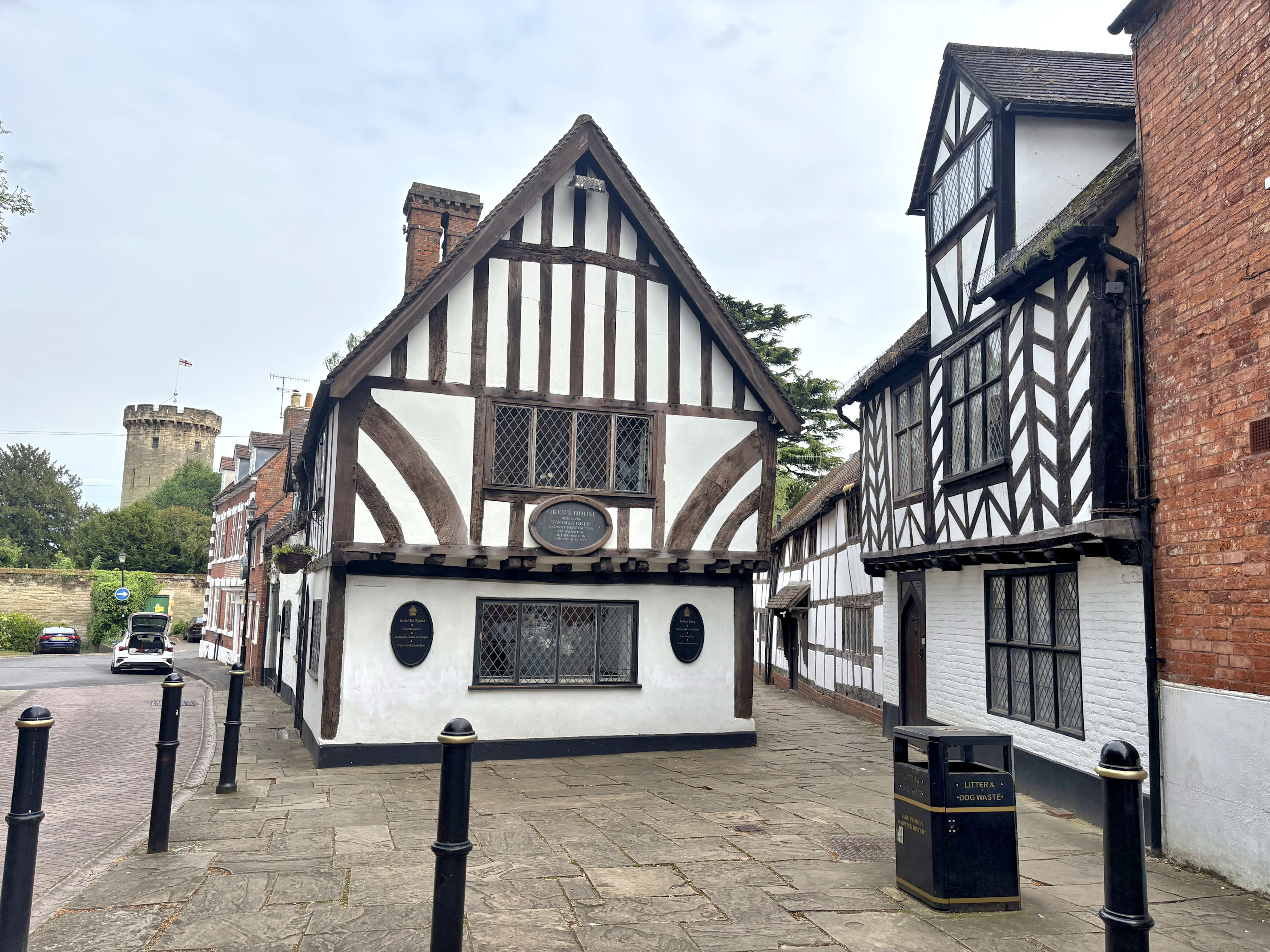
We just followed our feet to see where they took us next.


We were intrigued by the East Gate, having not heard about it before. Especially fascinating was the “For Sale” signage. We imagined what would be the best use if we bought the place.

By the 12th century a wall had been built around Warwick, and by the 16th century, most of the wall was gone. Today, only two bits remain of the old defensive wall, and those are the West Gate and the East Gate. We did not know it at the time, but the West gate is attached to the Lord Leycester, and I had photographed it in the image at the very top of this post. The East Gate is the more impressive of the two because it is grander, but also because it stands alone.

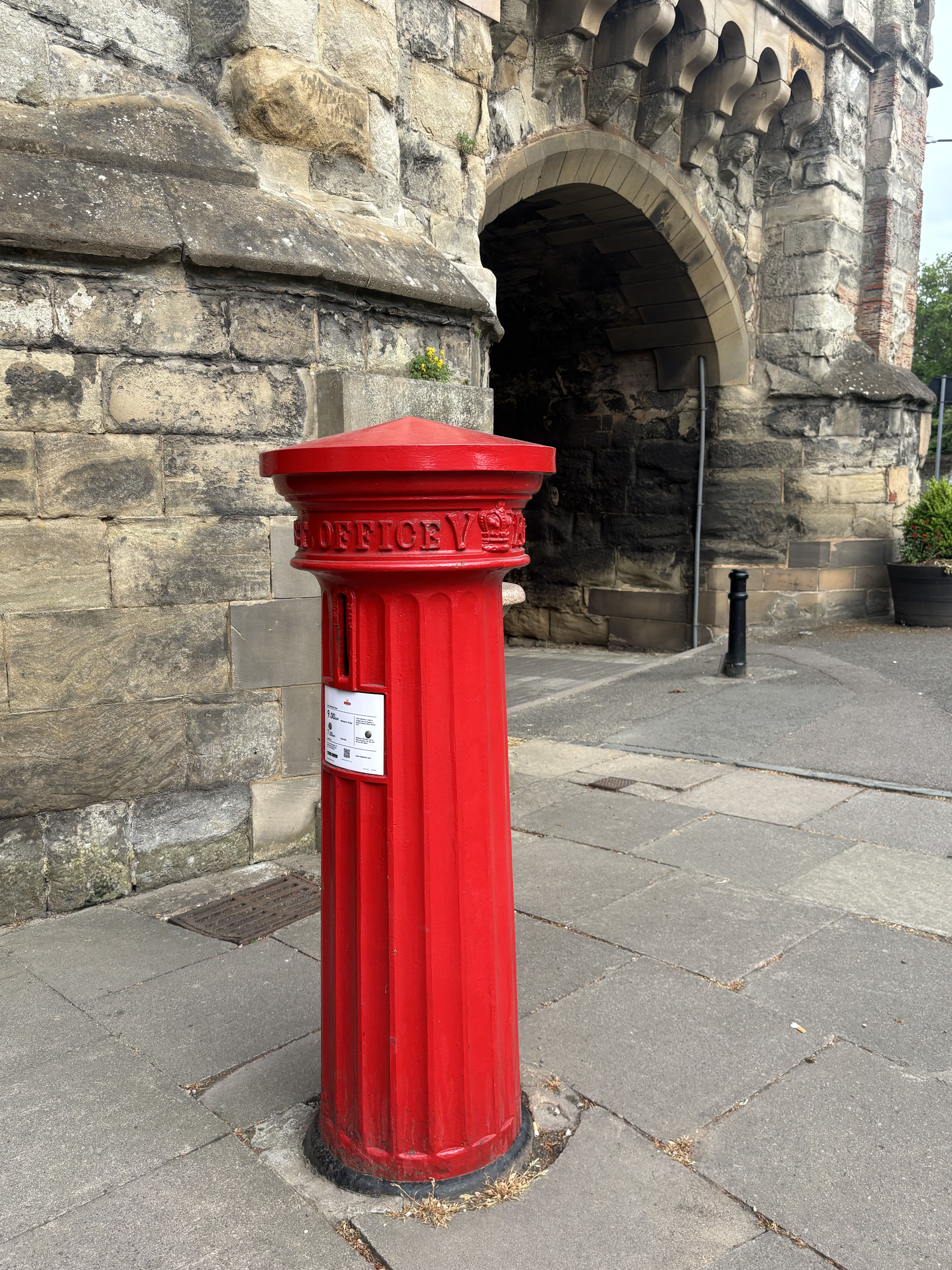
A sign posted on the gate says that the pillar box was cast in 1856 and is one of a pair specially cast to be placed at both gates. I did not notice the twin at the West Gate then, but yep – that’s in the photo at the top too. Good on me.

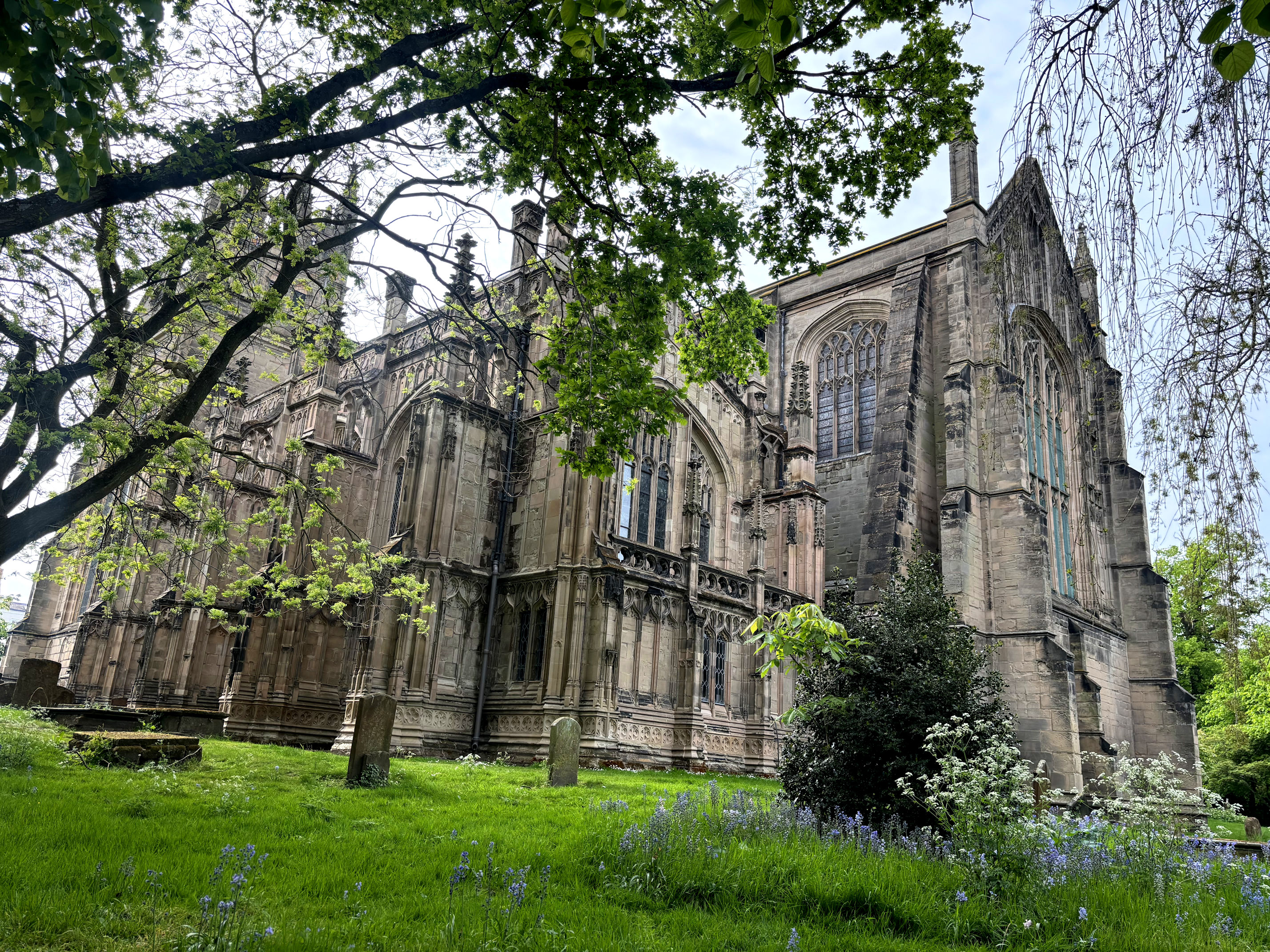
We found a nice path through the cemetery behind St. Mary’s Church, and enjoyed some especially nice views of it.
We then walked back to our rooms to pack for the next stage in our journeys. Margaret would be taking a flight to Copenhagen, and I would be going home. We had stuff scattered all over the rooms and needed to consolidate and reorganize. We nibbled at the last of our snacks and wine.
I spent a very stressful hour trying to pay for my additional bag on British Airways. They said it would be £70 if I paid in advance, and £90 ($122) if I waited till I got to the airport, so I was determined. But it never worked out. I had purchased my tickets through their affiliate, American Airlines, and nobody would take responsibility for my purchase. After cursing at my phone for a good 30 minutes, and stressing Margaret out, I gave up. (The damage was minimal the next day though, when BA only charged me £45 ($60). “That’s less than I was expecting,” said the employee who helped me. “Me too!” I said.)

 Conscious Engagement
Lovely photos and laughed at the pronunciation story. Can I give you another titbit?
Places where graves are in church grounds are graveyards. I only learnt this recently 😁
Brian, I had no idea that there were criteria for cemeteries vs. graveyards! Thank you! I am happy to keep learning.
I didn’t either and I love learning and being able to pass on some of the stuff I accumulate in my head
Another fine tour – and thank you for correcting my pronunciation of Leycester which I will now forever remember – especially as I was Leycester born. 🙂 XX
ha ha!