
Bath, in England, is famous even to me, but I had little knowledge of it before this trip. I confess I am so dull that I didn’t even know it was named after Roman Baths! Embarrassing.
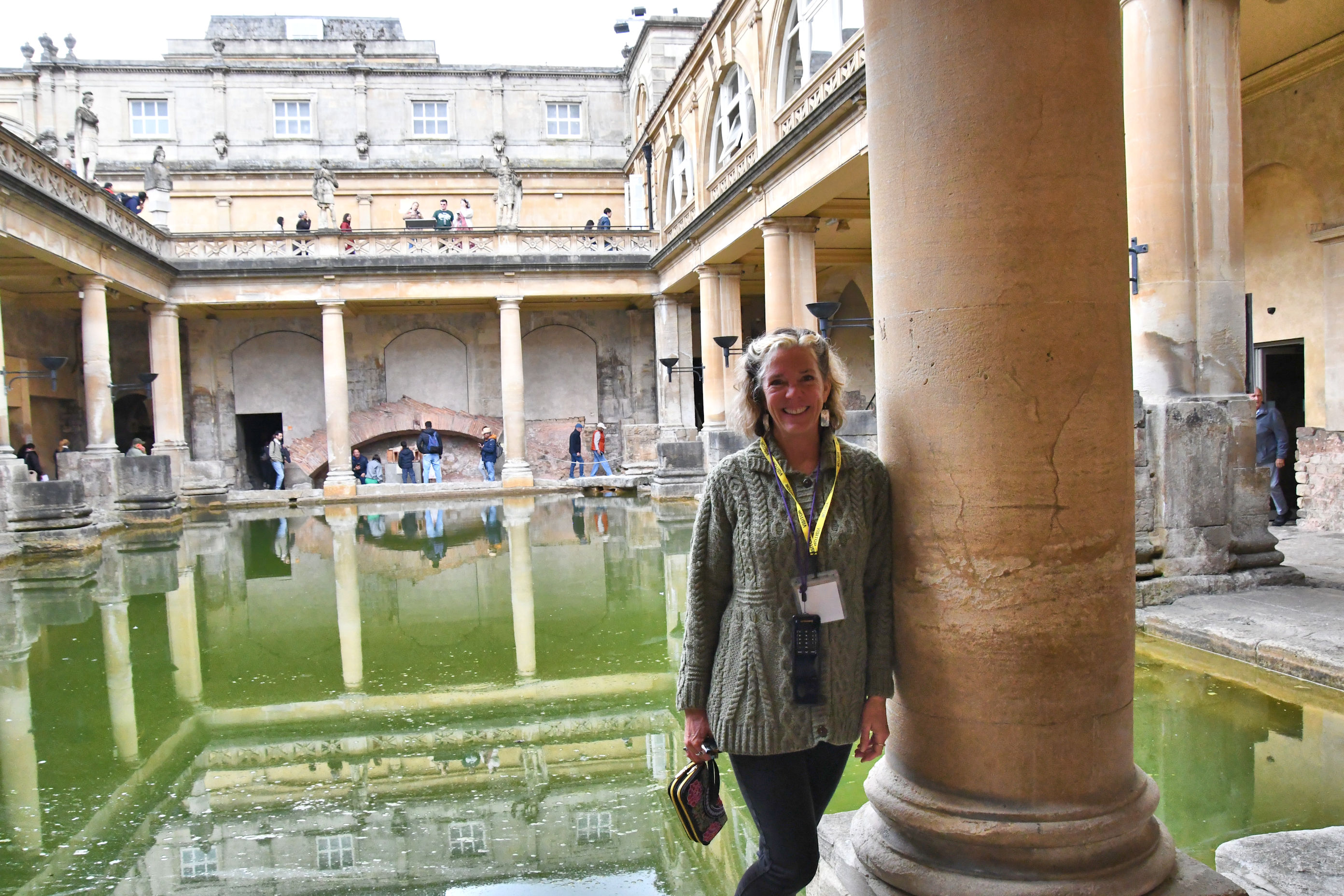
We checked in for our tour beneath gorgeous ceilings, and were handed a lanyard with an ID card and a self-tour clunky plastic gadget like an old style cordless telephone, also attached to a lanyard. With the touch of the right combination of buttons, this would play pre-recorded information at many stops inside the museum. The addition of my camera, also on a strap around my neck, and my purse connected to a strap around my wrist, I felt a bit loaded down. The woman who checked us in said, “You have done exactly what we want everyone to do, and that is arrive one hour before your tour!” I patted myself on the back.
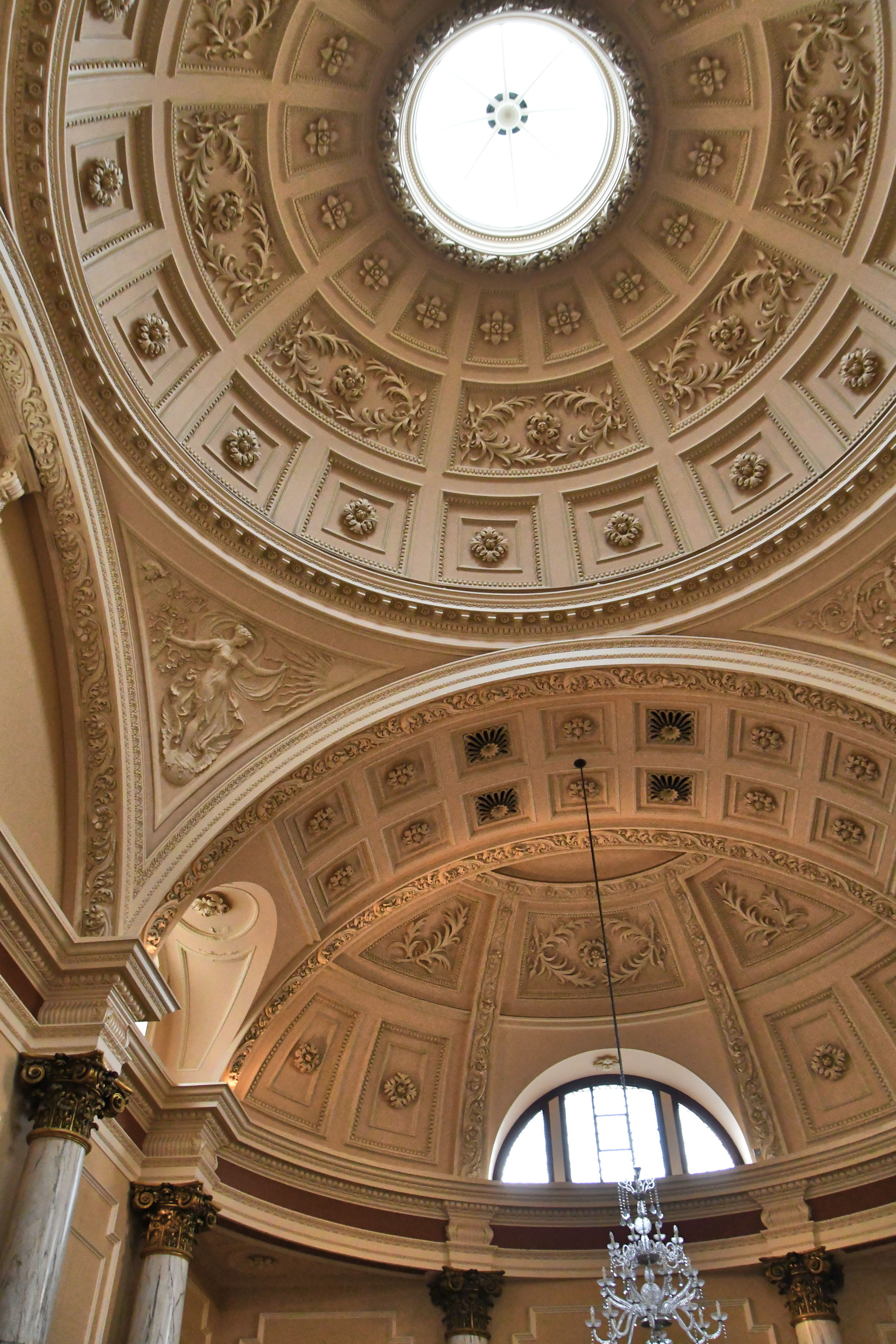

The reason they want you to arrive early is because the museum is quite large and the guided tour does not include most of the museum. So, in order to get the most bang for your buck, er, bang for your pound, come early and see the museum before your tour.
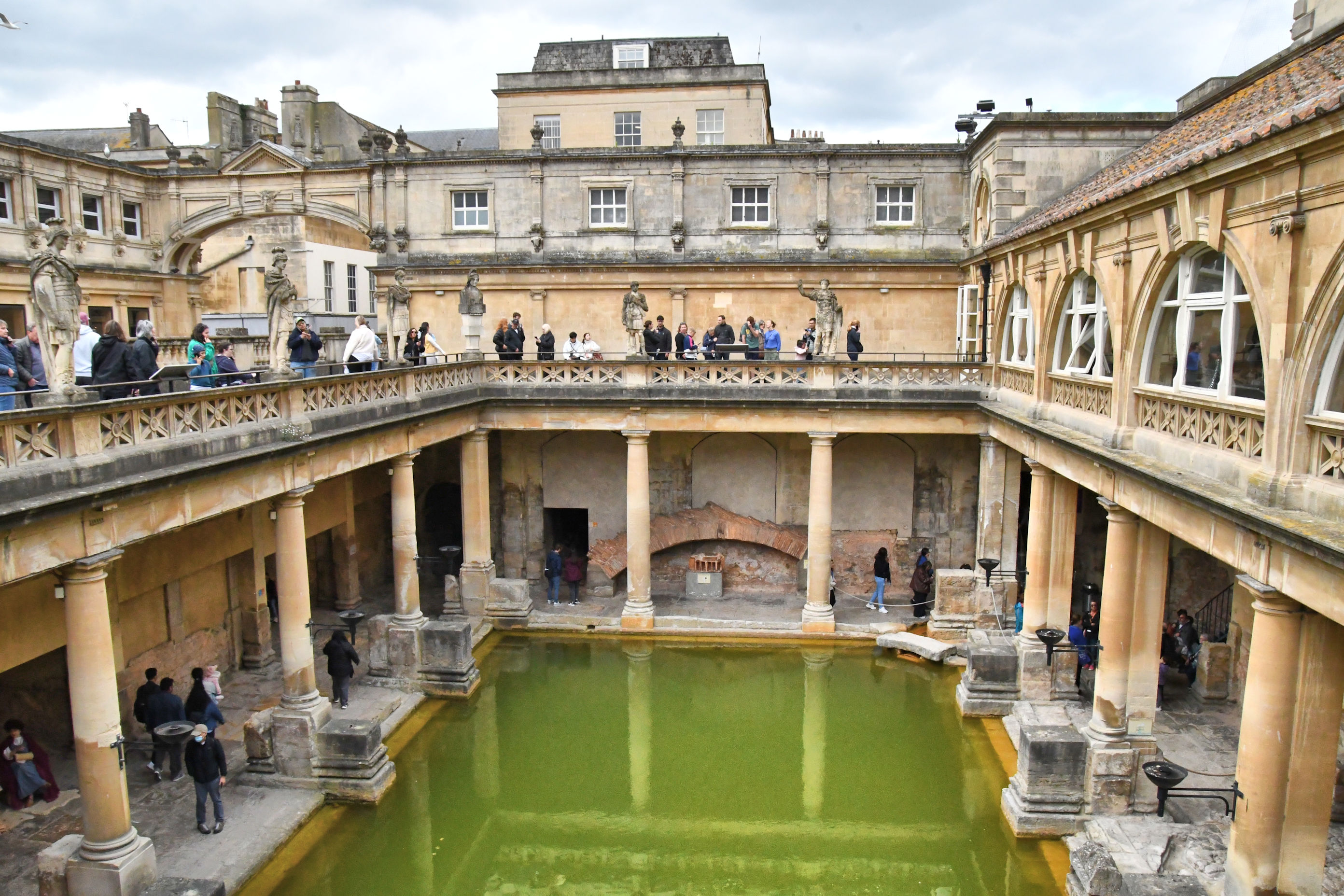
Operators are aware that we all just want to see the water! So the first thing you see is the water. Ground level outside is the balcony level inside, and they pop you directly out onto a view of the algae-green waters. I think the radioactive green colour is stunning against the rock for photos, but of course there is nothing about the pool that invites a swim.
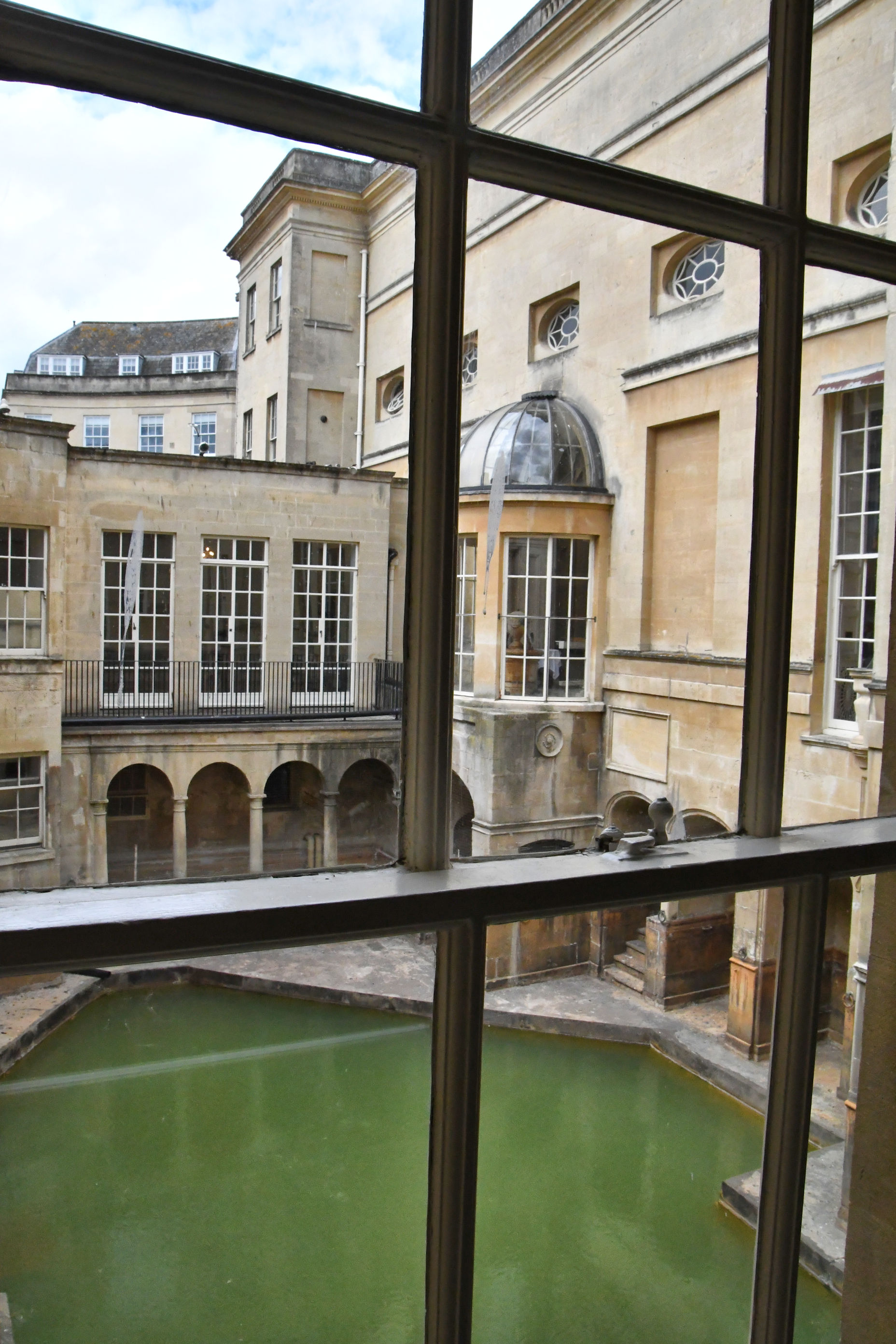
The story is that the waters arrive much cleaner (for proof, see yesterday’s blog post where I describe a spa visit), and were originally covered by a permanent roof. With a roof, and constant turbulence with bathers, algae did not get a good chance to grow. But today, with the roof opened up allow sunshine down there to provide food for the tiny beasties, and no humans allowed in to stir up the water, it’s a great place for an algae bloom.
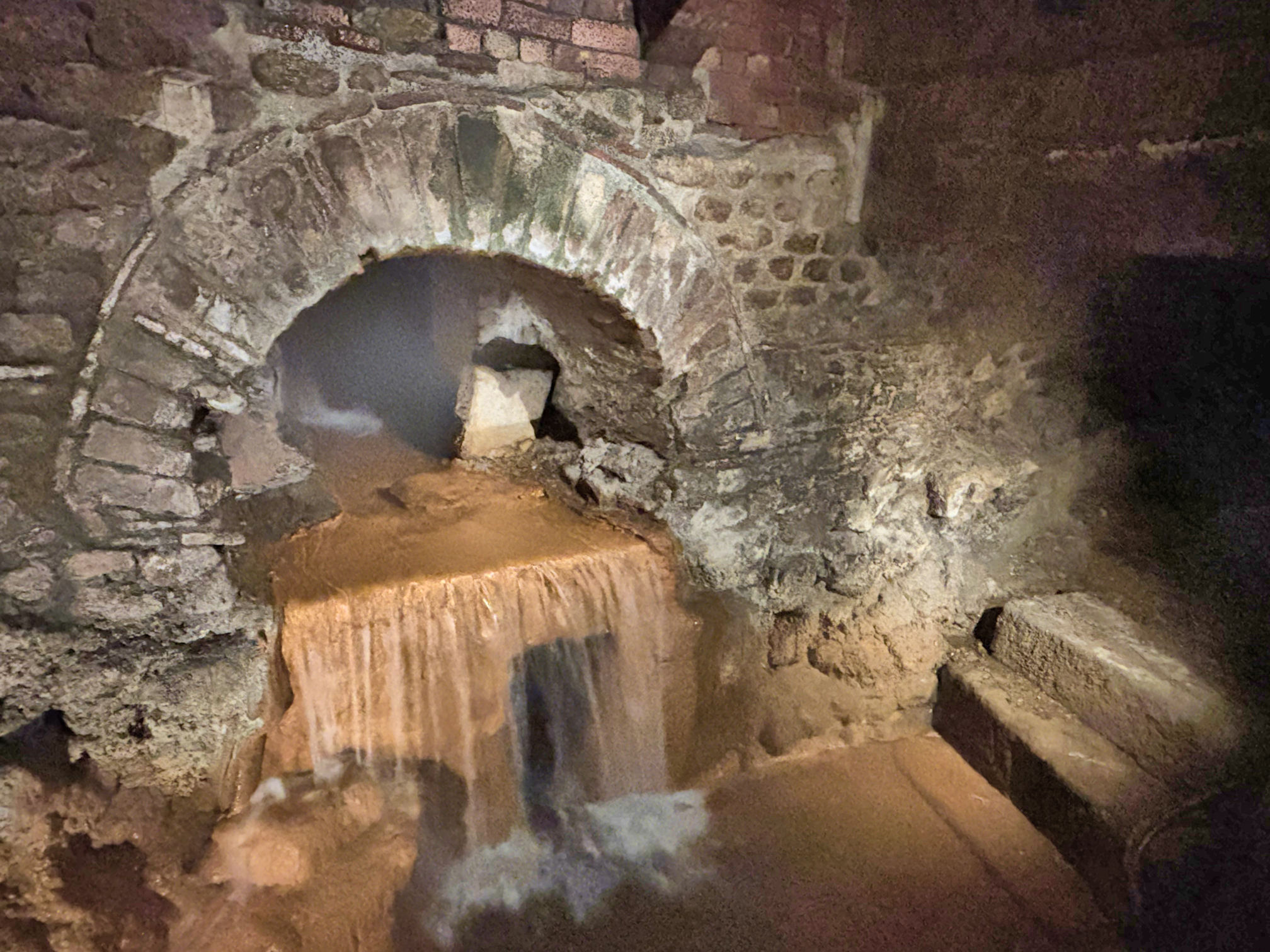
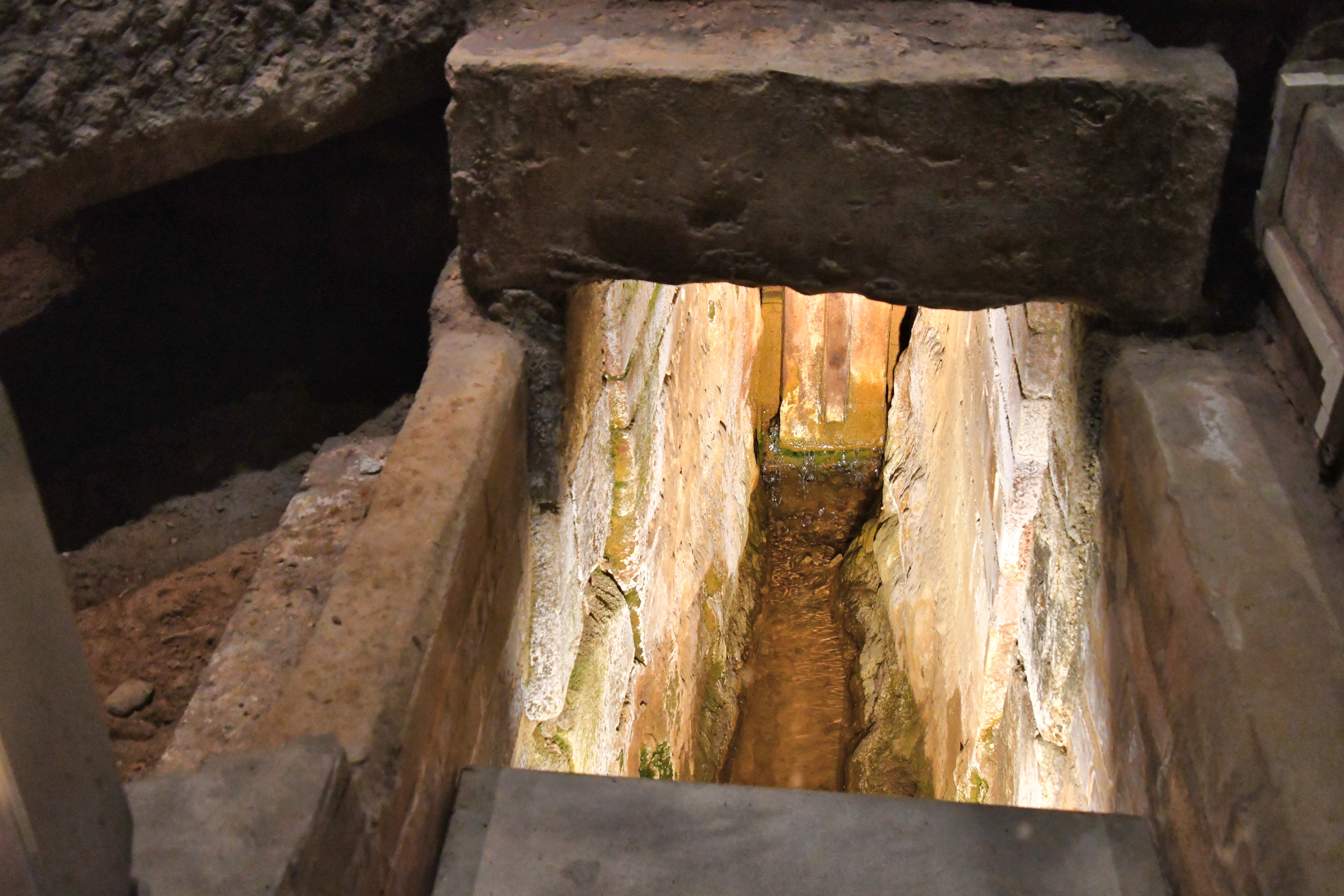
Rain falls in the Mendip Hills, 13 miles away, and seeps into that remarkable limestone and bubbles through the earth, and flows downhill slowly slowly, for 10,000 years, absorbing the heat of the earth, and then bubbling up as a hot springs in Bath! The Romans, as everyone knows, loved their baths, and here was the temptation of a bath with less effort and expense, since Mother Nature was providing the heated water. The Romans occupied this site from about 50-400 CE and built an excellent bath around 70 CE that became famous for great distances. During that time the first tourists began arriving to visit the baths. So many pilgrims began arriving to take a dip in what they believed to be healing waters, that the complex had to be enlarged.
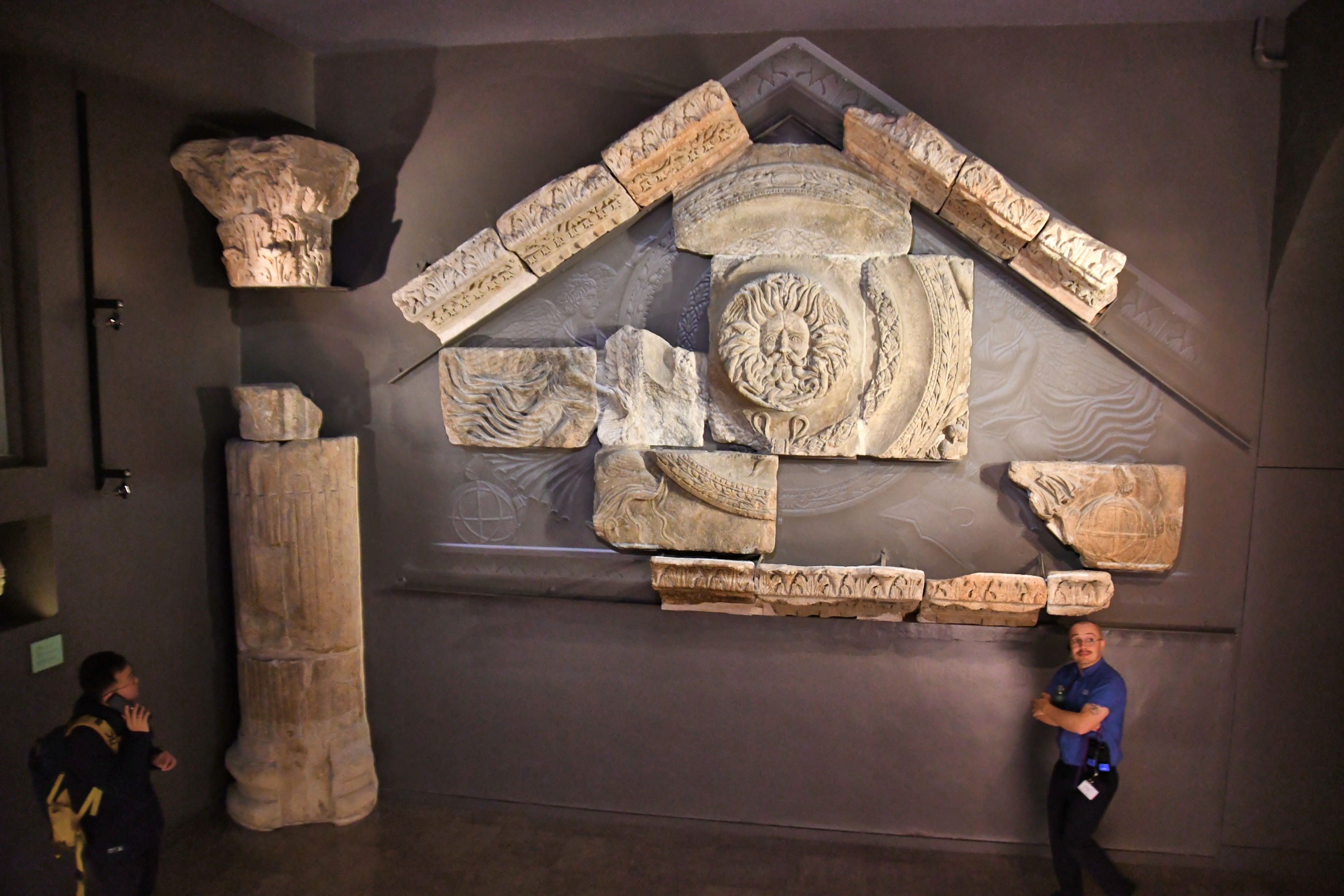
There are large, beautiful pieces of the original Roman work still at the site, but even larger sections are missing. In many places, the pieces are shown and overlayed with image projections to help people envision what it once was. In the image above, you can see the actual stone, and the image projected onto it to fill in the blanks.
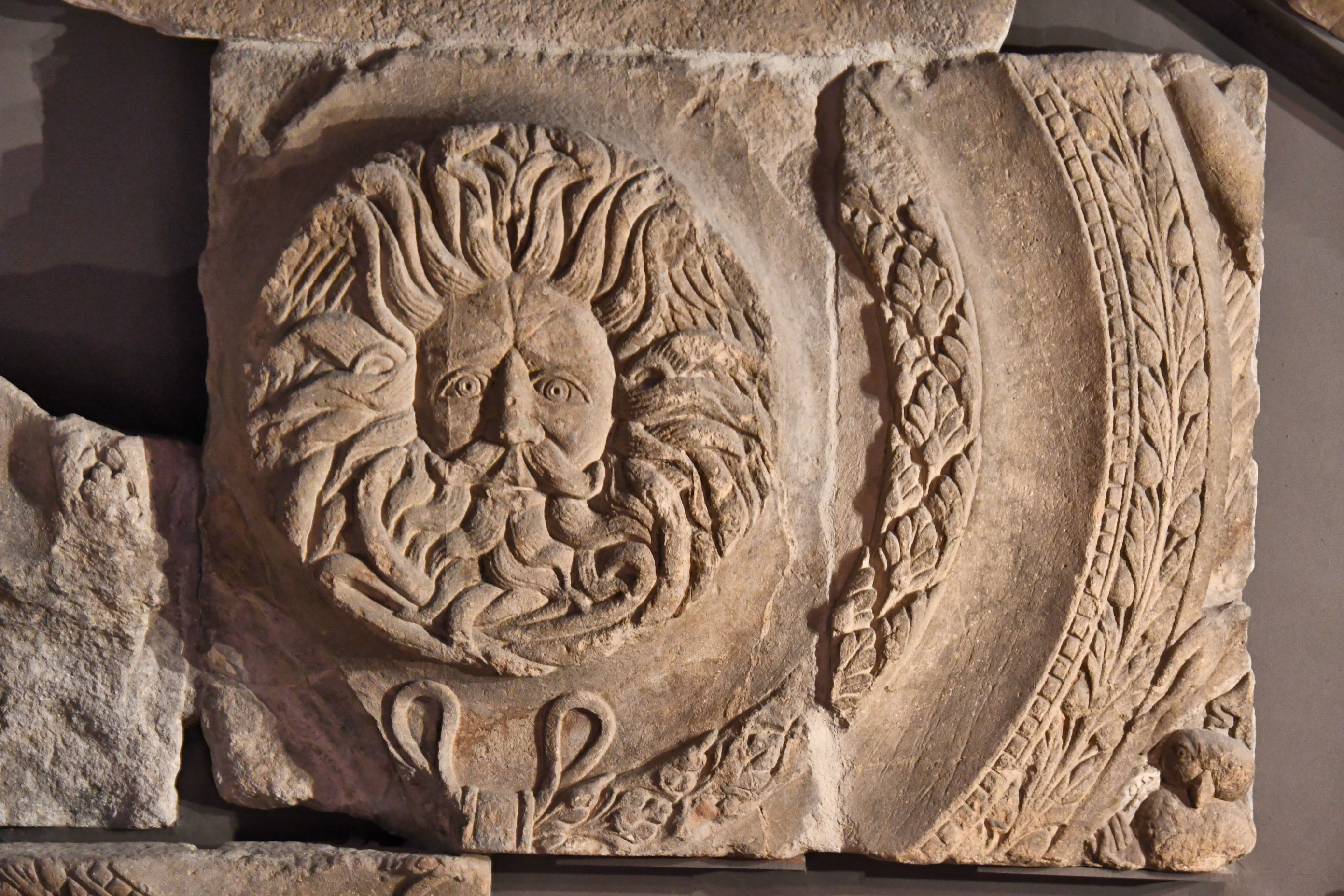
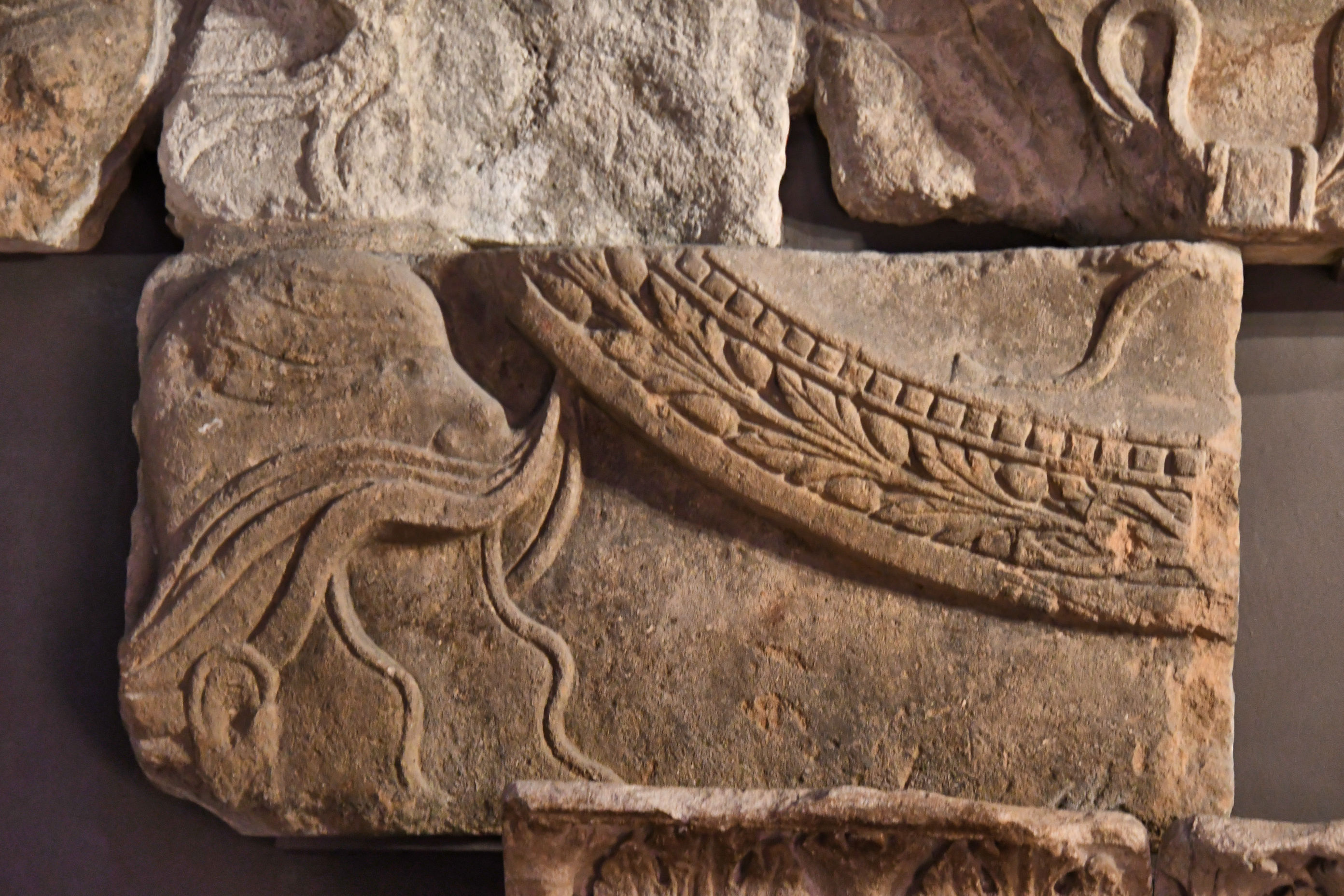
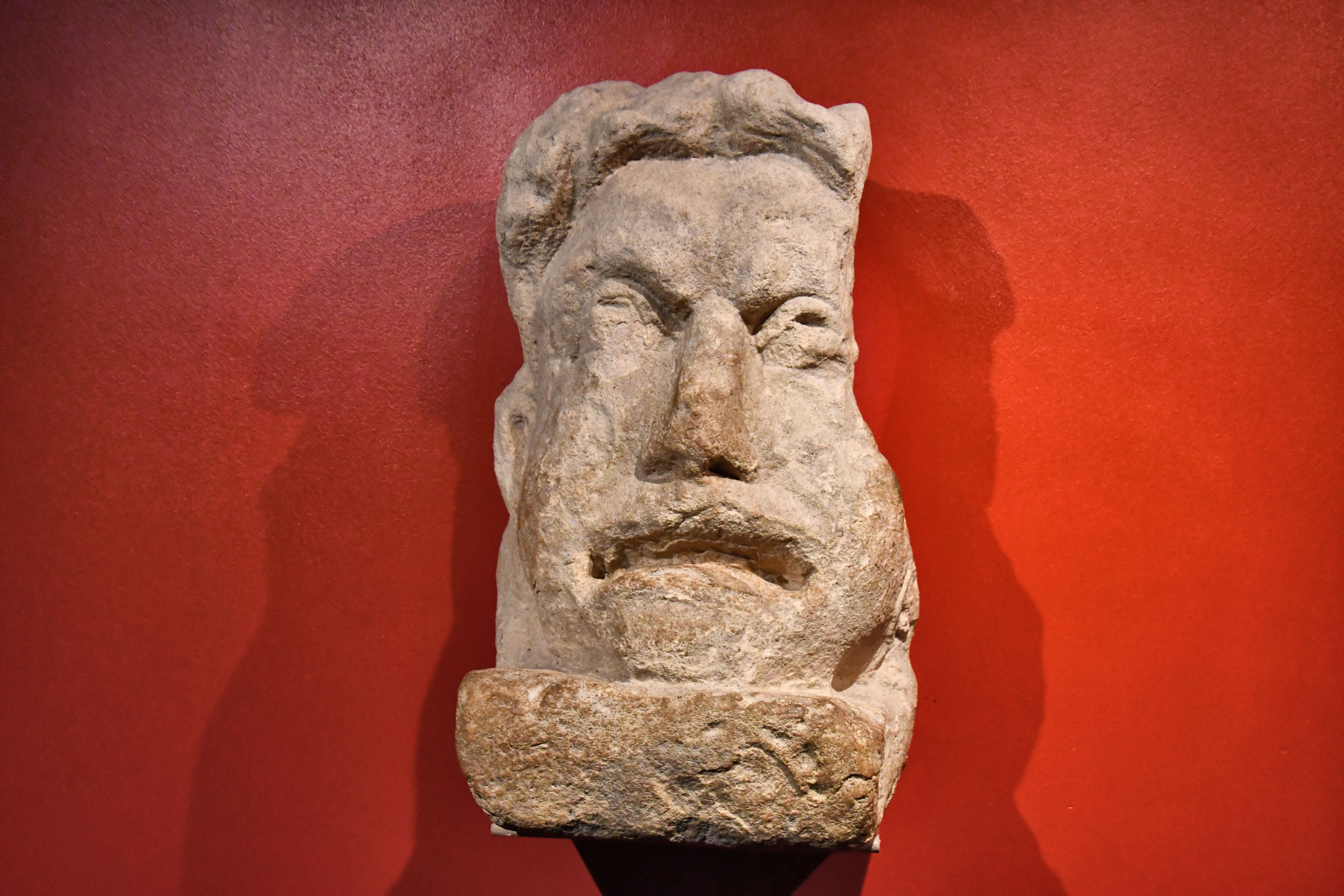
The use of projections of still images as well as videos is meant to add to the visitors’ understanding of the use of the bath and its various rooms and artifacts that can be seen inside.
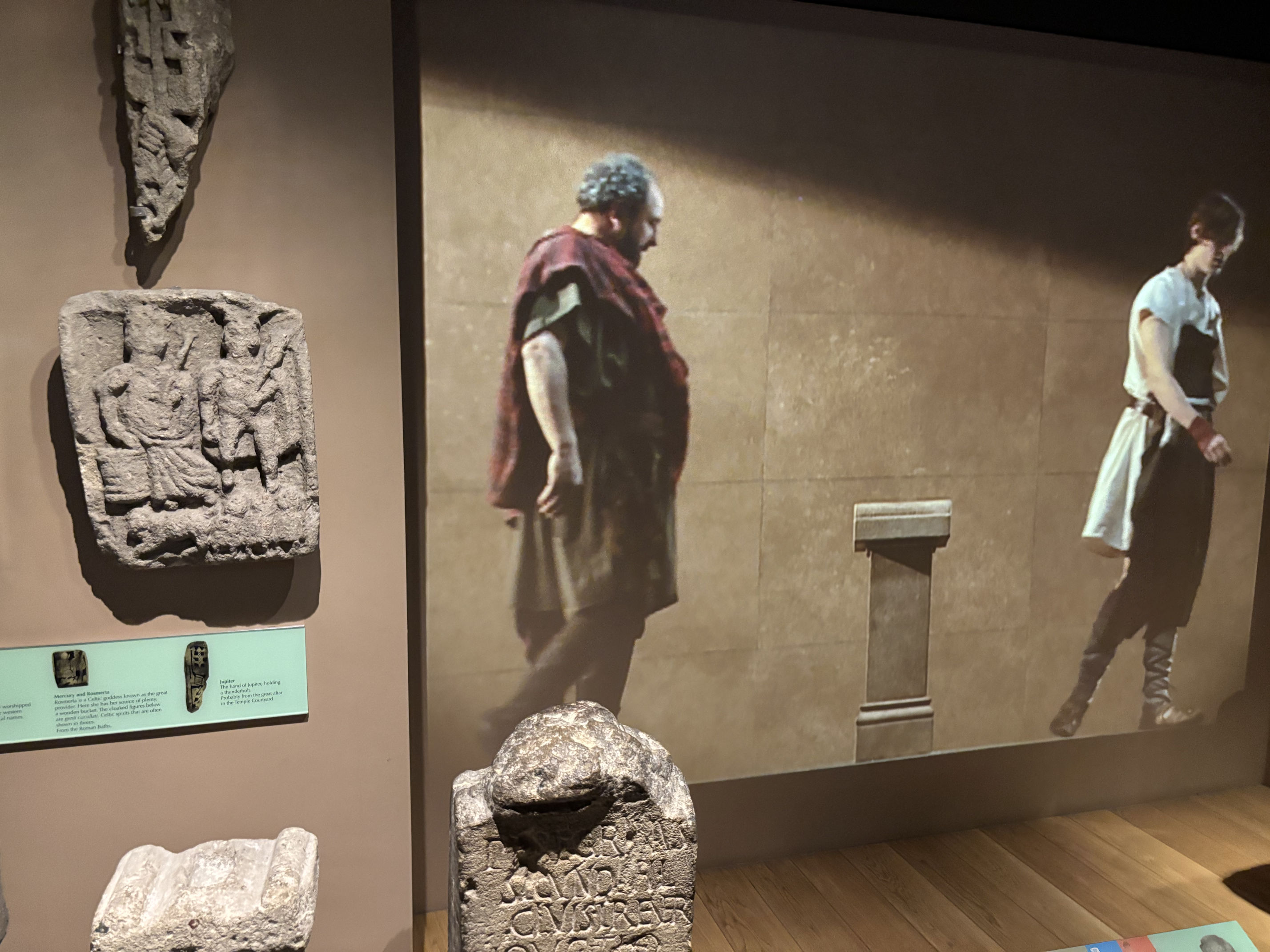
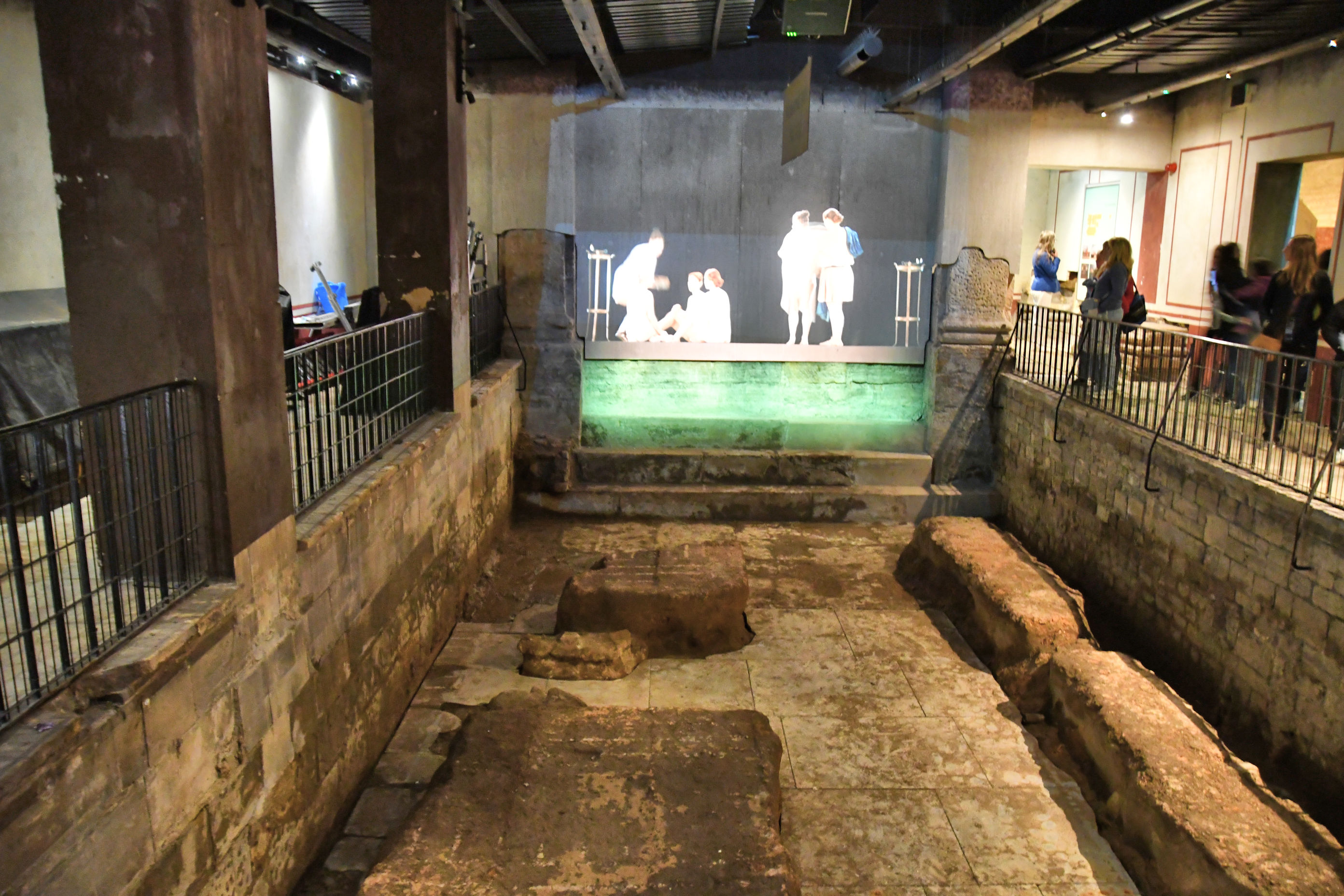
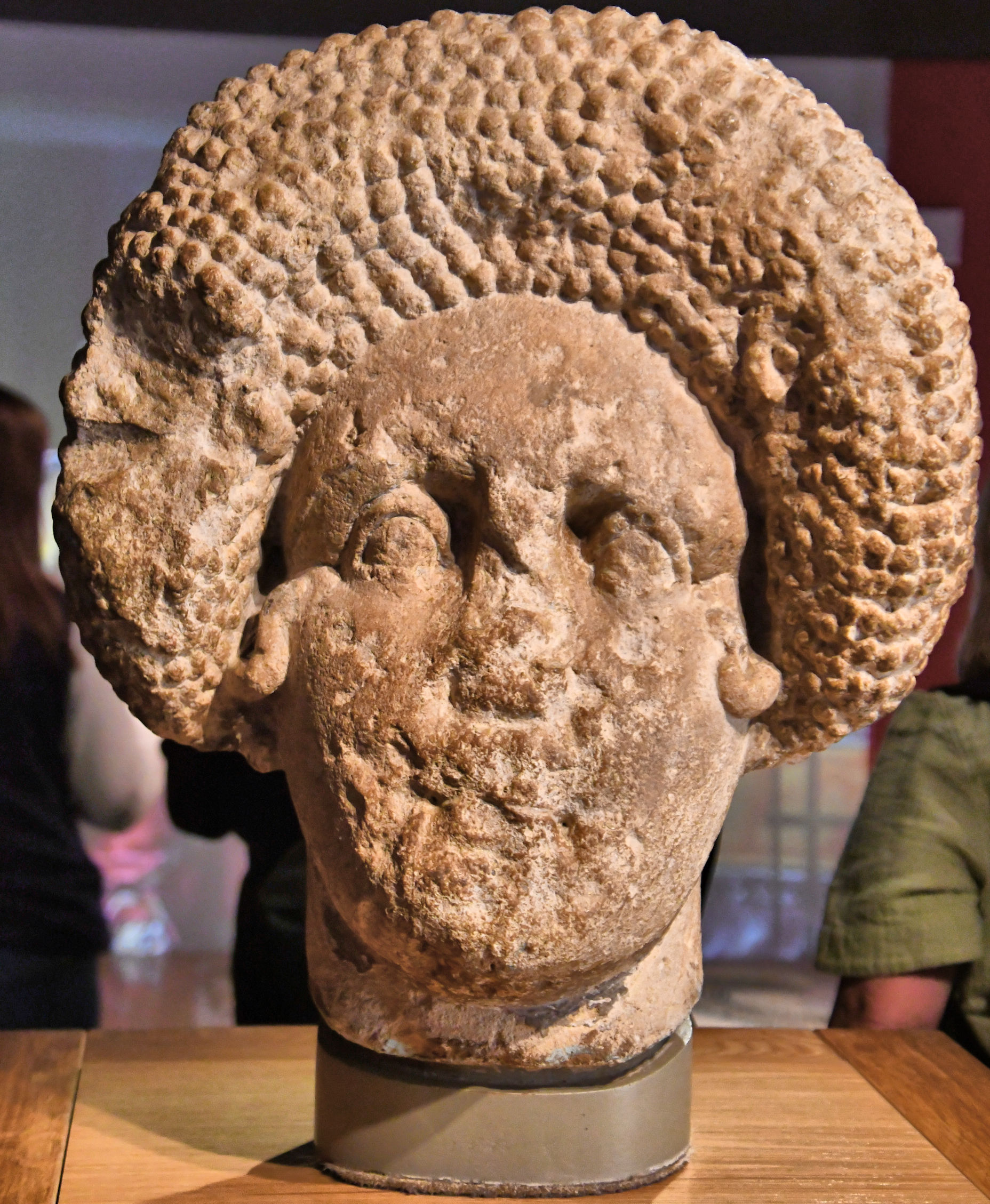
The museum has a deliciously large and varied collection of items that help tell the story of the humans who have lived and worked at this place. All of it interspersed smoothly with actual preserved Roman ruins.

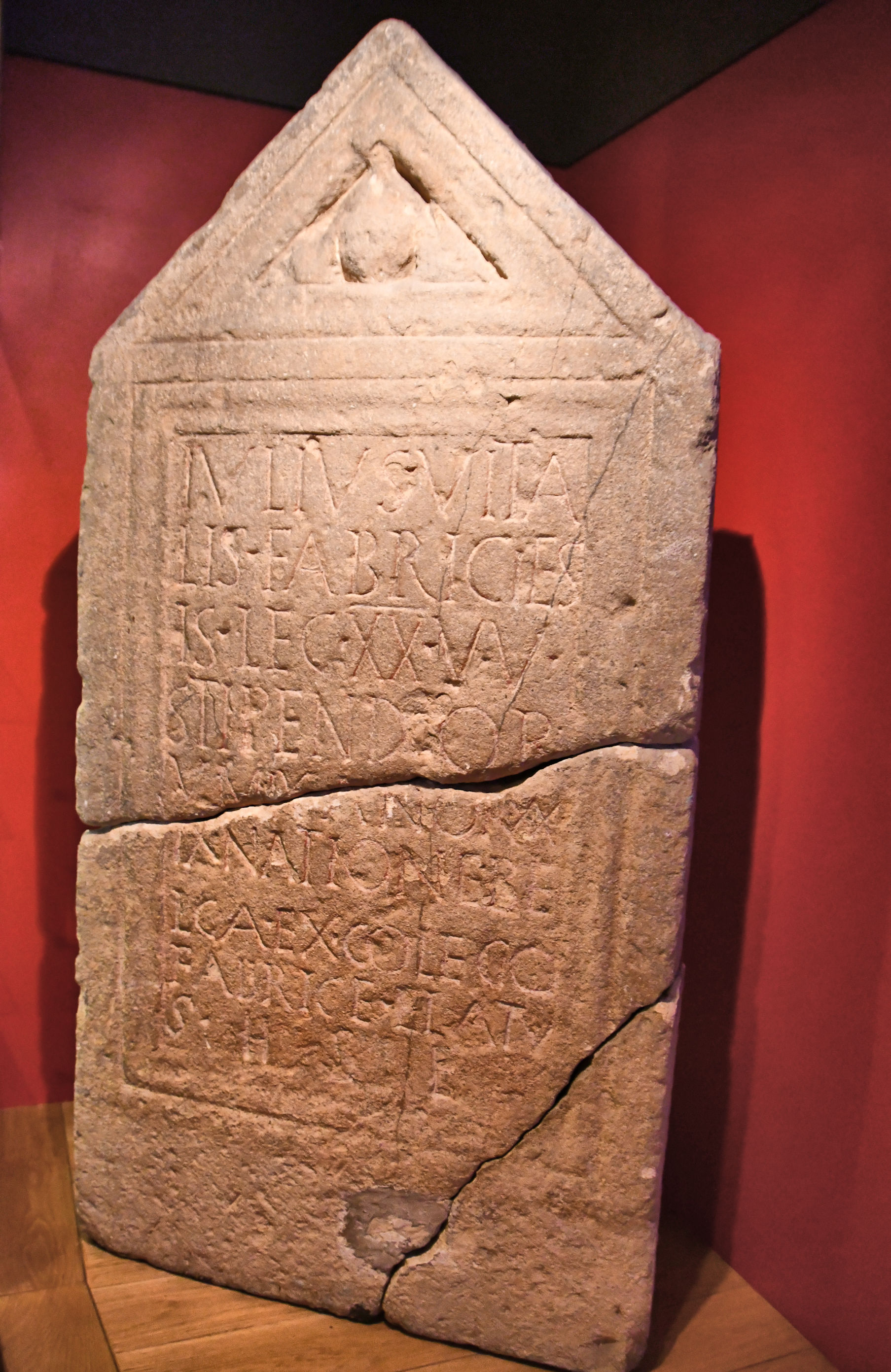
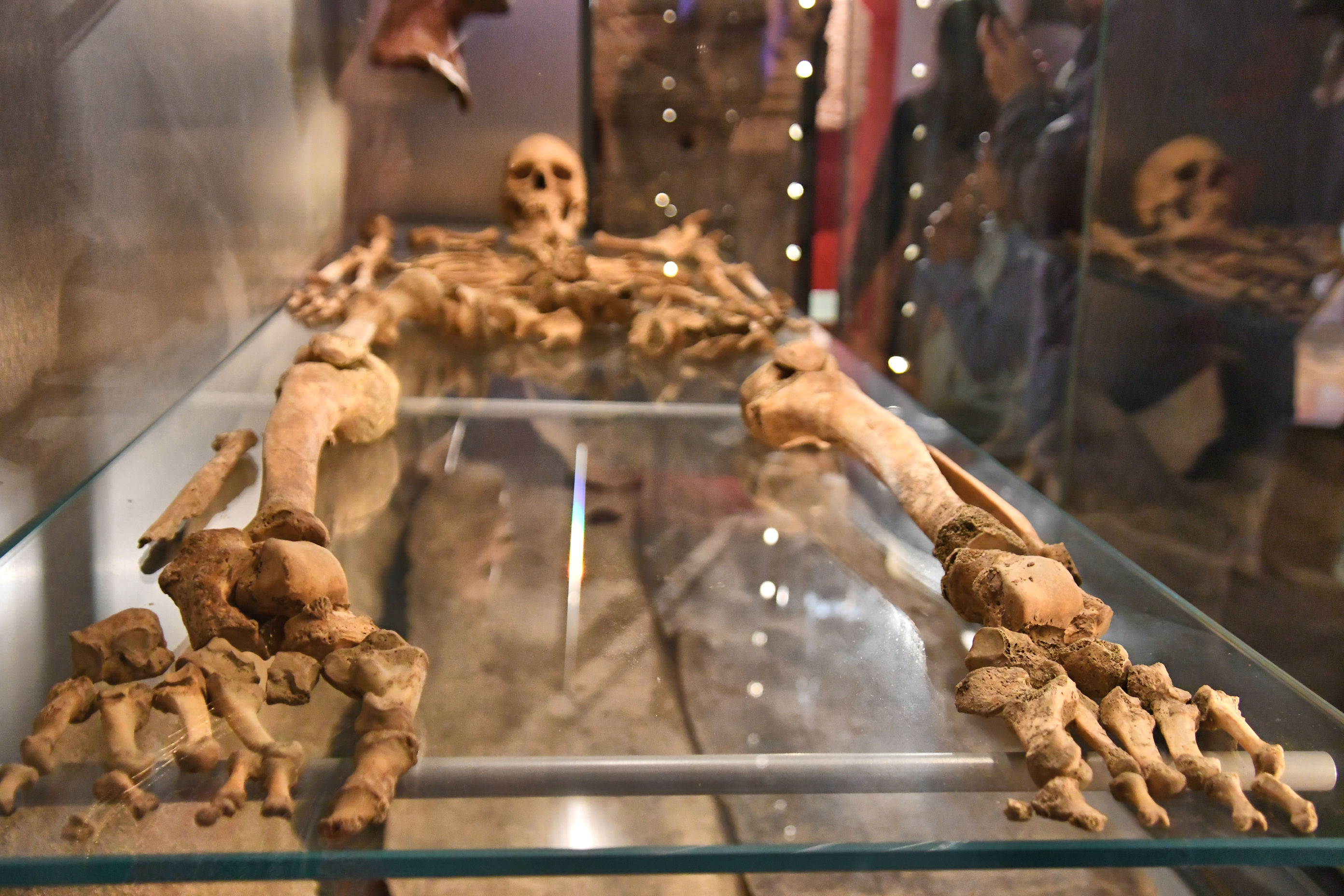

Long, long ago I cultivated a fascination with foreign coins. My grandfather, Capt. John Waterbury was a Merchant Marine sea captain and traveled the world, eagerly exploring other cultures. He and his wife, Barbara, collected things and filled their home with them, like a gigantic shell (maybe 4 or 5 feet across!) that he actually hauled up from the ocean floor himself, and then they used it to store handtowels on their bathroom countertop. They had hundreds of coins for sale in an odd little “shop” in their front room for random travelers who would come to visit their home in remote Lakeview, Oregon at a place appropriately called “Sailboat Ranch.” I never had money and could never purchase, but on one occasion I was allowed to choose five coins that captured my interest. I spent hours choosing, based on the coins with the prettiest designs of course. I have yearned for foreign currency ever since, and have a modest collection that has interesting American currency too.
That long story was just to lead up to this statement: any time I see coins in a museum, I am especially pleased. So look what they have in Bath!

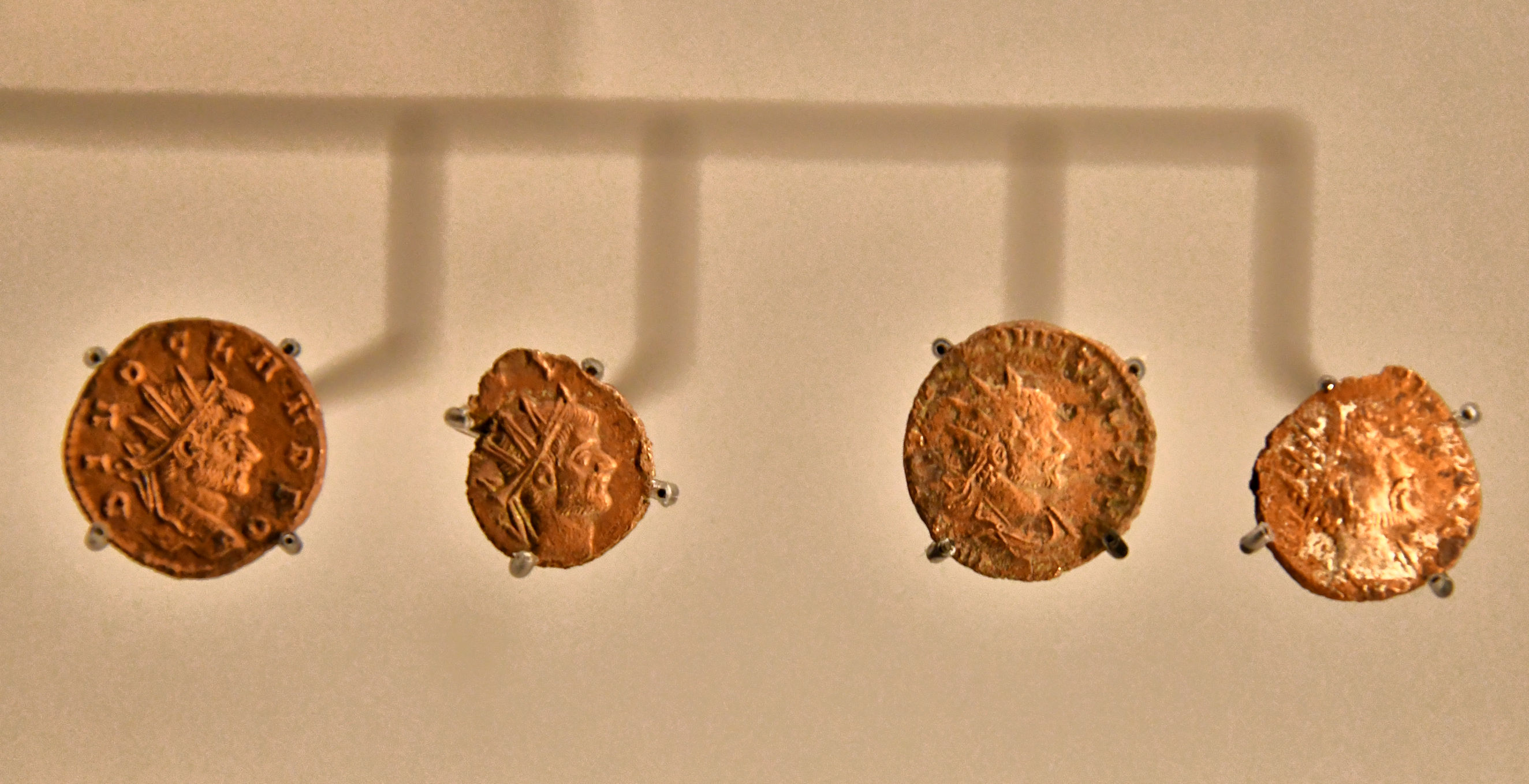
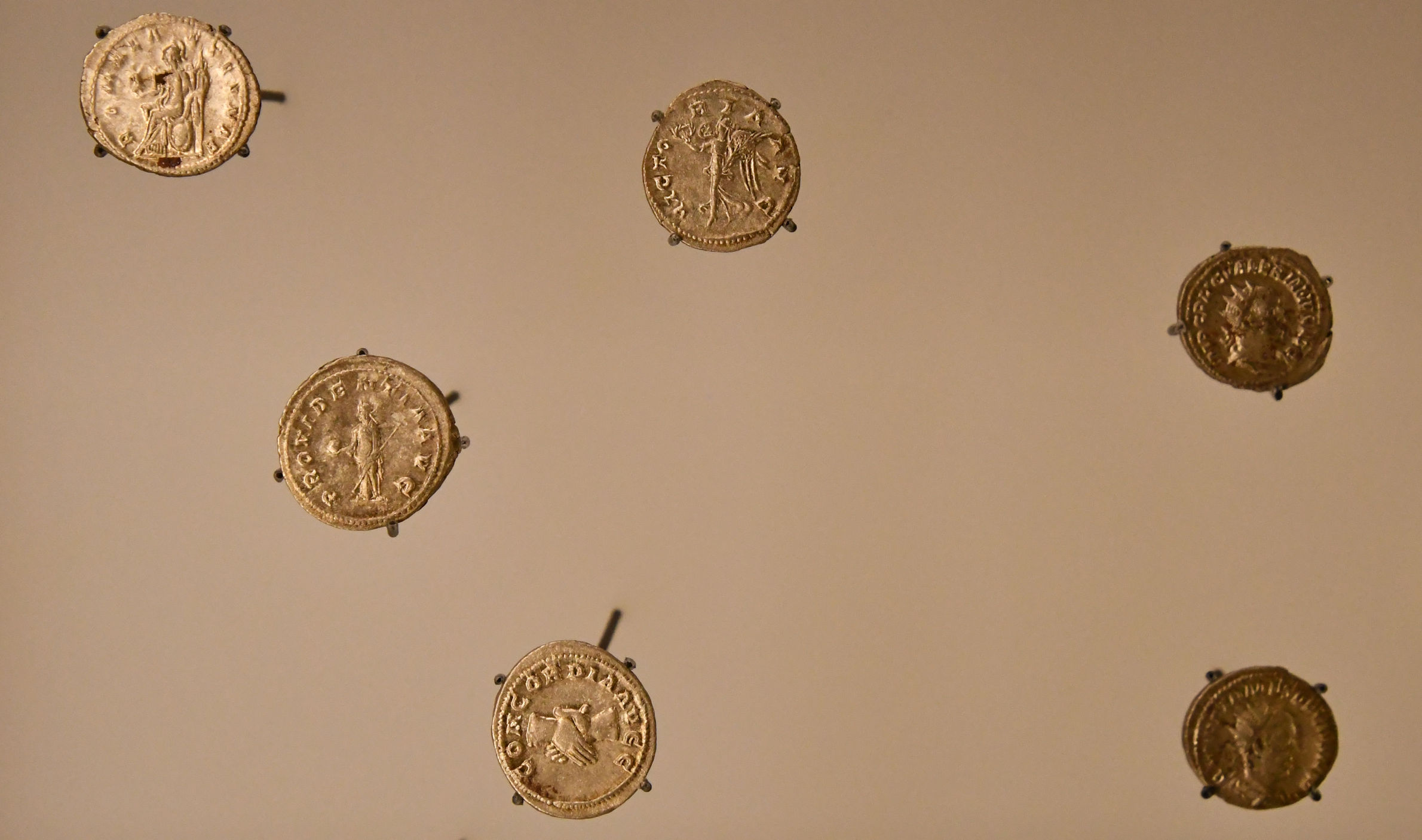
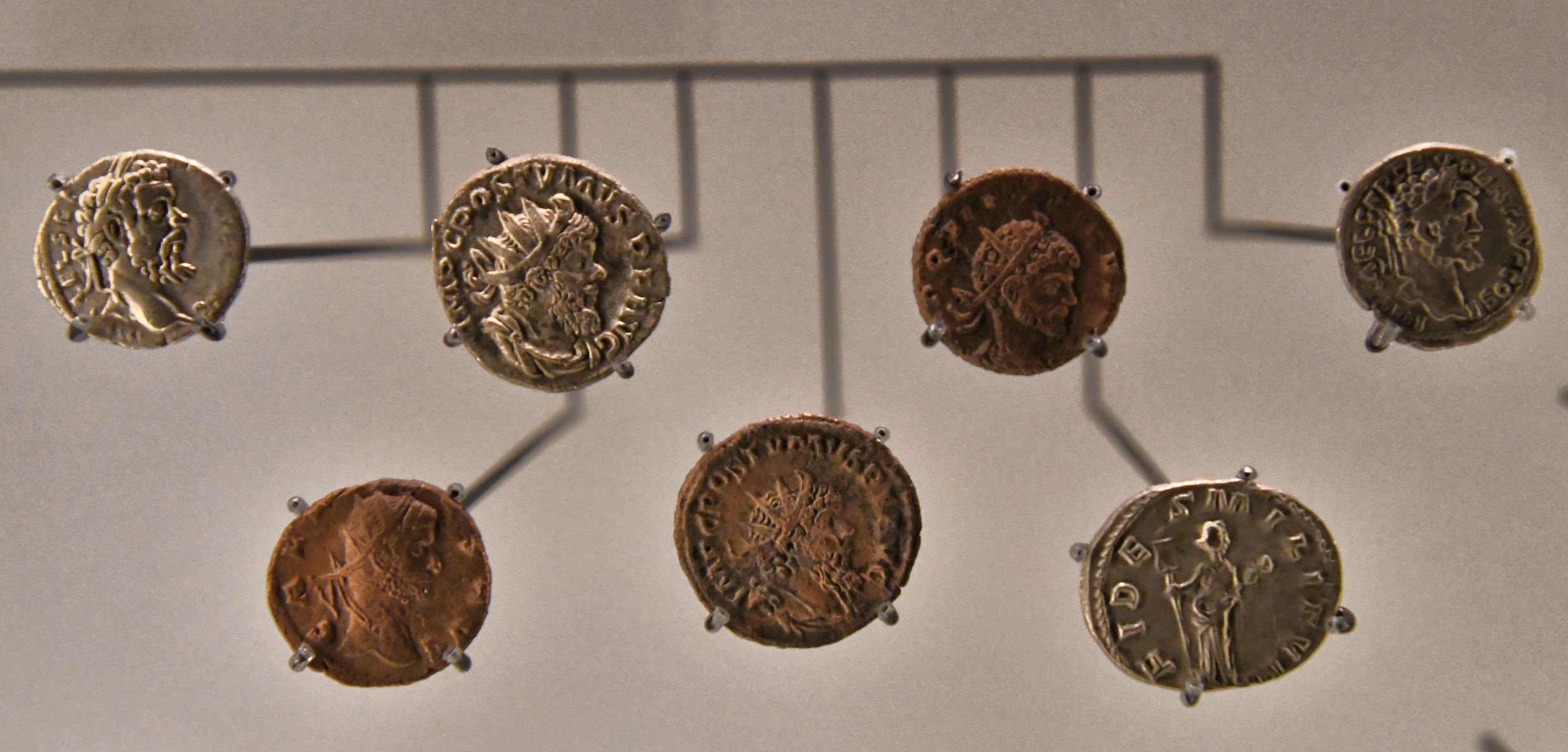
After the Romans left Bath, the baths gradually fell into disrepair and then were abandoned completely. Astonishingly, they were eventually completely forgotten. Records show that multiple times the baths were found and used again, then forgotten again. In 1878, a leak of the spring forced a survey and excavation, leading to the baths’ discovery in 1880. The John Woods (Elder and Younger) that I mentioned in my previous architecture post worked on plans for the redesign and rebuild.
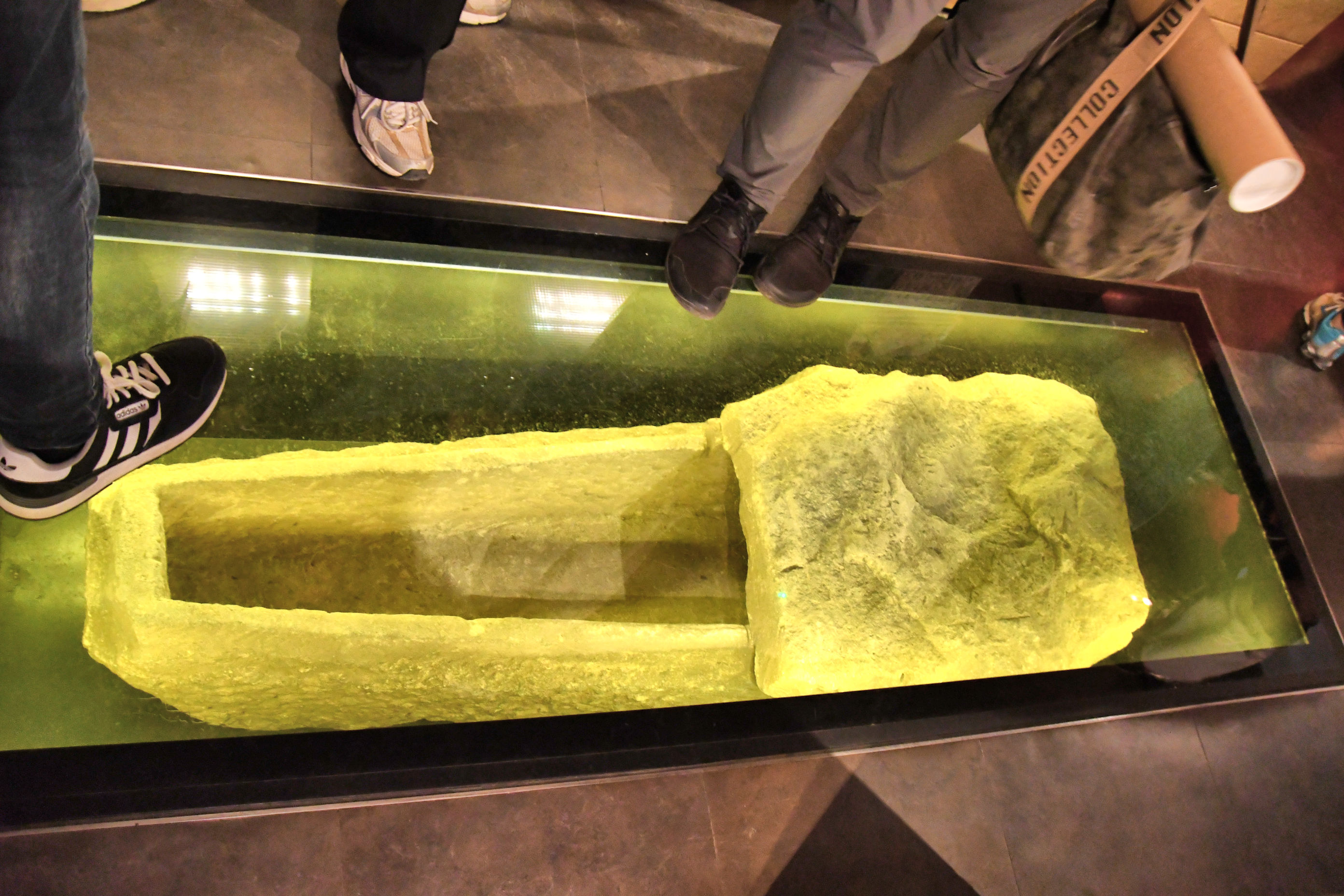
Our tour guide talked about the discovery of the coins, referring to the Beau Street Hoard found by an archaeologist in 2007 of what turned out to be a collection of 17,500 ancient coins in bags. I have not been able to find her explanation anywhere, but our guide said that when the nearby spring was rennovated by monks before the Victorian times, they believed the pool to be too deep. They corrected this by laying a new floor directly on top of the old floor. Viola! Shallow pool. Later, excavations pulled up the fake floor and found – preserved for generations beneath it – tens of thousands of coins that had been tossed in by bathers, supposedly as offerings to the goddess. I didn’t have the presence of mind to ask how/when/who the floor was pulled up, offerings put into bags, and then lost again.
Also discovered were over a hundred curse tablets made of lead, also presumed to be messages to the goddess. People would purchase a tablet, inscribe a curse, then toss it in. Most of the curses found at this site are pleas for damnation upon the person who stole one’s clothing while they were bathing!
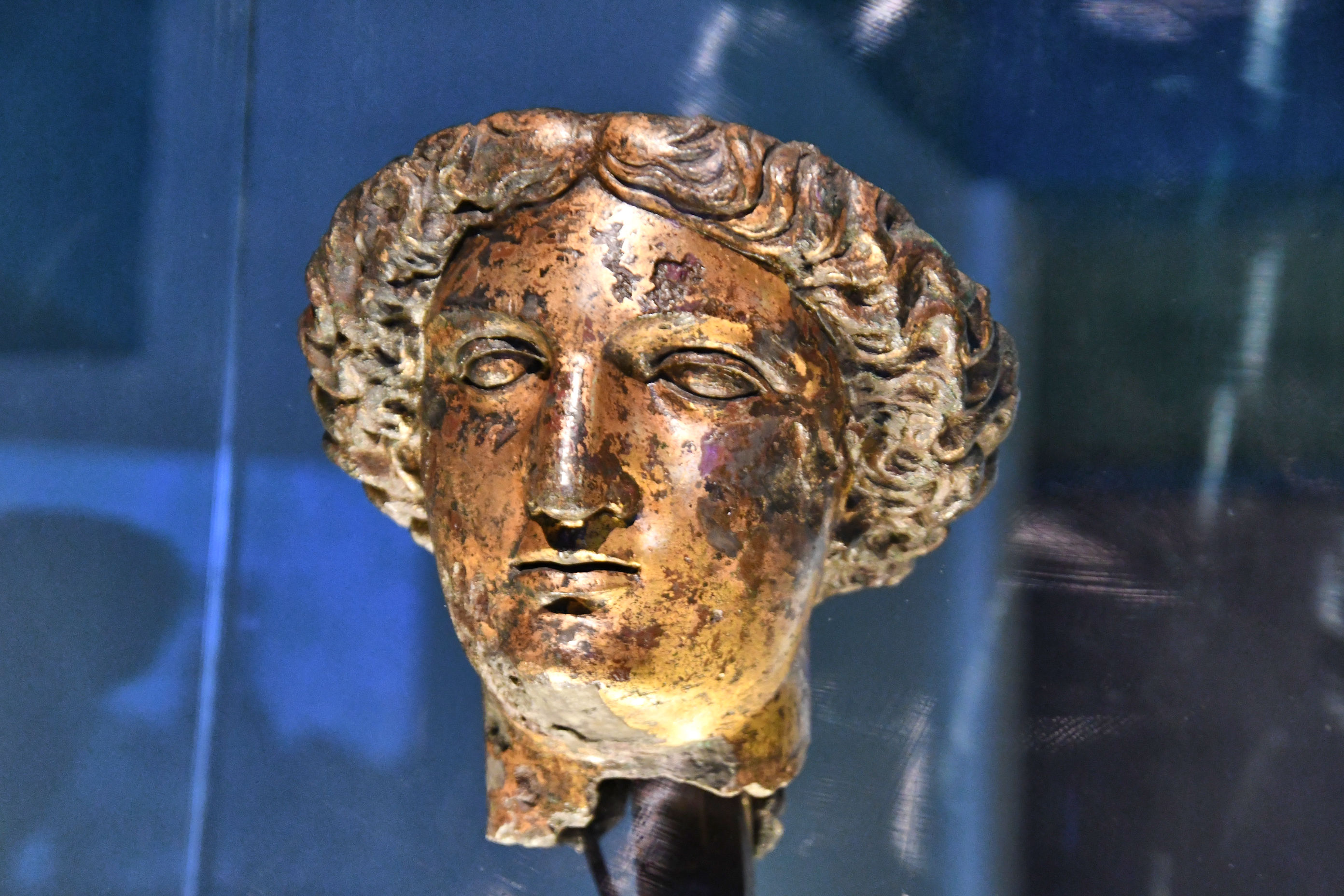
This site was well known and holy before the Romans arrived. The springs were believed to be the domain of the Celtic goddess Sulis. The Romans thought Sulis was like Minerva, and so they began referring to her as Sulis Minerva, and the place was called Aquae Sulis (waters of Sulis). As conquering powers often do, they incorporated the beliefs of the locals into their modern beliefs. Syncretism is a good way to appease occupied peoples, if any of you are planning a future colonization.
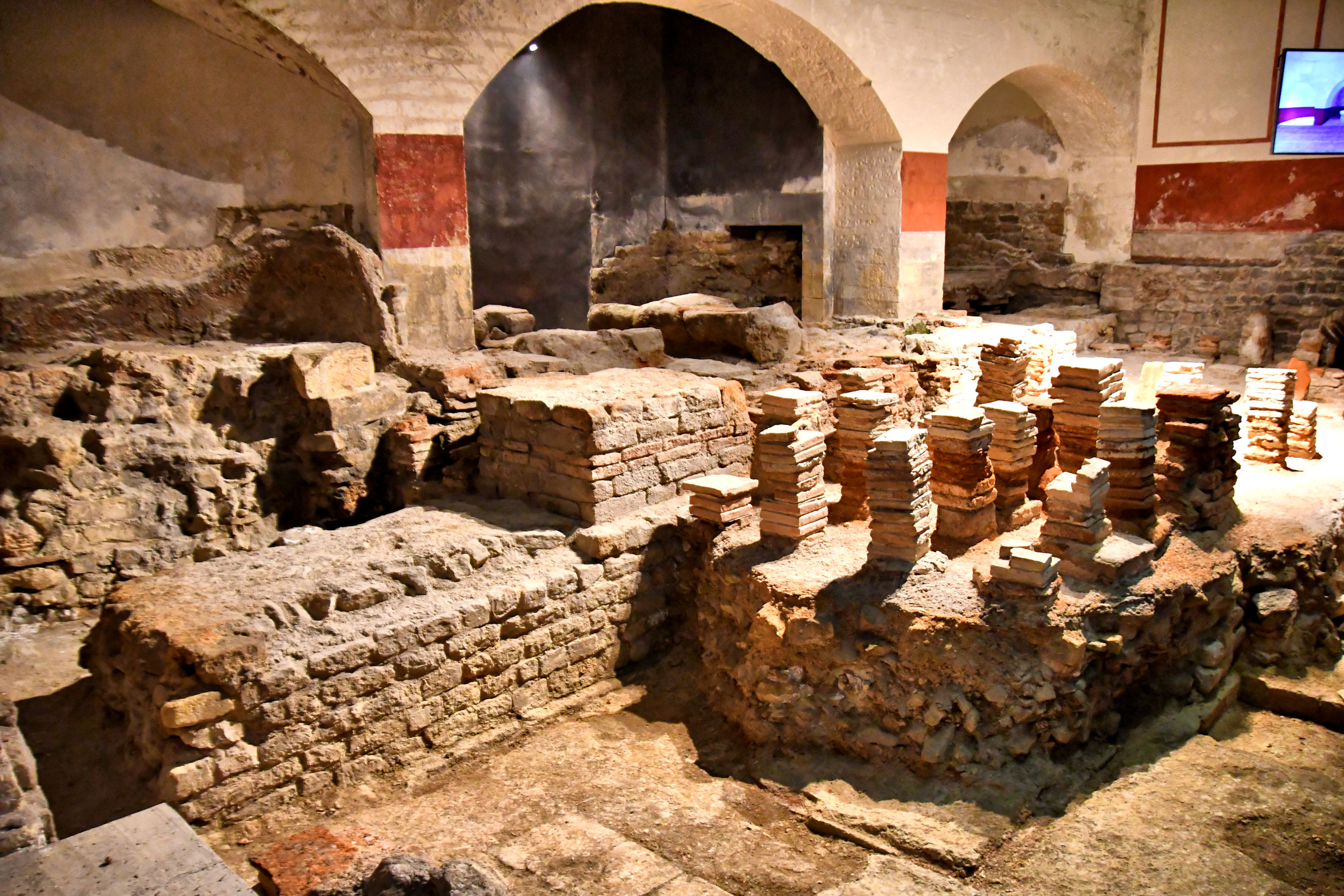
We met our tour guide at the time prescribed, and began a one-hour guided tour of the lower levels of the bath. She showed us multiple rooms, like the cauldarium, tepidarium, and frigidarium one expects at a Roman bath, for men and women and at different temperatures. The ruins are in remarkably good condition for their age.
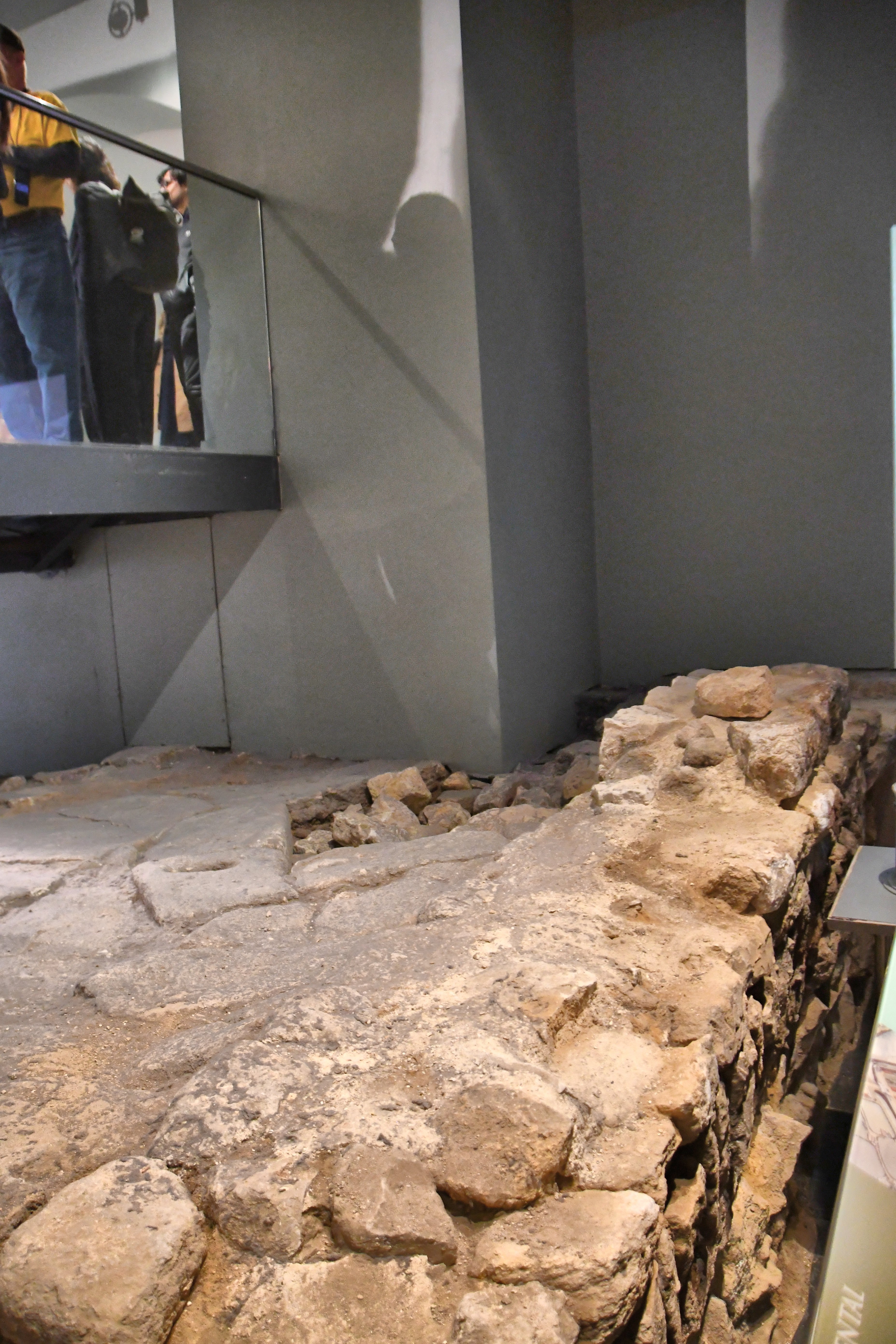
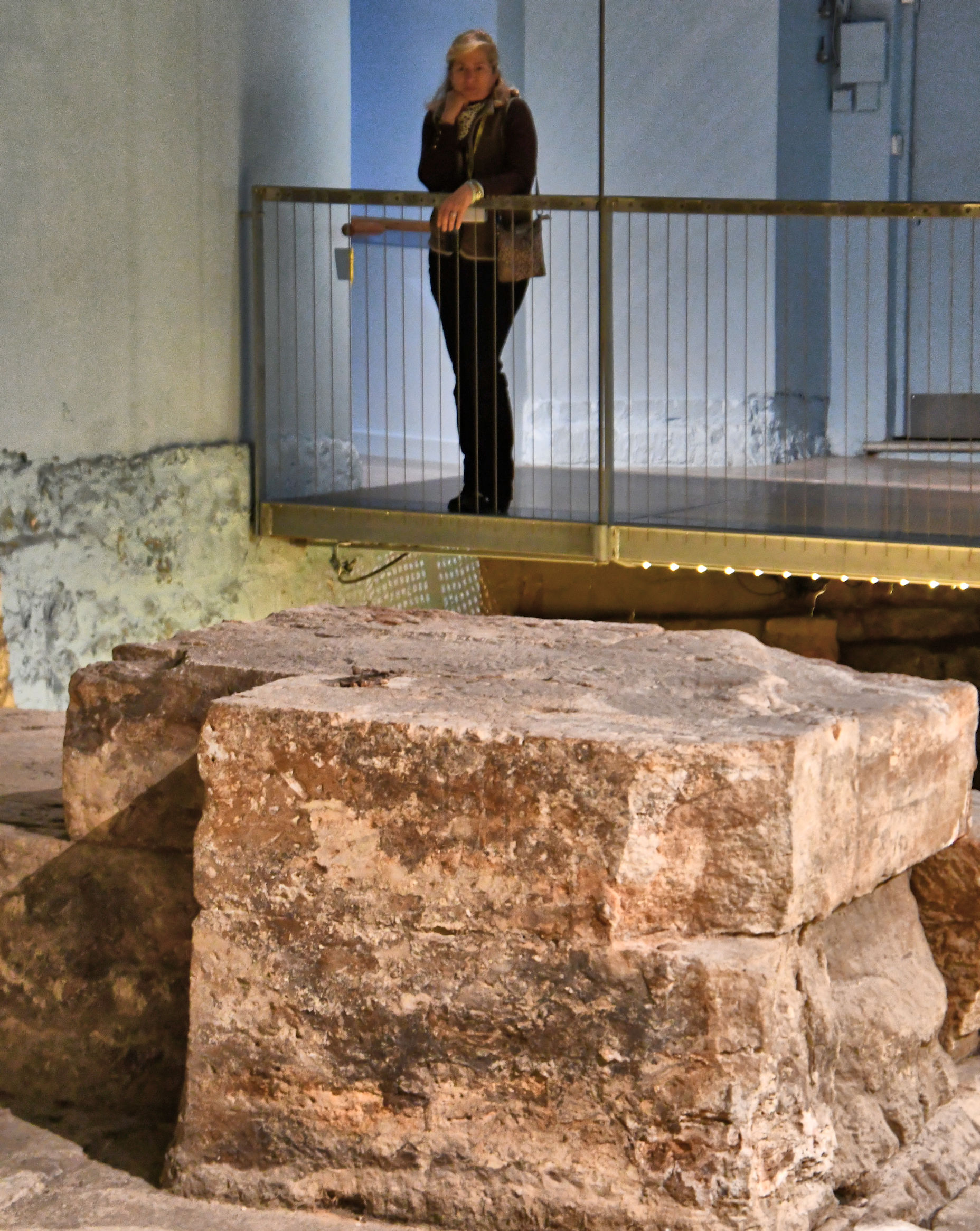
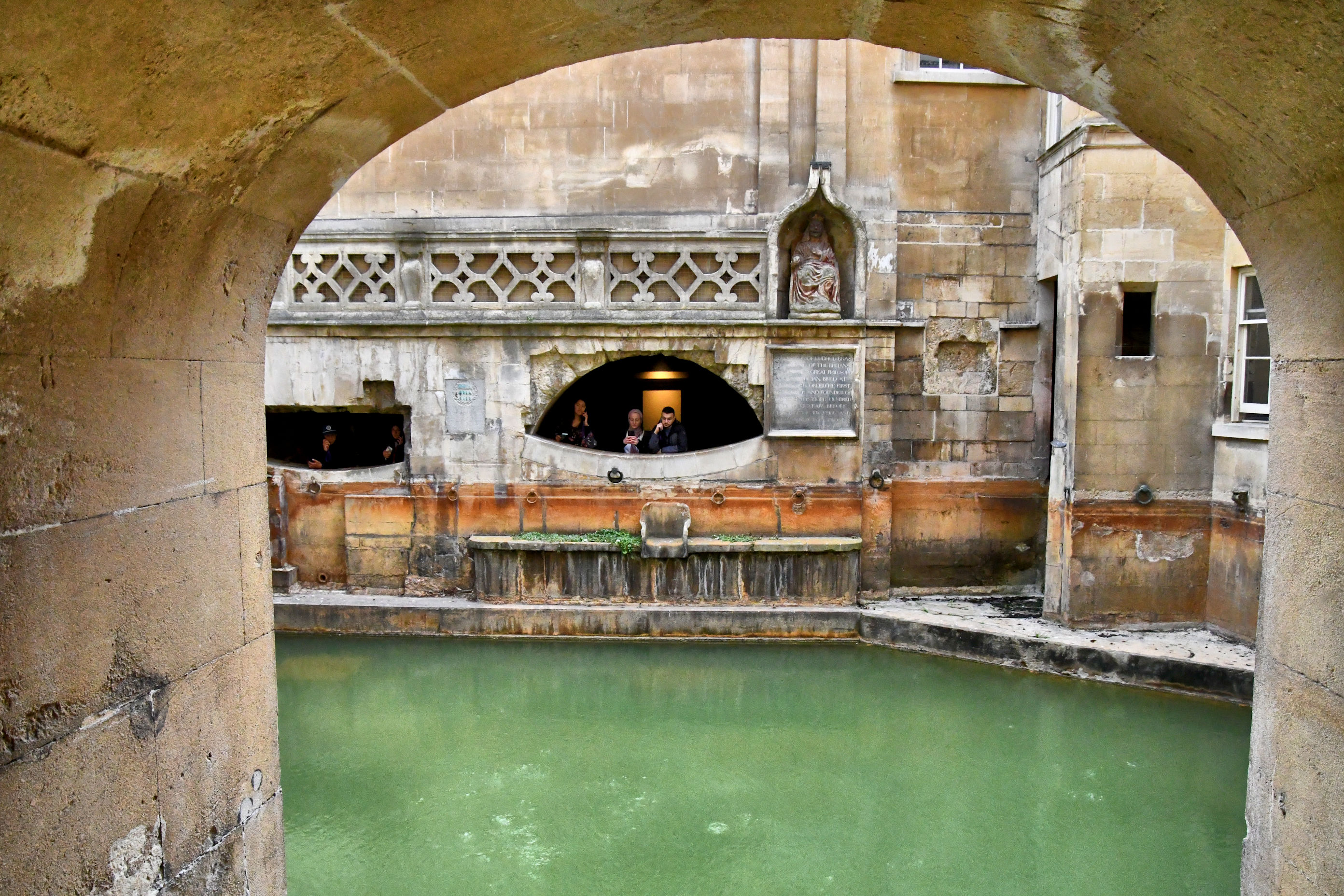

We heard the surprising story of how funding for the rebuilding of the Baths kept running out, and an enterprising financer began selling the Roman lead water pipes to fund construction. Our guide said each time the money ran out, more pipe was sold. I cannot find this described online, so I can’t tell you who it was who sold the pipe. She showed us what she said was one remaining piece that is now protected from being sold. Since I heard two amazing stories from our guide that I cannot find anywhere else…I must caution anyone on using this blog post as supportive evidence for repeating the stories.
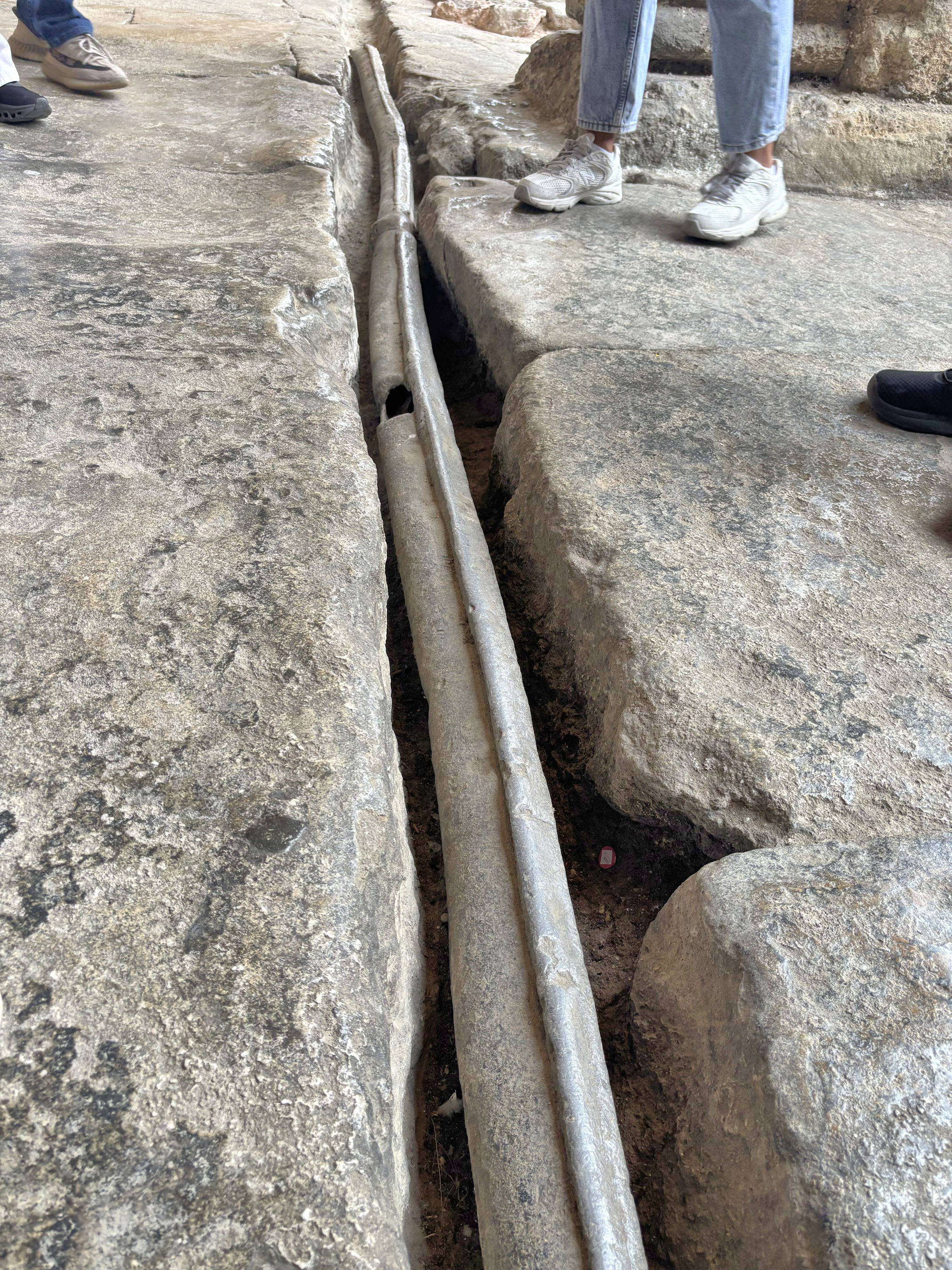
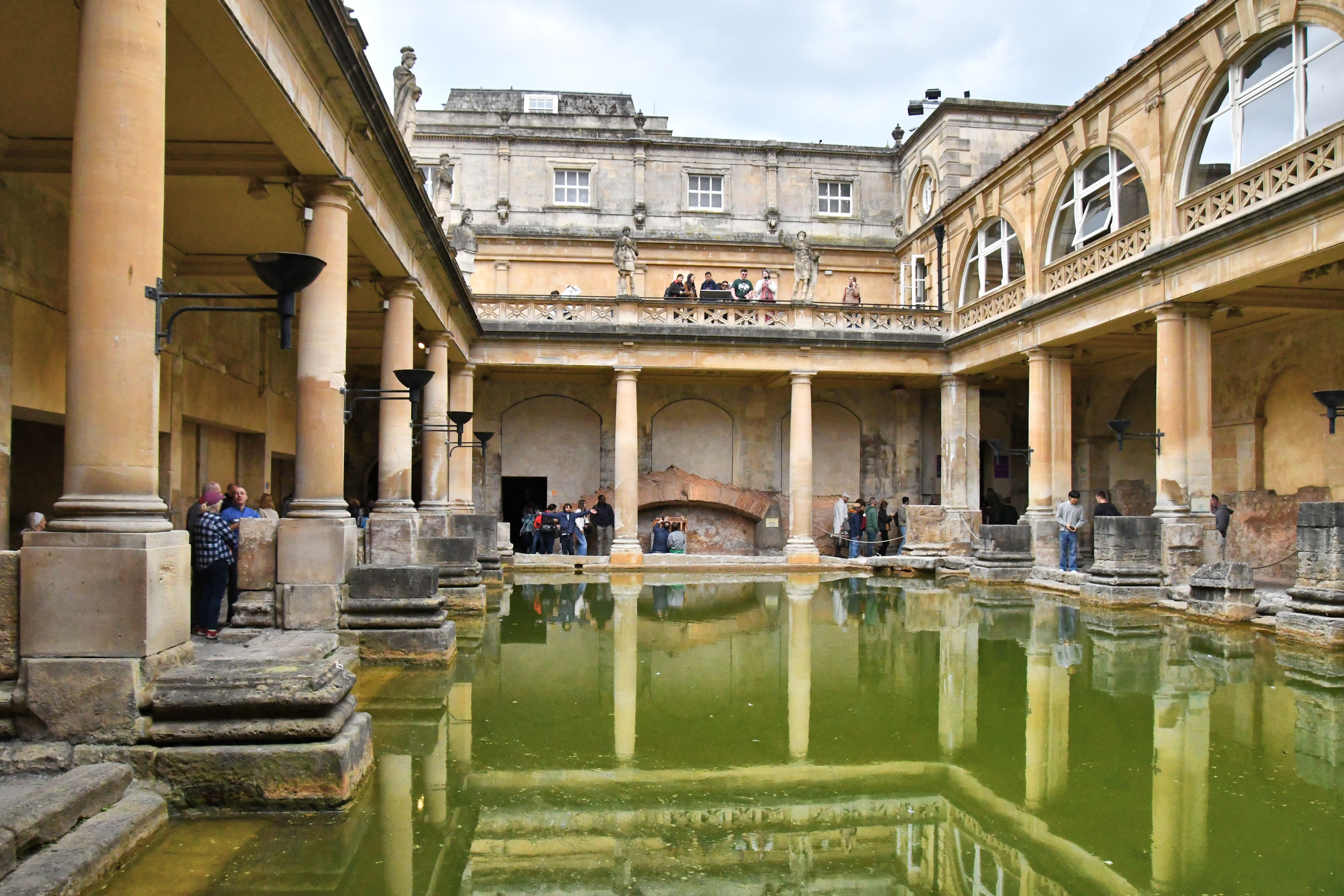
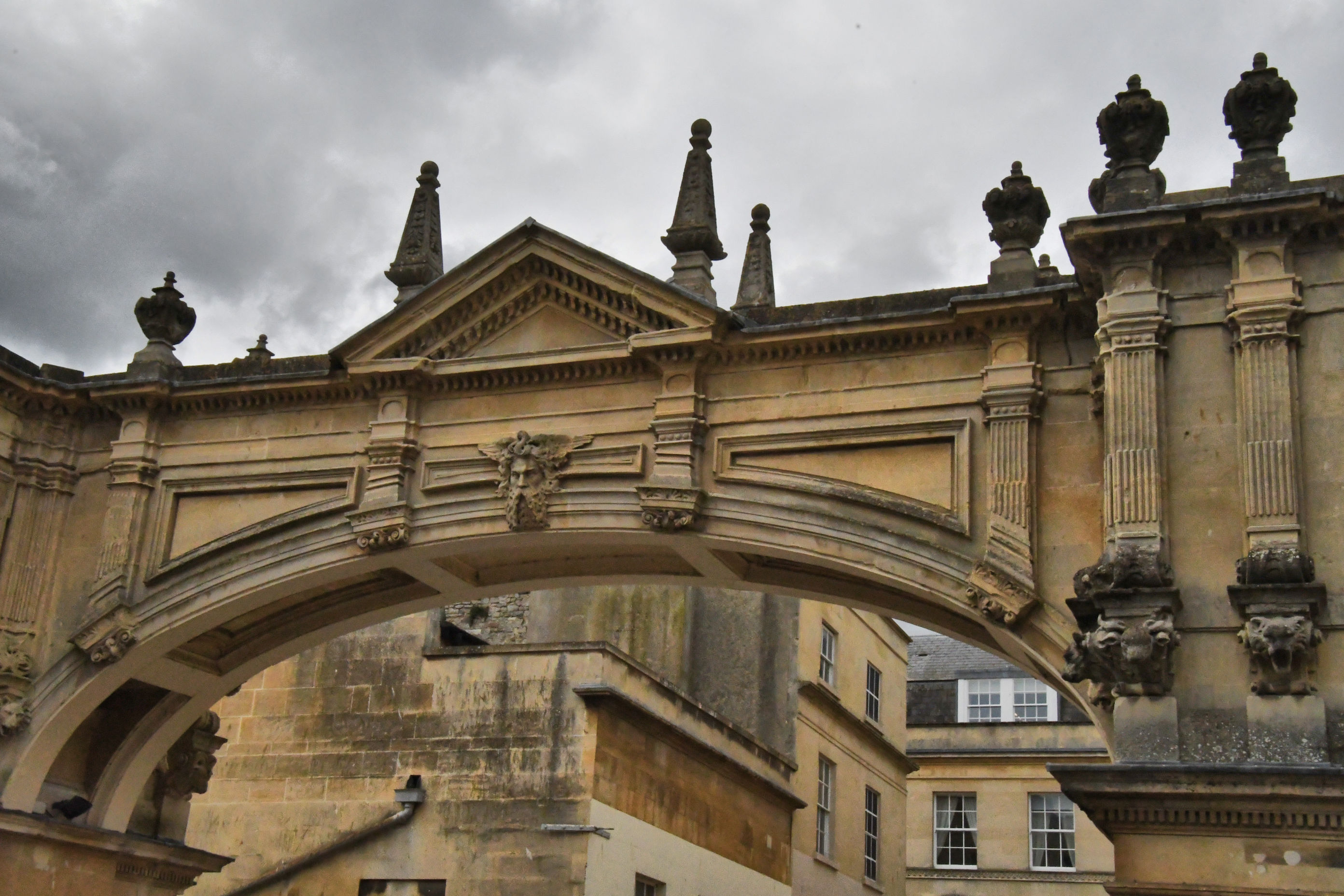
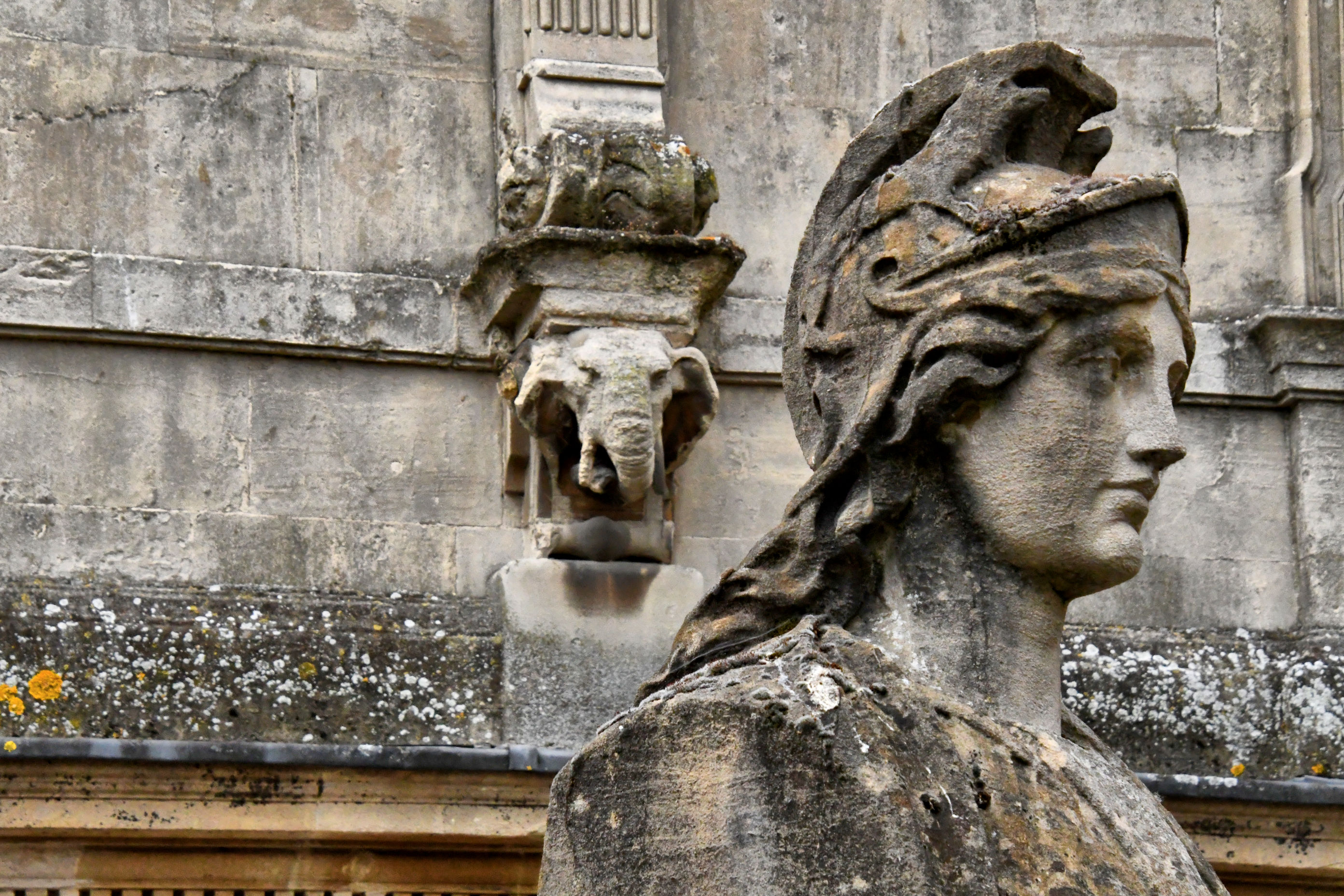
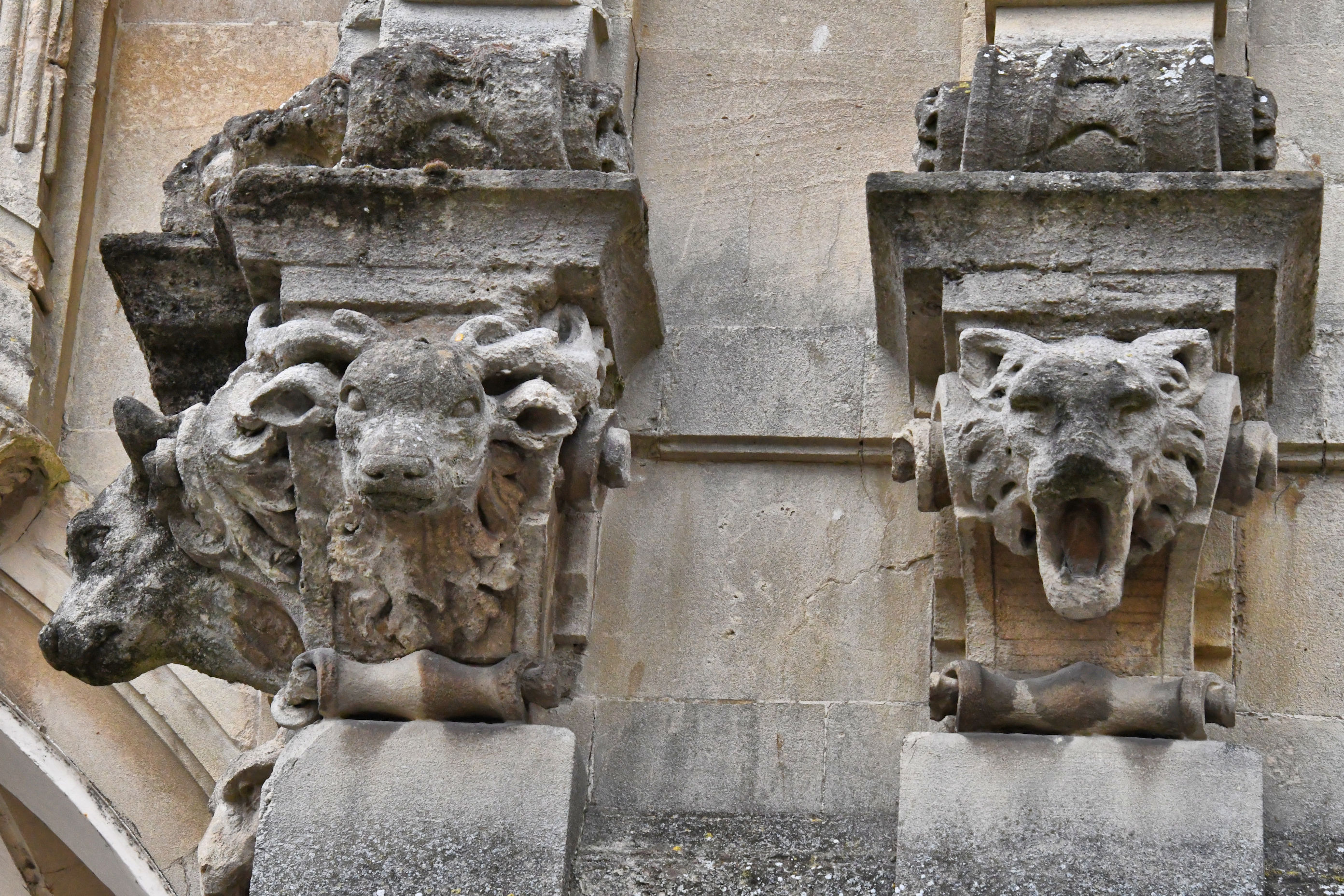
Our guide pointed to something that I did not at first notice at all, and now cannot “unsee.” The only part that is Roman in the image above is the grey bases of the columns, and the stones we walked upon (you can see the stones in the image with the pipe). That’s all that is left of the 70 CE construction. Everything else was built by the Victorians, in the way that they felt best honored the idea of Roman baths. That is why you have the multiple life-sized statues that aren’t exactly Roman, and the gargoyles of things like elephants.
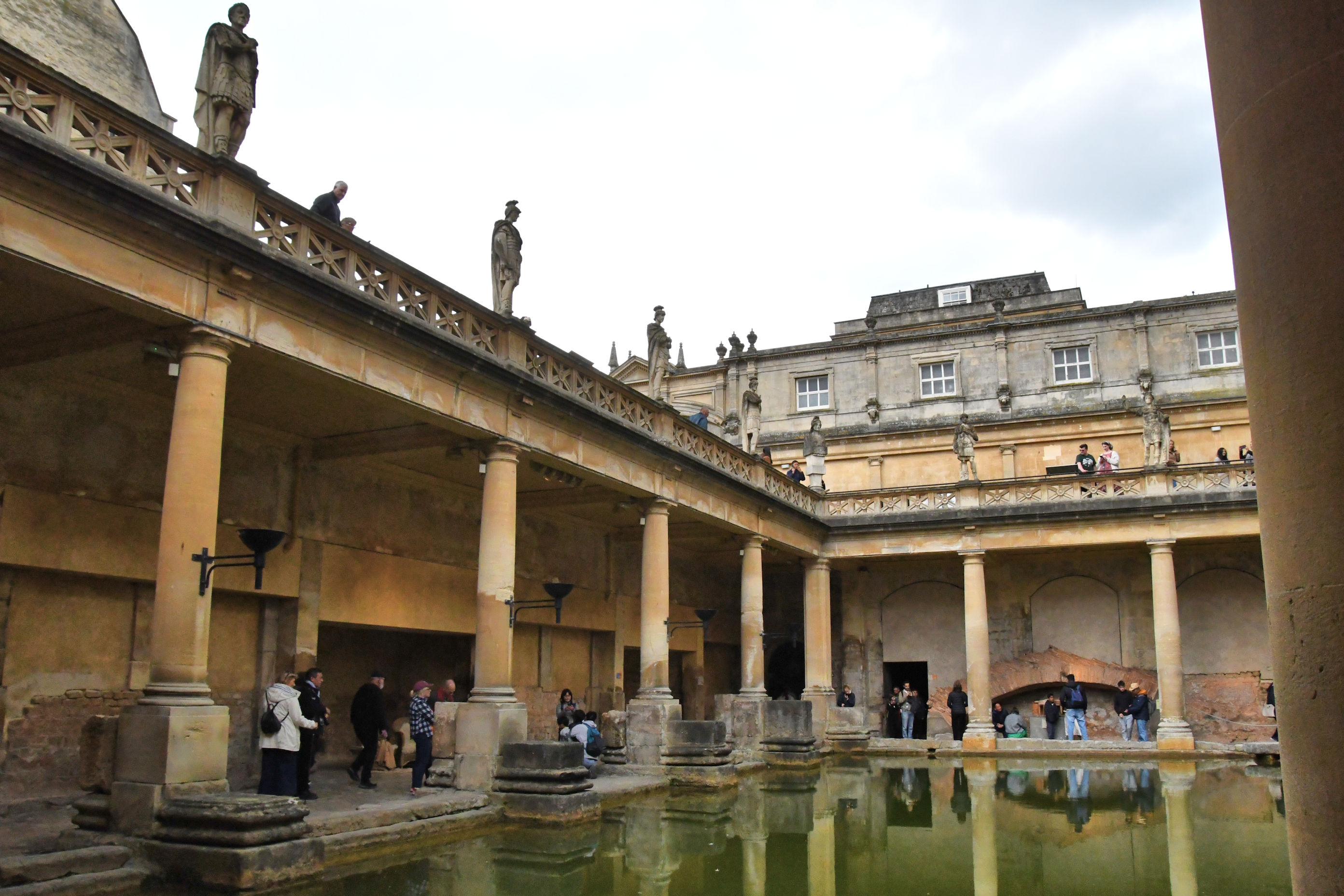
But bless the Victorians anyway, for going to the trouble to bring this UNESCO World Heritage Site back to the people.

 Conscious Engagement
Crystal, thanks for a very thorough and educational post.
Of course, Lou! I took notes on my phone for some of this stuff while our guide talked. But there was a lot to look up this time and I had fun with it.
My goodness didn’t you read a lot do write all of this. Wonderful photos
Thanks for noticing, Brian. Yes, this one took me a long time. I was using notes from my phone, and snapshots of information signs at the bath. So I thought at first it would go quickly, but then I kept looking things up to get names and dates right, and I kept finding more information, and corrected information. I ended up spending hours on it. Ha ha!
Well worth the time Crystal
Another of your classic tours packed with splendid photographs and well absorbed history. (How about more punch for your pound; could the sculptural blend be the Greek goddess, Minerva and our Green Man – the harbinger of spring? ) There are so many Roman coins in UK antiques centres that they are cheap as chips.
Punch for your pound is much better alliteration! And what a great eye for detail – yes, apparently scholars have had the same ideas as you about what the sculptural blend might be. There are lots of ideas, and because of that there are no attempts to say what it is for sure. I did not realize Roman coins were so easy to come by, and now I am determined to get my paws on one of them. On my next visit!
So many were buried here – and are always being dug up – the thought is that when under attack they were hidden for safe keeping
That was going to be my next question…. thanks
Again, thanks for sharing such terrific photos. LIke you, I had no idea about Bath and the roman baths. When we traveled to Ireland in 2014 my good friend who had lived in London insisted we go there. Truly amazing! Safe travels my friend, and keep sharing.
I echo your friend: Bath was a beautiful city to visit. My previous post was everything else we saw in Bath – which was heavy on the architecture. The designs there are really outstanding, from a time when it was fashionable to build magnificent buildings. The river Avon flowing through adds a lot. I think if we had two more days there, we would have easily been able to stay entertained. (I’m glad I’m not the only one who didn’t know about the Roman Baths. It seems so obvious now, heh heh)
What a fascinating place, Crystal and a good thing you did a tour, as one can learn so much that way. I also enjoyed your previous post and am glad you had a memorable and relaxing time, especially and the rooftop heated pool. That must have been pure bliss.
Most of the information here is from notes I took from our guide. The city of Bath was a good stop. It was hard for me to choose locations to visit, when we had such limited time, but I am glad we spent a day here. Yes, the pool at the spa was unexpectedly one of my better choices for the itinerary. 🙂
Makes you wonder what they are going to say about our remaining structures, etc. in several hundred years. Looks like a great trip. Color me green. 🙂
Isn’t that fun to imagine? I like thinking about how the things that end up being preserved are not going to be the things we would choose to preserve, like yes the Lincoln Memorial will survive, but also a Yugo, and a case of petrified HoHo’s cakes, several metal forks with 2-, 3- and 4- tines, a video of a middle school music class learning how to play recorders, and minutes from a town hall meeting about whether or not to allow a billboard on the edge of town. And what conclusions will they draw from these results? ha ha.
You made me laugh at how your mind works, Crystal.
Love this! I’ve only really traveled internationally once and it was to many of the places you’ve been on this trip: Bath, White Horse Hill, Stonehenge. I was there in November, decades ago, and stayed in an old rectory in Lower Basildon. I walked through a sheep field to reach the River Thames and watched old men fishing along the bank. These posts have stirred a lot of memories. I think a travel book should be in your future! Thanks for all of these!
Oh gosh yes, memories galore I’ll bet. I like the idea of a book about the places I’ve seen, and using them to draw greater conclusions. There is a great quote attributed to Twain about travel broadening minds. “charitable views of men cannot be gained by sitting in a corner” or something along those lines. If I wrote a book about travel, it would probably be about how my mind was improved as a result of it.
Very nice. The Romans made us Europeans what we are… (For better of for worse)
Love the curse tablets because someone had robbed their clothes. In which case the robbed client could not decently go out on the street in his/her birthday suit… LOL
I got such a kick out of those tablets!! At the main bath in Ephesus, there is a carved inscription saying something along the lines of, “The establishment not responsible for lost or stolen items.” Bad behavior at baths is apparently tradition.