
In my last post, you saw that Margaret and I toured the impressive National Motor Museum in Beaulieu (pronounced “bew lee”). Our entrance tickets also got us into the gardens, the Palace House, and the abbey.

The 13th century village of Beaulieu grew around the abbey. The abbey was built on donated land from King John in 1204 with support from the king, who had decided to help establish an abbey so that the monks would put in a good word for him upstairs. John was a notoriously bad person, so he needed all the help he could get.
Beaulieu grew and became more established as the monks traded goods and tended medicinal gardens. The gardens include more than medicinal herbs today, and are large and absolutely lovely to walk through. Above our heads was the monorail that offered rides to visitors, but we did not take the opportunity.


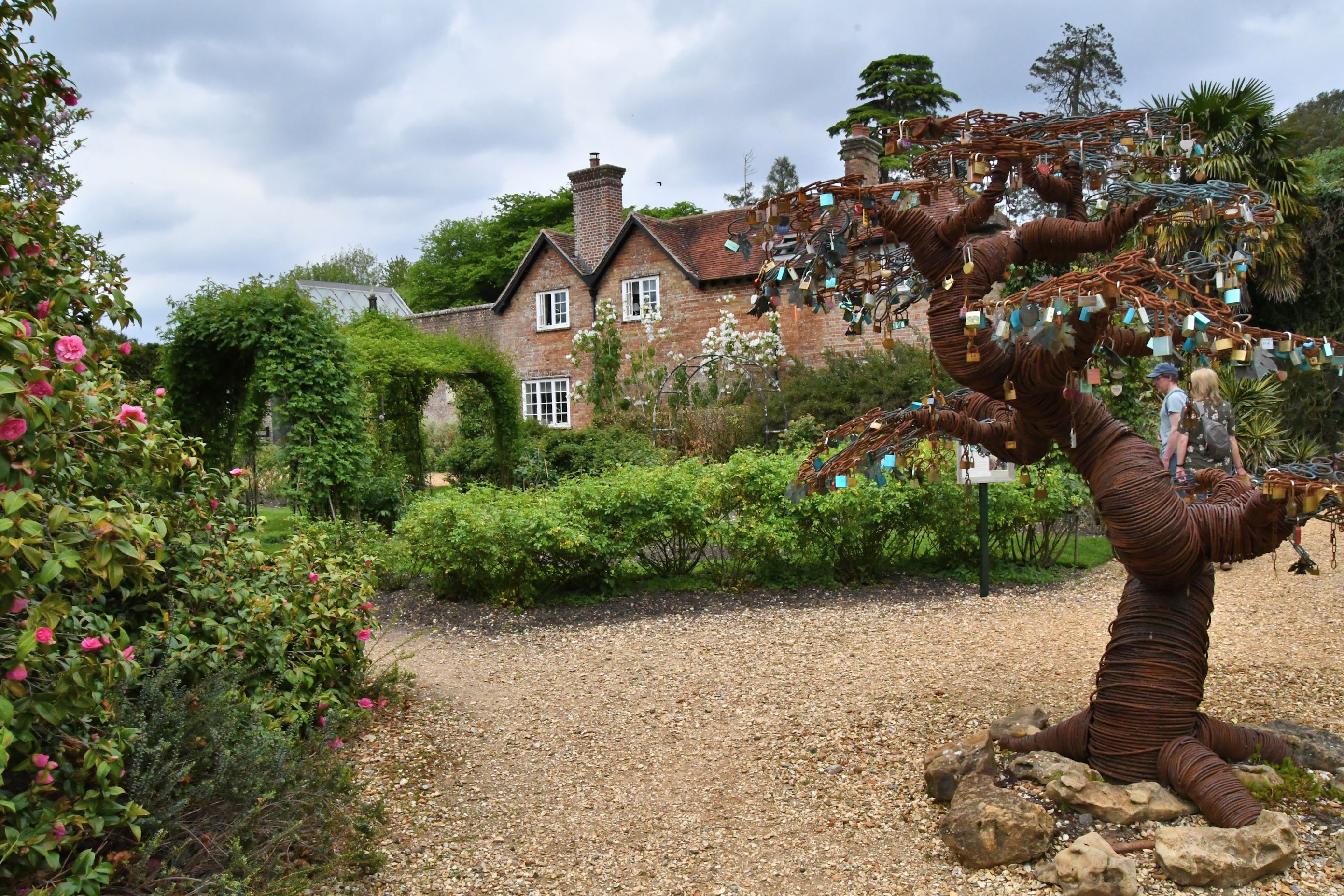
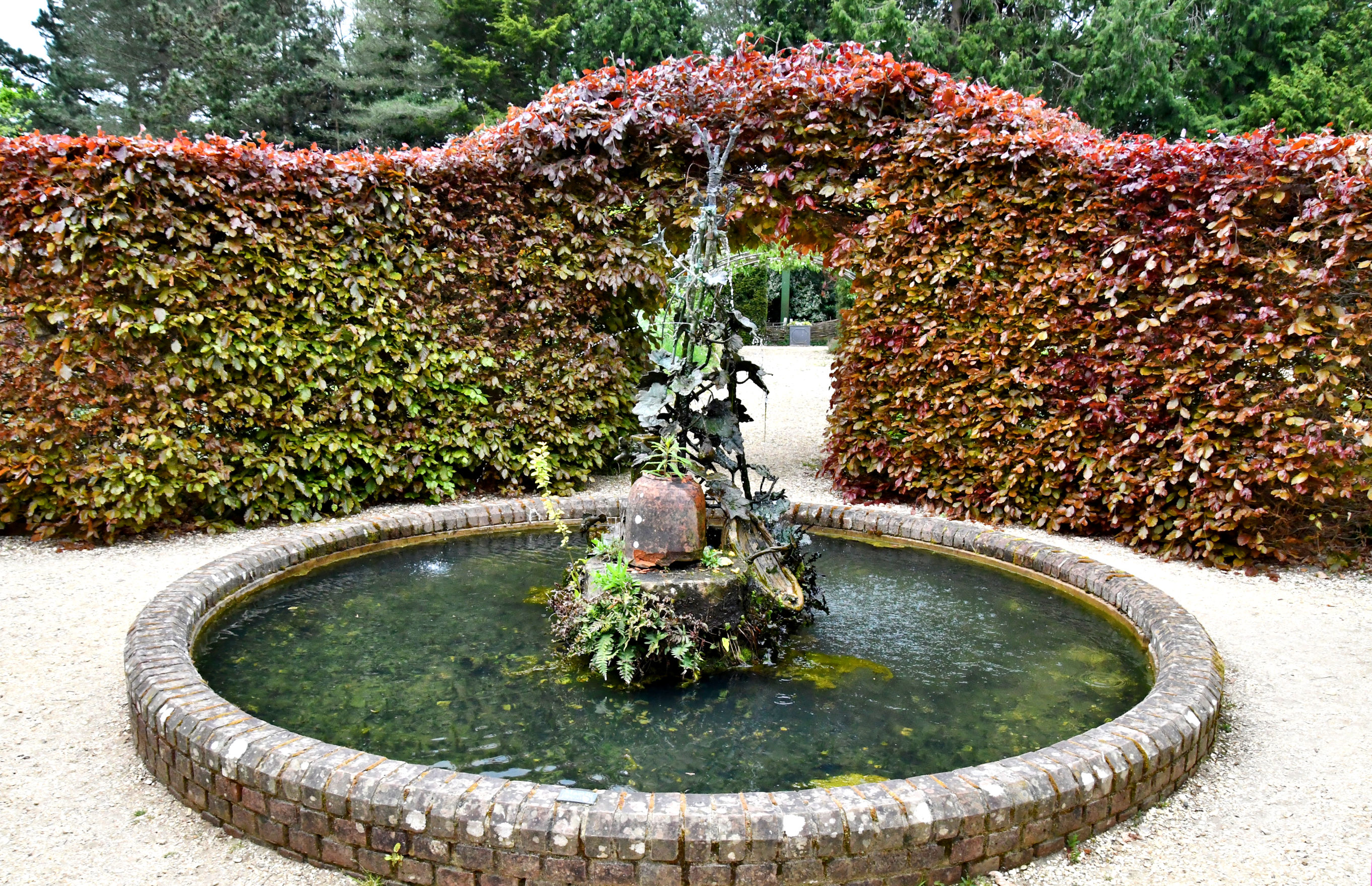


The Beaulieu Palace House was apparently the gatehouse to the abbey, with some “rennovations” in the 1800s. It is magnificently grand, so hard to imagine what is meant by “gatehouse” for an abbey, unless by rennovations, it is meant that a great deal of construction was involved. Today it is one of the Treasure Houses of England, a collection of ten of the most impressive stately homes, palaces and castles open to the public.
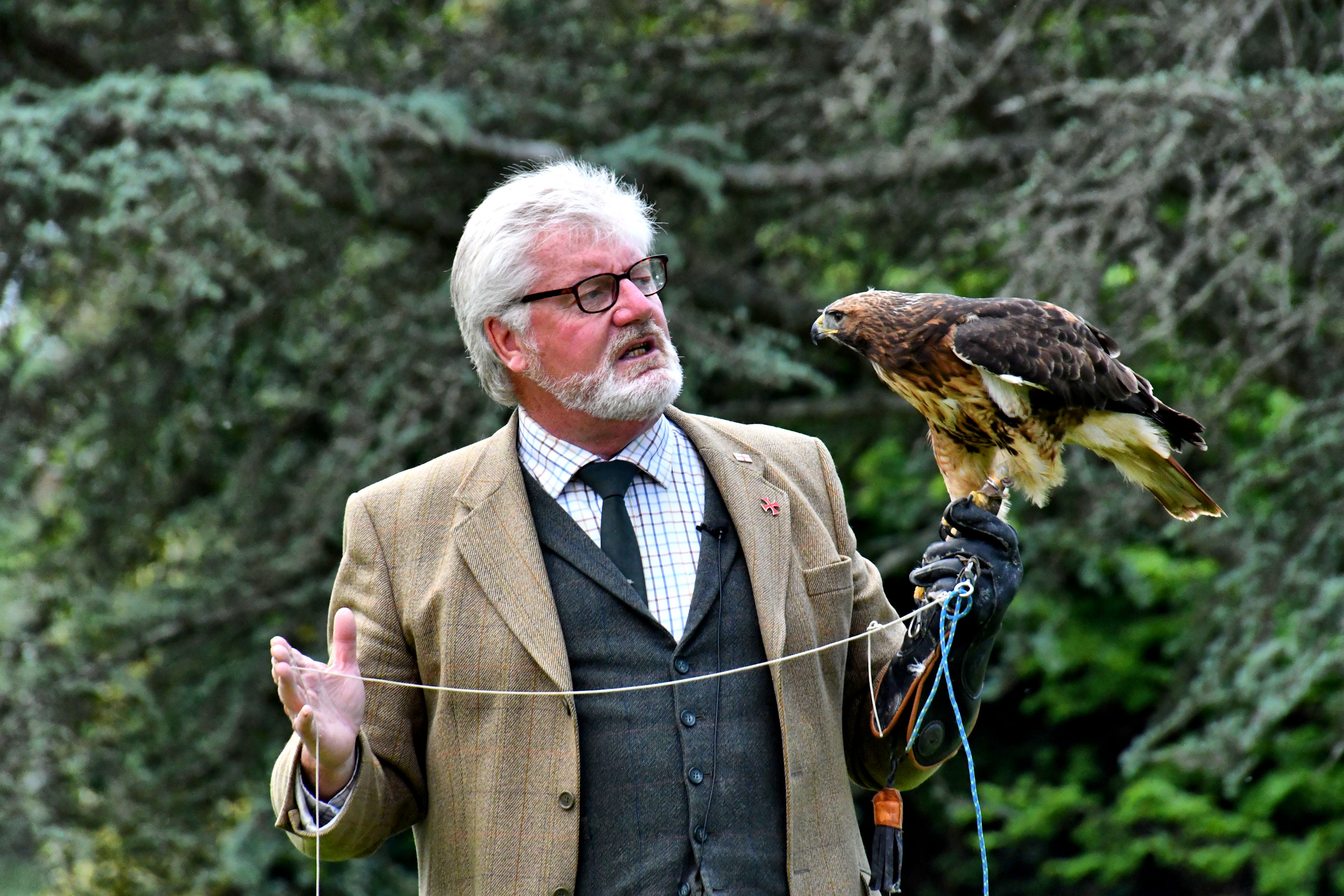
As we approached the Palace House, we noticed a falconer about to begin a demonstration. We found a place to sit and were entertained right away because the man had his microphone on, and was encouraging people to ask questions as we waited. The questions were good and we stayed entertained then, and for the better part of an hour, as he moved into his formal presentation.
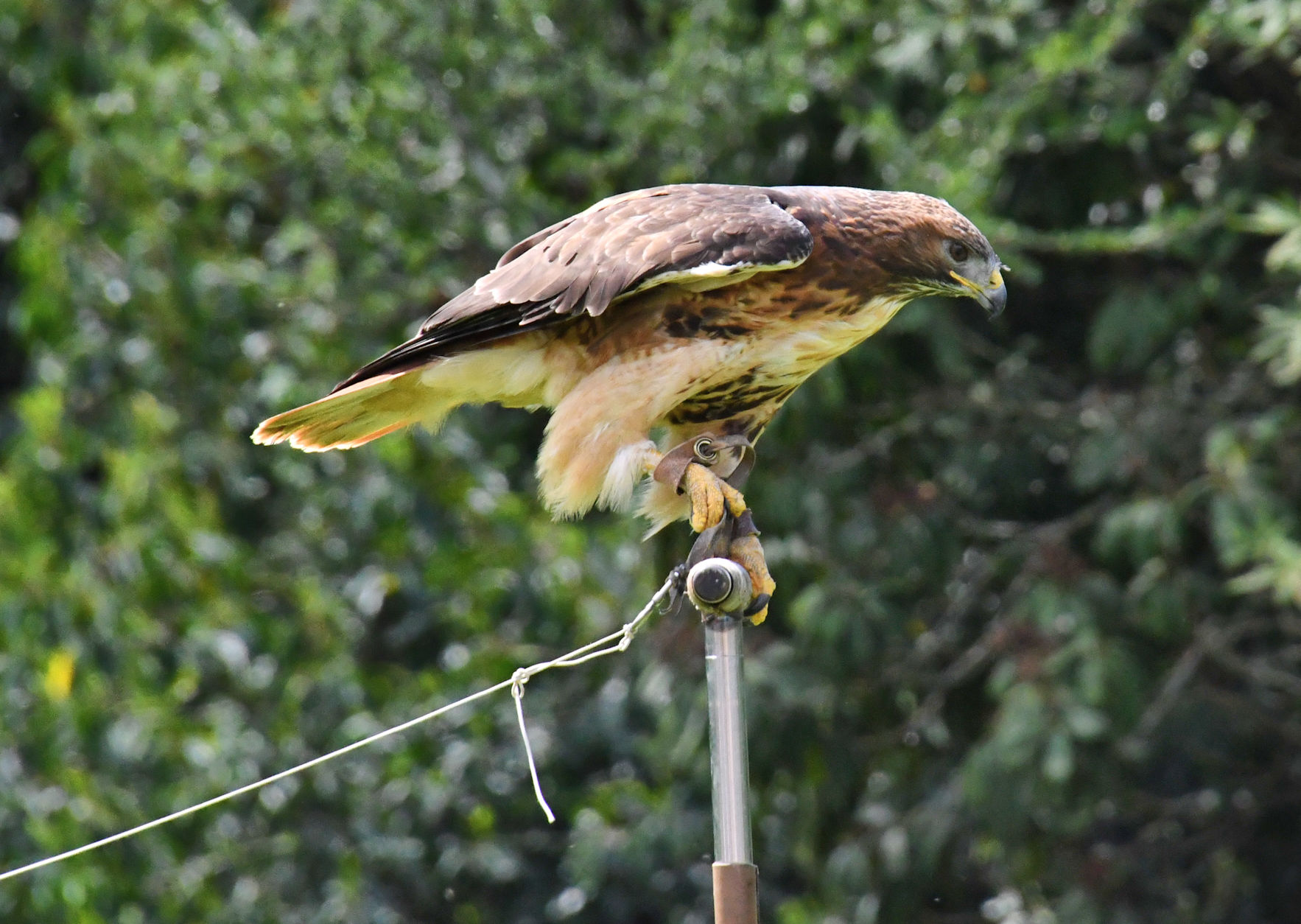

First he introduced us to Bonnie the Red Tailed Hawk. She stayed on his arm and flew to a perch, and back, dutifully as the falconer talked and gave her small treats. When she was on his arm, he held her in place with his thumb on her lead, thus she was “under his thumb.” He explained that falconry is the taking of wild prey naturally by using birds. They do not have to be specifically falcons, but the prey always must be wild. The birds have no love for their handlers, and a successful partnership is based on extreme levels of trust, when the bird has decided that the human can be trusted to assist in getting food. The bird will only willingly work with the human when it is very hungry. After she eats, the man said, she’ll ignore him for the next three days. This is described by saying she is “fed up.”

The sport of falconry he said may be the world’s oldest sport, and there are references to it in Mesopatamia in 2000 BCE. The most famous falconer is King Henry VIII. He said there is a lot of vocabulary in the English language that comes directly from the sport, like when someone is flirting with you, they are “making a pass” at you. Or the other two phrases I highlighted above (and one below).
Bonnie went to rest in the shade, and the falconer brought out another hunting bird. About the same time, the sun grew warmer and we had to seek shade ourselves. It was our third very hot, sunny day in England. I told Margaret that I will confidently go home and proclaim that the UK has the best summer weather! (wink) Directly behind us was the Palace House, and we walked inside.


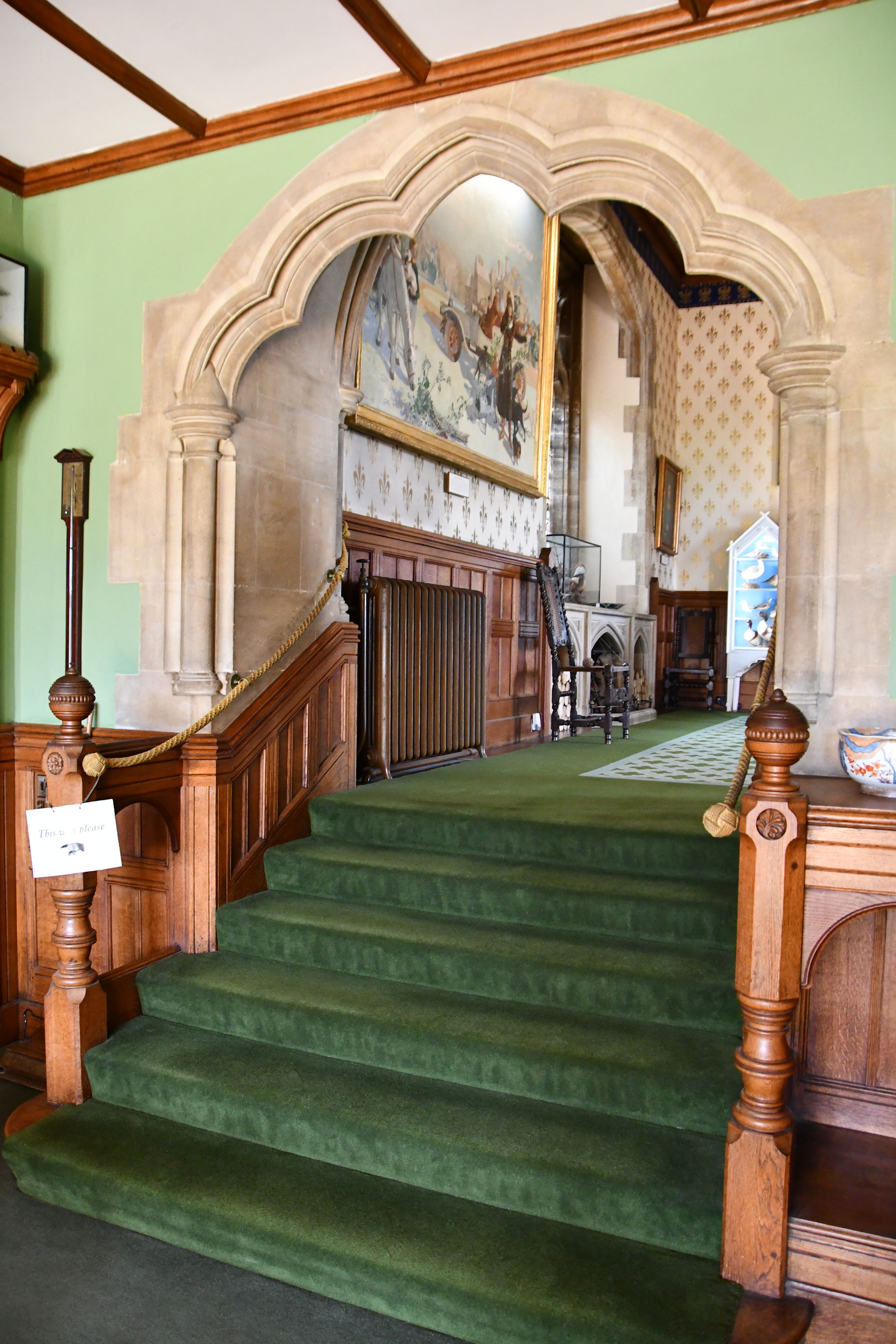
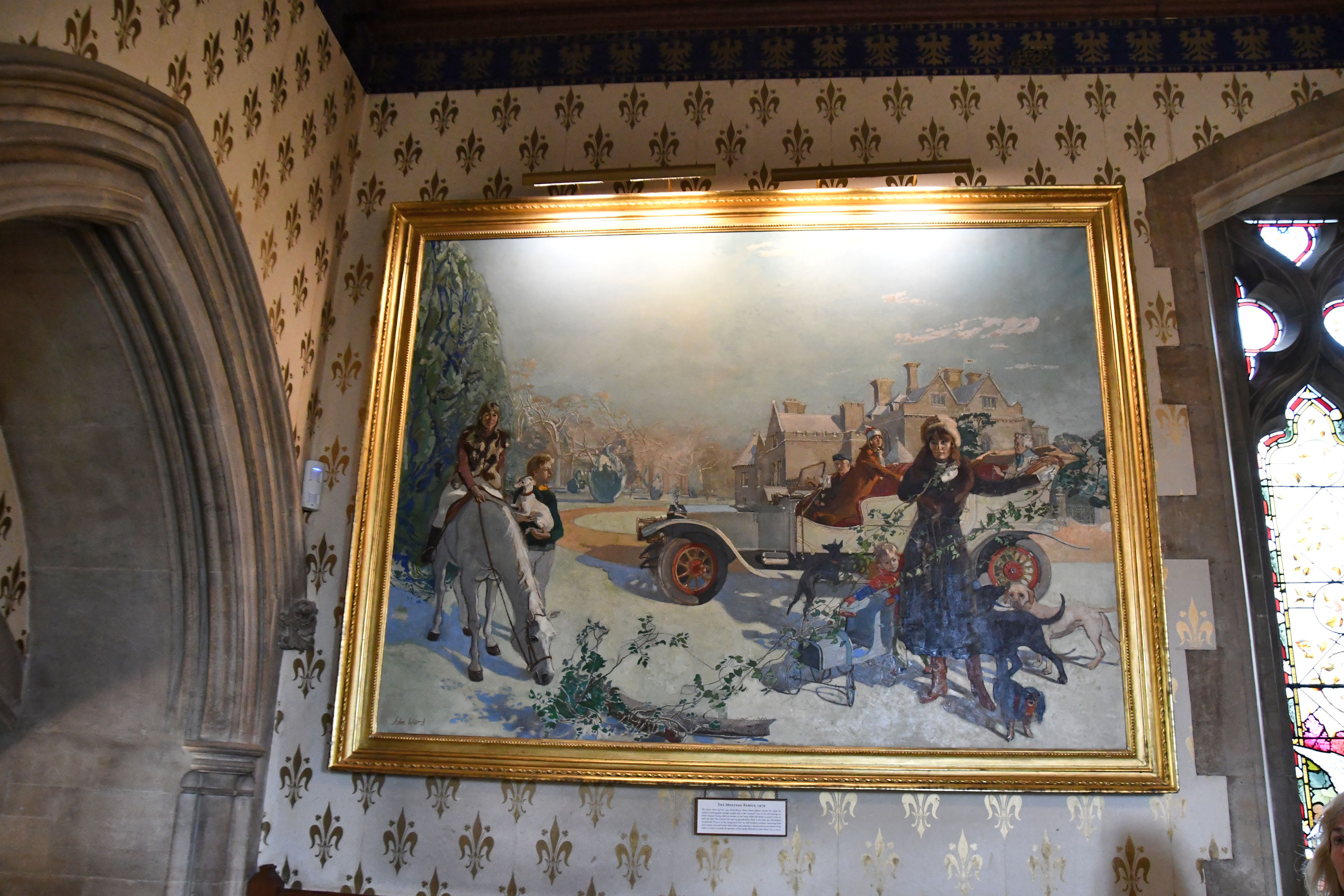

The 1st Earl of Southampton, Thomas Wriothesley, bought the property in 1538, and is the one who converted the gatehouse into a manor house. The Earl of Southampton was one of the present Lord Montagu’s ancestors and the estate has remained with the family ever since. The current Lord Montagu opened the house to the public, and has turned much of it into a celebration of his father’s life, his car collection, car magazine, and decision in 1952 to open the front room of the home so that visitors could view his cars. This, of course, became eventually the Motor Museum on the property.
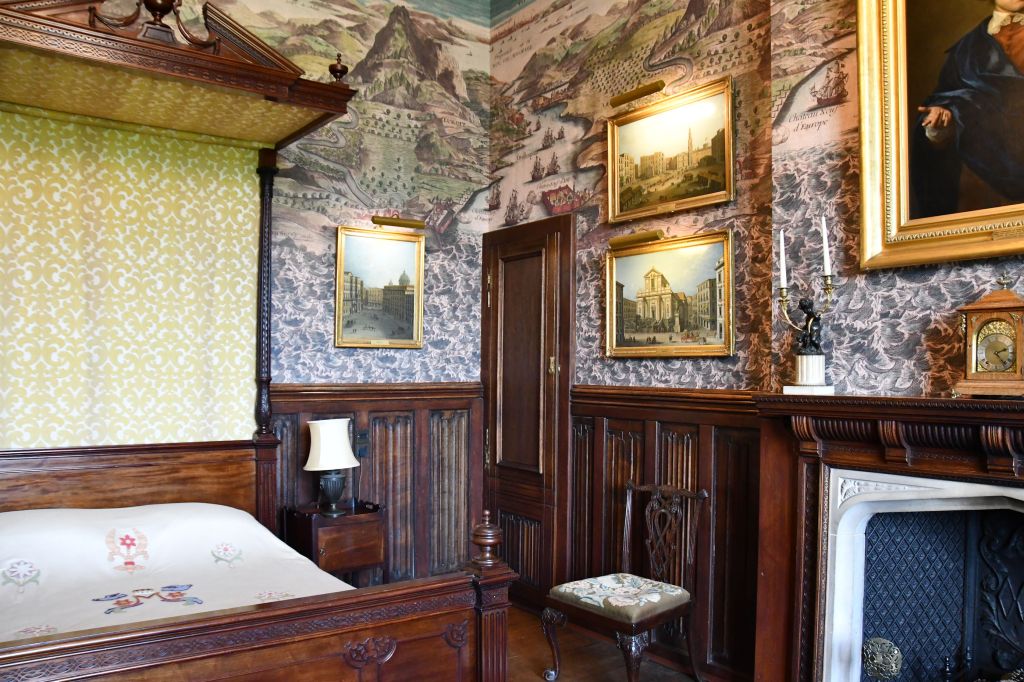
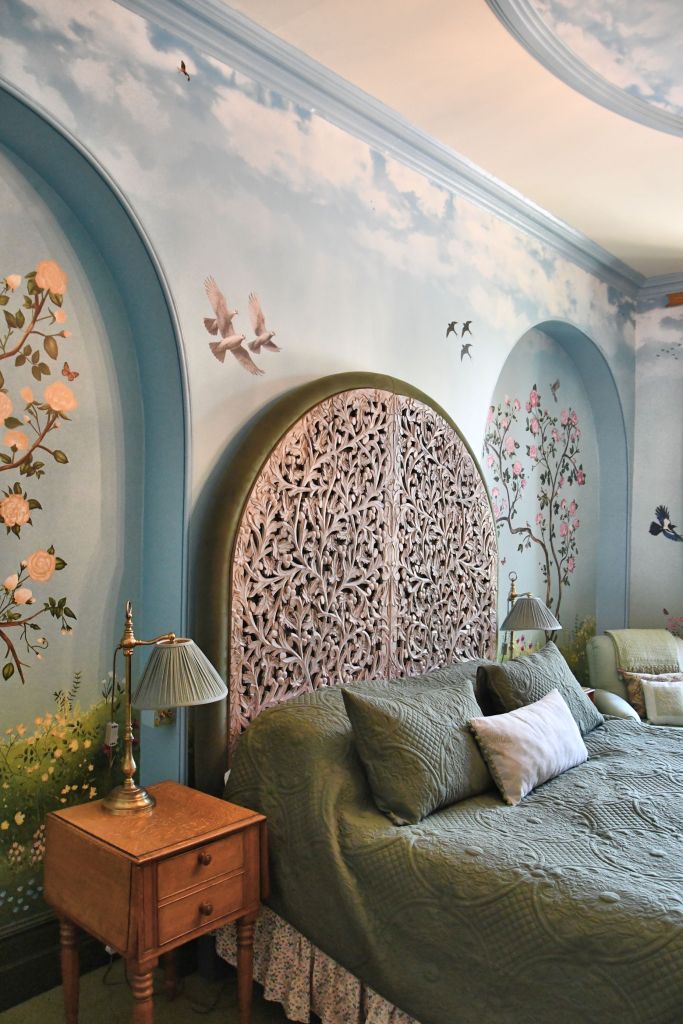
I was impressed with the grandeur, but in this home, I think I was most impressed with the style of decorating. It is more colorful and more whimsical than any grand estate I have seen inside. I particularly loved the bathrooms. (Oops, I guess in the UK they are called “toilets” which seems unneccessarily vulgar to my American ears.)
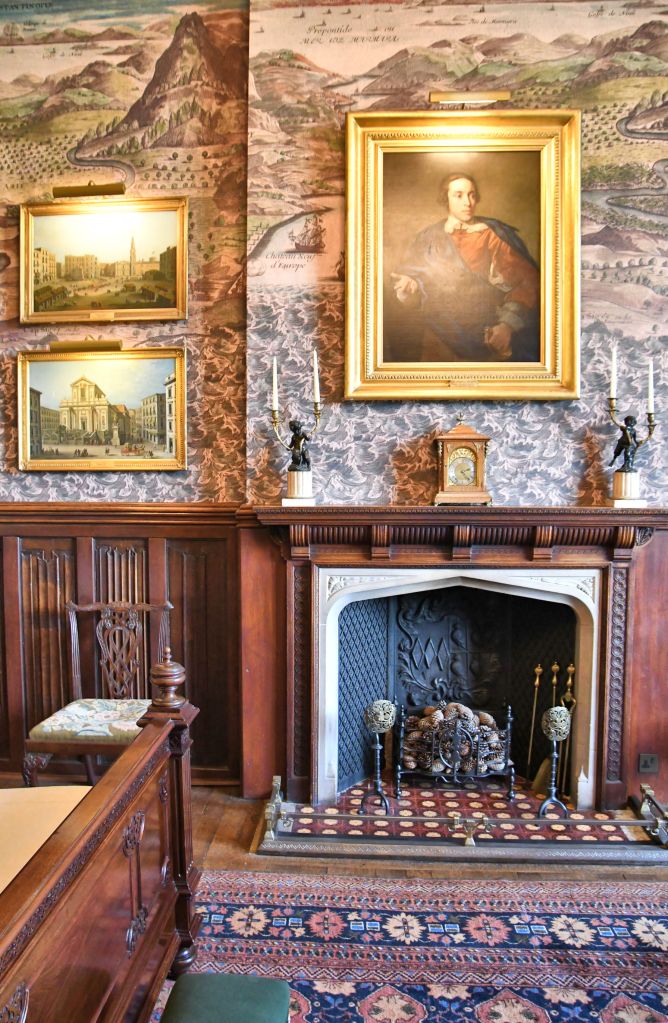

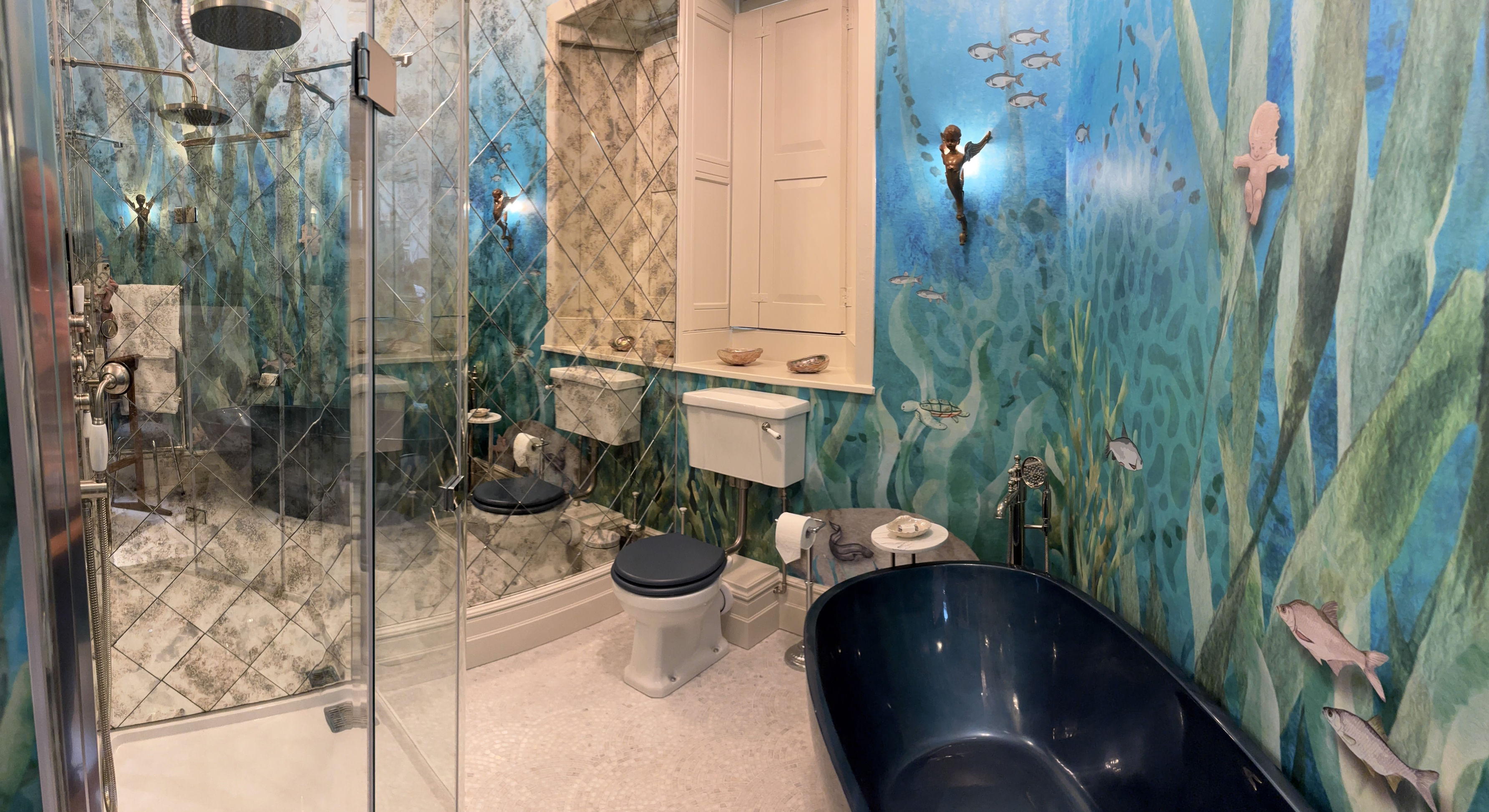

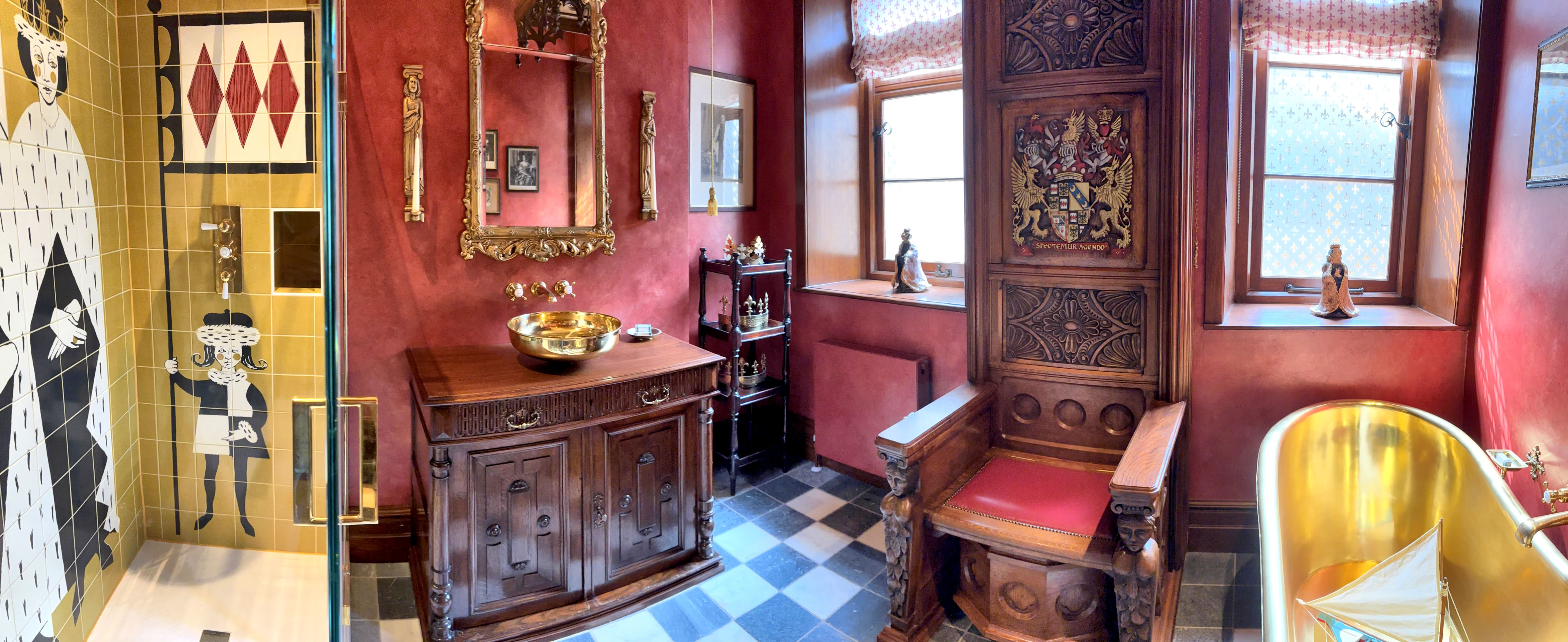


From the second floor, we had a marvelous view, and saw the falconer still teaching. He was explaining how he put a hood over his hunting bird to get her to be more compliant, because she didn’t know what was going on. In other words, she is “hoodwinked.”
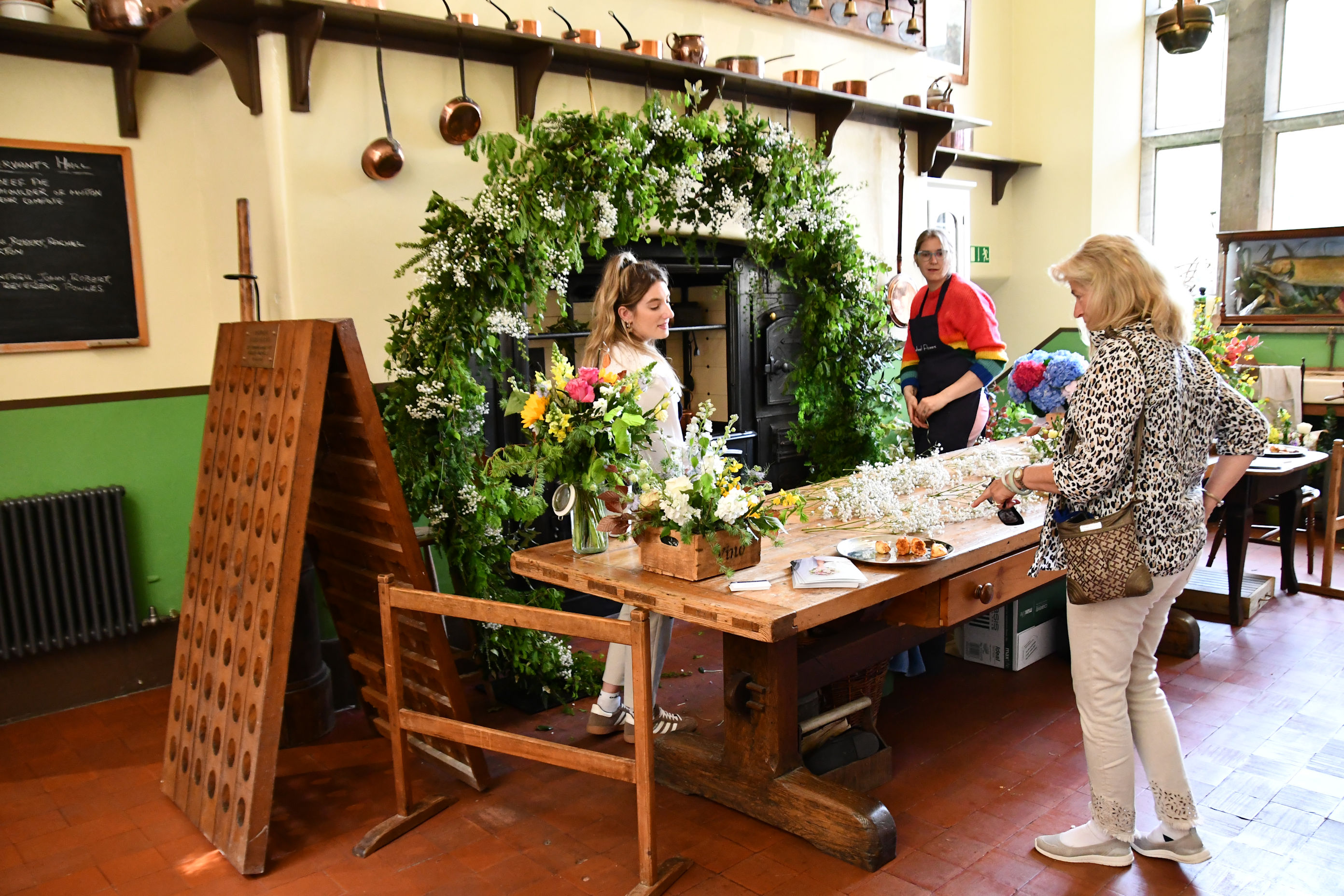
Our final favourite place in the Palace House was of course the kitchen, and Margaret noticed an opportunity to have a bite. 🙂 I loved the wall of bells, that reminded me of similar bells for staff in Downton Abbey, that I am re-watching right now. From the kitchen we could look into a pretty interior open-air patio.


The food got us to thinking about lunch, and Margaret was in the mood for burgers, so we ate hamburgers at a food vendor. There were many places to eat that day because of the huge crowds there for the BBC World Gardeners’ Spring Fair that I mentioned in my last post. After a pretty decent burger, we made our way to the famous Abbey.
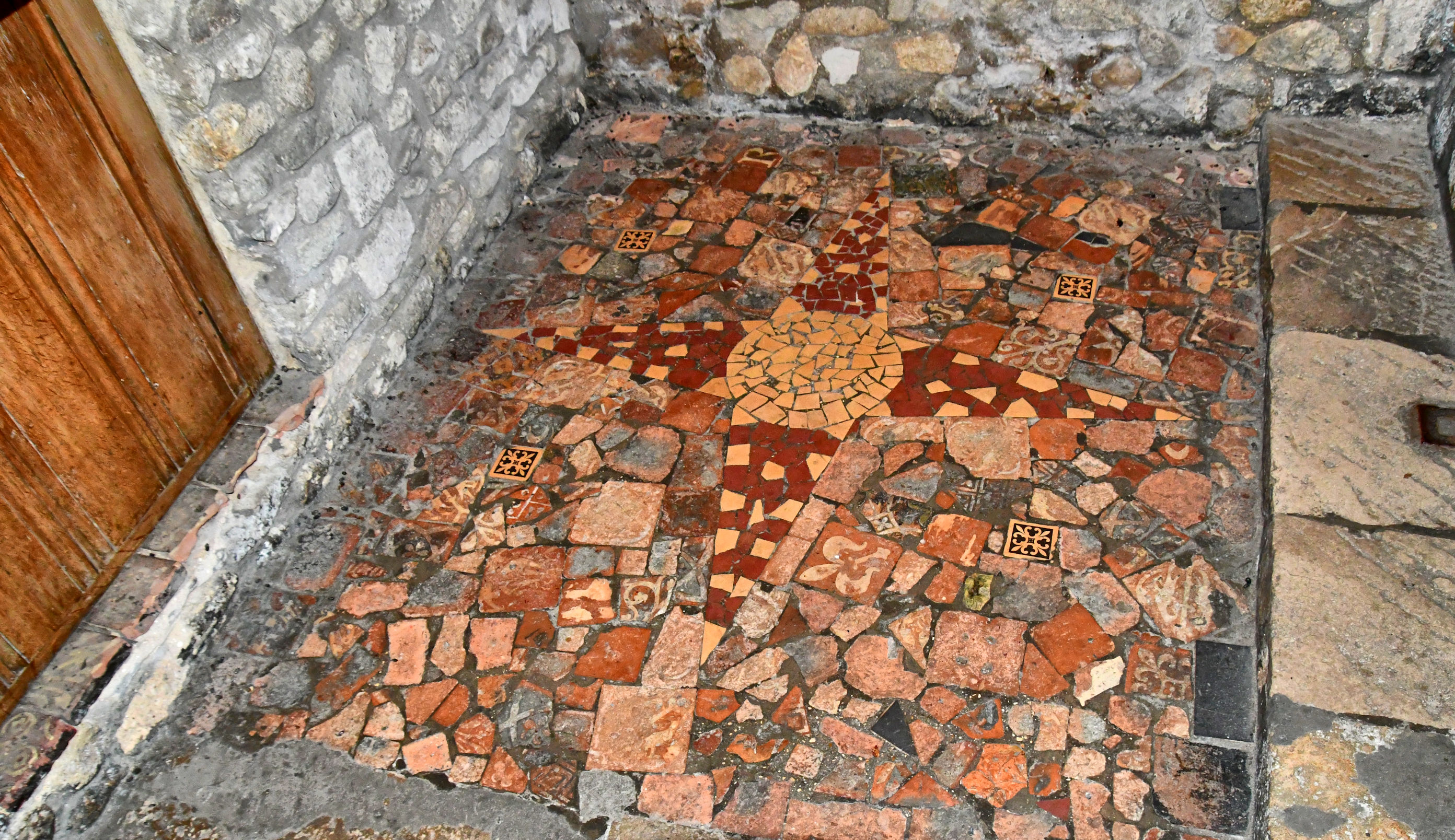
Though I said above that the Abbey grew, things changed with Henry VIII. (I keep noticing how the same names keep shaping history in these parts…) In the 1530s, King Henry VIII began dissolving monasteries. Beaulieu Abbey church, cloister and chapter house were destroyed. The refectory, domus and two of the gatehouses remained under the proviso that they were not to be used for religious purposes. The refectory is now known as Beaulieu Parish Church. We explored the current Abbey church, which is quite small, and the Domus, once the dormitory, which has a small museum on the ground floor, and a great event space on the second floor.
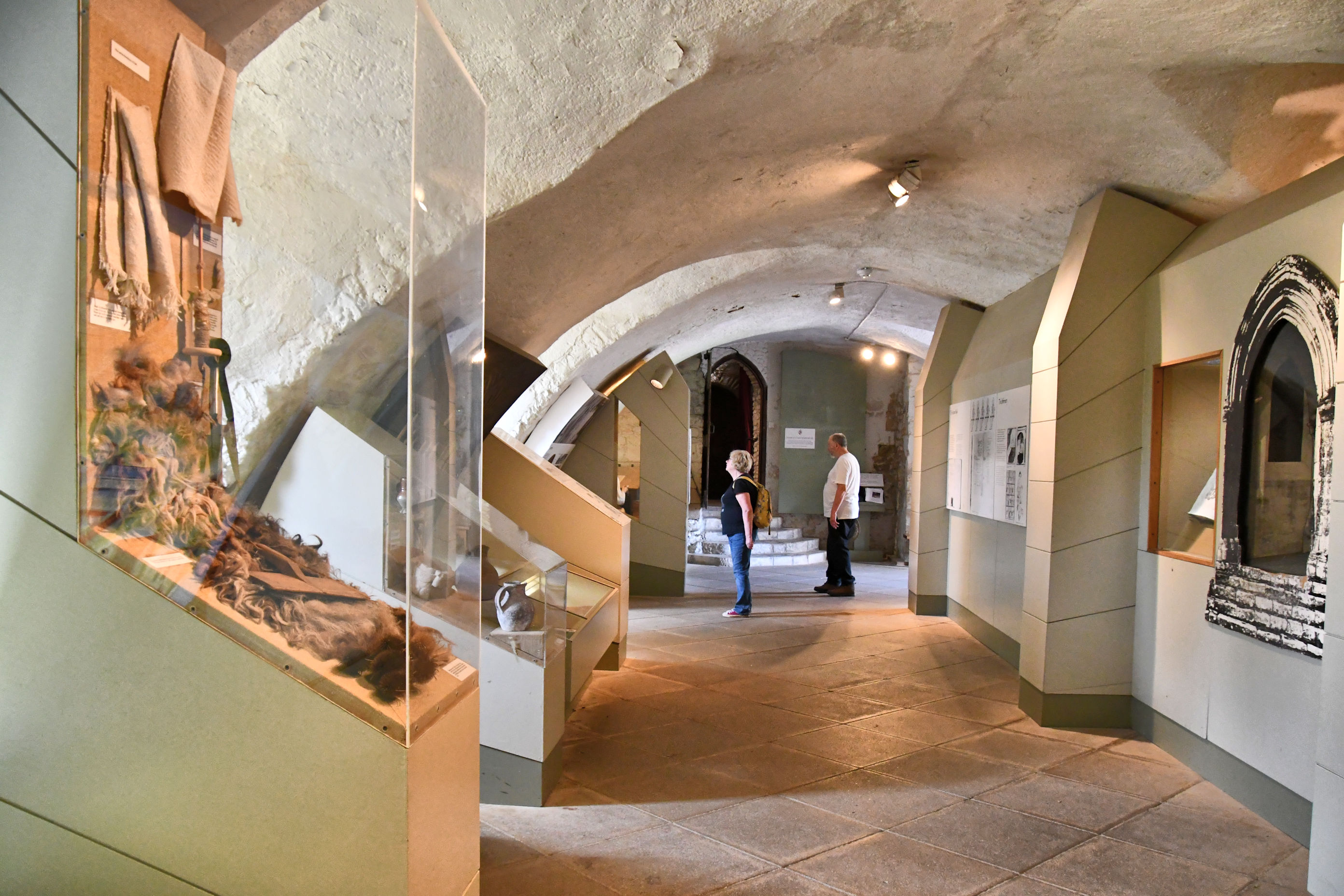
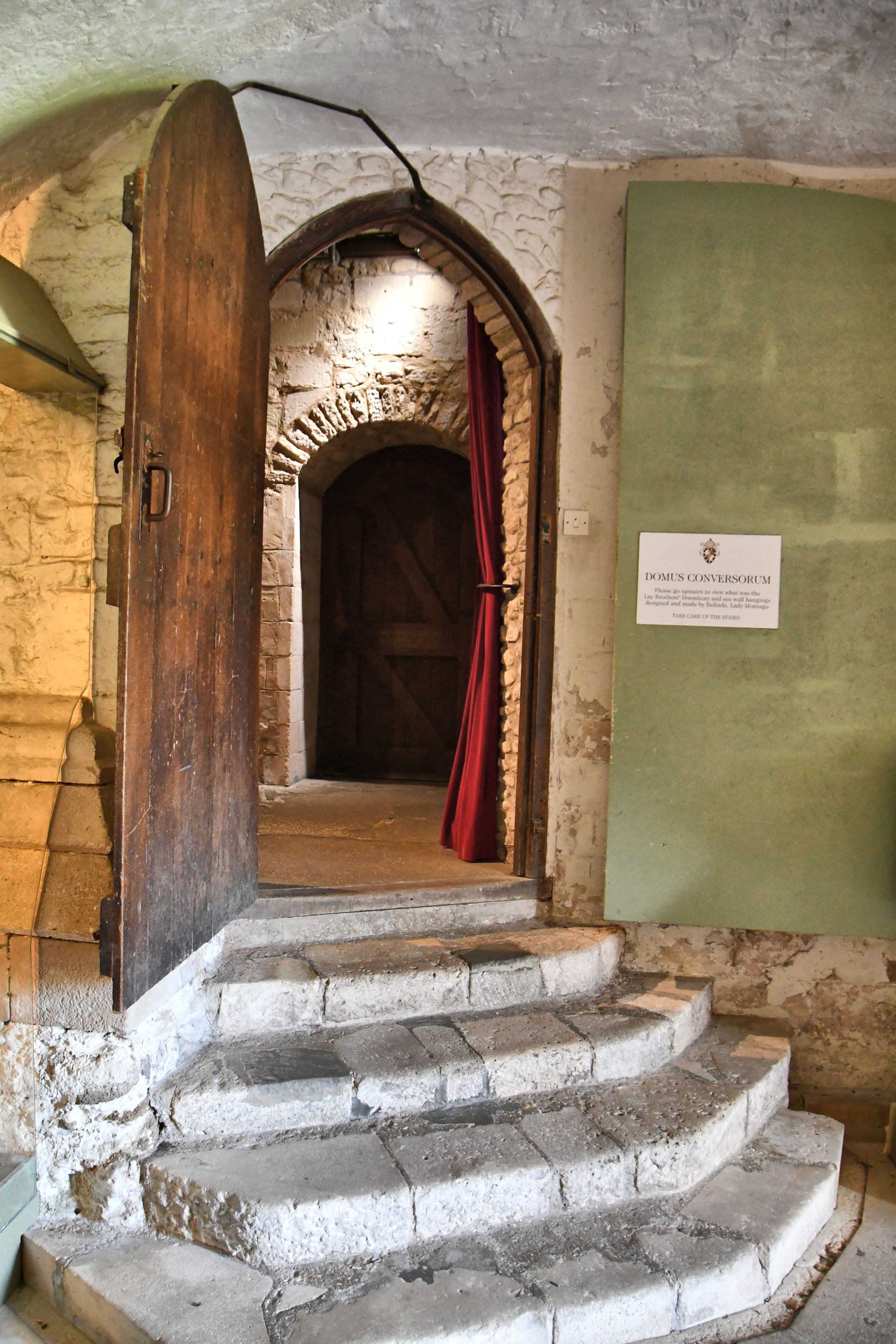
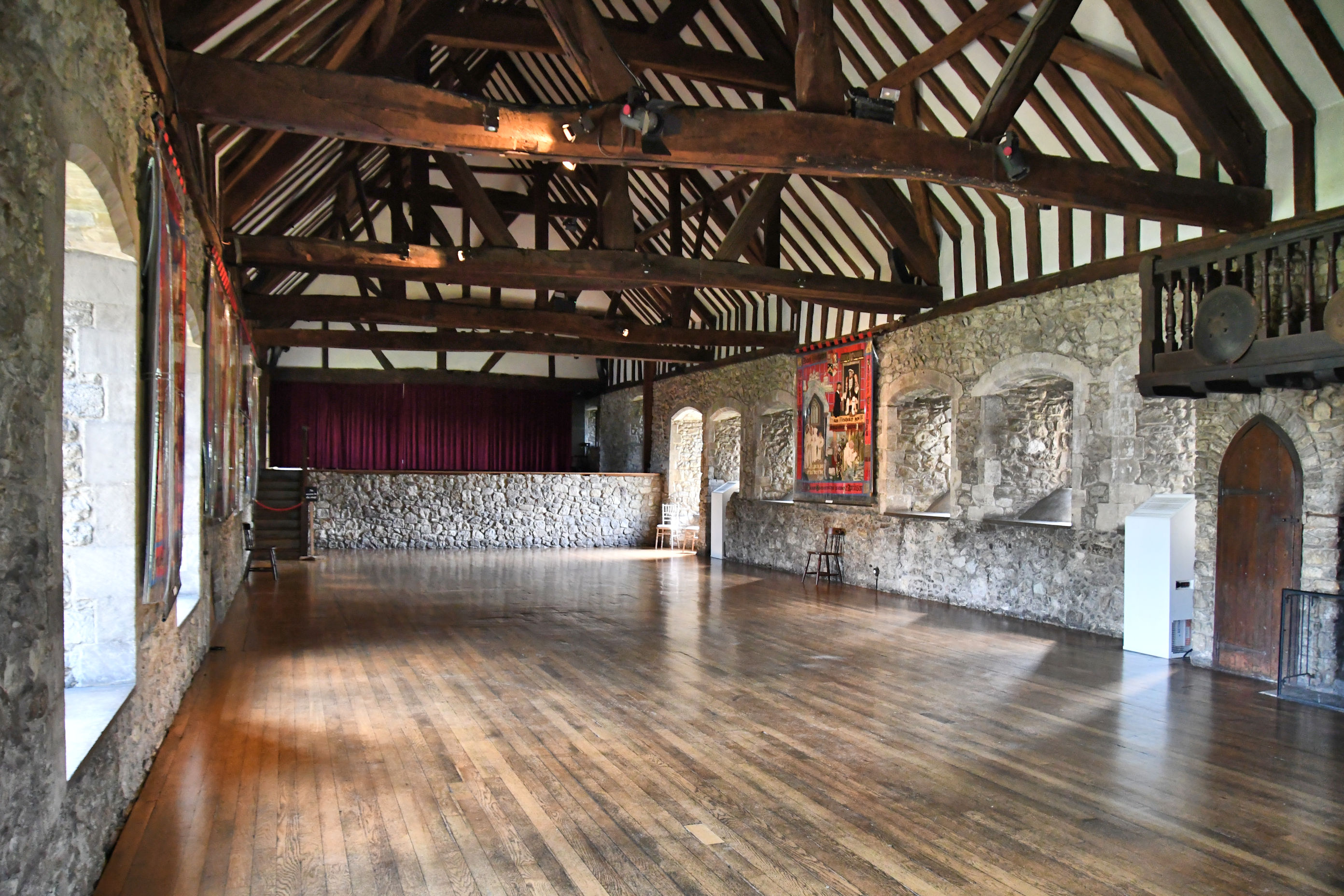
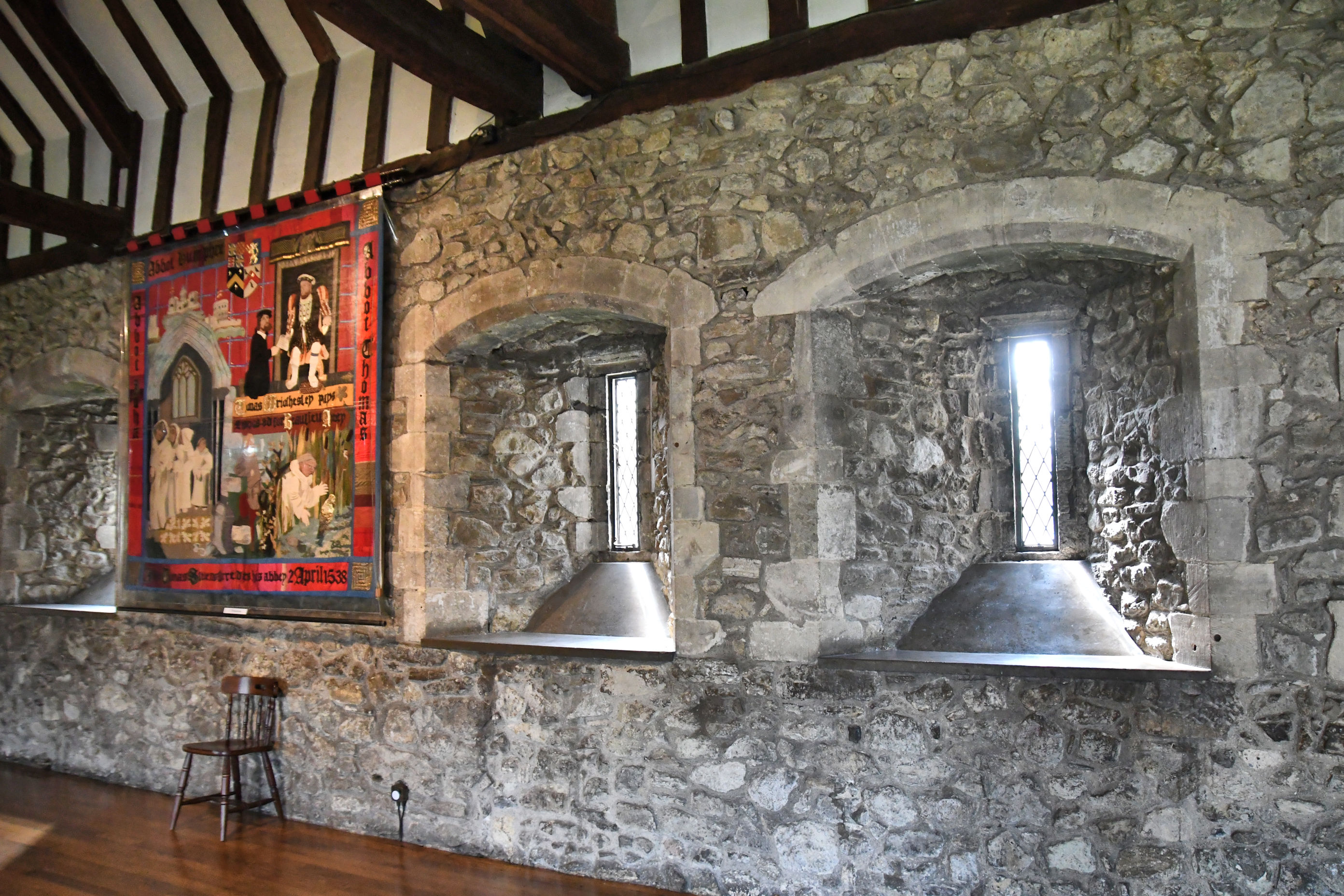


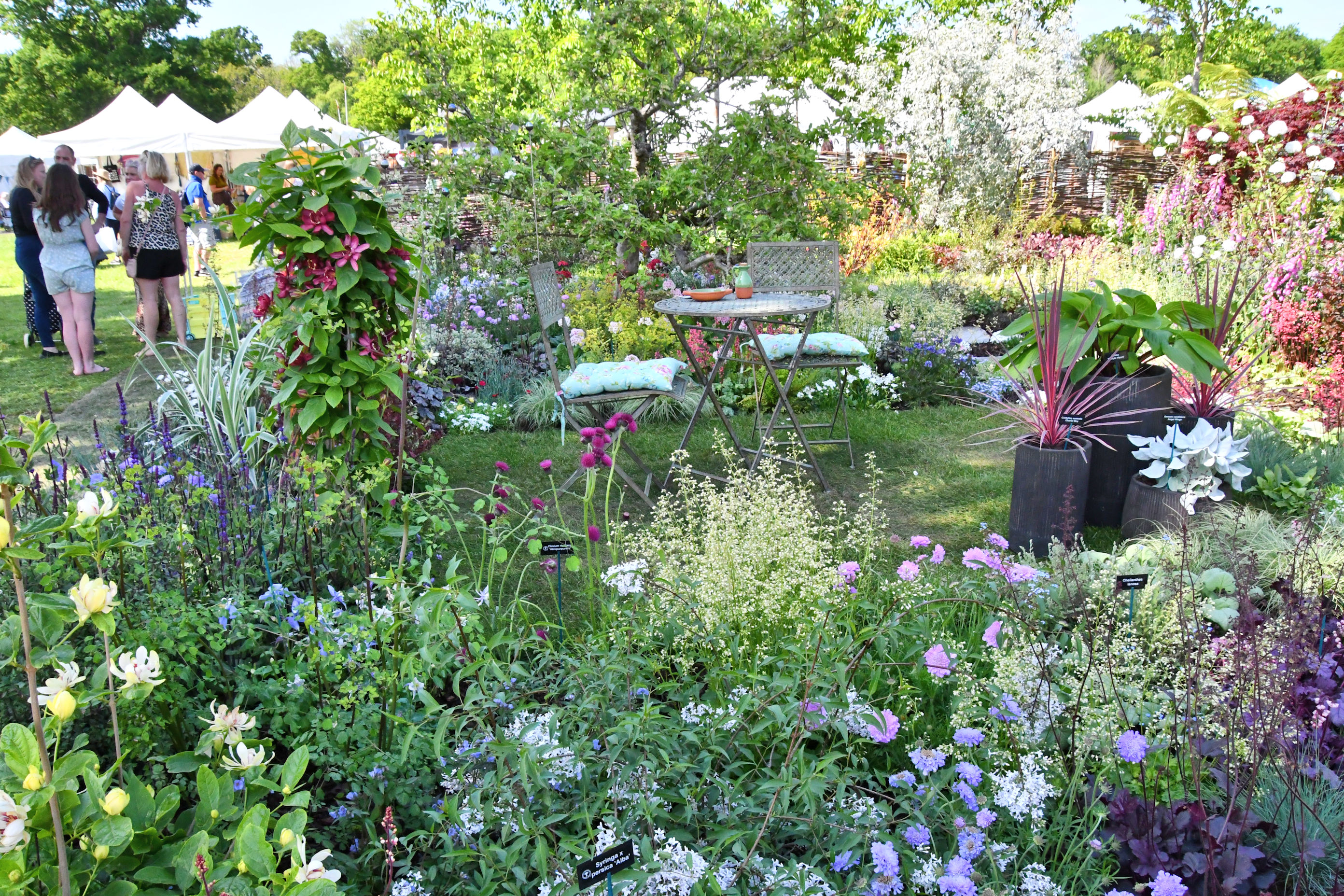
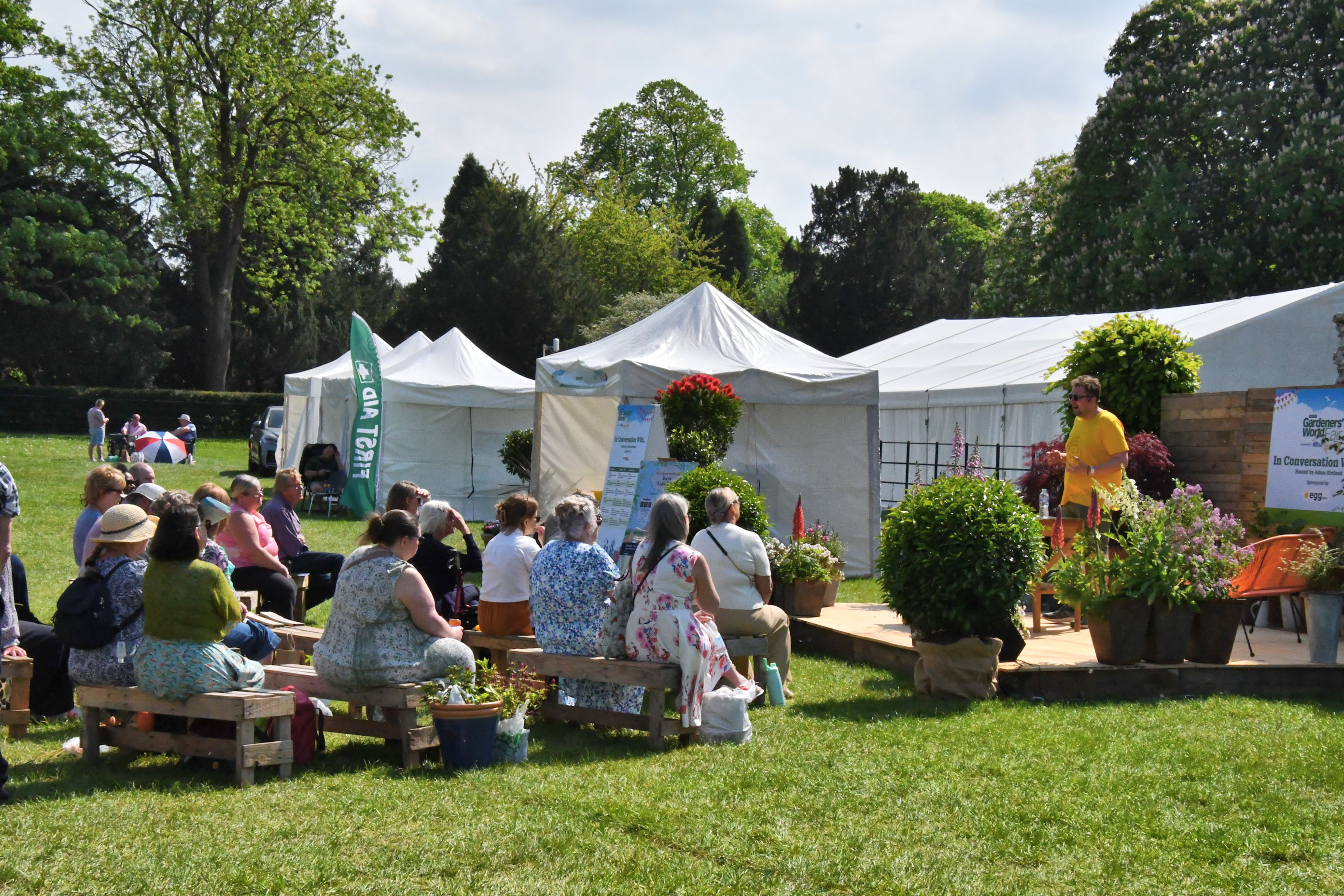
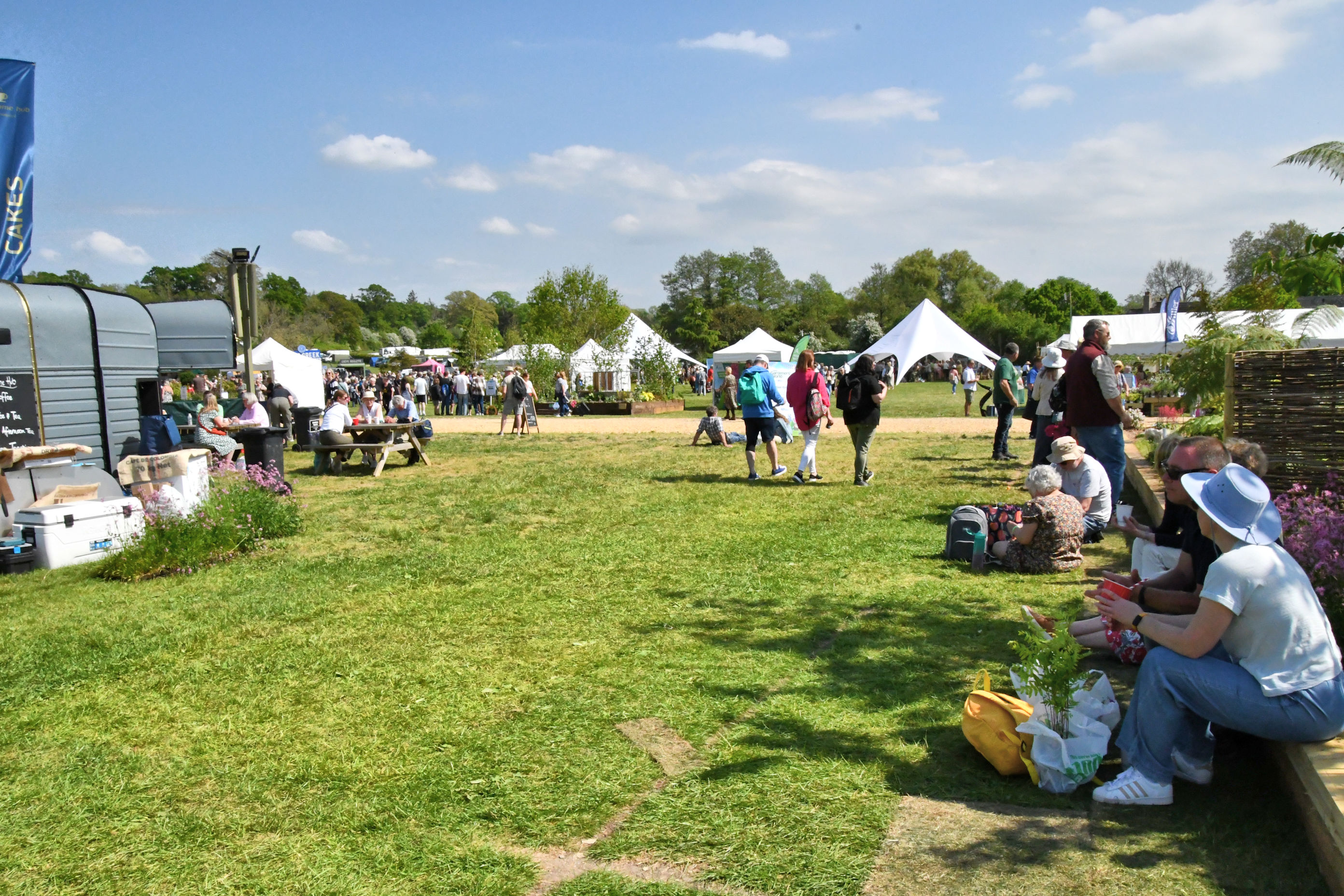
We had finally seen all the other attractions, and it was now time to make our way to the main event of the day: The BBC Gardeners’ World Spring Fair. This turned out to be very similar to a Gardeners’ Fair in the US, with all things related to home and property. There were audiences listening to talks about gardening, cut flowers, potted flowers and fruit trees, solar powered lights, self-contained waterfall systems, umbrellas, lawn furniture, gnomes, trellises, vegetable starts, and of course, ice cream. I particularly liked the large garden areas set up temporarily that looked for all the world like a garden that had been there for a year.
Not in the target market for a garden purchase, I instead talked with a representative of Fauna & Flora, an animal and habitat conservation organization, and found out that its founding Board Member, Sir David Attenborough, was to celebrate his 99th birthday in five days. I learned my favourite tidbit of the day when the man asked me, “Do you know what animal New Forest is famous for?” to which I answered, “Ponies?” and he laughed and said, “Well, yes, ponies too. But New Forest has the world’s largest leeches!” Medicinal leeches (Hirudo medicinalis) can grow to 20 centimeters long, have 3 jaws and 100 teeth. (shudder) And as impressive as that is, I think his conviction that New Forest is famed for leeches is probably optimistic.


We were tired then, after spending the morning at the Lymington Saturday Market, then the bulk of the day in Beaulieu. It was time to head home and refresh for a moment before we would meet with Derrick and Jackie for dinner once more.

 Conscious Engagement
A really fantastic tour!
Lou, I’m glad you could come along with us. It was a place entirely unknown to me, and I’m pleased with how much there was to see and do in Beaulieu!
I can see some baroque features being incorporated into your place now 😂
If someone said to me they were going to the bathroom, I’d hand them a towel and washer 😁
That is another American thing I find weird. Maybe you would prefer the Aussie slang of dunny instead of toilet.
Dunny is not a word I have heard. It sounds funny, but not distasteful. “Toilet” for me, of course, is specifically the porcelain place where you drop your waste. I know the word is used in multiple ways among English speakers. The Navy term “head” I also don’t like, but that may be because it pretty much means toilet to me also. The American use of “can” might be similar to dunny. My guess is that “bathroom” came into use because the toilet is found in the same room as the bath, and that stuffy people referred to the room that contained the toilet without actually saying toilet. People get so bent out of shape about the silliest things. If the conversation was personal or medical, my mother never referred to an actual body part by its name, for example, believing that any specifics were improper, haha! It got complicated for her if I asked any follow up questions, because she added eyebrow movements to help me put the story together. Hilarious.
I dislike “head” as well. The full name was dunny can, the ones that someone came into your backyard and to your outdoor toilet and emptied into the truck. That’s where “can” came from. Be hard to use the word bathroom for out there 😂
My parents didn’t shy away from personal body parts but didn’t actually say the medical terminology.
Can just inagine your Mum doing that with a “Oh Crystal” look 😂
She had that look down pat. 🙂
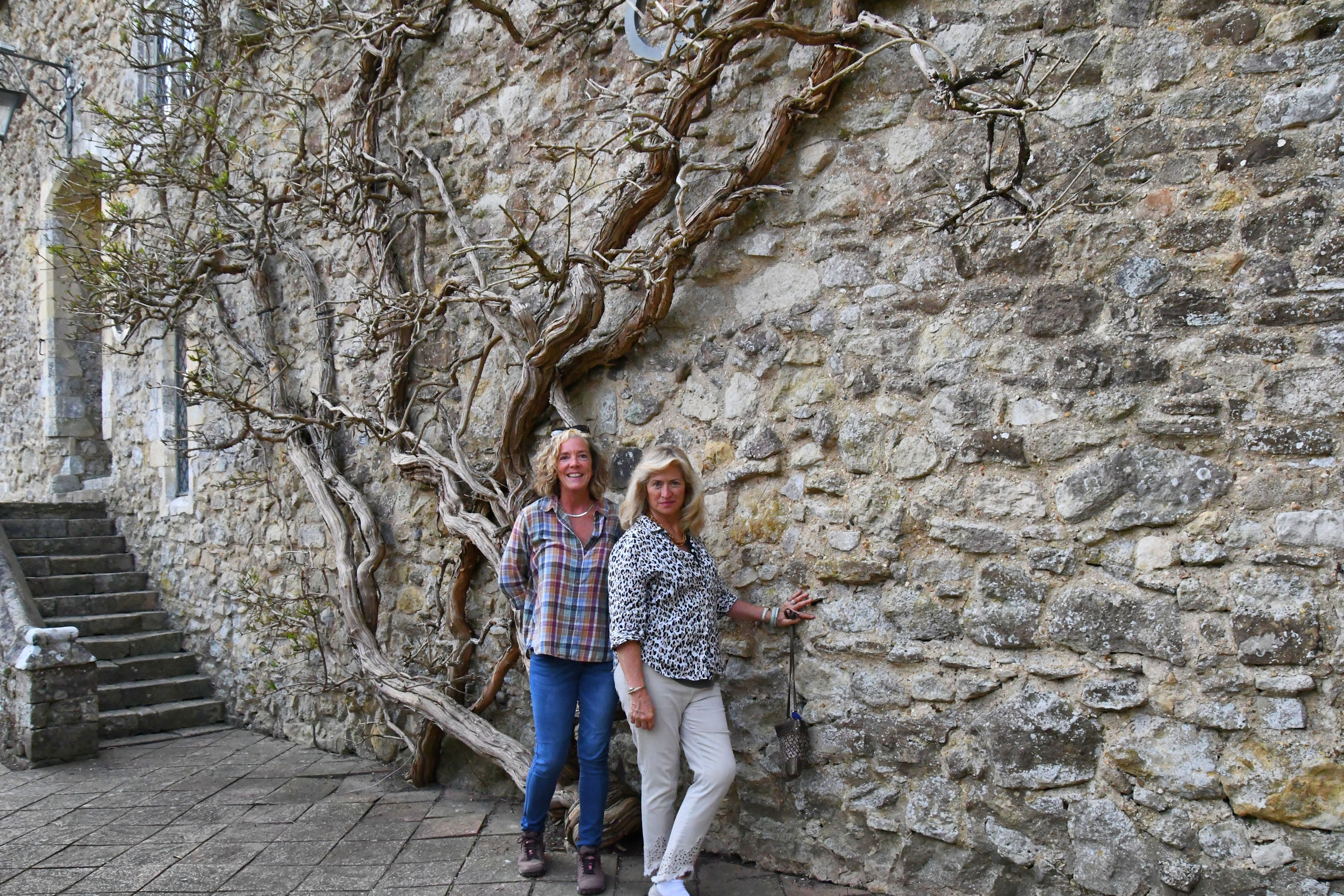
Lovely post Crystal, It is years and years since I went to ‘Bew-lee’ no mono-rail when I was there! So lovely to see you both, hope your journey home was OK. Jackie Knight, this will come up as from Jackie Stockley but it’s me! X
My friend, I am so touched that you read and commented. Our journeys were smooth. Margaret enjoyed three days in Cophenhagen, after I left for home, and both of us are safely home once more. I am immensely pleased to have been able to spend time with you both. My next post includes photos of you and your astonishingly excellent garden. Margaret couldn’t stop talking about your advice on fairy lights, and I suspect she will add them to her own back garden. 🙂
Quite splendid coverage in photography and prose – much I didn’t know, myself; lovely posed pic of the two of you.
The news about the leeches was specifically for you, Derrick, if you didn’t already know. There may be an opportunity to share this bit of trivia with someone else who lives there. I now have a good sense of New Forest, and without you I doubt I ever would have taken the time to explore such a beautiful region. Thank you.
Much appreciated XX
What a delightful read! I felt like I was right there with you—from spotting the New Forest ponies to watching the falconry demo (loved the idioms!). The Palace House sounds stunning, and those whimsical bathrooms were such a fun surprise. Your mix of history, humor, and personal moments made this a joy to read. Looking forward to your next adventure!
You give the best comments! I am pleased that I have introduced these places in an appealing way. I think enjoyment of a place has so much to do with your attitude going in: we were both ready to see it as they wanted to present it to us, so we had fun.
You’re so right, Crystal – attitude makes all the difference. When you show up open-minded and curious, even the smallest details can feel magical. You captured that spirit beautifully in your writing, and it really came through how much fun you had. It’s such a gift to be able to share that energy with readers. Keep exploring and sharing—we’re all the better for it! 😊