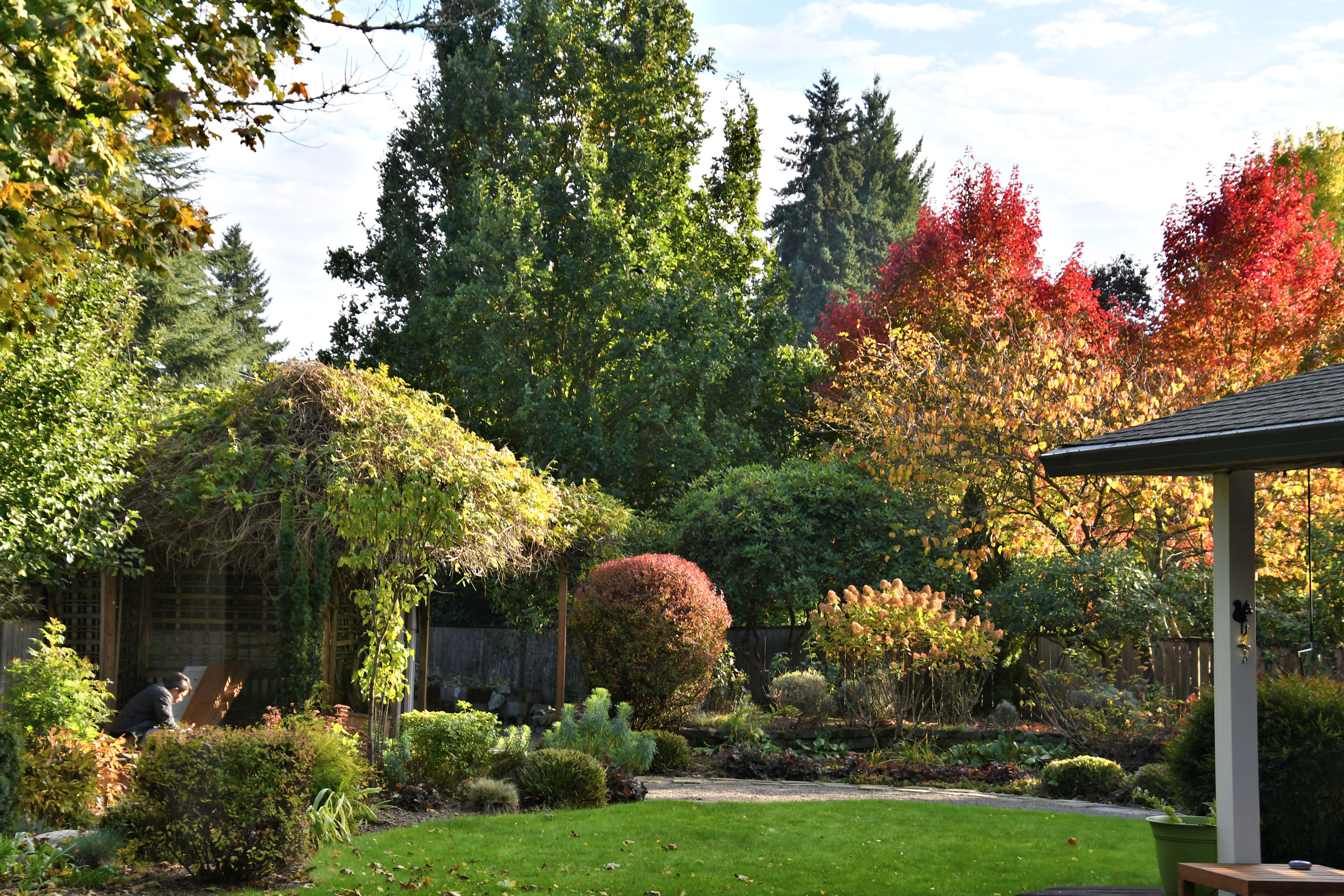
In the photo above, you see Pedro in his favourite afternoon take-a-break-from-work spot in the back yard. This is where he goes to decompress from too much screen exposure, too many meetings, too many people asking questions, too many data issues making a work day frustrating. I love this habit of his. It seems so healthy.
Anyway, what I want to talk about is what you see behind him: a magnificent mountain of green wisteria. Magnificent in its size, which was due to almost total neglect for at least a decade. Beneath the wisteria was a 1970s-era aluminum storage shed that we optimistically filled with stored goods when we moved into the house. Our plan has always been to get rid of the shed and hack that wisteria down to something manageable. Since the back yard has been designated “my realm,” much of that work is up to me. I spent most of the dry season on the gardens, but in Autumn of 2024 began working on this new project.

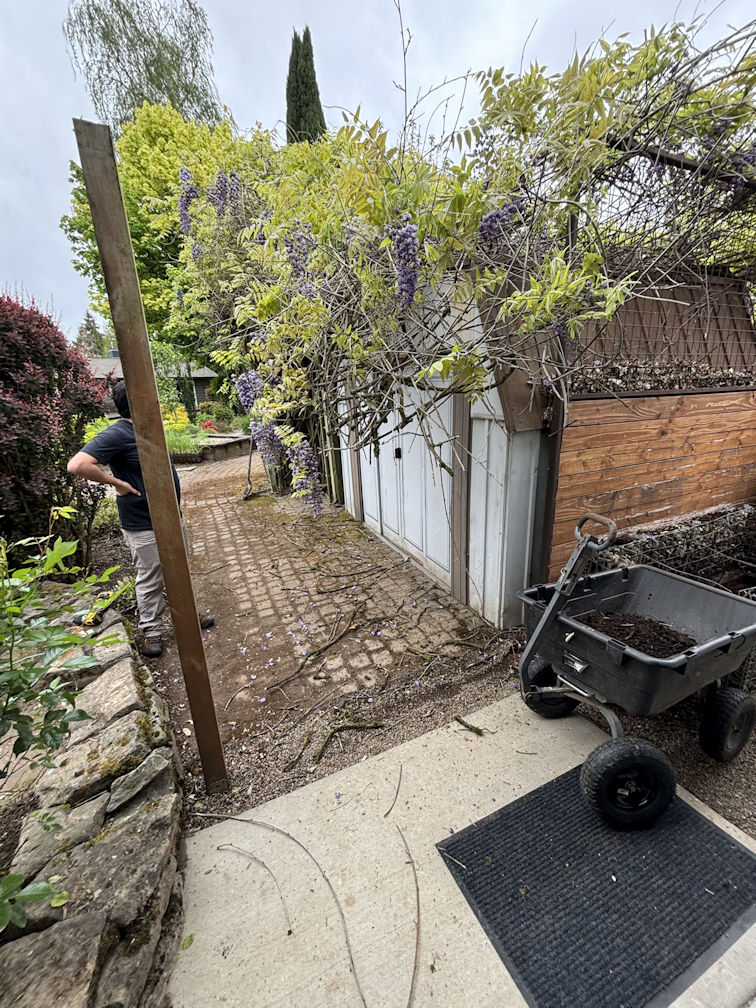
This post is Part I of my back yard office posts – my latest project occupying my interest. Originally, we told ourselves the project was part of our 5-year plan. It was a lot of time and expense to get his shop built, and we wanted to pay that off first. A year ago I was still in the glow of sharing a home with my Pedro and thinking the glow would be enough to overcome the stress of moving from my quiet life alone in the country to a busy city street and with another person.
Two major things changed our 5-year-plan to a right-now plan. First, we became aware that the shed was unuseable, and second, I realized I need a space of my own.

During the winter I discovered an enormous hole in the roof of the shed that we were unaware of (due to the massive wisteria blocking out any light that would have shone through), that had allowed rain in. Day after day of water soaked all the boxes of belongings and furniture that we had stored inside. Oops. We did a quick temporary roof patch job and waited for summer.
It was my job to empty this mildew-stinking cesspool of soggy cardboard boxes and rotten fabric and all manner of nastiness – both during the winter when we found the problem, and again last summer when I found things I had missed. Bluh. I put half of it in the trash and everything salvageable into the greenhouse to keep it dry. All that stuff is still in the greenhouse, which it turns out, also has leaks, and so things got wet again. Argh.
Then we began tearing out all the stuff built inside the shed, then tore down the shed. I was grateful for Pedro’s help on that part.
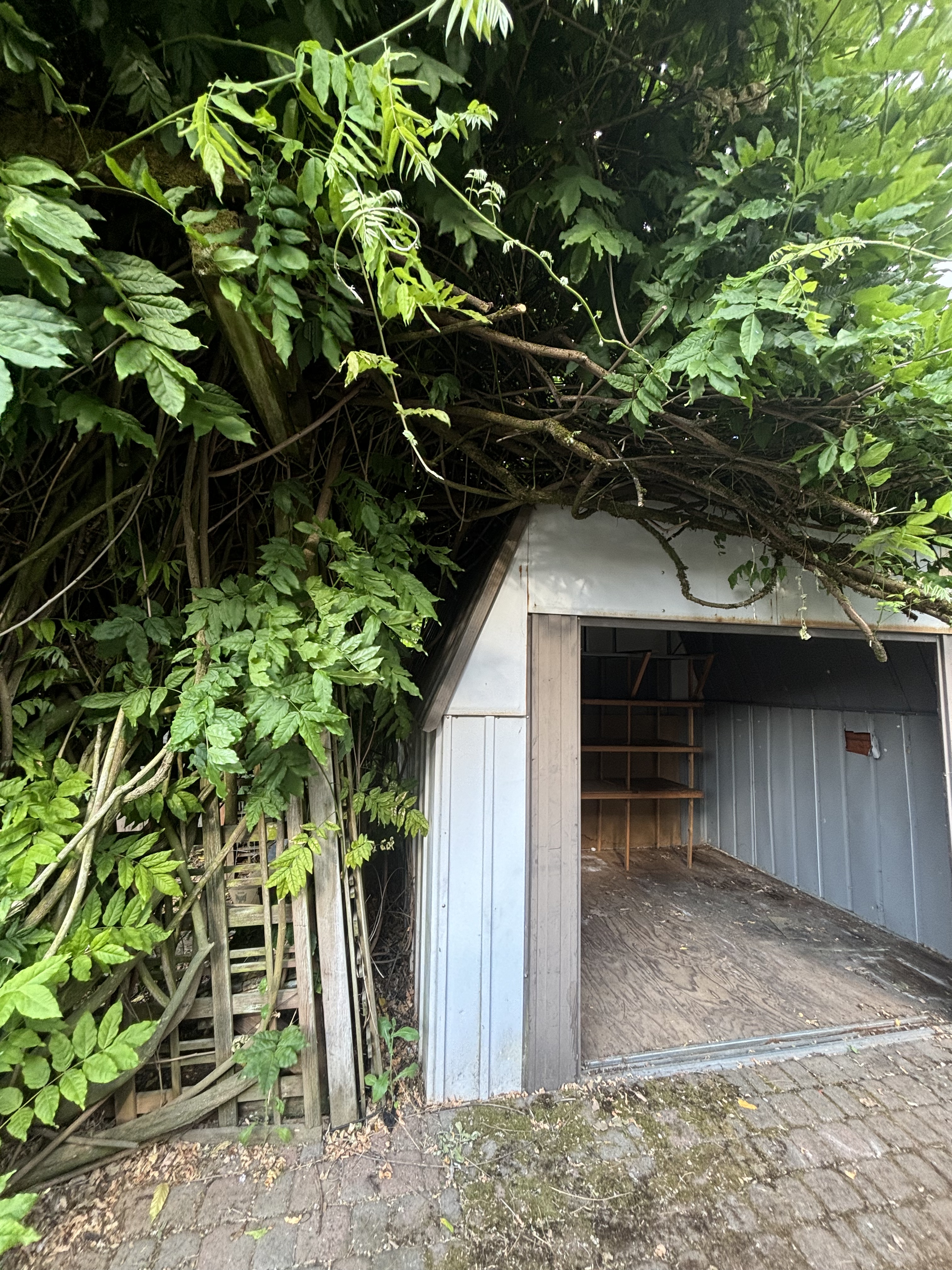


After tearing down the shed, we had piles of metal stacked around, and we spent the next couple of months cramming as much as we could into the trash bin a week at a time, so that our city waste collectors would take it away, bit by bit, once a week.
Now I had better access to the wisteria. I was unprepared for how many long days of work it took to tear that thing down.

I’m glad we waited so long, so that I had a really good sense of how much to protect a wisteria if you want to prune it but keep it alive. The answer: not at all. This thing is a beast. I was prepared to hack it brutally.
The 8-second video above shows me trying to pull down the branches, and the wisteria beating me. I did eventually win though.

I worked until the pile of cut branches was so high that it was blocking my space to move. I then rented a UHaul moving van and one day after work, Pedro helped me fill that van. We filled it full, just with wisteria! We hauled it to our local landfill that allows us to dump yard waste for a discounted price. We got it over there and unloaded just before closing time. What a relief.
Oh, by the way, our landfill here in Oregon City is a pure pleasure to visit. I am pleasantly startled by this every time. Many employees are constantly there to help, always friendly, usually appearing to be having a good time. They take their job seriously and are eager to educate me on how their work is helping the environment because they are constantly in there, climbing through the junk, separating metal, separating wood, and making sure to keep toxic things out of the general landfill section. They guide people to the best locations for unloading, guide vehicles backing up, stand by to answer questions. This is one of the absolute best community services we have used here in Portland.

The pile of lumber is from the old wooden structure that had been built to hold up the wisteria. Most of the wood was completely rotten. Some of it was somewhat new, from having been recently erected in order to make the place look safe to sell to us. I kept the good boards and, like we did with the metal, filled the trash bin week by week with the rotten wood till it was all gone.
We discovered all this nice brick work beneath the wisteria beast! In the photo at the very top, you see Pedro in his favourite “sit in the sun in the afternoon” spot. That spot is now cleared and open, and paved! We want to curate it especially for sitting in afternoon sun, so one of these days I’ll show you what we come up with. When we know what that is…

I’m envisioning using the “trunk” of the wisteria to make something like a tree. I’ll use the bits you see above as the base, and help guide the new vines that grow into a bushy tree shape at the top. I’ve never done anything like that, so we will see how it goes. It’s still winter, and there has been no growth at all, so I’m still eager to see what the wisteria will do after all this brutal treatment.

 Conscious Engagement
Good luck with the Wisteria They can be such a problem. Thanks for showing this part of the shed story. I did have a smile at your “I’ll just pull this down” effort
I was so naive…
But you showed it who’s boss in the end 😂
The wisteria didn’t cover the shed. I engulfed it like a carnivorous plant! ?Feed Me, Seymour!
Yes!! I’m so glad you understand the problem, haha. These photos are from last Fall, and now a few months have passed with only those bare trunks. I gaze at them all the time, wondering if they are dead, or if they will sprout again. Who am I kidding? I know they will sprout and I had better buckle up. That thing will come for me.
An area so well transformed
I agree. It’s an open canvas now that we can use more intentionally. I have a bad habit of coming up with multiple ambitious projects. I hope I can shape them into more modest ideas, and then try to make them happen.