
It was a tall order, I thought. We had seen more than seven film locations so far, of course. And on some days we had seen multiple film sites. But Josh promised seven film locations in a single day, all around Queenstown. We jumped onto the bus, bringing our takeaway lunches with us, and off we went.
We gazed in appreciation at the vistas outside the windows of the bus. Every single day. Every single day we are surrounded in beauty here.


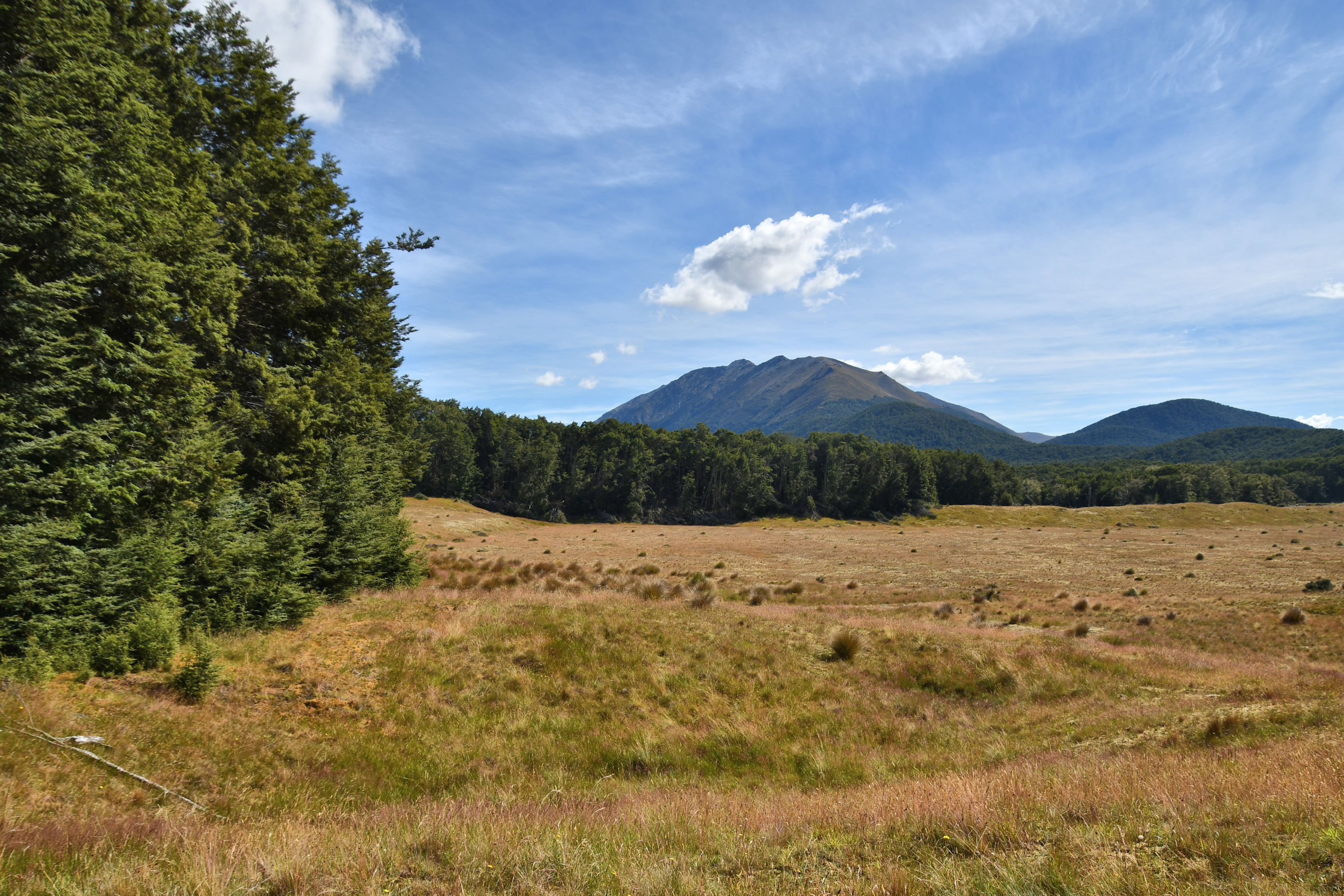
Our first stop would be on the edge of a small clump of trees. This setting was used for multiple scenes in the Lord of the Rings movies, just with the camera pointing different directions.


We were headed for Fangorn Forest and the Orc funeral pyre, from the scene when Aragorn, Legolas, and Gimli came upon the work of Eomer and the exiled horsemen of Rohan. First we faced northwest at the spot where the urukhai head was impaled on a stake as a warning.


(It was the first time I noticed that the movie scene had mountains obscured in clouds, but we got to see the entire mountain!)

Then we faced south at the place where Aragorn tracked the Hobbits who escaped from the battle and into Fangorn Forest.


Next we faced north to find the scene where Gandalf calls Shadowfax, a kingly horse from the horse race of Maeras.
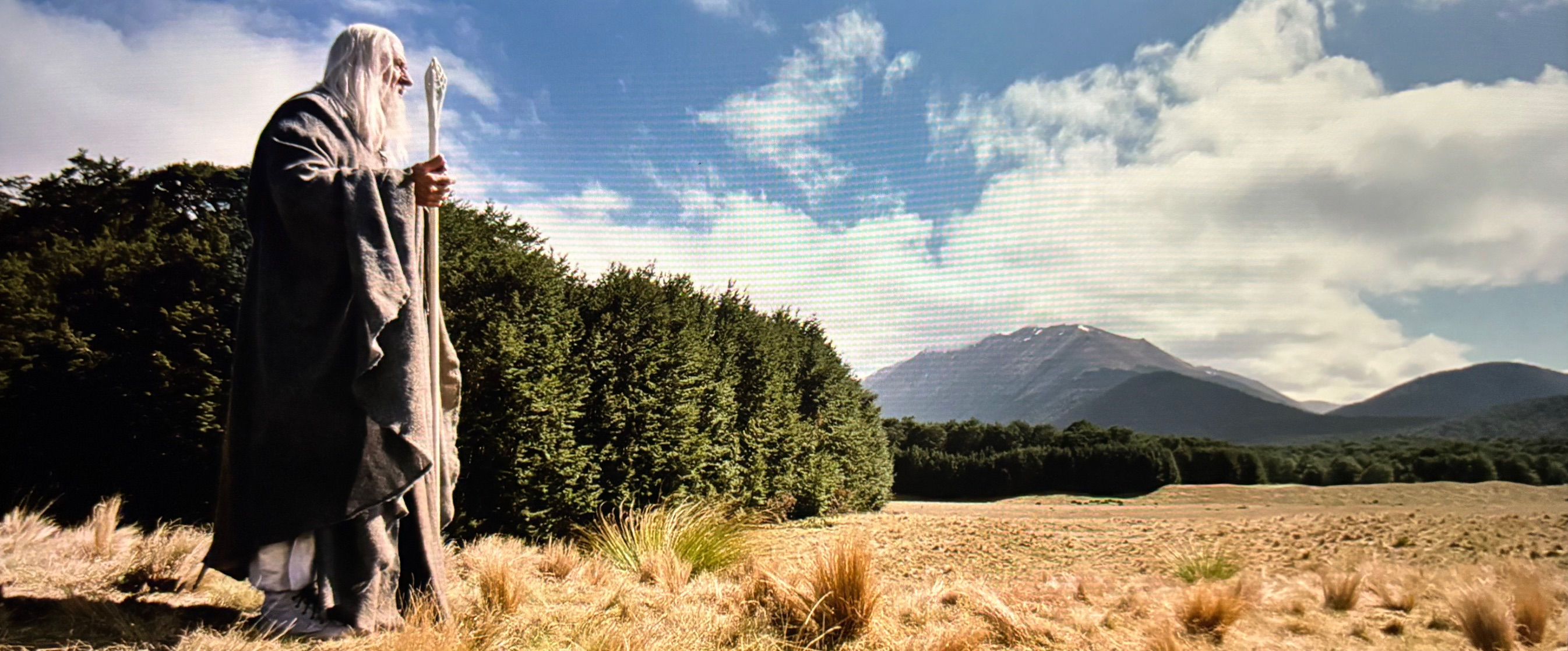
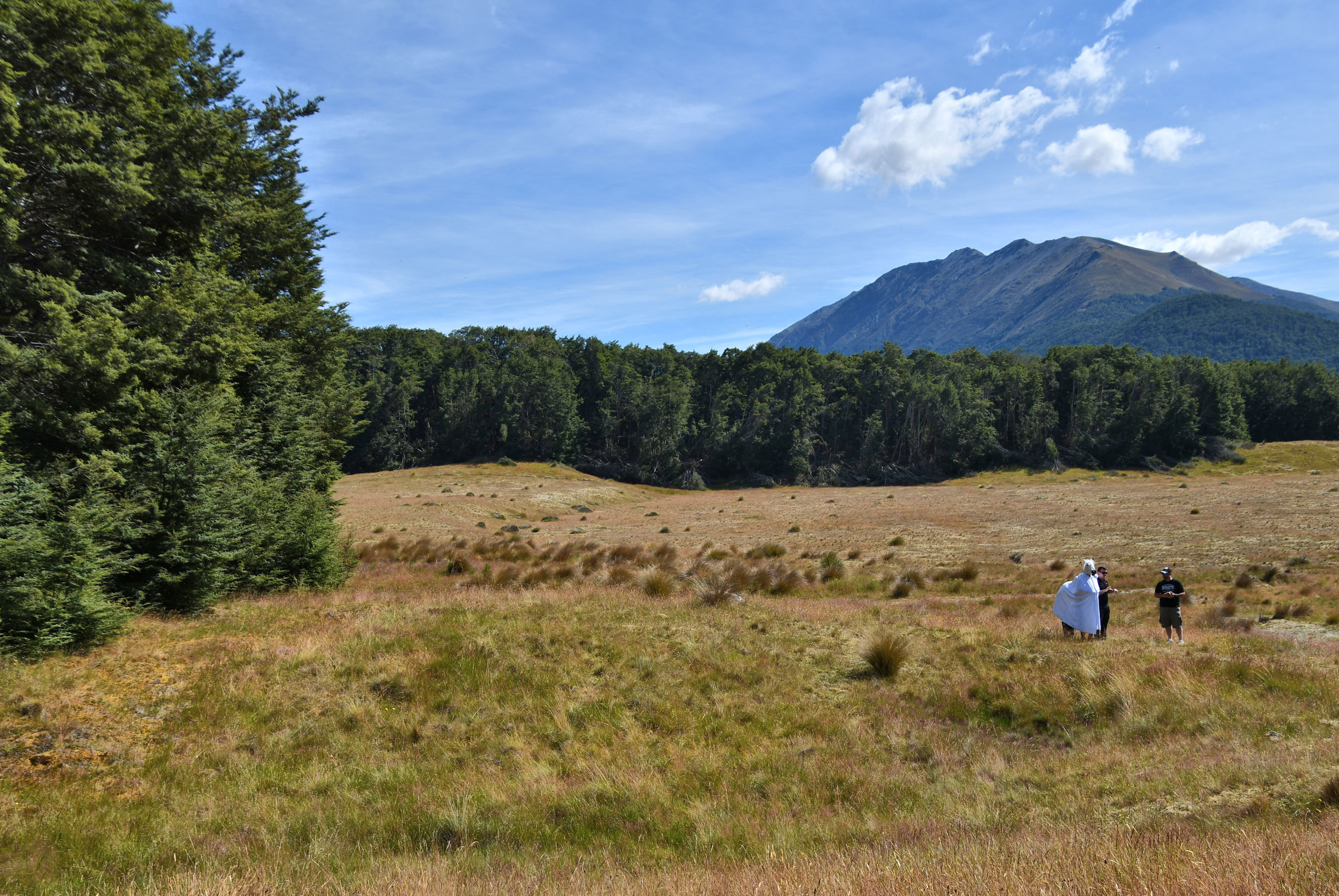

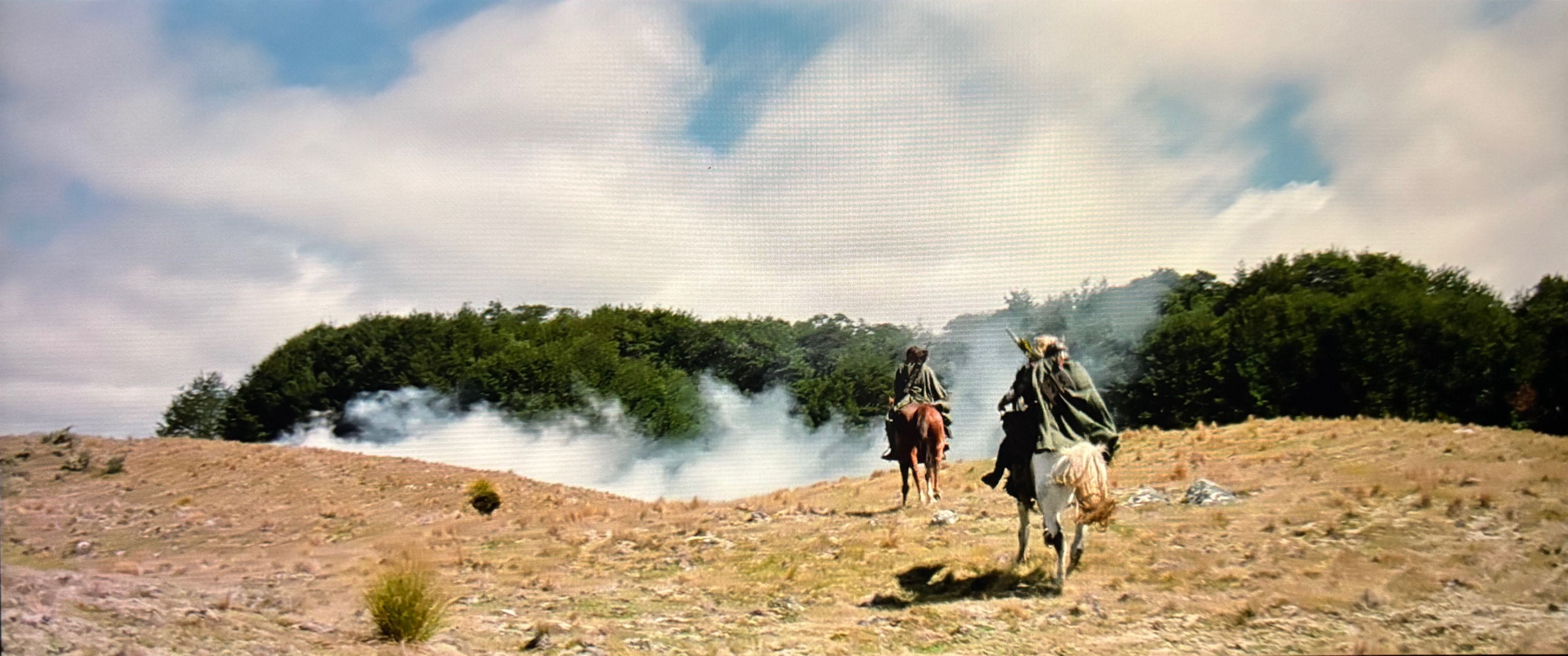
Interesting inside knowledge about Gimli, riding with Legolas, as you can see in the image above. In order to get the size right (since elves are taller than dwarves), the Gimli who rode with Legolas was often a dummy. We saw the actual dummy at Weta Workshop in Wellington. Our Weta tourguide says that if you watch carefully, there is a shot when the horse moves roughly, dislodging the dummy arms, and they go flailing out to the sides. I haven’t seen it, but I’ll be looking for it now.
We returned to the bus to our next stop, which Josh had explained was a place in the river where anyone who had greenstone on them, called Pounamu, would be able to bless and cleanse their stone in a Maori ceremony. This ceremony reminded me very much of Cherokee cleansing ceremony, called Going to Water. Ideally there should be running water, and the intent is to release old and negative energy. For both Cherokee and Maori, these qualities are the same.
Because it reminded me so much of a Cherokee ceremony, all my warning flags went up as soon as we had heard this would happen. Cherokees can be fiercely protective of their ceremonies, not wanting the general public to know them or witness them and above all else, not wanting a non-Cherokee to lead one of their own ceremonies. I expressed my concern to Pedro, wishing to remove myself from anything disrespectful, and planning to talk with Josh about it.

To educate myself about Maori wishes, I began doing Internet research, and it did not take long to find a Maori website that explained that they encouraged non-indigenous people to copy their ceremonies, as long as they did it with good intent and with respect. I wish Cherokees felt this way, but our protectiveness comes from a history of being persecuted for displays of Native culture, so I understand. The day before the ceremony, Josh explained how his grandmother used water in the ceremony. Though he didn’t say it clearly, that sounds to me like Josh is Maori, or if they don’t recognise it the same way Cherokees do, he might at least be a descendant of Maori. I had found two good reasons to believe that the coming ceremony would be appropriate, and from then on I was eager to be present.
Pedro had purchased a Pounamu stone pedant in Queenstown at the jewelry store the day before. He was eager to join the ceremony and have his stone purified in the water.

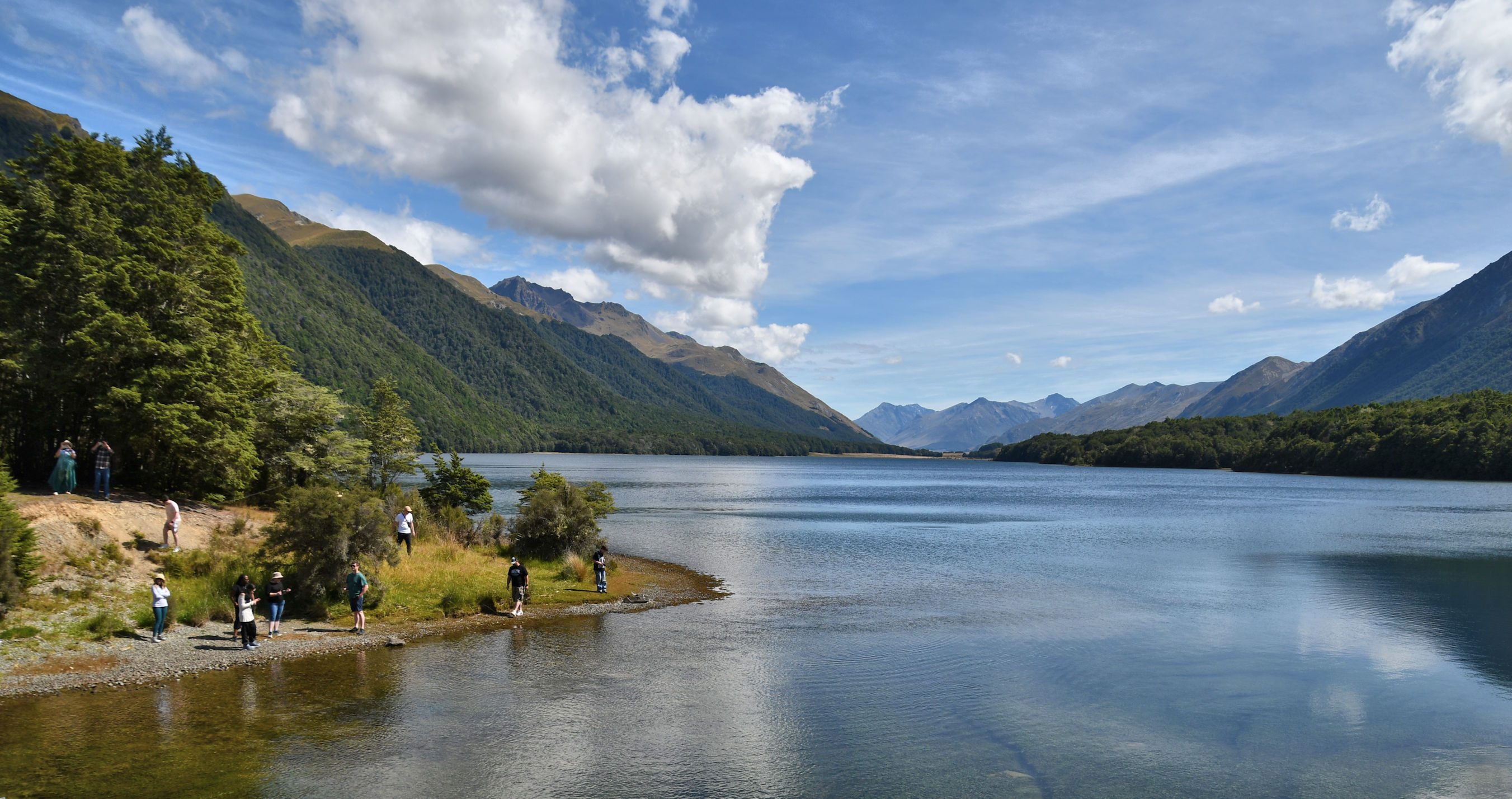
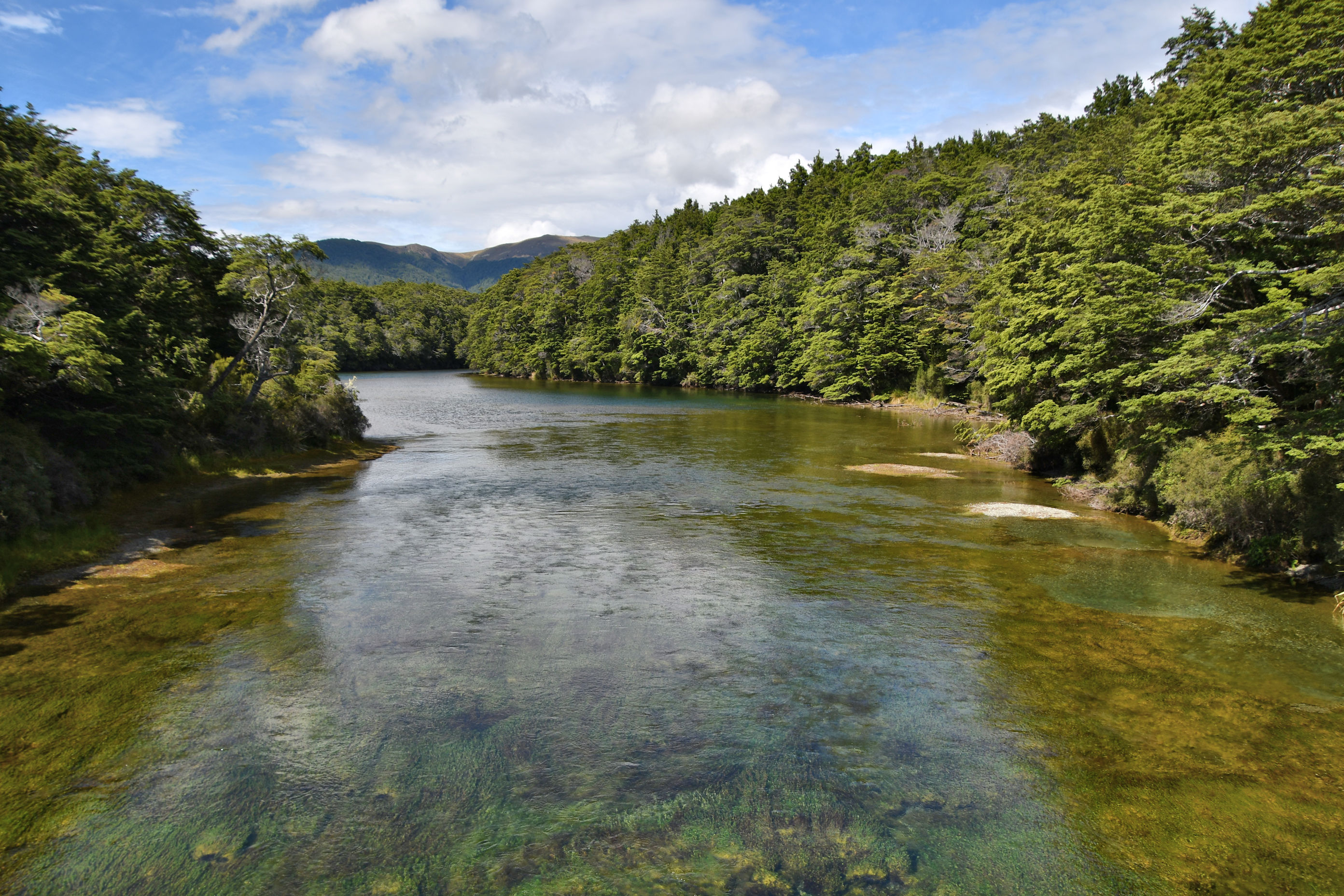
The bridge crosses the Silverlode River, right at its mouth into South Mavora Lake. Two-thirds of the way across the bridge, Josh stopped us and showed us another film location. This one I did not recognize till I went home and watched the movie again. Sure enough, there it is.


Appropriate karakia (prayers and blessings) or ceremonies, often including water, were used to mitigate and remove tapu, making things noa (ordinary, unrestricted, and free from the extensions of tapu) and placing them firmly in the human world. For this reason, it is customary within Māori culture to bless pounamu before it is worn.


After the ceremony, we crossed back over the bridge and returned to the bus and completed the trip to the lakeshore film location of the South Mavora lake.

The place we headed next was a busy beach vacation spot. Thankfully, the place we were most interested in was not where most of the people were. In fact, our first destination was not on the beach at all, but on the hills nearby.

Josh pointed up at this hill and said, “Just imagine how hard it was for the actors playing the urukhai, who had to go running down this hill over and over!”
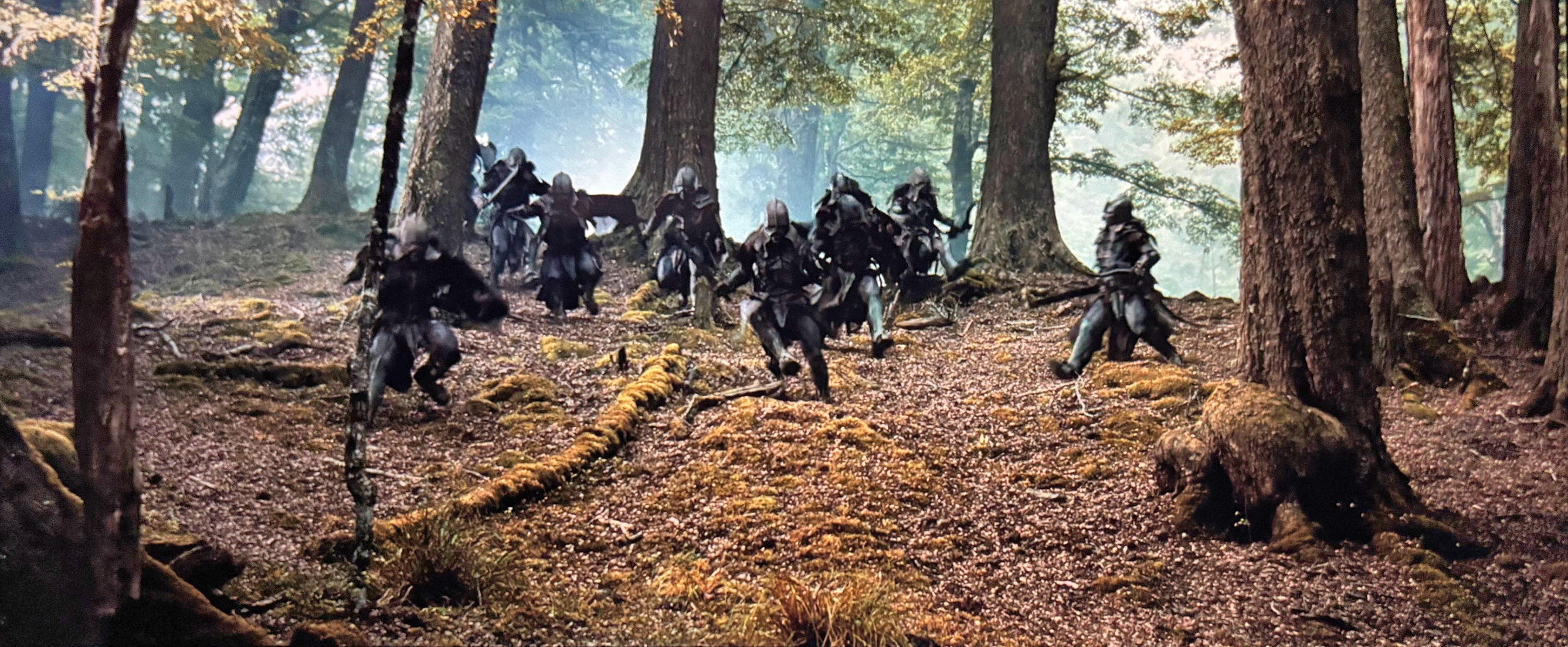
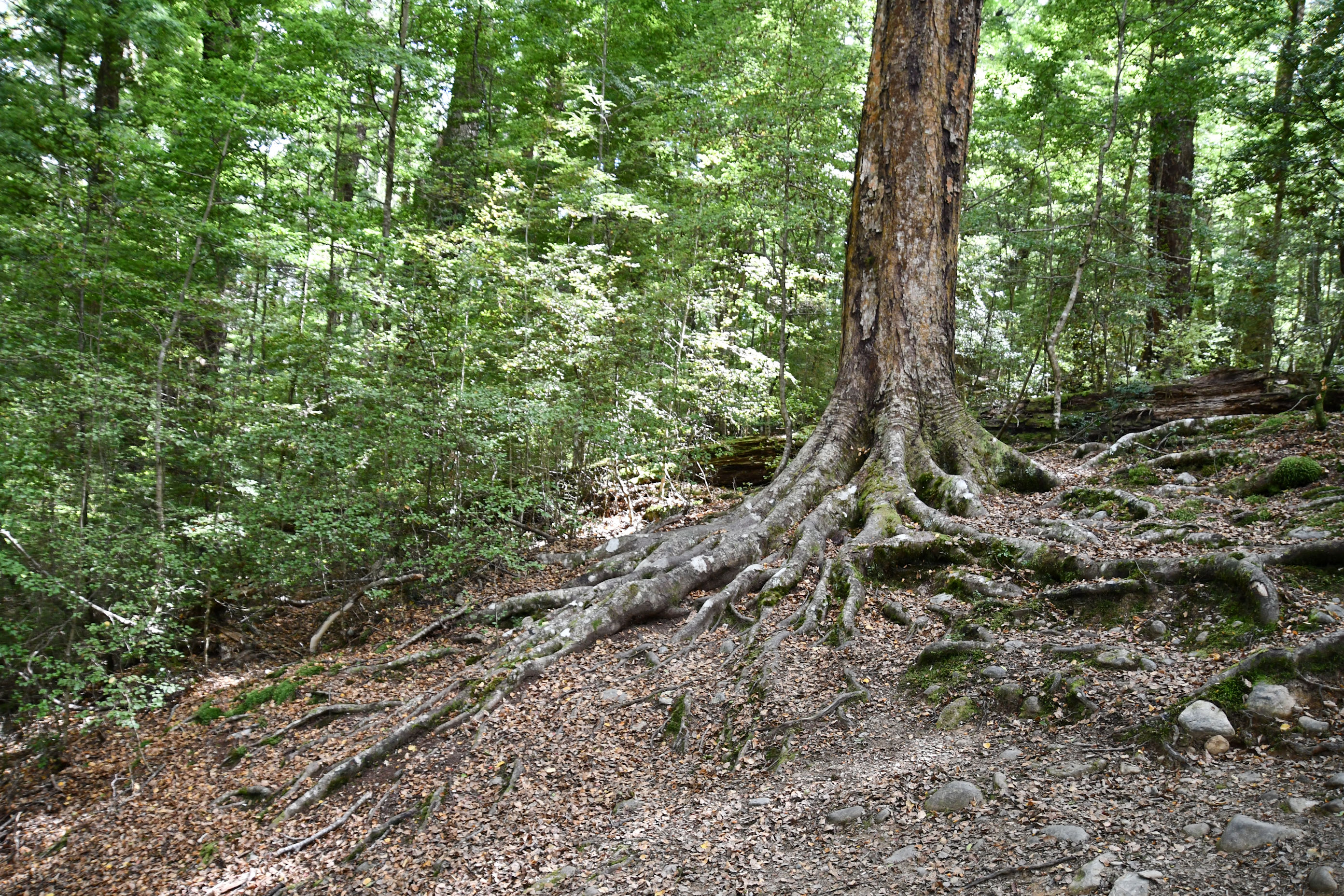

In the movie, two other Hobbits, Merry and Pippin, are directly across from Frodo, and realize that he is about to abandon the Fellowship. The tree they were hiding in is not really in that spot though. It is nearby, and up farther on the hill.
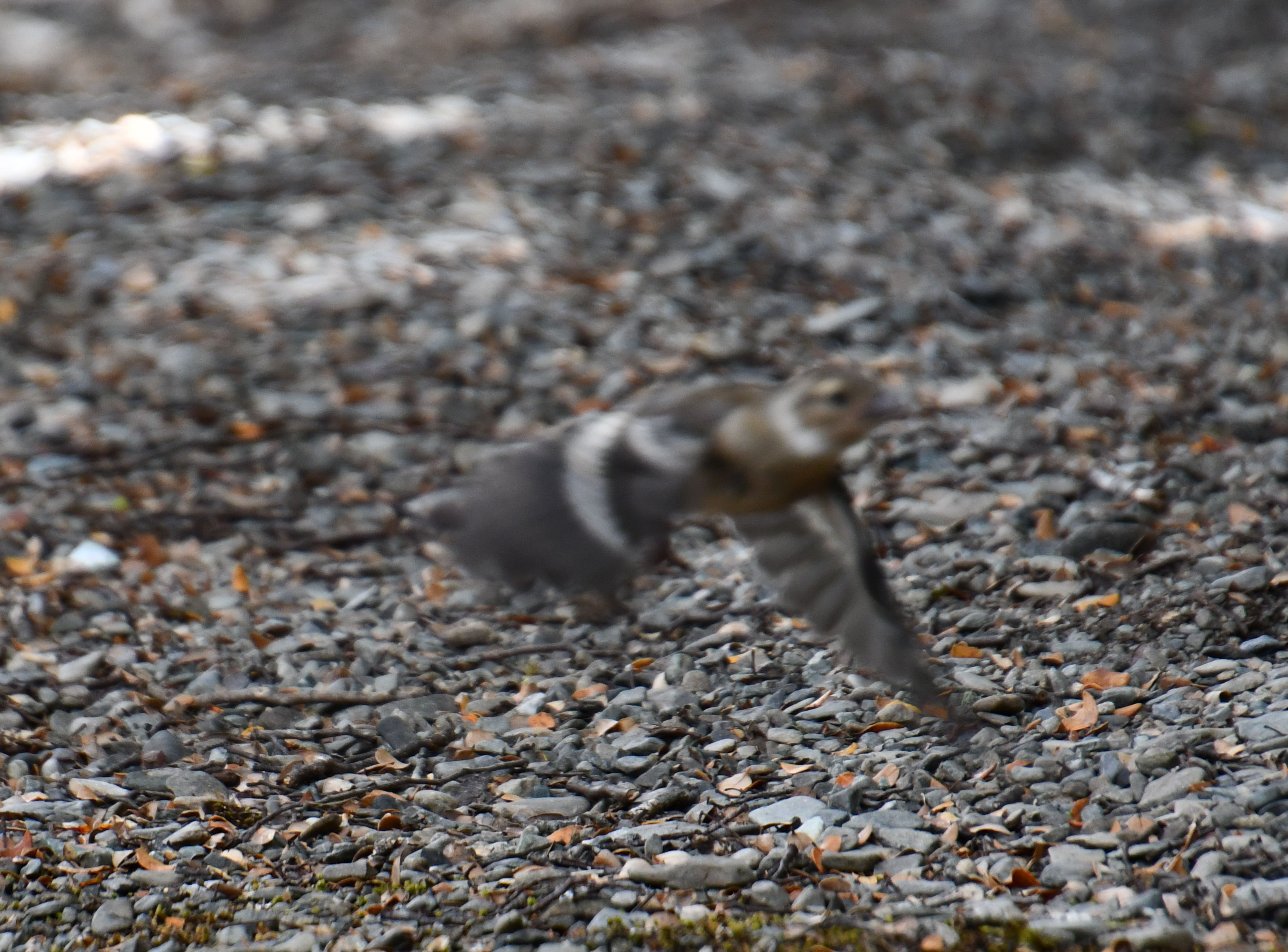
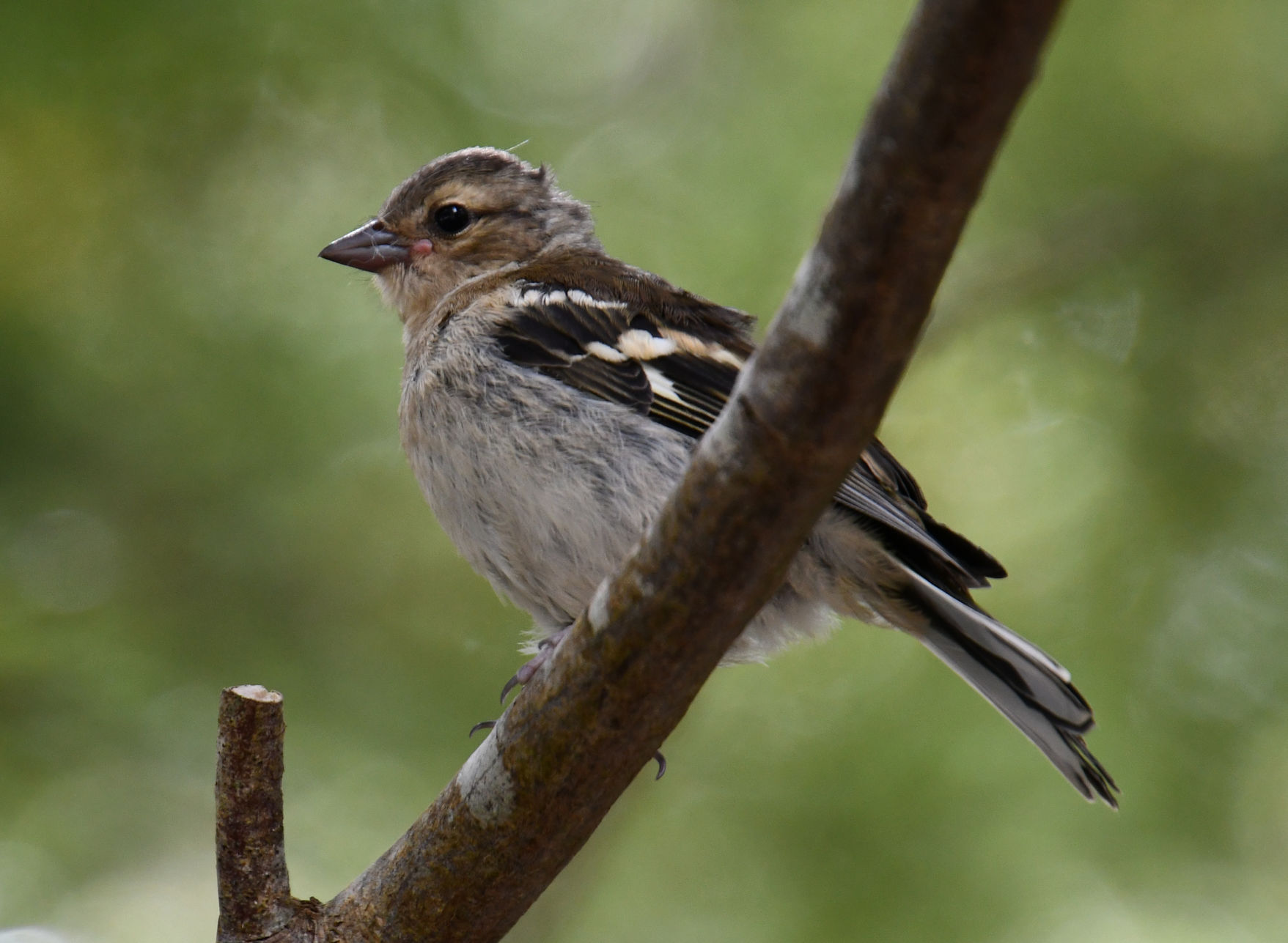
The photo on the left is what I saw that caught my attention, with the white neck band and the white streak on the wings, that you can see even though the photo is blurry. Still, on a branch, it looks at first glance like a common sparrow. But that is a finch beak. A female does not have the face and neck markings, and a male is beautifully orange, grey, black and white. Thus…I think this is a juvenile male.
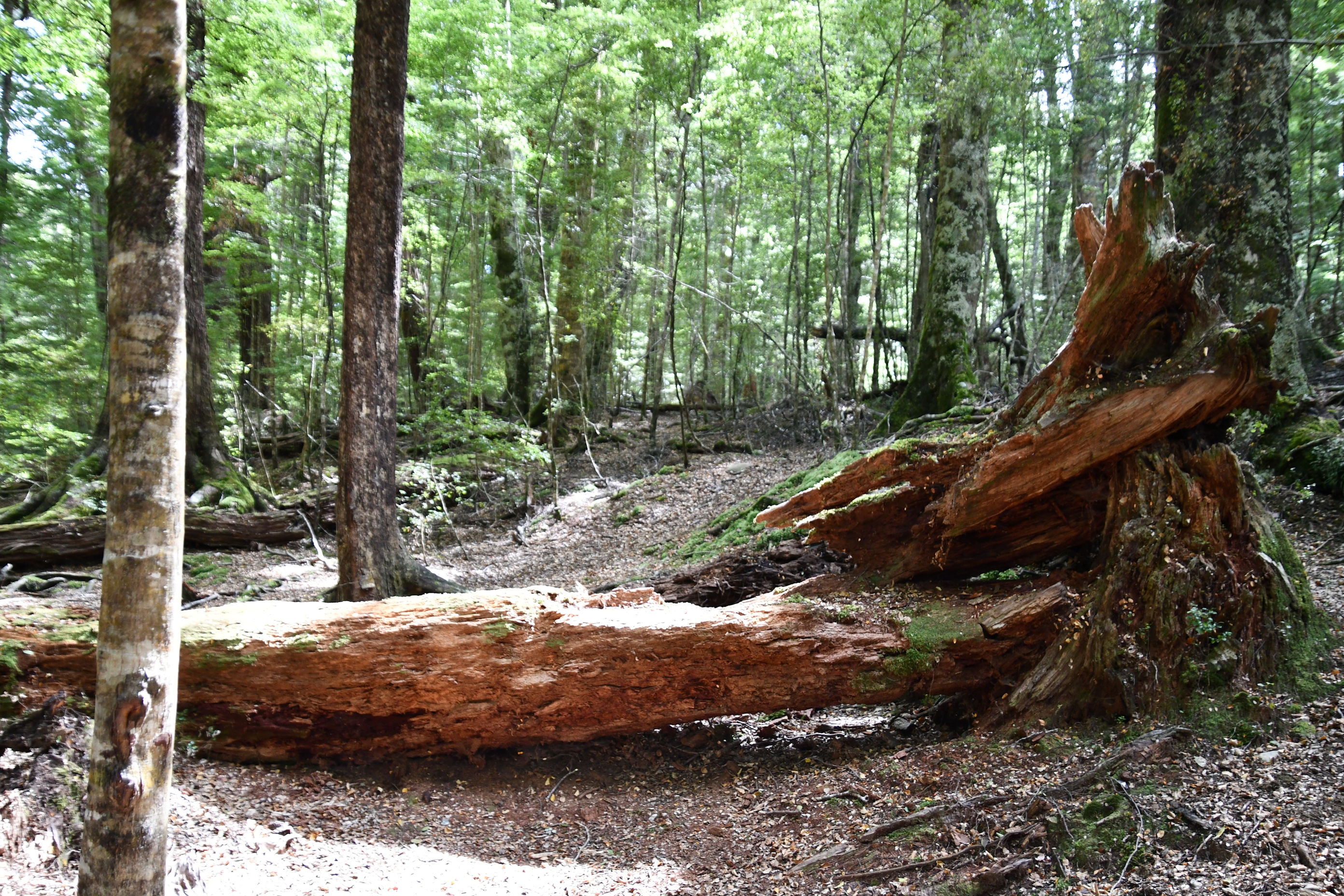


After all the reenactors took turns hiding in the fallen tree, we then made our way to the beach. Most of the local people on vacation stayed in a part of the beach we were not interested in, so that made it a little easier on everyone. We tried to take photos without children floating on inflatable crocodiles and such, and got a really good look at the place.

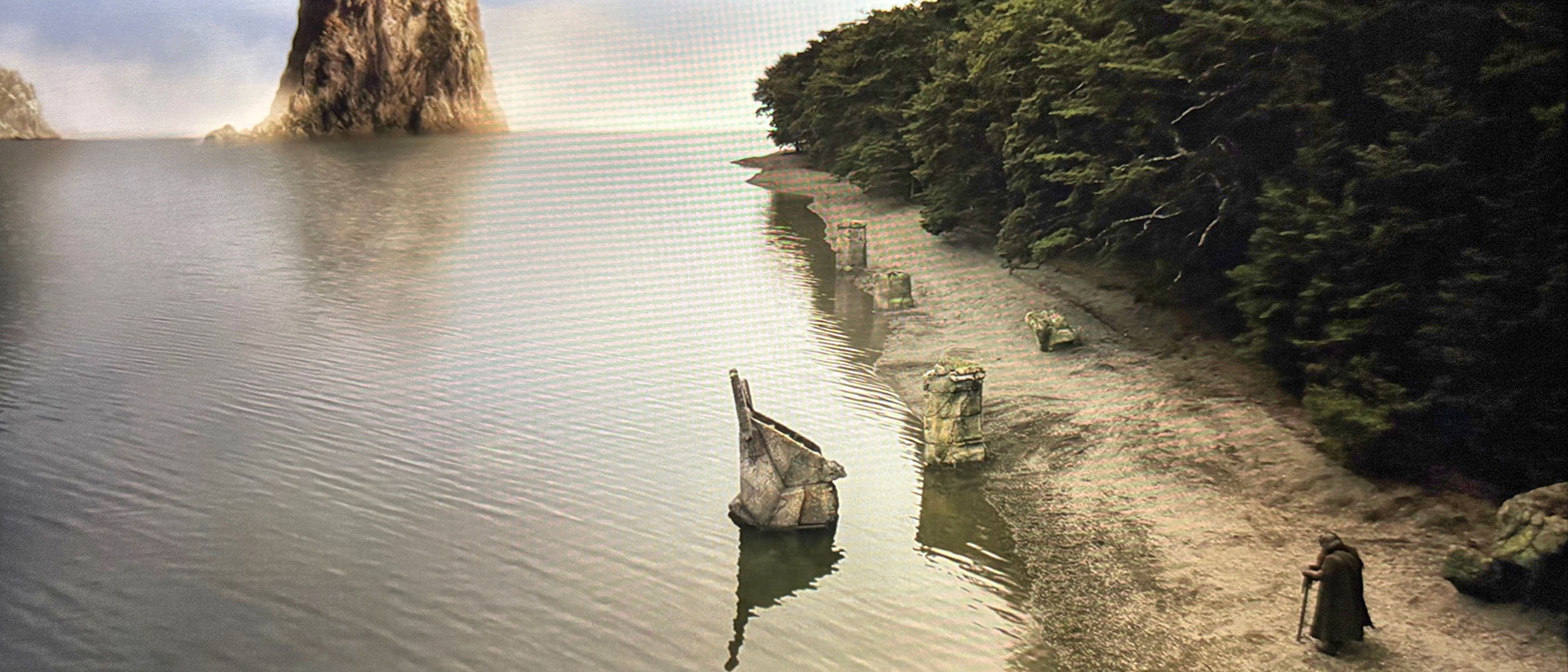


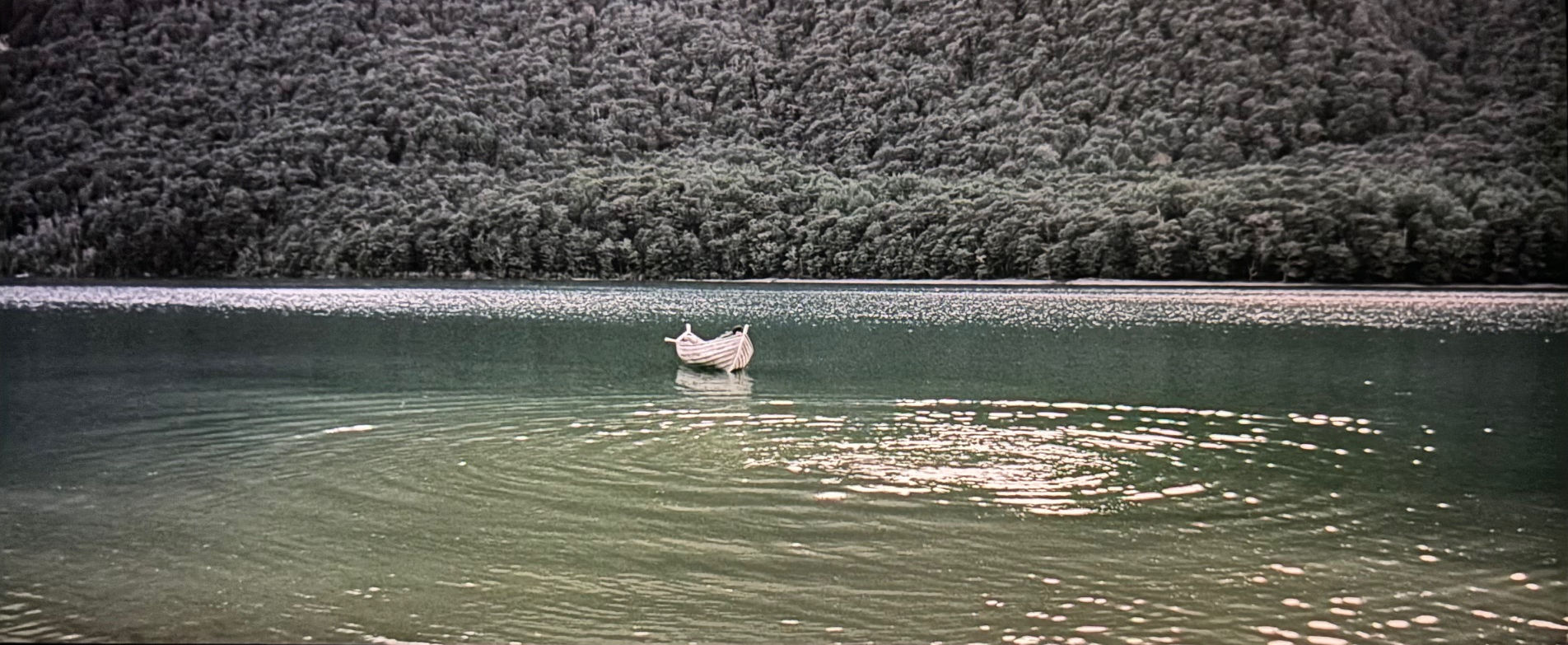


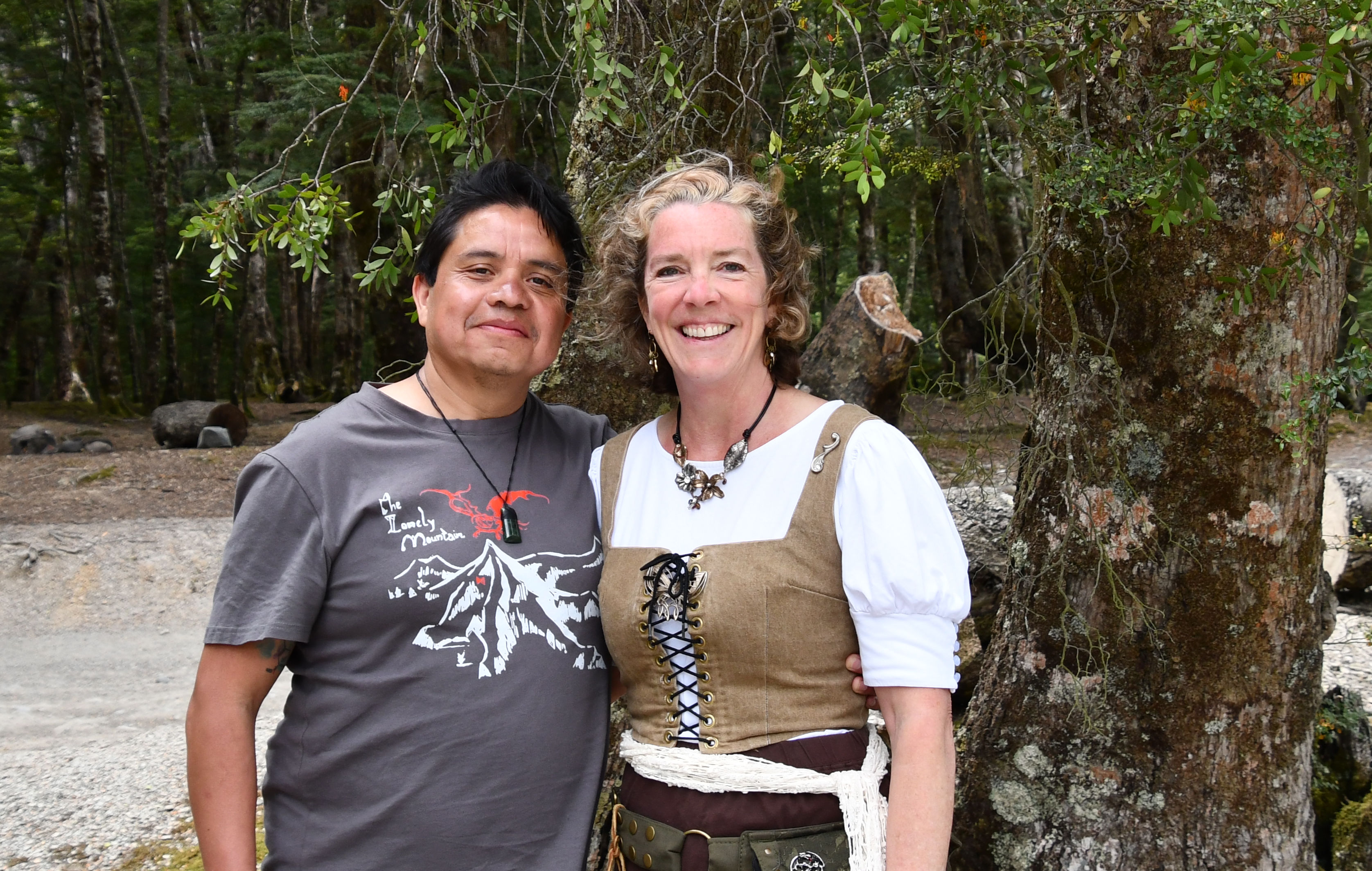
So it turns out Josh was wrong. There weren’t seven movie locations. I counted more like eleven. That was AMAZINGLY FUN!
Bird count: Even with the repeat of the Eurasian blackbird, I spotted two new ones, the Chaffinch and the Kakaruai. New Zealand bird total: 19 birds.
{All movie photos are screenshots, courtesy New Line Cinema, taken with my phone and do not belong to me.}

 Conscious Engagement
I am happy you looked into the ceremony and was present to support Pedro. There are some ceremonies that are for everyone here as well.
I bet you have seen more sheep in 2 weeks than in your whole life 😂
Your sheep comment made me laugh! It’s nice that sheep are so scenic. 🙂
I’m glad to hear that there are indigenous ceremonies in Australia for all, as well. The Cherokees are opening up a little bit. It’s often the conservative and cautious tribal members who don’t want any information to be shared. But there are more Cherokee all the time who have instead concluded that it is by increasing the country’s knowledge of who we are that we can get more respect and more protection. I agree with the latter idea.
That’s right. Not being overly secretive about customs does build relationships within the community.
The Landcare group I was Chair of fostered communication as some of the environmental rehabilitation work we were doing was close to Indigenous lands. That has grown now and we actually have Indigenous representation on the committee.
I was allowed onto an island in the river but had to stay at a certain point as the rest of the island had secret womans business where there is a huge fig tree that was the birthing tree and other sacred sites.
There are places where I could go that were secret mens business where initiation rites and other mens ceremonies were held, but the Landcare Coordinator, Debbie, couldn’t go.
Most of major meetings now have a welcome to country at the start and our meetings have an acknowledgement to the land we meet on.
All of this is great to hear. I’m pleased that there is an indigenous member on the committee, and I like that you have been to that island. I would guess you think it’s fine that there were certain places you couldn’t go. We do land acknowledgements here, too. It’s a simple way to remember history and to offer some respect. We Cherokees are on the lands of other indigenous groups, so we acknowledge that.
I am fine with knowing there are sacred places I shouldn’t go – the Gadachi Man might get me 😂 – it is about respect.
I like that you acknowledge other tribes
I like your Maori/Cherokee comparisons. Your birding knowledge is increasing
I can’t explain why I enjoy identifying birds so much. I could be totally wrong, since I only try this as a hobby, but it’s still fun for me to try to solve the mystery. Especially with mediocre photos that don’t always show the bird features I want to use.
Yes, I liked the comparisons as well. In fact, I found a facebook group of Maori who share knowledge and appreciation of that culture, and I commented on exactly what I wrote about here – the similarities in the Cherokee Going to Water ceremony, and was approved into the group. That’s fun. In this way I can read what they say and learn more.
Thank you very much, Crystal. Congratulations on the group