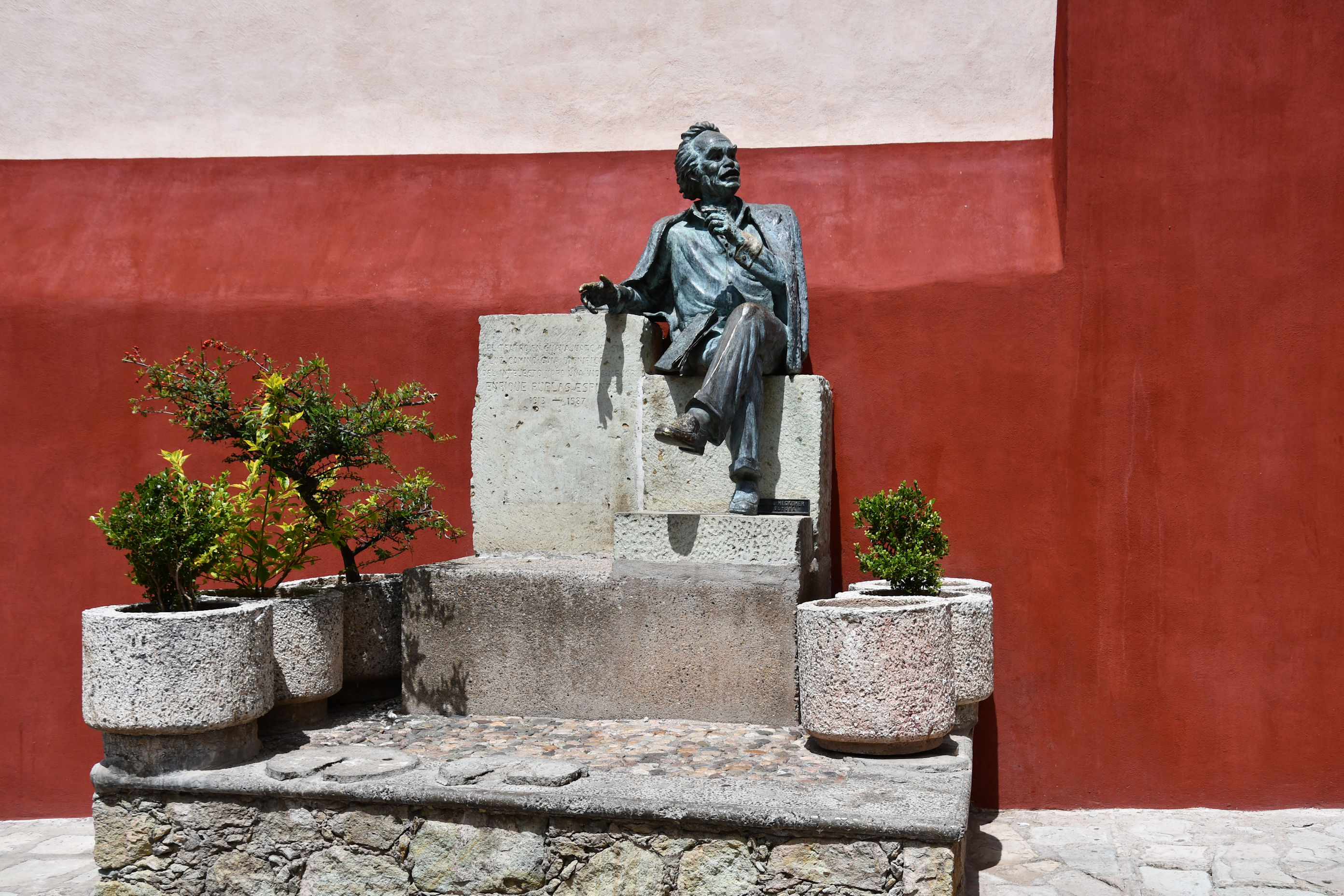
Only those points of interest we came across, of course. For spending five full days here, we still did not have enough time to see all the famous sights. For example, it’s a key city in the birth of the Mexican Independence, and we could have spent all five days just studying places relevant to that history. But it’s also a city of artists, inspired by locals Diego Rivera the muralist, Gorky González Quiñones the potter, and Maria Garcia the photographer as only a few examples. There is a huge festival each year called Festival Internacional Cervantino, in which 2000 artists come from around the world to showcase dances, painting, singing, stage performances, and a wide variety of art I can’t even imagine. The name is from the earliest days of the festival in the 1950s which initially was a performance of works from Miguel de Cervantes.

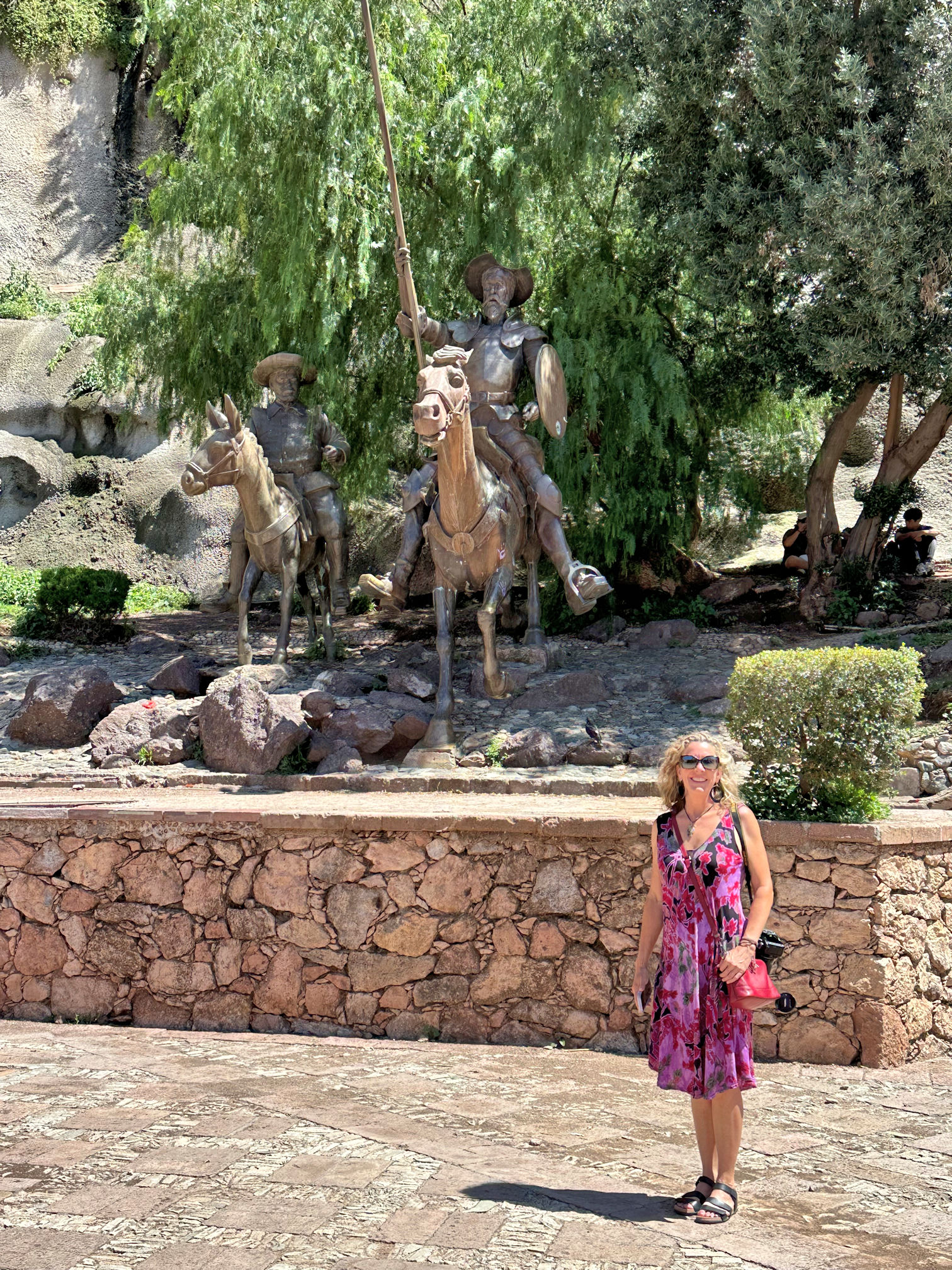
Aside from those reasons to host statues and monuments, Guanajuato is simply an old and important canyon city, settled originally by the Otomi tribe thousands of years before white people showed up. Its mines were some of the richest in the entire world, and records prove it had been mined at least since the Aztecs (who came after the Otomi) first began collecting precious metals. The Spaniards found gold there in the 1540s and ramped up mining operations and forced the indigenous people into servitude as miners. Subsequently it achieved fame as a wealthy city, and the mines funded much of the original European structures. (Otomi still live in the area, by the way.)


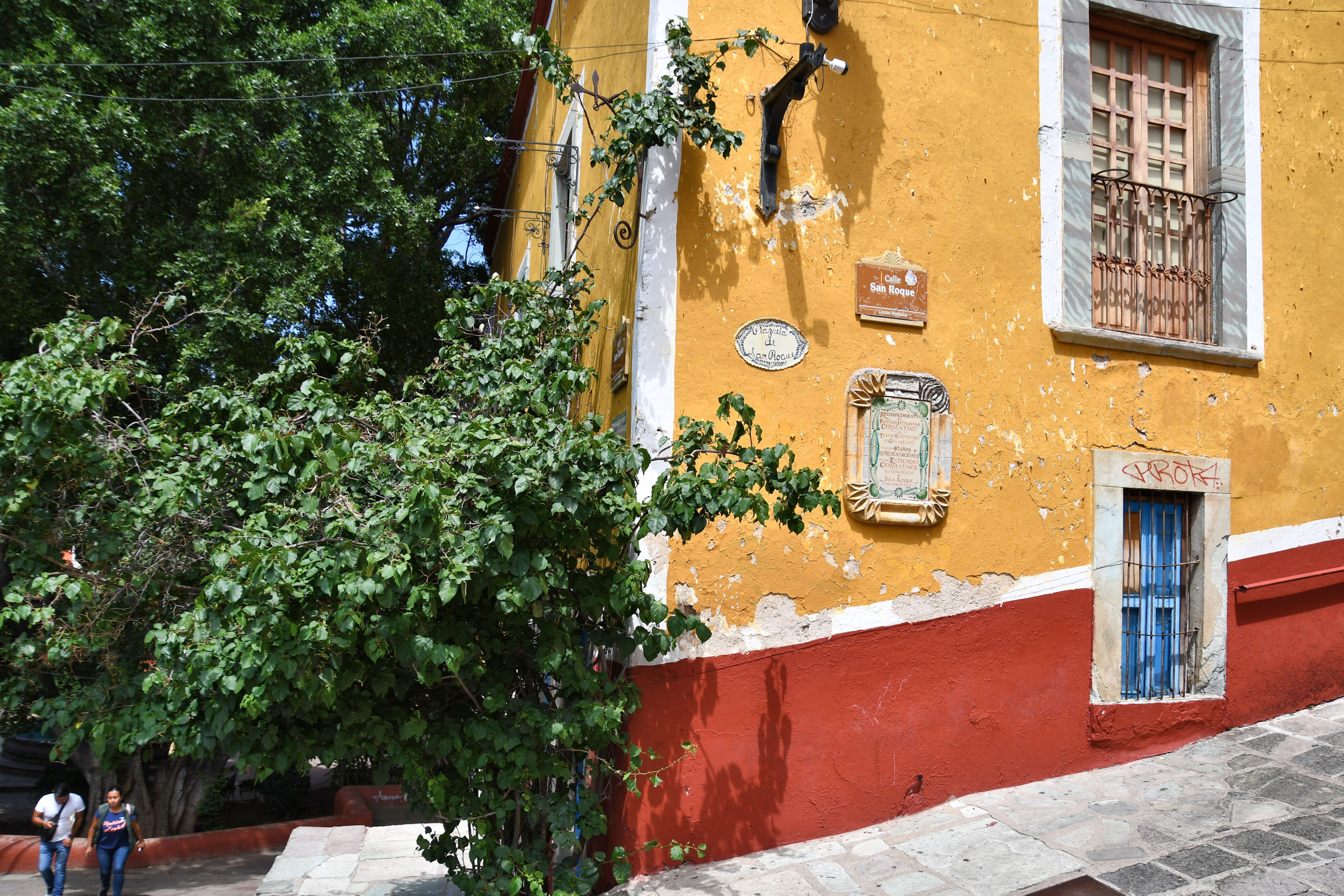
Beginning at the Teatro Cervantes and heading generally West, one comes across the following scenes:

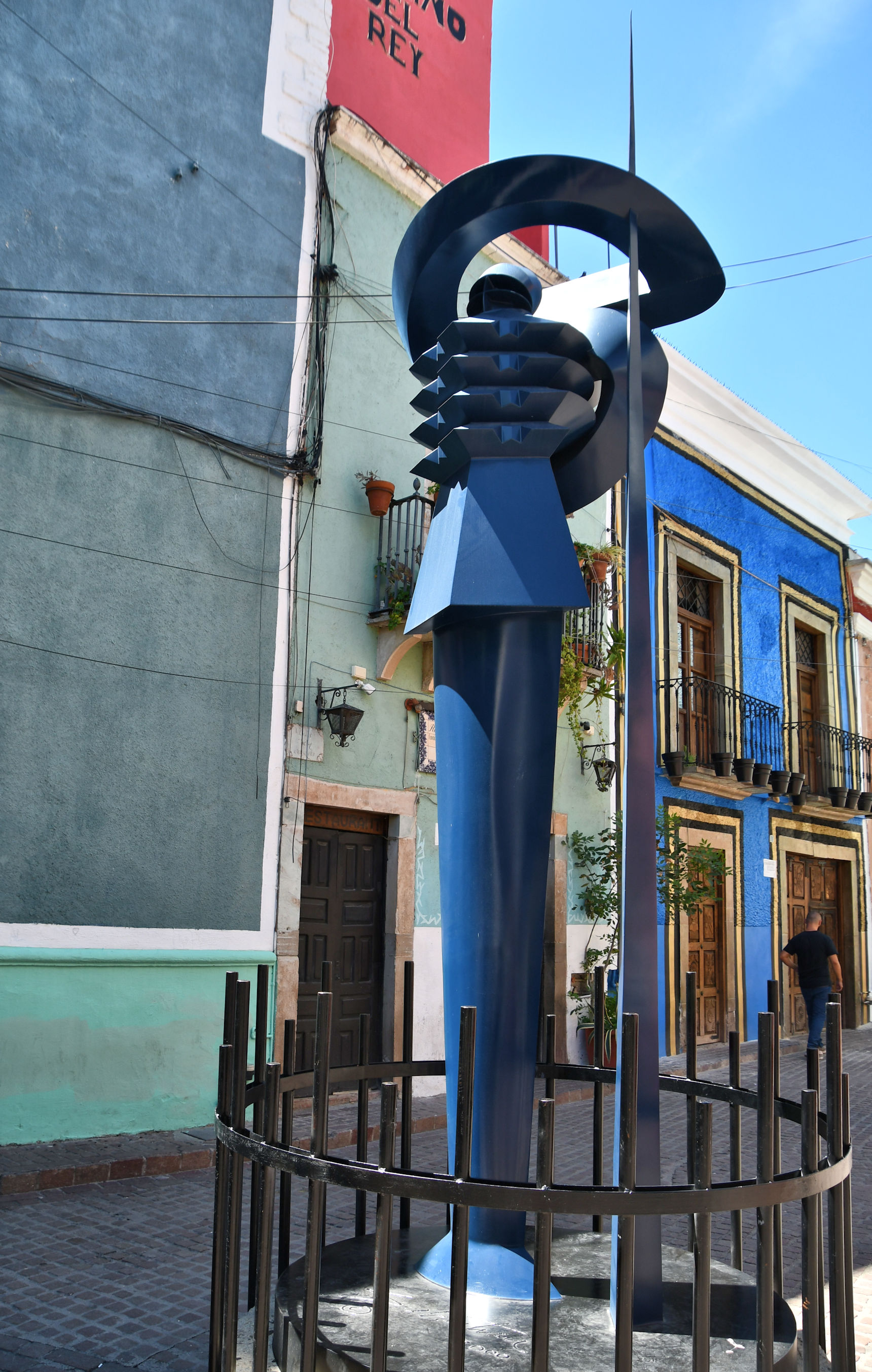


This is the first of multiple churches I will show you with that recognizable carved stone facade, in a 18th century style called Churringueresque, Named after the architect and sculptor, José Benito de Churriguera.


Beyond that point we reached what I personally feel is the current heart of the city: the triangle garden next to the Juarez Theatre and the San Diego Church.


The center of Guanajuato was added to UNESCO’s list of World Heritage Sites in 1988. The center drew us in each day. It was directly below us and thus our path to anywhere generally took us to the center. But aside from that, the central triangle-shaped Jardín de la Unión (Union Garden) was a good beginning point for most of our plans. The garden is an unmistakable landmark; not only because of its unusual triangle shape, but also due to the Indian Laurel trees pruned into cube shapes. On hot days, all of the park benches are filled with people resting and cooling off. Under the trees are kiosks selling snacks, drinks, fresh fruit and fruit juices, toys, and art. The park is surrounded by restaurants on two sides, and on the third side is the theatre and the church.

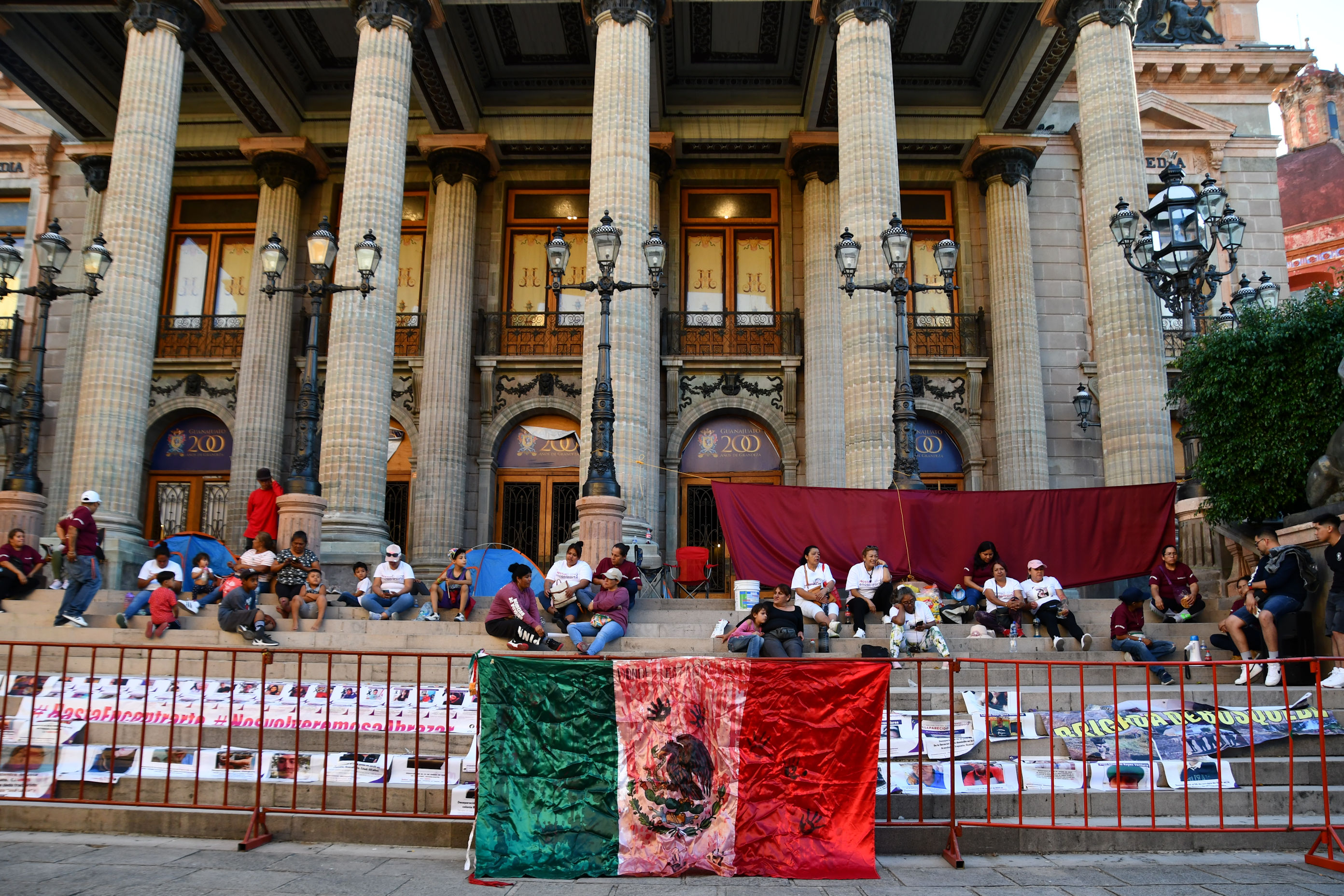
It’s also a party spot. Tourists come directly here, and drink at the many bars, and pay student musicians and Mariachi bands to play songs all night. One of the favourite activities is for the student musicians from the University of Guanajuato to start little parades, wherein every person on the tour (or on the streets) is encouraged to join and to sing loudly along with them. Originating in the 19th century, the pastime is called callejoneadas, and there is a prescribed tour route that includes stories along the way. Partying out-of-towners have a blast at this activity, paying the musicians to play more and more songs, parading up and down the streets, and they keep it up until the wee hours every single night of the week. Because our balcony was up the hill right above it, and because it was warm and we left all the windows wide open for the cool night air, we had to listen to the revelry. The first night it was hard to sleep through it, but we got more used to it each night.


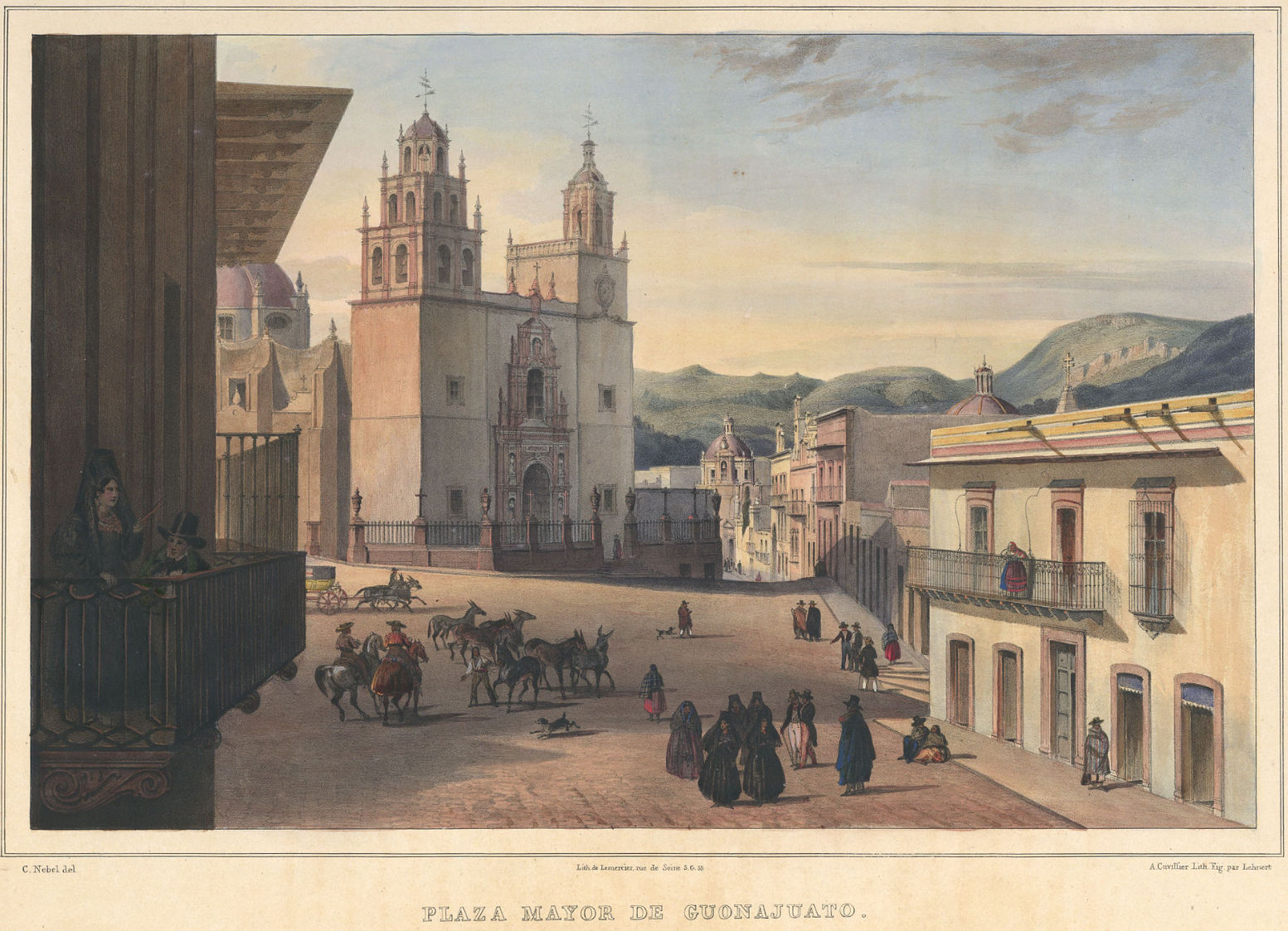
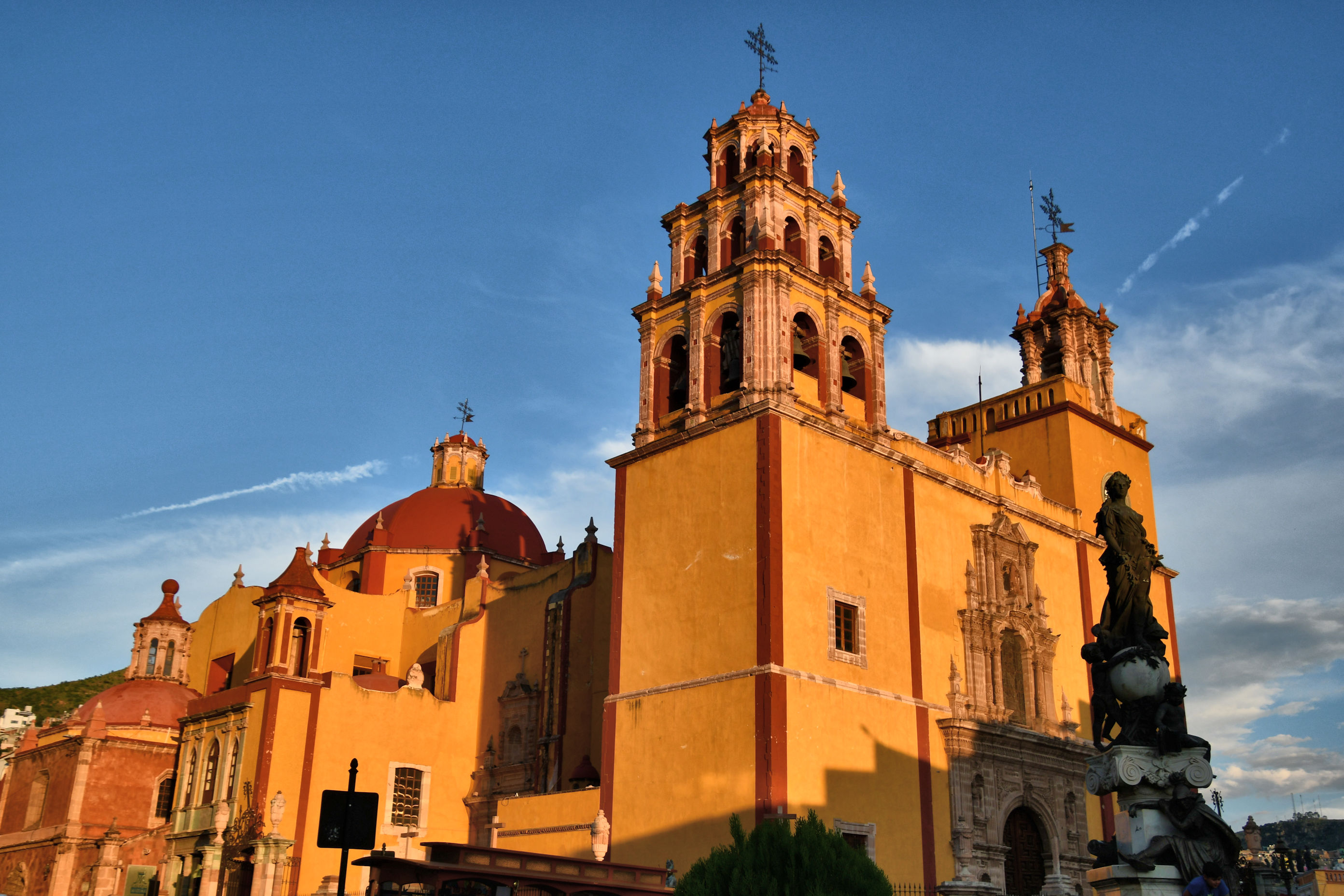
Steps away from the theatre and the church is the significantly more recognizable Basílica Colegiata de Nuestra Señora de Guanajuato (collegiate basilica of Our Lady of Guanajuato). Locals call it simply La Basílica. This much-photographed church was built between 1671 and 1696, and later received basilica status. La Basílica is now painted in resplendent gold and red and finds its way into every tourists’ photos and every website that mentions the city. It awkwardly faces the Southwest, and I’m sure there is a reason for that, but I don’t know what it is. No religious center lies in that direction, unless there is one in New Zealand. The orientation does not match the old streets or the other buildings, and is cattywampus to the large open square there. The square today is called Plaza de la Paz (Peace Plaza) and has a circular central monument honoring the end of the fight for Mexican independence. it is the “official” center of the city. The plaza is often filled with the tables and umbrellas of restaurants.

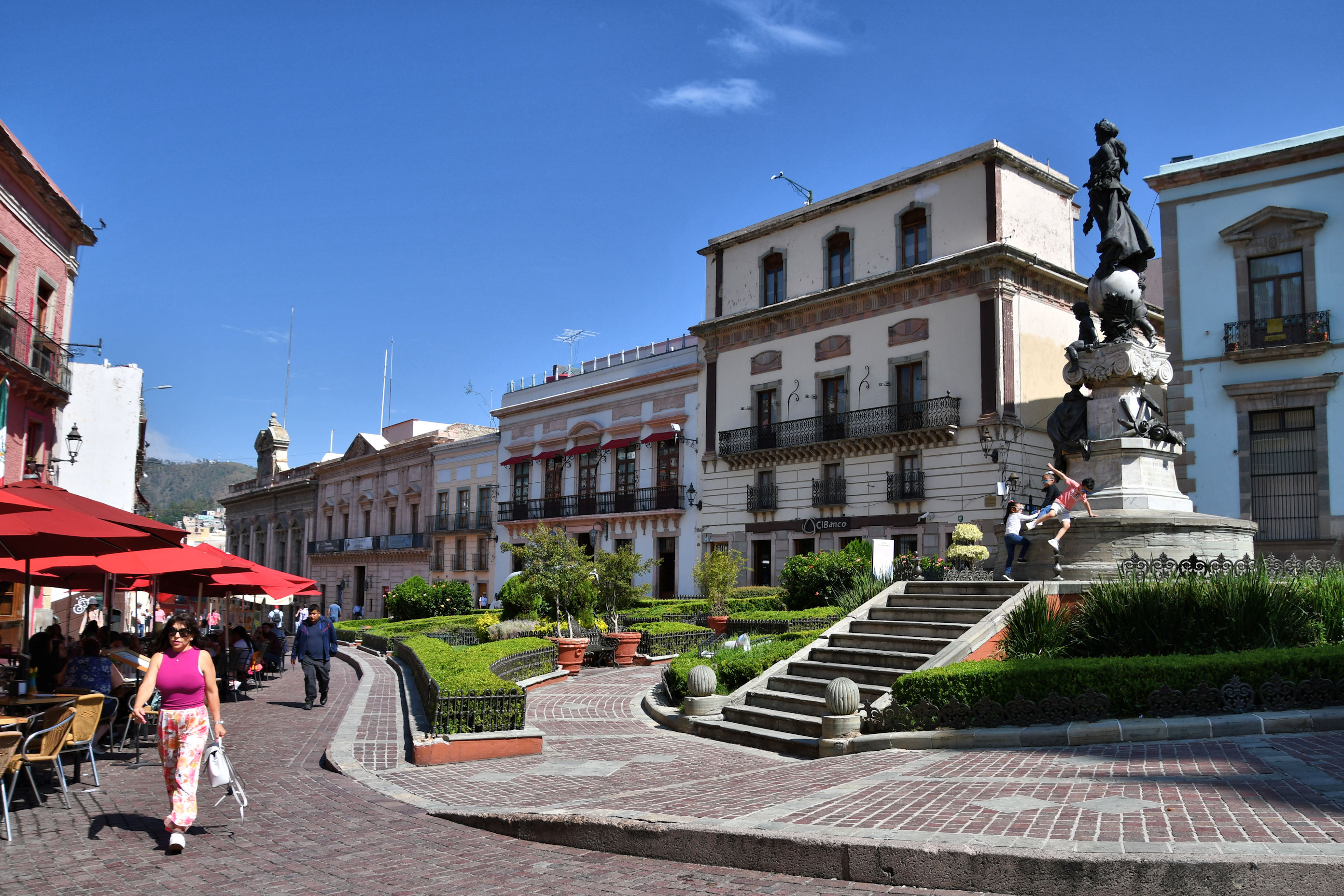
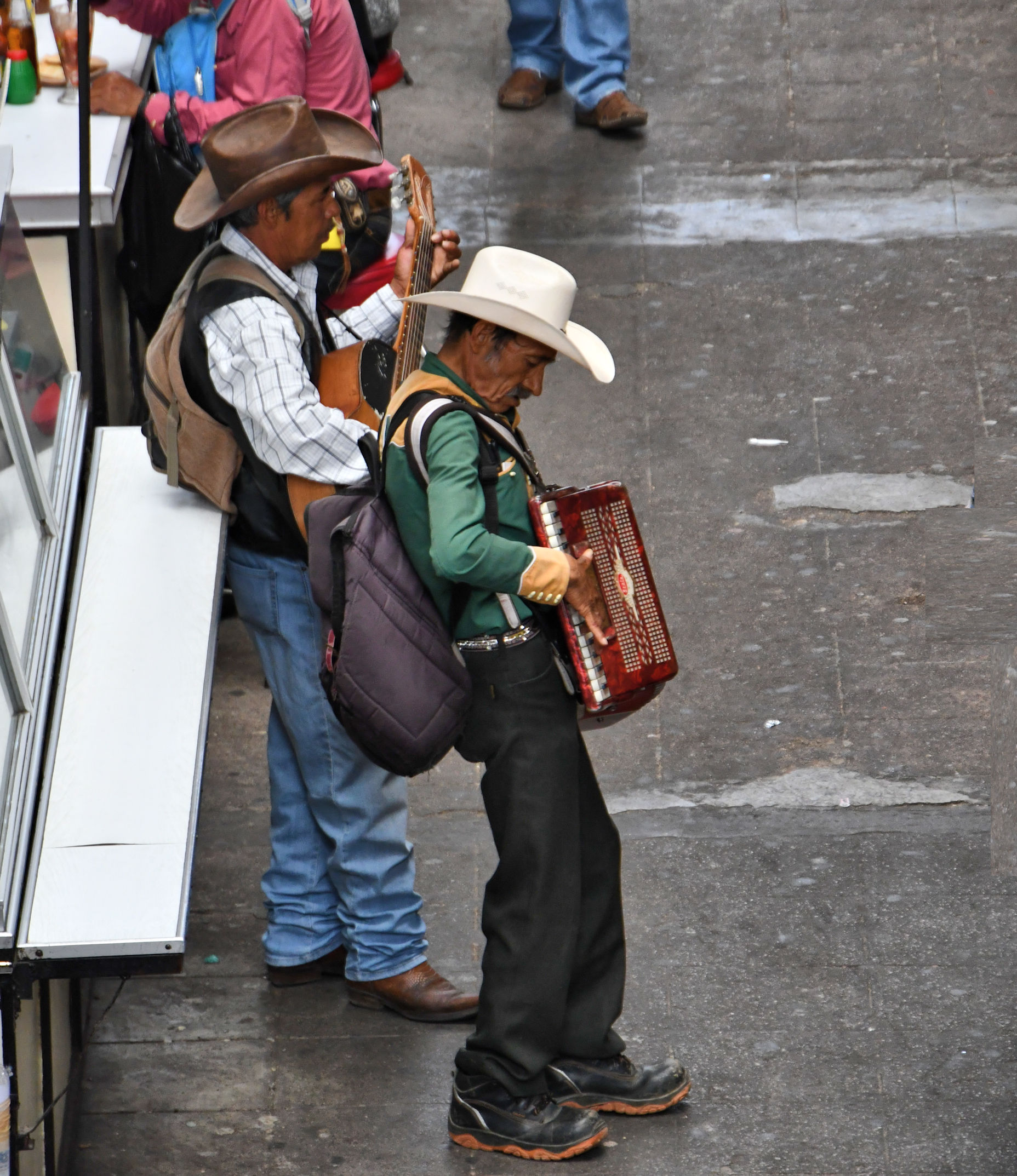
Follow the Peace Plaza away from the Basilica to reach the huge Mercado Hildalgo. The building was envisioned in 1905 to be a grand train station and an economic hub that would propel Guanajuato into economic boom. By 1910, the building was complete, but the dream had fizzled. It was immediately converted into a market and remains so today. The market is flanked by more giant square hedges that obscure most of the front entrance, and there was just no good place to take a photo.


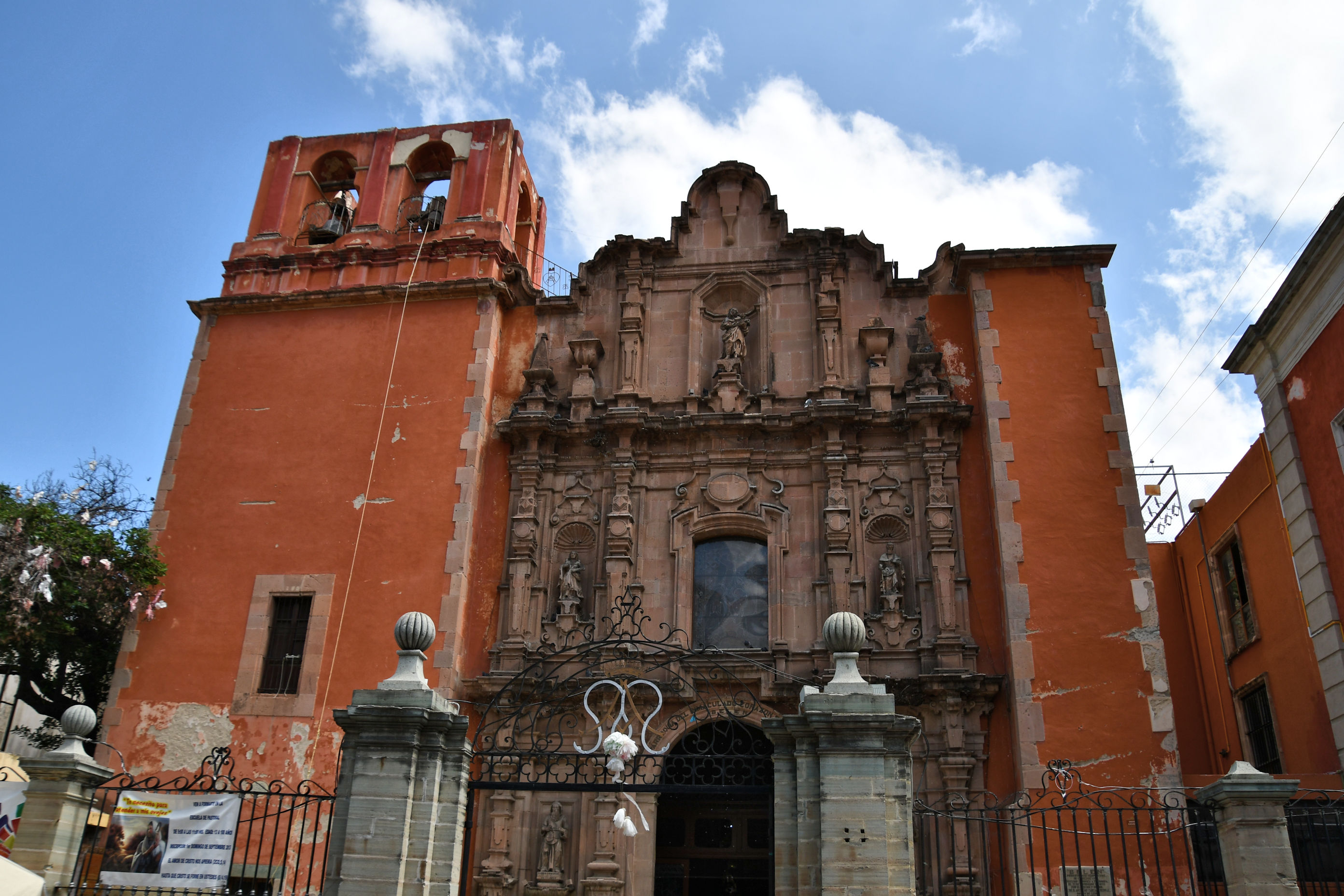
Directly across the street from the mercado is the Templo de Belén (Temple of Bethlehem). The church is all that remains of a monastic complex built in the early 18th century. This church has more of that gorgeous stone carving in the Churrigueresque style, and a sign on the church wall states that the monastery complex was founded in 1717.
We did not wander too far from the main east-west route, and saw so many things. It makes me drool at what was left unseen because we didn’t have the time for it. Just think if my beloved had come from a super boring city and that’s all we had available to go and visit? Serendipitously, his hometown is one of the coolest places I’ve ever visited. I am dying to spend more time there. I’ve threatened multiple times to go live with his family for six months. Watch this space….

Stories from Pedro:
The fountain. Before the metal railing was installed to keep people back from the concrete basin, this was the site of a hilarious scene to imagine, when a very young Pedro went with his mother to get an inoculation by a woman he consistently describes as “mean,” because he only ever went to see her when he needed medical care. Soon after arriving, Pedro discovered what was about to happen and he bolted right out of the woman’s office! He ran out into the square and went to the other side of the fountain to hide from his mother, but she spotted him. As she ran for him, he circled the fountain, keeping his mother on the opposite side. He said that she chased him in circles around the fountain for some time before catching him and dragging him to get his shot. I imagine there were additional consequences later too. This memory is particularly precious because Pedro’s mother died when he was 8 years old. He has very few memories of his mom, and cherishes this one.
The gazebo. Somehow, one of the kids in the neighborhood found out that if you put one hand on the railing of the gazebo, and stretched your other hand as far as you possibly could, it might be enough to reach the lamp post. If you made a connection between the lamp post and the railing, you would get a mild electric shock. Apparently there was some sort of wiring error that no one but the neighborhood kids knew about. Pedro said that it was a test of bravery to show the others that you could willingly get yourself zapped. Many children were not brave enough. Pedro – of course – did not hesitate.

 Conscious Engagement
A splendid sculptural and architectural collection with the bonus of Pedro’s memories
Oh thank you! I hope you will like my next post, too, then. I hope to display many examples of architecture along city streets. I did particularly like the facades of the churches here though.