While driving around the Yucatán peninsula, I used my phone GPS for most of my navigation. I have my Siri voice set as an Australian man’s voice, because ❤ . On this trip I needed to use Pedro’s phone, and that voice is still factory settings. She has no sense of foreign words. Our whole gang got such a big laugh out of how Siri pronounced “Cenote X’Canché” like a country gal from Texas. It came out as “Say NOTE ee, ex CAN chae.”
Andre was still overheated from hiking the ruins of Ek’ Balam in the morning, so he chose to stay in his air-conditioned room and use the WiFi while the rest of us put on suits, grabbed towels, and headed out. We drove right back to Ek’ Balam because there is a cenote near there. None of us had ever seen a cenote before and we didn’t know one from another. We knew exactly how to find Cenote X’Canché, because we had seen the signs that morning, so that’s the one we picked.
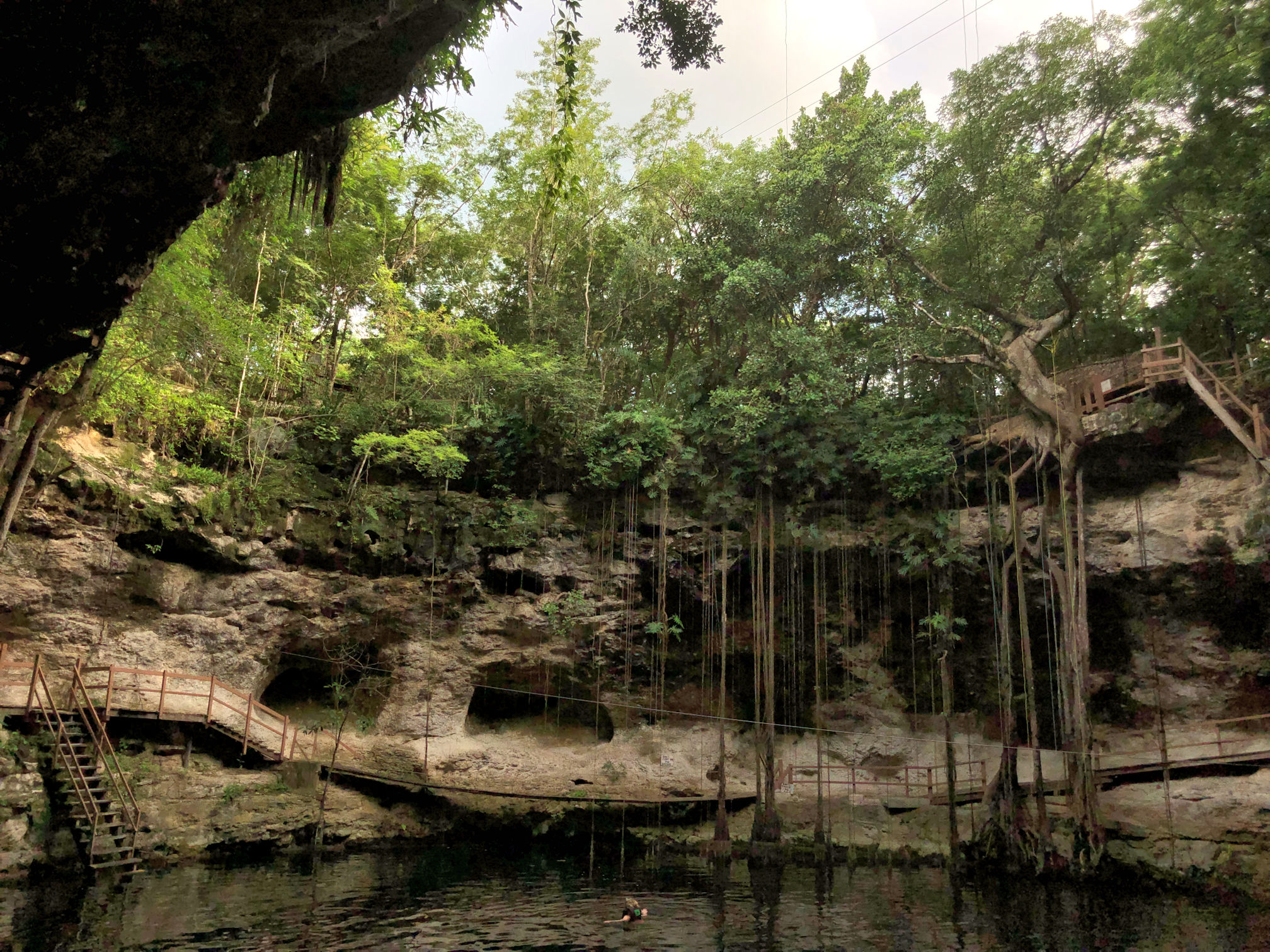
A cenote (seh NO tay) is a sinkhole filled with water. They are everywhere in the Yucatán, from wishing well size to public swimming pool size. Many of them are commercialized and visitors can buy tickets to swim in them. Before the trip I had described it to a few people as “swimming in a cave,” to which people responded that it sounds nightmare-inducing. It’s easier to explain with photos. In fact, maybe a video is the best way to show you.
There, now see? You just realized you want to see a cenote too!
We traveled the same road we had been on that morning, but at 4 pm the checkpoint I had mentioned in my last post was gone. We drove past the paved parking lot for Ek’ Balam and continued another mile and a half to a second parking lot that was much smaller and made of packed dirt. Entrance to the cenote was inexpensive, but also, when we left around 6 pm and no one was around. So my guess is that entrance is free if you arrive late in the day. I wonder if it’s possible to explore Ek’ Balam after 6 pm too?
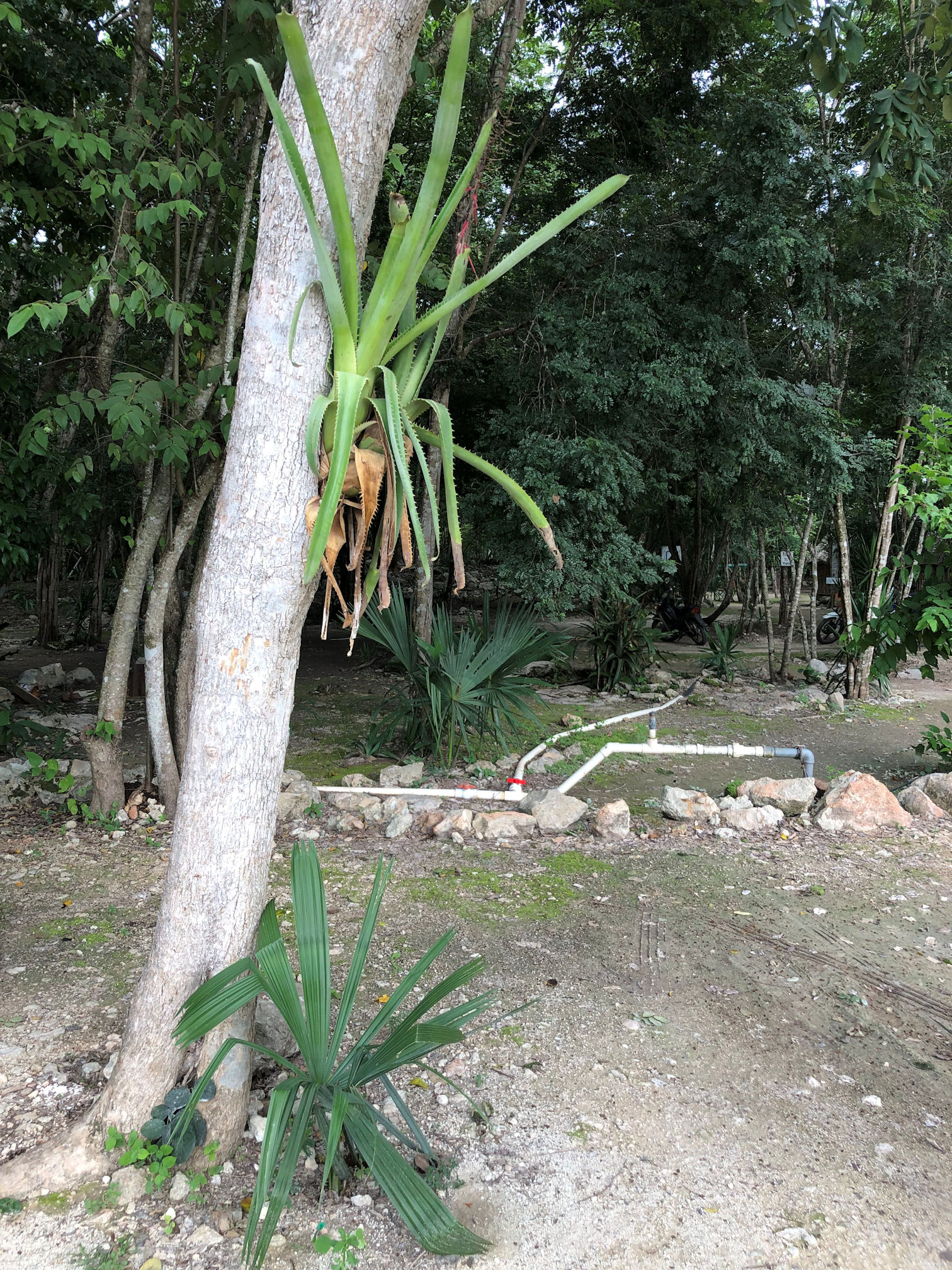
This cenote is part of a preserve, and they are careful about protecting the water. No sunscreen, bugspray, or lotions are allowed. In fact, there are mandatory showers prior to entry. Showers and changing rooms are set up right behind the pay station, and they hand out free keys to lockers for your use. (It’s all somewhat rustic, so imagine DIY wooden structures, and ground-temperature water from old metal shower heads.)
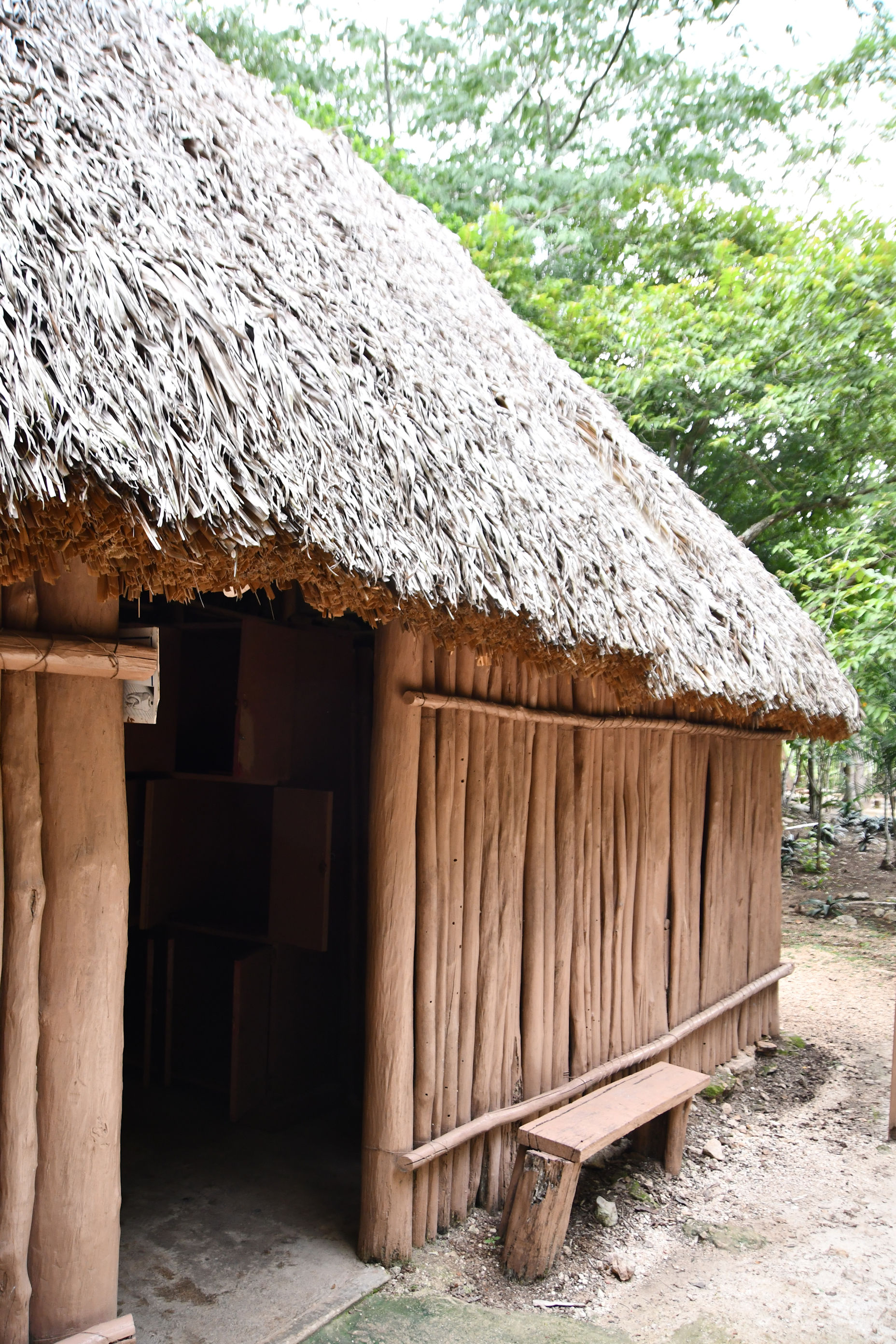
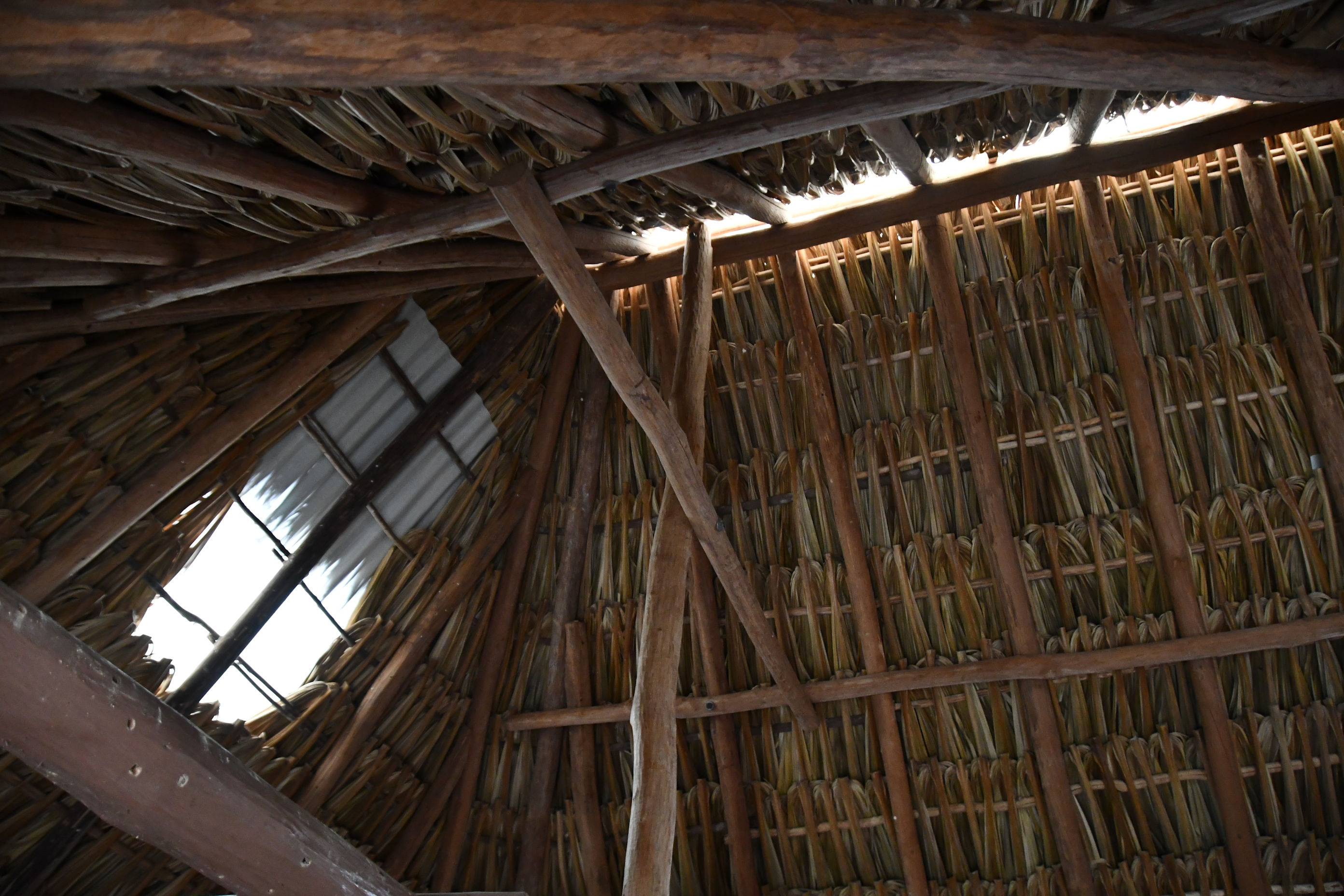
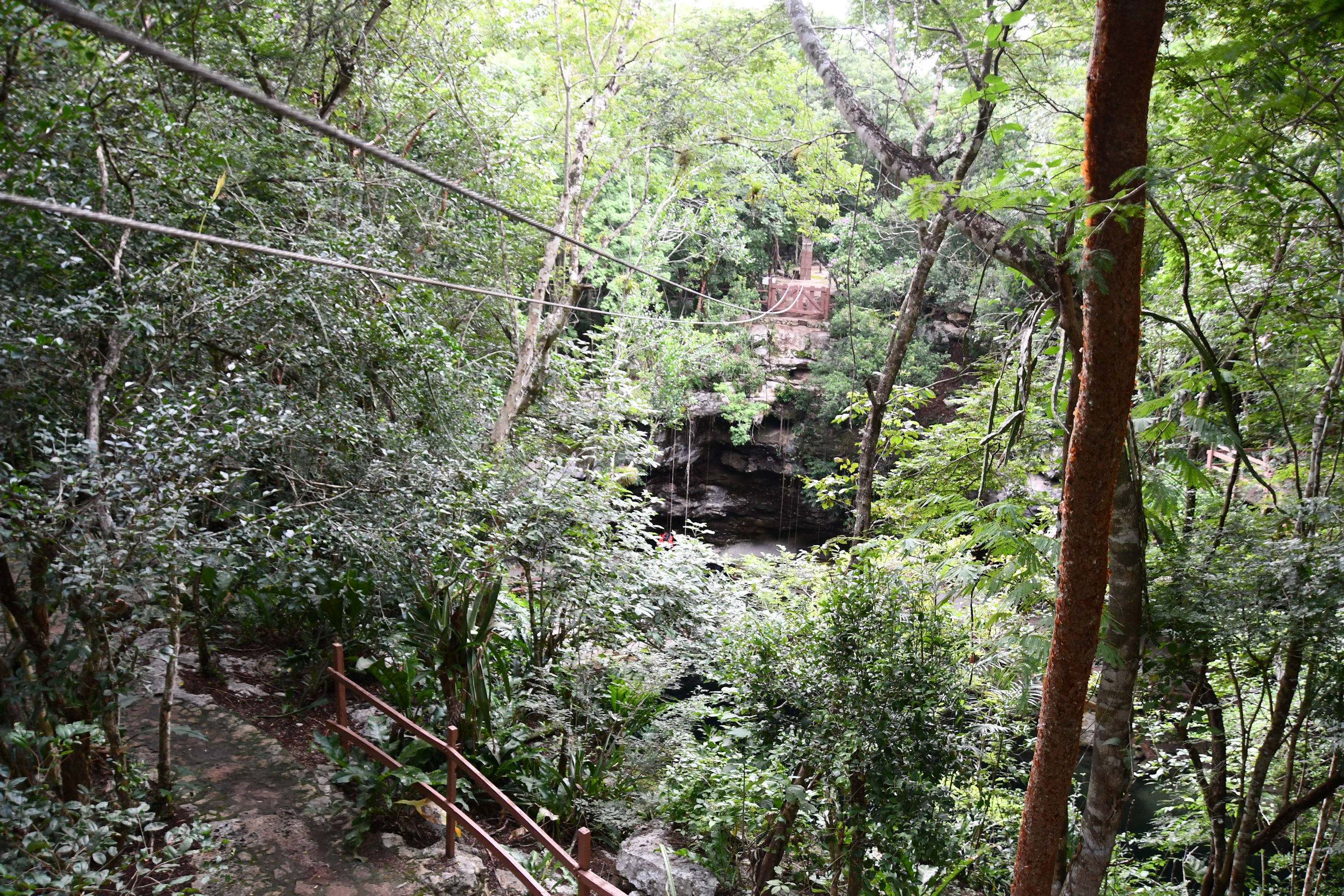
The trail to the cenote through the jungle is not very long, and well traveled and well marked.
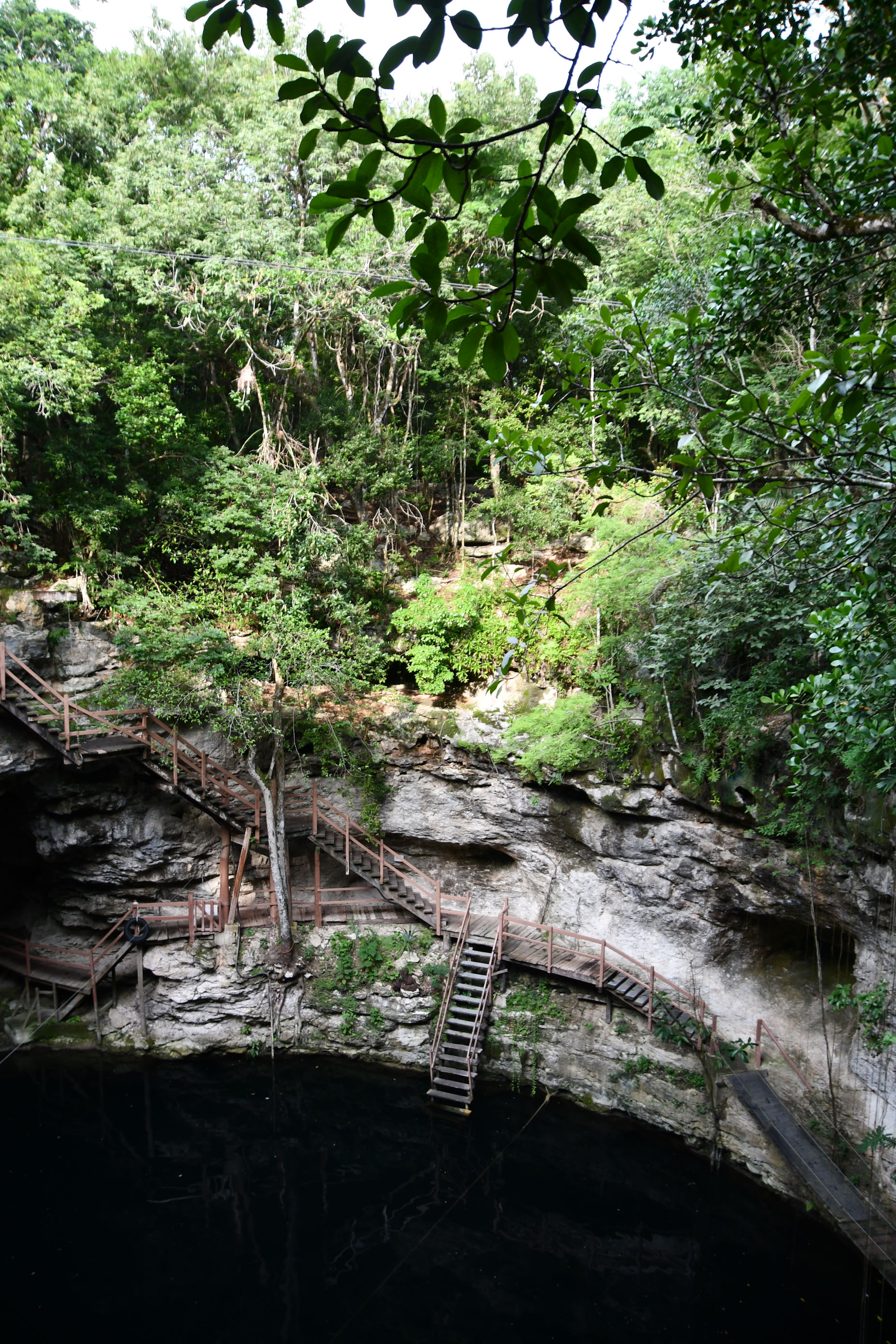
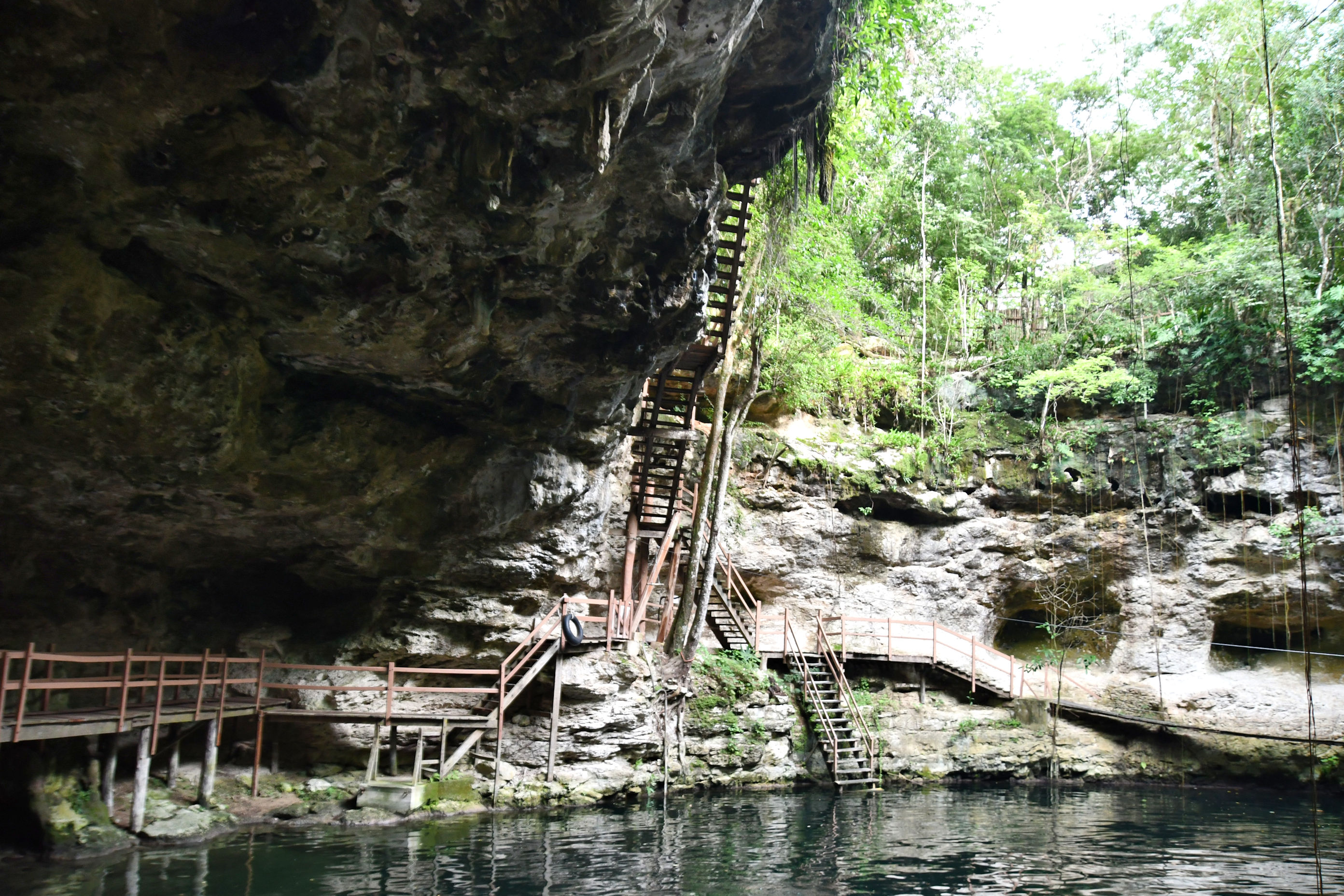
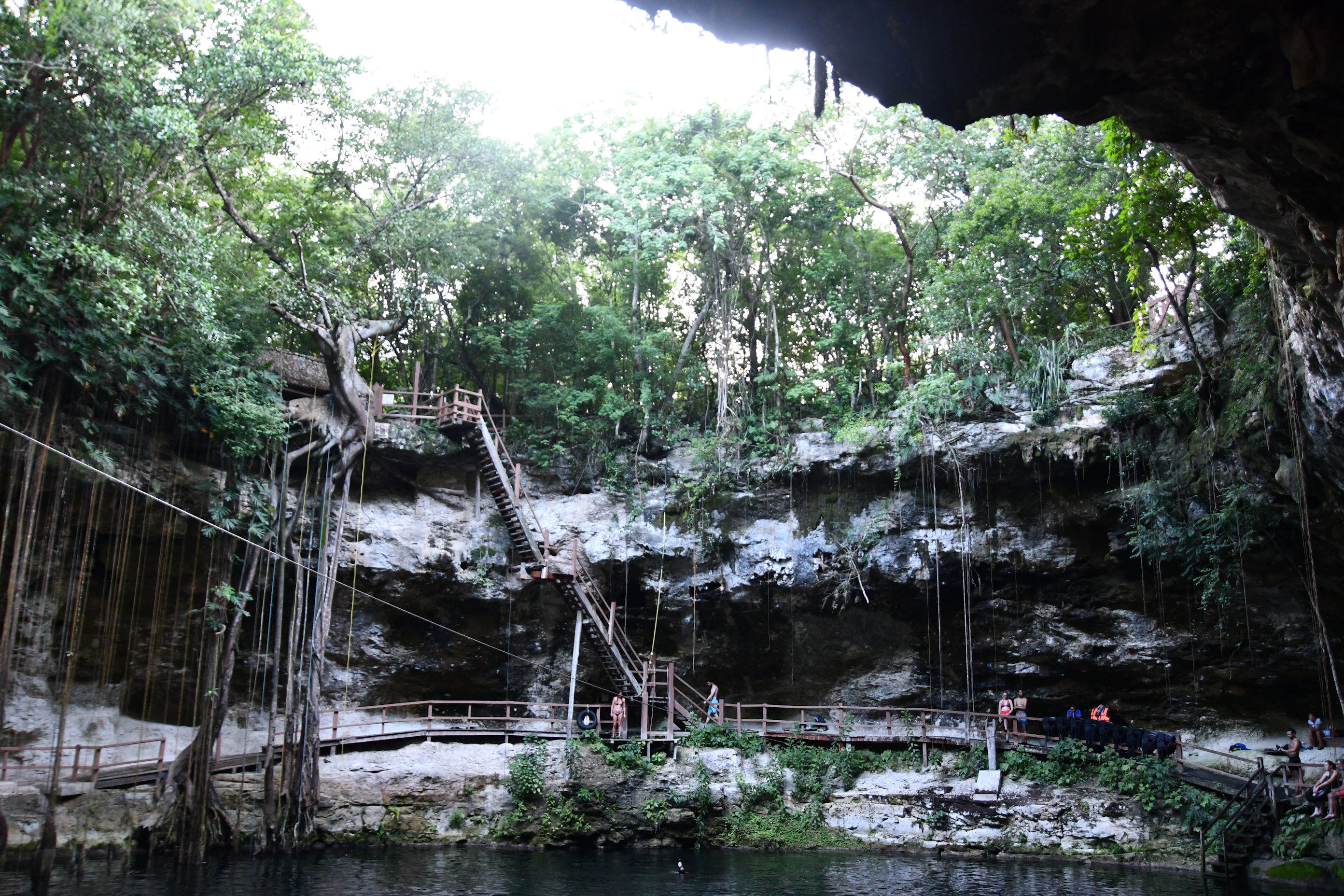
OK, so yes, with a fear of heights, the stairs to the water will be the biggest obstacle. Liam was hesitant, but he tested the stability of the stairs, which are well-made. He kept his face to the wall, sucked in his breath, and made it!
I am certain that more popular, expensive cenotes with more tourists will have a less-steep access. This one, like I said, was in a nature preserve, so they were trying to keep it less developed, but still fun. The trade off here was: hardly any people! As you see from the video, there were only two people when we arrived. By the time we left, there were about twelve people in there, including us.
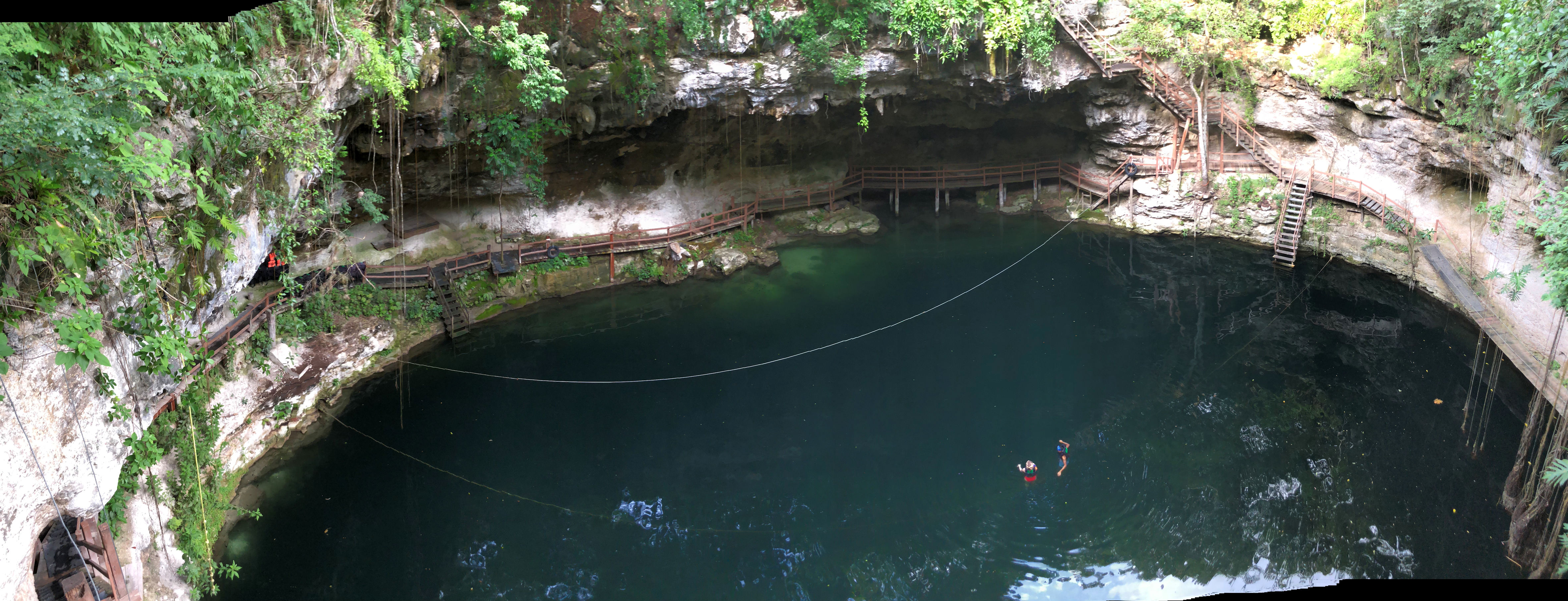
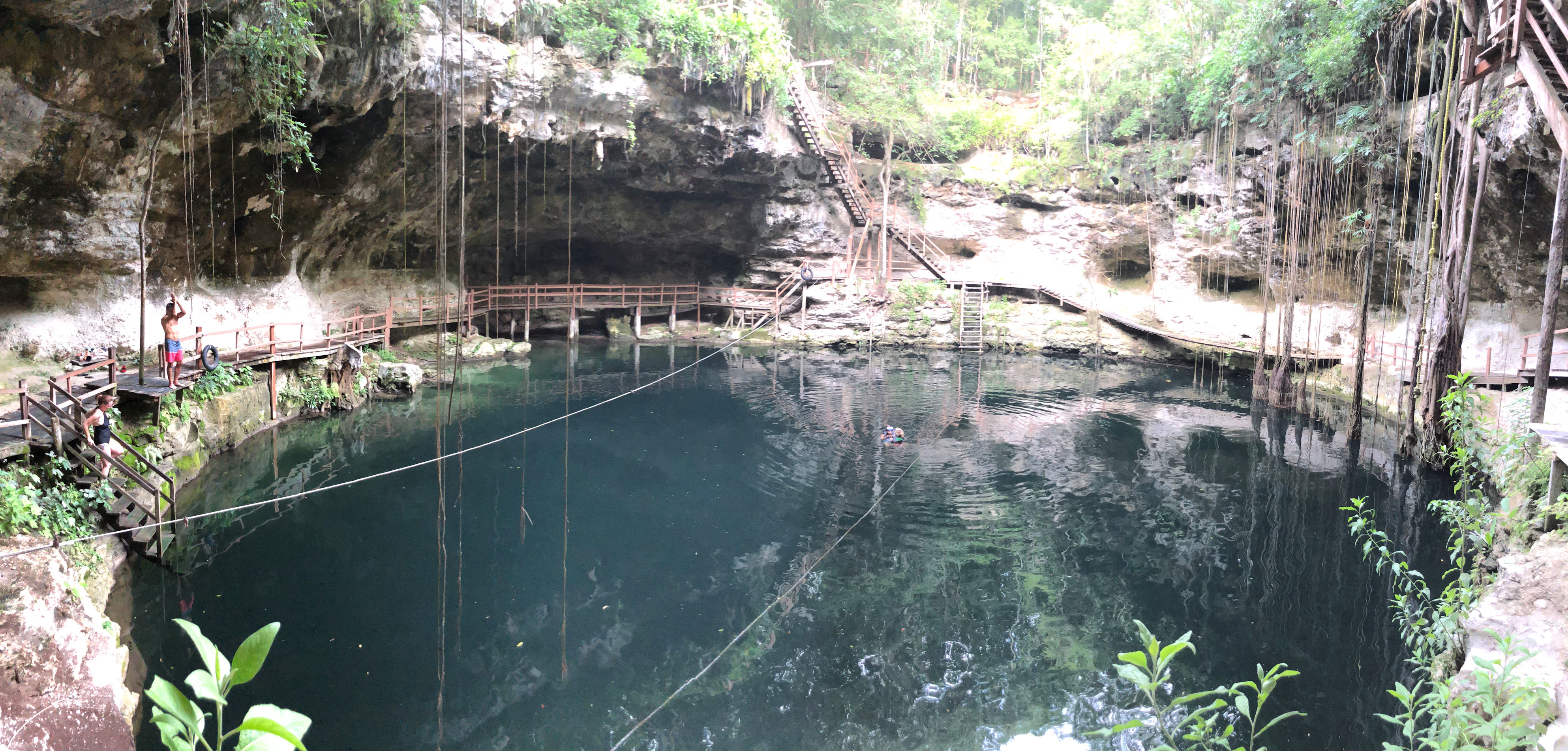
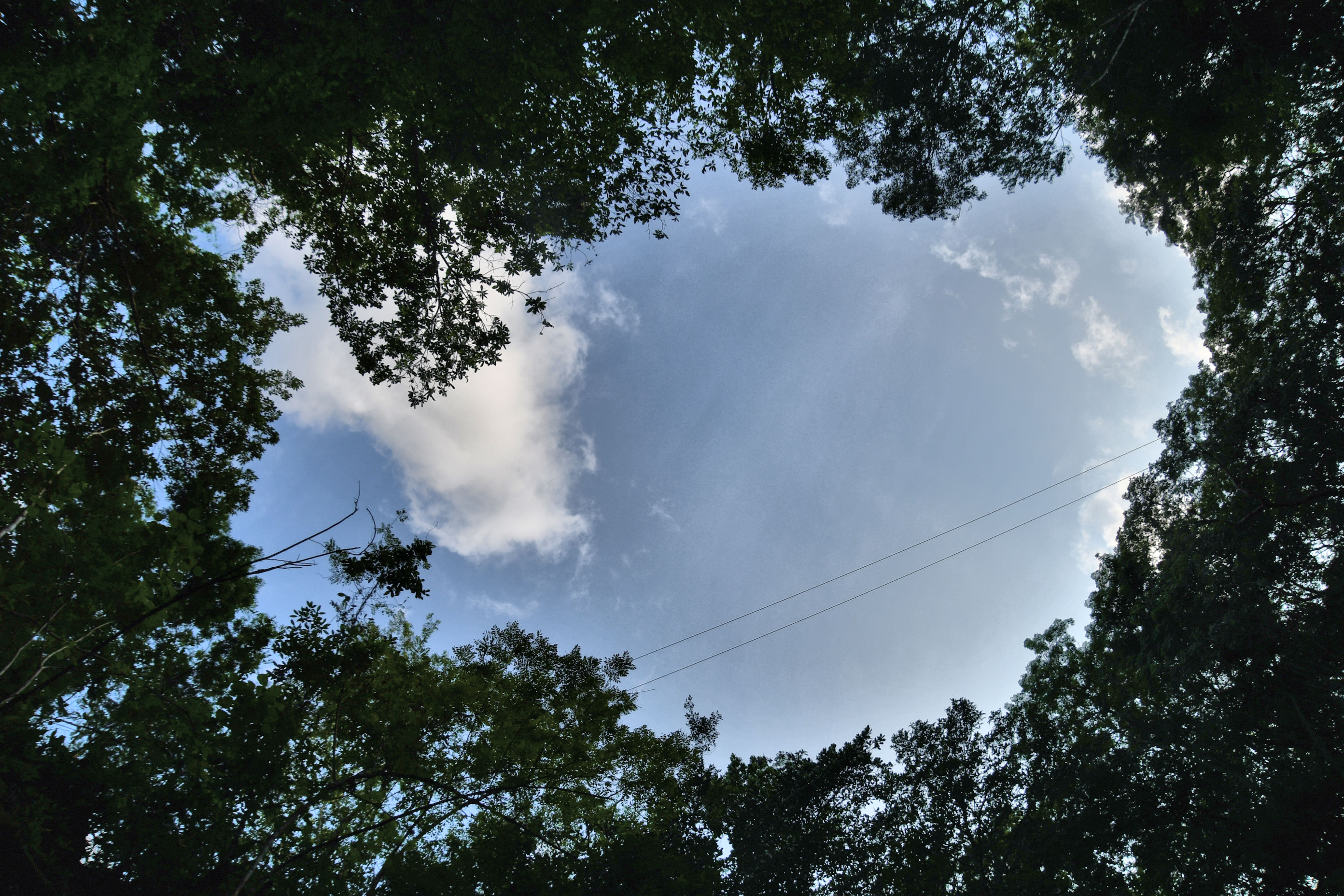
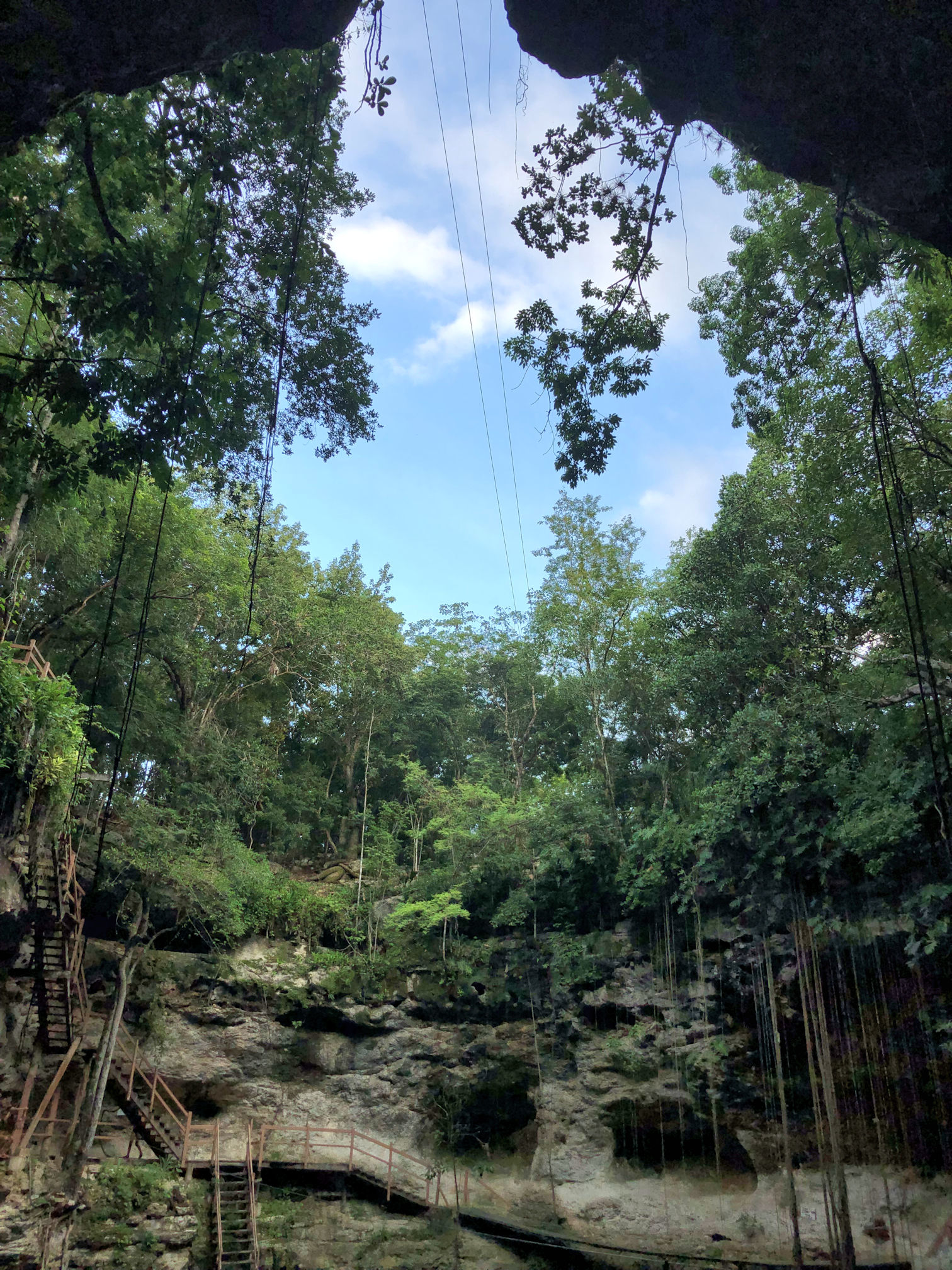
You’ll have to excuse the exposure in my photography. My camera was struggling. First of all, it was several hundred degrees out, with 137% humidity. Electronics don’t like that. But worse, the bottom of the sinkhole was in shadow, and the top of the sinkhole was bright light. I always have a hard time dealing with that kind of scene. So, the photos, while cool, are all over exposed.
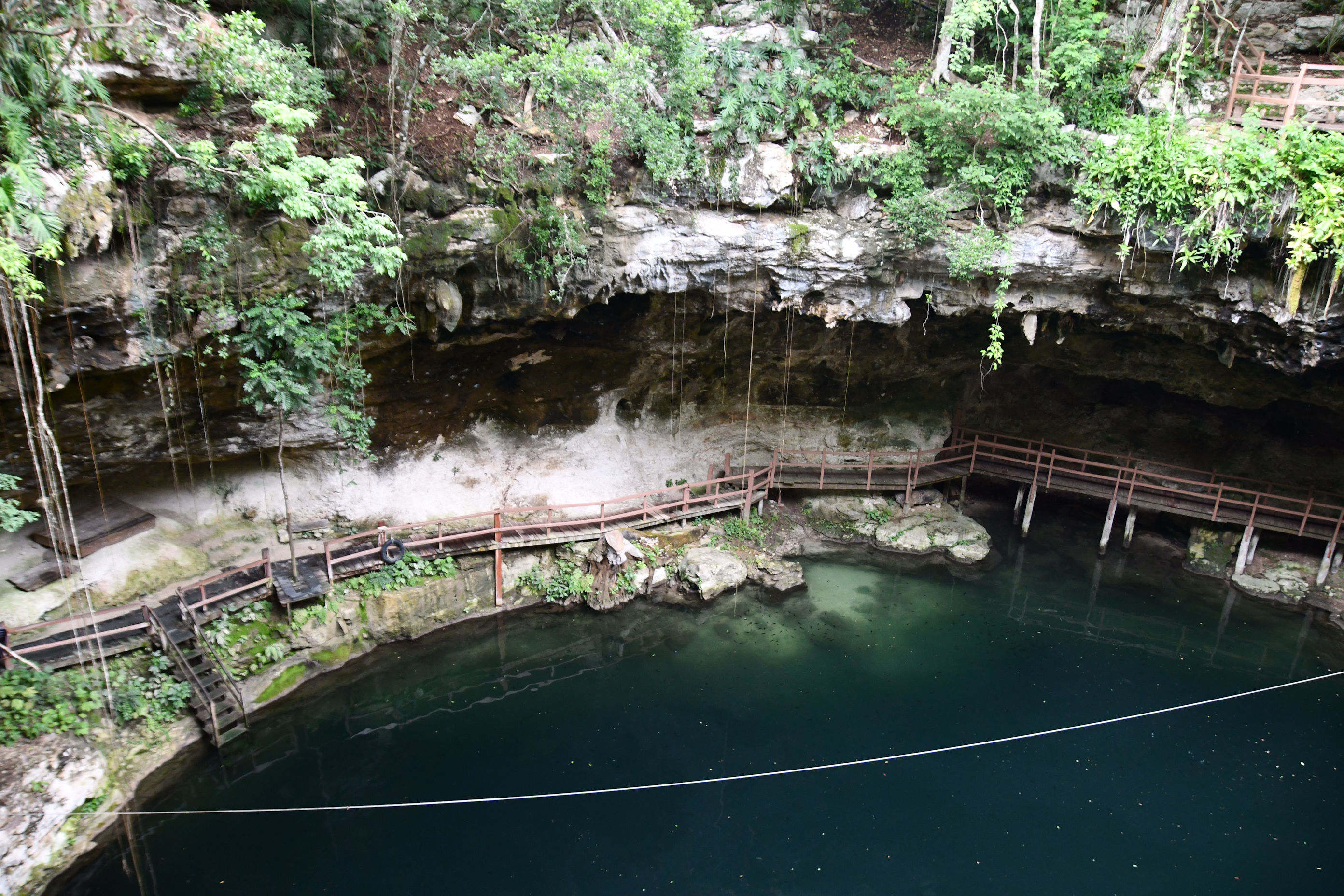
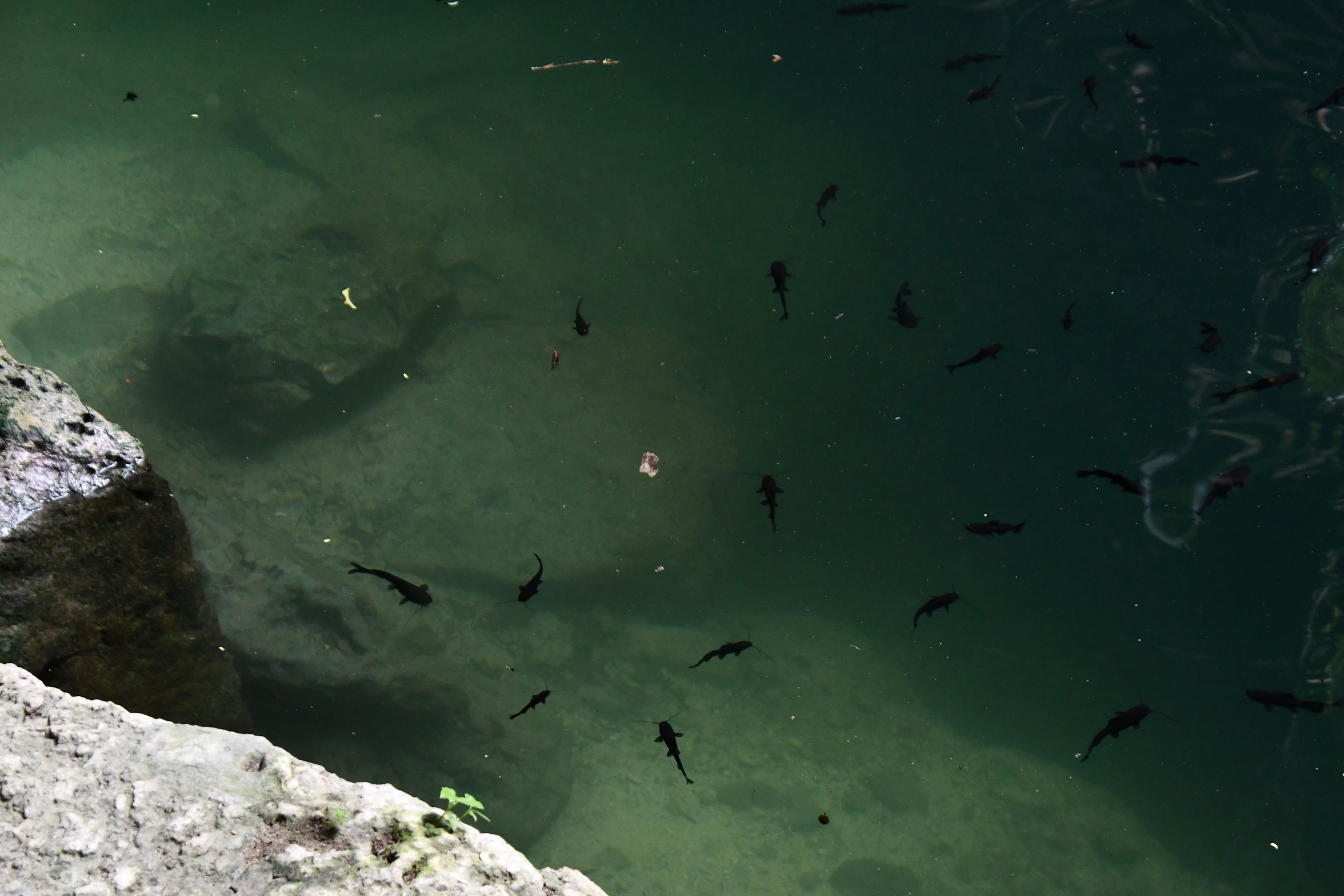
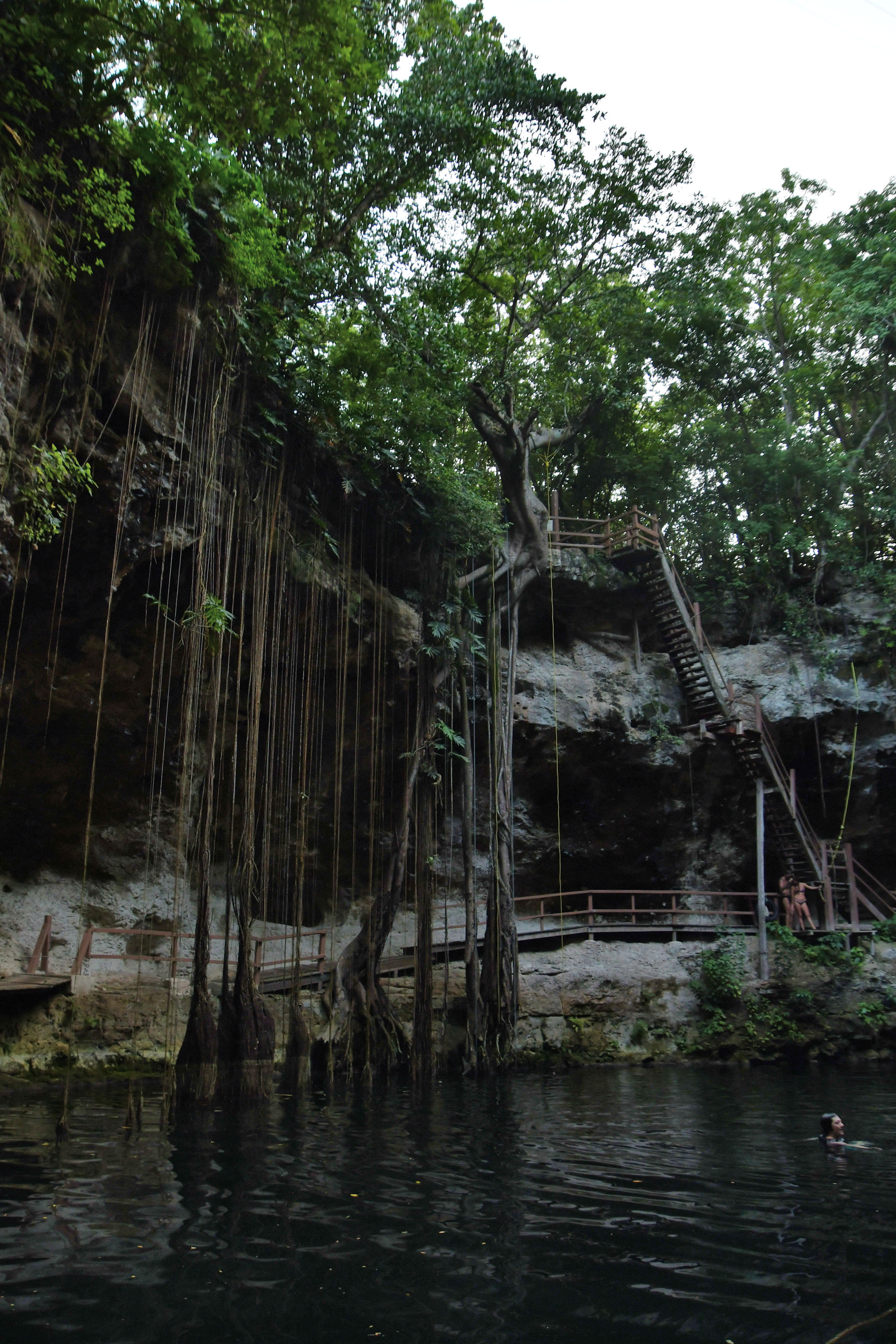

We were told at the pay kiosk that life vests were mandatory. When we arrived, no one was around to enforce the rules and Pedro and I are strong swimmers, so we declined to use them. Pedro tried it for a little while, but the vest rose up around his neck and made swimming awkward, and he ditched it. When we confirmed for Liam that we could not find the bottom of the pool, he felt more comfortable wearing a vest. There were also inner tubes we could use. (None of the other people there wore life vests either.) One reason you may wish to use a life vest is because the pool is deep and you can’t stand. So you need to bring an inner tube, or periodically swim to the edge and hold onto something to rest.
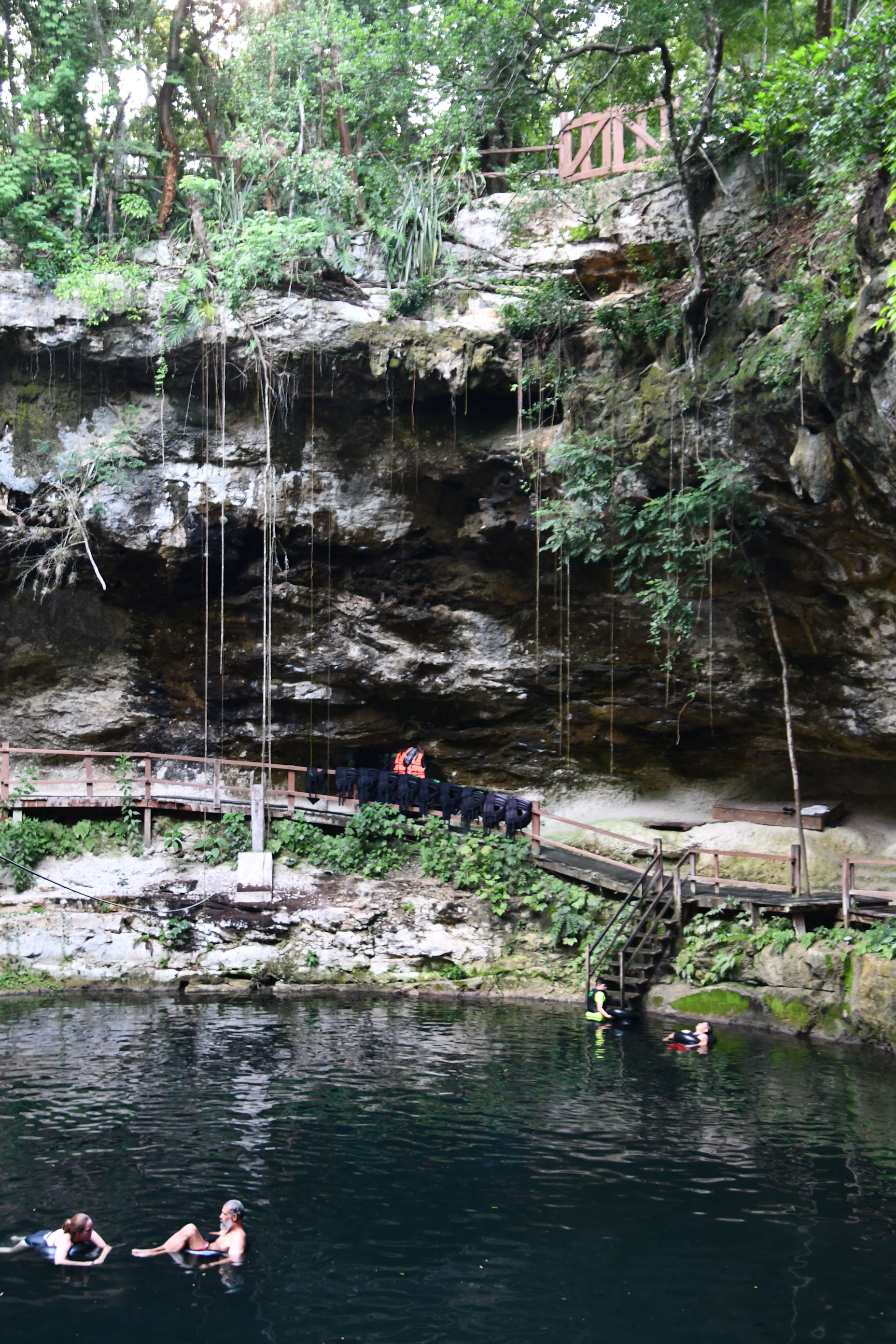
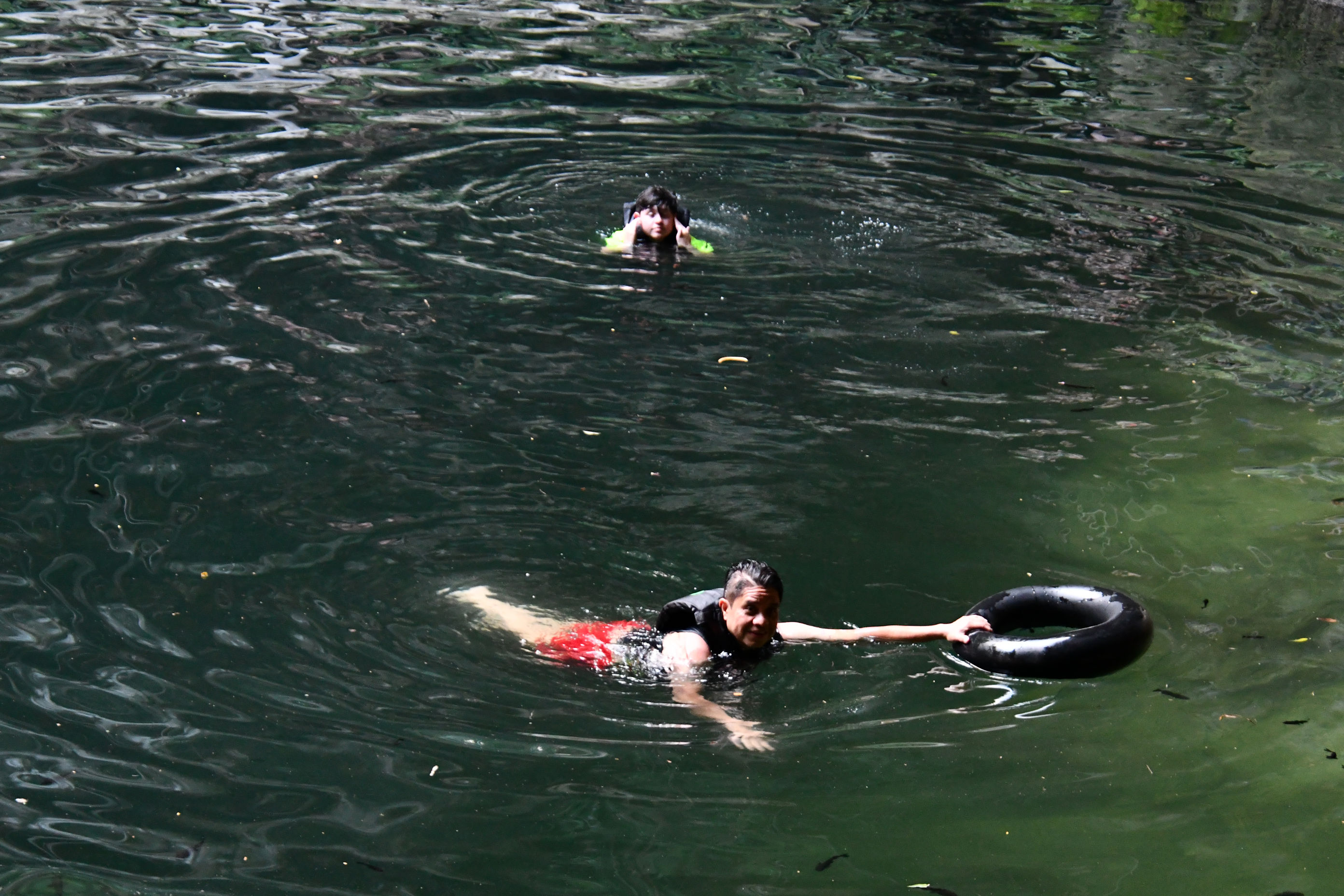

For a long time, people were happy to swim around and look up at the sky through the hole in the trees. It’s a completely new experience.
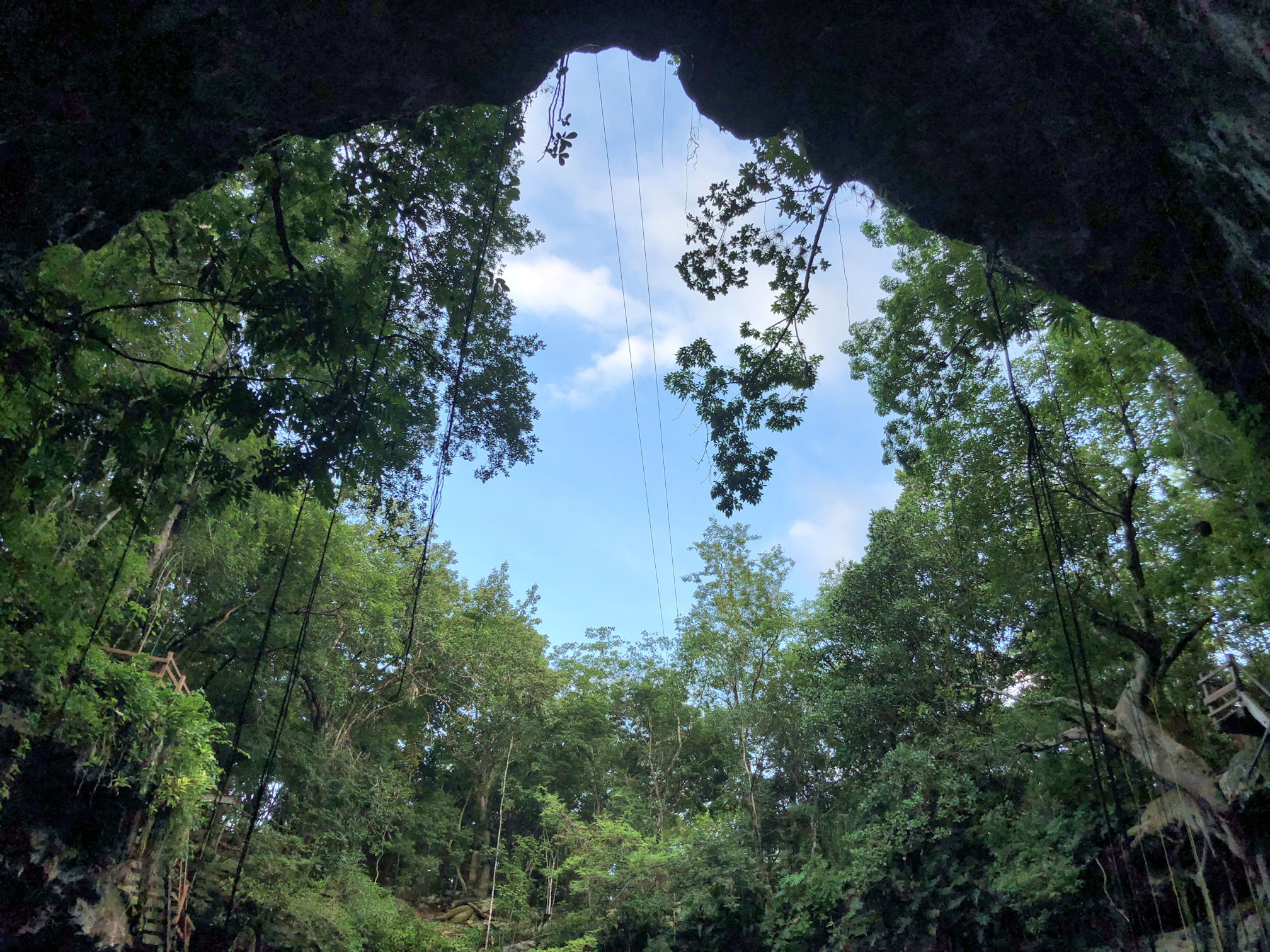
The water in the cenote is clean. For some reason I expected it to be icy cold, but the temperature is comfortable. It’s so clear you can see right through to your legs treading water and the little black catfish. I spent a silly amount of time trying to touch a fish because they are quite relaxed with people and come right up to you. I managed it a couple of times.
The light was beginning to wane and we were missing Andre, so we climbed back out and headed back to the car.
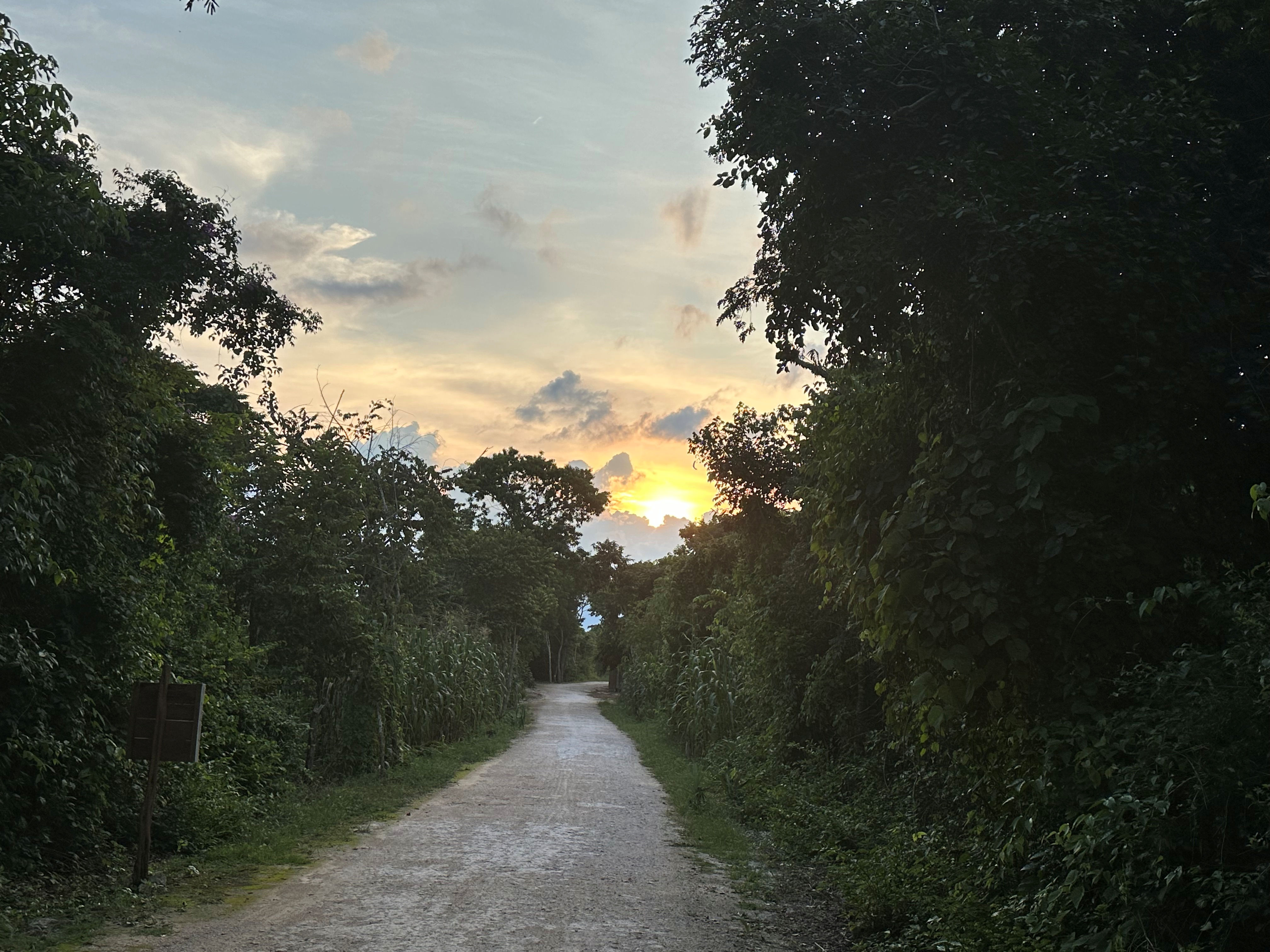
On the way home we kept saying, “Say NOTE ee, ex CAN chae,” and giggling.

 Conscious Engagement
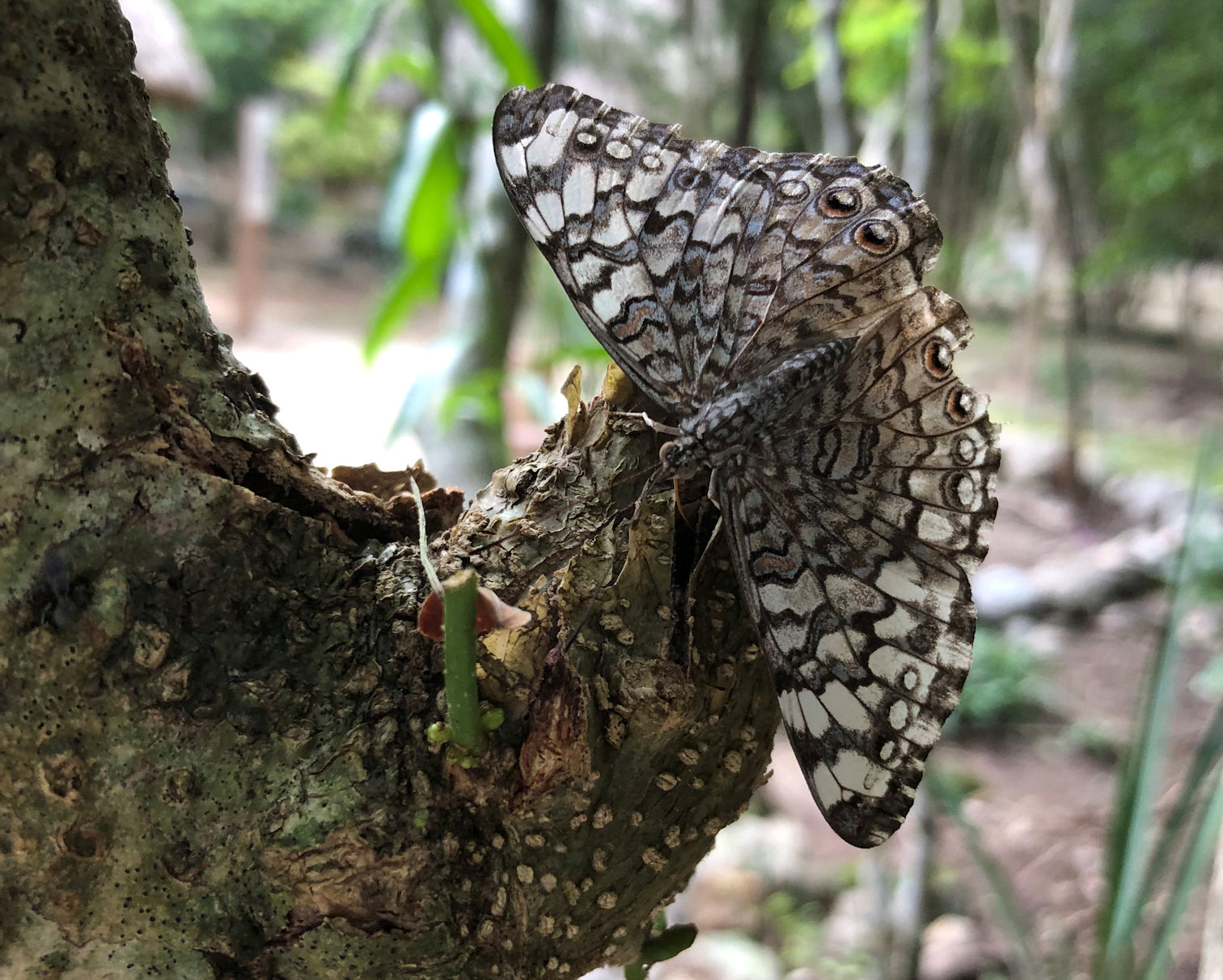
A well photographed fantastic phenomenon with bonus butterfly
Bonus butterfly! I am glad to have spotted it. Now that we have experienced this cenote, I look forward to visiting more someday.
I´ve always been fascinated by cenotes, and this one looks amazing, Crystal. Not to mention the perfect place to be on a hot, humid day.
I heard about cenotes for the first time in my life last year from my Spanish textbook! As soon as I saw photos, I became a little obsessed. I’m so happy that Pedro and Liam were game to join me on my quest to experience something none of us knew anything about. And, oh yes, swimming in the cool water, in the shady hole was a perfect end activity for the day.