
Somehow we had missed the Abbey the day before. It’s not like Lacock is so vast that one can miss a point of interest. But we had followed the main city streets around in a loop and saw no reference to the Abbey, and I neglected to check my travel notes. We had not chosen to take High Street away from town, to have come across the Abbey entrance. It wasn’t until we left town in the morning that we noticed signs to the rather remarkable Lacock Abbey. Too late for us though. It was early morning, and entrance gates were locked except to footpaths, and we were on a timeline that day so walking would have taken too much time. I parked and took photos as best I could, which wasn’t enough. But it’s all I have of the Abbey at Lacock.

I had already purchased noon tickets to tour the Roman Baths at Bath, but before then I wanted to see Castle Combe (pronounced Castle Coom), which is sort of on the way to Bath. We came into the village from the north, and copied what everyone else was doing before we even came in sight of the village. Parking spaces were filling up, so we made a snap decision and parked in one remaining space, and began walking down hill.
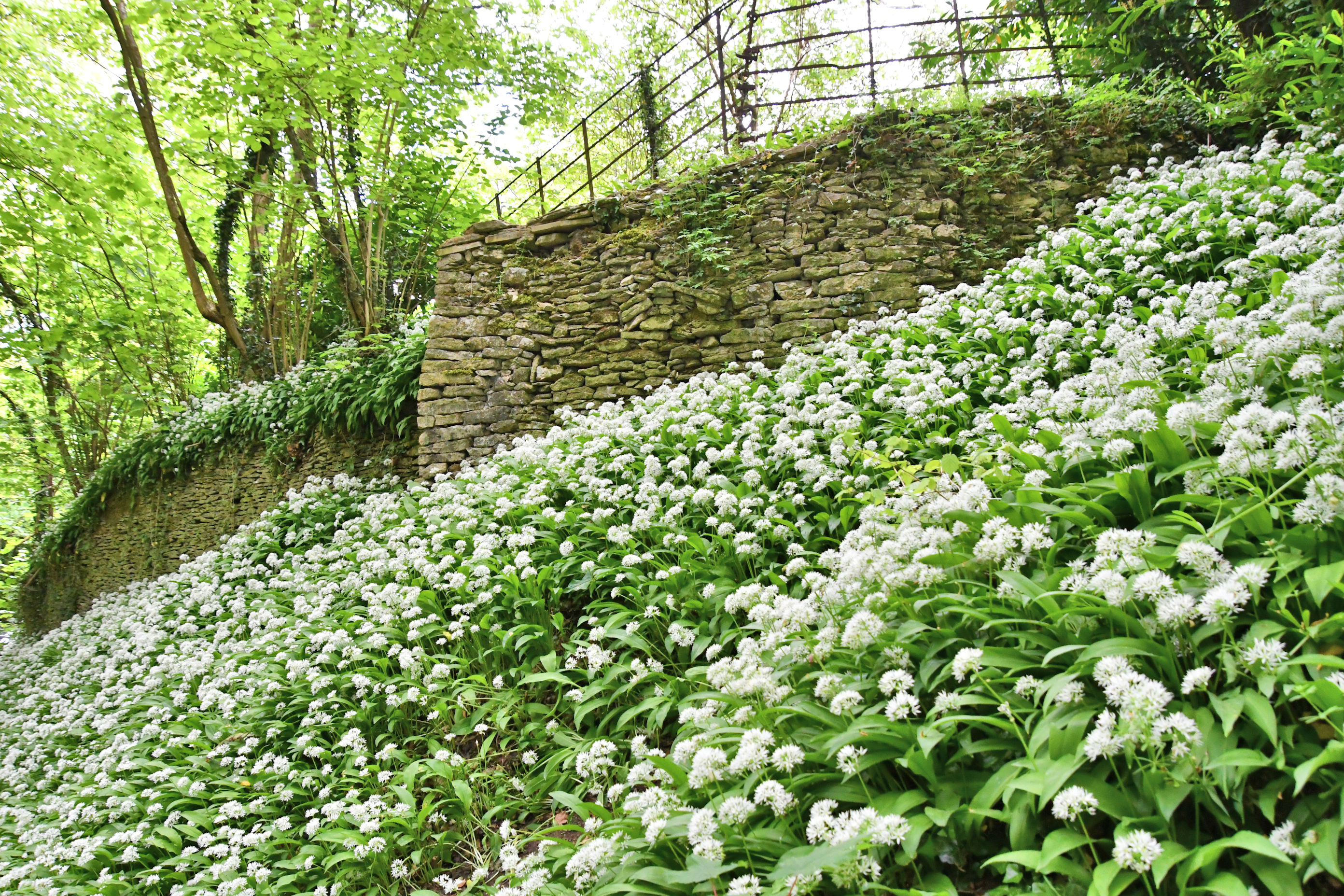
Many people were parking and walking briskly toward the village with us, and we asked questions. Can we park here? Is everyone going to the village? Why are there so many people? I had been eager to explore on this Monday, a weekday, because I assumed many tourists would be absent. Remember how I said in a previous post that it was a Bank Holiday? Well, it was on this day, Monday, in Castle Combe, that we learned this information. The holiday is May Day, something only rarely celebrated in the US as a Spring Holiday, and also rarely but more often lately, celebrated in the US as a labor rights day. It’s a three-day weekend in England, and everyone was out.

The name Castle Combe comes from the Norman castle, which was abandoned by the 14th century and now no longer exists, and the fact that the village sits in a valley, called a “combe” in Old English.
My hopes to have Chippenham to ourselves was dashed, as we saw more and more people pour into the tiny village. The oddly cropped photos here and there are a result of my attempts to take photos without all the people in them. Castle Combe has an absolutely darling little stone bridge with gorgeous homes in the background. I yearned for a photo of it, but the one lane bridge was packed with tourists getting selfies every moment that we were in sight of it. So I didn’t even attempt a shot of or from the bridge. Except of the ducklings.
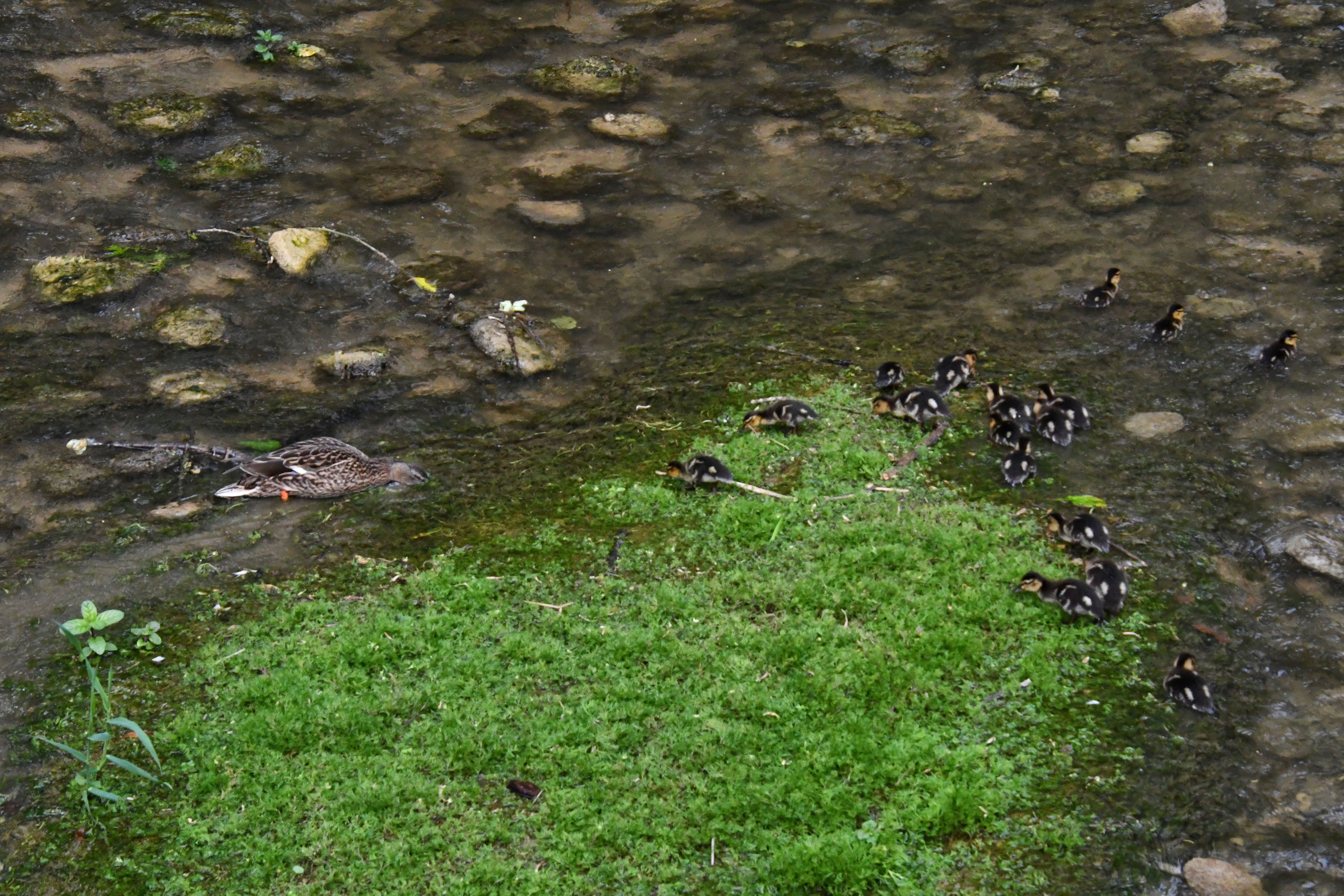

There was once a castle here, but nothing but the earthworks to support it remain today. The site was once occupied by the Romans due to its strategic location. After them, the Normans took over, and built the castle. In the Middle Ages the village became an economic center in the wool industry, and used By Brook to power the mills.
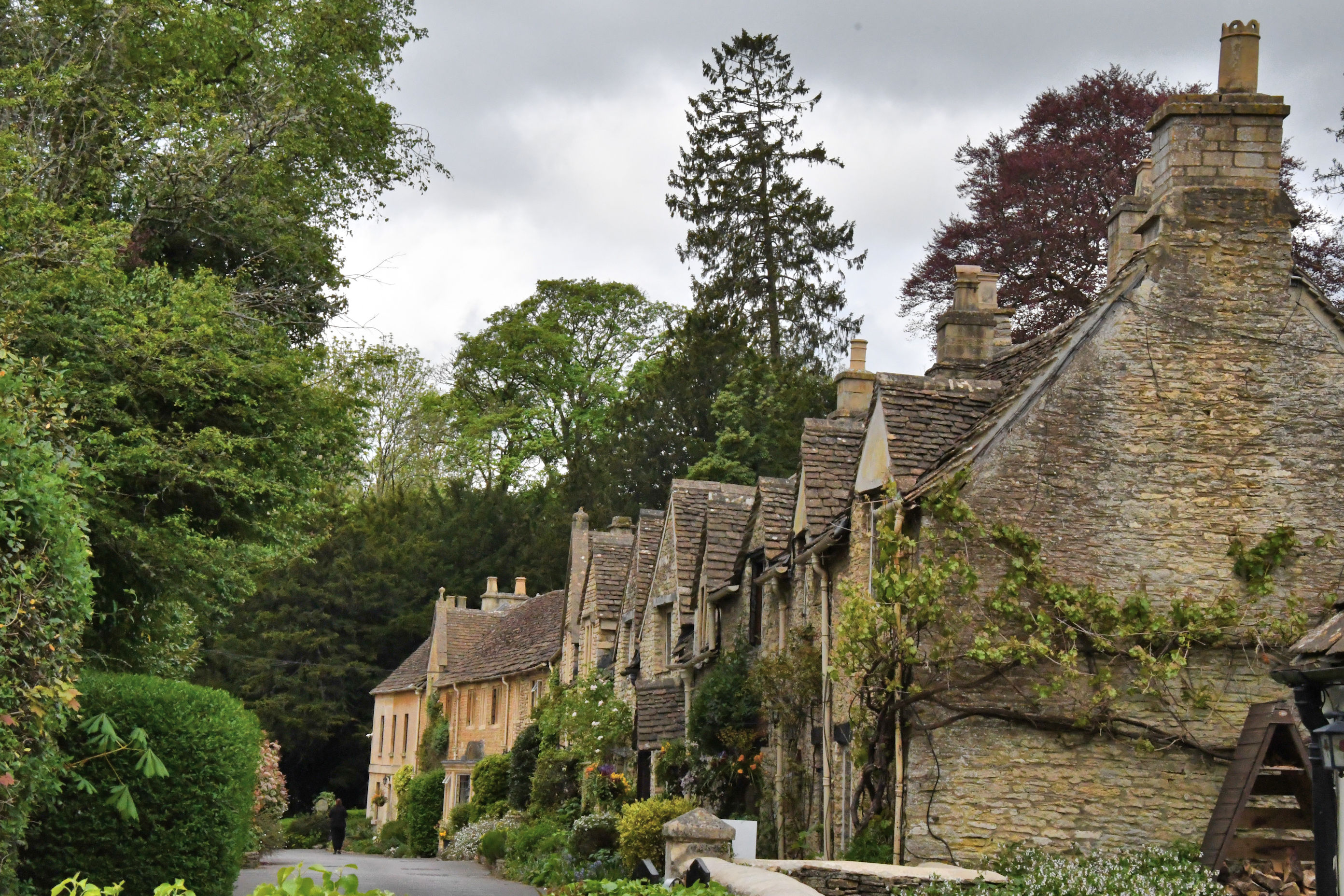
The village houses are constructed in stone with thick walls and roofs made from split natural stone tiles. The properties are many hundreds of years old and are listed as ancient monuments. Strict construction rules apply to preserve the beauty and character of Castle Combe for later generations to admire. The village is so pretty, and so matches our expectation of a beautiful medieval English village, that it appears in movies and advertisements. The one I was most pleased about is the movie Stardust, with Robert De Niro in drag and if that isn’t a hoot, I don’t know what is.


In the center of town are a couple of awkward monuments (that tend to occur when a village is 1,000 years old) in the middle of the intersection of three roads. One with a roof built over 2/3 of it, but leaving the tallest point rising through the roof. And the other a large stone in the center of the square, that I assume is a hazard for cars. Luckily, no one is likely to attempt driving through here very quickly.

King Henry VI granted the village the right to hold a market in 1440, and the monument – the market cross – reflects that charter.


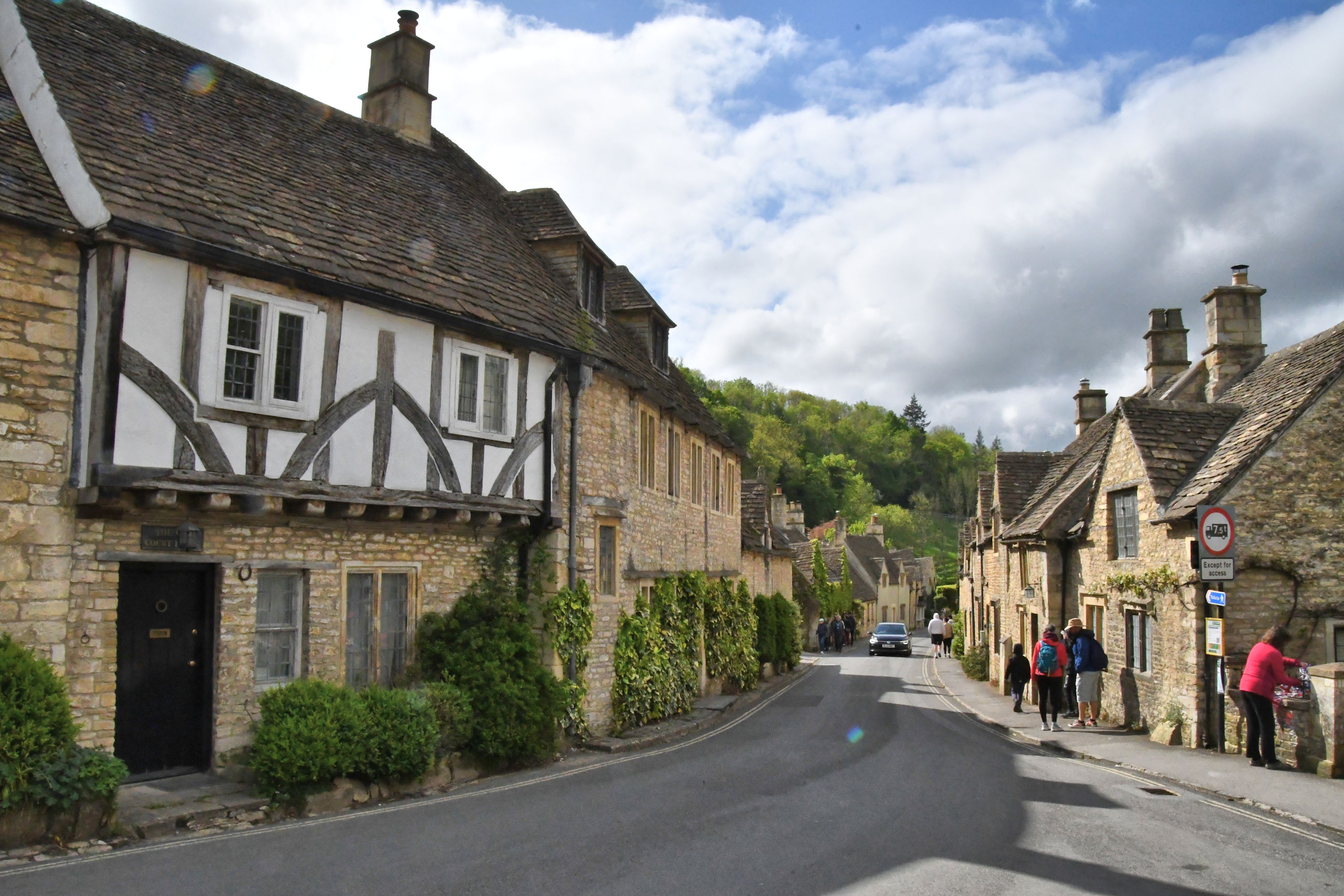


The scene above is burned into my memory because standing on the sidewalk I received a phone call from Pedro. It was the middle of the night for him. I had been so drowsy the night before that I had forgotten to tell him goodnight. It was morning for me, but I had not sent a good morning message because I didn’t want to wake him. He had sent a few texts during the night to check on me, but I didn’t hear the alerts, or see the notifications on my phone. He sent a text to Margaret’s boyfriend, asking if he knew anything, but Allen didn’t see the texts timely either. By the time he called, he was very worried and I heard it in his voice and it broke my heart. I hate it that he worried so much, and all because I didn’t look at my phone. But my next thought was how grateful I am sometimes for modern technology. Much of the time I did not have phone signal, especially out in the Cotswolds, but viola! My phone rang in the center of Castle Combe, and I assured my sweet man that we were ok, and he was finally able to sleep in peace.


With a place this gorgeous, no wonder so many location scouts choose it as a movie location. It was certainly worth going a little bit out of our way to find Castle Combe before spending the rest of our day in Bath.

 Conscious Engagement
Excellent wander about Crystal. Thanks for taking me with you 😀 I can image Pedro’s panic. I would do the same and be at my wits end. Ain’t love grand
I understood his worry, too. Funny how, once you get a worry into your head, it can just spiral out of control. I am so, so, so grateful that when he decided to call, that it rang right through. Love is grand. I’m grateful that my man loves me and worries about me.
It does become a constant nagging in the head after a while but the relief upon reply is so good
More splendid coverage of excellent photography and impressive information. I am sorry that Pedro was so worried, but it is such evidence of his love. XX
I did find the history of Castle Combe interesting. I guess it was originally a fort, and that is why it interested the Romans, who built it into a defensive position, as they do, since it was near some significant road. That must have been what drew the Normans, who then improved upon it once more. What is curious to me is that they built a castle in a valley, harder to defend, but I’m sure they used the By Brook for some defence. Then the proximity of By Brook is why the town flourished as a center for wool. All these bits come together to make a long history. It’s fascinating.
What a quaint village, Crystal. I’m glad you managed some good shots without people in them.