
In my last post I only wrote about the otters at the High Desert Museum in Bend, Oregon. In this post I will show you more of the museum. It is a large campus and I will leave out a lot, but this will give some sense of it.


Since Pedro and me and the kids showed up mostly to see the otters, we bought our tickets and walked directly through the building and exited into the campus outside in the back. The building holds 100,000 square feet of exhibition space, but outside are 135 acres of land. They have an aviary, and an entire old-timey section meant to show the life led by early Oregon homesteaders, including a real sawmill from 1904, a barn with hay put up and tack for the horses. There is also a one-room cabin that is an exact replica of the house my family lived in when I was a kid, complete with an outhouse.

Once outside, we went hunting for the otter exhibit, but got distracted by the Donald M. Kerr Birds of Prey Center. The museum cares for birds that cannot survive on their own due to injury or maybe being too comfortable with humans. The staff and signs take pains to explain that it is never best practices to keep a wild animal, but they will do it if there is no other way for the animal to live.
It was hard for me to photograph these beautiful birds through the wire mesh, but I got a couple of good ones.


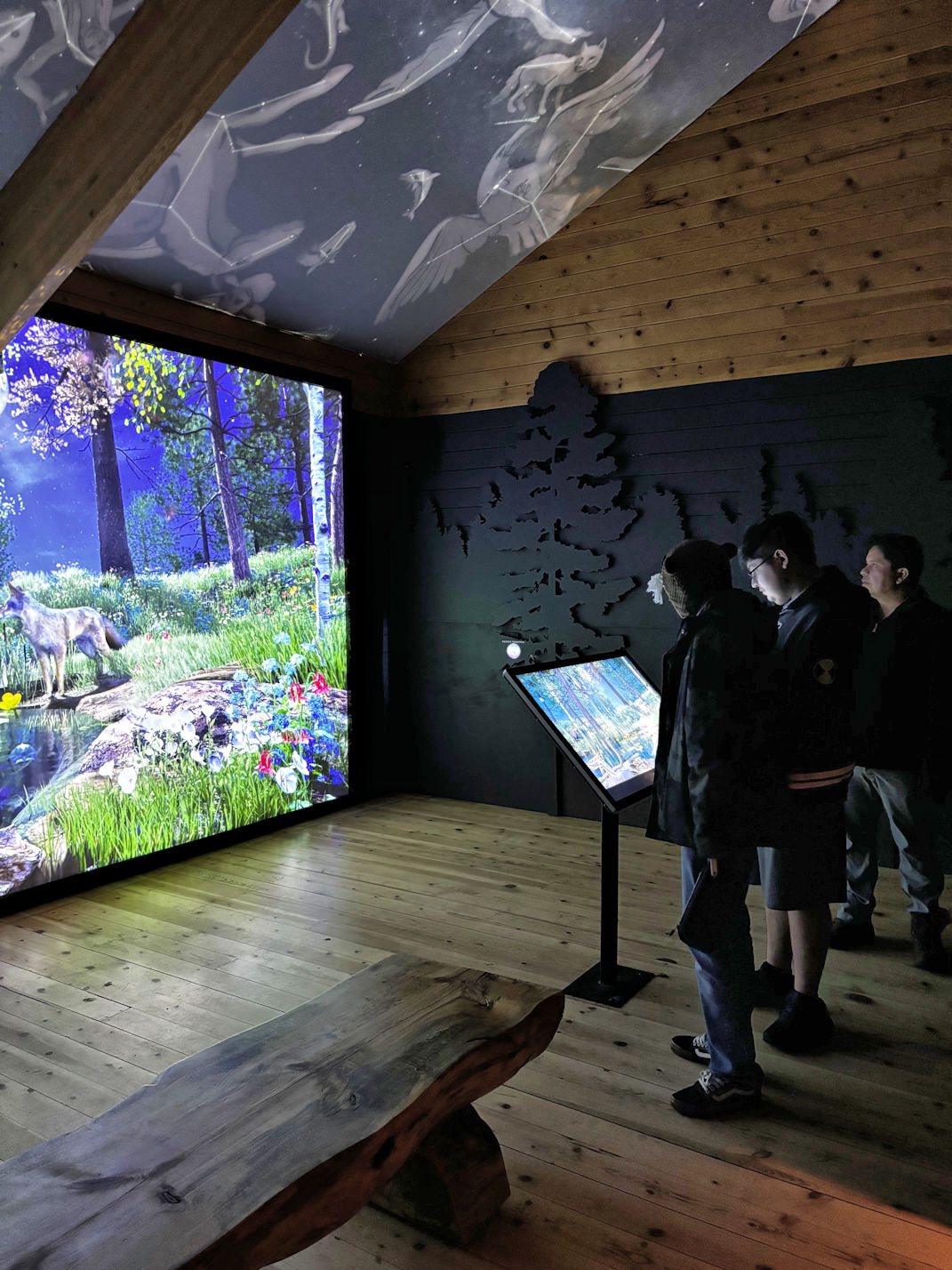
We exited the aviary and walked through the forest trails to the next outdoor exhibit, a neat one called Forest At Night, that had interpretive boards in a covered patio.

As we stood inside the exhibit, a scene unfolded in front of us, with life-sized wild animals on the screen that moved and interacted with each other (like when a baby bobcat pounced, an insect flew away in alarm).
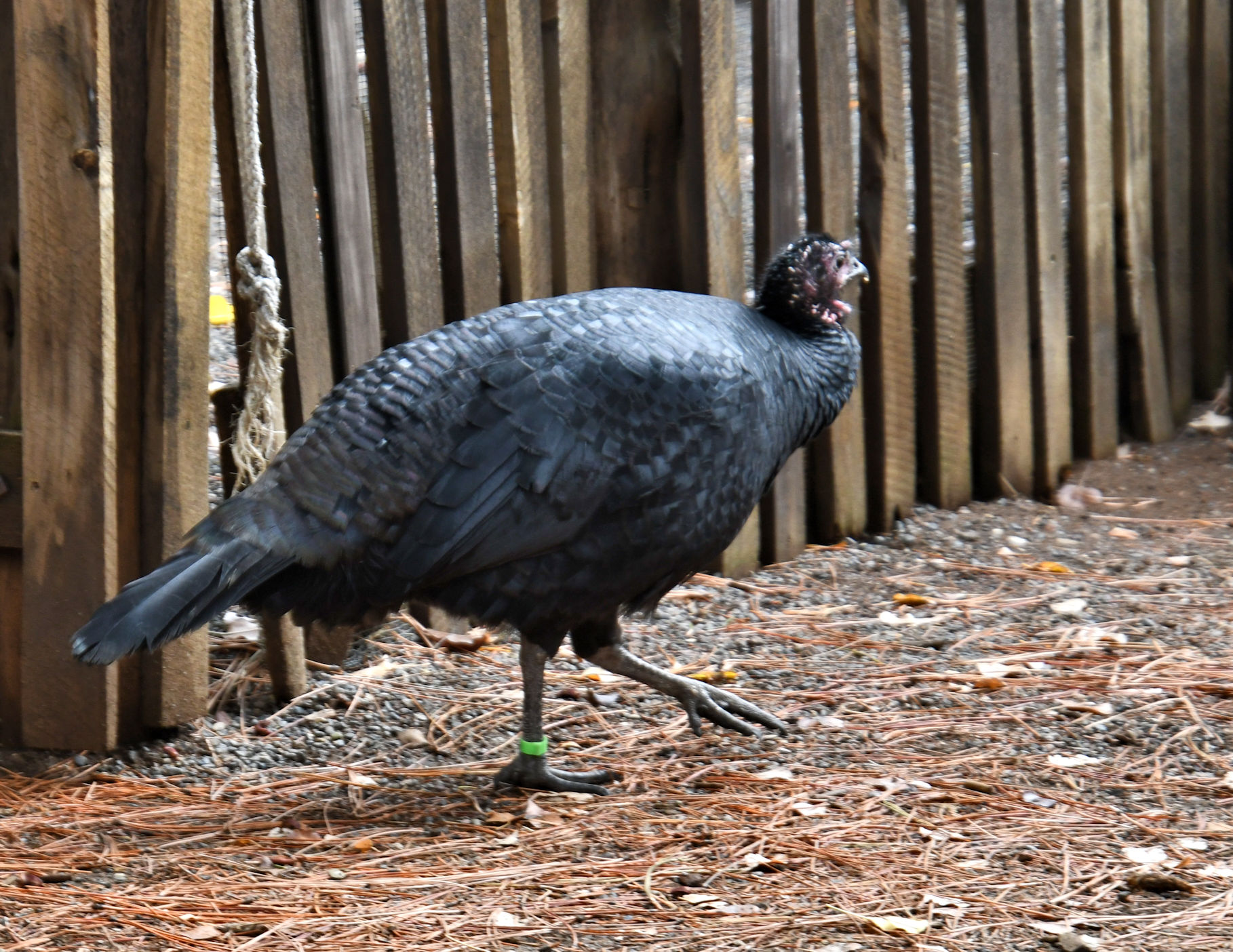
One thing we found amusing was that there were a couple of chickens lose on the property, ignoring visitors entirely, as they scratched in the pine needles and duff of the forest floor. We saw them multiple times but I forgot to take a photo.
There was an announcement that the otter experience was about to begin, so we made more of an effort to find the otter enclosure. We had, of course, chosen the wrong direction from the beginning, and started at the side opposite of where the otters were. But we now saw a few people heading there, and we walked in the same direction. By the time we spent another hour with the otters, we had been out in the cold, rainy, November day for two hours and we were all freezing. We went back inside.

Inside the museum is the desert animal display, which again holds only animals that are unable to suvive on their own in the wild.


Inside the museum are always outstanding examples of High Desert Art on the walls, adding a dimension I don’t often see in nature museums. The nature exhibits regularly change, with a focus on appreciating and understanding nature, with a variety of animals that surprises me.


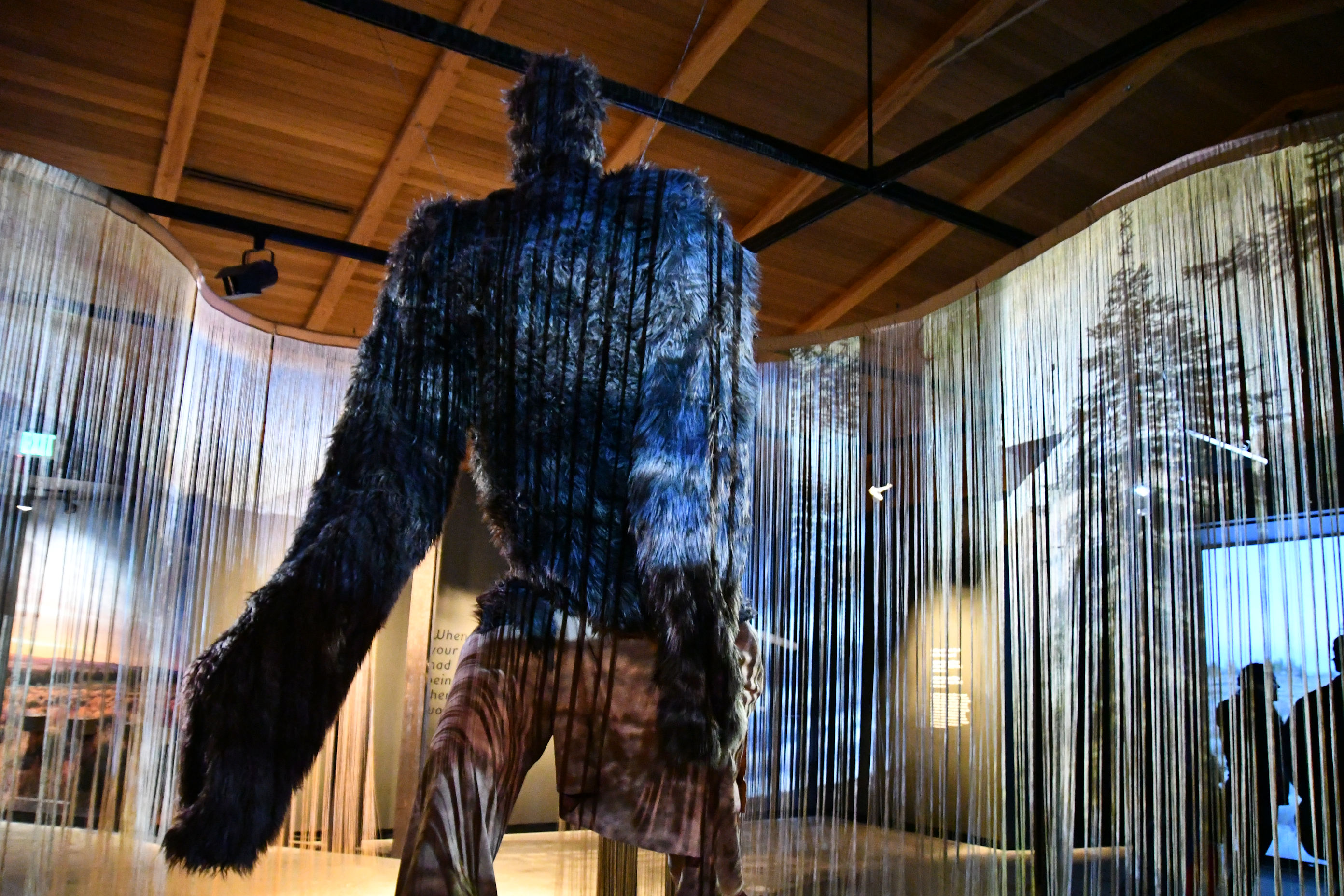
We were getting hungry and the twins were losing patience, so we agreed to skip half of the indoor exhibits, but we did take a quick look at the Sasquatch display, which is a Native interpretation of this large, hairy, man-like legend.

The one exhibit I did want to see again is the Native exhibit. I go to this one every time of course. My favourite part in this wing is the tule reed tipi at the entrance. It is traditional construction on the outside, and inside are some tanned hides, and carved tools and some woven blankets…AND a plastic igloo cooler and a fold-up aluminum chair, next to a Gore-Tex jacket. I surprise people every time I point out examples that place Indians in the current world, and I’m super glad the museum is doing this as well.


The boys joined me in the exhibit called By Hand Through Memory. This exhibit, with all its hand-crafted items that you see above, includes contributions from Nez Perce, Umatilla, Warm Springs, Yakama, Spokane and Colville people. The exhibit portrays Native Peoples as people who preserved their history and adapted to and shaped contemporary society.

We were in the mood for comfort food, and left the museum and ate heartily of Italian pasta after that. Bend has outstanding offerings by way of restaurants and bars and coffee shops and more.

 Conscious Engagement
Another great place to visit, so much history with birds and animals as well. I am so glad I tagged along Crystal 😀
I love how they also care for those wild animals that cannot otherwise survive in nature, Crystal. It must have been such a lovely experience with the otters and other wildlife. A good friend of mine lives in Bend, so it was lovely to get this glimpse from your visit to the museum.
Oh, now isn’t that a fun coincidence? Bend is a special place.
Jolandi, if you take a look at my newest post, you will get a great look at the landscape around the city of Bend, Oregon.
It sounds like it is.
A wonderful tour. The wingspan check was good and I really liked he Native exhibit. Re the one-room cabin, welcome to the group who find their childhoods in museums
Oh no, Derrick. This has happened to you also? I admit, I was dismayed. I really don’t feel as old as all that. It’s a similar dismay to when I was listening to the “classic rock and roll” station on the radio, which played songs I listened to in high school.
I find it fun
That looks like so much fun! I love the car. I’ve seen cars with quilted covers but never mosaic. I’m glad I got to go along on this trip with you. Thanks. So much to see.
The car is spectacular. I do really love it. I’m glad I posted several photos then, so you could get a good sense of it. ❤