

In my last post, I mentioned that we left the House Finches for four days over a long Fourth of July weekend. Well, here is my very late post talking about that trip. It was super fun and you’ll recognize our companions.
Margaret is my long time travel buddy and you have seen our adventures around the world. She wanted to spend the holiday weekend at Crater Lake. Since I am registered with the park service as a US military veteran, I can often get discounted rates on things like camping in parks, so I agreed to make reservations for all of us.
Most of the Crater Lake National Park lodging was already taken, but what was available seemed like a sketchy prospect. The reviews of accommodations were bad, listing filthy bathrooms, dangerous states of disrepair, broken locks and windows, understaffed everything. People were extremely critical of the company, Aramark, that had the contract to manage lodging and food at the park. It made me so uncomfortable that I told my concerns to Margaret and we agreed instead to camp at a US Forest Service campground right outside of Crater Lake NP.
That wasn’t the end of it.

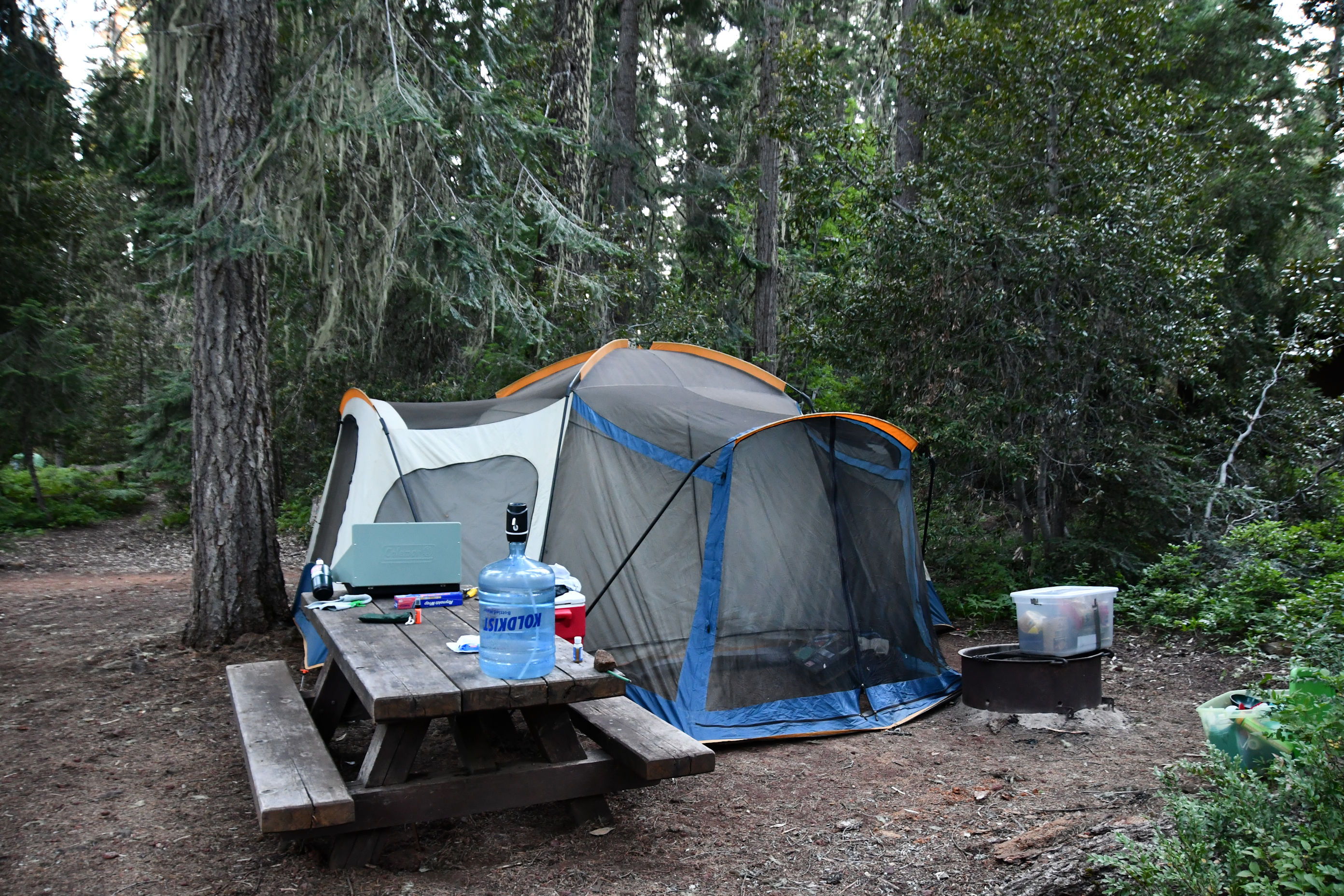
A month before it was time to go, I received an email from the Forest Service, explaining that disease had killed trees around our campground, and that it would have to be logged to protect the other trees and to reduce wildfire fuel. Our reservations would be honored, but it was a heads up that the campsite would be ugly. At that point, all possible places to find lodging near Crater Lake were taken, so we sighed with disappointment and agreed to make the best of it.
Two weeks before it was time to go, I received another email from the Forest Service. This time it said, “All reservations at the campground are canceled. You will receive a refund.” Whoah. So the logging must have destroyed more than just the views. We had to give up completely on staying near Crater Lake.


Pedro used to live in southern Oregon, and said that he had spent time at Fish Lake, which is near the more famous Lake of the Woods, and he thought it was a nice place to camp. Done deal!! I got the only two remaining camp sites there, and we rearranged our expectations.


It was going to be a brutal weather weekend, with temperatures over 100 degrees (38 C) nearly everywhere. But here in the mountains, only in the 80s (27-31 C), which is still hot, but better. Also, there was a lake to swim in!
We all got up and prepared for a hike the next morning. Margaret and I had been researching hikes for over a month, but we had not planned on the heat, which no one really wanted to hike in. We adjusted our expectations again. The first hike began from our campsite, and was to go toward the mountain in the photo above. It is Brown Mountain, and is not that eye-catching. But from there we could get a look at the closest high volcanic peak of Mt. McLaughlin.

Though our AllTrails app says the trail is a TRAIL, it actually ended up turning into a road. Roads are not very fun to hike on, and they often offer less shade because they are wider than a trail.


The 9,495 foot Mount Pitt was renamed in 1905 to Mount McLoughlin after John McLoughlin, a senior trader for the Hudson’s Bay Company. The name Mt. Pitt came from map makers. The mountain’s original names were many, due to the many languages of Natives here before White people. They called it Alwilamchaldis, or Makayax, or Kesh yainatat, and the Modoc people (maybe my ancestors) called it Melaiksi.

An early fur trader, Peter Skene Ogden, displaced the Native name for a river in what is now Northern California, and called it Pit River, after pits the Shasta Indians dug to trap animals. He did not name the magnificent mountain above the river, so map makers years later called it Pit Mountain, and sometimes Pitt Mountain, after the river. Ogden traveled north, guided by the Sastise, or Shasta, Natives and came upon the mountain in my photos. He called it Mt. Sastise in 1827, after his guides. The name was anglicized to Shasta.
In the years after, map makers got the two mountains mixed up, and started calling the Oregon one Mt. Pitt, and the California one Mt. Shasta. When I was growing up in Oregon, my parents (who also grew up in southern Oregon) taught me the name of the mountain as Mt. Pitt. And when the highway signs went up, declaring it to be Mt. McLoughlin, they scoffed, and told me that was not the correct name. Such a funny history.


After our hike we were hot and tired and decided that it was time for a swim in the lake. We unloaded our hike gear and changed into swimming gear and grabbed towels and hit the trail again, only this time we stuck to the lake shore. We walked for some time before we first got away from the majority of the people, then next found a beach-ish sort of place. The swim was marvelous and just the cool-down we needed.

Back at camp we played cards, drank wine, and had another outstanding dinner. We had planned ahead to take turns making dinner for each other.

The next morning we tried a more ambitious hike, but still much toned down from our original plans of going for hours. This one started off with a major hiccup. Only 100 yards from the parking lot at the trailhead at the base of Mt. McLoughlin, the bridge to cross had been washed away by winter flooding. Luckily, storms had also knocked down some trees over the creek and for the brave explorers that we were, provided something bridge-ish. One by one, we balanced on the tree and walked heel to toe over the water. No one fell in!
The weather grew hot and uncomfortable immediately, and we did some scrambling around and under more trees down over the trail. Our thoughts turned to ways to find rest, shade, and maybe some water. Allen and I spotted a faint trail branching off at one spot, and it looked like it might be the way to a tiny pond I spotted on the AllTrails app. In this weather, the pond might be only a marsh, but it was worth a look. We were hoping for a wider spot and maybe a place to sit for a lunch break. We all agreed to take the side trail.

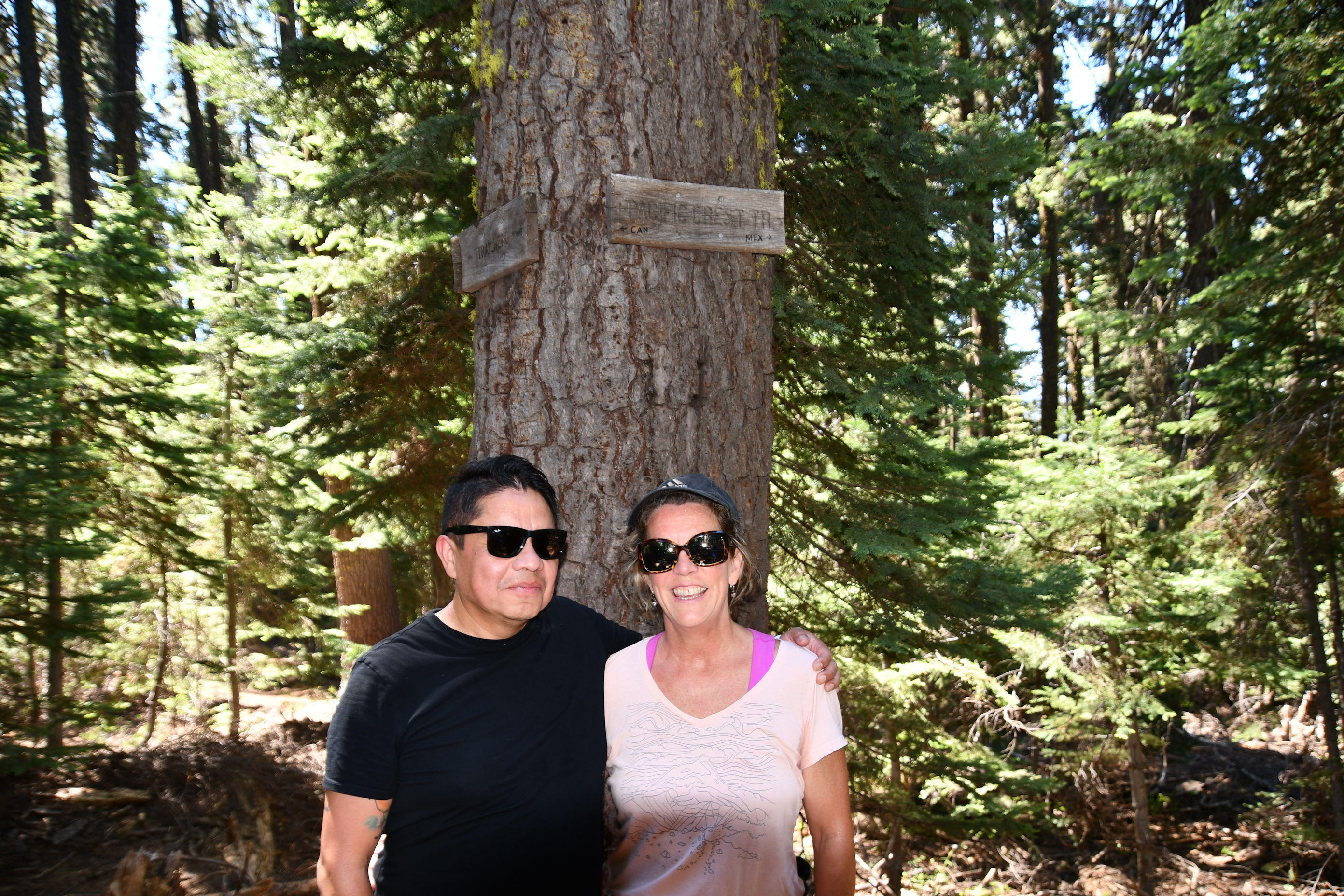
We enjoyed the trail signs above, after Margaret started laughing. The official sign has PACIFIC CREST TRAIL carved into it, because yes, we were hiking on part of the Pacific Crest Trail a famous through hike in the west, similar to the same kind of hike on the east side, the Appalachian Trail. The PCT goes from border to border, and someone had marked onto the sign in black marker: “CAN” for Canada and “MEX” for Mexico, with little arrows showing the way.

What a great idea it was to take this side trail! We found not a marsh or a pond, but a beautiful lake! Allen looked it up and found the name. It’s Freye Lake, and less than two miles from the parking lot with the mountain scenery as though we had hiked all day long to get there.


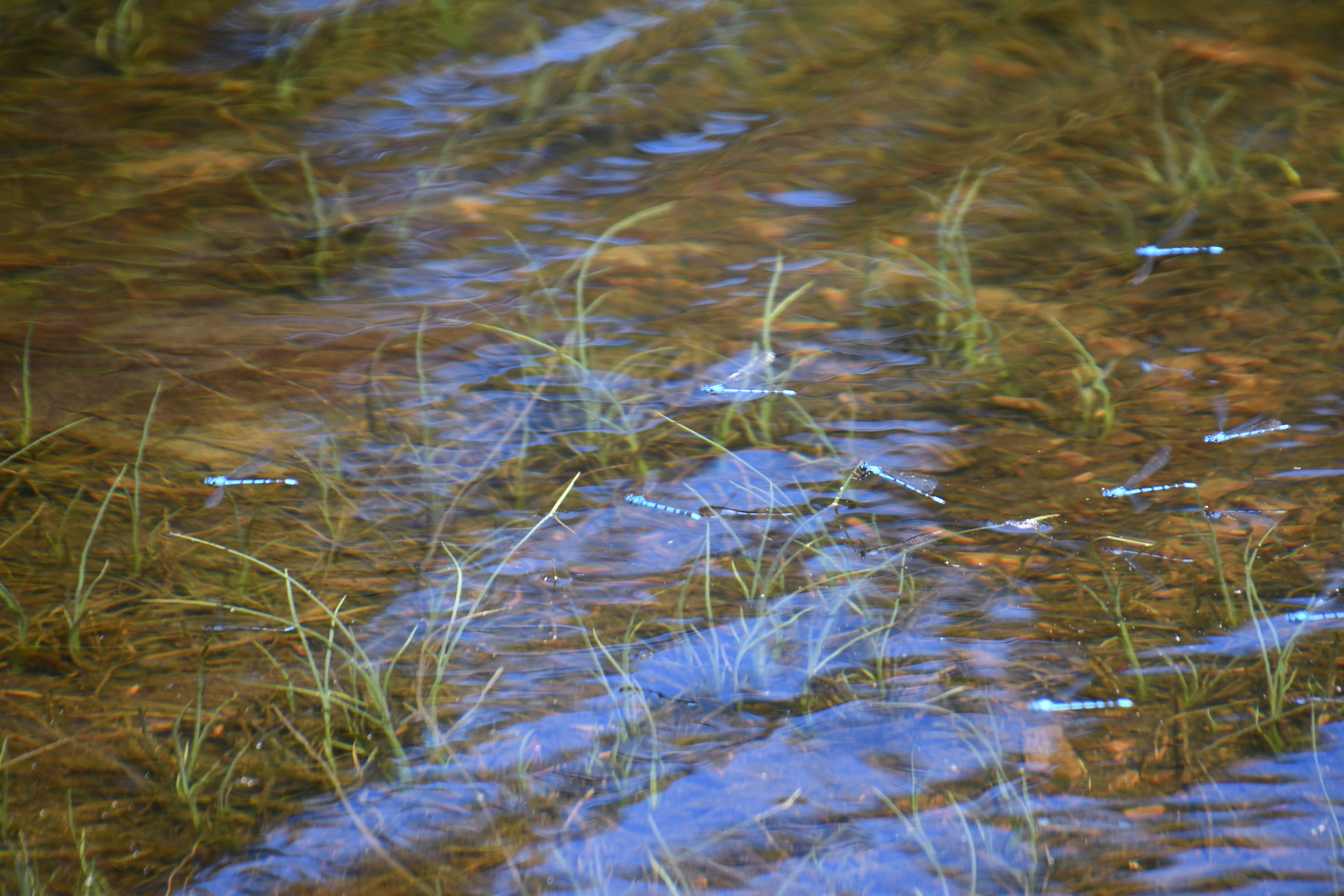
I followed dragonflies, then other sights, and soon found myself circling the entire lake.
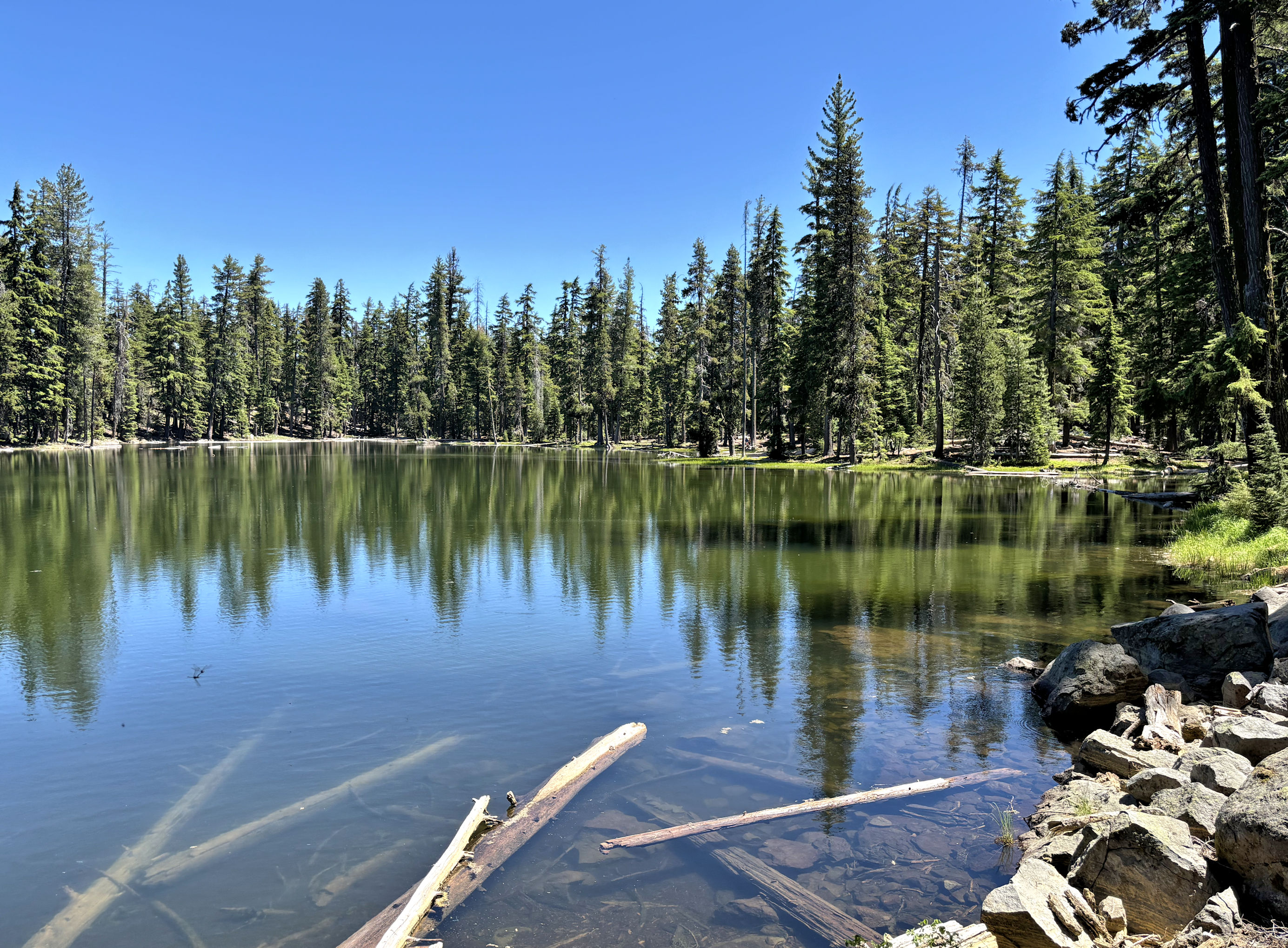
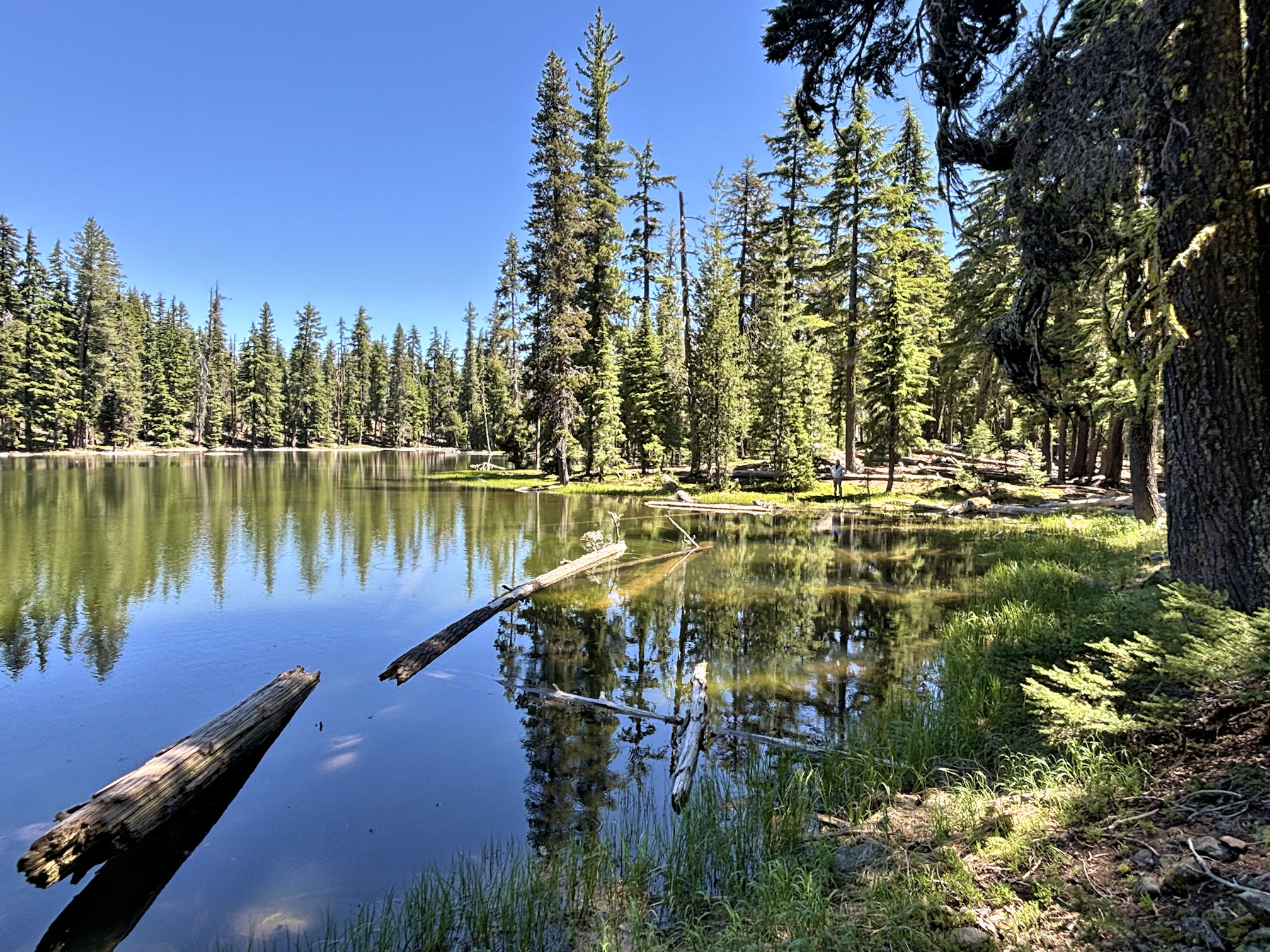


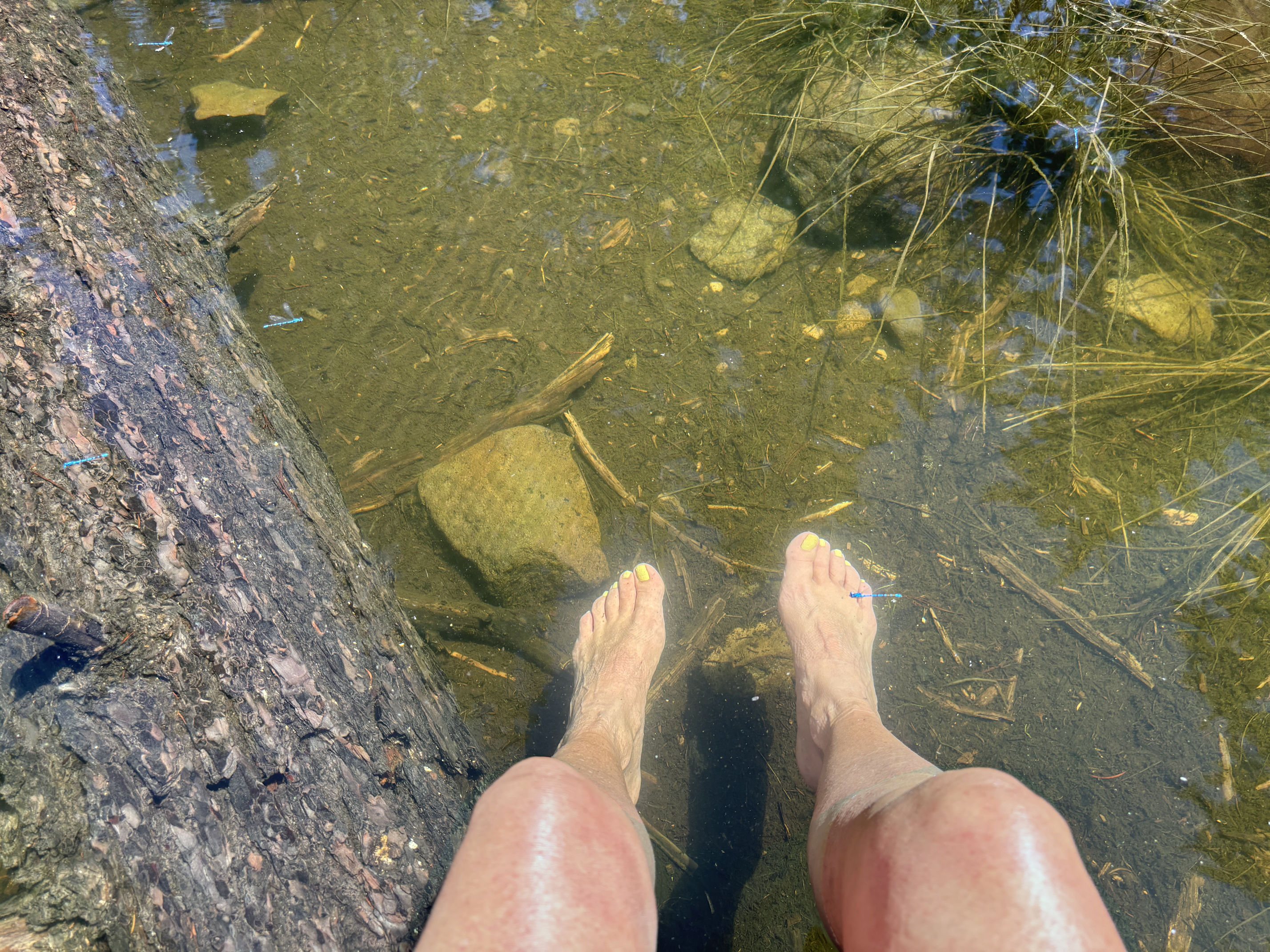
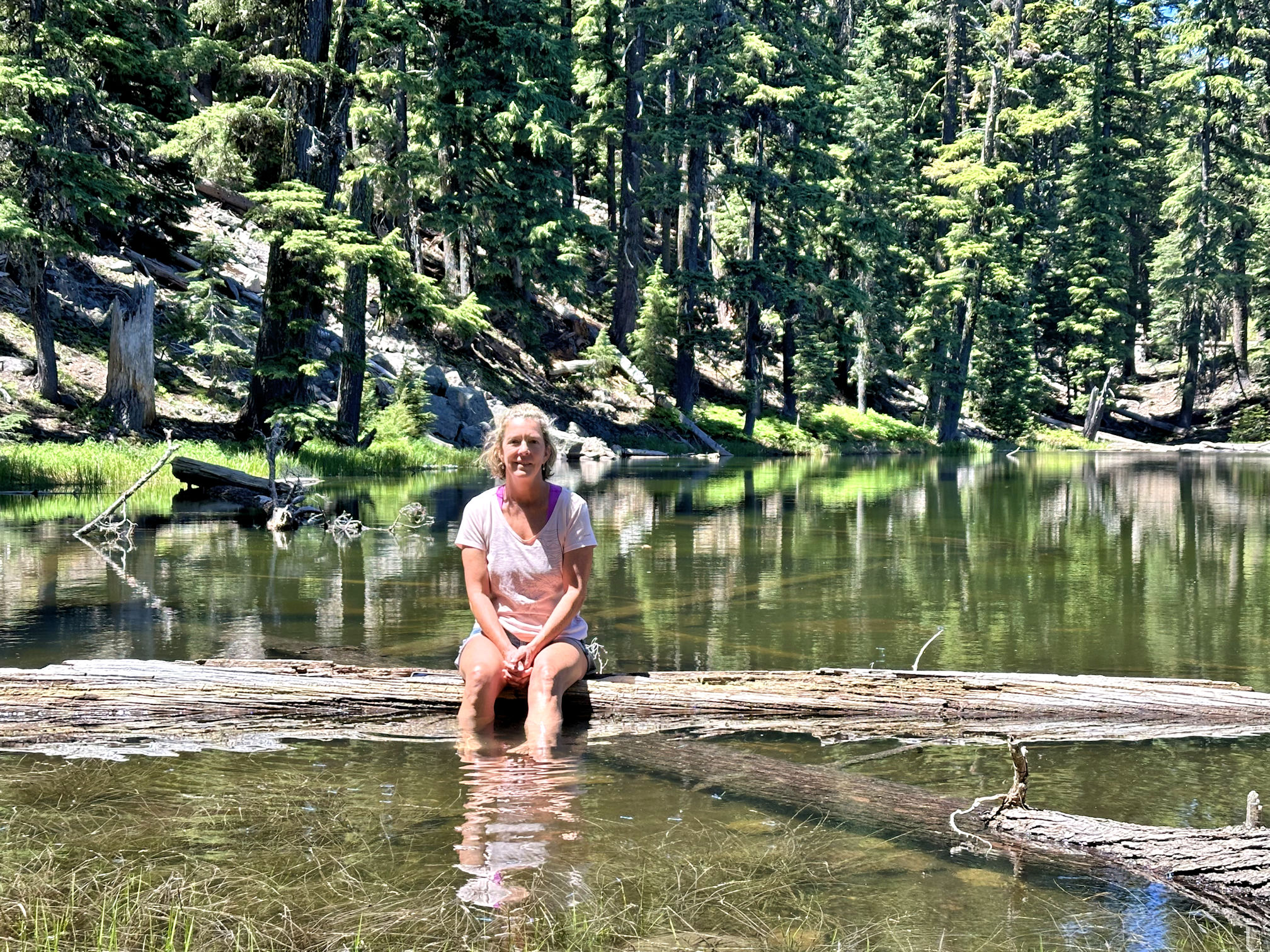
After we rested and cooled down, we ate lunch that we had brought with us. Then, I went exploring again, and played in the lake a little.


Margaret and I decided we were not meant to visit Crater Lake this year and have decided to try again next year. There was a great scandal in Oregon when state legislators realized the catastrophe taking place in our state’s favourite and most famous tourist attraction. Aramark was fired and ExplorUS took over their contract. Here’s hoping 2024 is a better year for Crater Lake visitors. And hopefully we can try this camping trip again next year, but inside the park!
The next morning we all left the campground rather early to head back home, as our trip was 5 hours to the north and theirs was 5 hours to the south. Pedro and I stopped for gas and breakfast in a tiny Oregon town called Rogue River. We started noticing roosters.


On the way out of town, we saw a banner that said Rooster Crow Weekend! I don’t know what that means, but it warrants some investigation for a possible future visit. I am the Chicken Lady after all.


 Conscious Engagement
Looks like a great trip. I had just read about the problems at Crater Lake and what a challenge it would be going forward. I’ve only been in spring and saw neither crowds nor problems. From what I learned today about the condition Aramark left the place in, I likely won’t try to visit again for a couple years. Sounds like maybe you dodged a bullet!
Thanks Bonnie Rae. I had that same thought that we dodged a bullet – if for nothing else, we avoided the negative staff energy of low morale. It looks like the new company has done as much as they could with short notice: mainly some key infrastructure repairs and better accommodations for staff. They also said they are focusing on creating a warm and healthy culture among staff there. I am super happy to hear this, and I hope it turns out to be a lasting improvement in the park.
The Trulove family has deep roots in Crater Lake National Park because my Grandpa Trulove was a decades-long supervisor in the snow removal crew at the park, and he and Grandma Trulove lived there and raised my dad and aunts and uncle there. All the park families lived there year-round, trapped in by snow in winters. My dad’s first job ever was at age 17 on Wizard Island in Crater Lake, making lunches for a crew building a boat down there (I think?). He told a story about how it did not take long before a black bear noticed that there was a bunch of food there, and he would watch on multiple mornings as she swam from island to island from the western shore, to reach the main island. Everyone in the food team would take turns on Bear Watch to make sure she didn’t surprise anyone. Also as a teenager, he stuffed a porcupine for fun one year, just to see if he could do it. I learned this because much much later we were touring the park, and came across a stuffed porcupine in a glass case. “This is my porcupine!” he exclaimed in astonishment. “I had wondered what happened to it.”
A great family tradition, Crystal!
Thank you, Lou. We are proud of it. 🙂
Sure does look like a nice trip. I remember camping trips to National parks in the South. Or very nice lodgings at great prices… it is one amazing feature of America… 👍🏻
I agree, Brian! The value for the price in our state and national parks is one great thing about this country. I appreciate the early leaders of the country creating this culture, which now everyone expects. The public feels that having access to magnificent national parks is a right. 🙂 It helps us to love and protect our lands.
Great value indeed. I do envy the accessibility you have to Nature in many states. Something hard to find in Mexico. There is a small park north of Mexico city that is nice, but it is a good hour and half away from where we live. And I’m always a bit wary about safety…
Enjoy your land.
Rooster Crow weekend, I’m there too.
Another wonderful weekend away
To be honest with you, I’m really hoping that it is a rooster crowing contest for humans to crow. Wouldn’t that be wonderful?
Or at least a rooster and a human crowing contest.
Better get Pedro into training now 😁
An exercise in adaptability well recorded in prose and photography
I was hoping someone would notice, Derrick ❤ I think our ease of flexibility with travel plans is one reason Margaret and I travel well together. We’ve had multiple obstacles in front of us, and have come through them all mostly unscathed.
XX
I haven’t been camping since my little guy was born (over 5 years ago) and this reminds me how much I used to enjoy it! I have got to take him
Hi Katie! Omigosh, yes. Going camping was one of my little one’s favourite things to do. There are so many things for a small person to play with while camping, and if you go to a campground, often other kids too. Lots and lots of teaching opportunities, like listening to birds and watching insects, and walking a trail to the water, or whatever! Also, preparing meals in a new way lets your little guy pay attention to what is involved in food preparation, which is such a good life lesson. Mine liked sleeping in a tent SO much that usually when we got home, they would beg to set up the tent in their room so they could sleep inside it.