
Pedro and I had 2/3 of a day before we had to catch an evening flight home from Washington, D.C. to Portland. We spent most of it in two museums. The city holds so many magnificent museums and in my opinion, each one could take up an entire day.
Pedro wanted to see the National Museum of the American Indian. I wasn’t even aware of this museum, though it opened in 2004, and was happy to go there. As with all Smithsonian Museums, entrance is free. It was very close to the Capitol, and we walked there from the hotel.
The interior of the building included some features that I particularly liked: permanent carved art on the walls, lots of windows, stone and patterns thoughtfully embedded into the floor, a large, round space in the center designed for gatherings with a speaker/performer in the center. We also liked the high quality food at Mitsitam Cafe selling Native-inspired foods. After we had looked at all the exhibits we were very hungry and stopped there before we left the building. We had pulled pork fry bread tacos, naturally.

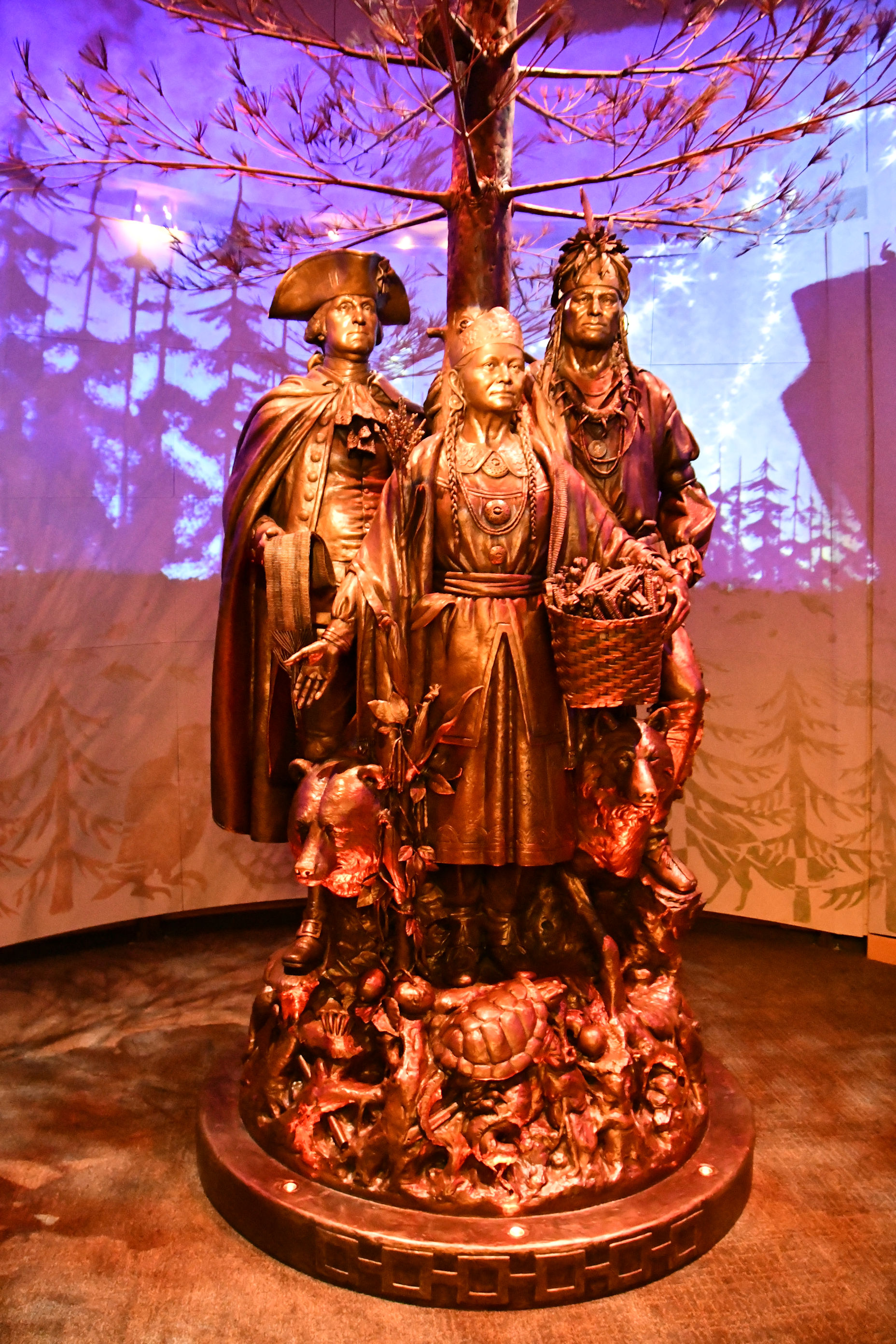

A flag from every sovereign nation within the U.S. is hung inside. 
The tribal flags are often quite beautiful. 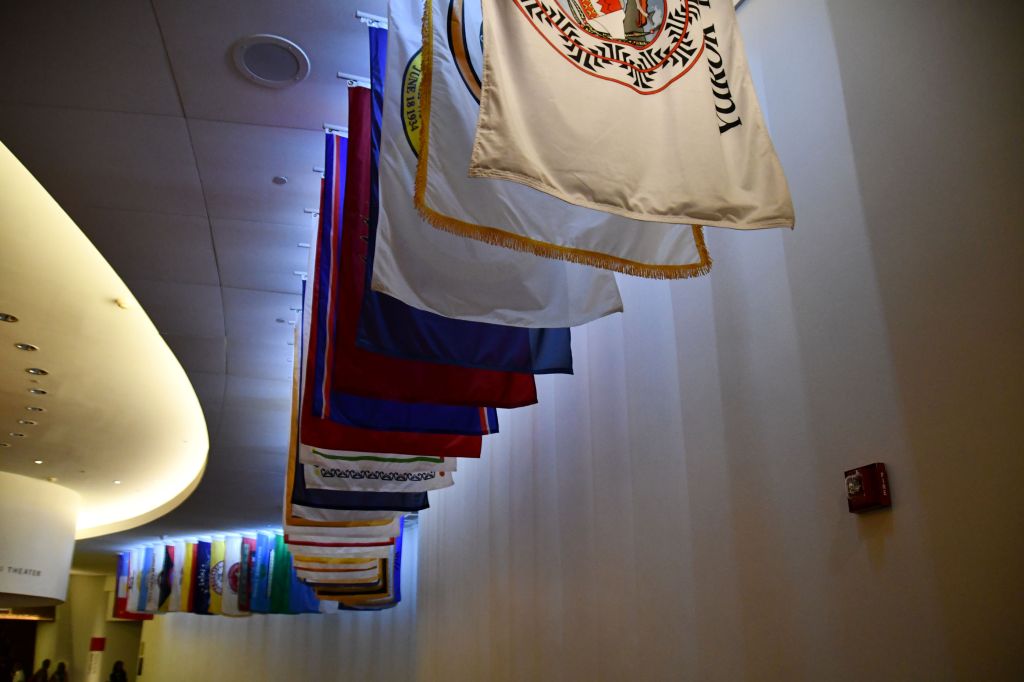
Looking at them hung in the hallways and in front of windows, it occurred to me how many tribal nations there really are. 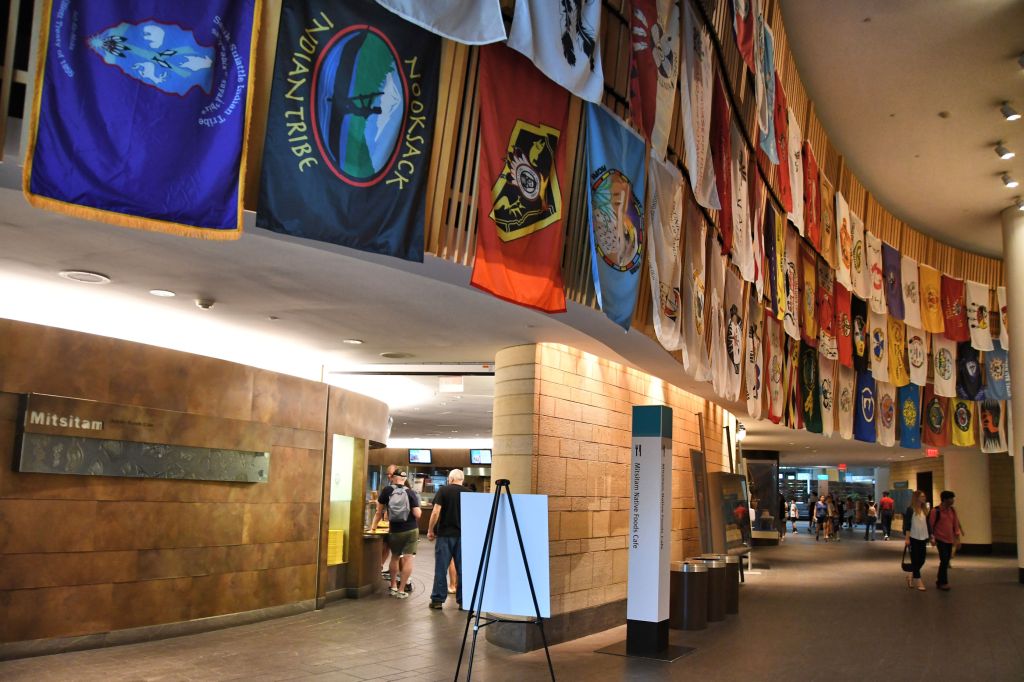
These are only the federally recognized tribes. As of 2023, there are 574 of them. 
Aha! FINALLY I found the Cherokee flag – right in the center with the yellow stars.
The scale of it all is overwhelming for a first-timer to decide how to approach the four floors of exhibits. We asked for help at the information desk, and a man suggested we begin at the top, and work our way back down. That is what we did.


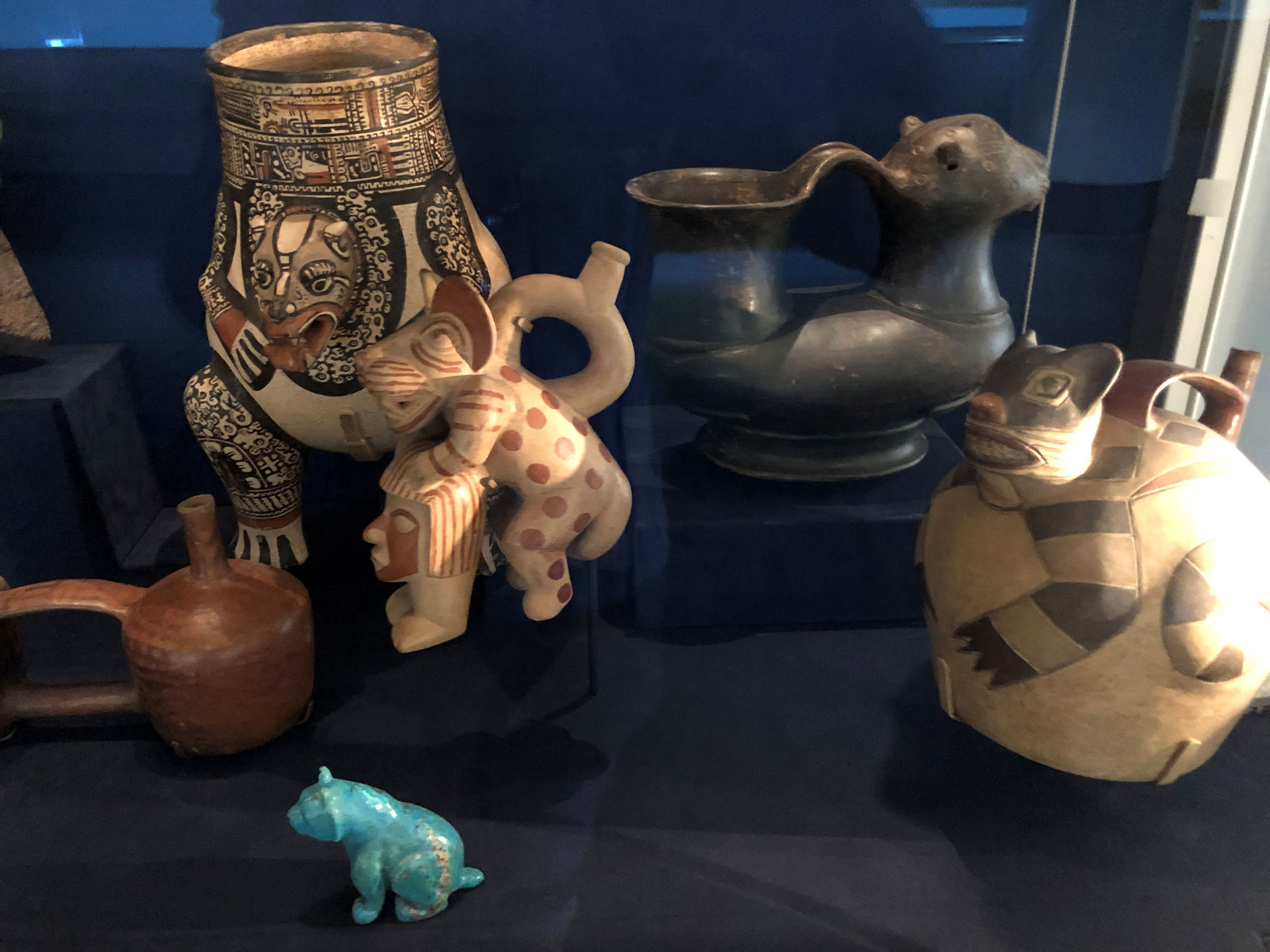


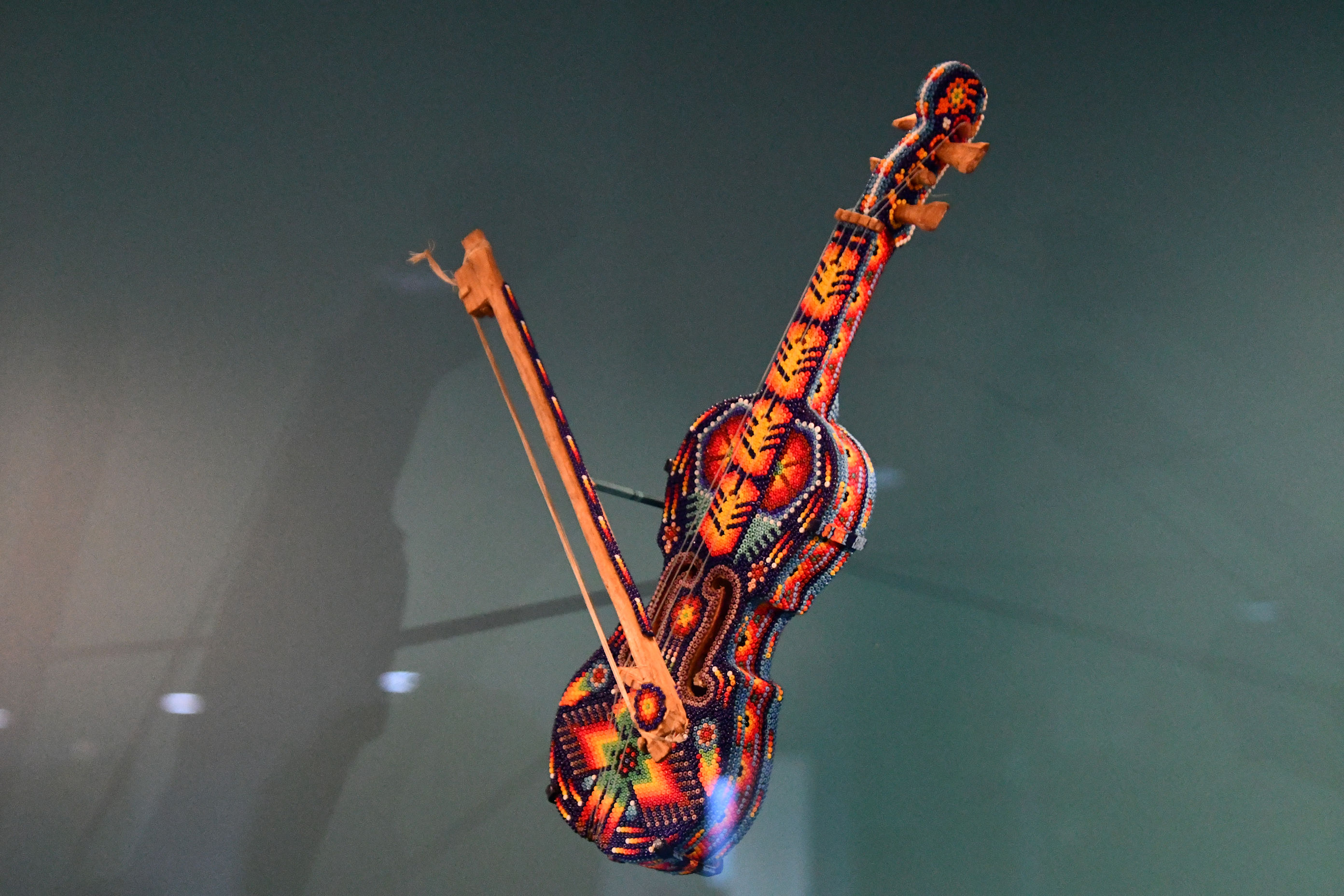

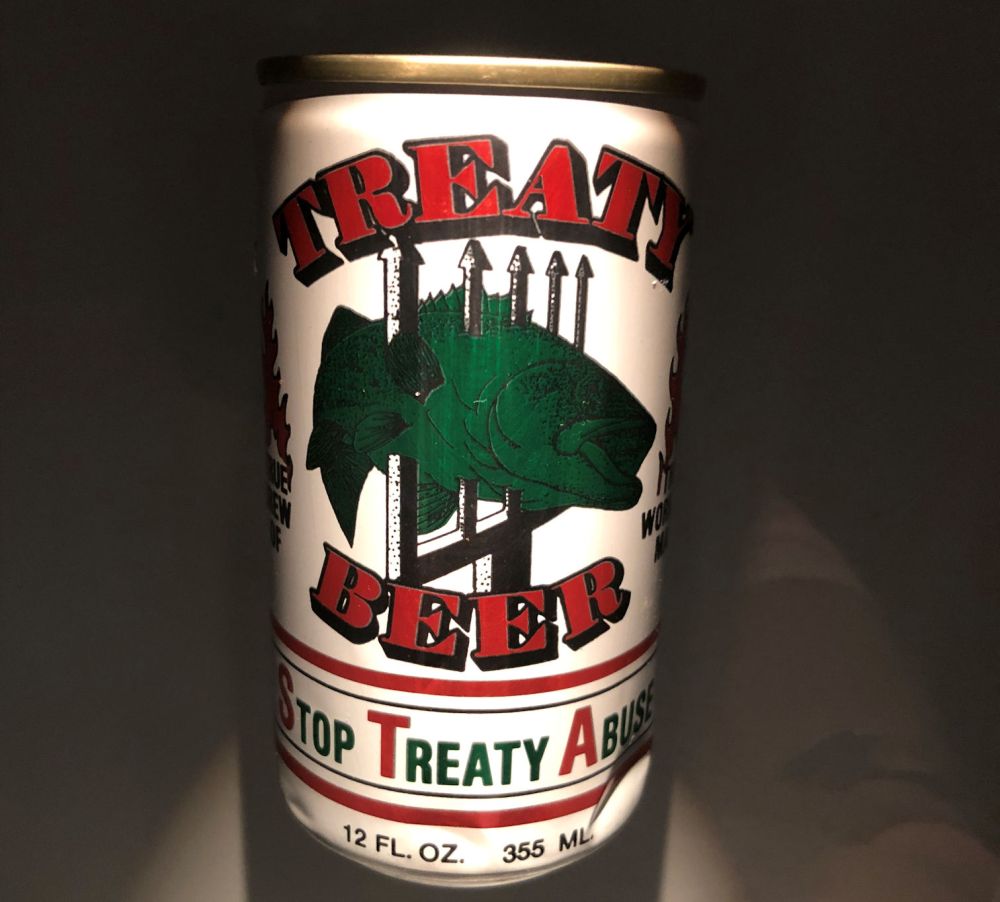


We devoured the fourth floor, then as we descended the stairs to the third, we checked our watches. It had already been a full hour! Wanting to see at least one more museum after this one, we hurried up after that.
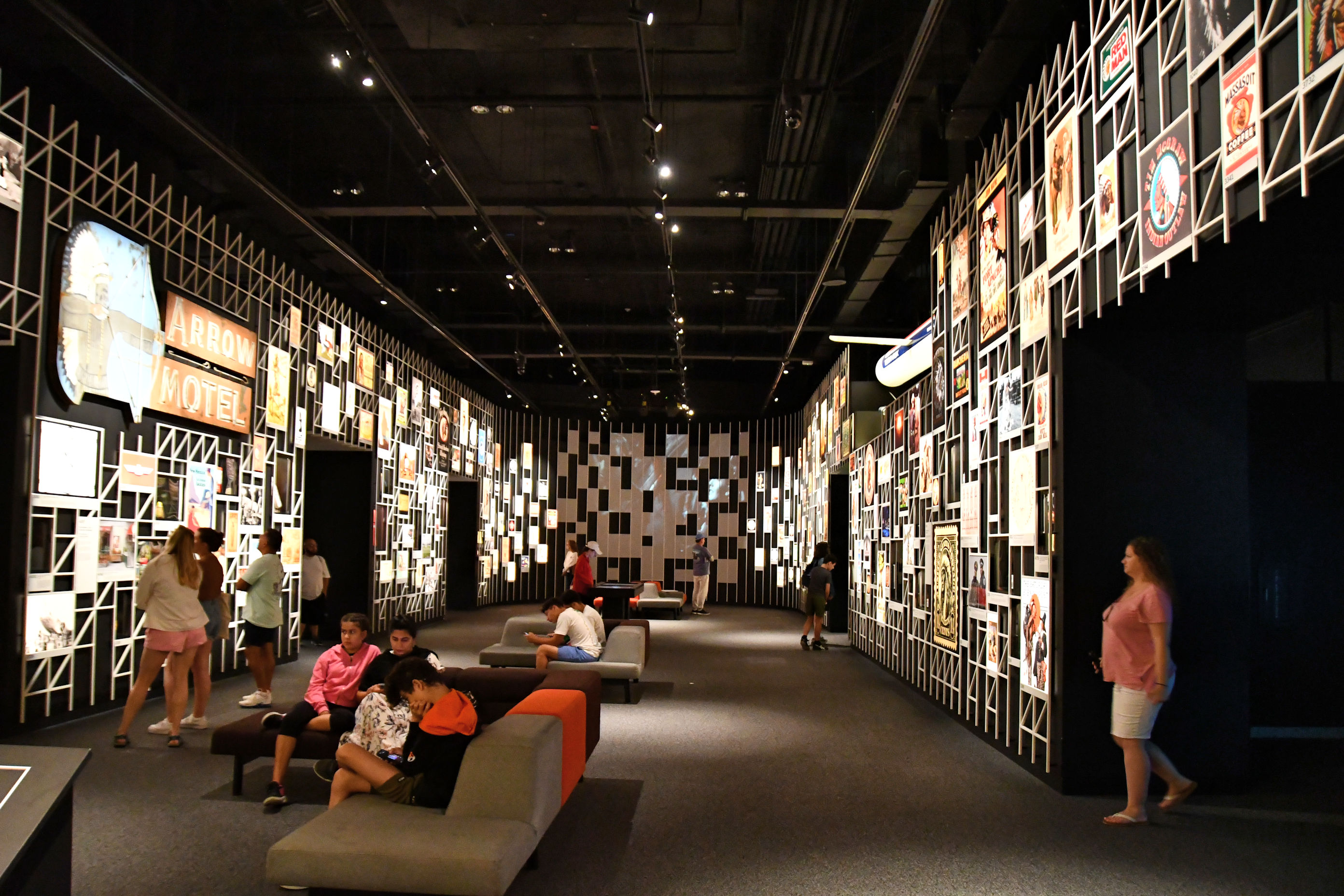


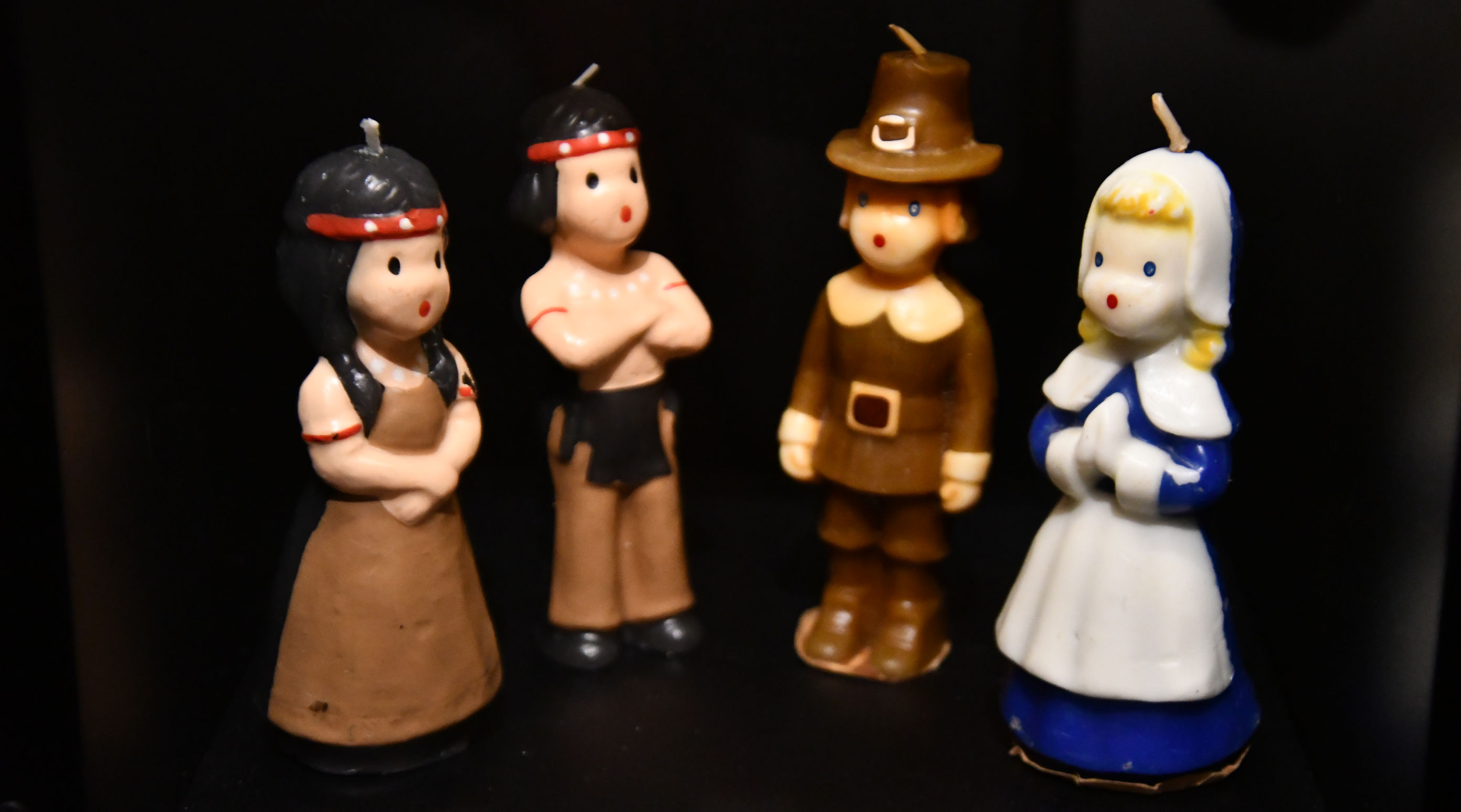


One of my favourite exhibits included an interactive language tool. There were six short stories told in their indigenous language. You pushed a button to choose the language, then pushed the large button in the middle to begin the story told by a native speaker. I LLLOOOOOVVVEEEE hearing native languages spoken. It moves something deep and ancient inside of me. My reaction is cellular and my chest swells. I stood here, tears in my eyes, and listened to all six stories.
There was an entire section of the museum dedicated to treaties, which I found significant, but I won’t show much here because it doesn’t make for very interesting photos.

We are despoiled of our private possessions, the indefeasible property of individuals. We are stripped of every attribute of freedom and eligibility for legal self-defense. Our property may be plundered before our eyes; violence may be committed on our person; even our lives may be taken away, and there is no to regard our complaint. We are denationalized; we are disfranchised…And this is effected by…treaty.
John Ross (Cherokee), 1836

We were trying to leave the museum when we came across a dedication to American Indians who serve in the U.S. military. I joined the Air Force because I saw it as my only way out of poverty and a small town. In that humble way I became accidentally part of the highest per capita demographic in the U.S. military. American Indians serve at five times the rate of any other group in the United States. They have the highest rate of women serving of any other group as well.


Finally, we dragged ourselves outside (after eating scrumptious food as I mentioned at the top). And there was more!


This memorial was opened in 2020. For obvious reasons, the dedication ceremony did not happen until 2022. It was built because – despite the enormous contribution of American Indians to the armed forces – there was no other place in our nation’s capital that recognized this particular group of warriors. I hadn’t looked for it before. I mean, during my previous visits I did not ask: “Where’s the memorial for my demographic?” But now that it’s there, it feels really good.

 Conscious Engagement
So good to know about – thank you for sharing this. I can imagine how moving it must have been. Hope to get there some day.
I hope you do get a chance to see it, Nancy. It was moving for me – partly because I didn’t even know it existed, and it was honoring my own people. The museum is really well done, and I think it would appeal to anyone who stops there. The memorial outside is right off the sidewalk and very accessible too, so I hope lots of people wander through it even if they weren’t originally planning to.
A fabulous post Crystal 🙂
Thank you for your generous compliment, Bushboy. ❤
I am so pleased Pedro found this wonderful museum for you, Crystal. The Cherokee Phoenix was particularly special. I liked the architect’s inspiration for the building
Thank you Derrick. I felt the same about the inspiration behind the shape of the building. I am also so grateful Pedro found this museum. It was the one stop he consistently said he wanted to visit, and it had never previously made it onto my mental radar. Now I am so glad we spent some time there.
(Today, purely coincidentally, I checked my spam file to see what was in there, and there were FIVE of your comments. I do not know what happened. But now that I have found you, languishing, I will set things right. :o) )
🙂
Another great museum to add to my must-see list for next time we visit DC. Thanks for the introduction.
I’m glad I could put this one on your radar. It’s so wonderful, and right next to the Air & Space Museum, which so many people visit, so it will be easy to find.